

No. 257
Capula Catrinas: Where Michoacán's Clay Catrinas Come From and How They Are Made
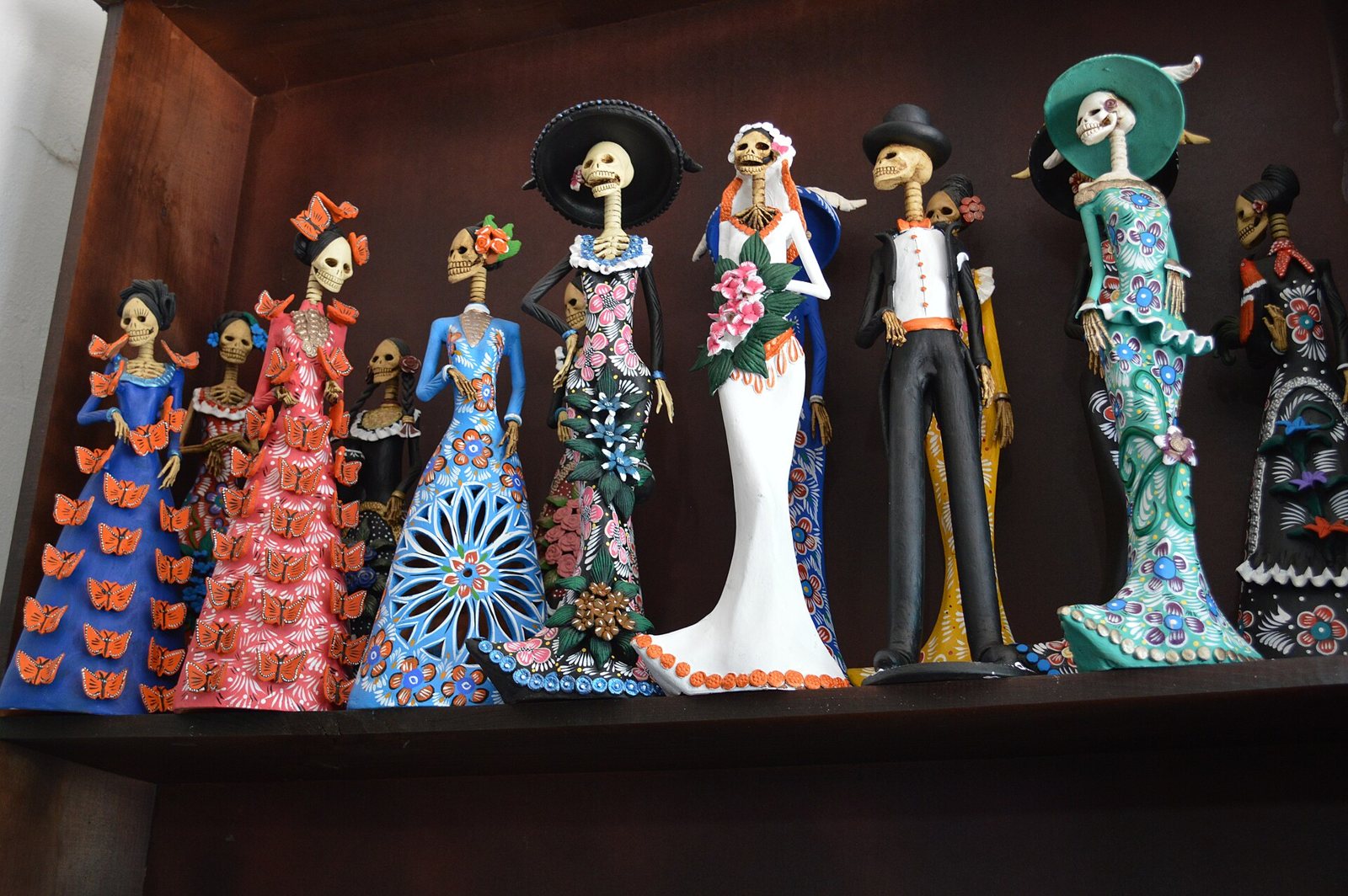
Many of the painted clay Catrinas you see on shelves and altars come from Capula, a pottery town in the Morelia municipality of Michoacán, where family workshops model, fire and paint each figure by hand. The clay Catrina tradition there is traced to the sculptor Juan Torres Calderón, who began making and teaching the figures around 1980.
Capula celebrates its figures every year with a fair. In 2026, the XVI Feria Nacional Artesanal y Cultural de la Catrina de Capula runs from October 18 to November 3, according to the Morelia municipal government's announcement of October 16, 2026.
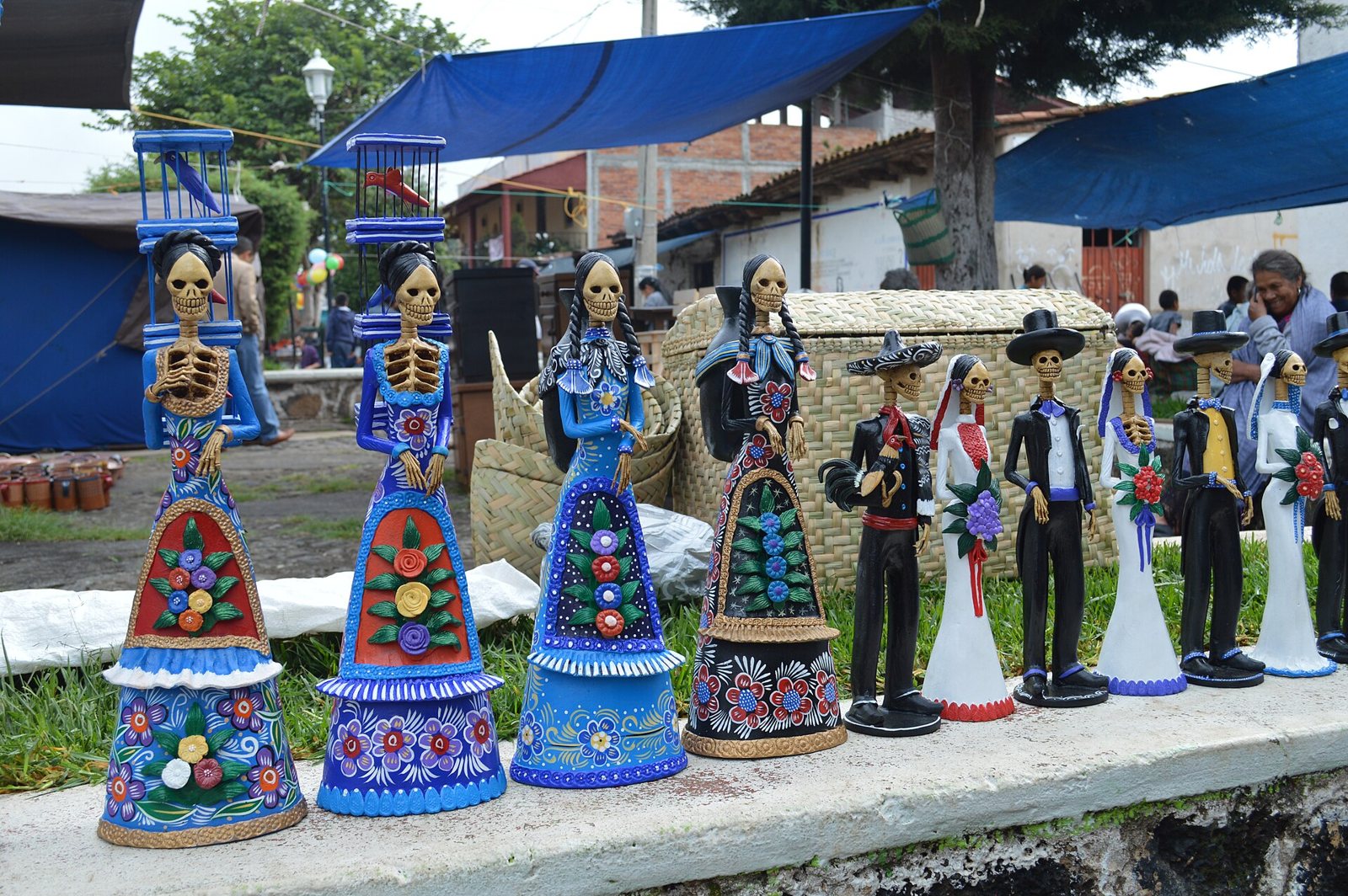
If you are holding one of these skeleton ladies, with her wide hat, her flowers and her painted dress, and she came from Capula, a figure of her size can take about a week of one maker's work. The skeleton figure herself has a longer history that begins with a printmaker in Mexico City, told in our story on La Catrina. In Capula, she became clay.
Capula, a pottery town long before the Catrinas
Capula is a tenencia of Morelia, a community that belongs to the municipality, and its potters were working long before anyone shaped a skeleton out of clay. Researchers María del Pilar Castro Fragoso and colleagues, writing in the journal Espacio y Desarrollo, report archaeological ceramic remains showing that Capula already made earthenware when the Spanish arrived.
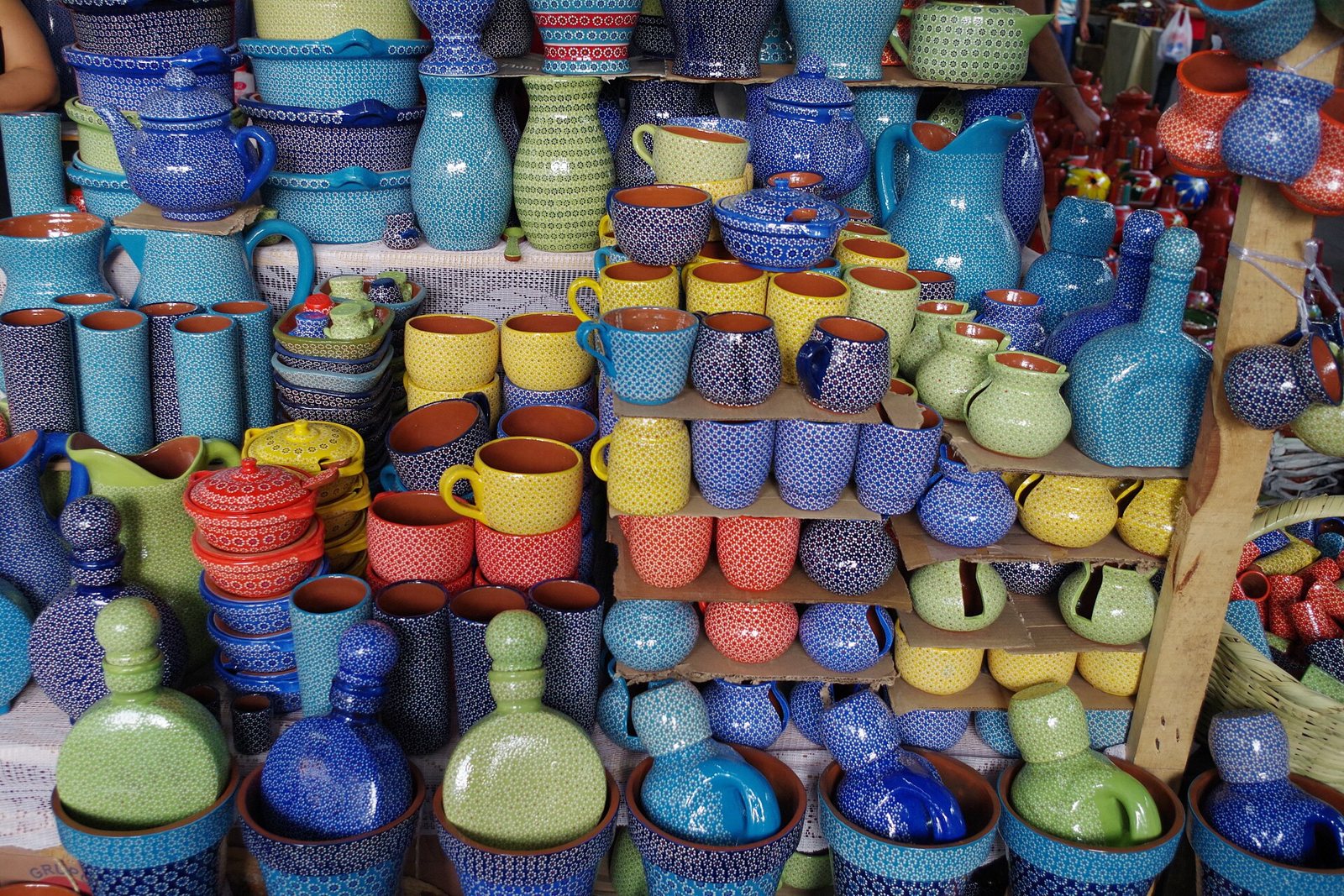
Local accounts often credit Vasco de Quiroga with bringing pottery to Capula around 1550. A paper presented at CENIDIAP points out that the archaeological remains show an earlier ceramic tradition. So, the fairest way to put it is that Quiroga influenced or organized local production, building on knowledge the community already had.
From there the craft passed down through families. Anthropologist Victoria Novelo's 1976 INAH study describes Capula pottery as a family-based production system. The town became known for its traditional ware, for punctuated decoration and for capulineado, a dotted style associated with flowers and capulín imagery. The Secretaría de Cultura's record of Capula pottery notes later changes, including higher-temperature kilns and lead-free glazes, which Capula adopted gradually through the 1990s and early 2000s.
Juan Torres Calderón and the first clay Catrinas
The person most often named as the first maker of Capula's clay Catrinas is the sculptor Juan Torres Calderón. The dates differ depending on who is telling the story.
The Morelia Film Festival describes Torres as the sculptor who began the tradition in the 1970s. A 2024 account in Contramuro, citing Michoacán government material, gives 1980, when Torres opened a workshop in Capula and adapted into clay the skeleton figure associated with José Guadalupe Posada and Diego Rivera. Michoacán's official gazette of 2016 also says that Torres taught Catrina-making through workshops and training in 1980.
Capula's own artisans remember it in their own way. Carlos Anaya, a Capula artisan interviewed by Quadratín, places the Catrina's arrival in 1987. The festival, the state and the artisan each remember the start a little differently, and each account is worth hearing on its own. What the accounts agree on is that Torres taught through workshops and passed his techniques to local artisans, who made the Catrina their own.
How a clay Catrina is made, in the makers' words
Each figure starts with the clay itself. Javier Misael Cervantes Espinoza, a Capula artisan interviewed by MiMorelia, explains that workshops combine white, red and black clays to get the right workable plasticity. Artisan Viridiana Espinosa, speaking to UnoTV, describes obtaining the clay, milling it and mixing it with water and other earths before molding begins.
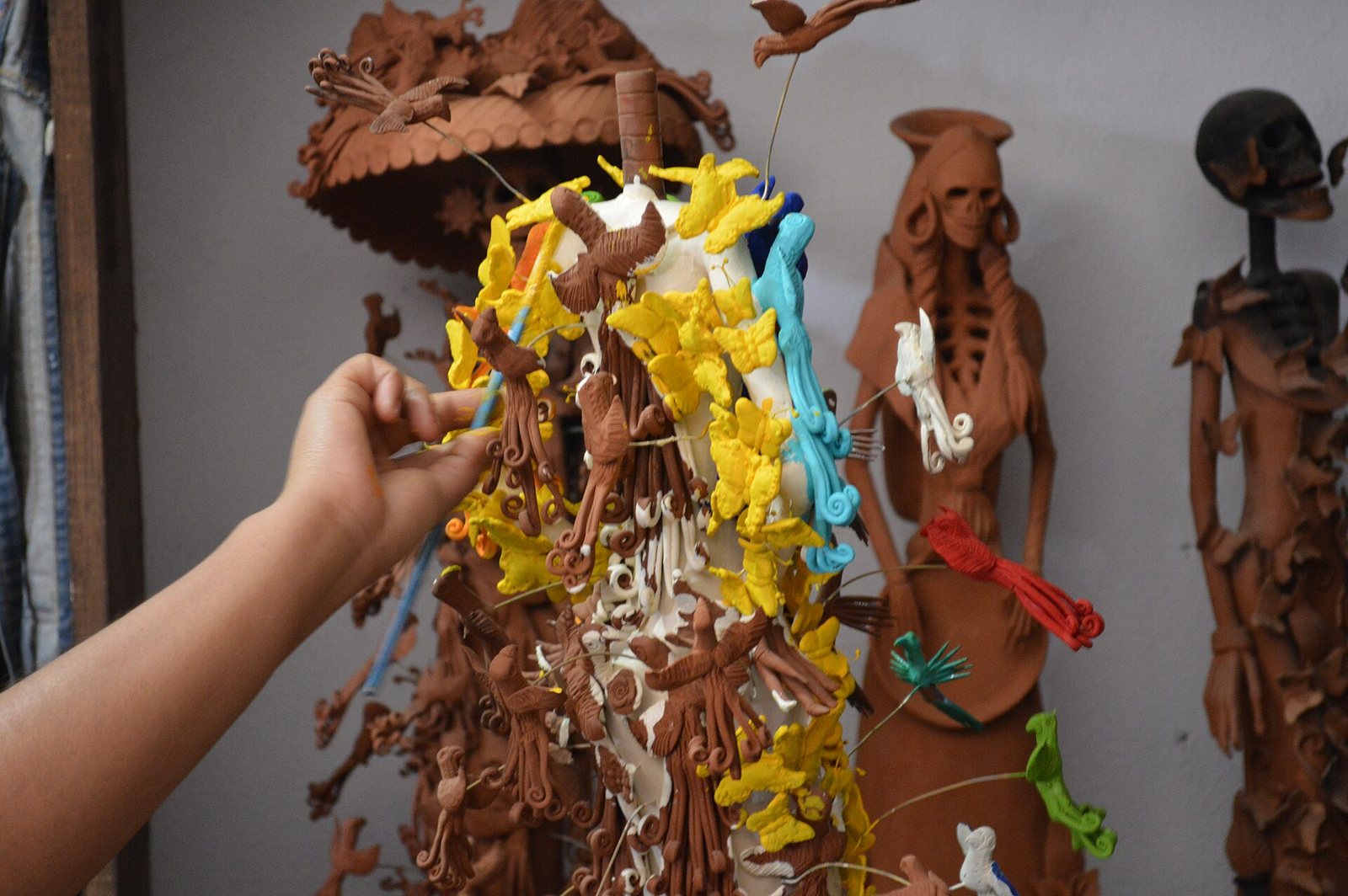
The body comes first. Once it is modeled, the maker adds the clothing, flowers, leaves, earrings and other accessories by hand, one piece at a time. Contramuro describes pastillaje, the technique of adding raised clay details onto the base form. The figure then dries before it goes into the kiln.
Color comes last. Cervantes Espinoza explains that Capula commonly uses cold painting, applied after the clay has been fired or partly fired, to give the figures their many colors. He also describes techniques inherited within families, puntillismo and capulineado, both built from small dots of paint.
All of this takes time. A Catrina about 60 centimeters tall, roughly two feet, can take around a week, Cervantes Espinoza says, depending on how the clay is prepared, the humidity and heat, the drying, the firing and the decoration.
From clay to Catrina in Capula
Tap a card to bring it forward.
- Prepare the clay: White, red and black clays are combined, milled and mixed with water and other earths.
- Model the body: The figure's body is shaped first.
- Add the details by hand: Clothing, flowers, leaves, earrings and other accessories, often in pastillaje.
- Dry: The piece dries before firing.
- Fire: The figure is fired, fully or partly.
- Paint and decorate: Cold painting, puntillismo and capulineado give the color.
A town of workshops
Capula is not one studio but a whole town of them. Cervantes Espinoza told MiMorelia that the community has around 250 workshops, and that Catrinas sell all year long, with demand rising around Noche de Ánimas, the night of the souls in the Día de Muertos season.
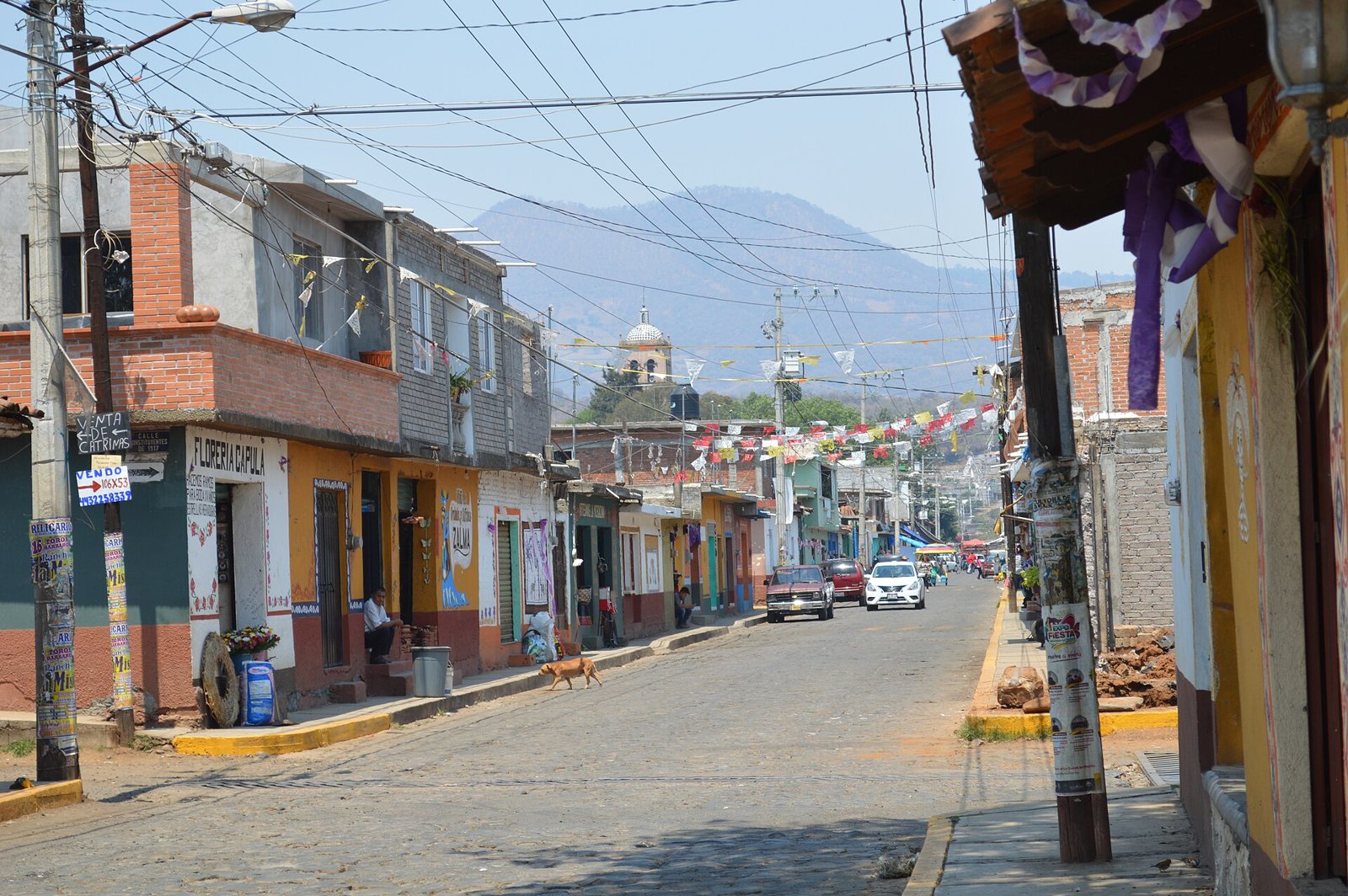
The 2024 Capula visitor brochure lists places to see and buy the work, among them the Mercado Artesanal of the Unión Estatal de Artesanos de Michoacán and the Cabaña de los 12 Artesanos on Avenida Vasco de Quiroga. It also names individual workshops and makers who specialize in capulineado, in traditional ware and in high-temperature ceramics. So, the Catrina shares the town with traditional ware and other pottery, and a visit can take in both.
Michoacán has other Día de Muertos traditions of its own. For one of the best known, the candlelit vigil on Lake Pátzcuaro, read about the Night of the Dead on Janitzio, and for how customs change across Mexico, see Day of the Dead by region.
The Feria de la Catrina in 2026
Capula's Catrina fair brings the town's makers together in its main plaza each autumn. The Morelia municipal government's announcement of October 16, 2026, sets the XVI Feria Nacional Artesanal y Cultural de la Catrina de Capula for October 18 to November 3, 2026, open daily from 10:00 to 22:00. Opening day began with a Catrina parade at 11:00, followed by the official inauguration.
The program includes artisan sales, a Catrina contest, traditional cooks, cultural events and invited exhibitors. The municipal announcement counts 210 Capula artisans and 15 invited exhibitors from other parts of Michoacán. The Michoacán state government's announcement of October 18, 2026 reports 260 participating artisans, with 56 people entering 76 pieces in the 2026 contest and 25 winners. The two governments count different parts of the event, so each figure stands on its own.
The fair is younger than the figures. Carlos Anaya says artisans began organizing the fair project in 2011. Plans can change from year to year, so confirm dates and details with the Morelia or Michoacán government before you travel.
Capula's pottery and its Catrinas
Tap or hover a step to follow the order.
Pre-Hispanic period
Archaeological evidence shows pottery-making in the Capula area.
Spanish arrival
Capula already had ceramic knowledge, according to the Espacio y Desarrollo study.
1970s to 1980
Juan Torres Calderón introduces clay Catrina workshops, with dates that differ by account.
1990s and early 2000s
Capula gradually adopts lead-free glazes, according to the Secretaría de Cultura.
2011
Artisans begin organizing the Catrina fair project, according to Carlos Anaya.
October 18 to November 3, 2026
The XVI Feria Nacional Artesanal y Cultural de la Catrina de Capula.
Buying a Catrina from the makers
The most direct way to buy a Capula Catrina is from the person who made it: at the fair in the main plaza, in the town's workshops or at its artisan markets. Each maker sets their own prices and their own terms for shipping and returns.
A few questions help you choose well and get the piece home in one piece. Ask about its size and the clay and glaze used. Ask whether it is meant for display or for use with food, which matters if you are buying plates or bowls alongside a figure. Ask how it will be packed for shipping, and ask for the maker's name, so the figure on your shelf carries the name of the person who made it.
What to ask a Capula maker
Tap a card to bring it forward.
- Dimensions: How tall and wide the piece is.
- Clay and glaze: What the figure is made and finished with.
- Display or food use: Whether the piece is decorative or safe for food.
- Shipping protection: How it will be packed for the trip.
- The maker's name: Who made the figure you are taking home.
How well do you know Capula's Catrinas?
Answer every question to check.
Questions about Capula Catrinas
A few quick answers for anyone who owns one of these figures or hopes to.
Where are clay Catrinas made?
Capula, in the Morelia municipality of Michoacán, is the best-known home of the clay Catrina, with around 250 workshops by one artisan's count. Catrina figures are made in other places too, but Capula's family workshops are the ones most closely tied to the clay tradition that Juan Torres Calderón began.
Where can I buy a Capula Catrina?
You can buy directly from the makers at the Feria de la Catrina in Capula's main plaza, in the town's workshops, and at artisan markets such as the Mercado Artesanal and the Cabaña de los 12 Artesanos. Catrinas sell all year, so a workshop visit does not have to wait for the fair.
How do I get to the Feria de la Catrina in Capula?
The fair is held in the main plaza of Capula, in the Morelia municipality of Michoacán. Confirm the route, dates and hours with the Morelia municipal government before you set out.
How long does it take to make a clay Catrina?
A figure about 60 centimeters tall can take around a week, according to Capula artisan Javier Misael Cervantes Espinoza. The time depends on the clay, the weather, the drying, the firing and how much decoration the piece carries.
Where to go next
The clay figure is one chapter of a longer story. To learn how the skeleton lady began as a print and got her name, read La Catrina, and for the printmaker behind her, José Guadalupe Posada. Other skeleton figures of the season appear in our story on calacas, and if you would rather wear the look than shelve it, see Catrina makeup. Another handmade craft of the season is the sugar skull, and for the celebration as a whole, start with Día de Muertos.
Terms in this story
Tap a term to see what it means.
Capula. A pottery town and tenencia of the Morelia municipality in Michoacán, known for its clay Catrinas and its family workshops.
---