

No. 335
Cerro de la Calavera and Casa Calavera: Mexico's Places Named for Skulls
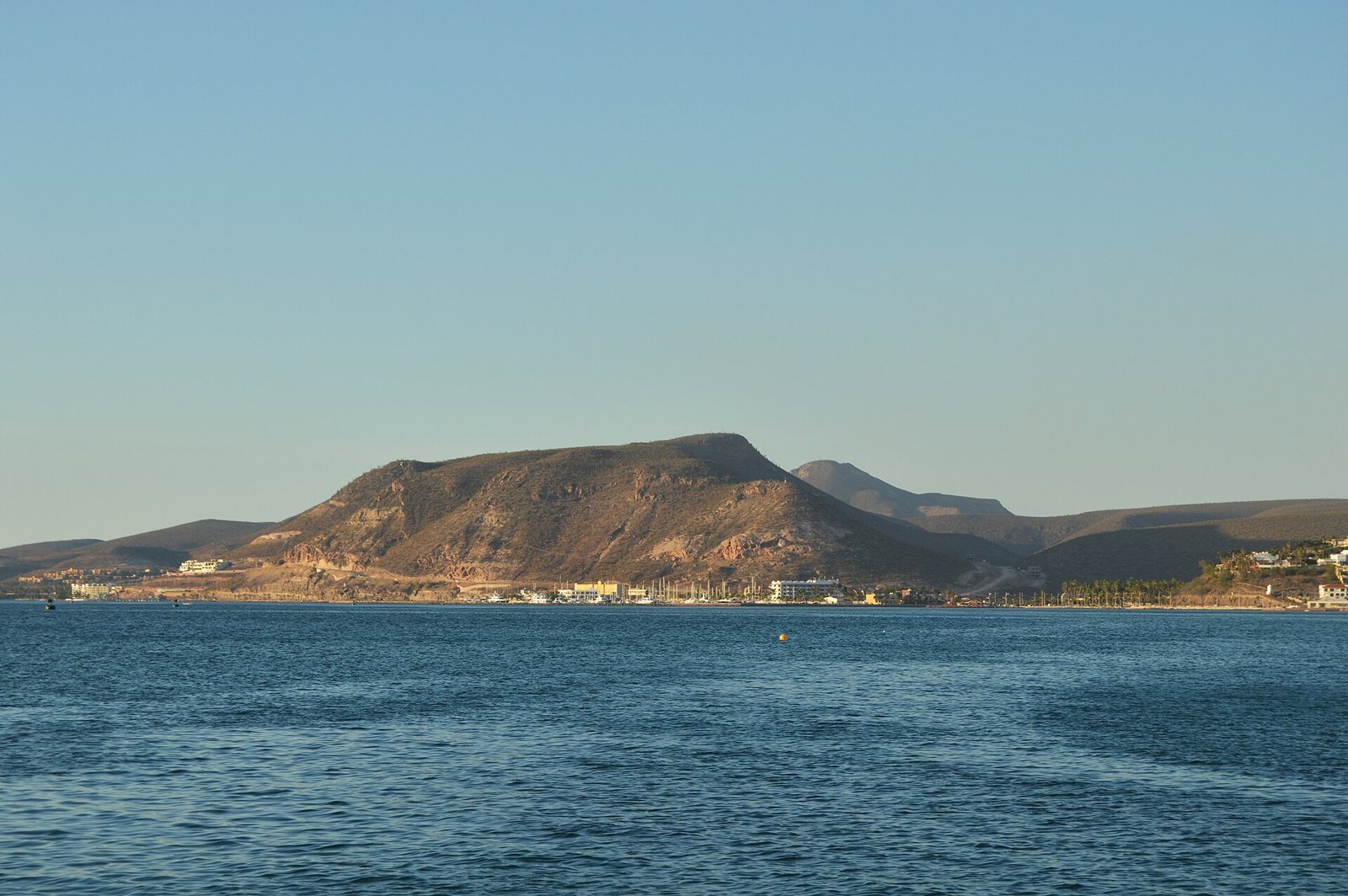
Several places in Mexico share the name Cerro de la Calavera, Skull Hill. The best known is a low hill and viewpoint just northwest of La Paz, Baja California Sur, on the road to Pichilingue, where skull-like rock formations and a handful of local legends explain the name.
Another Cerro de la Calavera rises near Ecatepec and Xalostoc in the State of Mexico. And if you heard "Casa Calavera" instead, Skull House, the one most people mean is an open-air music venue in Tepoztlán, Morelos, which opened in 2018.
None of these places is connected to the others, so the first thing to settle is which one you heard about. Each has its own location, its own reason for the name and, for the places people visit, its own official guidance.
Cerro de la Calavera in La Paz, Baja California Sur
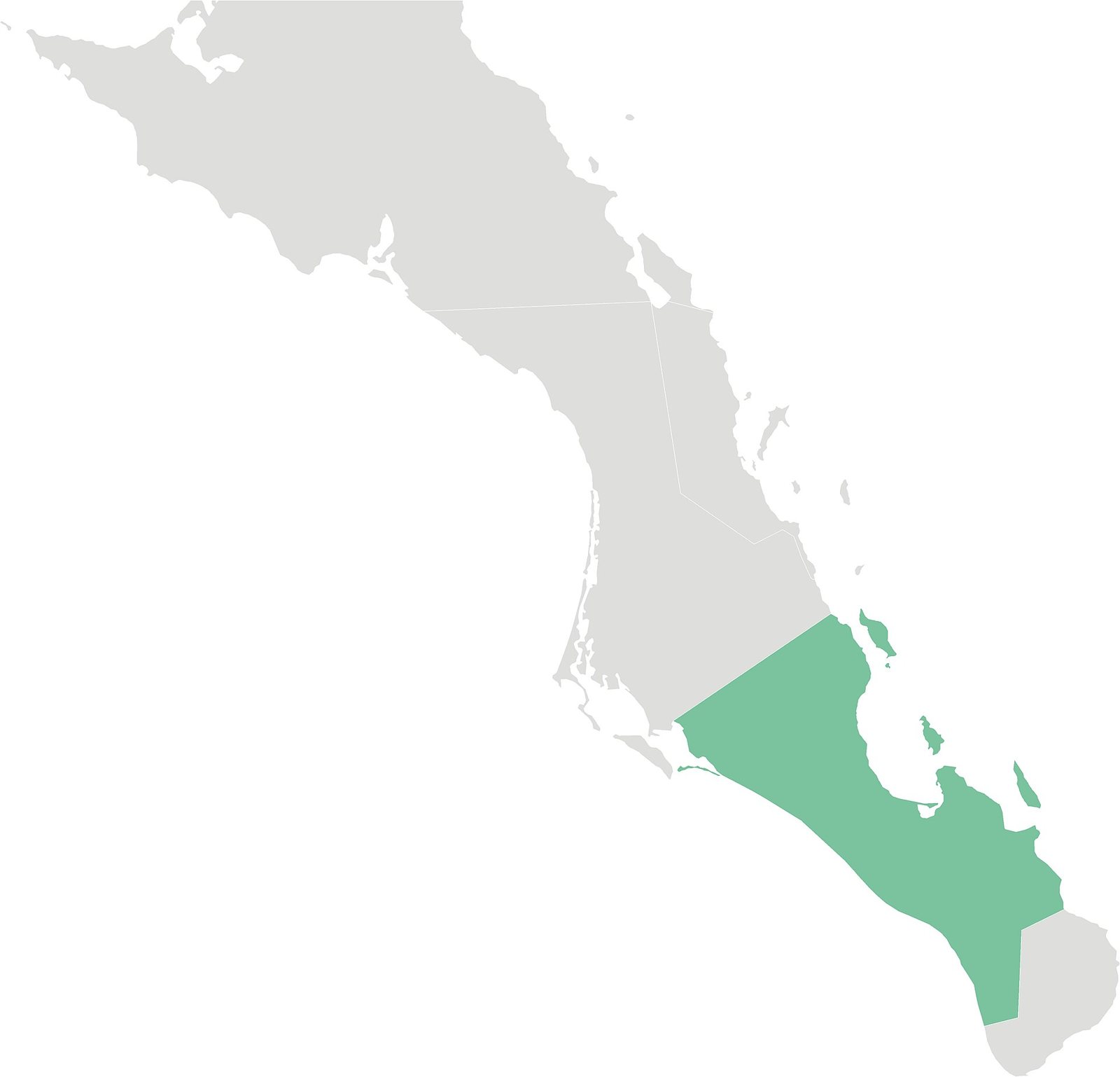
The La Paz hill sits northwest of the city, beyond the Palmira area, about 3 kilometers along the road from La Paz to Pichilingue. The federal Diario Oficial, in its edition of September 26, 2018, places it at kilometer 2.5 of that road.
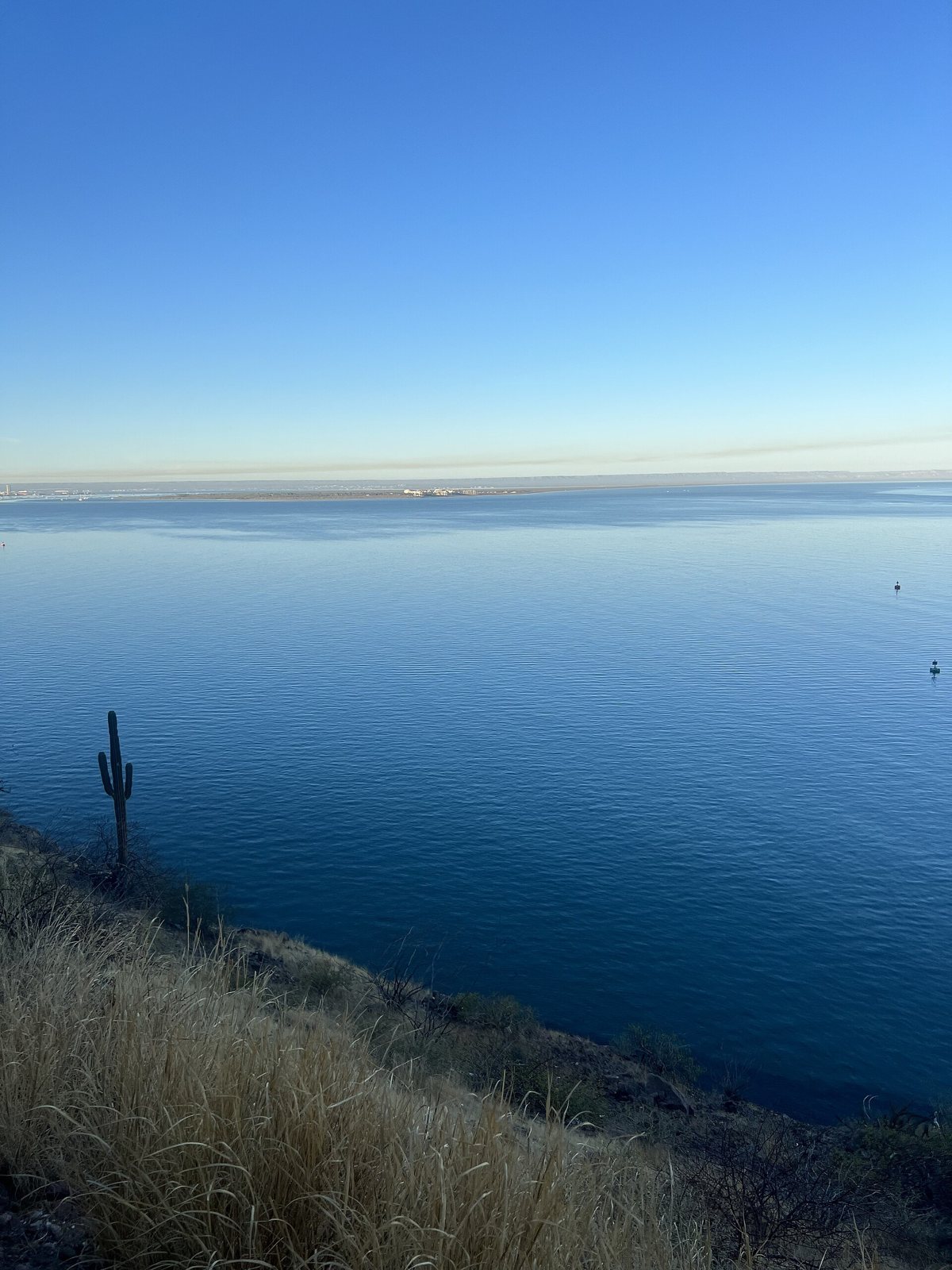
The municipal tourism office, Turismo La Paz, describes a low hill and lookout point with unusual rock formations and views of the sunset. People go there to hike, take photographs, watch the plants and wildlife and climb, and the office puts the climb at roughly 20 to 30 minutes.
The hill is also an archaeological area. The same municipal page reports stone tools and projectile points there and links the area with the ancient Californian peoples it calls Guaycura. INAH, Mexico's national institute of anthropology and history, lists three archaeological sites under the hill's name in its register of archaeological sites: Cerro de la Calavera 11 and 12, classed as rock shelters and caves, and Cerro de la Calavera 13, with ceramics and lithics, the archaeologists' word for worked stone.
Why the La Paz hill is called the skull
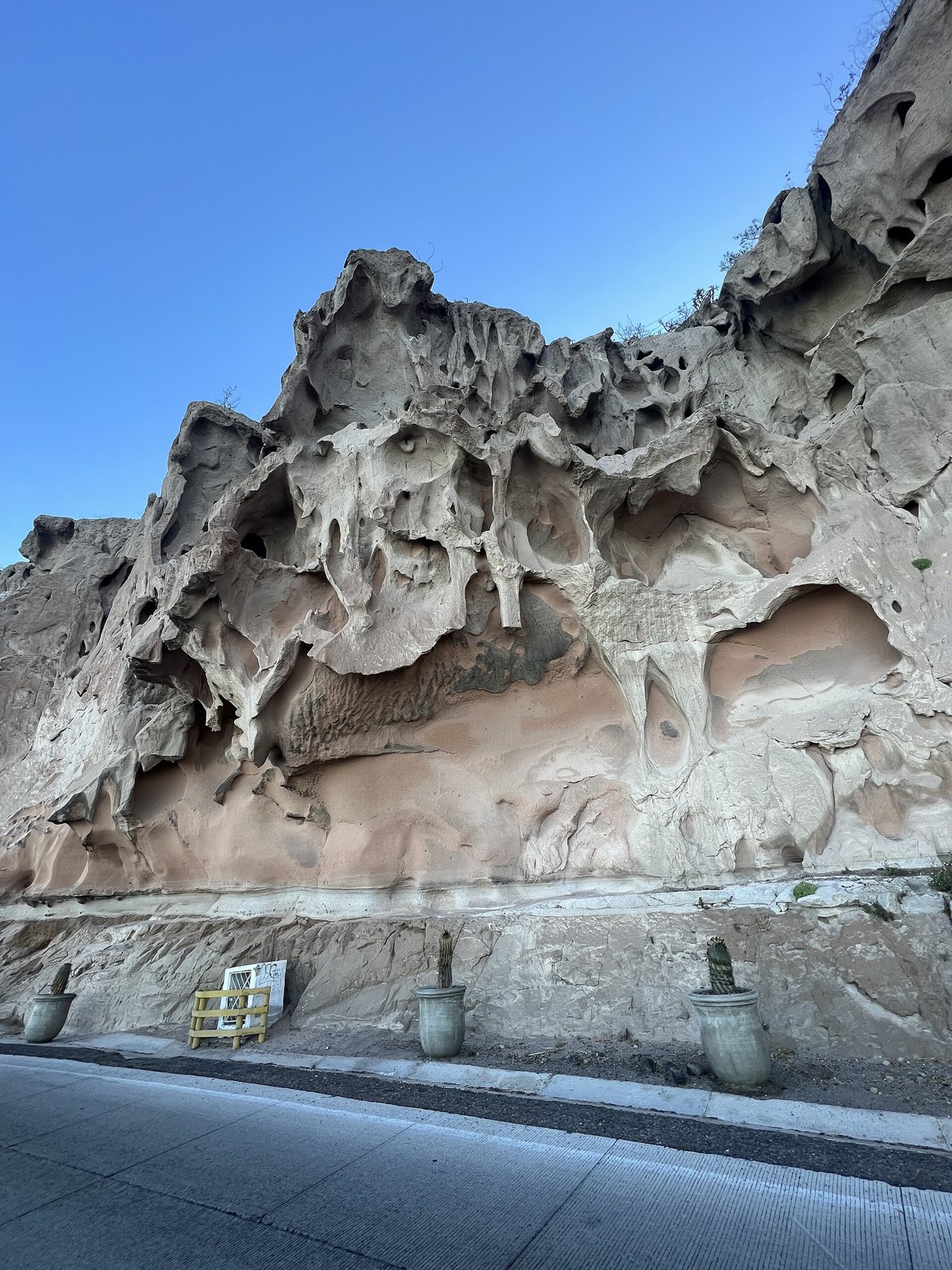
The short answer is the rocks. The hill has rock formations that look like skulls, and the name follows the shape. The longer answer is a set of local legends, and Turismo La Paz records several of them without settling on one.
One legend ties three skull-like formations to a story about a woman and two men. Another connects the name to a shipwreck in 1918 and to burials. A third tells of a Guaycura princess named Humai. Each is a story told about the hill, passed on by the people of La Paz, and the municipal page presents them side by side as legends.
That is part of the pleasure of the place. You can stand in front of the formations, decide for yourself which legend fits, and see the skull in the stone, much as visitors do at other rocks named for their looks, like Skull Rock in Joshua Tree.
Visiting the La Paz hill: what the municipality says
Turismo La Paz lists access to the hill as free and gives no set opening hours. Its advice for visitors is short and practical.
Before you climb the La Paz hill
Tap a card to bring it forward.
- Access: Free, according to Turismo La Paz, with no set opening hours listed.
- Water: Bring your own.
- Clothing and footwear: Wear clothes and shoes suited to a rocky hike.
- Daylight: Go during the day.
- After dark: Take extra care if you are out once the sun goes down.
- Company: Go with another person.
Conditions can change, so check with Turismo La Paz before you go. The hill is more than a lookout: its rock shelters, caves and scatters of ceramics and worked stone are registered by INAH as archaeological sites.
The Cerro de la Calavera near Ecatepec and Xalostoc
A second Cerro de la Calavera stands inland, in the State of Mexico. A 2021 UNAM geography thesis describes it as a small hill in the Tlalnepantla area, near Ecatepec de Morelos. The neighborhood of Colonia División del Norte sits on it, it borders Marina Nacional, and its eastern side lies close to Industrial Xalostoc. A 2010 report in La Jornada also places it near Tlalnepantla and Ecatepec.
The name, here too, comes from the shape. The Spanish-language Wikipedia entry for the hill describes a skull-like form visible from the México-Pachuca highway, which was later picked out in white paint. That is a local account of how the hill looks and how it got its name rather than an official one, and it makes sense: a skull you can spot from a highway is hard to forget.
Other places in Mexico named calavera
The word turns up on Mexican maps more often than you might expect. The official listings record the names, and each place keeps its own story behind them.
INAH's archaeological site database includes a Cerro de la Calavera in Cosío, Aguascalientes, listed as a site with structures. It is a different hill from both the La Paz and the Ecatepec ones.
INEGI, Mexico's national statistics and geography institute, lists more in its historical nomenclátores, the official gazetteers of place names for each state. Baja California has localities called La Calavera and Las Calaveras. The State of Mexico has a locality called Calaveras. Sonora has three localities named Las Calaveras, and San Luis Potosí has hills named La Calavera and Las Calaveras.
The 2020 census adds one more: Guadalupe de Gómez, also known as La Calavera, in Pénjamo, Guanajuato. On the Caribbean side of the country, a cenote near Tulum carries the name too, told in Cenote Calavera.
Tap or hover a row to highlight it.
| Place | State | Type | Detail |
|---|---|---|---|
| PlaceCerro de la Calavera, La Paz | StateBaja California Sur | TypeHill, viewpoint and archaeological area | DetailNorthwest of La Paz, beyond Palmira, on the La Paz to Pichilingue road |
| PlaceCerro de la Calavera 11 and 12 | StateBaja California Sur | TypeINAH archaeological sites | DetailRock shelters and caves |
| PlaceCerro de la Calavera 13 | StateBaja California Sur | TypeINAH archaeological site | DetailCeramics and lithics |
| PlaceCerro de la Calavera, Cosío | StateAguascalientes | TypeINAH archaeological site | DetailSite with structures |
| PlaceCerro de la Calavera near Ecatepec and Xalostoc | StateState of Mexico | TypeLocal hill | DetailTlalnepantla area, with Colonia División del Norte, Marina Nacional and Industrial Xalostoc |
| PlaceCasa Calavera, Tepoztlán | StateMorelos | TypeContemporary venue | DetailOpened July 13, 2018; electronic music, architecture and Mexican food |
| PlaceCasa Calavera, San José del Cabo | StateBaja California Sur | TypeRestaurant and cantina concept | DetailDeveloped with Hakkasan Group and listed by TAO Group Hospitality |
Casa Calavera in Tepoztlán, and the other Casa Calaveras
Casa Calavera in Tepoztlán, Morelos, is a modern place with a skull in its name, not an old one. It is an open-air venue near the Tepozteco, focused on underground electronic music. Mixmag Latin America dates its opening to July 13, 2018, and describes a place that brings together architecture, the natural surroundings, Mexican food and music ranging from downtempo to techno.
Hours and programs at a venue like this change, so confirm the current address, hours, reservations, prices and entry rules directly with Casa Calavera before you go.
The name has been used elsewhere, too, for businesses unrelated to the Tepoztlán venue or to any hill. TAO Group Hospitality's venue deck from 2022 describes a Casa Calavera at Vidanta Los Cabos in San José del Cabo, Baja California Sur, as a Mexican culinary and cantina concept developed with Hakkasan Group and built around calavera art and a Día de Muertos theme. In Mexico City, El Universal reported on a temporary Casa Calavera, a bar inspired by Día de Muertos, that popped up for the season at the Sofitel Mexico City Reforma on Paseo de la Reforma.
Those last two borrow the imagery of the holiday, which says something about how familiar the skull is in Mexican design. The celebration itself, and what calaveras mean on the ofrenda, is told in Día de Muertos.
Why a hill gets called a skull
In La Paz and near Ecatepec, the answer is the same: people looked at the rock and saw a skull. A shape that resembles a skull is enough to name a landmark, and a name like that is easy to remember.
The word itself carries a lot. Calavera means skull in Spanish, and in Mexico it also names sugar skulls, rhyming verses and skeleton figures; calavera meaning follows all of those senses. The most famous "place of the skull" in the world is Golgotha in Jerusalem, whose name and history are told in Golgotha. Across the Atlantic, a whole shoreline in southern Africa carries the name of bones: the Skeleton Coast.
Skulls also have a much older history in central Mexico, on the skull racks of the Mexica and their neighbors, told in tzompantli. None of these is connected to the hills named here, and the hills' names come from their shapes, but together they show how naturally people reach for the skull when they name the world around them.
FAQ
Short answers on location, meaning, the hike and the venue.
Where is Cerro de la Calavera?
The best-known one is in La Paz, Baja California Sur, northwest of the city past Palmira on the road to Pichilingue. Others share the name, including a hill near Ecatepec and Xalostoc in the State of Mexico and an INAH archaeological site in Cosío, Aguascalientes.
What does Cerro de la Calavera mean in English?
It means Skull Hill. Cerro is a hill and calavera is a skull, and the name describes the skull-like shape people see in the rock.
How long is the hike up Cerro de la Calavera in La Paz?
Turismo La Paz puts the climb at roughly 20 to 30 minutes. Bring water, wear suitable shoes and go in daylight with a companion, as the municipality recommends.
How do I get to Cerro de la Calavera in La Paz?
Head northwest from the city, beyond the Palmira area, about 3 kilometers along the road to Pichilingue. The Diario Oficial places the hill at kilometer 2.5 of that road; check current access with Turismo La Paz before you go.
When is Casa Calavera in Tepoztlán open?
Its schedule changes, so confirm the days and hours directly with Casa Calavera before visiting. The same goes for reservations, prices and entry rules.
Mexico's skull places quiz
Answer every question to check.
One name, many places
Skull Hill in La Paz, the painted skull above the highway near Ecatepec, a hill with structures in Cosío and a music venue near the Tepozteco all answer to a calavera. They are separate places with separate stories, and the best way to know which one someone means is to ask where.
If the skull-shaped rocks of La Paz are what caught your eye, the legends of Humai and the 1918 shipwreck travel with them. If it was the music, Tepoztlán is the place. Either way, the skull on the map belongs to the long life of the calavera in Mexican words and images, which families celebrate each year in Día de Muertos.
Terms in this story
Tap a term to see what it means.
Cerro. A hill in Spanish; Cerro de la Calavera means Skull Hill.
---