

No. 111
The Taung Child: The Skull That Changed the Search for Human Ancestors
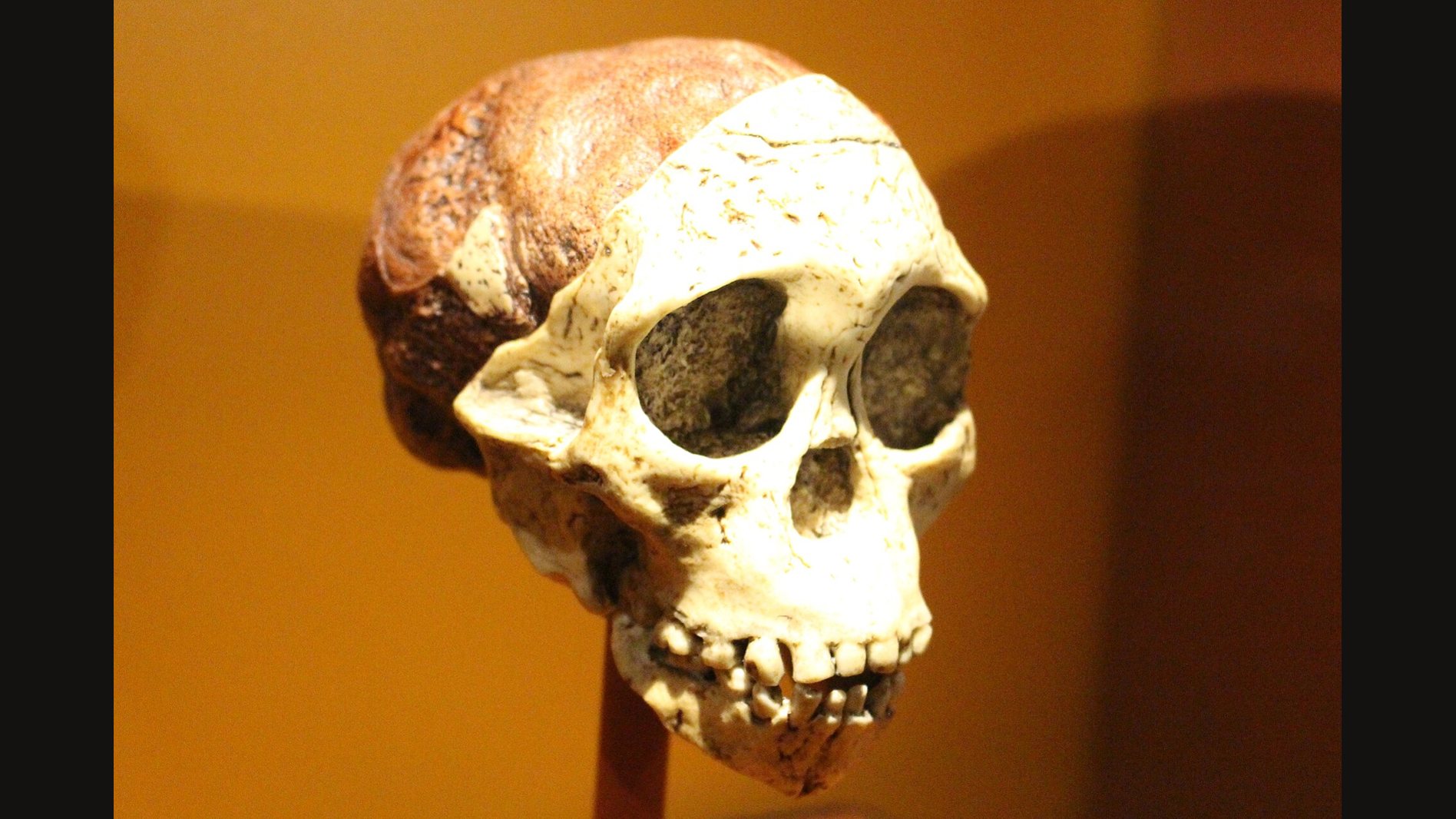
The Taung Child is the fossil face, lower jaw and natural brain cast of a child who was about three years old, a young member of the species Australopithecus africanus. Quarry workers exposed it near Taung, South Africa, in late 1924, and the anatomist Raymond Dart named it in the journal Nature on 7 February 1925. The fossil is commonly dated to about 2.8 million years ago. The leading explanation for the child's death is that a large bird of prey, probably similar to a crowned hawk eagle, killed the child. It mattered because it pointed the search for human ancestors toward Africa, decades before most experts were ready to agree.
A skull from a limestone quarry
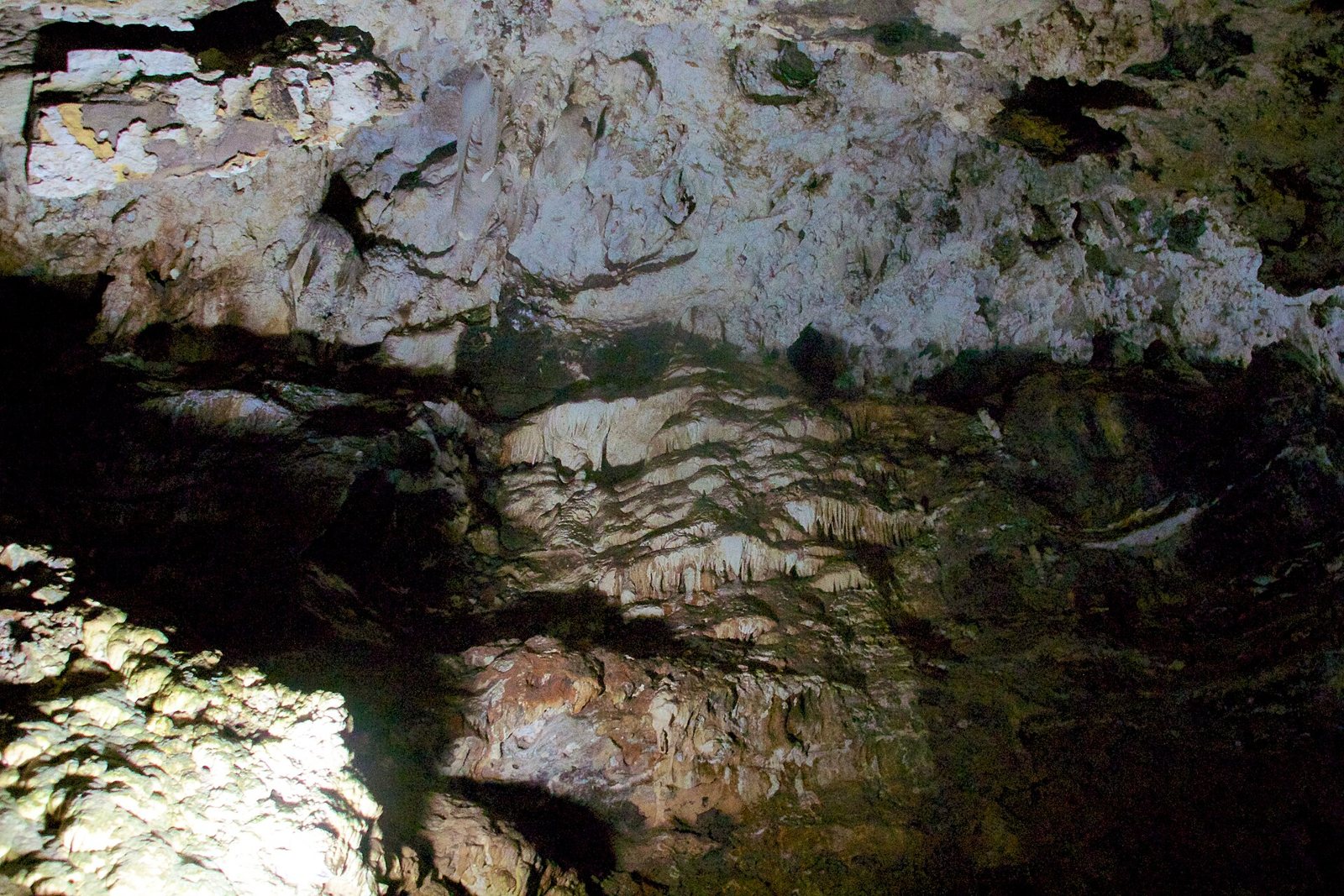
The Taung Child did not come from a planned dig. In late 1924, workers at the Buxton Limeworks near Taung, then in Bechuanaland and now in South Africa's North West Province, exposed a fossil primate skull in the rock (Dart and the Taung juvenile, Biology Letters).
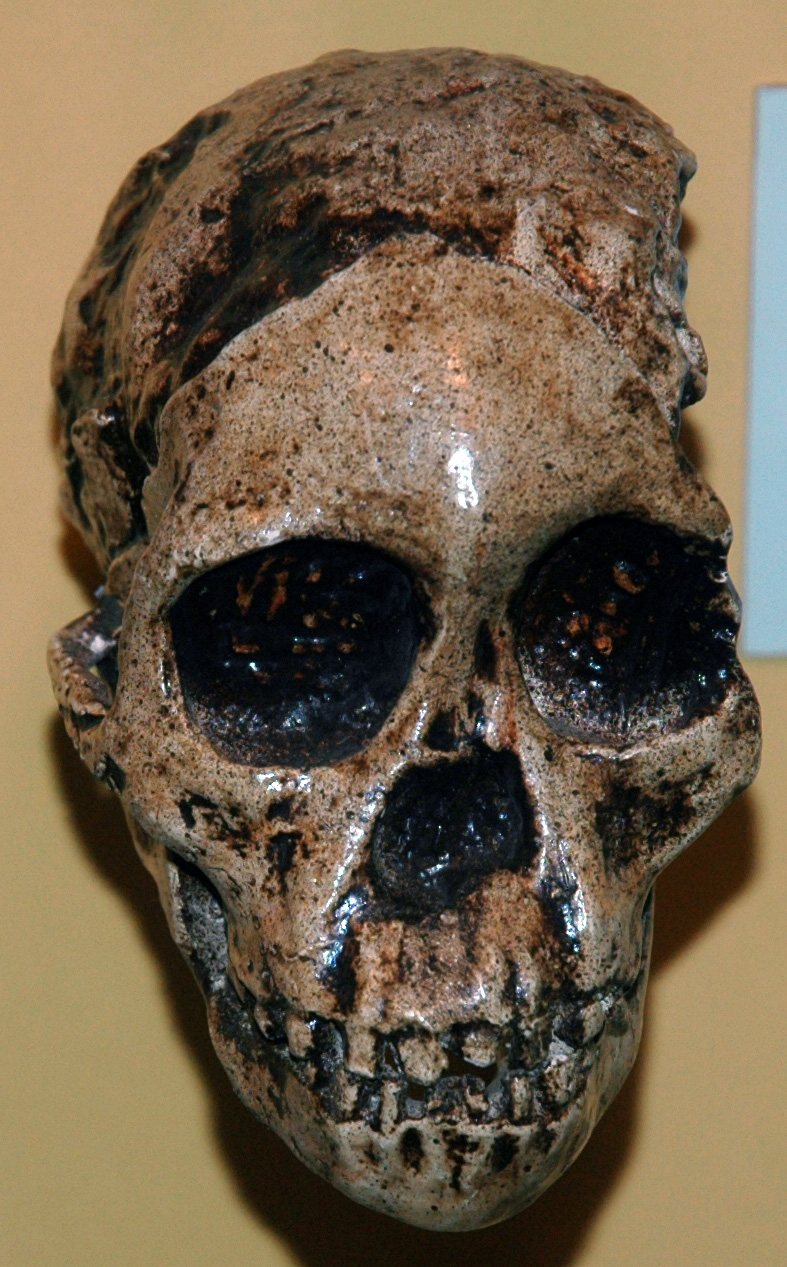
It reached Raymond Dart, an anatomist at the University of the Witwatersrand in Johannesburg, through a chain of people. Josephine Salmons, a Wits student, and contacts in quarrying and geology, including Robert Young, helped bring fossils from the quarry to Dart's attention. Dart then removed the surrounding rock himself. As the rock came away, he recognized two things at once: a small face with its teeth, and a natural endocast, a stone cast of the inside of the braincase (Dart's 1925 Nature paper).
Where was the Taung Child found? In that limestone quarry near Taung, in what is now South Africa's North West Province. It is a reminder that some of the most famous fossils in the world were spotted by working people doing an ordinary job.
Dart's bold paper in Nature
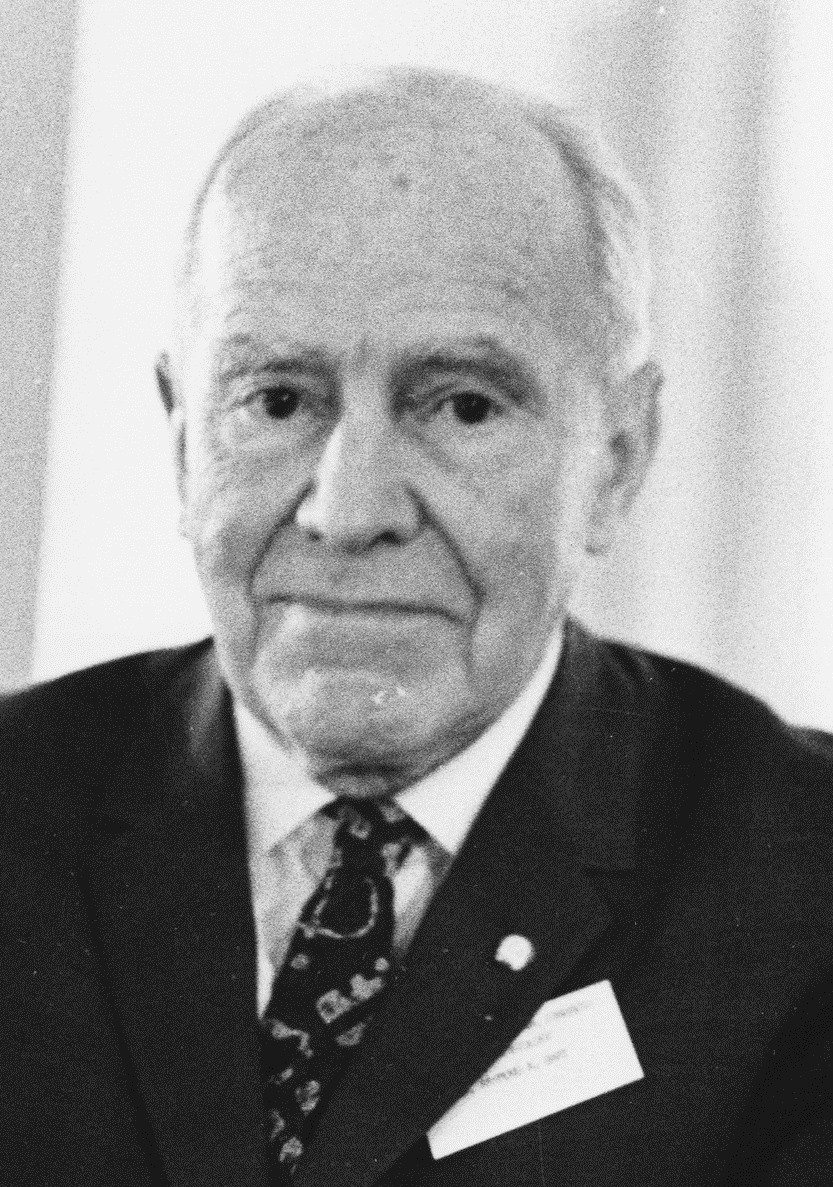
Dart moved fast. On 7 February 1925, only weeks after studying the fossil, he published "Australopithecus africanus: The Man-Ape of South Africa" in Nature. He described it as a new genus and species, an ape-like creature with human-like features, and argued that it belonged near the human line (Nature). The child became the type specimen, the reference fossil for the whole species.
It was a big claim built on a small skull, and the scientific world was not ready for it.
The Taung Child, from quarry to eagle
Tap or hover a step to follow the order.
Late 1924
Quarry workers expose a fossil skull at a limestone quarry near Taung, and it reaches Raymond Dart.
7 February 1925
Dart publishes "Australopithecus africanus: The Man-Ape of South Africa" in Nature.
1930s to 1940s
Robert Broom's South African finds strengthen Dart's interpretation.
1953 onward
The exposure of the Piltdown fraud removes a major obstacle to accepting an African origin for human evolution.
1995
Lee Berger and Ron Clarke propose that an eagle was involved in collecting the bones at Taung.
2006
Berger reports damage in the eye sockets matching the damage crowned hawk eagles leave on monkey skulls.
Why the experts said no for decades
Most established authorities rejected Dart's interpretation for more than twenty years. Historians of science, including Goran Štrkalj and Katarzyna Kaszycka in the South African Journal of Science, point to several reasons that worked together (Štrkalj and Kaszycka).
The fossil was a child, and critics doubted that a juvenile could show what the adult of its kind looked like. Its brain was small. It came from Africa, when many researchers expected the earliest humans to turn up in Europe or Asia. And the most influential fossil of the day, Piltdown Man from England, seemed to show that human evolution began with a large brain, the opposite of what Taung suggested. Sir Arthur Keith, one of the leading critics, treated Taung as an extinct ape or argued that a child could not reveal the adult form (P. V. Tobias, history of the Taung find).
Dart had an ally in Robert Broom, who supported him and kept looking. Adult Australopithecus africanus fossils from Sterkfontein, especially Broom's adult skull of 1947, strengthened the case that Taung represented a real, distinct kind of early hominin. Then in 1953 Piltdown was exposed as a fraud, and a major obstacle to accepting an African origin for human evolution fell away (Metopic suture of Taung). The full story of that hoax is in our piece on Piltdown Man.
Acceptance came gradually. Even today, the exact place of Australopithecus africanus in the human family tree is still debated.
A child of about three
The Taung Child was about three years old at death. That estimate comes from the teeth, especially the development of the first permanent molars, along with other dental evidence (Smithsonian Human Origins Program). Dental studies have produced estimates around 3.3 years, and one study by Lacruz, Ramirez Rozzi and Bromage estimated 3.73 to 3.93 years from the development of the first molar (Lacruz, Ramirez Rozzi and Bromage).
Our story on what bones tell archaeologists covers how specialists read age from a skeleton.
How did the Taung Child die?
The Taung Child was probably killed by a large predatory bird. That is a supported scientific hypothesis, built from careful comparison, and it is the leading explanation today.
The idea began in 1995, when Lee Berger and Ron Clarke studied the other animal bones from the Taung deposit. The collection was unusual, and the damage on the bones suggested that an eagle had been involved in gathering them (Berger and Clarke 1995). In 2006, Berger went back to the child's skull itself. In the American Journal of Physical Anthropology he reported puncture-like damage on the floors of the eye sockets that closely matched the talon damage found on monkeys killed by crowned hawk eagles. He concluded that a bird of prey was probably responsible for the child's death (Berger 2006). Further work by Berger and McGraw in 2007 added more evidence for eagle predation (Berger and McGraw 2007).
It is a sad end for a small child, and a striking one. It also says something about the world these early hominins lived in, where a three-year-old could be in danger from the sky.
How old is the fossil?
The Taung Child is commonly described as about 2.8 million years old. The dating is less tidy than that single number suggests. In 1993, McKee's study of the animal fossils in the deposit placed it in a probable range of about 2.6 to 2.8 million years. Later biochronological work, which also dates a deposit by the animals in it, has proposed younger estimates, including about 2.58 million years (Smithsonian Human Origins Program; Vermeesch, Geochronology of Taung).
There is no direct radiometric date for the skull itself, and the geology of the quarry is complicated. So, the fair answer to "How old is the Taung Child?" has two parts: the child was about three when they died, and the fossil is roughly 2.6 to 2.8 million years old, commonly rounded to 2.8. For how scientists date bones in general, see our story on how old bones are dated.
The brain in stone
The natural endocast is one of the things that makes this fossil so special. Over time, sediment filled the inside of the child's braincase and hardened, keeping the approximate shape of the brain and some of the markings its surface left on the bone. It holds no brain tissue, and it cannot prove what the child could think or do (Interpreting sulci on hominin endocasts).
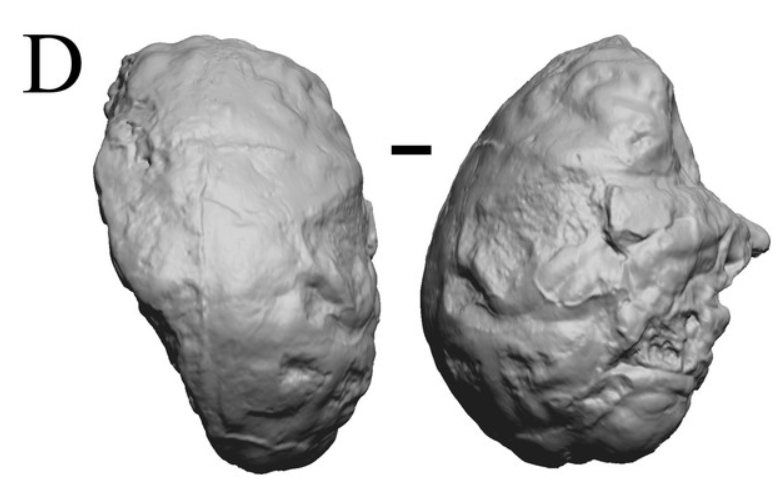
Dart read a lot into it. He used its rounded profile and what he took to be its grooves, called sulci, to argue that the brain had begun to reorganize in a human-like way despite its small, ape-sized volume. That reading became one of the long arguments of the field. Researchers have disagreed about the position of one groove in particular, the lunate sulcus. Dean Falk's 1980 reanalysis found several of the patterns more ape-like (Falk 1980), while Falk and colleagues have since argued that parts of the endocast show human-like patterns. Recent comparative work reports both features associated with humans and features associated with chimpanzees (Cofran and colleagues).
The secure takeaway is that the Taung Child had a small brain with a mix of ape-like and hominin features, and that its endocast is still argued over a century after Dart first held it.
Where is the Taung Child skull now?
The original Taung Child fossil is held by the University of the Witwatersrand in Johannesburg, the same university where Dart studied it in 1924 and 1925 (Smithsonian collections record). Museums elsewhere, such as the Smithsonian in Washington and Mexico's Museo Nacional de Antropología, show images or reproductions of it. Wits is also home to later South African finds, including the fossils of Homo naledi.
If you hope to see the original or a display about it, confirm display and access details with the Evolutionary Studies Institute or the Origins Centre at the University of the Witwatersrand before you go.
Questions people ask about the Taung Child
The questions people ask most about the Taung Child have short answers.
What is the Taung Child?
The Taung Child is the fossil partial skull and lower jaw of a young Australopithecus africanus, found near Taung, South Africa, in 1924. Raymond Dart named it as the type specimen of the species in 1925, and it preserves the face, teeth and a natural endocast.
How did the Taung Child die?
The child was probably killed by a large predatory bird, similar to a crowned hawk eagle. Lee Berger reported in 2006 that damage in the eye sockets matches talon damage on monkeys killed by these eagles, which makes it a well-supported hypothesis.
How old is the Taung Child?
The child was about three years old at death, with dental estimates around 3.3 years. The fossil is commonly dated to about 2.8 million years ago, within studies that range from about 2.6 to 2.8 million and as young as about 2.58 million.
Where was the Taung Child found?
It was found in 1924 at the Buxton Limeworks, a limestone quarry near Taung, in what is now South Africa's North West Province. Quarry workers exposed it, and it reached Raymond Dart at the University of the Witwatersrand.
Who found the Taung Child?
Quarry workers at Taung exposed the skull, and Raymond Dart identified and named it in 1925. Josephine Salmons, a Wits student, and geologist Robert Young helped bring the fossils to Dart.
Where is the Taung Child skull now?
The original is held by the University of the Witwatersrand in Johannesburg. Other museums show images or reproductions.
Was the Taung Child a human ancestor?
The Taung Child belongs to the human family, but its exact place in the family tree is still debated. It showed that a small-brained hominin lived in Africa about 2.8 million years ago.
Taung Child check
Answer every question to check.
Where to go next
The Taung Child sits at the start of a long line of famous African fossils. For an australopith from Ethiopia with much more of her skeleton intact, read about Lucy, and for the fraud that held Taung back, see Piltdown Man. The bigger story of the earliest skulls is in our piece on the oldest human skull, and our human skull facts cover the modern skull for comparison.
Terms in this story
Tap a term to see what it means.
Australopithecus africanus. The species Raymond Dart named from the Taung Child in 1925, described in his paper as the man-ape of South Africa.