

No. 144
Where Is the Head of John the Baptist? The Relics and Their Churches
Several churches and shrines claim to hold all or part of the head of John the Baptist. The best known are the shrine inside the Great Umayyad Mosque in Damascus, Amiens Cathedral in France, the church of San Silvestro in Capite in Rome, and a reliquary associated with the Munich Residenz in Bavaria. Orthodox Christian tradition also remembers three separate findings of the head, linked with Jerusalem, Emesa (today's Homs, in Syria), Comana and Constantinople. The Gospels do not say where the head went after John's death, and no single place is accepted by every tradition. Several of these relics are, by their keepers' own description, different parts of a skull.
That is why the question has more than one answer. Each place has its own history, its own way of describing what it holds, and its own community that venerates it. They are set out here one by one, each in the words of the church or shrine that keeps it, with what historians and scientists have said beside it.
What the Gospels say, and the feast of 29 August
The story begins in two Gospels. Mark 6:14-29 and Matthew 14:1-12 tell how Herod Antipas imprisoned John, how Herodias held a grievance against him, and how, at a banquet, Herod swore an oath to Herodias's daughter, Salome, who asked for John's head. John was executed, and his disciples came and buried his body (Mark 6:14-29, Bible Gateway). The Gospel accounts stop there. They say what happened to his body; they do not say where his head was kept afterwards.
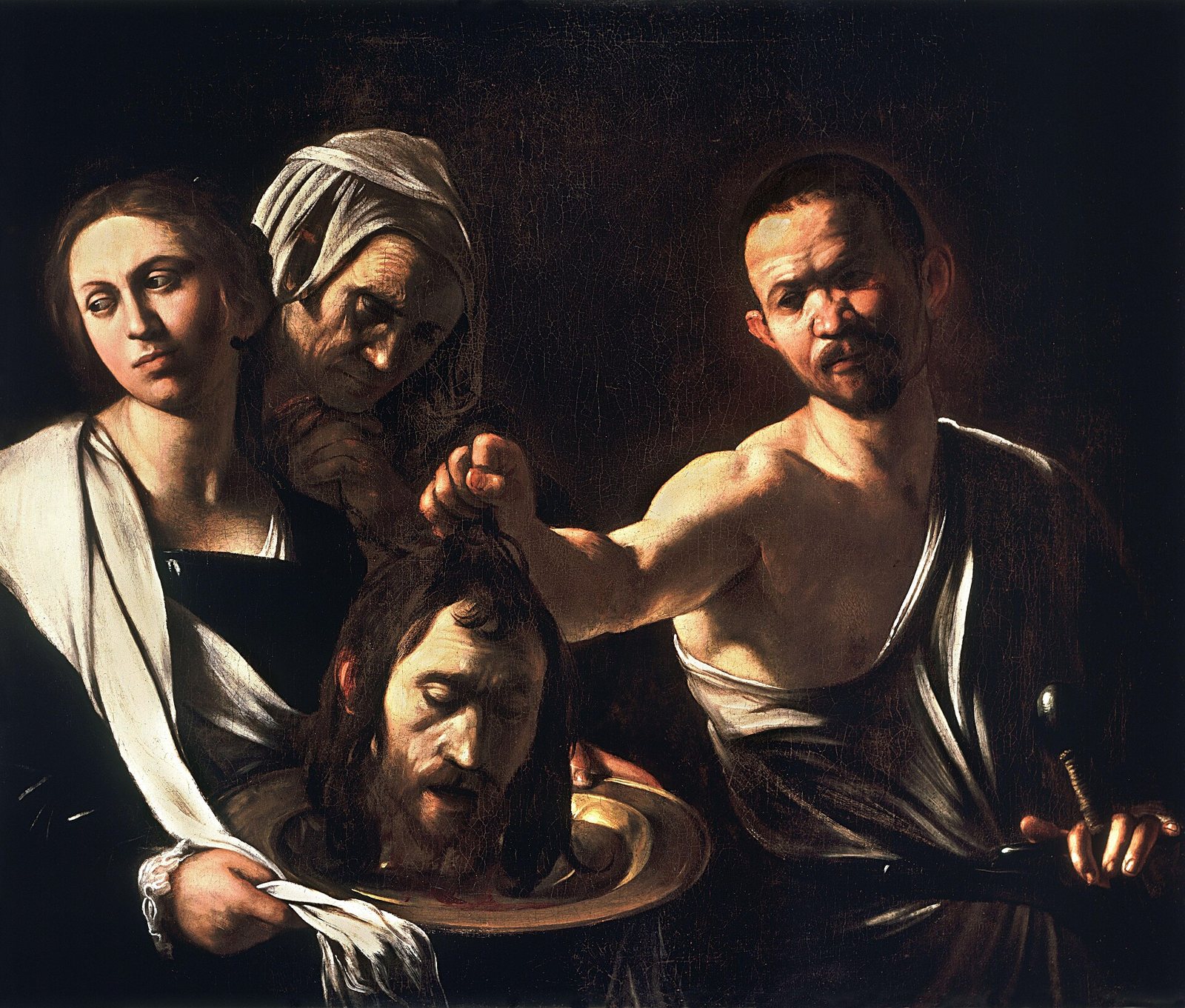
The Church still marks his death. The Roman Catholic feast, the Memorial of the Passion or Beheading of Saint John the Baptist, falls on 29 August (Vatican News). The Vatican connects the date with ancient observances in fifth-century France and sixth-century Rome, and with traditions about the finding of John's head (Vatican State). The scene also became a subject for painters; Caravaggio's *Salome with the Head of John the Baptist*, now in the National Gallery in London, is one example, though a painting tells us about the artist's world, not about where the relic went.
The shrine in the Umayyad Mosque, Damascus
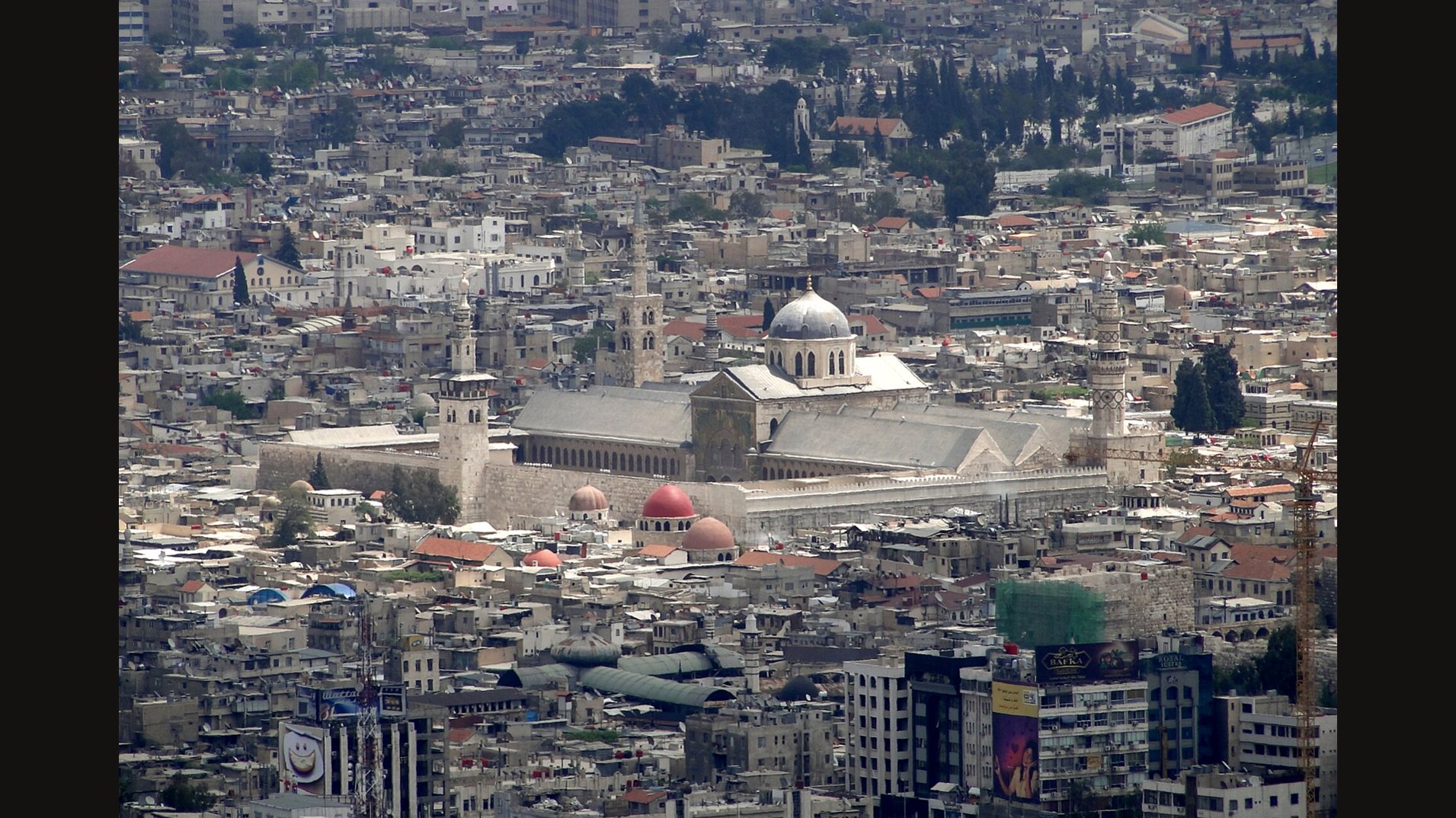
The Great Umayyad Mosque in Damascus stands on a site that was a temple and later a Christian church. The French Ministry of Culture's archaeological resource on the mosque says the fourth-century church there was associated with John the Baptist, and that relics of his head were placed in an aedicule, a small shrine. When Caliph al-Walid I turned the site into a mosque in 705, the shrine stayed inside the prayer hall (French Ministry of Culture).
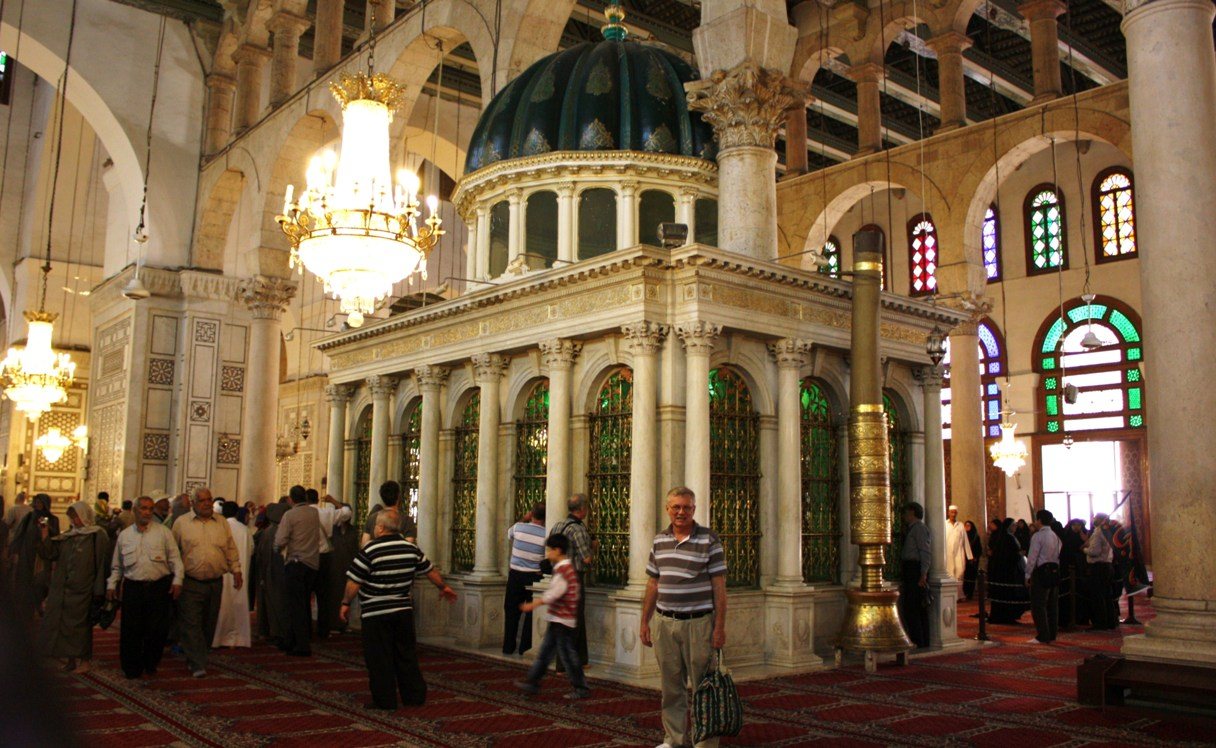
It is still there. In Islamic tradition, John the Baptist is the prophet Yaḥyā, and the shrine is identified with him. Both Muslim and Christian visitors respect it, so the head of John the Baptist is honoured there by two faiths under one roof.
Amiens Cathedral and the face from Constantinople
Amiens Cathedral, in France, states that its relic is the face, the front portion of John the Baptist's head, and that it arrived from Constantinople in 1206 (Amiens Cathedral). The French Ministry of Culture's record gives the details: Walon de Sarton brought it to Amiens after the Fourth Crusade and presented it to Bishop Richard de Gerberoy on 17 December 1206. The present reliquary combines medieval rock crystal with nineteenth-century metalwork, and the French heritage record describes the object itself as the anterior part of a human cranium, the front of a skull (French Ministry of Culture, Amiens reliquary).
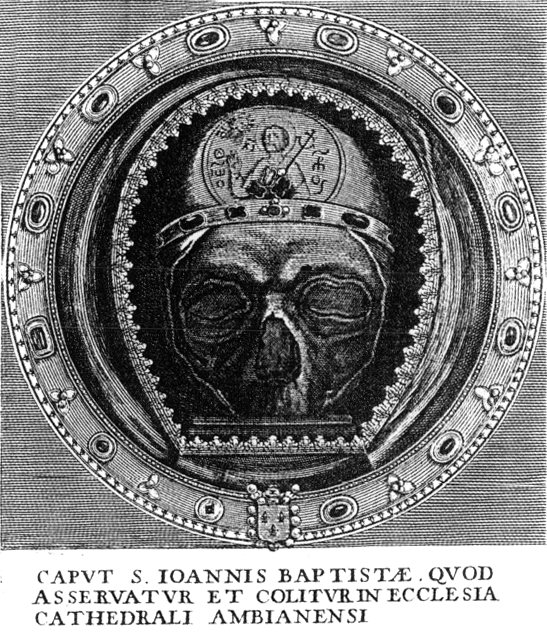
The relic gave Amiens its own cult of John the Baptist. The Metropolitan Museum of Art holds a fifteenth-century alabaster plaque showing John's head as it was venerated at Amiens, a piece of devotional art rather than the relic itself (The Met).
Science has also looked at the Amiens relic. The Institut Faire Faces reports that a radiographic analysis in 1959 characterized it as human, from an adult man who died in his thirties, with a broad estimated date range and a possible Palestinian origin (Institut Faire Faces). That analysis did not establish that the man was John the Baptist. The institute has since proposed a wider multidisciplinary study, including imaging, biology, dating and genetics; it is a proposal, and its results are not part of this story yet.
San Silvestro in Capite, Rome
In Rome, the church of San Silvestro in Capite states that its relic has been venerated there since at least the late twelfth century, with the name "de Capite" appearing by about 1192 or 1194 (San Silvestro in Capite).
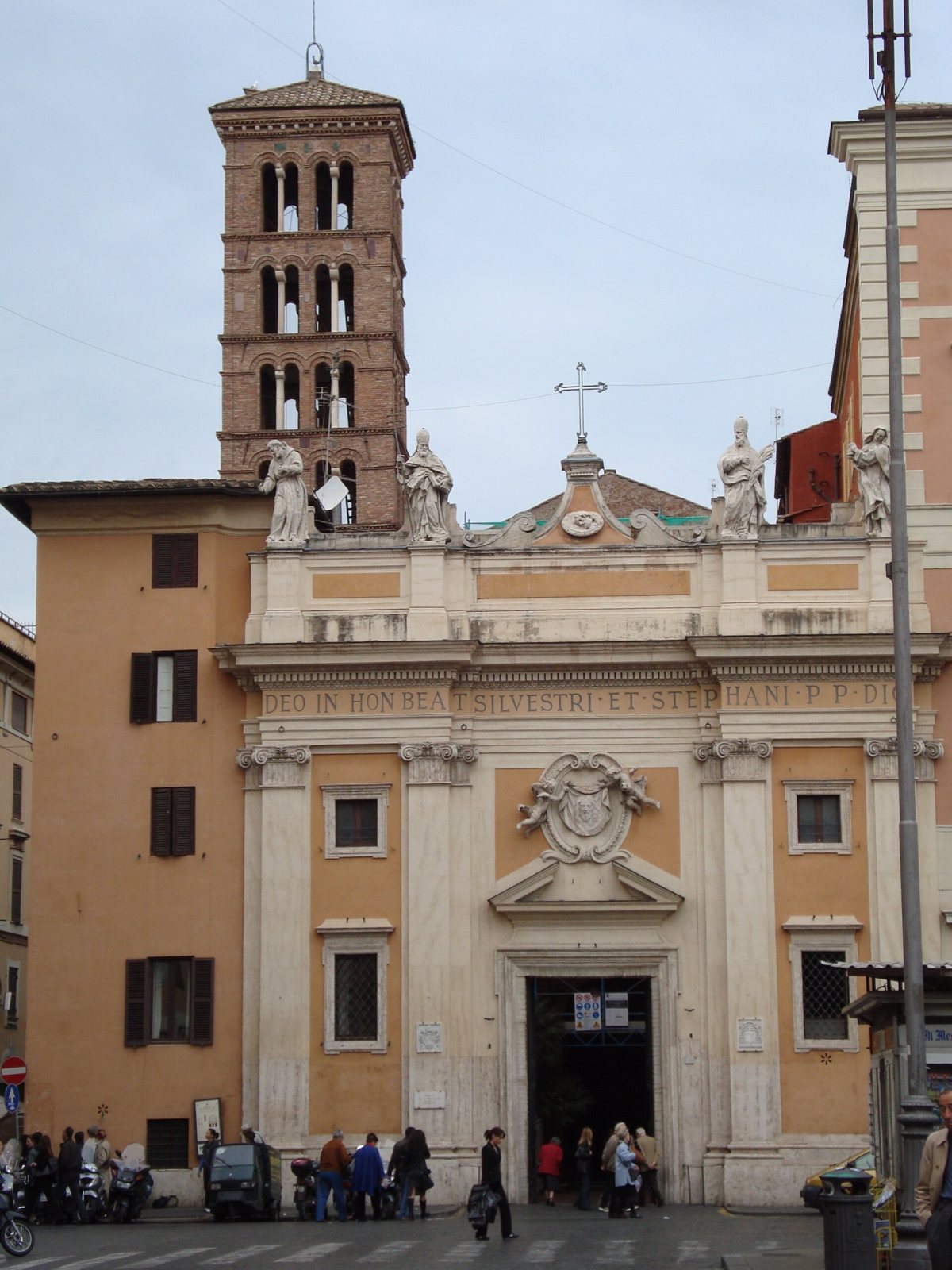
The church is open about what it holds and what it does not know. It describes the relic as the top part of a skull fitted into a wax skull, and it acknowledges that the relic's earlier provenance is not currently established. Its tradition connects the relic with a head once venerated at Constantinople, and its account says that in 873 the head was being venerated at the Stoudios monastery there. It also draws a clear line between its own fragment and the anterior cranium kept at Amiens, so the two churches are describing different parts.
The church quotes the historian Ilaria Toesca, who treated the precious reliquary as evidence of how highly the relic was valued, not as biological proof of whose it was. That is a useful way to read many relics: the craft and care around them tell you how much they meant to the people who kept them.
The Munich Residenz and the Orthodox findings
The Residenz in Munich, cared for by the Bavarian Palace Administration, preserves a major collection of reliquaries associated with the Counter-Reformation. The administration says the collection was formed from 1577 onward, with papal permission, and that about sixty reliquaries survive (Bavarian Palace Administration). Secondary accounts of the collection identify one reliquary as holding what the Wittelsbach rulers believed was John the Baptist's head. The Residenz's own page describes the collection as a whole and does not make that claim for the John relic itself, so it is best understood as what the Wittelsbachs believed, as those accounts report.
Orthodox Christianity remembers the head through a series of findings. The Greek Orthodox Patriarchate of Antioch describes the first finding as taking place in the middle of the fourth century near Jerusalem, through a revelation to two monks, after which the head was taken to Emesa, modern Homs, in Syria. It describes a second finding around 430, in the time of Bishop Uranius of Emesa (Greek Orthodox Patriarchate of Antioch).
A third finding is commemorated in Orthodox calendars: the recovery of the head from concealment at Comana and its return to Constantinople, traditionally dated to the ninth century. The Greek Orthodox Archdiocese of America keeps a dedicated observance for the Third Finding (Greek Orthodox Archdiocese of America). Other traditions name fragments or associated relics in Jerusalem, Constantinople, Antioch and elsewhere. These are distinct local traditions, each kept by its own community, rather than links in one continuous chain that history can follow from start to finish.
Why one saint has several heads
If you are wondering how one man could leave so many relics, the historian Patrick J. Geary gives the most helpful answer. He argues that medieval communities did not value relics only as objects. They treated them as sources of identity, protection, healing, prestige, pilgrimage, donations and political legitimacy. Between roughly the eighth and twelfth centuries, relics were divided, translated (moved from one church to another), exchanged, purchased, stolen, and sometimes acquired through stories of a miraculous finding. Their movements often followed political and military networks, including the Crusades. A relic's value depended on the community recognizing what it was and what it could do (Patrick J. Geary, "Sacred Commodities").
Amiens is a clear example. Its account of Walon de Sarton bringing the relic from Constantinople in 1206 shows how medieval Christians could describe the removal of relics from conquered Eastern churches as a "pious theft," the subject of Geary's book *Furta Sacra* (JSTOR). Modern historians also read such transfers in terms of conquest, competition, economics and institutional power (Amiens relic history).
So, how many heads of John the Baptist are there? There is no agreed count. Several institutions claim the head or parts of it, and the best-known claims often concern different portions: the front of a skull at Amiens, the top of a skull at San Silvestro, and the head shrine in Damascus. Medieval writers already knew of competing claims, and later traditions added more fragments and reliquaries. Mary Magdalene's relics have a similar history of rival claims, told in our story on Mary Magdalene's skull at Saint-Maximin.
The claims side by side
Tap or hover a row to highlight it.
| Place | What the institution or tradition says | Dated detail |
|---|---|---|
| PlaceUmayyad Mosque, Damascus | What the institution or tradition saysThe head of John the Baptist, the prophet Yaḥyā in Islamic tradition, rests in a shrine in the prayer hall | Dated detailThe site became a mosque in 705 |
| PlaceAmiens Cathedral, France | What the institution or tradition saysThe face, the anterior part of the cranium, arrived from Constantinople | Dated detailPresented to Bishop Richard de Gerberoy on 17 December 1206 |
| PlaceSan Silvestro in Capite, Rome | What the institution or tradition saysThe top part of a skull, fitted into a wax skull, is venerated as John's head | Dated detailVenerated by the late twelfth century |
| PlaceMunich Residenz, Bavaria | What the institution or tradition saysSecondary accounts link one reliquary with the head the Wittelsbach rulers believed they held | Dated detailRelic collection formed from 1577 |
| PlaceOrthodox tradition | What the institution or tradition saysThe head was found, hidden and moved in successive episodes | Dated detailFirst and second findings linked with Jerusalem and Emesa; third with Comana and Constantinople |
The head of John the Baptist through the centuries
Tap or hover a step to follow the order.
Gospel period
Mark 6 and Matthew 14 describe John's execution and the burial of his body by his disciples.
Middle of the fourth century
Orthodox tradition places the first finding of the head near Jerusalem, after a revelation to two monks, and its move to Emesa.
Around 430
The Antiochian tradition places a second finding at Emesa, in the time of Bishop Uranius.
705
Caliph al-Walid I turns the Damascus site into a mosque; the John shrine stays in the prayer hall.
873
San Silvestro's account says the head was being venerated at the Stoudios monastery in Constantinople.
Ninth century, by tradition
The third Orthodox finding, at Comana, and the head's return to Constantinople.
About 1192 or 1194
The name "de Capite" appears for San Silvestro in Rome.
17 December 1206
Walon de Sarton presents the Amiens relic to Bishop Richard de Gerberoy.
1577
The Munich Residenz relic collection begins to take shape.
Head of John the Baptist FAQ
These are the questions people ask most often about the relics.
Where is the head of John the Baptist now?
Several places claim all or part of it, chiefly the Umayyad Mosque in Damascus, Amiens Cathedral in France, San Silvestro in Capite in Rome and a reliquary associated with the Munich Residenz. Orthodox tradition also connects the head with Jerusalem, Emesa, Comana and Constantinople. Spanish speakers ask the same question as "¿Dónde está la cabeza de Juan el Bautista?", and the answer is the same: there is no single place accepted by every tradition.
How many heads of John the Baptist are there?
There is no agreed count, because the claims usually concern different parts of a head rather than whole skulls. It is more accurate to say that several institutions claim the head or parts of it than to give a number.
Is the head of John the Baptist in Damascus?
The Umayyad Mosque in Damascus keeps a shrine to John the Baptist, the prophet Yaḥyā, in its prayer hall, where relics of his head were placed in the fourth-century church that stood on the site. The shrine has remained there since the church became a mosque in 705.
What is the Amiens head of John the Baptist?
It is the front part of a human skull, which Amiens Cathedral venerates as John the Baptist's face, brought from Constantinople after the Fourth Crusade and presented to the bishop on 17 December 1206. A 1959 radiographic analysis described it as an adult man who died in his thirties, without establishing who he was.
Is John the Baptist's head in the Munich Residenz?
The Residenz holds a large collection of reliquaries formed from 1577, and secondary accounts say one of them held what the Wittelsbach rulers believed was John the Baptist's head. The Residenz itself does not make that claim for the relic.
Test yourself on the head of John the Baptist
How well do you know the John the Baptist head relics?
Answer every question to check.
One saint, many keepers
The head of John the Baptist is less a single object than a set of traditions that grew up wherever communities believed they held a part of him: in a mosque in Damascus, a cathedral in Amiens, a Roman church named for the head, a palace collection in Munich and the Orthodox memory of three findings. Each keeper describes its relic in its own words, and several of them say plainly that they hold a fragment. Historians like Patrick Geary explain how relics travelled; scientists have examined at least one of them closely, without naming its owner. None of that takes anything away from the faith of the people who pray before these relics. If you want to see how other churches have kept the bones of saints, our stories on skulls in Christianity, the Saint Valentine skull, the catacomb saints and the Otranto Cathedral skulls follow those traditions further.
Terms in this story
Tap a term to see what it means.
Relic. The remains of a saint, or an object connected with one, kept and honoured by a religious community.
---