

No. 118
Why Did the Celts Keep Severed Heads? The Celtic Head Cult and the Evidence
Some Iron Age communities in Gaul really did take, display and even embalm human heads. Greek and Roman writers describe Gauls hanging enemy heads from their horses, nailing them at the entrances of their houses, and keeping the heads of distinguished enemies in cedar oil (Strabo, Geography IV.4.5). In 2018, a chemical study of skull fragments from Le Cailar in southern France showed that some heads there had been embalmed in the 3rd century BCE (Ghezal and colleagues, Journal of Archaeological Science). Why they did it is still argued over. The heads may have been trophies of power and honour, and some may have been kept for protection or in memory of honoured dead, but scholars do not agree that one "head cult" was shared by all Celts.
That is the short answer. The longer one comes from two very different kinds of evidence, the words of outsiders who wrote about the Gauls and the objects and bones the Gauls left behind, and it is worth keeping the two apart.
What the Greek and Roman writers said
Every surviving written account of Celtic heads being cut off and kept was written by Greeks and Romans looking in from outside. None of it comes from the Celts themselves.
The geographer Strabo, writing in the early Roman imperial period, passes on what he learned from the earlier Greek writer Poseidonius. According to Strabo, the northern peoples hung the heads of their enemies from their horses and nailed them up at the entrances of their homes. The heads of "enemies of high repute" were embalmed in cedar oil and shown to visitors, and their owners would not give them back even for a ransom of their weight in gold. Strabo says Poseidonius saw the display himself in many places. He also calls the custom "barbarous and exotic" and says the Romans put a stop to it (Strabo IV.4.5).
Diodorus Siculus, probably drawing on earlier material that included Poseidonius, tells a similar story. In his Library of History he describes Gauls cutting off the heads of fallen enemies and fastening them to their horses, displaying weapons at their houses, and preserving the heads of distinguished enemies in cedar oil. For Diodorus, the heads were trophies of a warrior's military reputation (Diodorus Siculus, Library of History V.29).
Historians read these passages with care. Strabo and Diodorus generalise across different Gaulish communities, periods and regions, and they wrote with a ready-made "barbarian" stereotype in mind. Their accounts show that the custom was reported. They do not show that every Celtic-language community did it, or that every head carried the same meaning. That is why the archaeology has to be read one site at a time.
Le Cailar and the embalmed heads
The most direct evidence comes from Le Cailar, in the Gard region of southern France. Le Cailar was a fortified settlement, lived in from the 6th century BCE into the Roman period. Excavators uncovered fragments of human skulls together with weapons near the inner walls of the settlement and what may have been a gate area, the kind of place where heads could have been put on show (Ghezal and colleagues).
In 2018 Ghezal and colleagues published a chemical study of eleven of those skull fragments in the Journal of Archaeological Science. Using gas chromatography-mass spectrometry, a technique that separates and identifies the molecules left in a sample, they detected markers of conifer resin and aromatic compounds produced by heating in some of the fragments. The authors concluded that some of the heads had been deliberately embalmed. Their results support what the ancient writers described, though they do not show that every head at the site was treated this way. The study places the practice in Transalpine Gaul in the 3rd century BCE, and France's CNRS summarised the work when it was published (CNRS).
These fragments are the remains of real people from Iron Age Gaul, and they are what turned a line in Strabo into something scientists could test. If you are curious how so much can be learned from a few pieces of skull, our story on what bones tell archaeologists is a good companion.
Entremont, the hilltop with the head sculptures
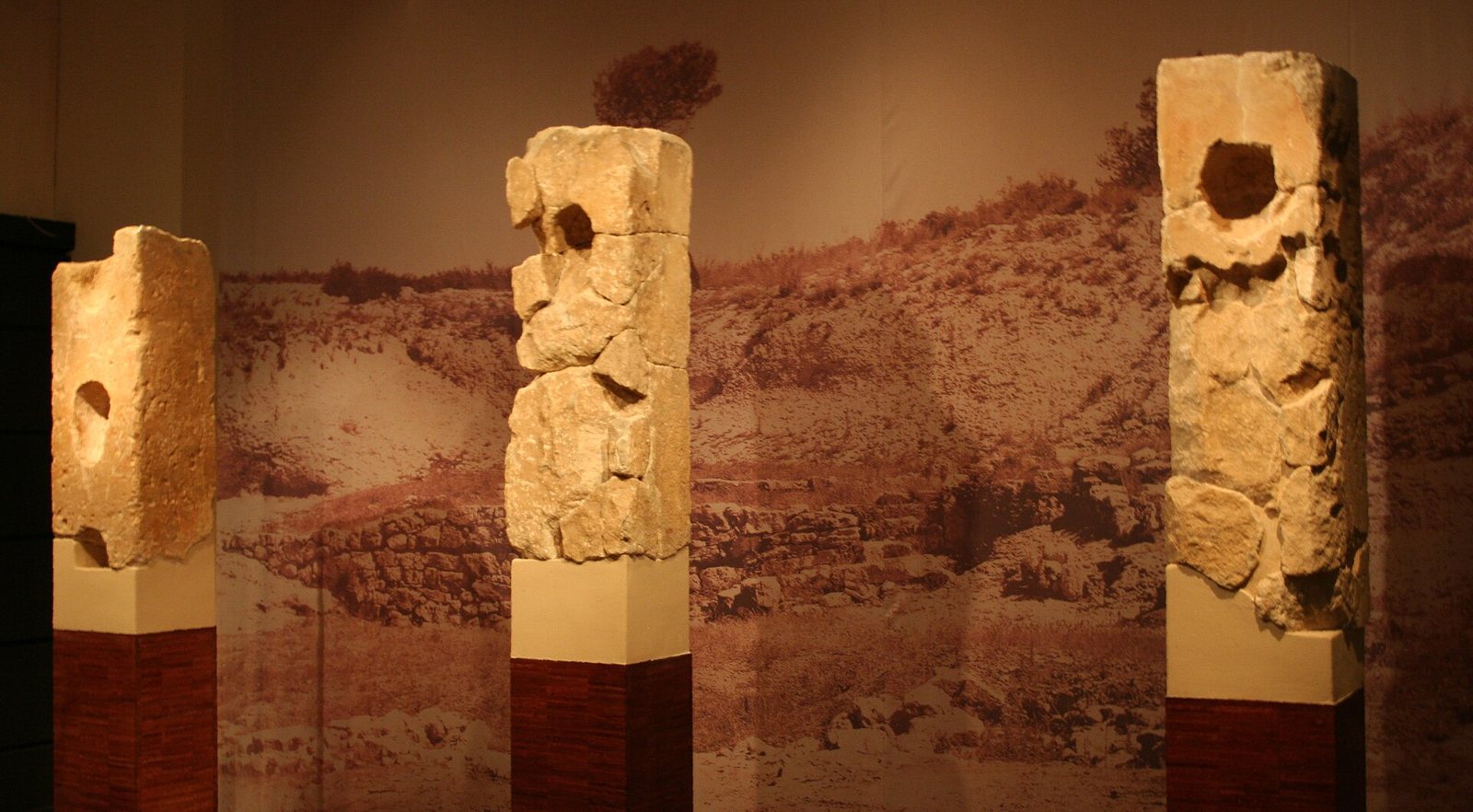
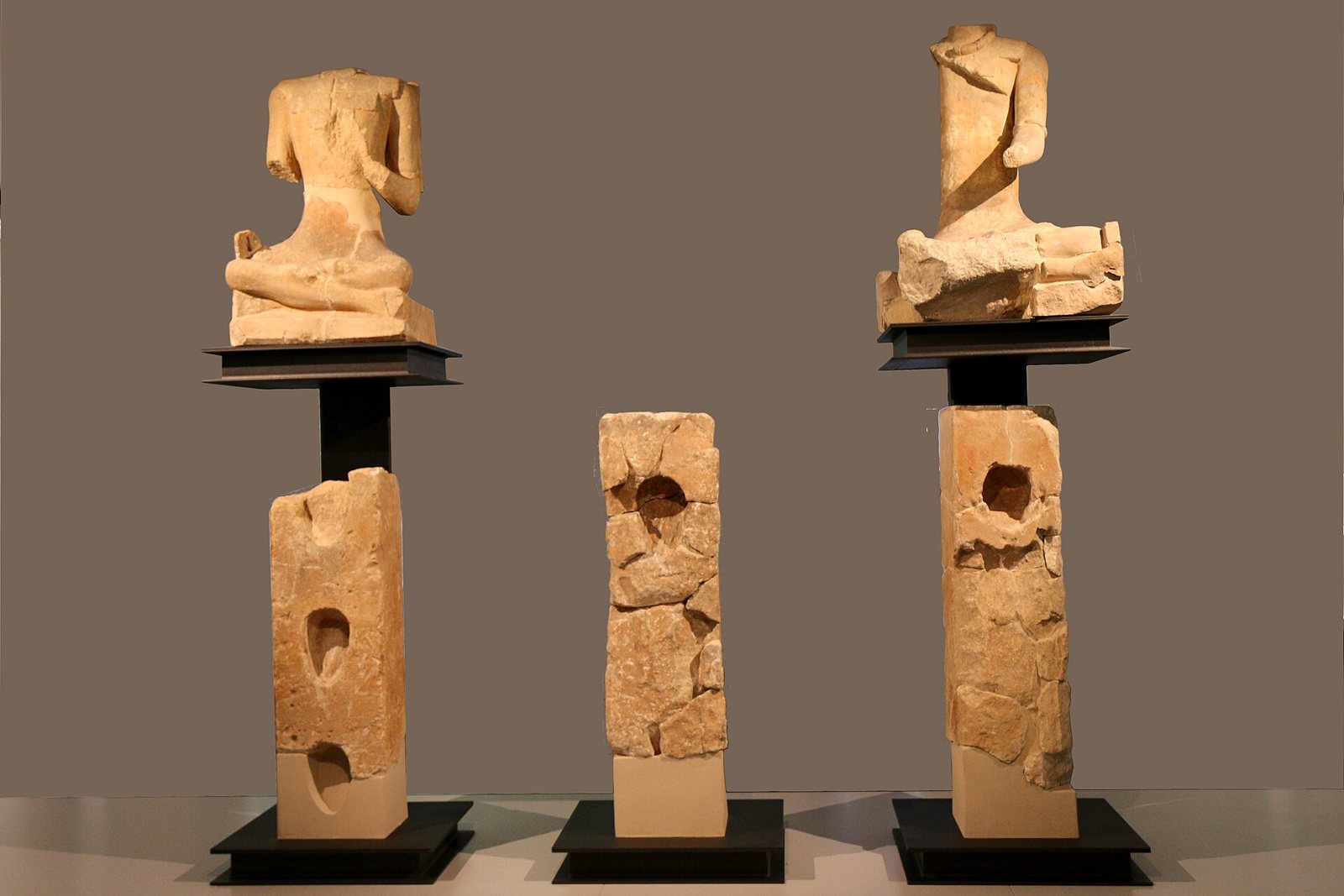
Entremont stands on a plateau near Aix-en-Provence. It was a fortified settlement established around 175 BCE and lived in through the 2nd century BCE (Entremont, Dating the statuary). Its sculptures include seated heroic figures, carvings of human heads, and stone building pieces with recesses shaped to hold heads.
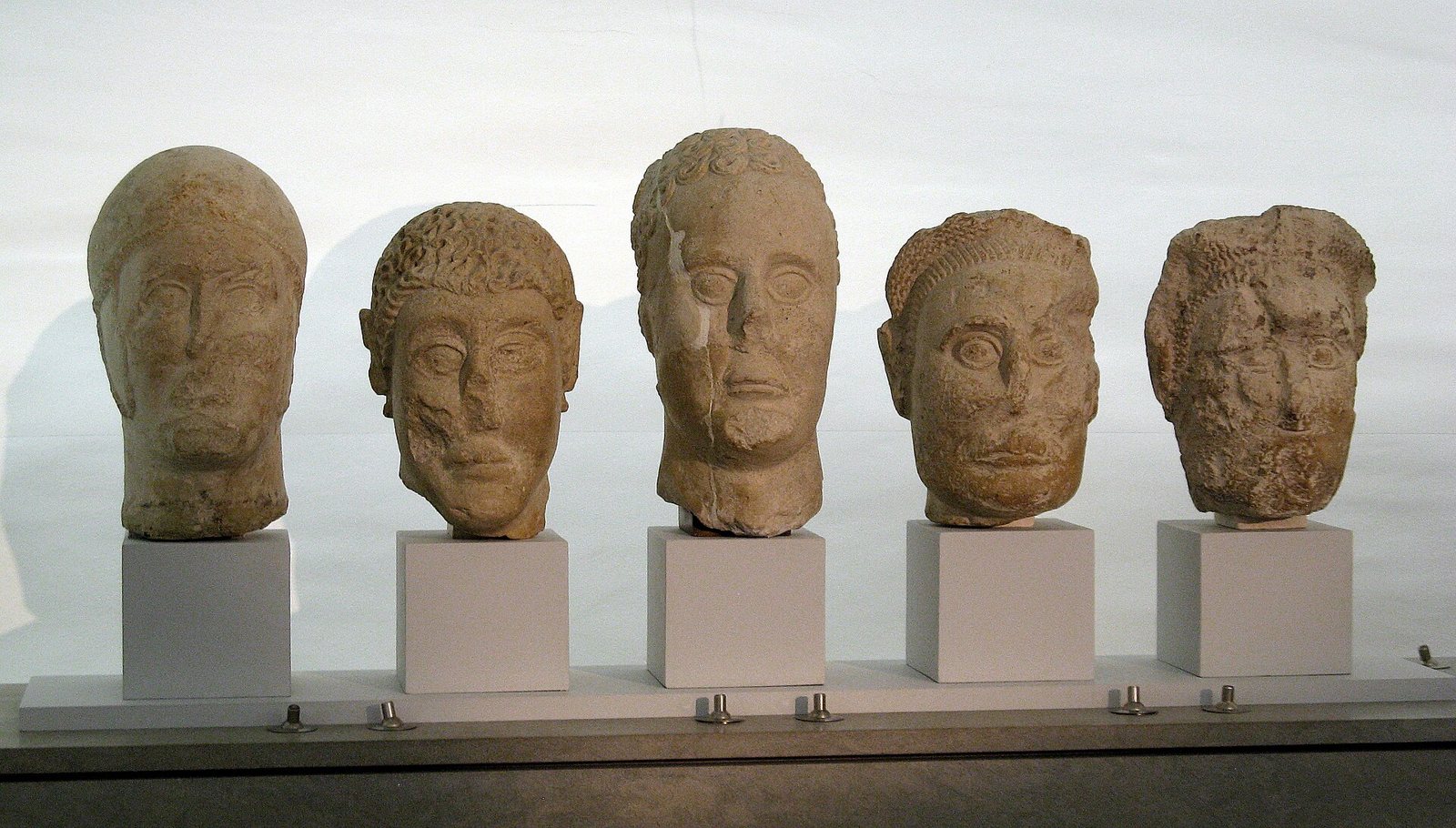
The French Ministry of Culture's Entremont site sets out two readings of these heads. In one, they are enemy trophies, shown off beside the heroes who won them (Entremont, Human trophies). In another, some earlier portico pieces were reliquary holders for honoured or heroic dead, a place to keep the heads of people the community wished to remember (Entremont, A sanctuary before the agglomeration). A proposed regrouping and display of the sculpture in the enlarged settlement dates to about 150 to 140 BCE.
Entremont also comes with a caution. Many of its sculptures were later broken up and reused as building material, and the site itself says a complete reconstruction is impossible. What survives is a set of pieces, not a finished scene.
Roquepertuse, the sanctuary near Velaux
Roquepertuse, near Velaux in southern France, was a Celtic or Celto-Ligurian sanctuary known for its sculpture, its carved building blocks and its imagery of human heads. A renewed study by Boissinot and colleagues dates its main phase to the 3rd century BCE (Boissinot and colleagues, Nouvelles recherches sur le "sanctuaire" de Roquepertuse).
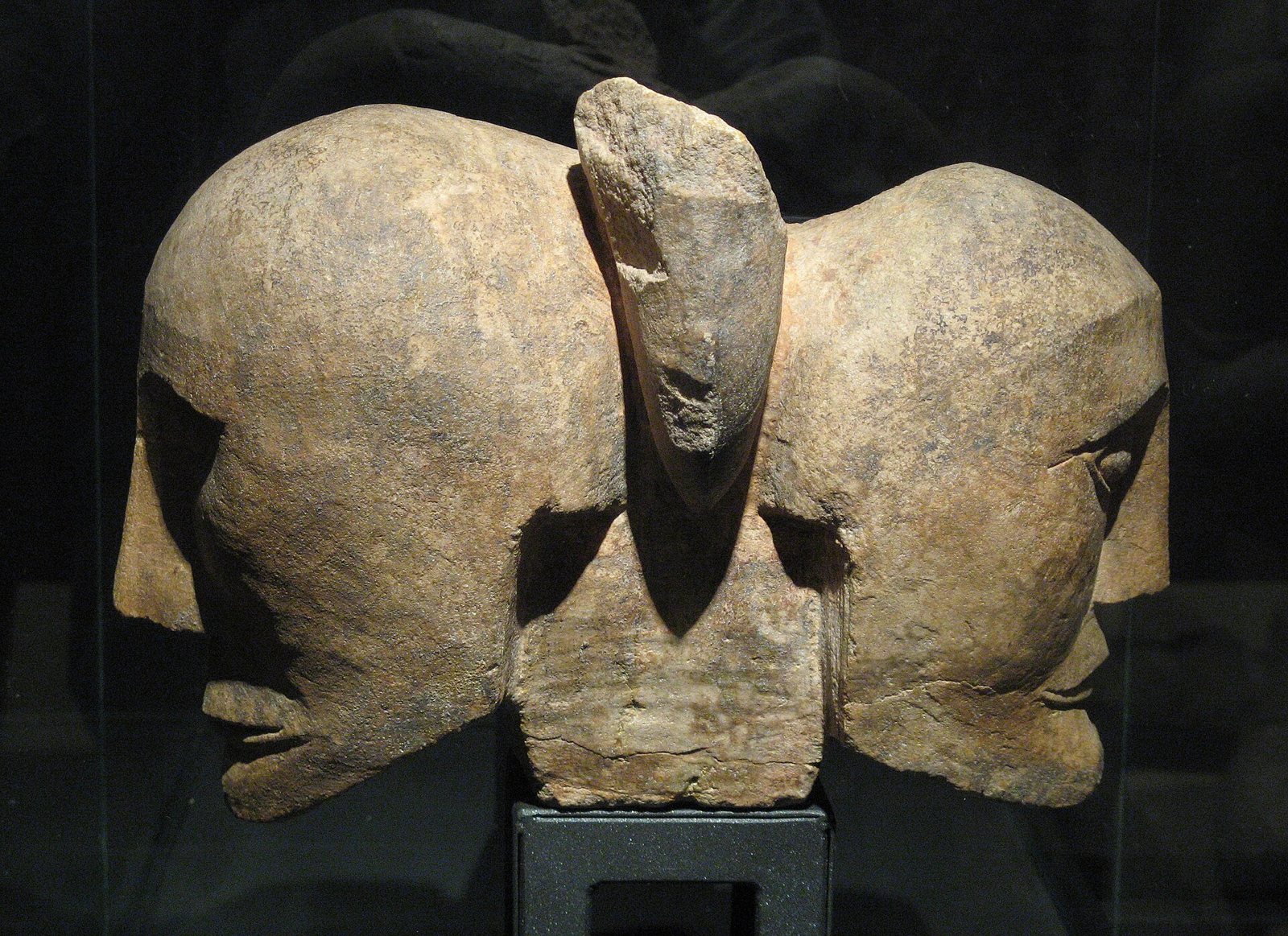
One of its best-known pieces is a sculpture of two heads joined back to back, dated to the 3rd century BCE. The site's meaning has shifted as excavation and reassessment went on, so it is best seen as a sanctuary still being understood, rather than as a simple, fully explained "head cult temple".
Tap or hover a row to highlight it.
| Site | Where | Date given | What is there | How it is read |
|---|---|---|---|---|
| SiteLe Cailar | WhereGard | Date givenSettlement 6th century BCE to Roman period; embalming 3rd century BCE | What is thereSkull fragments with weapons near the inner walls and a possible gate | How it is readSome heads deliberately embalmed, per the 2018 chemical study |
| SiteEntremont | WhereNear Aix-en-Provence | Date givenFounded around 175 BCE; occupied in the 2nd century BCE | What is thereSeated heroic figures, head carvings, pieces with head-shaped recesses | How it is readEnemy trophies, or reliquary holders for honoured dead |
| SiteRoquepertuse | WhereNear Velaux | Date givenMain phase 3rd century BCE | What is thereSculpture, carved building blocks, head imagery, a double-headed sculpture | How it is readA sanctuary whose interpretation has changed with new study |
Stone heads in Britain and Ireland
Carved heads turn up in other Celtic and Celtic-influenced regions too, but a carved head is not automatically a severed head. The National Museum of Ireland describes Ireland's Iron Age stone heads as a varied group of carvings, often with simplified faces, long noses, close-set eyes and stern expressions. It says the proposed "Iron Age head cult" remains a theory, and that the meaning of the motif cannot be boiled down to one explanation (National Museum of Ireland, A Face From The Past).
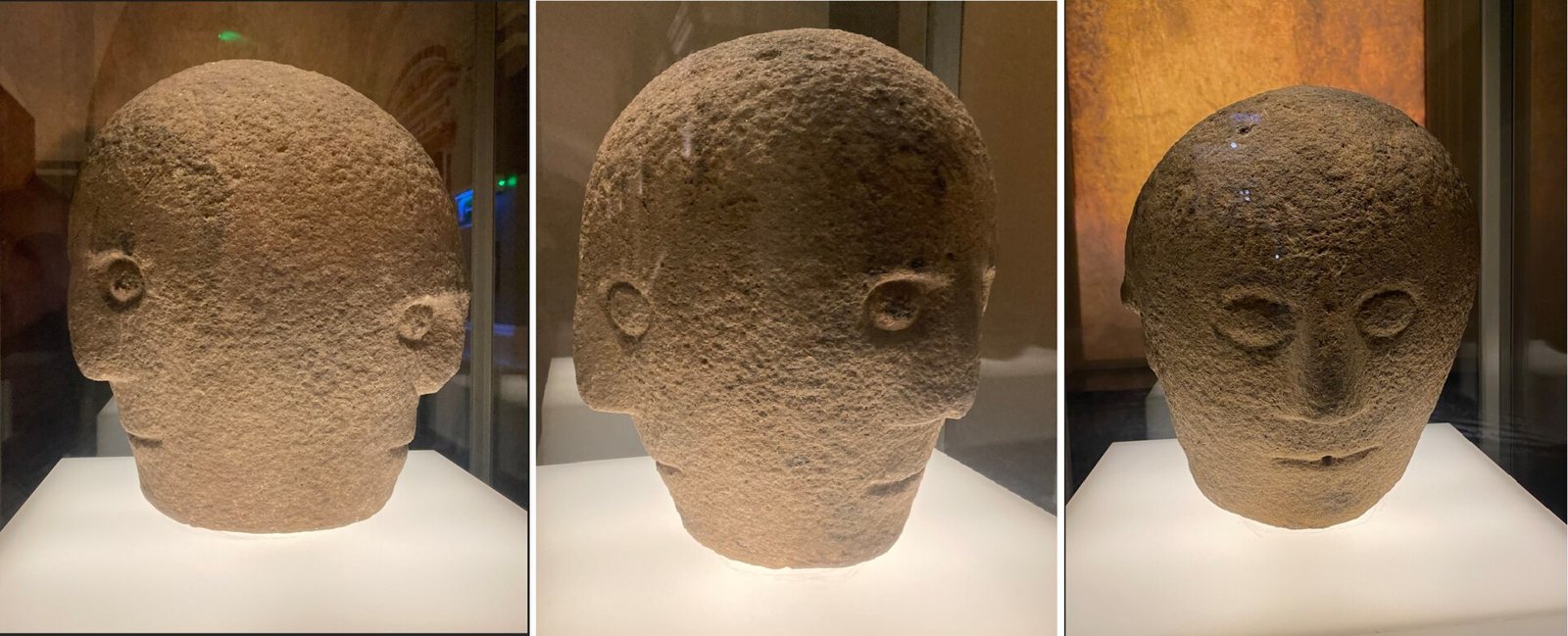
The best known is the Corleck Head from County Cavan, a stone head with three faces. The museum identifies it as an Iron Age carving, while whether it shows a god, an ancestor or something used in ritual remains uncertain. People sometimes ask whether Ireland has good examples of headhunting; what the museum can show you is heads in stone, and it is careful not to read them as proof of a cult.
Britain has many objects called "Celtic heads", and dating them is often hard. A stone head from Calderdale, recorded by the Portable Antiquities Scheme, is probably Romano-British and probably from the 1st century CE. That record also notes the British Museum archaeologist J. D. Hill's caution that there is no secure evidence for a specifically Iron Age British cult centred on stone heads (Portable Antiquities Scheme record). The British Museum also holds a small copper-alloy fitting in the shape of a human head from a burial at Welwyn, dated about 50 to 20 BCE. It shows that head imagery was part of Late Iron Age Britain, not that it represents a real severed head (British Museum).
What did the head mean?
Did the Celts worship heads? "Worship" is too big a word for the evidence. What scholars offer instead are three overlapping readings, each tied to particular writers and sites.
The first is power. The Entremont interpretation says that possessing an enemy's head could mean seizing his power for yourself. Heads shown beside heroic figures would then announce military success, aristocratic authority and control over the defeated (Entremont, Human trophies).
The second is honour and reputation. Strabo and Diodorus both describe the heads of distinguished enemies as prized trophies, kept because they stood for the rank of the person defeated and the achievement of the person who defeated him. That reading gives the heads a social and political meaning without needing any doctrine of head worship.
The third is protection, ancestors and continuity. At Entremont, some earlier head-bearing pieces are linked with relic holders for honoured dead and with symbols of fertility or renewal (Entremont, A sanctuary before the agglomeration). The National Museum of Ireland notes that the head motif has been connected with supernatural power, while warning that a single "head cult" across the whole Celtic world cannot be assumed.
That warning is the heart of the disagreement. Some scholars look for one religious system behind all the heads; others see several practices whose meanings changed from community to community and century to century. The evidence clearly supports the cutting off and display of heads at particular sites in southern Gaul. It does not establish that all Celts worshipped severed heads. Celtiberian Spain, has its own evidence and its own scholarly discussion, separate from the Gaulish sites here.
Keeping and displaying heads is not unique to Iron Age Europe, and each culture gave it its own meaning. Compare the skull racks known as tzompantli, the shrunken heads called tsantsa, or the plastered skulls of Jericho, each with a meaning of its own.
Heads in Iron Age Gaul, from the sites to the science
Tap or hover a step to follow the order.
3rd century BCE
At Le Cailar, in the Gard, some displayed heads are embalmed, as chemical analysis later shows.
3rd century BCE
Main phase of the Roquepertuse sanctuary near Velaux.
Around 175 BCE
The first major settlement is established at Entremont, near Aix-en-Provence.
150 to 140 BCE
Proposed regrouping and display of sculpture in the enlarged Entremont settlement.
1st century BCE to early Roman imperial period
Diodorus and Strabo record heads being cut off, displayed and preserved.
2018
Ghezal and colleagues publish chemical evidence for embalming at Le Cailar in the Journal of Archaeological Science.
Where to see the finds today
Many of these objects are on public display, though collections move and galleries change. The museums and towns describe them this way:
Where to see Celtic heads and head sculpture
Tap a card to bring it forward.
- Musée d'Archéologie Méditerranéenne, Marseille: At the Centre de la Vieille Charité; confirm that individual Roquepertuse objects are on display before you visit, since Marseille's museums have reorganised some collections.
- Tour Musée, Velaux: The town of Velaux says a collection devoted to the finds from Roquepertuse is shown here.
- Musée Granet, Aix-en-Provence: Associated with the Entremont finds; confirm which fragments are on view with the museum.
- National Museum of Ireland, Archaeology, Dublin: The three-faced Corleck Head is shown in the Treasury galleries.
- British Museum, London: The Welwyn head fitting is in Room 50, Britain and Europe 800 BCE to 43 CE.
For any single object, confirm the object and the gallery with the museum before travelling. The Musées de Marseille, the Ville de Velaux and the Entremont project all publish details for visitors.
Questions people ask about the Celts and severed heads
These questions come up often. The short answers follow.
Did the Celts worship heads?
Some Celtic-language communities displayed human heads and used head imagery, but "worship" is too broad a word for what the evidence shows. At Entremont the heads are read as enemy trophies, heroic ancestors or relics, and the National Museum of Ireland calls the proposed head cult a theory rather than an established fact.
Why did the Celts collect heads?
In the southern Gaulish evidence, heads served as trophies that showed victory, honour and control over an enemy's power. Some were put on display at settlements or buildings, and some at Le Cailar were embalmed.
What did the Celts do with the heads of their enemies?
Greek and Roman writers say heads were carried on horses, displayed at homes and buildings, and, for distinguished enemies, preserved in cedar oil and shown to visitors. At Le Cailar, chemical evidence confirms that some heads were embalmed in the 3rd century BCE.
Did the Celts cut off heads?
Some Iron Age Gaulish communities did cut off and display heads, according to Greek writers and to archaeological remains from southern France. The same practice should not be credited to every Celtic people, and not every head had a religious meaning.
Did the Celts embalm heads?
Yes, at least some of them did: a 2018 study of eleven skull fragments from Le Cailar detected conifer resin and heat-produced compounds in some of them. Its authors concluded that some heads were deliberately embalmed, which matches the cedar oil Strabo and Diodorus describe.
How well do you know the Celtic heads?
Answer every question to check.
Heads that still keep their secrets
The heads of Iron Age Gaul sit where two kinds of evidence meet: Greek and Roman writers describing a custom they thought strange, and bones and stones that confirm parts of what they said while leaving the meaning open. Some heads were trophies, some were embalmed, some may have honoured the dead, and many carved heads may have meant something else entirely. If the Iron Age people of Europe interest you, the bog bodies of northern Europe are another way to meet the people of that era.
Terms in this story
Tap a term to see what it means.
Gaul. The Roman name for the lands of Celtic-language peoples roughly in today's France and neighbouring regions. Transalpine Gaul was the part beyond the Alps from Rome, including southern France.
---