

No. 136
What Happened to Goya's Skull? Where Goya Is Buried Now
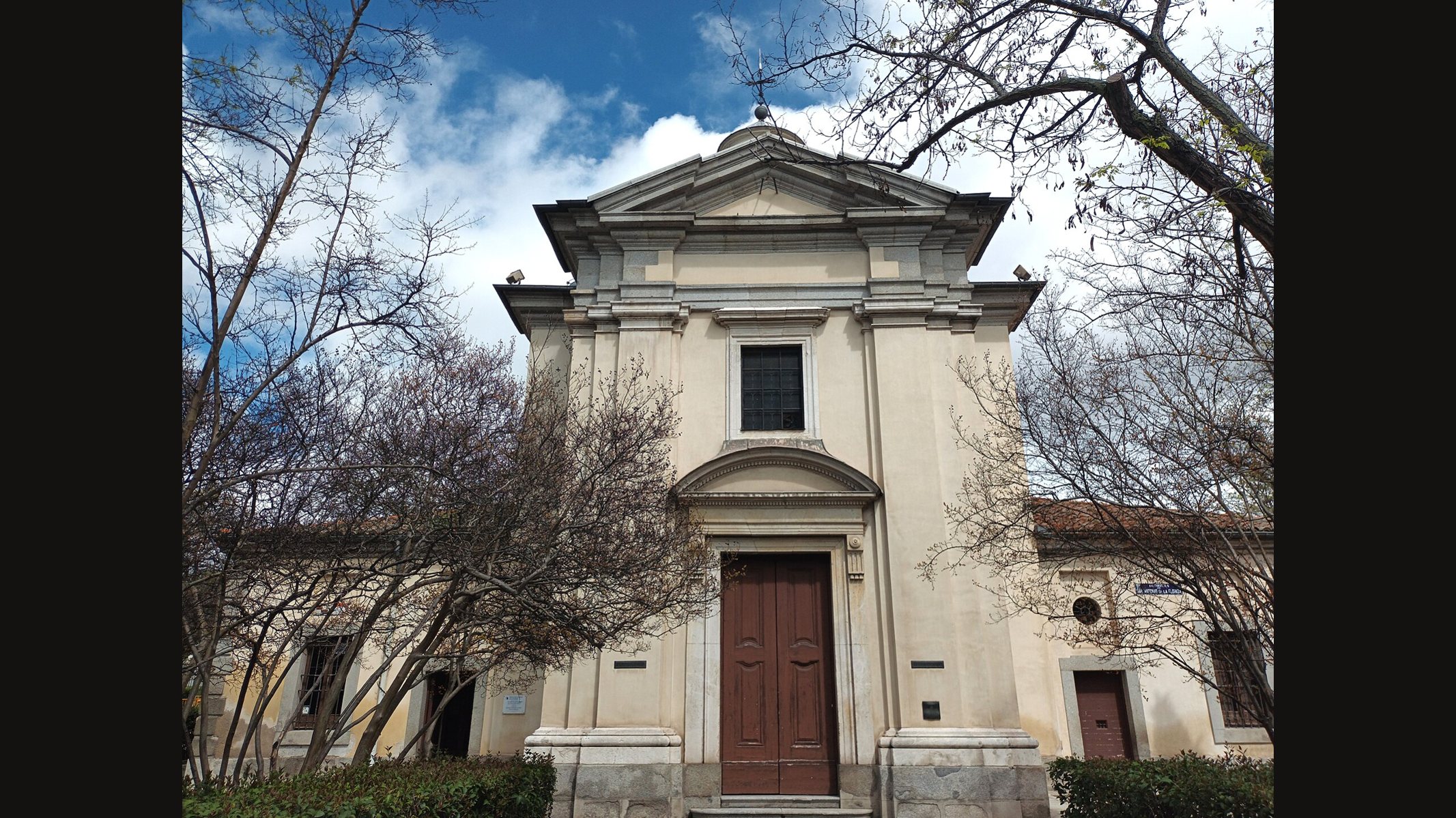
Francisco de Goya's skull was already missing when his tomb in Bordeaux, France, was opened in 1888, sixty years after his death. Nobody has ever established who took it, when, or where it went, and it has never been recovered (Ayuntamiento de Madrid). The rest of his remains came home to Spain, and since 29 November 1919 they have rested in the Ermita de San Antonio de la Florida in Madrid, beneath the frescoes Goya himself painted there in 1798 (Museo Nacional del Prado).
So, the short version is that one of Spain's greatest painters lies under his own ceiling in Madrid, and his head is a mystery that has outlived everyone who might have solved it. The longer version runs through a French cemetery, a Spanish consul, two exhumations, a strange painting signed 39 years before anyone knew the skull was gone, and a handful of family stories that have been told and retold ever since.
A death in Bordeaux, 1828
Goya spent his last years in France. He died in Bordeaux on 16 April 1828, after an illness that lasted 13 days (Ayuntamiento de Madrid).
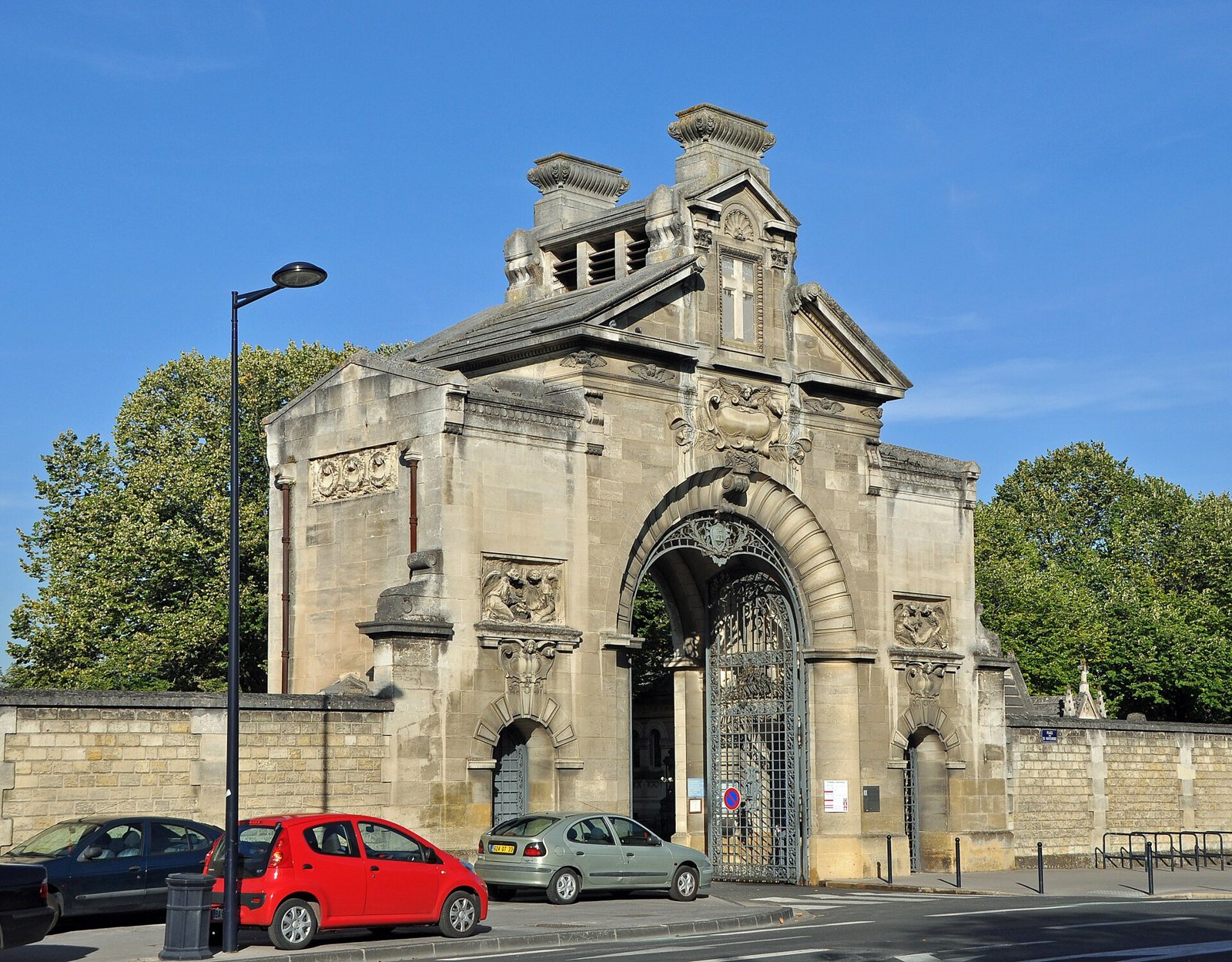
He was buried in the city's Grande Chartreuse cemetery, usually called La Chartreuse, and he did not lie alone. His grave was in the mausoleum of the Muguiro family, beside his friend and relative by marriage, Martín Miguel de Goicoechea. That shared tomb matters to the rest of the story. The Museo Nacional del Prado records that both men's bodies were later transferred to Madrid together, so whenever Goya's remains moved, Goicoechea's moved with them (Museo Nacional del Prado).
For decades after 1828, the painter stayed in Bordeaux, far from Madrid, and the tomb itself slowly aged.
A neglected tomb and a Spanish consul
The effort to bring Goya home began with a diplomat. Joaquín Pereyra, the Spanish consul, came across the painter's tomb in Bordeaux and found it in poor condition. The Ayuntamiento de Madrid, the city council, describes him as the man who then pursued the return of Goya's remains to Spain (Ayuntamiento de Madrid).
A study published by the Ayuntamiento de Zaragoza follows the consul's correspondence and the chronology that followed, from the first opening of the tomb in 1888 to the final transfer in 1899 (Ayuntamiento de Zaragoza study). Bringing a famous body across a border was slow, official work, and it took more than a decade.
1888: the tomb is opened and the skull is gone
The first exhumation took place in 1888. When the tomb was opened, the remains attributed to Goya had no skull (Ayuntamiento de Madrid).
That is the whole of the hard evidence, and it is worth reading slowly. Nobody saw the skull leave. There is no record of who removed it, or of when it happened, only that it was absent sixty years after the burial. The Ayuntamiento de Madrid's account of the case, titled "Oscuro y LUCIENTES", a play on the painter's full surname, Goya y Lucientes, also mentions photographs taken by Jean Laurent as part of the story.
You will sometimes see the case summed up in Spanish as "Goya decapitado", Goya beheaded. It is a catchy phrase, but the record is quieter than that: the remains were simply found without the skull, and the person who removed it has never been established.
1899: the second exhumation and the return to Spain
The remains were exhumed a second time on 5 June 1899 and transferred to Spain. That exhumation is documented in *Francisco de Goya. Diplomatario*, a published collection of documents about the painter, and it confirms that the head was still missing when the remains left France (Francisco de Goya. Diplomatario).
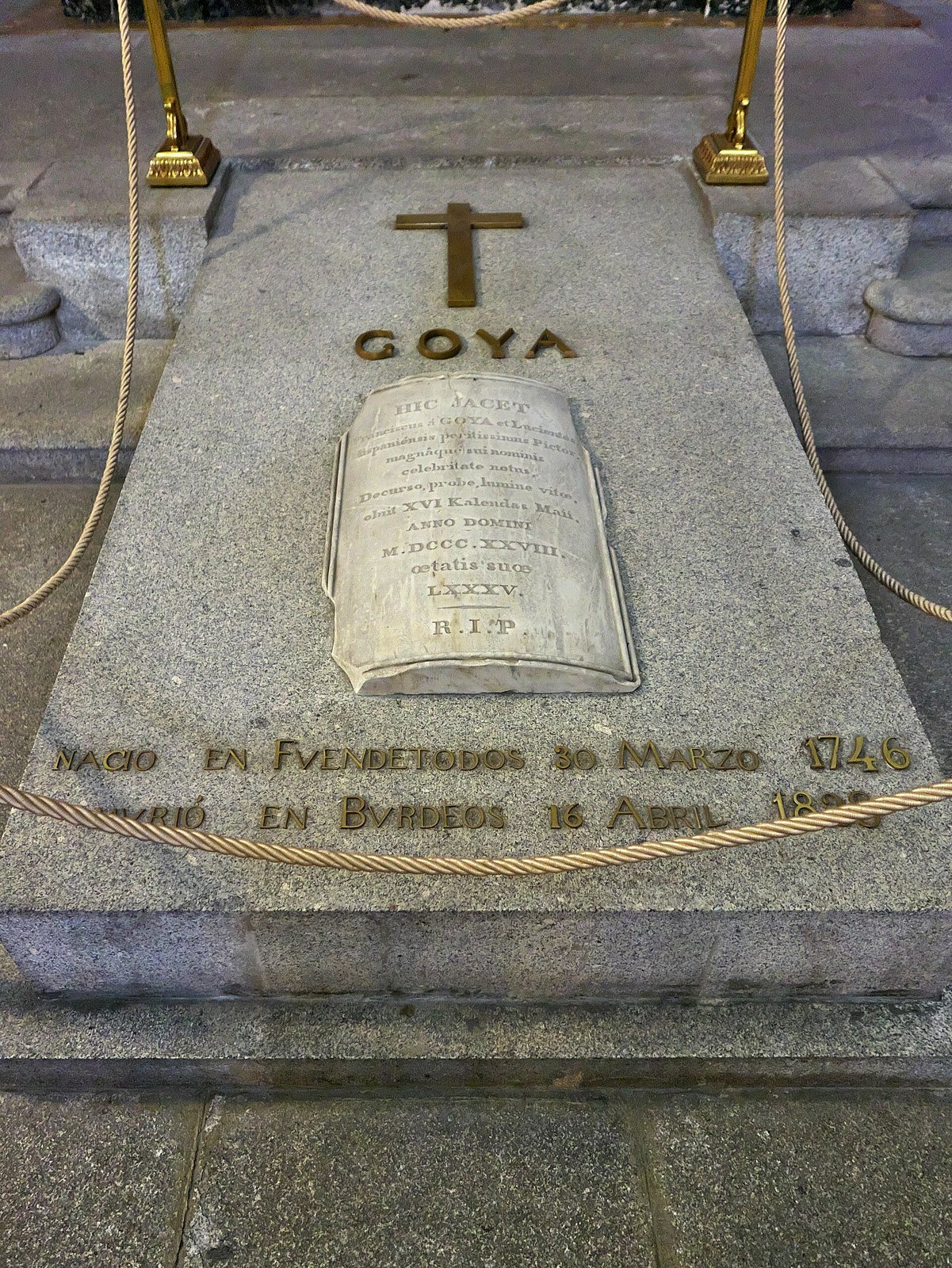
In Madrid, Goya's remains were placed in the Sacramental de San Isidro cemetery. They stayed there for twenty years before their final move (Museo Nacional del Prado).
Goya's remains, from Bordeaux to Madrid
Tap or hover a step to follow the order.
16 April 1828
Goya dies in Bordeaux and is buried at La Chartreuse beside Martín Miguel de Goicoechea.
1849
Dionisio Fierros paints Cráneo de Goya.
1888
The first exhumation shows that the remains attributed to Goya lack a skull.
5 June 1899
The second exhumation, and the transfer of the remains to Spain.
29 November 1919
Goya's remains are buried at San Antonio de la Florida in Madrid.
Why would anyone take Goya's skull? The theories
Because nobody knows who took the skull, the gap has filled up with explanations. None of them is proven, and each one comes with its own storytellers.
Phrenology
One theory points to phrenology, the nineteenth-century practice of linking the shape of a skull with a person's intellect and character. The theory holds that Goya's skull was taken for that kind of study. It remains a hypothesis, not an established fact (Museo de Zaragoza). If you want the background on the practice itself, our story on the phrenology skull tells that side of it.
Dionisio Fierros and the painting of 1849
The second thread is a painting. In 1849 the Spanish painter Dionisio Fierros signed a work known as *Cráneo de Goya*, Goya's skull. The date is what makes people sit up: 1849 is 39 years before the 1888 exhumation revealed that the skull was missing (Museo de Zaragoza).
The Museo de Zaragoza, which holds the painting, is careful about what it does and does not show. The museum records that the work came to be associated with Goya's skull through its inscription and through later testimony from the Fierros family. It also says plainly that the painting does not prove the skull on the canvas was Goya's.
The family stories
Around the painting grew a set of competing accounts attributed to the Fierros family. In one, a skull was kept in Dionisio Fierros's studio. In another, his son Nicolás took it to Salamanca. In a third, it was destroyed during a medical experiment (Museo de Zaragoza; Asociación Española de Pintores y Escultores).
These stories do not agree with each other, and none of them amounts to an identification. The museum treats them as testimony and legend. They are a real part of how the mystery has been told in Spain for well over a century, and the Ayuntamiento de Madrid raises the same questions about Fierros in its own account, without settling them (Ayuntamiento de Madrid).
The painting of a skull that may or may not be his
Even without its legend, Fierros's painting would belong to a long tradition of artists painting skulls as a meditation on death and the passing of time. On Wikimedia Commons the 1849 work is catalogued as *Vanitas*, with the Museo de Zaragoza as its home, and the artwork and its faithful reproduction are marked public domain (Wikimedia Commons). For more on that kind of still life, our story on vanitas paintings follows the genre, and famous skull art gathers other well-known skulls on canvas.
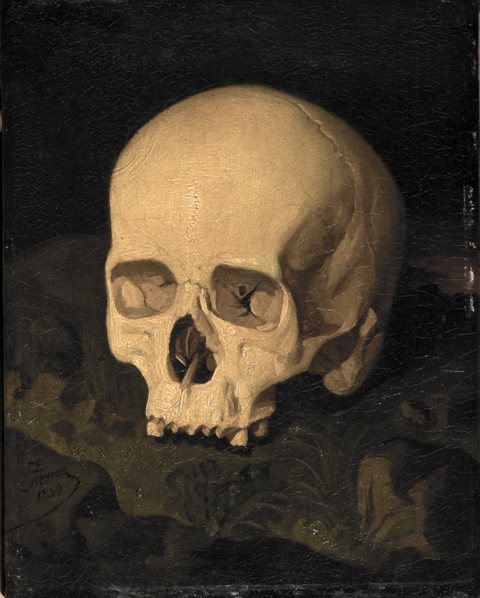
The image travelled. The Musée Goya in Castres, in the south of France, holds *Le Crâne de Goya*, a twentieth-century work by the French school made after Dionisio Fierros (Wikimedia Commons). So, a painting whose subject has never been confirmed has itself been copied, which says a lot about how firmly the story took hold.
Under his own frescoes: San Antonio de la Florida
On 29 November 1919, the remains attributed to Goya were moved from the Sacramental de San Isidro to the chapel of San Antonio de la Florida in Madrid (Francisco de Goya. Diplomatario). The choice of place is the loveliest part of this story. Goya painted the chapel's frescoes in 1798, and his tomb now lies beneath them (Museo Nacional del Prado). After nearly a century of moves, he ended up under his own work.
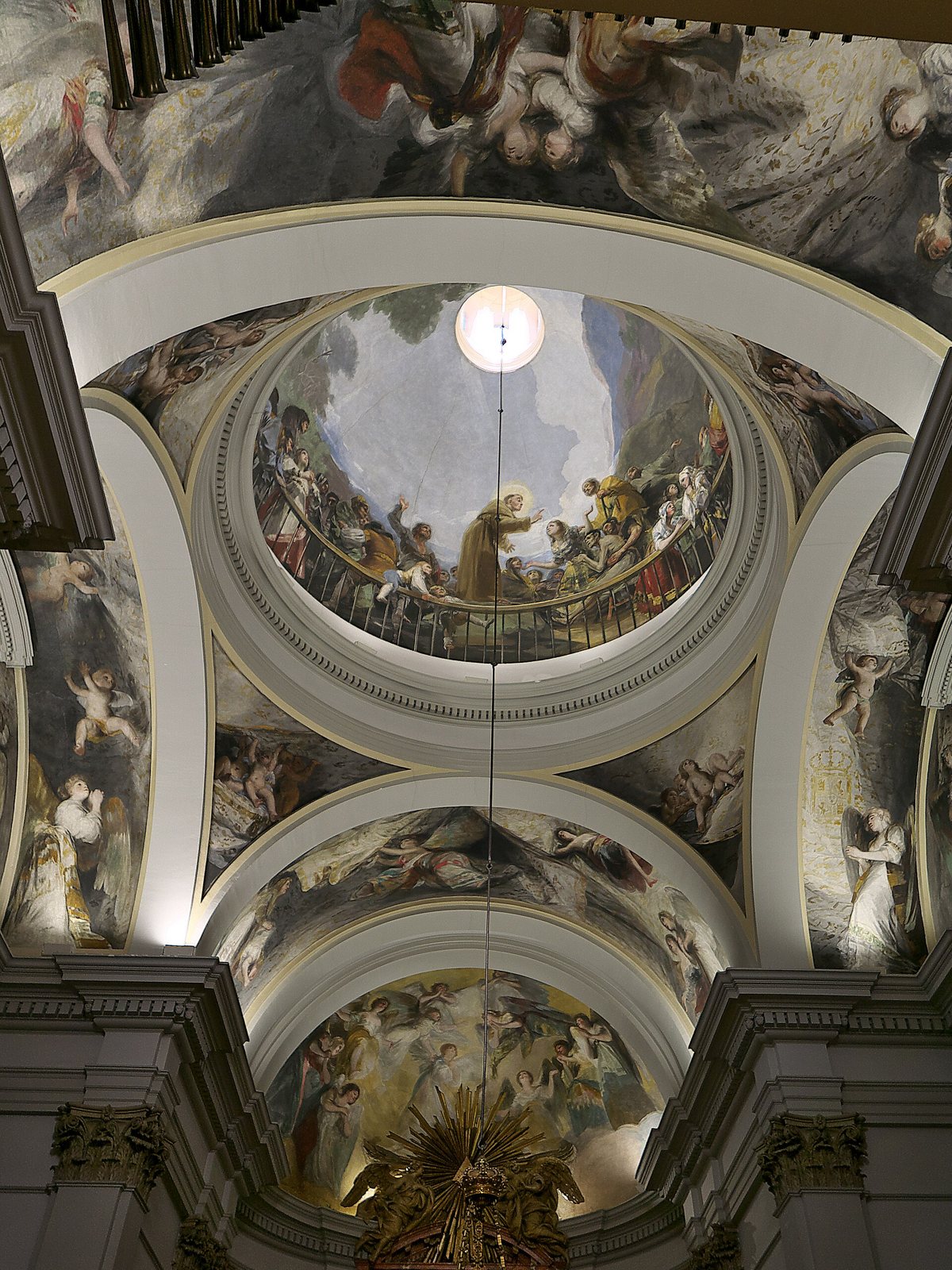
The skull was still absent in 1919, and it remains so. The man in the tomb is complete in every way that the chapel cares about: he is remembered there, in the building he decorated.
Visiting the Ermita de San Antonio de la Florida
The Ayuntamiento de Madrid lists free admission to the Ermita de San Antonio de la Florida. Its published visiting hours are Tuesday through Sunday, 9:30 to 20:00, and from 15 June through 15 September, 9:30 to 14:00 and 15:00 to 19:00. The chapel is closed on Mondays and on specified public holidays. Individual visitors do not need to book ahead, while groups have their own booking requirements, with a maximum of 25 people inside the chapel at once (Ayuntamiento de Madrid visitor information, accessed 18 October 2026). Schedules can change, so confirm the hours with the city before you travel.
San Antonio de la Florida as the city lists it (October 2026)
Tap a card to bring it forward.
- Admission: Free, according to the Ayuntamiento de Madrid.
- Usual hours: Tuesday through Sunday, 9:30 to 20:00.
- Summer hours: From 15 June through 15 September, 9:30 to 14:00 and 15:00 to 19:00.
- Closed: Mondays and specified public holidays.
- Individual visitors: No advance booking needed.
- Groups: Separate booking requirements; a maximum of 25 people inside the chapel.
- Before you go: Confirm current hours with the Ayuntamiento de Madrid, because schedules can change.
Goya is not the only famous figure whose skull took a different road from the rest of him. The stories of Haydn's skull, Descartes' skull, Schiller's skull, Mozart's skull and Oliver Cromwell's head each have their own twists.
Questions people ask about Goya's skull
These are the questions that come up most, with the short answers.
Where is Goya's skull?
Its present location is unknown. The skull was already missing when the tomb was opened in Bordeaux in 1888, and no documented recovery has been established since. Goya's remains, without the skull, are buried at San Antonio de la Florida in Madrid.
Has Goya's skull ever been found?
No. There is no documented recovery of the skull. The 1849 painting by Dionisio Fierros and the stories told by his family have been linked to it, but the Museo de Zaragoza says the painting does not prove the skull shown was Goya's.
Why is Goya's skull missing?
Nobody knows for certain. The leading theory is that it was taken for phrenological study, the nineteenth-century practice of reading character from skull shape, while another thread connects it to Dionisio Fierros. Neither explanation has been proven, and the person who removed it has never been established.
Where is Goya's head?
The head has not been located. What is certain is where the rest of him lies: in the Ermita de San Antonio de la Florida in Madrid, where his remains were placed in 1919.
What became of Goya's skull?
What became of it after Goya's burial in 1828 is unknown, and its absence was first recorded at the Bordeaux exhumation of 1888. Two explanations are usually offered, theft for phrenology and the Fierros family stories of a skull in a studio, in Salamanca or lost in a medical experiment, and none has been demonstrated.
Where is Goya buried?
Goya is buried at the Ermita de San Antonio de la Florida in Madrid, beneath the frescoes he painted there in 1798. He was moved there on 29 November 1919 from the Sacramental de San Isidro cemetery, and he shares the story of his moves with his friend Martín Miguel de Goicoechea.
Why is Goya's head missing from his grave?
Because it was already gone when the Bordeaux tomb was opened, and it never came back. The phrase "Goya decapitado" gets repeated online, but the record only says the remains were found without the skull, not how or when it was removed.
How well do you know the story of Goya's skull?
Answer every question to check.
A painter at rest under his own ceiling
The facts of the case fit in a few lines: a death in Bordeaux in 1828, a tomb opened in 1888 with no skull inside, a return to Spain in 1899 and a final resting place in Madrid in 1919. Everything else, the phrenologists, the painting of 1849, the studio, Salamanca and the medical experiment, belongs to the theories and the legends, and they are best enjoyed as exactly that. If you stand in San Antonio de la Florida and look up at the frescoes Goya painted in 1798, you are standing over the man himself, which is the part of the story that is not in doubt.
Terms in this story
Tap a term to see what it means.
Exhumation. The formal opening of a grave to remove or examine the remains. Goya's tomb in Bordeaux was opened in 1888 and again on 5 June 1899.
---