

No. 134
Is Shakespeare's Skull Missing? The Radar Scan and the Curse on His Grave
Shakespeare's skull may be missing, but nobody has proven it. In 2016 the archaeologist Kevin Colls of Staffordshire University and the geophysicist Erica Utsi scanned Shakespeare's grave in Holy Trinity Church, Stratford-upon-Avon, with ground-penetrating radar. The scan showed an unusual disturbance and a later repair at the head end of a shallow grave, and Colls said the evidence was "very very convincing" to him that the skull is no longer there. The grave itself was never opened, and Holy Trinity's vicar, Reverend Patrick Taylor, said the evidence was not enough to conclude that the skull had been taken (Channel 4). Above it all, the gravestone still warns: "cvrst be he yt moves my bones."
That leaves a real open question in a famous English grave, plus an old story about a theft in 1794, a skull in a village church that turned out to belong to someone else, and the most famous stage skull of all, which was never Shakespeare's to begin with. This is how the pieces fit together.
The grave in the chancel and the lines on the stone
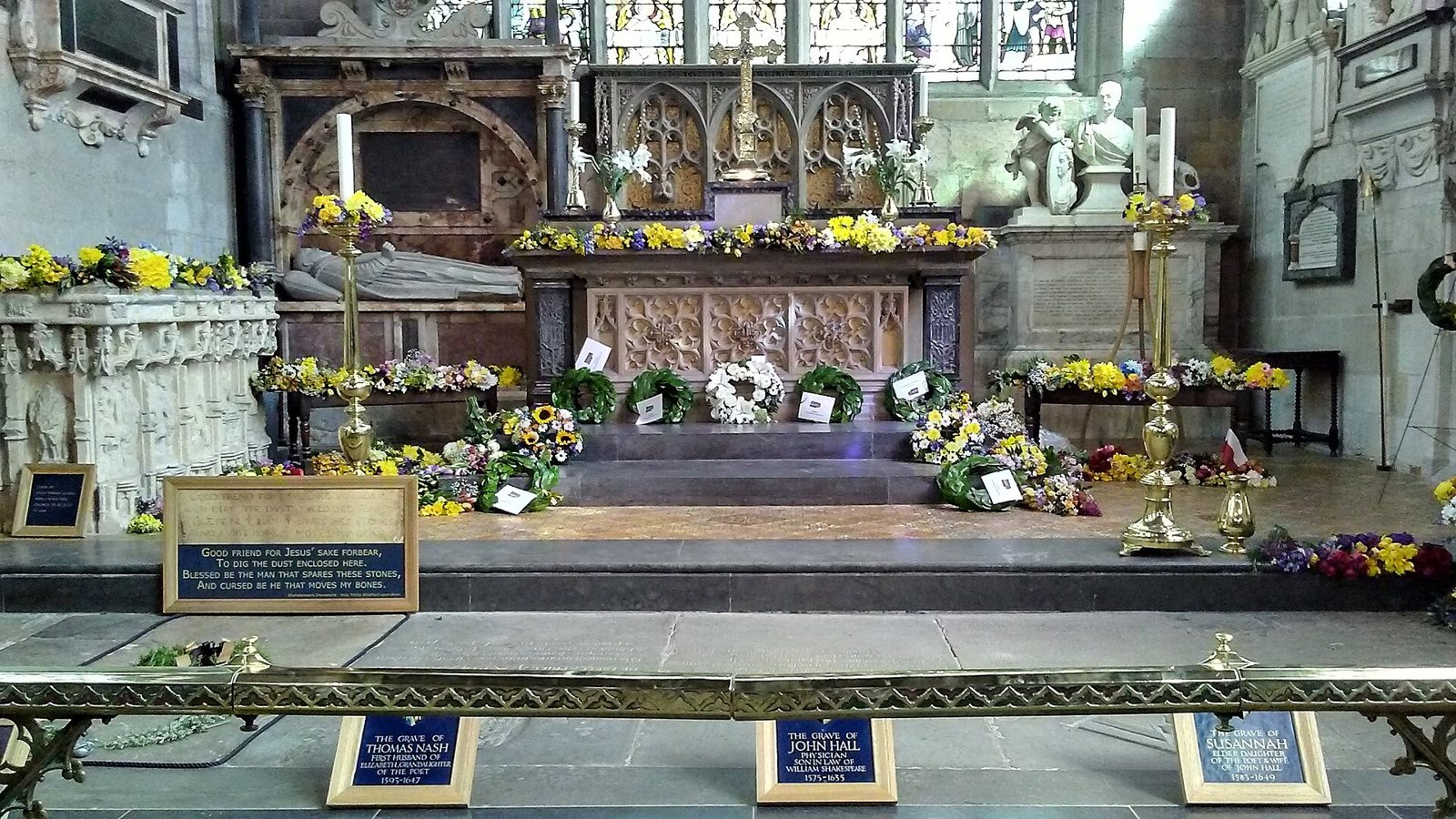
William Shakespeare was buried in 1616 in the chancel of Holy Trinity Church, Stratford-upon-Avon, the part of the church around the altar. Holy Trinity is still an active parish church, and it describes Shakespeare as buried there (Holy Trinity Church).
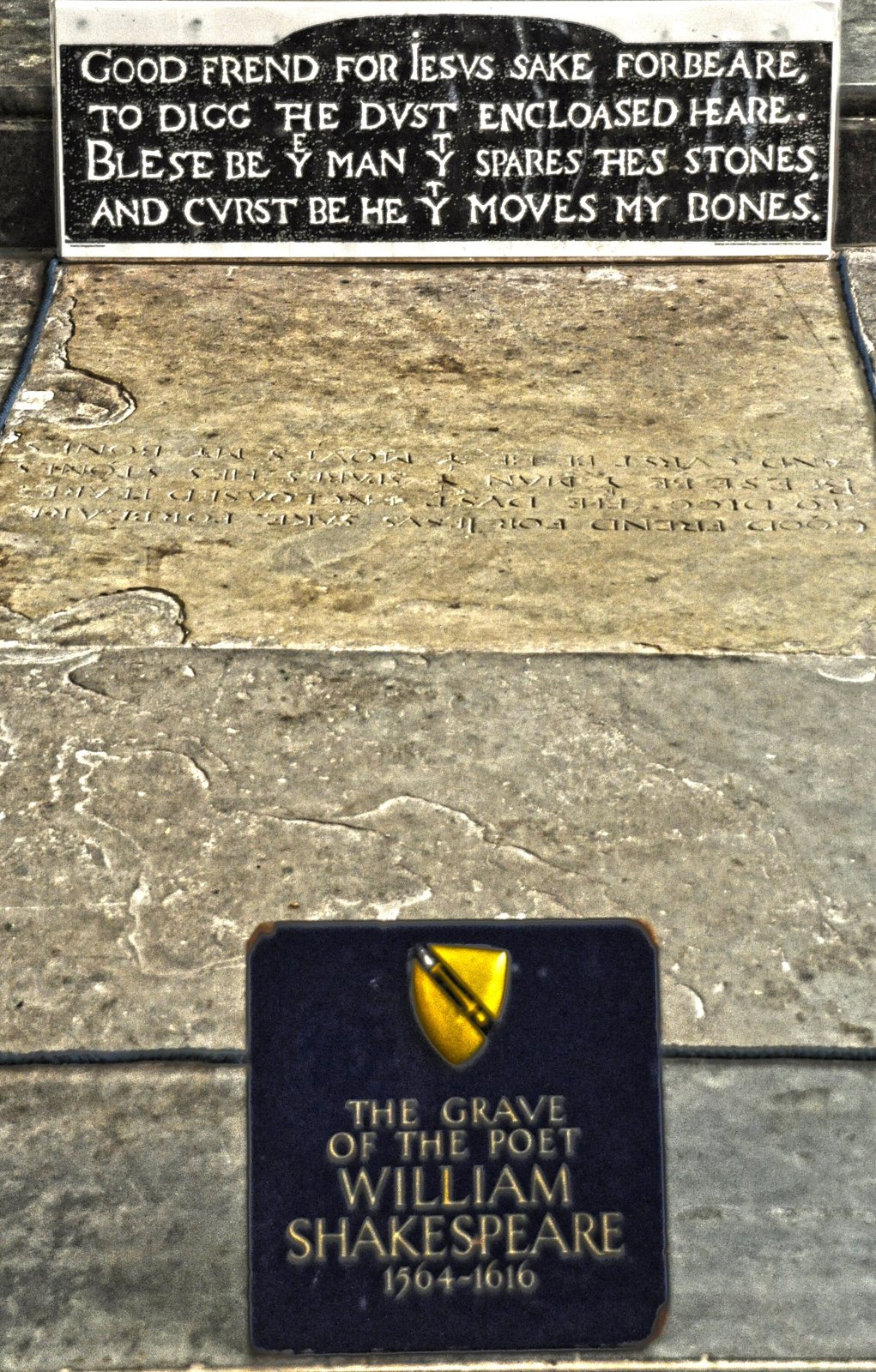
The stone over his grave carries four lines in early modern spelling (Historic England archive photograph OP10039):
> Good frend for Iesvs sake forbeare, > To digg the dvst encloased heare, > Bleste be ye man yt spares thes stones, > And cvrst be he yt moves my bones."
In modern spelling, that reads: "Good friend, for Jesus' sake forbear / To dig the dust enclosed here / Blessed be the man that spares these stones / And cursed be he that moves my bones." The "v" stands in for "u", "ye" is "the" and "yt" is "that". Spelling varies a little from one transcription to another.
The meaning is plain enough. It is a request, with a blessing for anyone who leaves the grave alone and a curse for anyone who disturbs the bones. What the lines cannot do is prove the grave was never disturbed. A warning on a stone tells you what its author wanted; it does not tell you what happened afterwards.
Inside the church, Shakespeare's funerary monument is topped by a carved skull (Historic England). A skull over a likeness is a sign of mortality, and our story on memento mori follows that tradition of telling the living that they too will die.
What the 2016 radar scan showed
The scan was made for the 2016 Channel 4 programme *Secret History: Shakespeare's Tomb*. Kevin Colls and Erica Utsi worked with permission from the church and the Diocese of Coventry, and the survey was non-invasive (Channel 4). Ground-penetrating radar sends radio pulses into the ground and reads the echoes that bounce back, so it can map what lies under a floor without lifting a single stone.
The scan showed four things about the grave (Channel 4):
- Shakespeare's burial was a separate, shallow earth-cut grave, less than one metre deep, rather than a deep family vault.
- There was no sign of metal coffin fittings, which suggests he was buried in a shroud or winding sheet rather than a fitted coffin.
- The grave appeared longer than the stone placed over it, extending west toward the head end.
- Near the head end, the radar showed an unusual disturbance and what looked like a later repair.
That last point is the one behind the headlines. Something seems to have happened at the head of the grave after the burial, and someone seems to have patched it up afterwards.
The 2016 radar scan: what it showed and what it did not
Tap a card to bring it forward.
- Shallow grave: A separate earth-cut grave, less than one metre deep, not a deep family vault.
- No coffin fittings: No sign of metal coffin fittings, suggesting a shroud or winding sheet.
- Longer than the stone: The grave appeared to extend beyond its stone toward the head end.
- Disturbance at the head: An unusual disturbance and a later repair near the head end.
- Not shown: No skull was physically identified as missing, because the grave was not excavated.
- Not known: Who disturbed the grave, or when.
What the scan could not prove
Radar reads shapes in the ground; it does not lift bones. The survey did not physically identify a missing skull, did not excavate the grave, and could not say who disturbed it or when (Channel 4).
So, two careful readings of the same evidence stand side by side. Kevin Colls said the evidence was "very very convincing" to him that Shakespeare's skull was no longer at Holy Trinity. The church's vicar, Reverend Patrick Taylor, said the evidence was insufficient to conclude that the skull had been taken. Both are speaking about the same radar images; they differ on how far those images can be pushed.
As for opening the grave to check, Holy Trinity said it intended to respect the sanctity of the grave and Shakespeare's epitaph. In other words, the request on the stone is still being honoured by the church that looks after him.
The 1879 story of a theft in 1794
Long before radar, there was a story. In October 1879 a magazine called *The Argosy* published "How Shakespeare's Skull was Stolen", credited only to "A Warwickshire Man" (Goldsmiths, University of London).
It claimed that in December 1794 a trainee surgeon from Alcester named Frank Chambers broke into Shakespeare's shallow grave and took the skull, after hearing that the writer and collector Horace Walpole would pay 300 guineas for it. That is a very specific price for a very specific object, and it is part of why the tale stuck.
The story appeared roughly 178 years after Shakespeare's death, and for a long time it was treated as fiction or as an unverified local tale (Channel 4). The 1879 magazine proves that the story existed by 1879. It does not prove that the theft happened. What gave it new life in 2016 is that the radar described a shallow grave with a disturbance at the head end, which is at least the kind of grave the story describes.
The skull at Beoley
The story had a sequel. In 1884 Reverend Charles Jones Langston published a continuation claiming that the stolen skull had ended up in an ossuary, a room for storing bones, beneath the Sheldon Chapel at St Leonard's Church in Beoley, Worcestershire, about 15 miles from Stratford-upon-Avon (Goldsmiths, University of London).
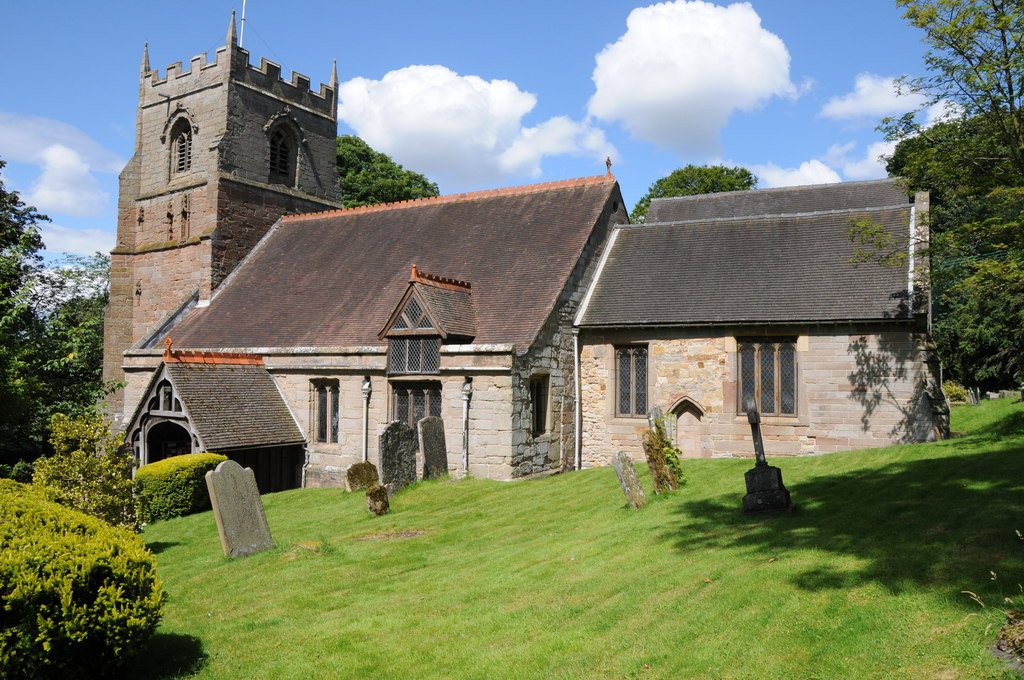
For the same 2016 Channel 4 investigation, the Beoley skull was laser-scanned and examined by forensic anthropology. The result was clear: it belonged to an unknown woman who had been in her seventies when she died (Channel 4). It was not Shakespeare's skull.
That answer closed one chapter and opened nothing new. The examination did not say where Shakespeare's skull is, if it is anywhere other than Stratford. It did give back an identity of sorts to a woman who had spent more than a century being talked about as someone else. She was a real person in her own right, and she lies among the bones at Beoley. For more on rooms like the one at Beoley, our story on ossuaries around the world visits others.
Shakespeare's grave and the skull story
Tap or hover a step to follow the order.
1616
Shakespeare is buried in the chancel of Holy Trinity Church, Stratford-upon-Avon.
December 1794
The date of the alleged theft, according to the 1879 story.
October 1879
The Argosy publishes "How Shakespeare's Skull was Stolen" by "A Warwickshire Man".
1884
Reverend Charles Jones Langston claims the skull is in the ossuary at Beoley.
2016
Kevin Colls and Erica Utsi scan the grave with ground-penetrating radar and see a disturbance near the head end.
2016
The Beoley skull is examined and identified as that of an unknown woman in her seventies.
Yorick is a different skull
Many people hear "Shakespeare's skull" and think of Hamlet holding one up. That skull belongs to a character. In *Hamlet*, Act 5, Scene 1, a gravedigger hands Hamlet a skull and tells him it belonged to Yorick, the King's jester. Hamlet answers, "Alas, poor Yorick," and turns to thoughts of death, memory and the remains of people once known in life (Folger Shakespeare Library). Our story on Alas, poor Yorick follows that scene in full.
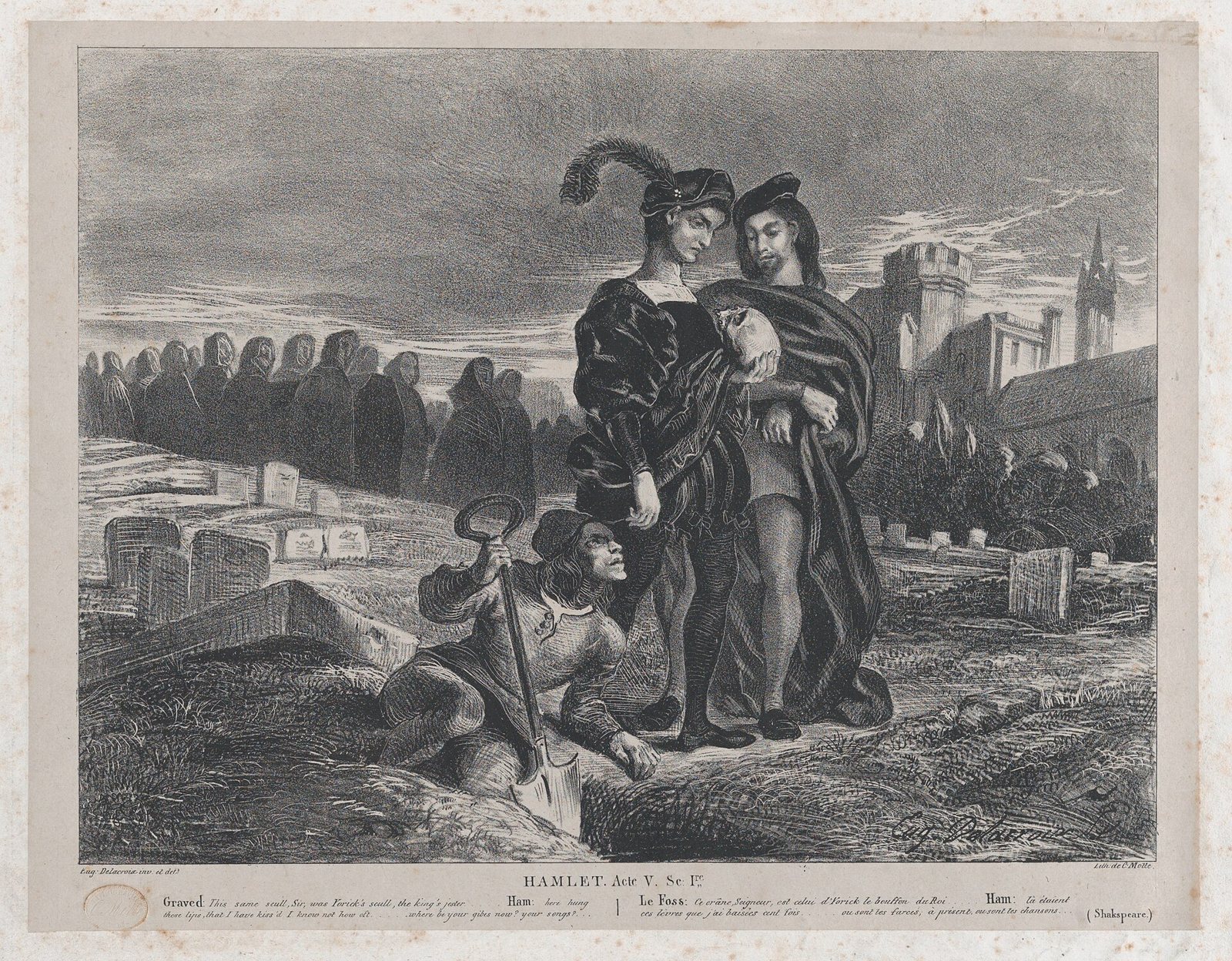
The scene made the skull one of the theatre's great props, and sometimes the prop has been real. The Folger Shakespeare Library notes that productions have occasionally used real human skulls for Yorick. A widely discussed case is André Tchaikowsky, who left his skull to the Royal Shakespeare Company, where it was used in connection with *Hamlet* (Folger Shakespeare Library). It is a strange and rather generous kind of curtain call, and it has nothing to do with the grave in Stratford.
Visiting Shakespeare's grave
Shakespeare's grave lies in the chancel of Holy Trinity Church, which is a working parish church as well as a place people travel to see. Opening times, any admission charges and the house rules, including photography, are set by the church, so check the church's own Visit page before you go.
Shakespeare is not the only famous figure whose skull may have parted company with the rest of him. The stories of Goya's skull and Haydn's skull have their own twists, and the search for Richard III's skeleton shows what happens when an English grave is actually excavated.
Questions people ask about Shakespeare's skull
These are the questions that come up most often.
Is Shakespeare's skull missing?
It might be, but nobody knows for certain. The 2016 radar scan showed a disturbance and a later repair at the head end of his shallow grave, which Kevin Colls called very convincing evidence that the skull is gone. The church's vicar said there was not enough evidence for that conclusion, and the grave has not been opened.
Was Shakespeare's skull stolen?
A theft is possible but unproven. The only theft story is the one published in *The Argosy* in 1879, which named Frank Chambers and dated the break-in to December 1794, and the skull that story later pointed to at Beoley belongs to a woman. The 2016 radar fits a disturbed grave, but it cannot say who disturbed it.
What does Shakespeare's grave say?
It says: "Good frend for Iesvs sake forbeare, / To digg the dvst encloased heare, / Bleste be ye man yt spares thes stones, / And cvrst be he yt moves my bones."
Is the epitaph really a curse?
Yes, in the plain sense that its last line curses whoever moves the bones. The four lines work as a warning, pairing a blessing for anyone who spares the stones with that curse, and the church still cites the epitaph when it declines to open the grave.
Was Shakespeare's grave ever opened?
It was not opened for the 2016 investigation, which used ground-penetrating radar instead of digging. The disturbance the radar showed at the head end suggests someone dug there at some point after 1616, but who and when is unknown. Holy Trinity said it intended to respect the sanctity of the grave and the epitaph.
What was the Beoley skull?
It was a skull kept in the ossuary beneath the Sheldon Chapel at St Leonard's Church, Beoley, claimed in 1884 to be Shakespeare's. In 2016 it was laser-scanned and examined, and it turned out to belong to an unknown woman in her seventies.
Who is buried beside Shakespeare?
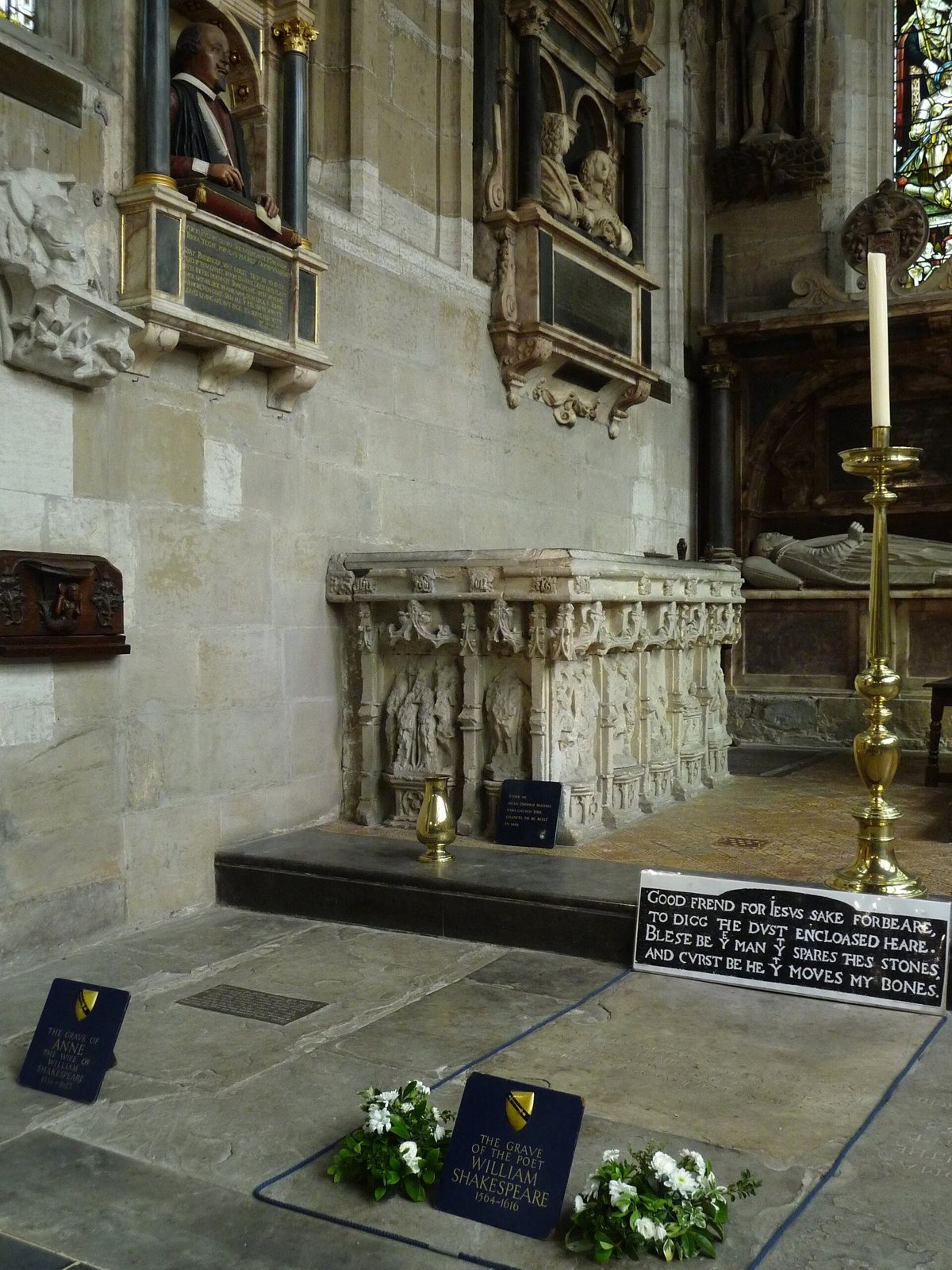
Members of his family lie in the chancel with him. The 2016 radar work was a survey of the Shakespeare family graves, and images of the chancel show Anne Hathaway's memorial close to his.
Where is Shakespeare's head now?
Nobody knows; the evidence does not settle whether it is still in the grave at Holy Trinity. If the skull was removed, nobody has traced where it went, and the one candidate ever put forward, at Beoley, is not his.
How much do you know about Shakespeare's grave?
Answer every question to check.
A grave that keeps its secret
The facts are few and firm: a burial in 1616, a shallow grave with no coffin fittings, a disturbance at the head end that radar could see in 2016, a magazine story from 1879 and a skull at Beoley that belonged to a woman. Between them sits a genuine unknown, which the church has chosen to leave alone, as the stone asks. For anyone who loves a skull story, it is a rare one: famous, unsolved and, by the wish of the man himself, likely to stay that way.
Terms in this story
Tap a term to see what it means.
Chancel. The part of a church around the altar. Shakespeare is buried in the chancel of Holy Trinity Church, Stratford-upon-Avon.
---