

No. 197
Fontanelle Cemetery in Naples: Whose Skulls They Are and Why People Adopted Them
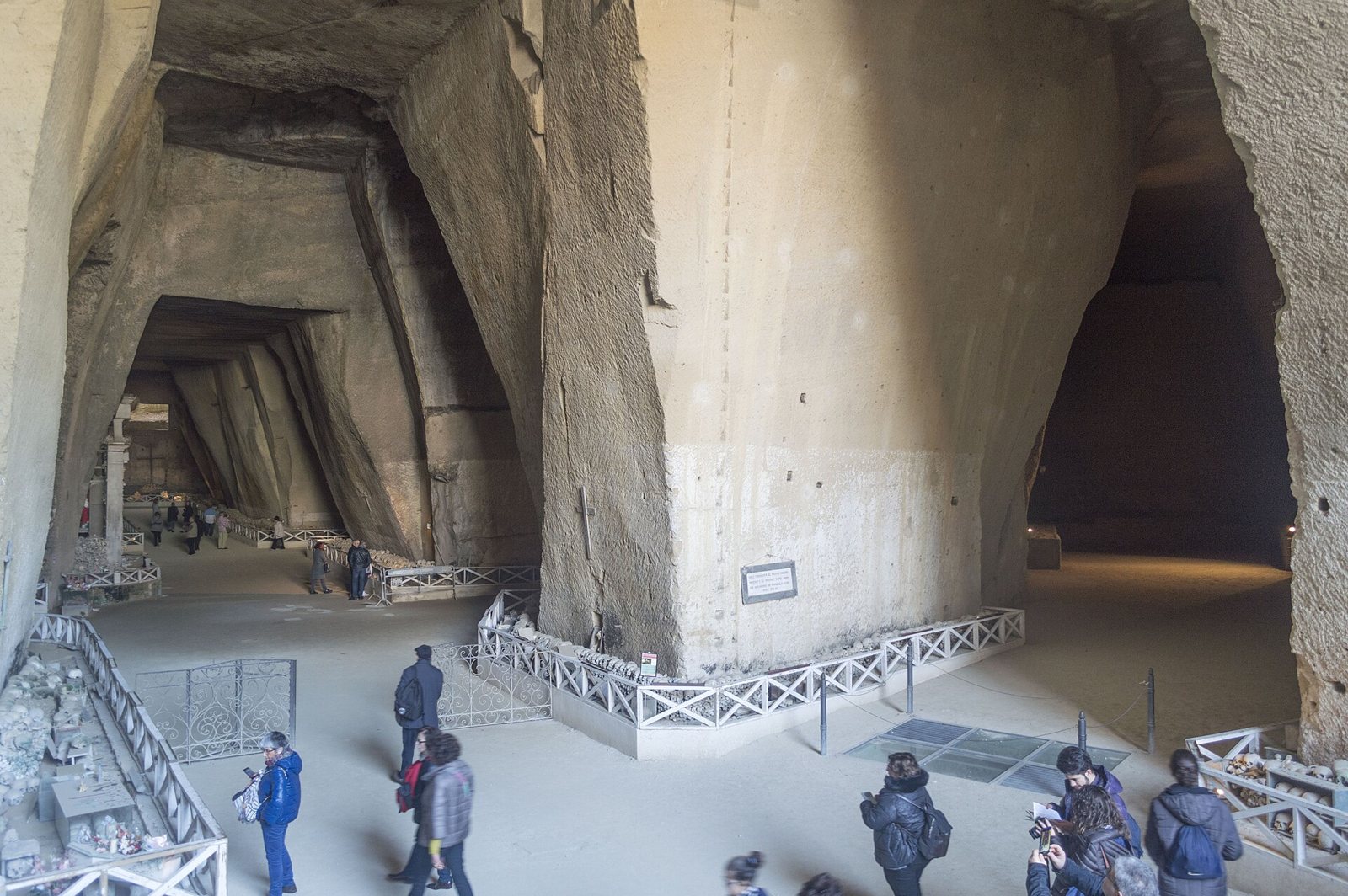
The skulls in the Fontanelle cemetery belong to the people of Naples. The Cimitero delle Fontanelle is an ossuary set inside old tuff quarries at Via Fontanelle 80, in the Rione Sanità, below the Materdei hill. It holds the remains of poor people who could not pay for a grave of their own, victims of the plague of 1656 and the cholera of 1836, and bones moved there from older church and confraternity burial grounds (official Fontanelle site).
For generations, Neapolitans, women above all, chose one of those anonymous skulls, cleaned it, gave it a cushion and candles, and prayed for its soul. The custom is called the devotion of the *anime pezzentelle*, the "poor souls."
And yes, you can go. As of October 20, 2026, the official site lists the cemetery as open with advance booking, closed on Wednesdays (official visit-planning page).
A cemetery of cemeteries in the Sanità
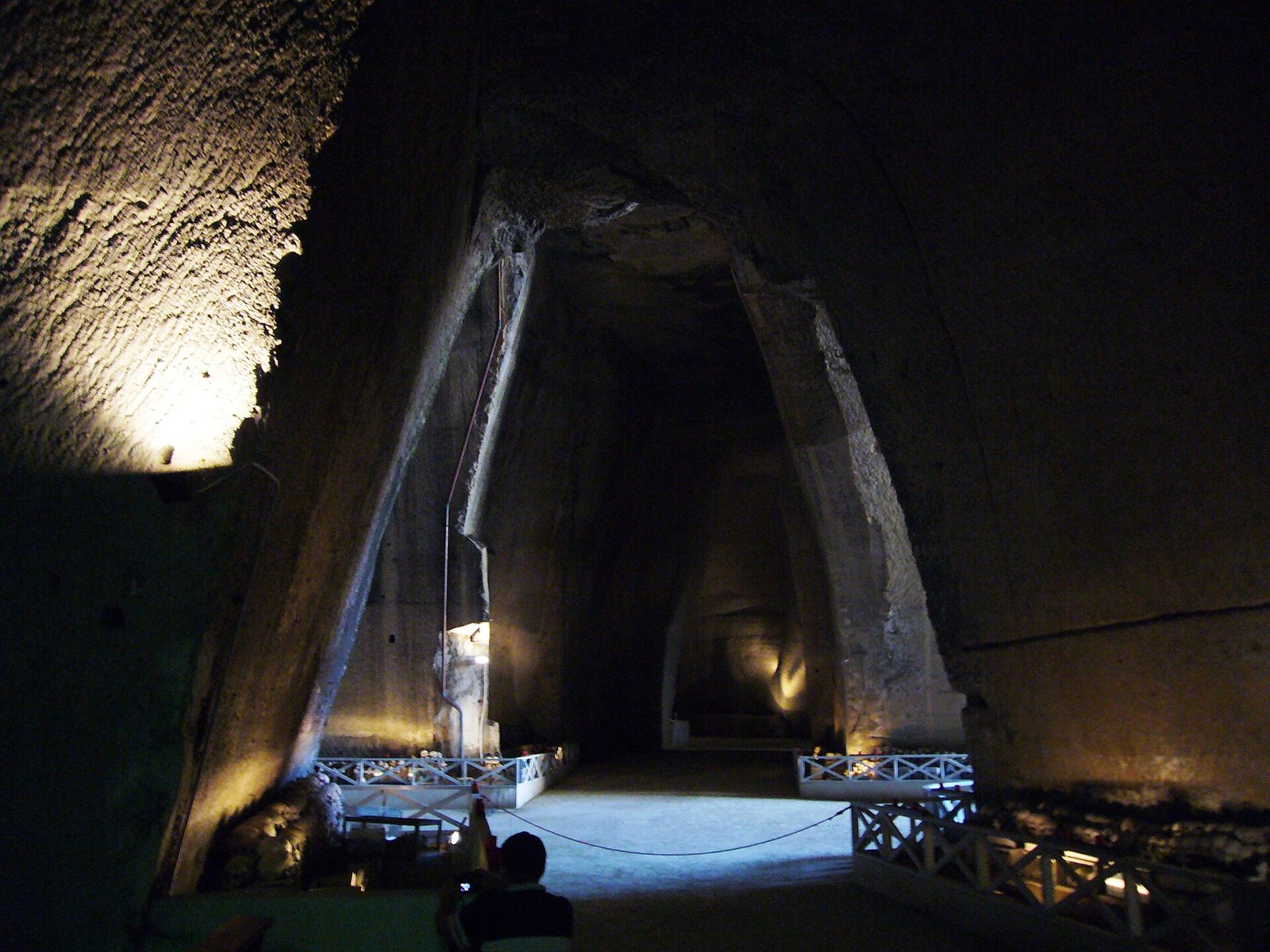
The word cemetery can mislead a little. Fontanelle is an ossuary, a place where bones are gathered and kept, rather than a field of individual graves. The galleries are former quarries cut into tuff, a soft volcanic stone, and they sit in the Sanità district beneath the Materdei hill.
Giuseppe Pace and his collaborators, in a study published by Italy's CNR/ISMed, call Fontanelle a "cemetery of cemeteries" (Giuseppe Pace, Il rione Sanità, CNR/ISMed). The phrase fits. The bones did not arrive in one burial, or from one cause. They came in over centuries from epidemics, from the city's poorest families and from church burial grounds that were cleared and emptied into the quarries.
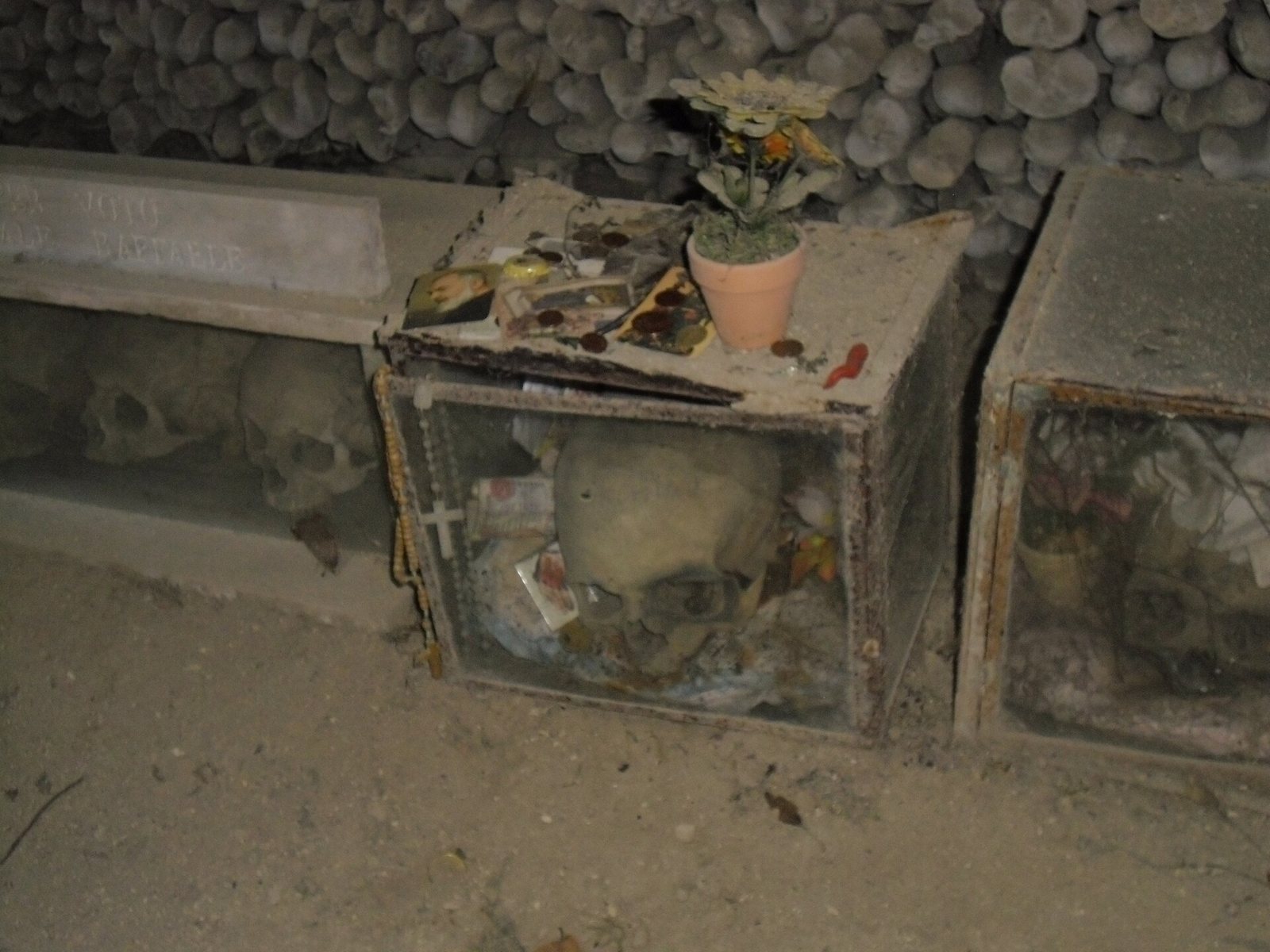
The rows of skulls in the photos are the result of all that layering. The cushions, cases and candles you may notice among them belong to the second half of this story, and to the people who came to pray.
Whose remains they are
The people in Fontanelle had very little in life, and that is part of why they ended up here. The official site describes them as people who could not afford burial and victims of past epidemics. The City of Naples, in its 2026 reopening notice, connects the great plague of 1656 with large numbers of anonymous dead brought to the quarries (Comune di Napoli).
Cholera brought more. The official Fontanelle site dates that epidemic to 1836, while some historical accounts place the final cholera deposits in 1837, so you may see either year depending on who is telling the story. Alongside the epidemic dead are the bones moved in from older church and confraternity burial places across the city, which is why Pace's "cemetery of cemeteries" is such a good description.
The ordered rows came later. According to the official site, Canon Gaetano Barbati is associated with arranging the bones into the organized display seen today, in 1872 (official Fontanelle site). Almost none of these people have names. The official site identifies only two named skeletons among the arranged remains, a count and his wife, who come up again below with the legends.
The galleries are the city's own dead, many of them people nobody else was left to mourn. Naples has long treated them that way, and that is where the adopted skulls begin.
Fontanelle through the centuries
Tap or hover a step to follow the order.
1656
The great plague of Naples brings large numbers of anonymous dead to the Fontanelle quarries, according to the City of Naples.
1836
Cholera victims are added to the remains, the year given by the official Fontanelle site; some accounts give 1837 for the final deposits.
1872
Canon Gaetano Barbati is associated with arranging the bones into the ordered display seen today.
1969
Cardinal Corrado Ursi orders the ossuary closed over concerns about fetishism and superstition in the skull devotion.
2026
The official visitor system lists booked, timed visits, with guided and audio-guided tours.
Adopting a skull: the anime pezzentelle
The *anime pezzentelle* are the "poor souls": the anonymous dead, prayed for as souls in Purgatory. The devotion built around them was simple and very personal.
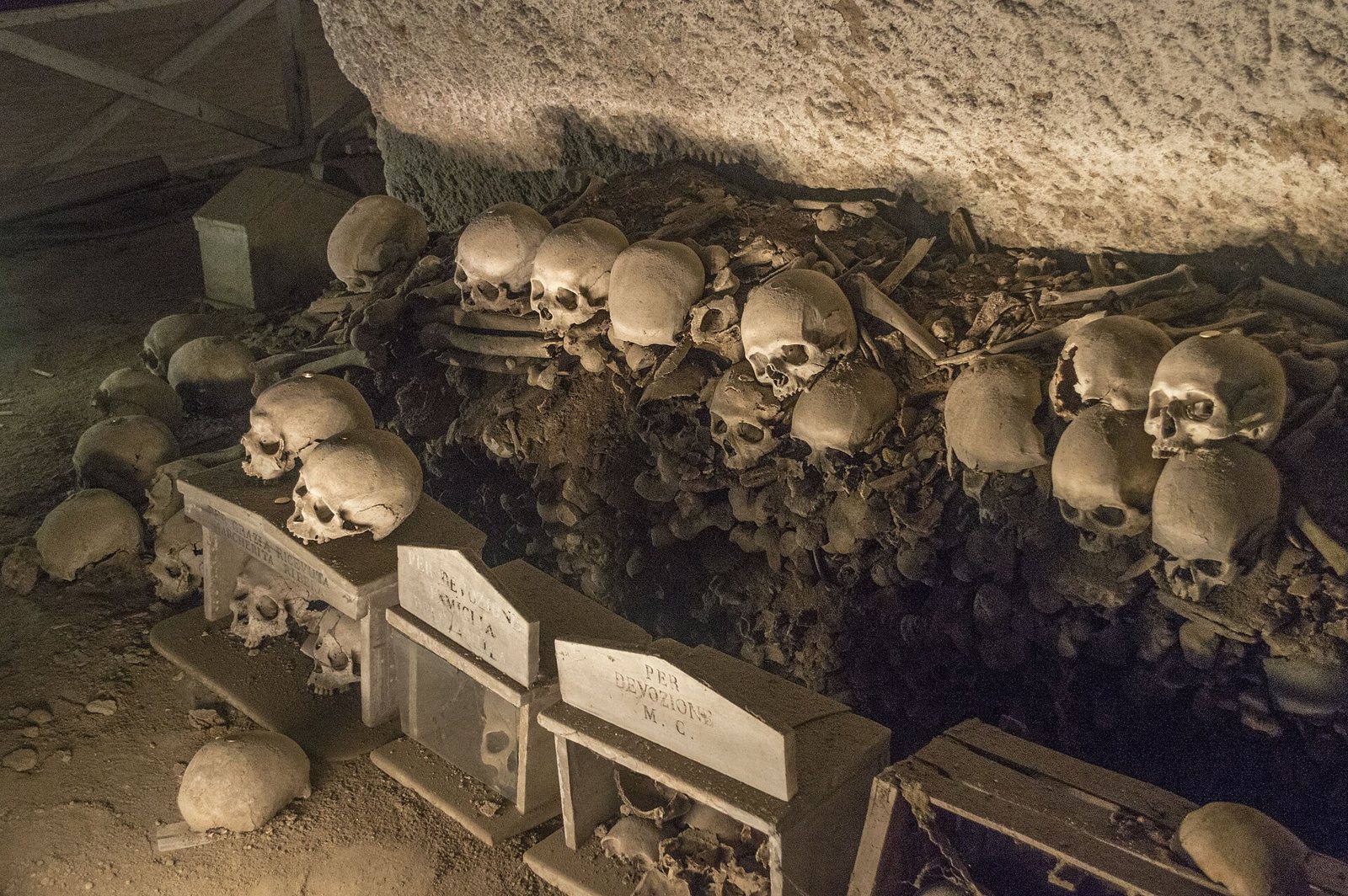
A devotee chose one skull, called a *capuzzella*. She cleaned and polished it, set it on a cloth or a small pillow, and added flowers, candles and a rosary. Then she prayed for that soul's relief in Purgatory. In return, she asked for something: a grace, protection, or help with a practical problem (official Fontanelle cult page).
It was a relationship that ran both ways. Anthropologist Donald Cosentino, writing in the journal Material Religion, records devotees who adopted skulls into their families and expected the soul to intercede for them, or to visit in a dream and reveal lottery numbers (Donald Cosentino, "Vernacular miracles: blood and bones in Neapolitan religion"). Dreams mattered. In accounts of the devotion, a soul could appear in a dream, sometimes asking for prayers and sometimes giving lottery numbers.
The official site describes how the bond was marked. If a grace was granted, the skull could be raised in honor: its cloth was replaced with an embroidered pillow, and it was placed in a case that recorded the date of the grace. If the request failed, the skull might be turned to face the wall and left. Seen from outside, that last part can sound harsh. Inside the devotion it made sense, because this was an exchange between the living and the dead, with care offered and help expected.
Anthropologist Marino Niola, quoted in Pace's study, reads the practice as collective solidarity with the weak and compassion for the forgotten dead. The devotion was especially tied to women, and it grew most visible in years of insecurity, including the periods around the two World Wars.
How a skull was adopted at Fontanelle
Tap a card to bring it forward.
- Choose: A devotee picked one anonymous skull, a capuzzella.
- Clean: She cleaned and polished it with care.
- Make a resting place: The skull was set on a cloth or pillow, with flowers, candles and a rosary.
- Pray: She prayed for the soul's relief in Purgatory.
- Ask: In return she asked for a grace, protection or practical help.
- Give thanks: If the grace came, the skull could be honored with an embroidered pillow and a case recording the date.
The Captain, Donna Concetta and other legends
A few skulls became famous in their own right, and Naples tells good stories about them. These are legends, handed down and retold, not documented life stories of the people whose bones they are.
The best known is the Captain, *Il Capitano*, a skull marked by one dark eye socket. The official Fontanelle site attributes a well-known version of his legend to the theatre director Roberto De Simone. In it, a blasphemous womanizer mocked the Captain inside the cemetery and dared him to come to his wedding. The man did marry, and a mysterious guest dressed in black arrived, revealed himself as the Captain, and killed the couple.
Visit Naples tells another version, in which a jealous fiancé damaged the skull's eye socket and was later confronted by a skeletal figure at his own wedding (Visit Naples). In both, the trouble starts with a man who treats the dead with contempt.
Donna Concetta is the other famous skull, known as *'a capa che suda*, "the head that sweats." Her skull is kept unusually polished or damp. Devotees read the moisture as the sweat of a soul suffering in Purgatory, and they rubbed the skull while asking for a favor. She is traditionally linked with fertility and motherhood. The official site presents all of this as tradition and belief.
Two skeletons in the galleries do have names. The official site identifies the remains of Filippo Carafa, Count of Cerreto, and his wife Donna Margherita Petrucci. Donna Margherita's open mouth gave rise to a legend of its own, that she died choking on a gnocco. It is a legend too, and a very Neapolitan one.
Guided tours run by the Cooperativa La Paranza tell these stories on site (La Paranza), so a visit is a good way to hear them in the place they belong to.
Why the ossuary closed in 1969, and what carried on
The devotion grew large enough that the Church stepped in. In 1969, Cardinal Corrado Ursi, Archbishop of Naples, ordered the ossuary closed through a decree of the ecclesiastical tribunal. The official site says he was concerned that the cult had developed signs of fetishism and superstition that were considered contrary to Catholic teaching after the Second Vatican Council (official Fontanelle cult page).
The decree was aimed at the devotion, not at the dead. The remains stayed where they were, and the habit of caring for the poor souls did not simply stop. Cosentino's fieldwork in Naples records the continuing importance of the *capuzzelle* in 1999, 2002, 2006 and 2013.
Prayer still has a place at Fontanelle today. The site keeps a set prayer period on Mondays and Fridays from 9:00 to 10:00, in a designated prayer area, before the ordinary visits begin. For many people in the Sanità, these galleries remain a place to remember the dead, not only a place to see them.
Visiting Fontanelle today
Fontanelle is open, and you need to book ahead. As of October 20, 2026, the official site lists these details (official visit-planning page):
- Opening hours are 10:00 to 18:00, with last entry at 17:15.
- It is closed on Wednesdays and on December 25.
- Mondays and Fridays have a prayer period from 9:00 to 10:00 in the designated prayer area.
For an ordinary visit you choose between an audio-guided visit and a guided visit, each about 40 minutes long. The audio guide presents voices from the Rione Sanità community, so the people of the neighborhood tell part of the story themselves. Up to 75 visitors are allowed inside at once, entering in groups of no more than 25 every 15 minutes. Groups of 20 to 50 book through a separate group system, and groups over 25 are split into smaller ones (official group-visits page).
Tap or hover a row to highlight it.
| Visit or visitor | Price listed |
|---|---|
| Visit or visitorAudio-guided visit, 40 minutes | Price listedFrom €6 |
| Visit or visitorGuided visit, 40 minutes | Price listedFrom €8 |
| Visit or visitorGroup visit, full price | Price listed€8 |
| Visit or visitorGroup visit, under 18, students, over 65 | Price listed€6 |
| Visit or visitorChildren under 12, people with disabilities and one companion | Price listedFree |
| Visit or visitorResidents of Naples' II and III Municipalities, accompanied visit | Price listedFree |
The official rules ask visitors to stay quiet and respectful. Photography and video are allowed, as long as you are considerate of other visitors and do not slow the route. Prices, hours and rules can change, so book and confirm the details on the official Fontanelle site before you go.
Other places that keep their dead in view
Fontanelle belongs to a long European habit of gathering bones where the living can see them and pray. Rome's Capuchin Crypt keeps the bones of friars in its chapels, and Paris moved the remains of millions of its people from crowded cemeteries into the Paris Catacombs, much as Naples emptied old burial grounds into its tuff galleries. Bone chapels such as the Sedlec Ossuary and Hallstatt's painted skulls in the bone house show other ways communities looked after their dead, and our story on ossuaries around the world gathers many more.
Rome's underground burial galleries have their own story in the catacombs of Rome. Across the ocean, families in La Paz keep named skulls called ñatitas and carry them to the Cementerio General each November 8, a tradition of its own told in our story on the Fiesta de las Ñatitas. For how Christians have thought about skulls and the dead more widely, see skulls in Christianity.
How well do you know Fontanelle?
Answer every question to check.
Questions about the Fontanelle cemetery
A few practical and curious questions come up again and again.
Is the Fontanelle cemetery completely closed?
No. As of October 20, 2026, the official site lists it as open with advance booking, from 10:00 to 18:00 and closed on Wednesdays. The closure people remember is the 1969 decree against the skull devotion, which closed the ossuary to the cult rather than removing the dead.
Do I need a tour, or can I visit by myself?
You need to book either way. The official site lists two options, a 40-minute audio-guided visit and a 40-minute guided visit, with timed group entries of up to 25 people every 15 minutes.
Can you still adopt a skull in Naples?
The adoption of skulls belonged to the *anime pezzentelle* devotion, which Cardinal Corrado Ursi closed the ossuary to in 1969. Today the site sets aside Mondays and Fridays from 9:00 to 10:00 for prayer in a designated area, which is the place for anyone who comes to pray rather than to tour.
What is the sweating skull?
The sweating skull is Donna Concetta, called *'a capa che suda* in Neapolitan. Devotees saw the damp shine on her skull as the sweat of a soul in Purgatory and rubbed it while asking for a favor, and she is traditionally linked with fertility and motherhood.
Why are there so many skulls at Fontanelle?
Because the quarries became the final resting place for many people at once: the poor without graves, the dead of the 1656 plague and the cholera of 1836, and bones cleared from older burial grounds. Canon Gaetano Barbati is associated with arranging them into rows in 1872, and the devotion grew up among those rows.
A place the Sanità still looks after
The skulls at Fontanelle are not anonymous to the neighborhood in quite the way they are to the rest of us. For centuries, women of the Sanità gave these strangers a cushion, a candle and a prayer, and the dead were expected to return the kindness. If you go, go gently, book ahead, and listen to the voices of the Sanità on the audio guide. The skulls people chose to care for say a great deal about the people who did the caring.
Terms in this story
Tap a term to see what it means.
Ossuary. A place where bones are gathered and kept, often after they are moved from earlier graves.
---