

No. 191
Saint Skull Relics: Agatha, Thomas Aquinas, Rose of Lima and Why Catholics Venerate Them
The skulls you see in silver busts and flower crowns are the relics of saints, and Catholics venerate them because, in Church teaching, a saint's body was a temple of the Holy Spirit and will share in the resurrection. A skull counts as a first-class relic, part of the saint's own body. Catholics honor the saint's example and ask for the saint's prayers; worship belongs to God alone (Vatican, "Relics in the Church: Authenticity and Conservation"; Code of Canon Law, Canon 1186).
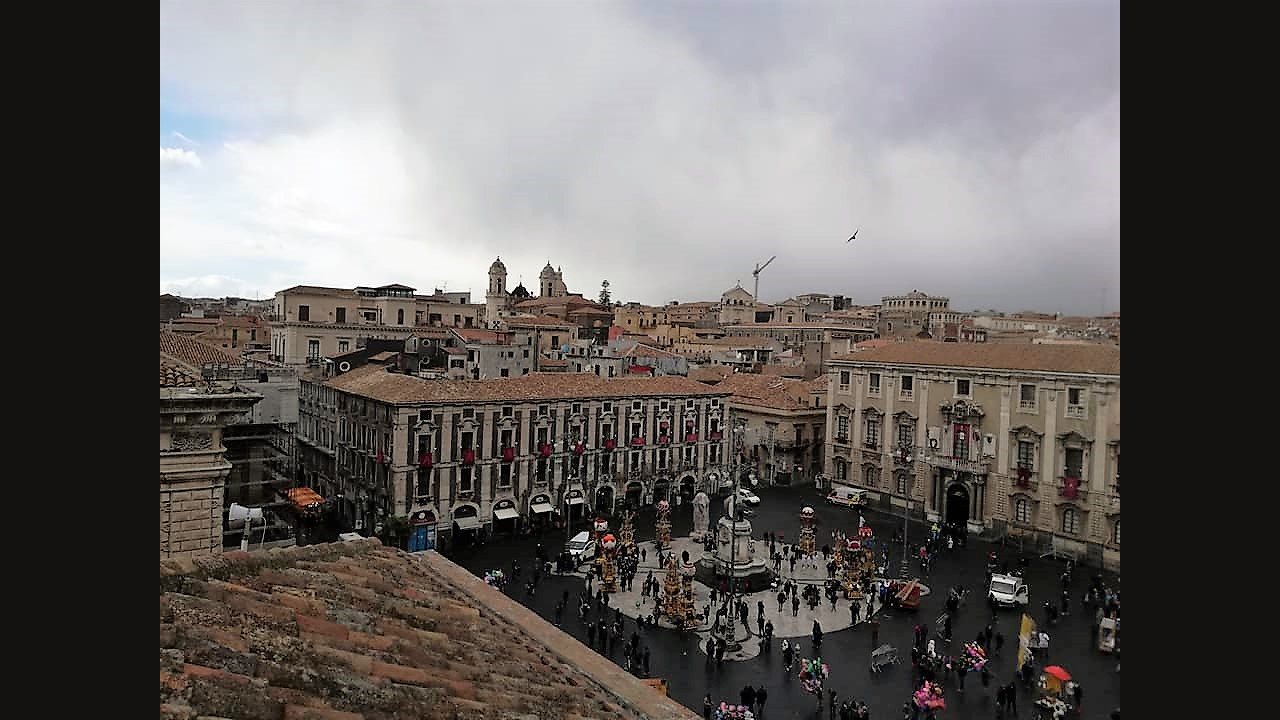
The procession skull at the heart of this story belongs to Saint Agatha. The Cathedral Basilica of Catania, in Sicily, keeps her head and thorax in a silver reliquary bust made in 1376, and every February the city carries it through the streets.
Two more skulls travel through this story with her: Saint Thomas Aquinas, whose skull is normally kept in Toulouse, France, and Saint Rose of Lima, whose skull rests in a gold and silver reliquary in Lima, Peru.
Saint Agatha of Catania and her silver bust
Agatha is Catania's own saint. According to the Christian tradition of the city, she was a virgin martyr of the third century who died in the Roman persecution after refusing to give up her faith. The details of her suffering come down through the *Passio Agathae*, the account of her martyrdom, and through centuries of devotion, so they are told as tradition rather than as a modern biography (Festival of Saint Agatha, history; Archdiocese of Catania). Her feast day is February 5.
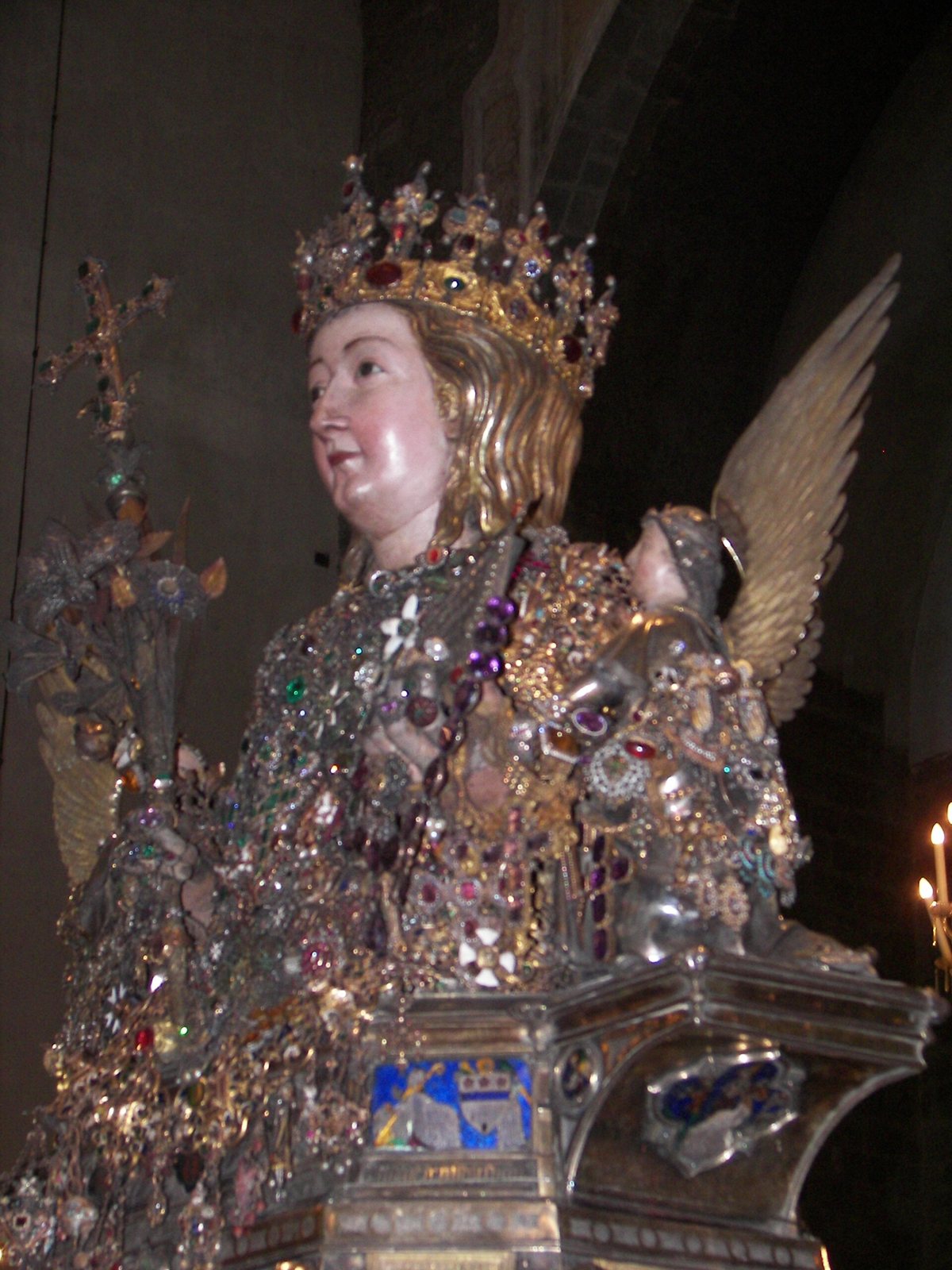
Her remains are in Catania. The Cathedral Basilica states that Agatha's head and thorax are kept in its reliquaries: the famous silver bust and a larger reliquary chest (Catania Cathedral, relics). The bust was commissioned in 1376 by Bishop Marziale and made by the goldsmith Giovanni di Bartolo. It shows Agatha clad in silver, surrounded by ex-voto jewelry offered by the faithful.
The bust is not kept out of sight. Catania's great feast runs from February 3 to 6, and above all on February 4 and 5 the bust and the larger casket are carried through the city on a silver fercolo, a processional platform. A second, summer observance falls on August 17 and recalls the traditional return of Agatha's relics to Catania from Constantinople in 1126.
Catania's tradition also tells of her veil. On February 5, 252, the story goes, the veil was carried out against a lava flow from Etna, and the flow stopped. The story belongs to Catania's devotion rather than to the geological record.
That story helps explain why people call on her. She is the patron saint of Catania, and popular devotion invokes her against fire and volcanic danger, and for women's health. Her traditional martyrdom included the mutilation of her breasts, and for that reason she is also prayed to for protection of the breasts (Festival of Saint Agatha, history).
When Agatha's skull left its bust in 2026
For most of its life the skull stays hidden inside the silver. In 2026 it did not. In July 2026, the Vatican Museums completed a restoration of the reliquary bust and Agatha's veil. While the work went on, her skull was taken out of the bust and placed in a separate reliquary so that people could still come and venerate it (Vatican City State).
The restored bust, the skull and the veil were shown together in Catania from July 20 to 22, 2026, in a special public exposition announced by the Archdiocese of Catania (Archdiocese of Catania). The skull was scheduled to go back into the bust on August 17, the day the city remembers the return of the relics from Constantinople. The Vatican's account praises the fourteenth-century bust and says its original polychromy, the painted color, and its ex-voto jewelry were restored.
Saint skull relics through the centuries
Tap or hover a step to follow the order.
1126
Catania's tradition dates the return of Saint Agatha's relics from Constantinople to this year.
1274
Thomas Aquinas dies at Fossanova Abbey on March 7.
1323
Thomas Aquinas is canonized.
1376
Giovanni di Bartolo makes Saint Agatha's silver reliquary bust in Catania.
2024
The skull of Thomas Aquinas tours the United States from November 29 to December 18.
July 2026
Agatha's restored bust, her temporarily separate skull and her veil are shown in Catania.
What a skull relic is, and why Catholics venerate it
A relic, in Catholic practice, is something connected with a saint, and a first-class relic is part of the saint's body itself: bone, hair, blood or a skull. The honor given to it is veneration, a form of respect, and the Church draws a firm line between that and worship, which belongs to God alone. The relic is honored because the saint's body was understood as a temple of the Holy Spirit and is destined for resurrection.
Canon 1186 of the Code of Canon Law gives the reason Catholics honor the saints in the first place: their example instructs the faithful, and their intercession supports them. Standing before a saint's skull is a way of standing near that example and asking for that help. The Church does not teach that relics work like magical objects (Herbert Thurston, Catholic Encyclopedia, "Relics").
The Church also sets rules. The Vatican's 2017 instruction "Relics in the Church: Authenticity and Conservation" says relics may be displayed for public veneration only with an ecclesiastical certificate of authenticity, and it forbids selling relics. That is why the skulls in this story stay in the churches and orders that keep them.
Relics and veneration in Catholic practice
Tap a card to bring it forward.
- First-class relic: Part of a saint's body, such as bone, hair, blood or a skull.
- Veneration, not worship: Saints are honored for their example and asked for their prayers; worship belongs to God alone.
- Authenticity: A relic shown for public veneration needs an ecclesiastical certificate of authenticity.
- Never for sale: Church rules forbid selling relics.
- Third-class relic: An object deliberately touched to a first- or second-class relic, such as a rosary.
The skull of Thomas Aquinas on tour
Thomas Aquinas, the great Dominican saint, died at Fossanova Abbey in Italy on March 7, 1274, and was canonized in 1323. The Dominican Province of St. Joseph says his skull is normally kept in Toulouse, France (Dominican Friars, "St. Thomas Aquinas on Tour").
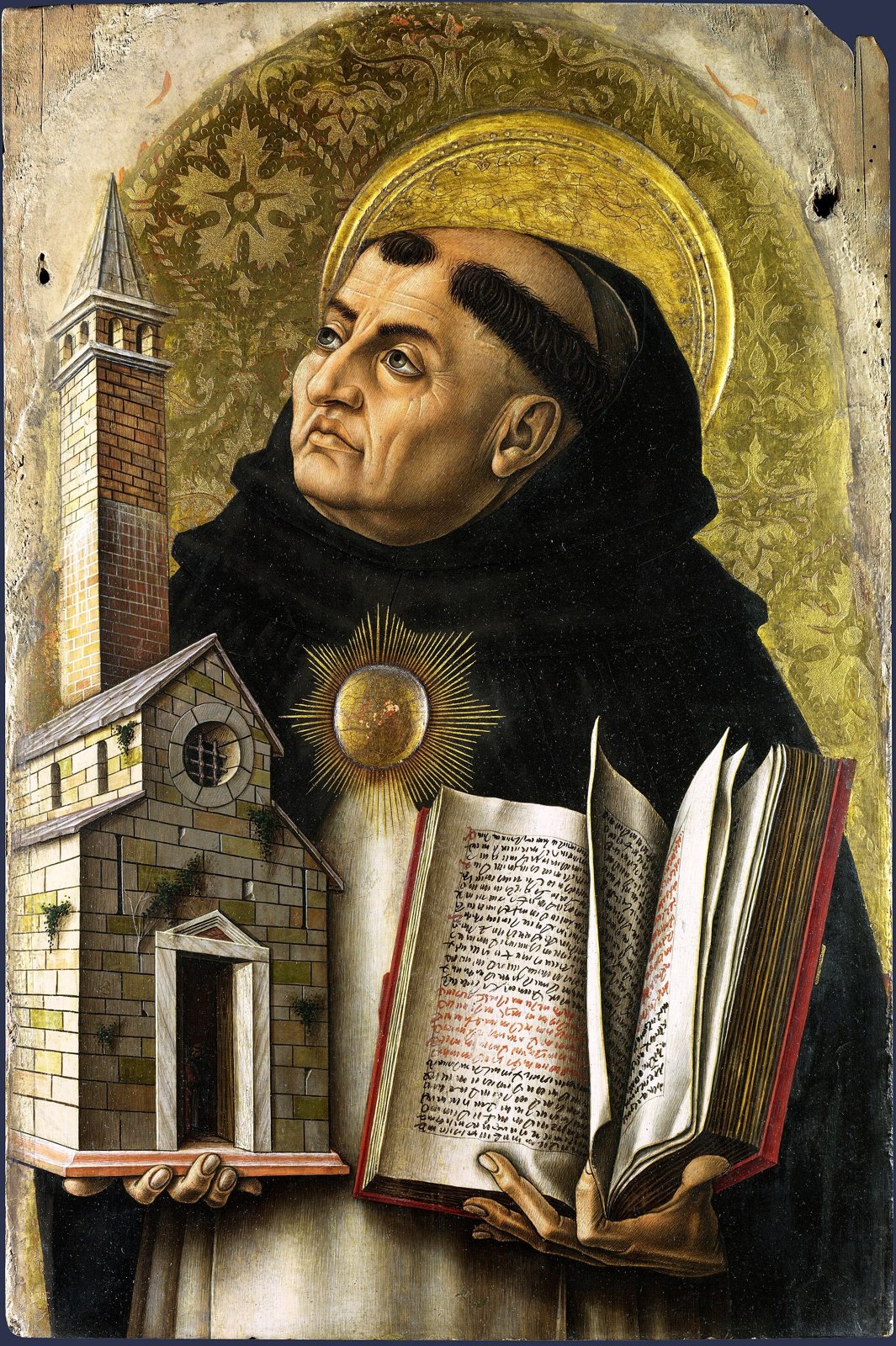
In late 2024 it left Toulouse for its first tour of the United States, from November 29 to December 18. The tour marked a Dominican jubilee with three anniversaries at once: 700 years since his canonization, 750 years since his death, and 800 years since his birth, traditionally dated to about 1225. It stopped at Dominican churches, houses of study and other Catholic institutions, where people were invited to venerate the relic. Earlier that year, on the 750th anniversary of his death in March 2024, his relics were carried in procession, as Catholic World Report described (Catholic World Report).
The Dominicans describe what visitors were doing as prayer before the earthly remains of a saint, tied to the belief in the resurrection of the dead (Dominican Friars, "Thousands Flock to Venerate the Skull of St. Thomas"). The order presents the Toulouse skull as an authenticated major relic. Talk around the tour also brought up a second skull said to have turned up at Fossanova in 1585; that remains an unresolved claim, while the Dominican identification rests with Toulouse.
Saint Rose of Lima and her crown of roses
Rose of Lima's skull is kept in her own city. The Basilica and Convent of Santo Domingo in Lima keeps it apart from most of her remains, which rest in a mausoleum and crypt beneath the convent. Peru's state news agency Andina reports that the skull is shown in the church in a marble reliquary plated with gold and silver, and that it is displayed during liturgical acts for public veneration. Some of her other bones are kept at the Monastery of Saint Rose and at other places in Lima (Andina; Andina, relic locations).
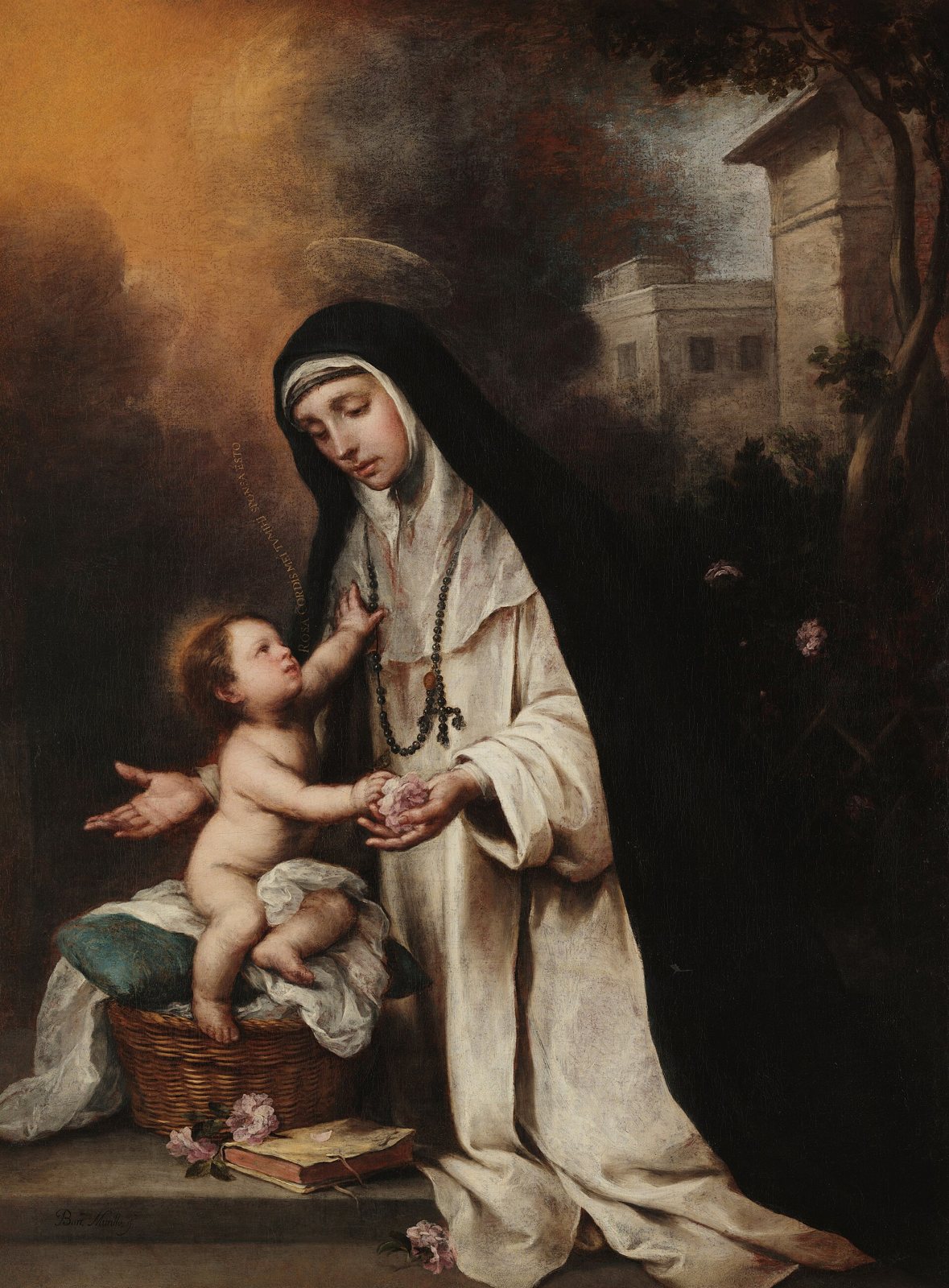
Her skull is traditionally crowned with roses, which fits her name and is often what catches a visitor's eye. The rector of the basilica, speaking to EWTN News, says the skull has been in the basilica since the late nineteenth century, and that an earlier gold crown was replaced after it was stolen (EWTN News).
Agnes, Ambrose, Basil and Peter
A few other saints come up often when people ask about skull relics, and each church describes its relic a little differently.
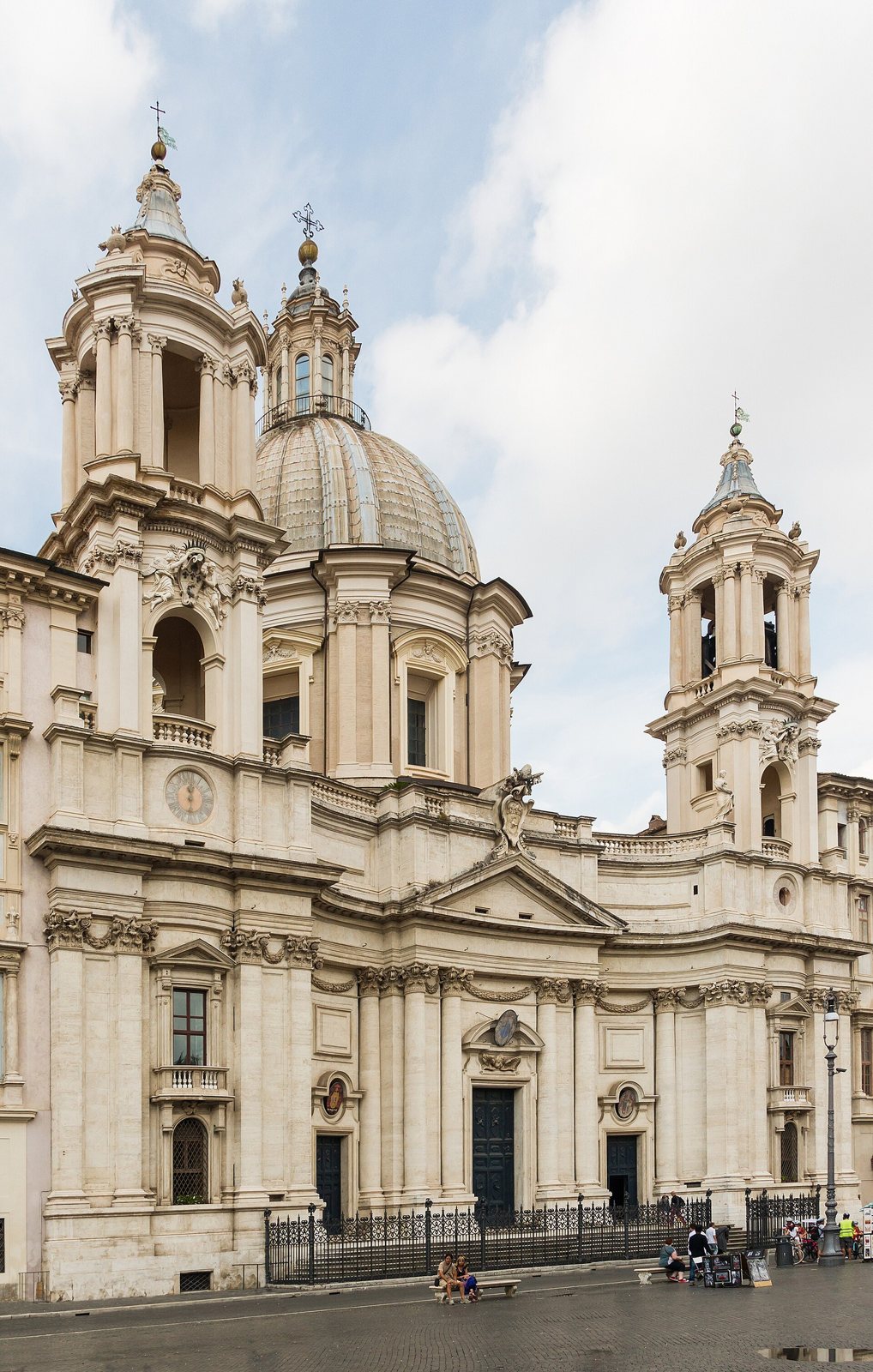
In Rome, a skull traditionally identified as Saint Agnes's is kept in the church of Sant'Agnese in Agone on Piazza Navona. Other remains associated with her lie beneath the altar of Sant'Agnese fuori le mura, built over her tomb in the catacomb that bears her name (Rome tourism, Saint Agnes catacombs). Our story on the catacombs of Rome follows those burial galleries. If you hope to see the skull, confirm the current relic display with Sant'Agnese in Agone before you plan your visit.
In Milan, the Basilica of Sant'Ambrogio keeps the body of Saint Ambrose beneath the altar in its crypt, together with the bodies of Saints Gervasius and Protasius. The basilica's history says the three were found together when the sarcophagus was opened in 1871 (Basilica of Sant'Ambrogio). Here the relic is the saint's body in the crypt.
Orthodox tradition places the skull of Saint Basil the Great at the Great Lavra Monastery on Mount Athos in Greece. Anyone hoping to see it there should confirm with the monastery.
And beneath Saint Peter's Basilica, the Vatican identifies a funerary niche as the burial place associated with the Apostle Peter. In a 2019 letter, Pope Francis wrote that bones uncovered there in 1952 can "quite reasonably be considered" Peter's (Pope Francis, 2019). The Vatican speaks of bones kept beneath the basilica rather than a skull on display.
Tap or hover a row to highlight it.
| Saint | Relic | Where it is kept | Who says so |
|---|---|---|---|
| SaintAgatha | RelicHead and thorax | Where it is keptCathedral Basilica of Catania, Sicily | Who says soThe cathedral |
| SaintThomas Aquinas | RelicSkull | Where it is keptNormally in Toulouse, France | Who says soDominican Province of St. Joseph |
| SaintRose of Lima | RelicSkull, apart from most of her body | Where it is keptBasilica and Convent of Santo Domingo, Lima | Who says soAndina |
| SaintAgnes | RelicSkull traditionally identified as hers | Where it is keptSant'Agnese in Agone, Rome | Who says soChurch tradition |
| SaintAmbrose | RelicBody, with Gervasius and Protasius | Where it is keptCrypt of Sant'Ambrogio, Milan | Who says soThe basilica |
| SaintBasil the Great | RelicSkull | Where it is keptGreat Lavra Monastery, Mount Athos | Who says soOrthodox tradition |
| SaintPeter | RelicBones that can "quite reasonably be considered" his | Where it is keptBeneath Saint Peter's Basilica | Who says soPope Francis, 2019 |
Three more skulls with stories of their own
Some saints' skulls are big enough stories to have their own pages, so here they get one line each.
Mary Magdalene is often shown holding or contemplating a skull in penitential art, and the skull venerated as hers rests at Saint-Maximin in Provence: Mary Magdalene's skull.
Saint Valentine's flower-crowned skull is venerated at Santa Maria in Cosmedin in Rome, a traditional identification among several churches that claim his relics: Saint Valentine's skull.
John the Baptist's head is claimed by several churches, including Amiens Cathedral and San Silvestro in Capite in Rome: the head of John the Baptist.
Siena keeps something a little different. Saint Catherine of Siena's relic there is not a bare skull but her preserved, mummified head, kept in the Basilica of San Domenico since Raymond of Capua had it carried from Rome in 1384, while her body lies beneath the high altar of Santa Maria sopra Minerva in Rome. Her story is told in full in the head of St Catherine of Siena.
The same impulse fills other churches across Europe with martyrs' remains: the jeweled catacomb saints of German-speaking churches, and the skulls of the martyrs kept in Otranto Cathedral.
Saints' skulls: how much do you know?
Answer every question to check.
Questions about saints' skulls and relics
A handful of questions come up whenever a saint's skull goes on view.
Which saint holds a skull?
In Christian art, Saint Francis of Assisi, Saint Jerome and Mary Magdalene are often shown holding or contemplating a skull. That is a painted symbol; the actual relic skulls in this story belong to saints such as Agatha in Catania, Agnes and Valentine in Rome, and Rose in Lima. Our story on skulls in Christianity looks at the painted skulls.
What is the holiest relic in the Catholic Church?
The Catholic Church does not publish a ranking of relics. The ones most often described as especially important are relics of Christ's Passion, the True Cross and the Crown of Thorns, and the tomb and bones associated with Saint Peter. Church teaching puts its weight on proper authentication and respectful veneration.
What happens if you touch a rosary to a first-class relic?
In Catholic devotional language, the rosary becomes a third-class relic, an object touched to a first- or second-class relic (National Shrine of the Little Flower). The relic itself stays sealed, and visitors do not handle it. The Vatican's rules stress authentication, authorized care and respect, not an automatic spiritual effect.
What is the most famous relic in the world?
There is no official ranking, but the Shroud of Turin, the True Cross, the Crown of Thorns and the relics associated with Saint Peter are among the most famous, because of their connection with Jesus or the early Church. Fame alone does not settle whether a relic is authentic; that is a question for the Church's own rules on authentication.
What is Saint Agatha the patron saint of?
Saint Agatha is the patron saint of Catania. Popular devotion calls on her against fire and volcanic danger, linked to the city's tradition of her veil stopping an Etna lava flow, and for women's health, including protection of the breasts.
Seeing a saint's skull with care
Whether it rides through Catania on a silver fercolo, wears roses in Lima or travels from Toulouse to a parish in the United States, each of these skulls is a real person's remains, kept by a community that prays before it. If you go to see one, treat the church as the place of prayer it is, and confirm the current display with the church that keeps the relic before you travel.
Terms in this story
Tap a term to see what it means.
Relic. Something connected with a saint and kept for veneration; a skull is part of the saint's body.
---