

No. 165
How Much Does a Human Skull Weigh? The Real Number and What Changes It
A dry adult human skull, lower jaw included, weighs a little over half a kilogram, or about 1.2 to 1.4 pounds. In a 2011 study of 130 recent French skulls published in Forensic Science International, the average was 623.44 grams (about 1.37 lb) for men and 548.07 grams (about 1.21 lb) for women (Forensic Science International).
A living head is a very different number. Cleveland Clinic puts it at roughly 10 to 12 pounds, or 4.5 to 5.4 kilograms, because it also holds the brain, scalp, muscles, eyes, teeth, blood and other tissue (Cleveland Clinic). Both figures are averages for groups of people, not a fixed value for any one person.
The measured number
The French study is useful because it weighed real dry skulls with the mandible, the lower jaw, still attached, and it reported how much the weights spread. Men averaged 623.44 grams, give or take 106.83 grams. Women averaged 548.07 grams, give or take 94.57 grams. Those ranges are wide, so plenty of individual skulls sit well above or below the average.

In everyday units, that comes to about 0.62 kilograms (1.37 lb) for the male average and 0.55 kilograms (1.21 lb) for the female average. A practical rounded answer for a dry adult skull with its jaw is about 0.55 to 0.62 kilograms, or 1.2 to 1.4 pounds. If the skull you held was a replica, its weight follows other rules, covered further down.
Tap or hover a row to highlight it.
| Item | Figure | Notes |
|---|---|---|
| ItemDry adult skull, male average | Figure623.44 g, about 1.37 lb | NotesFrench sample, 2011, lower jaw included |
| ItemDry adult skull, female average | Figure548.07 g, about 1.21 lb | NotesFrench sample, 2011, lower jaw included |
| ItemLiving adult head | FigureAbout 10 to 12 lb, or 4.5 to 5.4 kg | NotesCleveland Clinic estimate |
| ItemTotal head soft tissue, healthy women aged 35 to 45 | Figure3.02 to 4.96 kg | NotesIncludes the brain and other soft tissue |
| ItemTypical adult female brain, 2003 study | FigureAbout 1.17 kg | NotesApproximate study estimate |
What makes one skull heavier than another
Several things push a skull's weight up or down, and none of them works alone. Sex is one. In the French sample, male skulls averaged about 75 grams more than female skulls, but the ranges overlapped substantially, so a heavy female skull can easily outweigh a light male one.
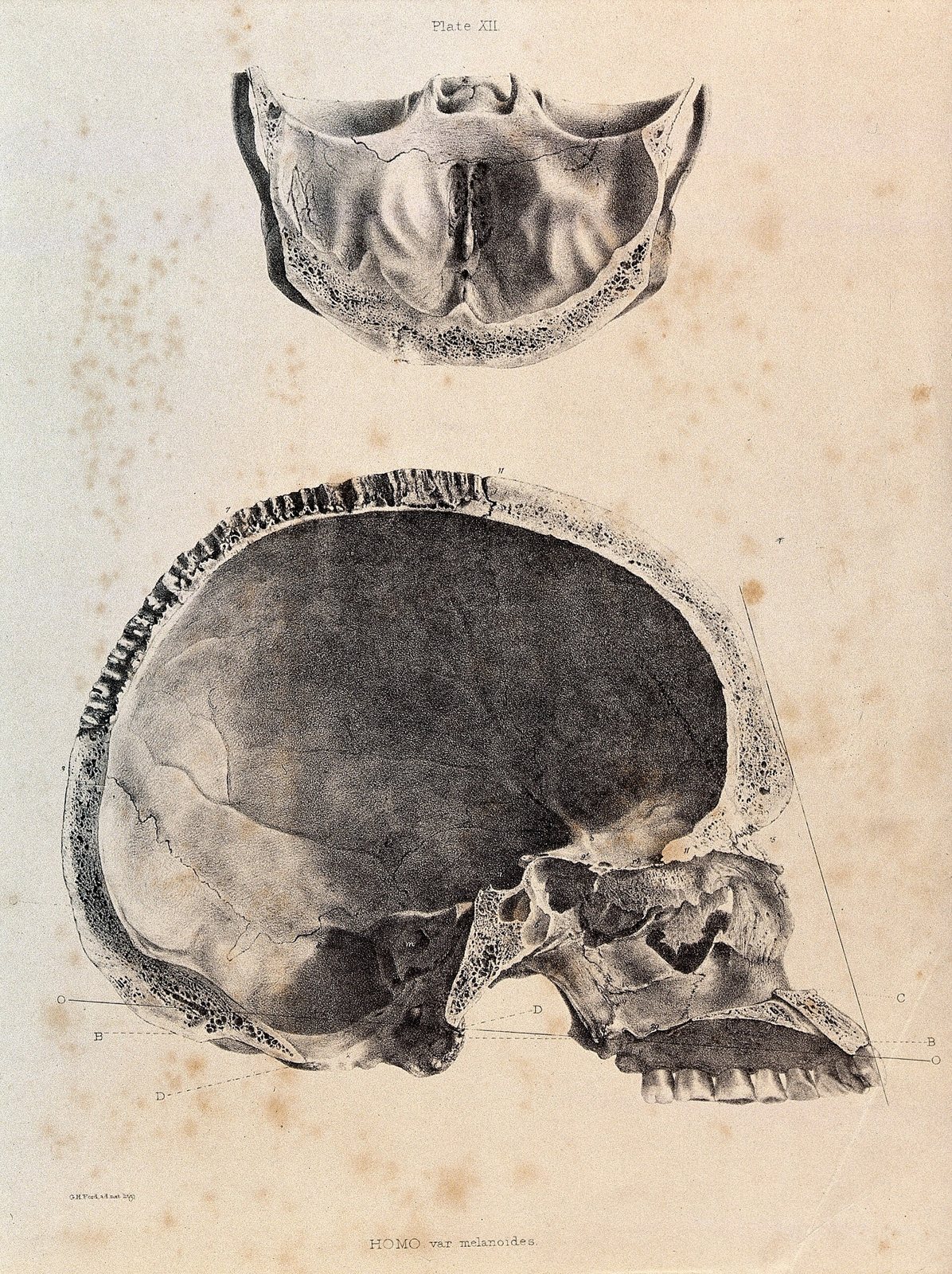
Bone density changes with age, and not the same way for everyone. A 2011 CT study by Schulte-Geers and colleagues looked at 244 European skulls from forensic collections. Male skull density stayed broadly constant across adulthood, while female skull density declined slowly from about age 20 onward (Schulte-Geers et al., 2011).
Body build plays a smaller part than you might guess. A Netherlands Forensic Institute study of 1,097 autopsies carried out from 2011 to 2014 found that the thickness of the adult skull vault correlated only weakly with body weight, and that age and height were not useful predictors (Netherlands Forensic Institute study).
Then there is the lower jaw. The mandible is the skull's only movable bone, and it adds meaningful mass (Cleveland Clinic, skull anatomy). Its size, its teeth, its bone density and the way it remodels over a lifetime all vary from person to person (mass properties of the human mandible). A specimen missing its jaw, or missing teeth, will weigh less than the same skull complete. All of this is why weight alone cannot reliably tell you whether a skull belonged to a man or a woman, or how old the person was.
What changes a skull's weight
Tap a card to bring it forward.
- Sex: Male skulls in the French sample averaged about 75 grams more, though the ranges overlapped widely.
- Bone density with age: Female skull density declined slowly from about age 20, while male density stayed broadly constant.
- Body build: Adult skull thickness tracked body weight only weakly in 1,097 Dutch autopsies.
- The lower jaw: The mandible, the skull's only movable bone, adds meaningful mass and varies between people.
- Missing teeth or jaw: A specimen without its jaw or teeth weighs less than the same skull complete.
Skull weight versus head weight
The two phrases sound alike but describe very different things. "Skull weight" means the cleaned bones, usually with the lower jaw. "Head weight" means the whole living head: the skull plus the brain, scalp, muscles, skin, eyes, teeth, blood and everything else. That is how a dry skull of about 0.55 to 0.62 kilograms ends up inside a head of about 4.5 to 5.4 kilograms.

Most of the difference is soft tissue. In 2003, Arcudi and colleagues used dual-energy X-ray absorptiometry, a scanning method, to study 85 healthy women aged 35 to 45. Defining the head as everything from the lower jaw to the top of the skull, they measured total head soft tissue at 3.02 to 4.96 kilograms. The brain alone came to about 1.17 kilograms in a typical adult woman (Arcudi et al., 2003). So, the heavy part of your head is mostly not bone.
This is general information about anatomy, not medical advice. Anyone with a head injury should get emergency medical care.
Does a head really weigh as much as a bowling ball?
The whole head does land in the same broad range. Cleveland Clinic compares the complete upright human head with a 10 to 12 pound bowling ball (Cleveland Clinic).
The comparison only works for the living head. The cleaned skull alone weighs a little over a pound, so a skull on a shelf is a long way from a bowling ball. If you are curious about what that bone can withstand rather than what it weighs, that is a separate story, told in how strong is a human skull.
Real skull or replica?
A skull replica can be lighter than a real dry skull, about the same, or heavier, depending on how it is made. Replicas may be hollow or solid, and they come in resin, plaster, polyurethane, ceramic, metal and 3D-printed plastic, each with its own weight. NYU Health Sciences Library lists a 3D-printed human skull model among models of up to 1,000 grams (NYU Health Sciences Library), while one maker of educational models advertises a skull of 300 grams. A real dry adult skull, at roughly 548 to 623 grams on average, falls between those two.
So, if the replica on your desk feels suspiciously light or surprisingly heavy, it is probably the material talking. For any particular replica, the listed material, the dimensions, whether the jaw is attached and the listed product weight tell you more than the word "skull" on the label.
How forensic scientists and museums use skulls
Forensic anthropologists do not identify a person from skull weight alone. They combine the shape and measurements of the skull with the teeth, signs of injury or disease, DNA when appropriate and the rest of the skeleton to build a biological profile. The American Board of Forensic Anthropology says a skull can contribute evidence about adult biological sex, age at death, ancestry or population affinity and the teeth, while the pelvis generally gives stronger estimates of sex and age (American Board of Forensic Anthropology). The American Dental Association notes that teeth carried in the jaw can be important in forensic identification (American Dental Association). For more on how much a skeleton can reveal, see what bones tell archaeologists.
Museums hold human skulls for teaching, anatomical comparison, conservation, imaging and research, and they treat them as the remains of people. That means documented provenance, consent, consultation and respectful care. UK government guidance recommends that museums keep written policies covering retention, access, transfer, return and reburial (UK government guidance). The American Museum of Natural History says its non-invasive research requires community consultation and consent, and it keeps a continuing moratorium on destructive analysis (American Museum of Natural History). The return of remains to communities is its own story, covered in repatriation of human remains.
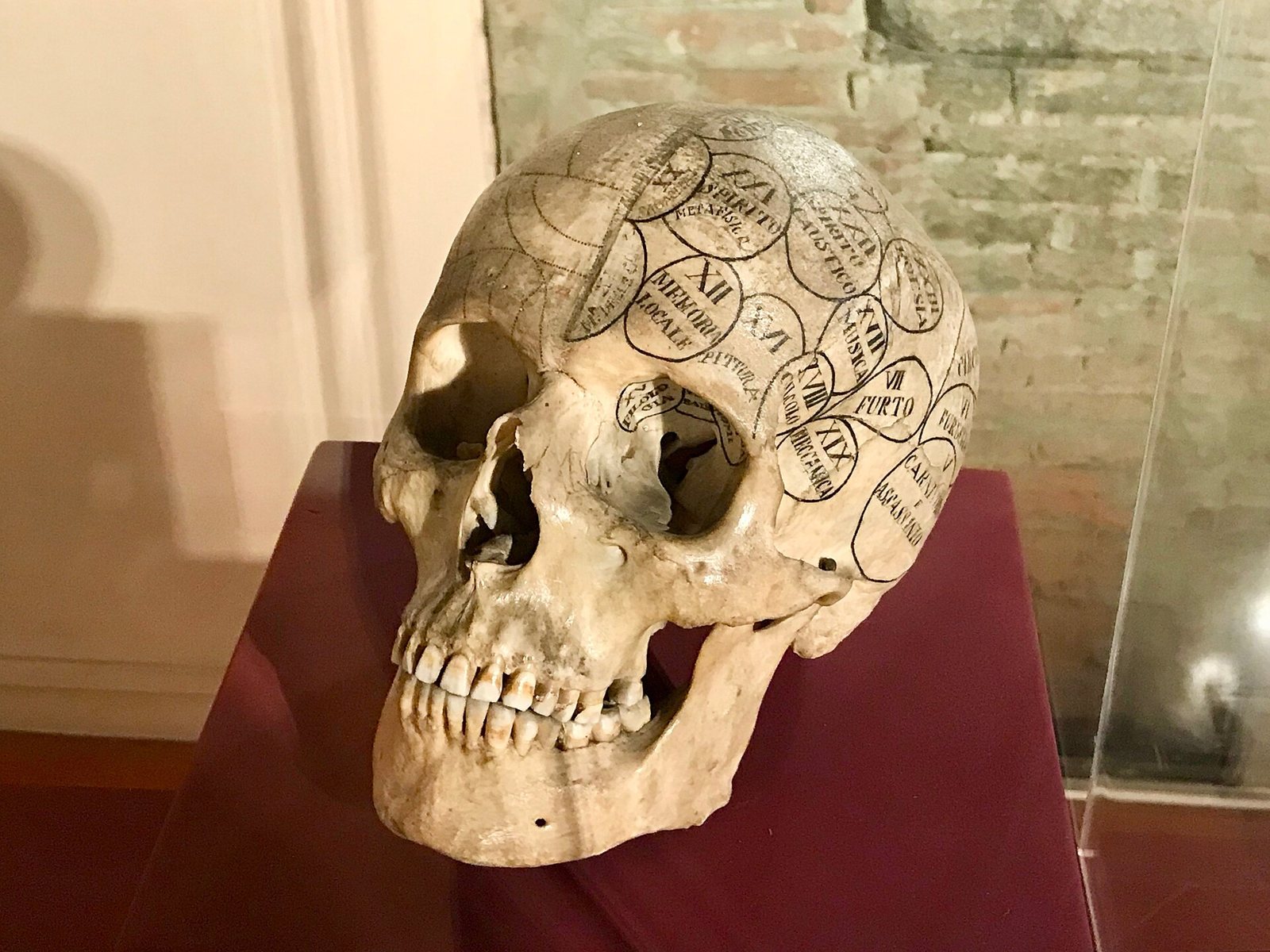
Some teaching skulls have long histories of their own. The Science Museum Group holds an 18th- or 19th-century European demonstration skull from the Sir Henry Wellcome Collection that was sliced horizontally and marked to show its different bones (Science Museum Group).
A word on real human skulls
If you are wondering about owning a real human skull, or you have come across bones, start with what to do if you find human bones.
How well do you know skull weight?
Answer every question to check.
Frequently asked questions
A few more quick answers about skull weight.
How heavy is an average skull?
An average dry adult skull with its jaw weighs about 0.55 to 0.62 kilograms, or 1.2 to 1.4 pounds, based on the French forensic sample. Treat that as a guide for groups of people, since the study reported a spread of roughly 95 to 107 grams around each average.
Can skull weight tell you if a skull is male or female?
No. Male and female skull weights overlap substantially, so forensic anthropologists rely on shape, measurements, teeth and other bones, and they consider the pelvis a stronger guide to sex than the skull.
How much does a human head weigh in kilograms?
About 4.5 to 5.4 kilograms, according to Cleveland Clinic's estimate of 10 to 12 pounds for the whole upright head. In healthy women aged 35 to 45, soft tissue alone accounted for 3.02 to 4.96 kilograms of it.
More about the human skull
Weight is only one way to measure a skull. For strength, see how strong is a human skull; for a wider set of surprising details, read our human skull facts. The skull is a small part of a much bigger count, explained in how many bones are in the human body, and if you want to see how specialists rebuild a face on a skull, there is facial reconstruction.
Terms in this story
Tap a term to see what it means.
Dry skull. A cleaned skull with no soft tissue, the kind weighed in the 2011 French study.
---