

No. 071
Skeleton in the Closet: What the Phrase Means and Where It Comes From
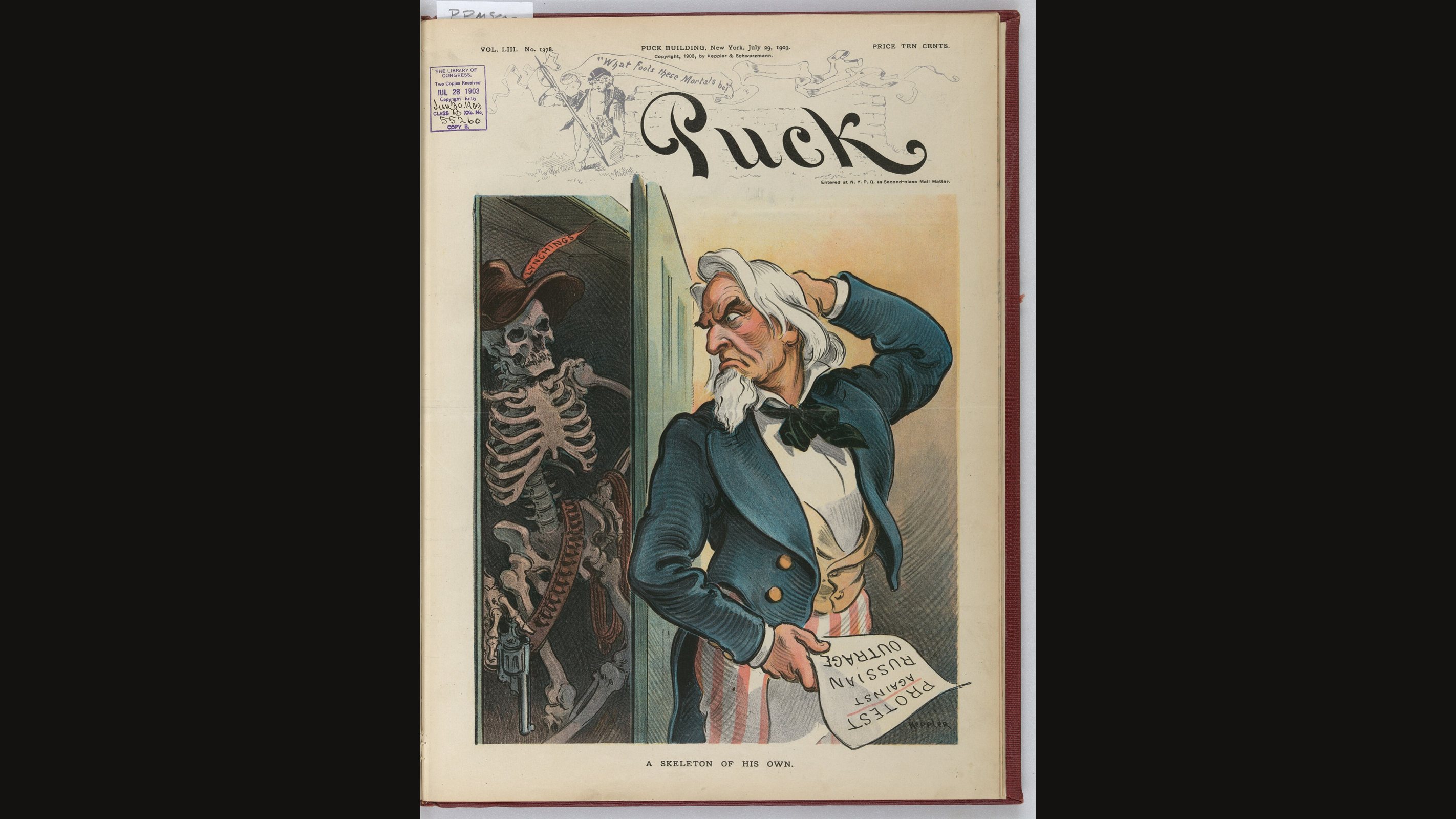
A skeleton in the closet is an embarrassing, shameful or damaging secret, usually from a person's or a family's past, that is being kept out of sight. Collins English Dictionary defines it as a concealed family scandal, or any embarrassing, shameful or damaging secret. In British English the same secret lives in a cupboard: "a skeleton in the cupboard."
The phrase is on record in British English in the early nineteenth century, first as a figure of speech for a hidden family trouble such as an inherited disease. The novelist William Makepeace Thackeray helped make it popular in the 1840s. Who said it first is still unknown, and no famous real skeleton has ever been tied to it, which is a small disappointment for a site that collects them.
What the phrase means today
The meaning has stayed steady. Collins gives the family-scandal sense and the wider sense of any damaging secret, and the Cambridge Dictionary puts it more briefly as "an embarrassing secret." People use it about individuals, families, companies and public figures: a politician with skeletons in the closet is someone with a past that might not survive daylight.
The plural is just as common as the singular. A person can have "a skeleton in the closet" or "skeletons in the closet," and when the secrets come out, people often say the skeletons came tumbling out. The image does the work. A skeleton is what is left of a person after everything else is gone, and a closet is where you put the things you do not want guests to see.
The earliest records
The phrase turns up in print earlier than many people expect. Gary Martin of Phrase Finder identifies an 1816 use by William Hendry Stowell in *The Eclectic Review*: "The dread of being the cause of misery to posterity has prevailed over men to conceal the skeleton in the closet." Stowell was writing about hereditary disease. His skeleton was a figure of speech for an inherited illness that families hid, not a set of bones in a cabinet.
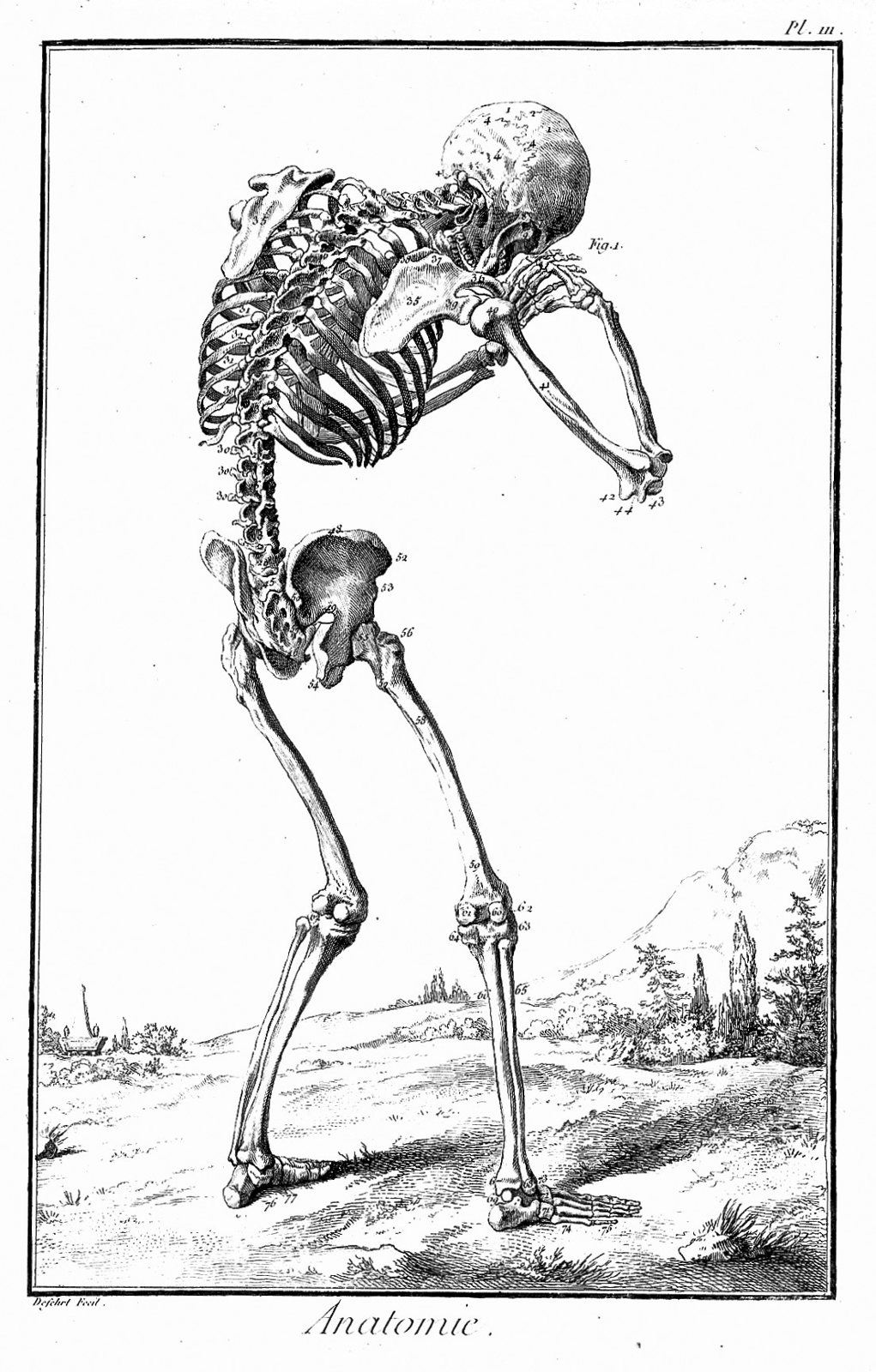
A year earlier, in 1815, a lecture by the physician Joseph Adams reportedly used the words "to conceal the skeleton in the closet" in the same sense, about hiding a family history of hereditary disease. That record is reported by Mental Floss, and it points to the same early meaning: the skeleton as a family's hidden inheritance.
The Oxford English Dictionary, as Mental Floss reports it, gives 1845 as its earliest record of the expression, in a piece by Thackeray in the magazine *Punch* about a skeleton in every house. Thackeray came back to the idea a few years later in *The History of Pendennis*, published in parts from 1848 to 1850: "Every house has its skeleton in it somewhere."
So, the dates depend on who is counting. Mental Floss reports Adams in 1815, Phrase Finder gives Stowell in 1816, and the earliest record in the OED is 1845. Collins credits Thackeray with popularizing a phrase that was already in use, which fits all three. The best reading of the record is a metaphor that grew gradually in the early nineteenth century, with no known inventor.
Theories about where the image came from
Because the phrase is so vivid, people have looked for a real skeleton behind it. Three explanations come up most often, and each is best treated as a theory.
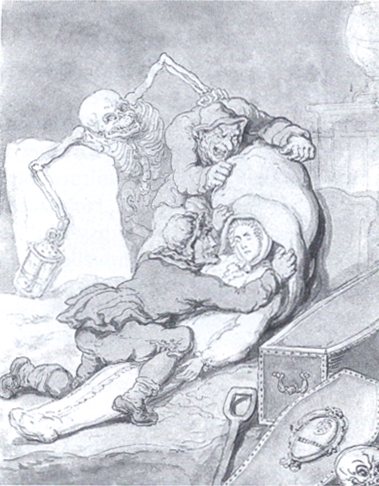
The medical theory, often told as the body-snatching story, starts in Britain before the Anatomy Act of 1832. Anatomists and medical students were short of legally available bodies to study, and so-called resurrectionists supplied bodies taken from graves. It was a secret trade and a publicly condemned one, and the people taken from those graves were somebody's parents, children and neighbors. It is plausible that anatomical remains were kept hidden in storerooms or cupboards, as Mental Floss notes, but no documented chain shows that body snatching created the idiom. If historic medical collections interest you, our story on the Mütter Museum skulls looks at one.
The literary theory points to Gothic stories of hidden corpses, secret rooms and concealed shame. One proposed influence is Bluebeard, the French tale recorded by Charles Perrault in 1697, in which Bluebeard's wife opens a forbidden room and finds the bodies of his earlier wives. Gothic fiction of the eighteenth and nineteenth centuries supplied plenty of similar scenes. Bluebeard is a likely relative of the image, not a proven origin of the phrase.
The hereditary-disease reading has the earliest direct evidence, since both Adams in 1815 and Stowell in 1816 used the skeleton as a figure for an inherited illness a family kept quiet. The fairest summary is that the image may have drawn on all of these: family disgrace, Gothic fiction and an awareness of secret anatomy. The doctor story makes a good tale, but it remains a theory rather than the established origin.
How the skeleton got into the closet
Tap or hover a step to follow the order.
1697
Charles Perrault publishes the Bluebeard tale, a proposed literary parallel involving hidden bodies
1815
Physician Joseph Adams reportedly uses "to conceal the skeleton in the closet" about hereditary disease
1816
William Hendry Stowell uses "the skeleton in the closet" in The Eclectic Review
1832
Britain passes the Anatomy Act, changing the law on anatomical dissection
1845
Thackeray writes in Punch about a skeleton in every house, the earliest record of the expression in the OED
1930
W. Somerset Maugham publishes Cakes and Ale, or the Skeleton in the Cupboard
1936
Louis Armstrong records "The Skeleton in the Closet"
1987
Anthrax releases "A Skeleton in the Closet" on Among the Living
Closet or cupboard?
Both are right; they belong to different varieties of English. British English keeps the skeleton in the cupboard, and the World English Historical Dictionary cross-references "skeleton in the cupboard" under its entry for cupboard. American English keeps it in the closet. The secret is the same either way.
The British form even made it onto a famous title page. W. Somerset Maugham called his 1930 novel *Cakes and Ale, or the Skeleton in the Cupboard*, published in London by William Heinemann, as the Huntington Library records.
The skeleton in books and songs
Once the phrase was settled in the language, writers and musicians borrowed it. Maugham's subtitle is the best-known literary example. In 1936, Louis Armstrong recorded "The Skeleton in the Closet" with Jimmy Dorsey and His Orchestra, a song with music by Arthur Johnston and lyrics by Johnny Burke, associated with the film *Pennies from Heaven* and catalogued by the Smithsonian National Museum of American History.

Half a century later the skeleton went heavy. Anthrax put "A Skeleton in the Closet" on *Among the Living*, released March 22, 1987, and the album page at Nuclear Blast lists it as track five. From a Victorian novel to a jazz trumpet to a thrash guitar, the skeleton has had a busy career for something that was supposed to stay hidden.
How well do you know the skeleton in the closet?
Answer every question to check.
How to say it in Spanish
Spanish has both direct versions of the English phrase and idioms of its own. "Tener esqueletos en el armario" and "tener esqueletos en el clóset" are understood adaptations of the English expression. The Real Academia Española defines armario as a cupboard or wardrobe and clóset as an American Spanish word for a built-in wardrobe, which is why clóset is the common choice in much of Latin America.
So, what does "tener esqueletos en el clóset" mean? It means keeping shameful secrets, family scandals or past events hidden, just like a skeleton in the closet. The Cambridge English-Spanish Dictionary gives the idiom "tener trapos sucios," to have dirty laundry. Other equivalents are "tener un muerto en el armario," "tener secretos vergonzosos" and "tener algo que ocultar." The best choice depends on the region and on how formal the conversation is.
Tap or hover a row to highlight it.
| Form | Where it is used | What it means |
|---|---|---|
| FormA skeleton in the closet | Where it is usedAmerican English | What it meansAn embarrassing, shameful or damaging secret kept hidden |
| FormA skeleton in the cupboard | Where it is usedBritish English | What it meansThe same hidden secret |
| FormTener esqueletos en el armario | Where it is usedSpanish adaptation of the English phrase | What it meansKeeping shameful secrets or past events hidden |
| FormTener esqueletos en el clóset | Where it is usedSpanish adaptation, common in much of Latin America | What it meansThe same, with clóset for a built-in wardrobe |
| FormTener trapos sucios | Where it is usedSpanish idiom | What it meansHaving dirty laundry or shameful matters |
| FormTener un muerto en el armario | Where it is usedSpanish idiom, by region | What it meansHaving a hidden shameful secret |
Other ways to say it
If the skeleton feels too dramatic for the moment, English has quieter options. A shameful secret, a hidden scandal, dirty laundry and a secret from the past all cover similar ground, and British speakers can always move the skeleton into the cupboard. The skeleton version earns its place when the secret is old, personal and the kind of thing that might come out at the worst possible time.
Questions about the phrase
A few more short answers about where the skeleton came from.
Why do people say skeleton in the closet?
Because a hidden skeleton is a vivid image of a past wrong or shame kept out of sight, and the figure has been on record since the 1810s. The earliest writers used it for inherited illness that families did not discuss, and the meaning widened to any damaging secret.
Did doctors really hide skeletons in closets?
That is a popular theory, and while anatomists before the 1832 Anatomy Act did depend on a secret trade in bodies taken from graves, no record ties that trade to the phrase. The earliest known uses talk about hereditary disease, not anatomy rooms.
Is "coming out of the closet" related to the skeleton in the closet?
Only loosely: the two share the closet as a place where something is kept out of sight. "Coming out of the closet" is a separate and later expression, though, with its own history and meaning.
Is the phrase meant literally?
No, it is figurative, and it was already figurative in the earliest known records. Stowell's 1816 skeleton was a family's inherited illness, and Thackeray's skeleton in every house was a secret, not a set of bones.
Where to go next
If you like the way skeletons have crept into everyday English, the skeleton has another job in your house: our story on why it is called a skeleton key explains the key stripped to its bare bones. For why a skeleton stands for death and secrets in the first place, see what a skull symbolizes, and for the real frame behind the metaphor, how many bones are in the human body. And if the skeleton in your closet seems to be grinning at you, why skeletons look like they're smiling has the answer.
Terms in this story
Tap a term to see what it means.
Idiom. A phrase whose meaning is figurative rather than literal, such as a skeleton in the closet for a hidden secret.
---