

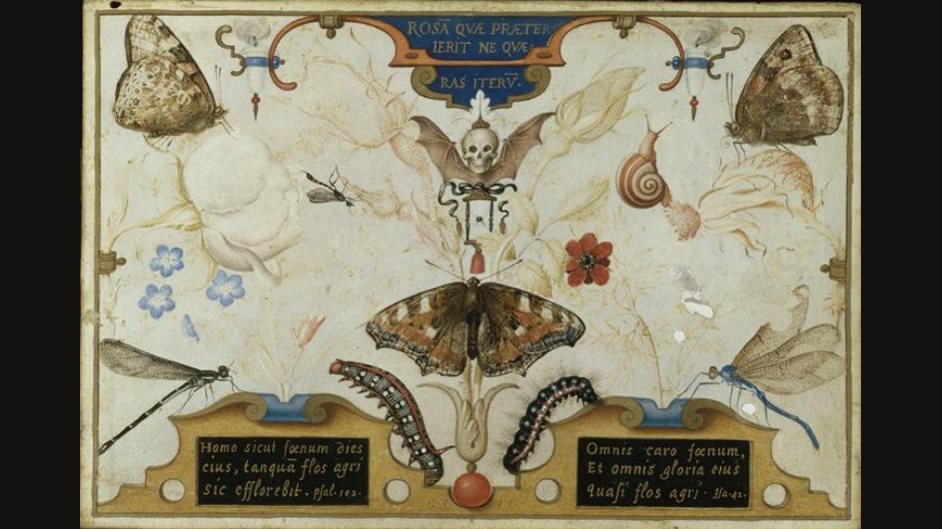
No. 070
Skull and Butterfly Meaning: Psyche, Vanitas, Monarchs and Tattoos
A skull with a butterfly usually pairs death with change. The skull stands for mortality and the shortness of life, and the butterfly for renewal, metamorphosis or the soul. Tattoo writer Mkpoikana Otu, writing for Tattoo Build, describes the combination as a contrast between change, renewal and hope on one side and mortality and life's fragility on the other. In the end, the meaning is the one the wearer brings to it.
The pairing also has older roots, and knowing them can help you choose a design that says what you intend. In ancient Greek, the word *psychē* could mean both "soul" and "butterfly." In European vanitas art, skulls shared the canvas or the page with flowers, insects and other signs of passing time. And in Michoacán, Mexico, Purépecha communities regard the monarch butterfly as the soul of the dead, arriving around Día de Muertos.
What a skull and butterfly says today
Modern tattoo meanings are personal, and they change with the wearer, the composition and the references in the design. Otu's reading is the common one: the butterfly brings change, renewal and hope, and the skull brings mortality and fragility. She adds that some wearers choose the design to mark accepting mortality, getting through hard times or a turning point in their own lives.
Put simply, a skull-and-butterfly tattoo can suggest mortality alongside change, remembrance or survival. Which of those it means for you is your call, and it is perfectly fine if the answer is that you like how beauty and death look side by side.
Tattoo artists tend to put the wearer first. In a 2016 interview with Hot Press, the tattoo artist Scott Campbell said he chose a skull as his first tattoo because it stood for control over his own identity and a permanent decision about who he would become. That was his meaning, not a rule for every skull tattoo, and it shows how much of a design's message comes from the person who wears it.
The butterfly as the soul in Greek art
The oldest thread runs through ancient Greece. In Greek, *psychē* (ψυχή) can mean both soul and butterfly, and Greek art used that double meaning. The National Gallery of Ireland identifies Psyche's butterfly wings as a symbol of the soul in Greek art.
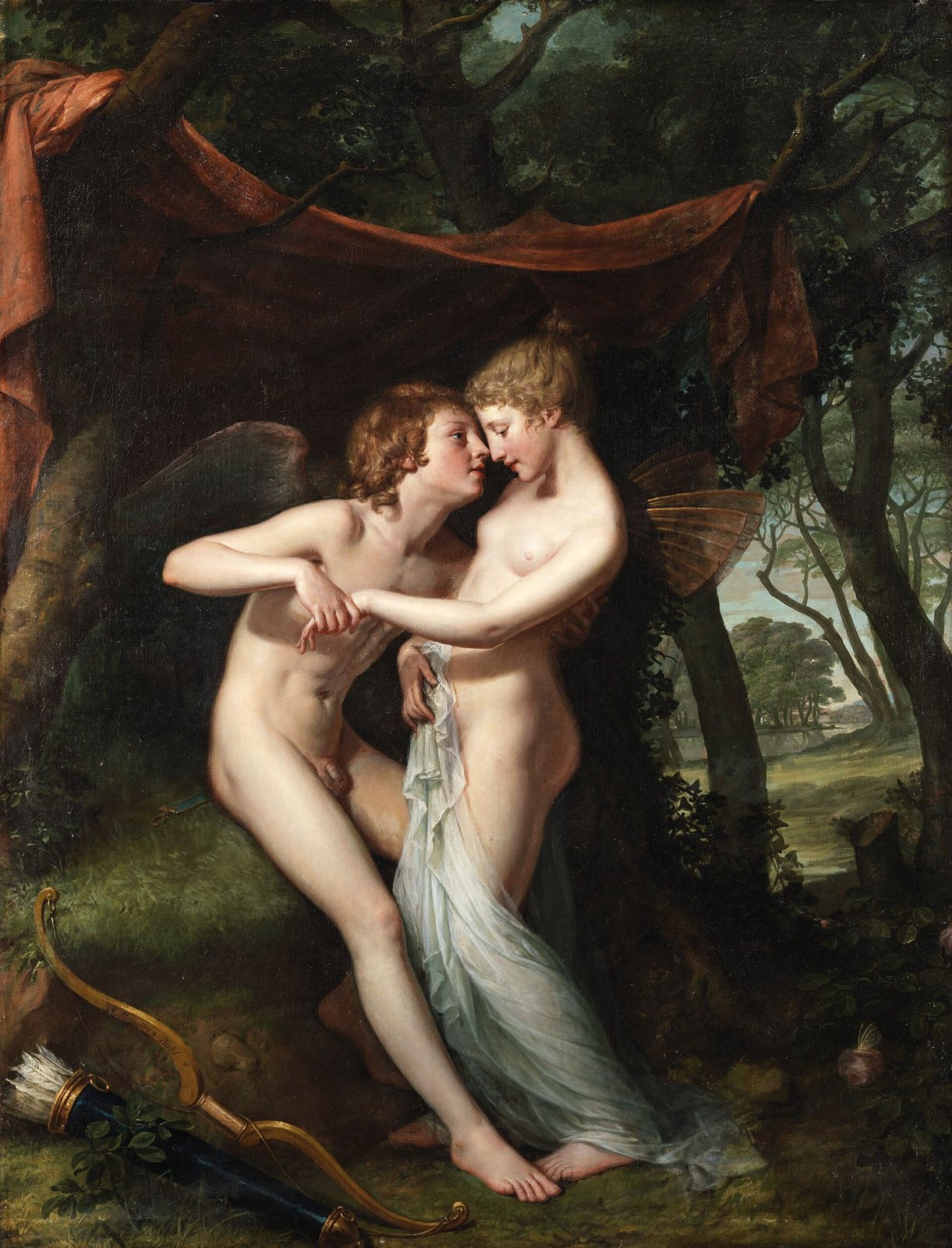
Later European painters kept the idea. The same museum holds *Cupid and Psyche in the Nuptial Bower*, painted by Hugh Douglas Hamilton in 1792 to 1793, which gives Psyche butterfly wings and presents her story as an allegory of the soul's passage through earthly life and its union with the divine after death. Emory University's Carlos Museum holds an intaglio of Cupid holding a butterfly and a torch, a small carved gem in which the butterfly is read as Psyche and the soul.
This is a documented Greek and later European art tradition. It explains why a butterfly beside a skull can stand for the soul that outlasts the body, though it does not mean every butterfly in every design carries that sense.
Skulls, insects and vanitas
The second thread belongs to early-modern European painting. Vanitas art, a still-life tradition about mortality, passing time and the brief hold we have on our possessions, put the skull at the center of the table. The Metropolitan Museum of Art dates Jacques de Gheyn II's *Vanitas Still Life* to 1603, calls it one of the earliest independent vanitas still lifes and reads its skull, bubble, flowers and smoking urn as signs of how short life is. The Uffizi describes Antonio de Pereda's vanitas imagery of the 1640s, with skulls, fading flowers, luxury goods and weapons, as a reflection on life's fragility.
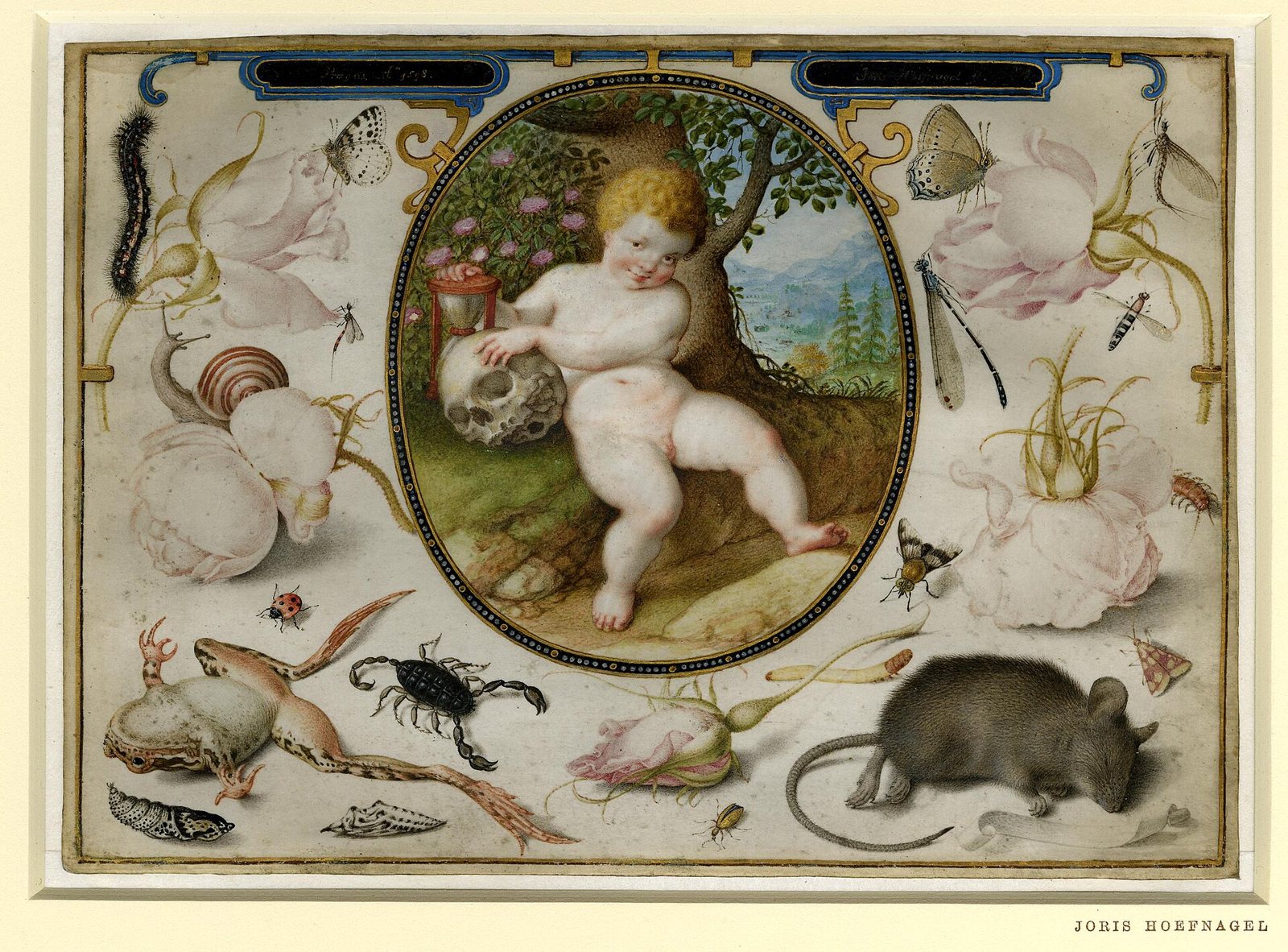
Insects belong to this world too. The British Museum describes a drawing by Joris Hoefnagel as a vanitas allegory that combines a skull, an hourglass, animals and insects. Butterflies fit the vanitas mood because their lives are short and their metamorphosis is a visible lesson in change, so a butterfly near a skull reads easily as transience. That is an early-modern European art association, not one fixed code for every design.
The vanitas tradition has much more to it, and our stories on vanitas paintings and what memento mori means cover it. Flowers have their own long partnership with the skull, told in skull and roses meaning; the hourglass gets its own story in skull and hourglass meaning; and the candle that so often burns beside the skull in still lifes is in skull candle meaning.
Monarchs, Michoacán and Día de Muertos
The third thread is a living tradition in a specific place. UNESCO places the Monarch Butterfly Biosphere Reserve in the mountains of Michoacán and Estado de México. Millions of monarchs arrive there from November to March, after a migration of roughly 4,200 kilometers from Canada and the United States, and UNESCO designated the reserve a World Heritage site in 2008.
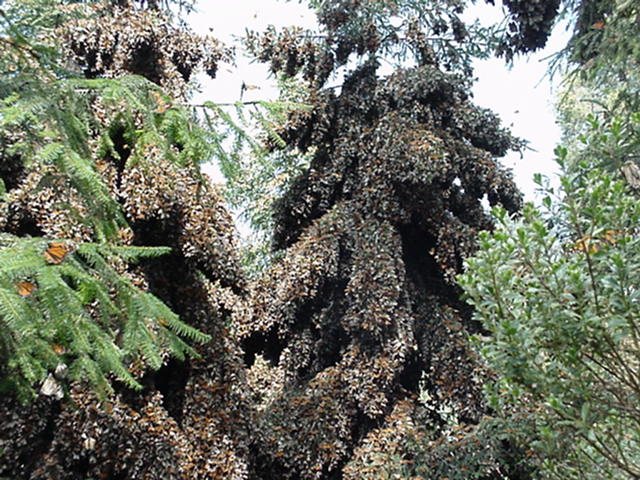
UNESCO also records what the butterflies mean to the people who live alongside them. Purépecha communities in Michoacán regard the monarch as the soul of the dead, and its arrival announces the visit of the deceased, because it coincides with Día de Muertos on November 2. In that belief, the butterflies arriving in the mountains and the dead coming home to visit belong to the same season.
That belief belongs to the Purépecha communities of Michoacán, not to all of Mexico, and not to every monarch image. A skull with monarch butterflies points to this tradition, and if your design is meant to honor someone you have lost, it is worth knowing where the image comes from. Our story on Día de Muertos tells more about the celebration, and if your skull is a decorated calavera, sugar skull tattoo meaning covers that design.
Skull and butterfly through time
Tap or hover a step to follow the order.
Classical Greek art
Psyche is shown with butterfly wings, linking the butterfly with the soul
1603
Jacques de Gheyn II paints Vanitas Still Life, with a skull among signs of life's brevity
1640s
Antonio de Pereda's vanitas paintings pair skulls with fading flowers and luxury goods
1792 to 1793
Hugh Douglas Hamilton paints Cupid and Psyche in the Nuptial Bower, with Psyche's butterfly wings as the soul
2008
UNESCO designates the Monarch Butterfly Biosphere Reserve in Michoacán and Estado de México a World Heritage site
Butterfly or moth? The death's-head hawkmoth
Some designs that look like a skull and butterfly are really a skull and a moth, and the moth has its own story. The death's-head hawkmoth belongs to the genus *Acherontia*, and the Natural History Museum in London lists *Acherontia atropos* as the death's-head hawkmoth. Its thorax carries a skull-like marking, and the museum says that in medieval Europe people regarded the moth as an omen of death because of it.
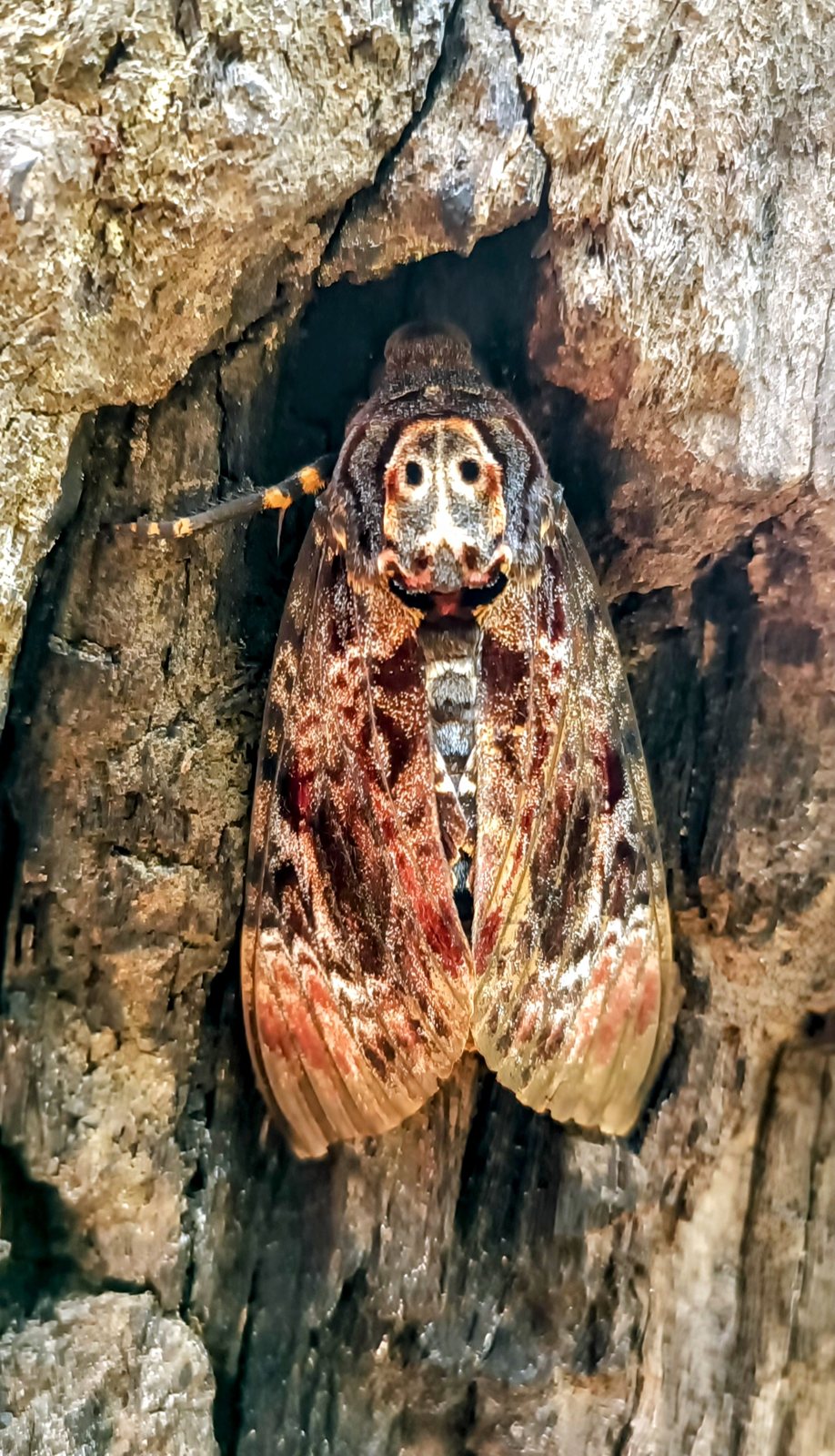
It also has a voice. When threatened, the moth squeaks by forcing air over its proboscis, the Natural History Museum explains, which cannot have helped its reputation. A "death moth" design may refer to *Acherontia*, to night and nocturnal imagery, to horror culture or simply to the moth's own built-in skull, and it is a different image from a skull with a butterfly. Our story on the death's-head hawkmoth has more about the moth.
Choosing a design that says what you mean
Because the pairing draws on several traditions, the details you choose do most of the talking. Decide first which thread you want, then let the design follow it.
Which thread does your design follow?
Tap a card to bring it forward.
- Butterfly as the soul: Greek art linked the butterfly with the soul, since psychē means both.
- Vanitas and passing time: In early-modern European still life, skulls sat with flowers, insects and hourglasses as signs that life is short.
- Monarchs and the returning dead: Purépecha communities in Michoacán regard monarchs as the souls of the dead arriving for Día de Muertos.
- The death's-head hawkmoth: A moth with a skull-like mark on its thorax, Acherontia, long seen in medieval Europe as an omen of death.
- Personal change: Tattoo writer Mkpoikana Otu notes that some wearers choose the pairing to mark change, survival or accepting mortality.
A monarch points to Michoacán and Día de Muertos. A moth points to the death's-head hawkmoth. An hourglass or wilting flowers beside the skull lean toward vanitas and mortality. If the tattoo is a memorial, a name or a date makes that plain to anyone who asks. Our guides to skull tattoo meaning and memento mori tattoo meaning go through other pairings and styles, and what a skull symbolizes covers the skull's many other meanings.
How well do you know the skull and butterfly?
Answer every question to check.
Questions about the skull and butterfly
A few more answers for anyone settling on a design.
What does a butterfly symbolize with death?
In Greek art the butterfly can stand for the soul, since *psychē* means both, and in Purépecha communities of Michoacán monarchs are regarded as the souls of the dead arriving for Día de Muertos. These are specific traditions with their own places and periods, so a butterfly near a skull carries them only when the design or the wearer means it to.
Is a skull and butterfly tattoo about change?
Often, yes; Mkpoikana Otu reads the butterfly as change and renewal beside the skull's mortality, though the wearer decides. Some people choose it after a hard stretch of life, and others simply for the contrast.
What does a butterfly tattoo mean after someone dies?
For many wearers it marks remembrance, and the image draws on the Greek butterfly-soul and, in Michoacán, on the monarch as the soul of the dead. The meaning belongs to the person wearing it, and a name or date beside the butterfly makes a memorial clear.
Is a death moth tattoo the same as a skull and butterfly?
Not quite, since a death moth design may refer to the death's-head hawkmoth, *Acherontia*, a moth with a skull-like marking on its thorax. It leans toward night, omens and horror imagery, while a butterfly with a skull leans toward the soul, change or vanitas.
Where to go next
If the vanitas thread speaks to you, start with vanitas paintings and the sibling story on the skull and hourglass. For the moth that wears its own skull, read about the death's-head hawkmoth, and for the season when the monarchs arrive in Michoacán, see Día de Muertos.
Terms in this story
Tap a term to see what it means.
Psychē. The ancient Greek word that can mean both "soul" and "butterfly." Greek art used it to link butterfly wings with the soul.
---