No. 004
The Skull in Freemasonry: What Freemasons Mean by the Skull and Crossbones
In Freemasonry, a skull, usually paired with crossed bones, stands for mortality. It is a memento mori: life is short, so spend it well and live by your principles. Freemasons meet the symbol above all in the third degree, the Master Mason degree, on its tracing boards and in its lectures, in the chamber of reflection that some rites use before initiation, and in Knights Templar Masonry, one of the Christian orders connected to the fraternity. The Grand Lodge of British Columbia and Yukon calls it a long-standing emblem of mortality and adds a point worth keeping: what it means in a given moment depends on the ritual, the lecture and the symbols around it.
So, if you have seen a skull on a Masonic apron, a ring, an old certificate or a lodge wall, it is almost always saying the same quiet thing. The details of where it sits tell you which part of Masonic life it belongs to.
What the skull means to Freemasons
The short version is mortality. The longer version is that Masonic teaching uses the fact of death as a moral lever. If your time is limited, how you treat other people, how honestly you work and what you leave behind all matter more, not less.
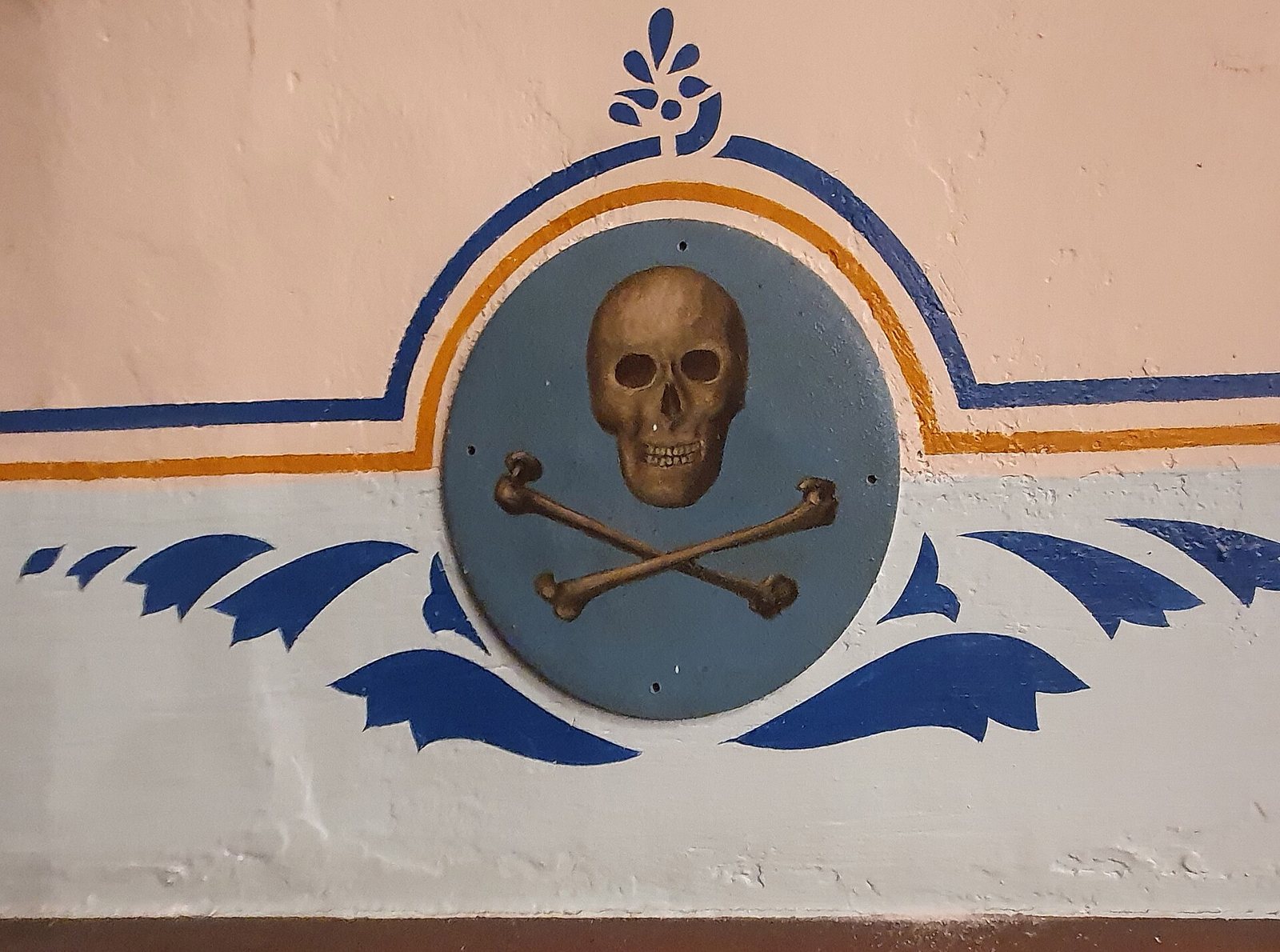
The Grand Lodge of British Columbia and Yukon places the skull and crossbones on the tracing board of the third degree, the illustrated board used to teach that degree's lessons, and describes it as an emblem whose meaning comes from the lecture that goes with it. Take it out of that setting and the same two bones and a skull can mean something entirely different. The Grand Lodge notes that an isolated skull and crossbones can signal piracy and other meanings that have nothing to do with Freemasonry. That is why the same image can sit on a pirate flag, a poison bottle and a lodge certificate. Context decides, and for Freemasons the context is a lesson about how to live.
Why skulls and crossbones in particular? They are one of the oldest and plainest ways European art had of saying "this will happen to you too." Freemasonry inherited that language rather than inventing it, which is part of why the emblem feels familiar even to people who have never been inside a lodge. If you want the wider story of the emblem outside the fraternity, our history of the skull and crossbones follows it from churchyards to pirate flags.
The chamber of reflection: a skull before the first step
Some Masonic rites place a candidate in a small, dark room before initiation. Not every jurisdiction uses it, and those that do differ in the details. The UNED Virtual Museum of the History of Freemasonry, run by Spain's national distance-learning university, describes the room as funerary in tone: black walls, a skull or a full skeleton, an hourglass, bread and water, and other symbols. In Spanish it is called the *cámara de reflexión* or *gabinete de reflexiones*.
The candidate sits there alone. According to the UNED museum, he answers written questions about his duties to God, to himself and to other people, and he writes a philosophical testament, a statement that stands for the death of his old self before he enters the lodge as a new member. The skull in that room is not a threat. It is a prompt to take stock.
Older printed rituals describe the same scene. A page from *The Book of the Ancient and Accepted Scottish Rite*, published in 1885 and now digitized on Wikimedia Commons, describes a black chamber furnished with a skull and crossbones, a dim lamp and the Book of the Testimony.
What the UNED museum lists in a chamber of reflection
Tap a card to bring it forward.
- Black walls: A funerary setting for a period of solitary thought
- Skull or skeleton: Mortality, the theme of the whole room
- Hourglass: Time running out
- Bread and water: Simple sustenance
- Salt, sulfur and mercury: Symbols listed among the room's furnishings
- Owl: Also listed among the room's furnishings
- Written questions: Duties to God, to oneself and to other people
- Philosophical testament: The candidate's written statement, standing for the death of the old self
The Master Mason degree: coffin, skull and acacia
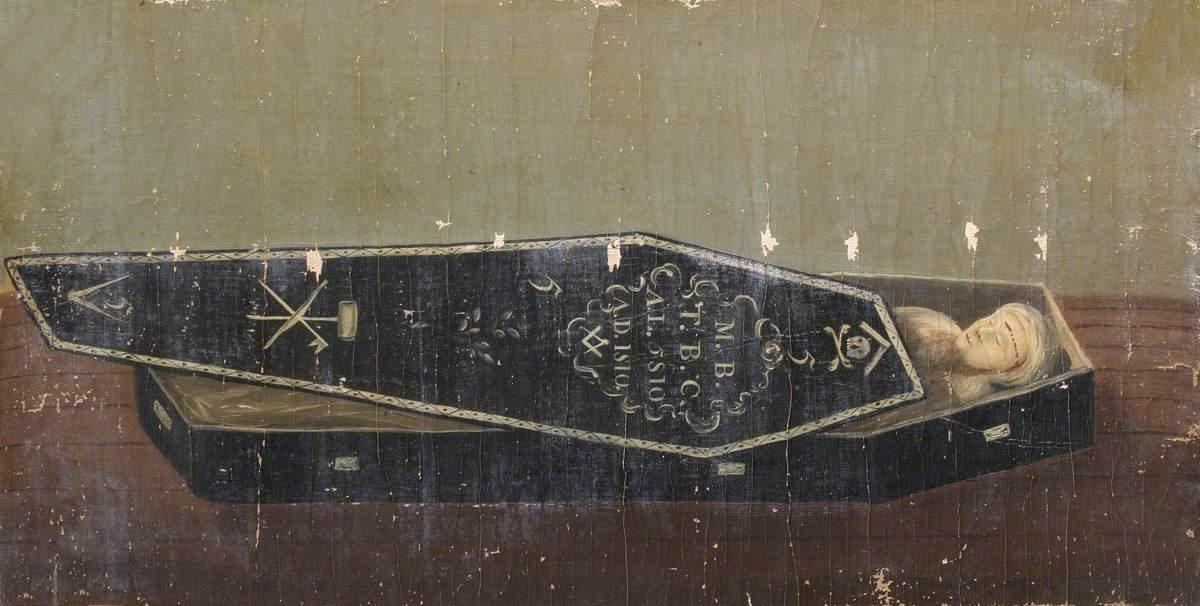
The third degree is where many Freemasons first meet the skull on a tracing board. Its tracing boards and lectures use a coffin, a skull and crossbones, an hourglass and a sprig of acacia to teach about mortality, moral change and the hope of renewal. The UNED museum and the California Freemason both describe this cluster of symbols, and the specific arrangement varies between Masonic systems.
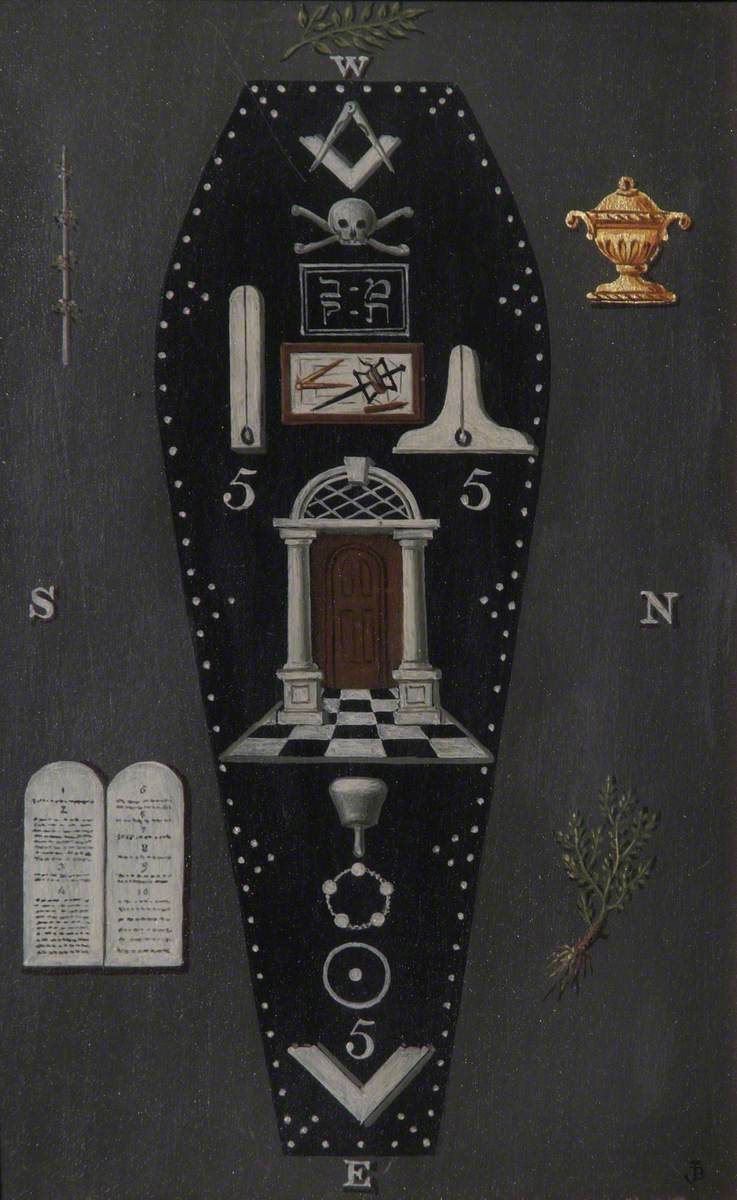
One dated example survives in England. The Worcestershire Museum of Freemasonry holds a third-degree tracing board published on February 9, 1825. Inside its drawn coffin sit a skull and crossbones, the square and compasses, and a sprig of acacia. The skull is there to mark death, and the acacia sits beside it for the hope of renewal that the degree teaches. It is a compact lesson in one image, and it is nearly two hundred years old.
Knights Templar Masonry: skulls, swords and crosses
The skull also turns up, more boldly, in Knights Templar Masonry, a Christian order within the York Rite. The York Rite describes its Order of the Temple as a Christian Masonic order built around trials, reflection, faith, courage and humility. Its regalia leans heavily on the skull.
Two dated objects show how. A Grand Lodge of New York antiquities catalogue records a Knights Templar certificate from Ballina, Ireland, dated September 12, 1816. Its seal shows a skull resting on a sword and a battleaxe, with crossbones beneath and a cross. Much later, in the United States, the Ames Manufacturing Company made a black Knights Templar apron, dated between 1870 and 1920 and now in the Scottish Rite Masonic Museum and Library. Crossed swords sit on the flap, and a silver-tone skull and crossbones is applied to the body.
So, when someone asks what a skull and crossbones on a Masonic apron means, a black apron with swords and a skull usually points to Knights Templar Masonry and its theme of mortality and Christian reflection. A white or light apron with other emblems may belong to a different body entirely.
You may also hear that the medieval Knights Templar flew a skull-and-crossbones flag and that Masons inherited it. That is a later legend. The Grand Lodge of British Columbia and Yukon rejects it as unsupported, and it should not be treated as medieval history.
Aprons, jewels, certificates and graves
The skull shows up wherever Masonic identity was worn, framed or carved. Beyond the aprons and certificates above, the Grand Lodge of New York catalogue records a silver Masonic jewel, a small badge worn on regalia, decorated with a skull and crossbones and found in a New Jersey grave in 1860. Museums Victoria in Australia holds a Masonic skull and crossbones horse brass dated between 1825 and 1939, which shows the emblem traveling onto everyday objects as well as lodge regalia.
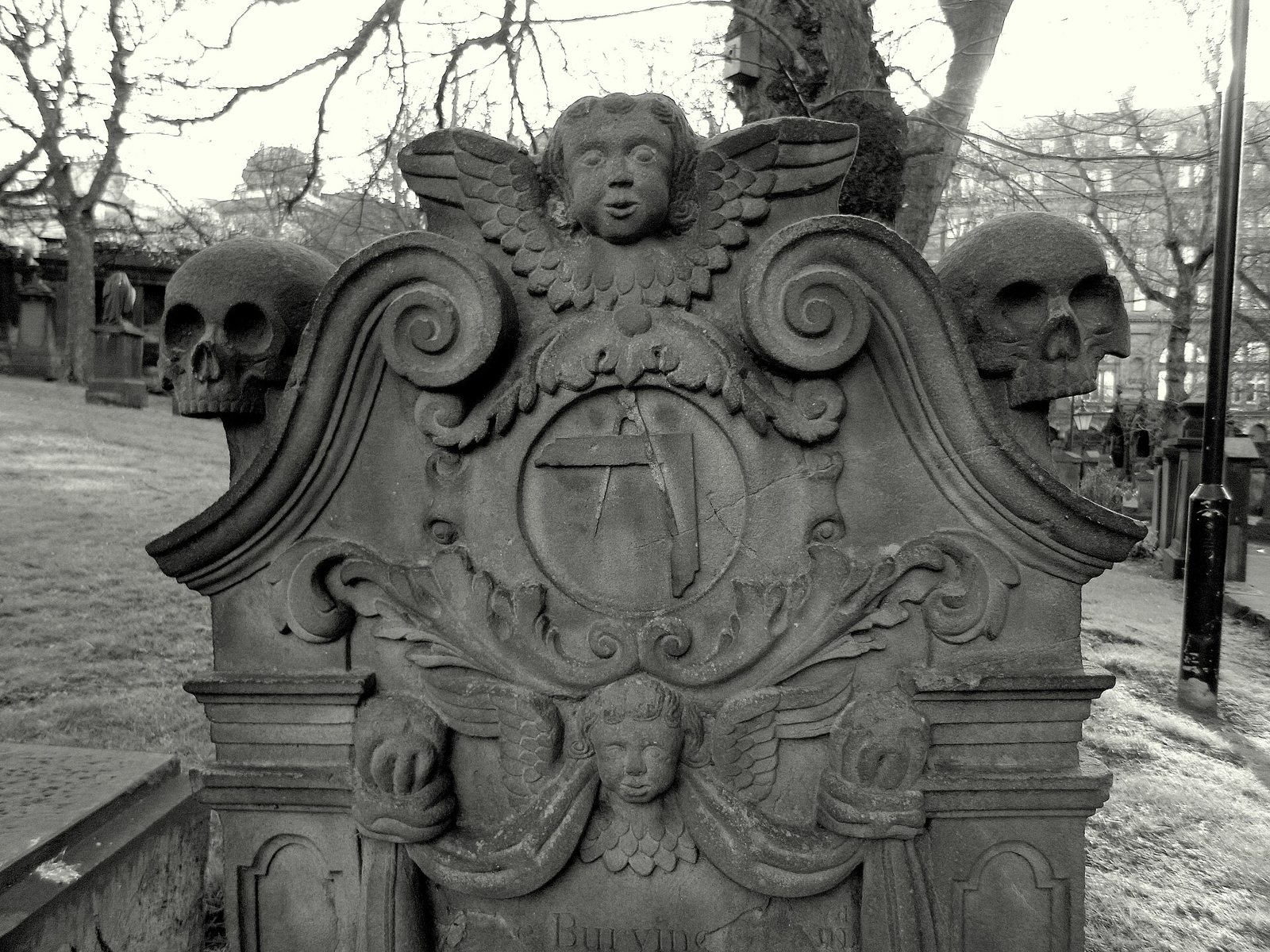
Gravestones need more care. Skulls appear on headstones in Masonic settings and in the much wider memento mori tradition. A carved skull on its own does not make a grave Masonic. If you are looking into a family plot or an old headstone, look for the square and compasses or other lodge emblems, read the inscription in full, and confirm the person's lodge affiliation through the cemetery's records or the relevant Grand Lodge before assigning a Masonic meaning. A grave is someone's memorial, and the person in it deserves an accurate reading.
Dated skulls in Masonic history, 1816 to 1885
Tap or hover a step to follow the order.
September 12, 1816
A Knights Templar certificate from Ballina, Ireland, carries a seal with a skull, crossbones, crossed weapons and a cross
February 9, 1825
A third-degree tracing board, now in the Worcestershire Museum of Freemasonry, shows a skull and crossbones, square and compasses and acacia inside a coffin
1832
Skull and Bones is founded at Yale as a senior society, separate from Freemasonry
1860
A silver Masonic jewel with a skull and crossbones is found in a New Jersey grave
1870 to 1920
Ames Manufacturing Company makes a black Knights Templar apron with a silver-tone skull and crossbones
1885
The Book of the Ancient and Accepted Scottish Rite describes a chamber of reflection with a skull and crossbones
What a Masonic skull ring means
A Masonic skull ring usually expresses the wearer's tie to memento mori, to the third degree, or to an appendant body such as Knights Templar Masonry. It is not a standard Masonic badge, and there is no single official design. A skull ring on its own does not prove that the wearer is a Freemason, or tell you which degree or body he belongs to.
The other details do that work. Look for the square and compasses, a cross or crossed swords, any inscription or lodge number inside the band, and whatever you know about where the ring came from. A ring with a skull beneath a square and compasses points one way; a ring with a skull, a cross and swords points toward Knights Templar Masonry. If you inherited one, a family member's lodge records or the Grand Lodge in their state or province can often tell you more. For skull rings in general, outside the fraternity, see our piece on skull rings and what they mean.
Memento mori, not menace
Masonic writers are clear about where their skull comes from. The California Masonic magazine article "For Freemasons, Death Is Not the End" sets the skull and crossbones beside the hourglass, the acacia and the Masonic funeral, and ties the theme to the older European habit of memento mori. It also points to seventeenth-century vanitas paintings, where a skull sits among fine goods, flowers and books to say that none of it lasts.
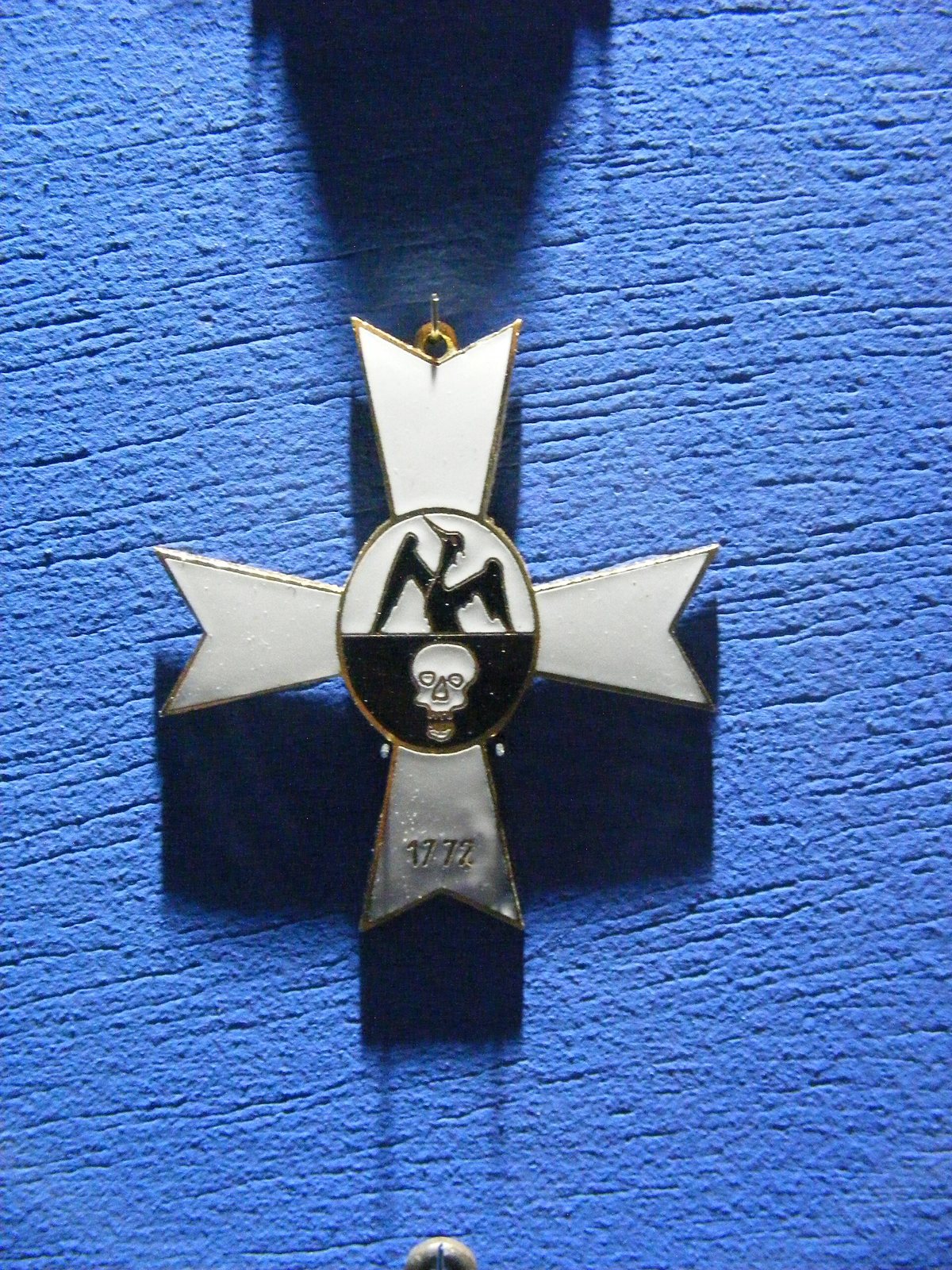
The same article quotes the Masonic writer Albert G. Mackey, who read the hourglass as an emblem of how brief and passing human life is. And it makes a point that surprises some readers: memento mori is not meant only as a gloomy thought. Awareness of death sits close to carpe diem, the idea that knowing your time is limited can push you toward a fuller, more purposeful life.
Anti-Masonic writers have long claimed that the skull points to occult worship or Satanism. Those are their claims. The Grand Lodges, Masonic museums and Masonic writers who use the symbol describe it as a moral teaching about mortality, and that is how the objects in their collections present it.
Skull and Bones at Yale is a different story
Skull and Bones is not Masonic. It is a Yale senior society founded at Yale in 1832. According to Yale Alumni Magazine, drawing on historian David Alan Richards's book *Skulls and Keys*, the society began after Phi Beta Kappa changed its policy on secrecy, and its early name was "Scull and Bone." The magazine treats it as one of Yale's senior societies, not as a lodge. Richards does discuss older fraternal groups, including an early Masonic oath, as part of the wider history of secret societies, but sharing secrecy, ritual or a skull does not make a group Masonic. The society has its own story, told in our piece on the Skull and Bones society.
The skull in Freemasonry quiz
Answer every question to check.
Quick answers about the skull in Freemasonry
What do skulls mean in Freemasonry?
Skulls in Freemasonry stand for mortality, the memento mori teaching that life is short and conduct matters. Freemasons meet the symbol mainly in the third degree, in the chamber of reflection some rites use, and in Knights Templar Masonry. The exact meaning in any one place depends on the rite, the jurisdiction and the symbols beside it.
What does a Masonic skull ring mean?
A Masonic skull ring usually signals the wearer's connection to memento mori, the third degree or an appendant body such as Knights Templar Masonry. It is not a universal Masonic badge and does not prove membership by itself. The square and compasses, crosses, swords, inscriptions and the ring's history identify it more precisely.
Is Skull and Bones a Masonic group?
No, Skull and Bones is a Yale senior society founded in 1832, not a Masonic lodge or recognized Masonic body. Its early name was "Scull and Bone," and Yale Alumni Magazine places it among Yale's senior societies.
What is the chamber of reflection?
The chamber of reflection is a small, dark room used in some Masonic rites, where a candidate sits alone with a skull or skeleton, an hourglass, bread and water before initiation. The candidate answers questions about his duties and writes a philosophical testament that stands for the end of his old self.
What does a skull and crossbones on a Masonic apron mean?
On a Masonic apron, a skull and crossbones usually marks mortality, and a black apron with crossed swords and a skull typically belongs to Knights Templar Masonry. One example, made by Ames Manufacturing Company between 1870 and 1920, is held by the Scottish Rite Masonic Museum and Library.
Where to go next
The Masonic skull is one branch of a much older family of death symbols. For the idea behind it, read what memento mori means and how painters used it in vanitas paintings. For the emblem's life outside the lodge, follow the skull and crossbones and the broader story of skull symbolism around the world.