

No. 315
Fèt Gede: Haiti's Festival of the Gede Spirits
Fèt Gede is the Haitian Vodou festival of the Gede, a family of lwa, or spirits, tied to death, cemeteries, ancestors, healing, fertility and transformation. It is kept principally on November 1 and 2, the same days as the Catholic All Saints' Day and All Souls' Day. Families and Vodou houses visit cemeteries, pray, bring food and drink for the dead and the spirits, drum and dance, and in some ceremonies the Gede themselves are said to arrive.
The white-powdered face, the top hat, the dark glasses and the black and purple clothes that may have brought you here belong to these spirits. Fèt Gede is not one fixed program, though. Practice differs from one Vodou house, city and family to the next, and as WLRN reported in 2025, it is kept by people who practice Vodou, not by every Haitian or every Haitian community abroad.
The days of Gede
The two principal public days are November 1 and 2. The University of Nevada, Reno chapter "Death, Dying, and the Soul in Haitian Vodou" places Fèt Gede on those dates, alongside All Saints' Day and All Souls' Day, and Visit Haiti describes the same calendar. WLRN's headline calls it "Haiti's Day of the Dead."
The observance does not always stop on November 2. In Brooklyn, the Caribbean Cultural Center African Diaspora Institute, known as CCCADI, speaks of November as Gede season, a month in which the relationship between the living and the dead comes forward.
What happens over those days is familiar to anyone who has kept a family grave. People go to the cemetery, pray, light candles and bring food and drink. Drumming and dancing follow, and so does spirit possession, which participants describe as a lwa manifesting, coming into a person during a ceremony. Visit Haiti sums up the festival the same way: cemetery visits, prayers, music, dance and, in some ceremonies, the manifestation of the Gede lwa.
Who the Gede are
The Gede are a family, not a single character. The UNR chapter describes them as lwa connected with death, the cemetery and the passage between life and death. The name is written several ways, Gede, Ghede and Guédé among them.
At the head of the family in many accounts stands Bawon Samdi, also written Baron Samedi, a leading spirit of the cemetery. His story is told in full in Baron Samedi. Beside him is Manman Brijit, also called Maman Brigitte or Grann Brigitte, a major female Gede associated with graves and the dead. Gede Nibo is another, often described in Haitian accounts as youthful, attractive and socially outgoing. Visit Haiti names these three and notes many other Gede besides.
Fèt Gede is their festival, the time of year when the whole family is honored in public. If you want to see how other cultures have imagined the powers that govern death, gods of death gathers several of them.
What scholars say about the Gede's history
Historians and anthropologists have their own accounts of where the Gede come from, and they are best read as scholarship, kept apart from what practitioners say about the spirits themselves.
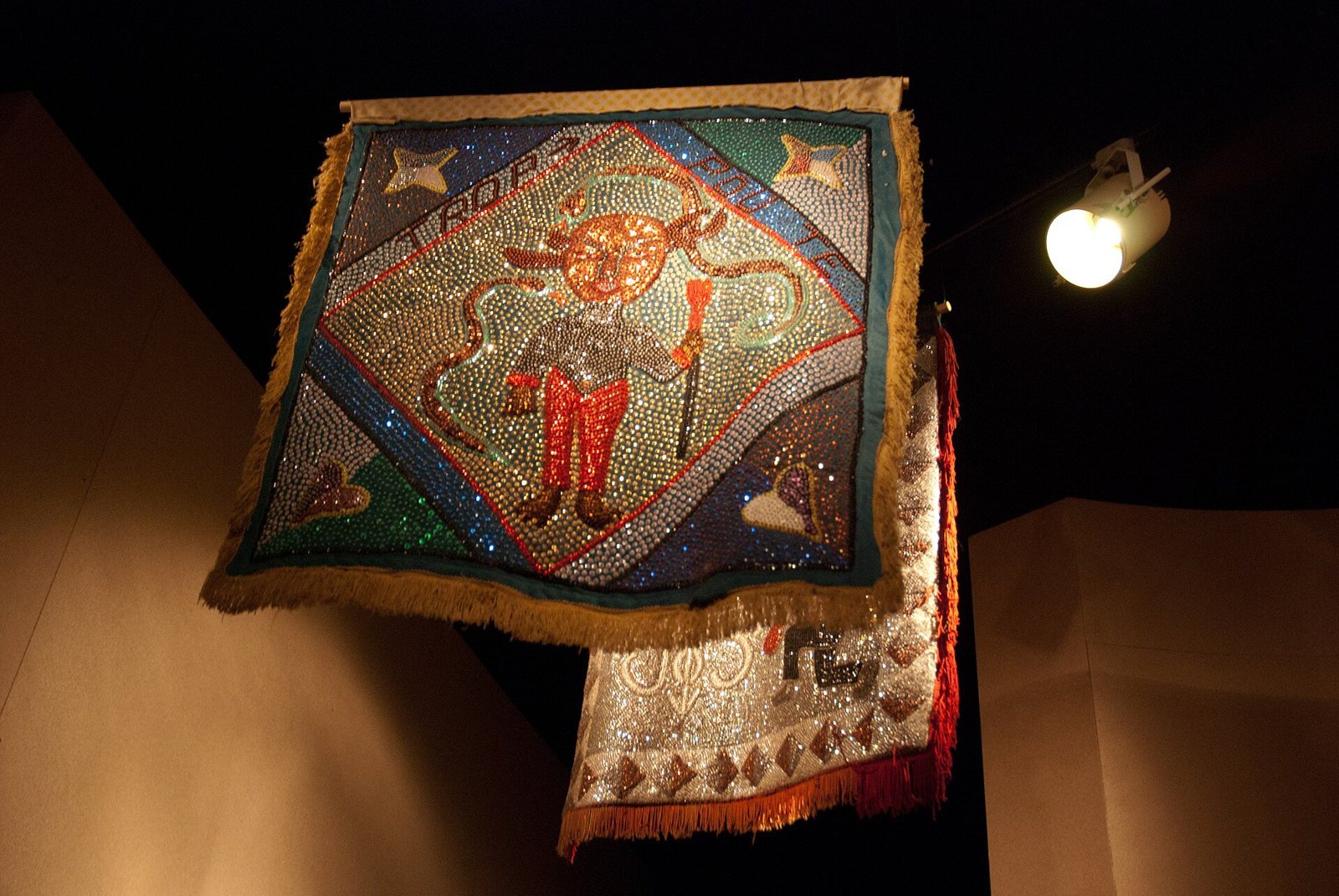
Scholars connect the growth of Haitian Vodou to African religious traditions carried by enslaved people to the French colony of Saint-Domingue, which became Haiti. Mark S. S. Smith, in *A Transatlantic History of Haitian Vodou*, records historical connections between the Haitian Gede and the Gedevi, or Igede, people of the Aja-Yoruba region. Smith also describes the Gede as addressing the whole span of a life: conception, birth, childhood, aging and death.
Karen McCarthy Brown, a scholar who wrote on Haitian Vodou and its diaspora communities, links the Gede to transformation, whether through healing or through death. In these scholars' readings, death and new life sit close together in the Gede's care, which is why spirits of the cemetery can also watch over birth and childhood.
Fèt Gede: dates and moments
Tap or hover a step to follow the order.
African and colonial Saint-Domingue periods
Scholars connect the development of Haitian Vodou to African religious traditions carried through slavery to colonial Saint-Domingue.
November 1
All Saints' Day, and the first principal day of Fèt Gede.
November 2
All Souls' Day, and the second principal day of Fèt Gede.
November 2, 2010
Andrew Welch photographed the cross associated with Bawon Samdi at the cemetery in Port-au-Prince.
November 5, 2010
Calvin Hennick photographed a Haitian Vodou altar for the Gede in Boston for WBUR.
November 23, 2024
CCCADI presented a Fèt Gede event in Brooklyn honoring the ancestors in Gede season.
At the Grand Cimetière in Port-au-Prince
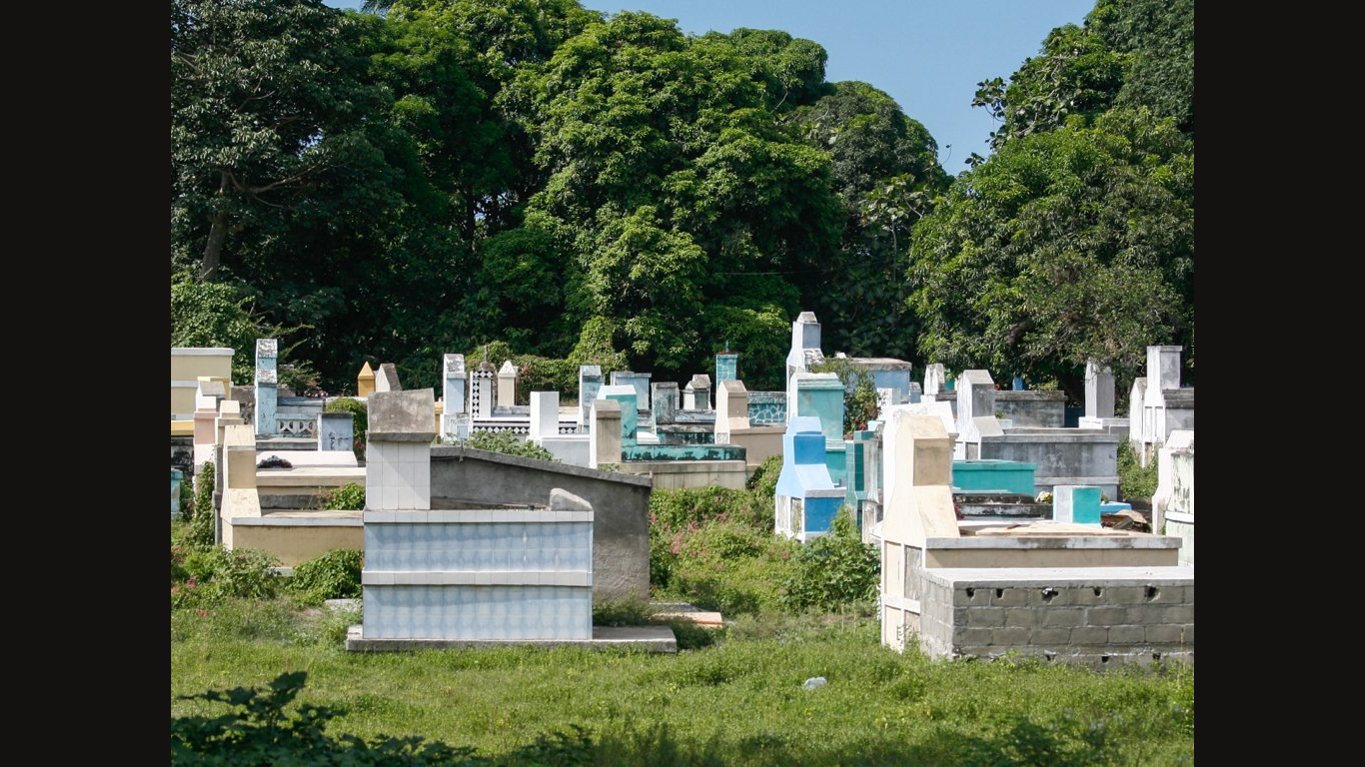
The best-known public setting for Fèt Gede is the Grand Cimetière, the main cemetery of Port-au-Prince. During the festival, Vodou practitioners and other mourners fill it. The UNR chapter describes people cleaning and tending graves, lighting candles, praying, pouring libations (drink poured out for the dead and the spirits), bringing food and drink and honoring relatives who have died. Drumming, dancing, processions and spirit possession can spread from the graves into the surrounding streets.
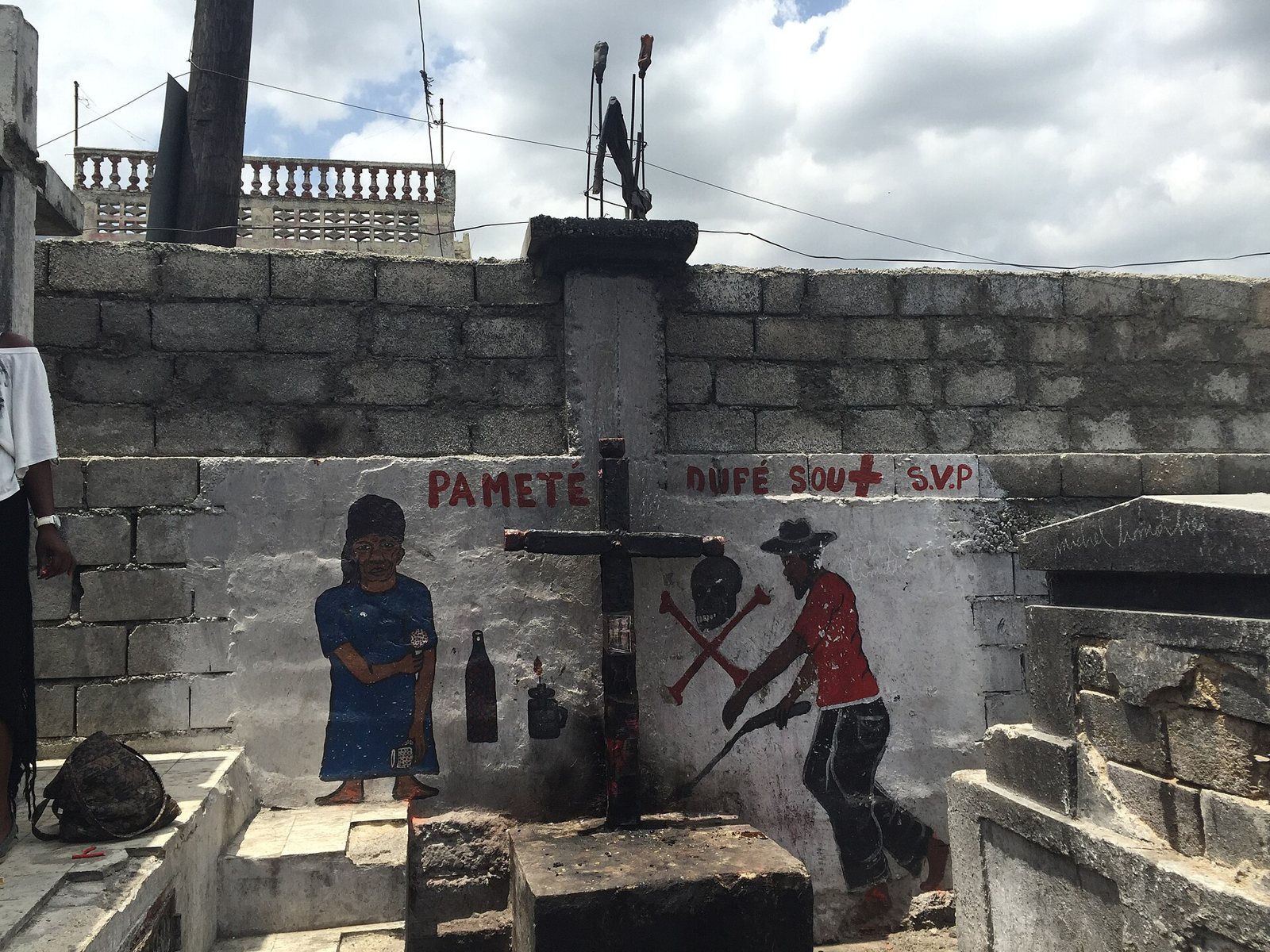
At the center of much of this stands a large cross associated with Bawon Samdi. In descriptions by the scholar Myron Beasley and others, the cross is a major ritual focal point. Participants may approach it, leave gifts and ask permission to enter the cemetery or to go on with their observances there. Andrew Welch photographed the cross on November 2, 2010, and the photo is shared on Wikimedia Commons.
The crowd is not only Vodou practitioners. Catholics and Protestants also use the Grand Cimetière for their own ways of remembering the dead, so on these November days the cemetery holds people of different faiths side by side. Within Vodou, the form varies as well. Some ceremonies are led or assisted by manbo and oungan, Vodou priestesses and priests, while other activity grows up among families, the faithful and visitors.
Port-au-Prince is one place, not the whole country. Fèt Gede is kept in other towns too; Visit Haiti's photo journal of the festival includes observances in Gonaïves.
The humor, the dress and the colors
The Gede are funny, and on purpose. The UNR chapter describes them as irreverent, comic, sexual and direct: they tell dirty jokes, make provocative gestures, dance the banda and play practical jokes. Scholars treat that humor as part of how the spirits face death, the body and social pretension head on. It is a religious style of expression, and a festival of the dead that makes room for a good laugh at the expense of the pompous has a certain logic to it.
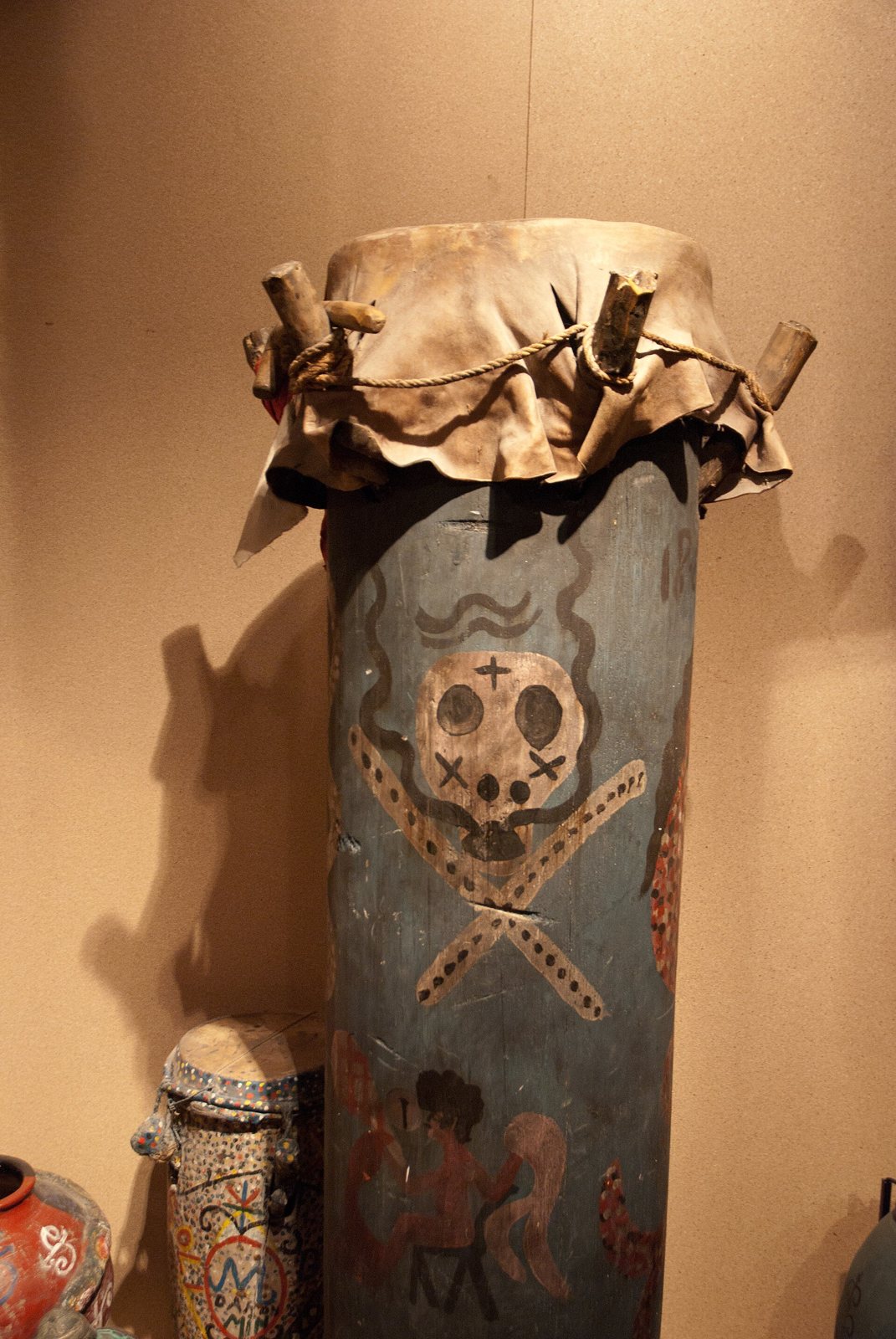
The look is just as recognizable. The colors most associated with the Gede are black, purple or mauve, and white. White powder on the face, dark sunglasses, sometimes with one lens missing, canes, top hats and cigars all belong to the image, along with rum and hot peppers. These features are tied especially to Bawon Samdi, and they vary by spirit, by Vodou house and by place.
The Fowler Museum at UCLA, in its teaching material for the exhibition *In Extremis: Life and Death in 21st-Century Haitian Art*, draws a useful line between the two sides of the family: Bawon's formal, skeletal authority, and the more unruly Gede, whose work leans toward healing. The skull-faced gentleman in the top hat and the jokers who follow him are part of the same household.
The look of the Gede
Tap a card to bring it forward.
- Black, purple or mauve, and white: The colors most associated with Gede dress and imagery.
- White powder on the face: A common marker of the Gede in published descriptions.
- Dark sunglasses: Often worn, sometimes with one lens missing.
- Top hat and cane: Associated especially with Bawon Samdi and his formal authority.
- Cigars: Part of the Gede image in published descriptions.
- Rum and hot peppers: Among the things associated with the Gede at their festival.
- It varies: Dress and ritual objects differ by spirit, by Vodou house and by place.
Fèt Gede beyond Haiti
Haitian communities abroad keep Fèt Gede too, and often add their own public side to it, with music, dance, ancestor altars, food, education and cultural programs alongside ceremony. New Orleans, Miami, New York and South Florida all have documented observances.
In New Orleans, La Source Ancienne Ounfo has held an annual Fèt Gede for more than four decades, according to its listing on neworleans.com. The observance includes ancestor altars, ceremony, a procession, prayers and praise names spoken for the dead. If you hope to attend, confirm this year's date and details with the organizer.
In Brooklyn, CCCADI presented a Fèt Gede event on November 23, 2024, with the artist Riva Nyri Précil, under the title "Fèt Gede: A Celebration of Our Ancestors." In Miami Beach, WLRN reported on a 2025 event that brought Haitian musicians and audiences together through music and dance. The same report made a point worth keeping: not every Haitian, and not every Haitian community abroad, keeps Fèt Gede, especially among people who do not practice Vodou.
The diaspora story has older chapters too. A photograph by Calvin Hennick for WBUR, dated November 5, 2010, shows a Haitian Vodou altar in Boston with separate areas for the Rada, Petwo and Gede spirits. An early 1980s photograph by Chantal Regnault shows the drummer Frisner Augustin playing for a Vodou dance in Brooklyn.
Fèt Gede and other November remembrances
Do Haitians celebrate the Day of the Dead? Haitians who practice Vodou keep Fèt Gede, their own tradition of honoring the dead and the Gede spirits. It shares the calendar with the Catholic feasts of November 1 and 2 and sits among the world's ancestor-remembrance traditions, while its ceremonies, its spirits, its music and its cemetery practice are specifically Haitian.
Those same days carry many other traditions. The Catholic feast is told in All Souls' Day. In Mexico, families keep Día de Muertos, with its own calendar of arrivals and altars laid out in the Day of the Dead calendar. In Ecuador, families mark Día de los Difuntos in their own way. Each stands on its own ground, and Fèt Gede is Haiti's.
FAQ
Short answers on what happens, Maman Brigitte, the word Gede and Día de Muertos.
What happens at Fèt Gede?
People visit cemeteries, clean graves, pray, light candles and bring food and drink for the dead and the Gede. There is music and dance, and in some ceremonies the Gede lwa manifest. The exact form depends on the Vodou house, the family and the place.
Who is Maman Brigitte?
Maman Brigitte, in Kreyòl Manman Brijit and also called Grann Brigitte, is a major female spirit of the Gede family. She is associated with graves and the dead. In many accounts she stands beside Bawon Samdi among the Gede.
What does the word Gede mean?
Gede is the name of a family of Haitian Vodou lwa associated with death, cemeteries, ancestors and the passage between life and death. It is also spelled Ghede or Guédé. The historian Mark S. S. Smith connects the name's history to the Gedevi, or Igede, of the Aja-Yoruba region.
Is Fèt Gede the same as Día de Muertos?
They are separate traditions that fall on the same November days. Fèt Gede belongs to Haitian Vodou, with its own spirits, ceremonies and music, while Día de Muertos belongs to Mexico and its communities. Both honor the dead in their own way.
The Gede in November
Fèt Gede brings the dead, the living and a family of very outspoken spirits into the same cemetery for two days, and often for a whole season. Whether you know it from your own family or met the Gede through a top hat and a powdered face, this is a festival where remembrance and laughter share the same ground.
Fèt Gede quiz
Answer every question to check.
Terms in this story
Tap a term to see what it means.
Fèt Gede. The Haitian Vodou festival of the Gede spirits, kept principally on November 1 and 2.
---