

No. 311
Día de los Difuntos in Ecuador: Colada Morada and Guaguas de Pan
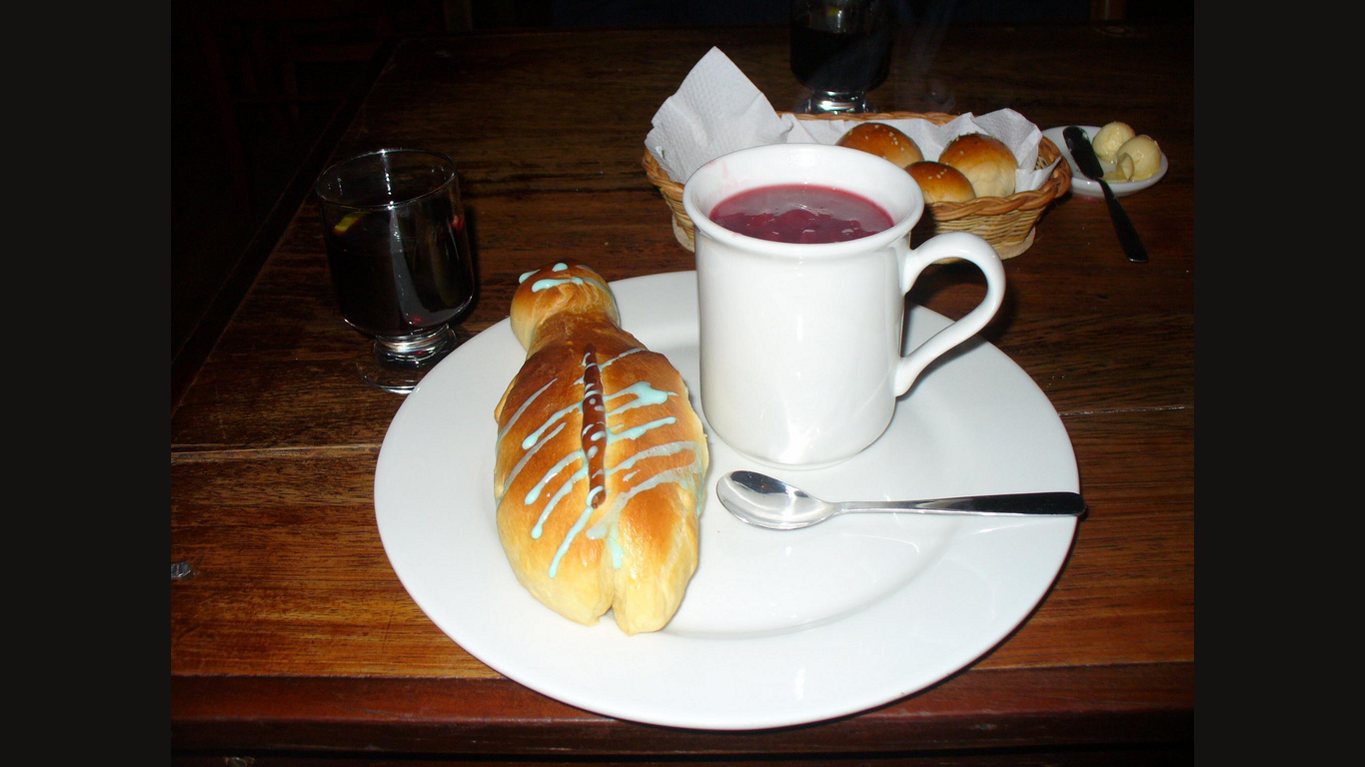
Día de los Difuntos is Ecuador's day for remembering the dead, kept on November 2, a national rest day. Families share colada morada, a thick purple drink made from purple or black corn flour with fruit and sweet spices, alongside guaguas de pan, decorated breads shaped mostly as human figures. They make them because food is at the heart of how Ecuadorian families remember and visit their dead, at the table at home and beside the grave.
How the day looks depends on where you are. A family in Quito, a Kichwa household in Chibuleo and a community in Otavalo each keep it in their own way, and the sections below follow the foods and the customs through those places.
Colada morada: the purple drink and what goes in it
Colada morada is a thick purple drink tied to Difuntos. Quito's municipal cultural publication, Quito Informa, describes it in 2020 as a preparation based on purple or black corn flour, mortiño, panela, fruit and sweet spices. A 2023 report in Primicias names purple corn flour, fruit and spices as the core, then lists how the drink changes from one region to the next.
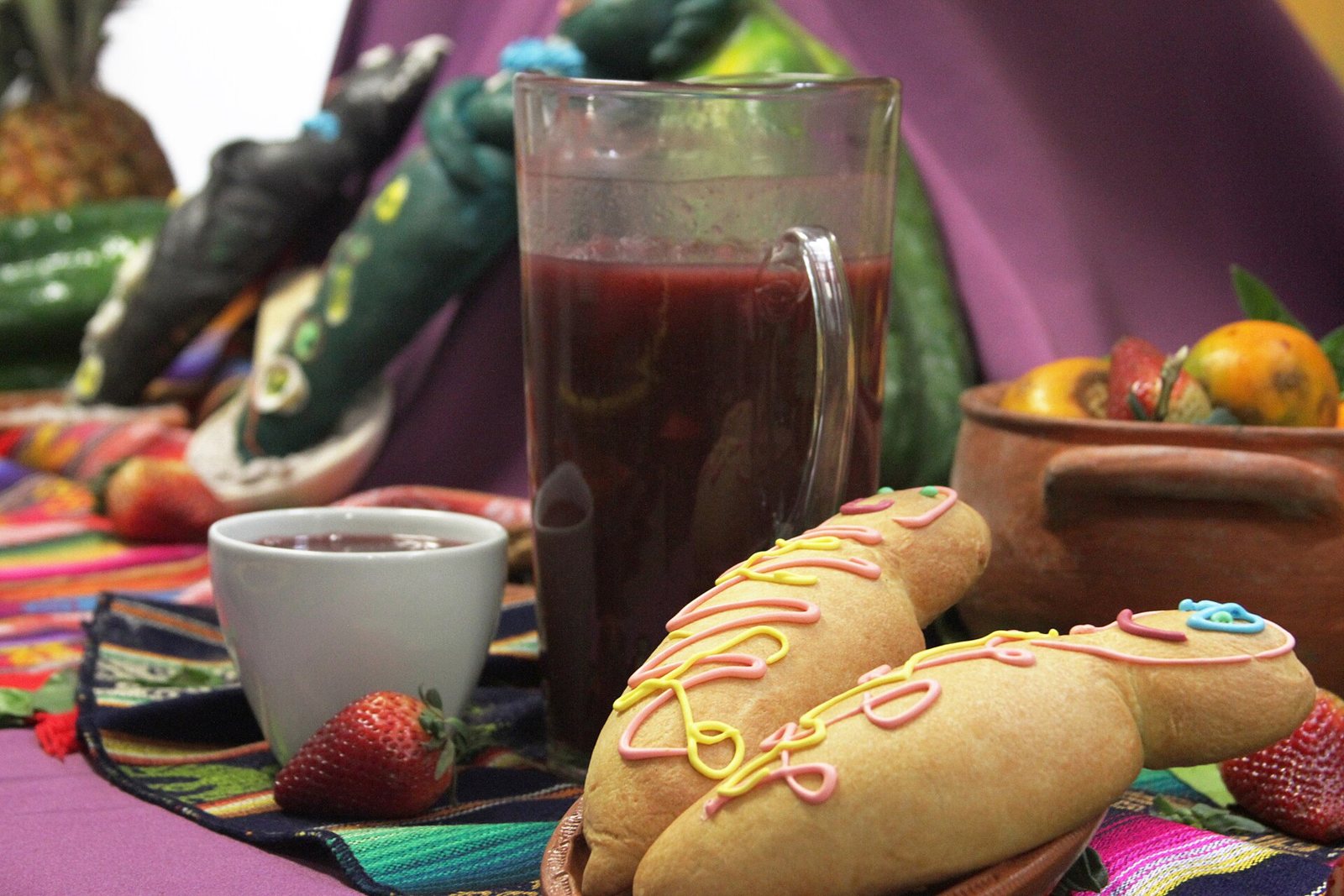
Across Ecuadorian accounts, the named ingredients run long: mortiño, mora, naranjilla, piña, babaco, hierba luisa, cedrón, arrayán, hoja de naranja, ataco or sangorache, canela, clavo de olor, pimienta dulce and ishpingo. A 2016 publication from Ecuador's Ministerio de Turismo lists black corn flour, mortiño, mora, piña, ishpingo, clove, sugar and arrayán. No two kitchens use exactly the same list, and that is part of the custom: the recipe belongs to the household and the town.
Ingredients named in Ecuadorian accounts of colada morada
Tap a card to bring it forward.
- Quito Informa, 2020: Purple or black corn flour, mortiño, panela, fruit and sweet spices.
- Primicias, 2023: Purple corn flour, fruit and spices at the core, with regional variations.
- Ministerio de Turismo, 2016: Black corn flour, mortiño, mora, piña, ishpingo, clove, sugar and arrayán.
- Also named in Ecuadorian accounts: Naranjilla, babaco, hierba luisa, cedrón, hoja de naranja, ataco or sangorache, canela, clavo de olor and pimienta dulce.
What does the drink mean? It is a ritual and festive food tied to remembering the dead, to sharing with others and to keeping the bond between the living and the dead. Quito Informa names "Yana Api" as a Kichwa name associated with the purple drink and links colada morada with community reciprocity and cultural memory. El Universo, writing in 2022, connects its color with mourning, and that is a common reading today, though explanations of its origin and symbolism are not the same everywhere in Ecuador.
Guaguas de pan: the bread figures
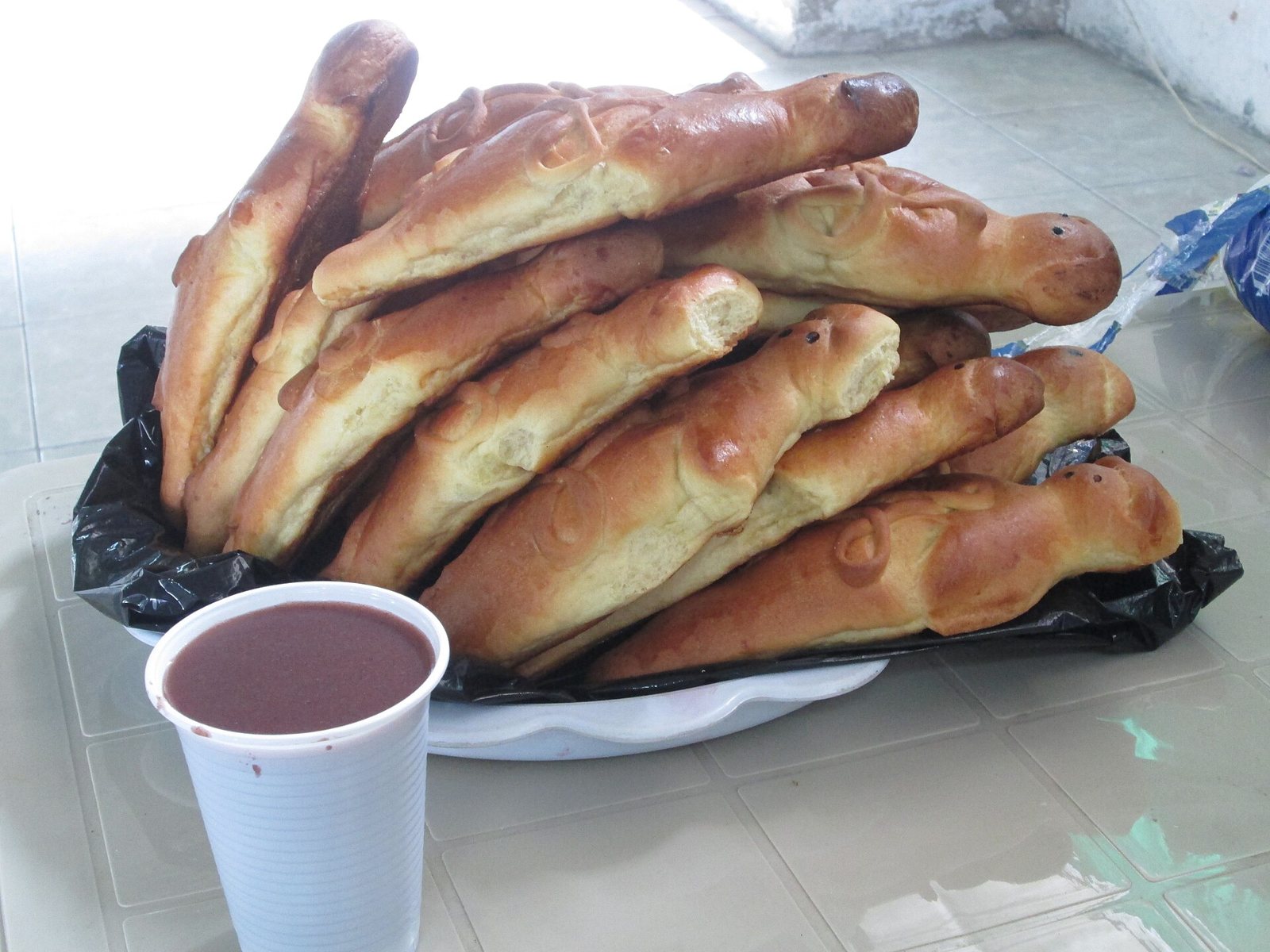
The bread that sits beside the mug is the guagua de pan, a decorated bread shaped mainly as a human figure. Some local traditions also shape animals, such as llamas. A study published by the Universidad Central del Ecuador in Revista Anales describes the Difuntos meal as colada morada served with breads in human and animal forms.
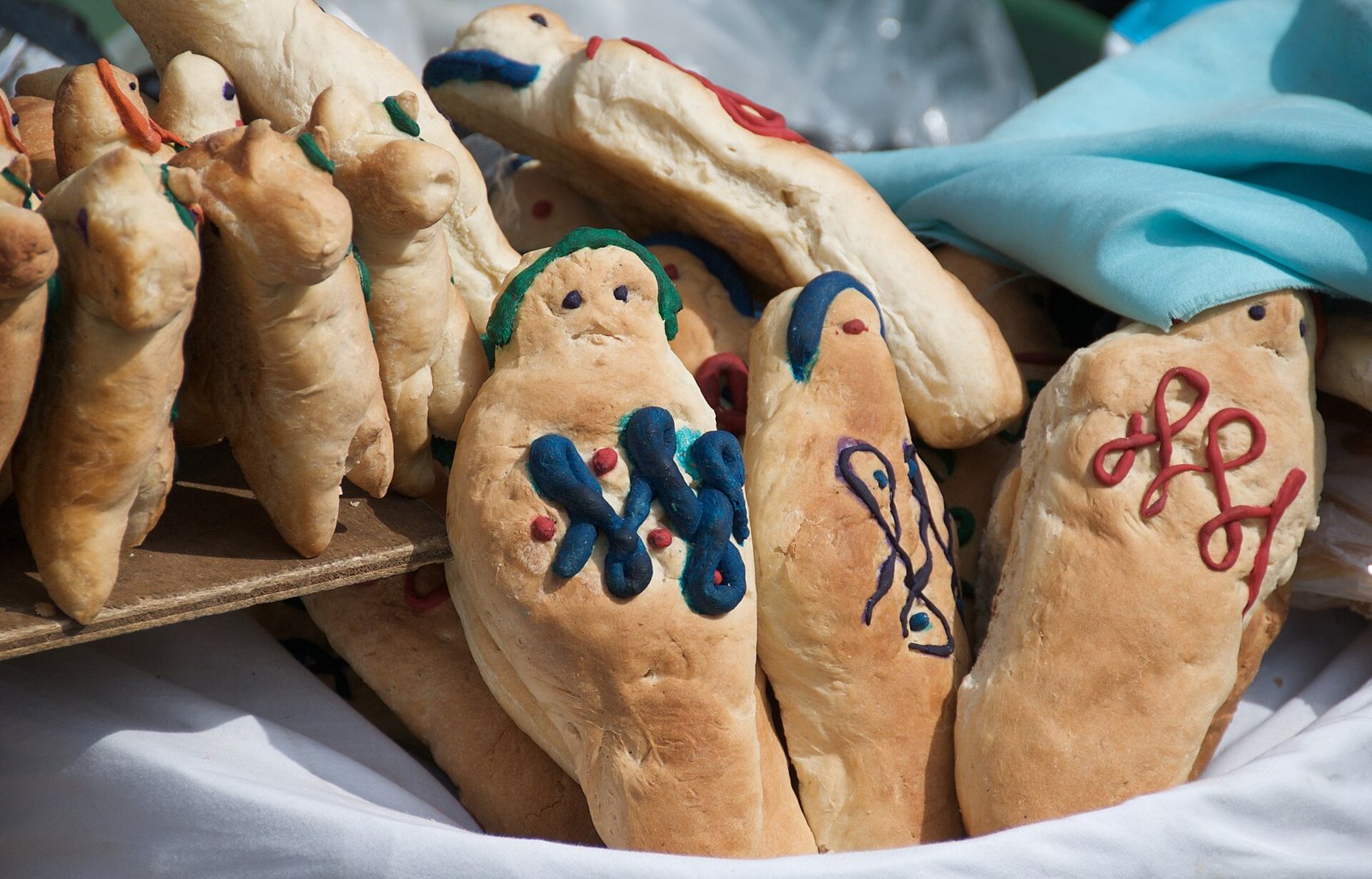
In the Kichwa Chibuleo community of Tungurahua, the researcher and community member Israel Chango documents *wawas de pan* and *llamas de pan* among the foods placed on the household altar for the dead. There, the breads are part of what the family gives to the souls.
So, what do guaguas de pan mean? Their meaning is tied to remembrance, to giving and to the presence of the dead, and it differs from one community and one family to the next. Some people read each figure as a wrapped body; that is one interpretation among several, not an explanation shared across the country.
Mexico has its own bread for the season, with its own roots and its own shapes, told in our story of pan de muerto. The two breads sit on different tables and carry different histories.
Older Andean roots of feeding the dead
Long before anyone wrote down a recipe for colada morada, people in the Andes fed and visited their dead. Julio Pazos Barrera, writing for the Academia Ecuatoriana de la Lengua, cites Pedro Cieza de León's 1553 account of funerary banquets with maize, meat and chicha. He also cites José de Acosta's 1608 description of Indigenous beliefs that souls felt hunger, thirst, cold and labor, and so received food, drink and clothing.
Pazos draws on the anthropologist Segundo Moreno Yánez, who places November invocations to the dead within an Andean agricultural cycle tied to requests for rain. The timing of remembrance, in other words, was bound up with the farming year.
The drink itself turns up in writing later. Pazos cites a 1771 account by the Jesuit Mario Cicala as the oldest written notice he knows of something resembling colada morada. He also cautions that the modern pairing of colada and bread cannot be given a precise beginning. A 1934 description, later reproduced by Darío Guevara, records colada morada and bread at a Difuntos gathering in Ambato.
Taken together, these records show a long thread of feeding, remembering and visiting the dead, carried through the changes of Catholic colonial rule. They do not show that today's purple drink and bread figures existed unchanged before the Spanish arrived. The day as families keep it now joins the Catholic observance of November 2 with those older Andean practices.
Feeding and remembering the dead in the Andes, from 1553 to 2026
Tap or hover a step to follow the order.
1553
Pedro Cieza de León's account, later cited by Julio Pazos Barrera, describes an Andean funerary banquet with maize, meat and chicha.
1608
José de Acosta describes Indigenous beliefs that souls felt hunger, thirst, cold and labor and received food, drink and clothing.
1771
The Jesuit Mario Cicala records an early written reference to something resembling colada morada.
1934
A description later reproduced by Darío Guevara records colada morada and bread at a Difuntos gathering in Ambato.
November 2, 2026
Ecuador's national Día de los Difuntos holiday falls on a Monday.
Eating with the dead in Kichwa communities
In several Kichwa communities, the food goes to the cemetery, and the family eats there with its dead. In Cotacachi, Imbabura, the anthropologist Carlos Humberto Coba Andrade and his coauthor María Fernanda Paredes describe the Kichwa ritual Wakcha Karay, translated as "eating with the dead." Families eat near the grave and share food with the dead, within a Catholic calendar adapted to local Kichwa understandings.
In Chibuleo, Tungurahua, Israel Chango's 2022 account follows a family from home to grave. At home they set out an altar on a totora mat with breads, wawas de pan, bread llamas, fruit, colada morada and cuy. Then they go to the cemetery, which Chango records as the "second home" of the dead. He describes the food prepared on November 2 as a banquet for the souls.
In Kichwa Otavalo communities of Imbabura, described by Nhora Benítez and by AME, families take food to the graves and share it with relatives, neighbors and the *samys*, the word used there for the souls. They pray in Kichwa, talk with their dead, and sometimes hire musicians or children who recite prayers.
The day in Quito and other cities
In Quito and other cities, many families prepare or buy colada morada and guaguas de pan in the days before November 2. They attend Mass, visit the cemetery, clean or decorate the graves of their relatives and remember them at home. The Instituto Nacional de Patrimonio Cultural, in its guide to Pichincha, records Finados as a practice of cities, parishes and rural areas alike, with colada morada, guaguas de pan and cemetery visits where food is shared with the deceased.
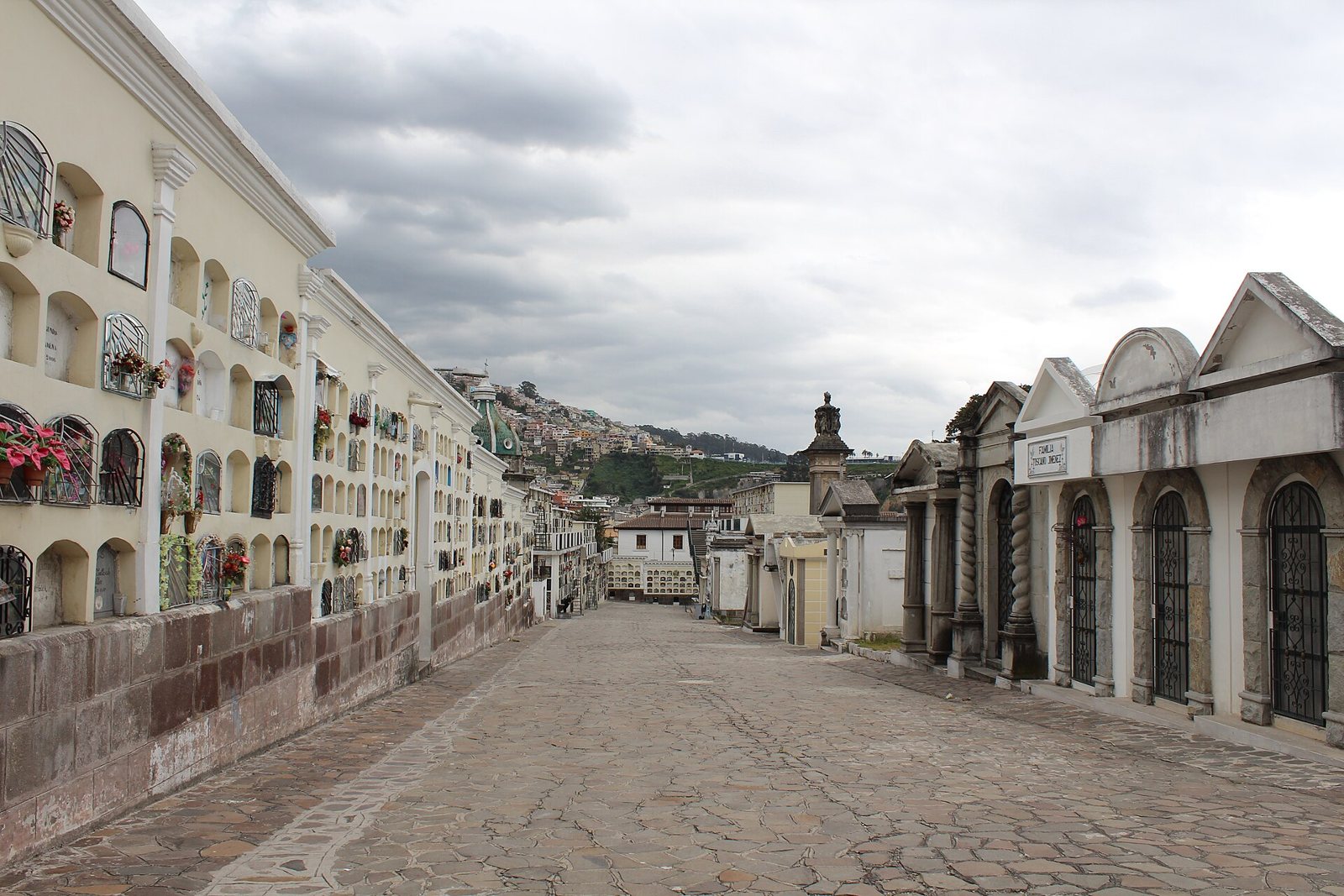
Family memory adds its own details. In Sangolquí, an account recorded by the Fundación Museos de la Ciudad tells of food placed at the doorway so that deceased relatives could come in and eat, while the living left the house for a while.
The date itself is a Catholic one. November 2 is All Souls' Day, the Commemoration of All the Faithful Departed, and our story of All Souls' Day tells where that feast comes from.
Tap or hover a row to highlight it.
| Practice or food | Place and period | What happens |
|---|---|---|
| Practice or foodColada morada | Place and periodEcuador, especially October and November | What happensA purple drink of corn flour, fruit, herbs and spices |
| Practice or foodGuaguas de pan | Place and periodEcuador, Día de los Difuntos | What happensBreads in human and animal forms, served with colada morada |
| Practice or foodCemetery food sharing | Place and periodOtavalo, Imbabura | What happensFamilies share food beside the graves with relatives, neighbors and the samys |
| Practice or foodHousehold altar | Place and periodChibuleo, Tungurahua, recorded in 2022 | What happensAn altar with bread, wawas, fruit, colada morada and cuy |
| Practice or foodNational holiday | Place and periodEcuador, November 2, 2026 | What happensMonday, November 2, with November 3 as the Independence of Cuenca |
November 2: the national holiday
November 2 is a national mandatory rest day in Ecuador. The country's public-service law, the Ley Orgánica de Servicio Público, lists November 2 and November 3 among the national holidays that are kept out of the ordinary rules for moving holidays.
In 2026, Quito's municipal government announced on October 26 that Día de Difuntos would fall on Monday, November 2, forming a four-day break with the weekend and Tuesday, November 3, the Independence of Cuenca. For the coming year's dates, check the official holiday calendar from Ecuador's Ministerio de Turismo.
How well do you know Día de los Difuntos?
Answer every question to check.
Common questions about Día de los Difuntos
These are the questions that come up most often around the purple drink and the November visit to the cemetery.
Why is colada morada made for Día de los Difuntos?
Colada morada is made and shared because food is part of how Ecuadorian families remember their dead, and in many Indigenous communities families visit the dead with food or eat beside their graves. El Universo links the drink with maize, mourning, memory and the continuing bond with the dead, while its exact historical origin is still debated.
When do people drink colada morada?
Colada morada centers on Día de los Difuntos, November 2. In Quito and other cities, families make it and shops sell it through October and into early November, as Primicias reports, and there is no separate holiday just for the drink.
Is Ecuador's Día de los Difuntos like Mexico's Día de Muertos?
Each one remembers and welcomes the dead from its own roots. Ecuador's day centers on November 2, colada morada, guaguas de pan and the visit to the grave, while Mexico's Día de Muertos has its own altars and a calendar of its own, set out day by day in our Day of the Dead calendar.
How is Día de los Difuntos different from Halloween?
They come from different roots. Difuntos is a day for remembering one's own dead, with Mass, the cemetery and food shared with family, neighbors and, in many communities, the souls themselves.
What do families take to the cemetery on Día de los Difuntos?
Families take food to share and clean or decorate the graves. In Otavalo, food is shared beside the graves with relatives, neighbors and the samys; in Chibuleo, the family goes from the home altar to the cemetery; and in Pichincha, the Instituto Nacional de Patrimonio Cultural records cemetery visits with food for the deceased.
Where to go next
The purple drink and the little bread figures carry a long Andean habit of setting a place for the dead. For another Andean tradition of remembering the dead, with roots of its own, read about the Fiesta de las Ñatitas in Bolivia, and for a wider map of days of the dead, our guide to Day of the Dead by region.
Terms in this story
Tap a term to see what it means.
Día de los Difuntos. Ecuador's day for remembering the dead, kept on November 2, a national rest day, and also called Finados.