

No. 304
The Skull and Bone Gang of New Orleans: Tremé's Mardi Gras Morning Skeletons
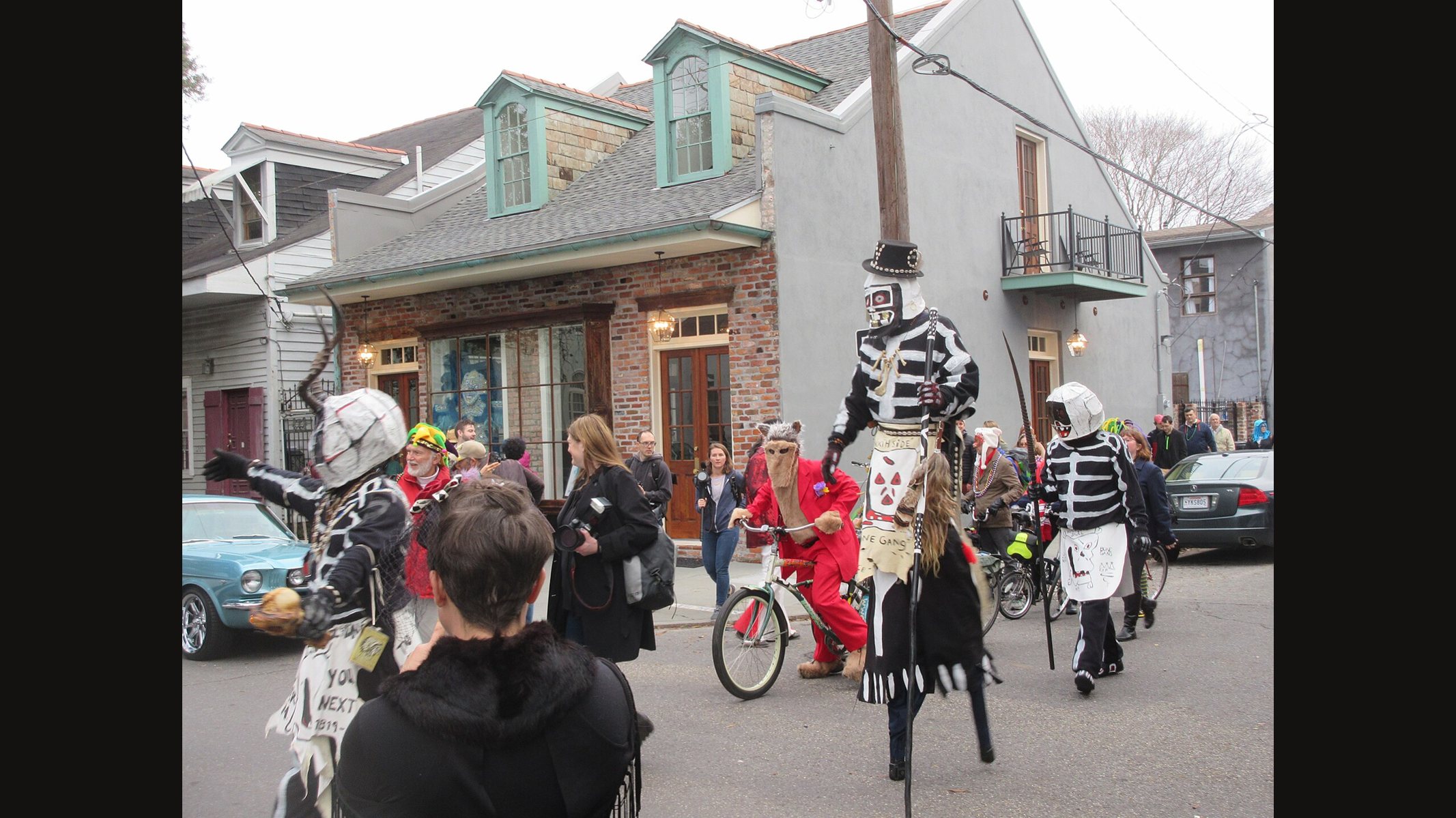
The skeletons who wake up Tremé on Mardi Gras morning are the North Side Skull and Bone Gang, a Black masking tradition of New Orleans' Tremé neighborhood whose oral history goes back to 1819. Before dawn, members in papier-mâché skull masks and suits painted with white bones walk the streets drumming, singing and knocking on doors.
Their message is short and hard to forget. "You next!" they call out: death comes for everyone, and there is still time to live right. For the homes along the gang's path, that knock on the door is how Mardi Gras begins.
Mardi Gras morning in Tremé
Before the sun is up, the gang is already moving. Members walk through Tremé in skeleton costumes, singing, drumming, banging on doors and waking the people inside, as the Historic New Orleans Collection and New Orleans & Company describe the morning.
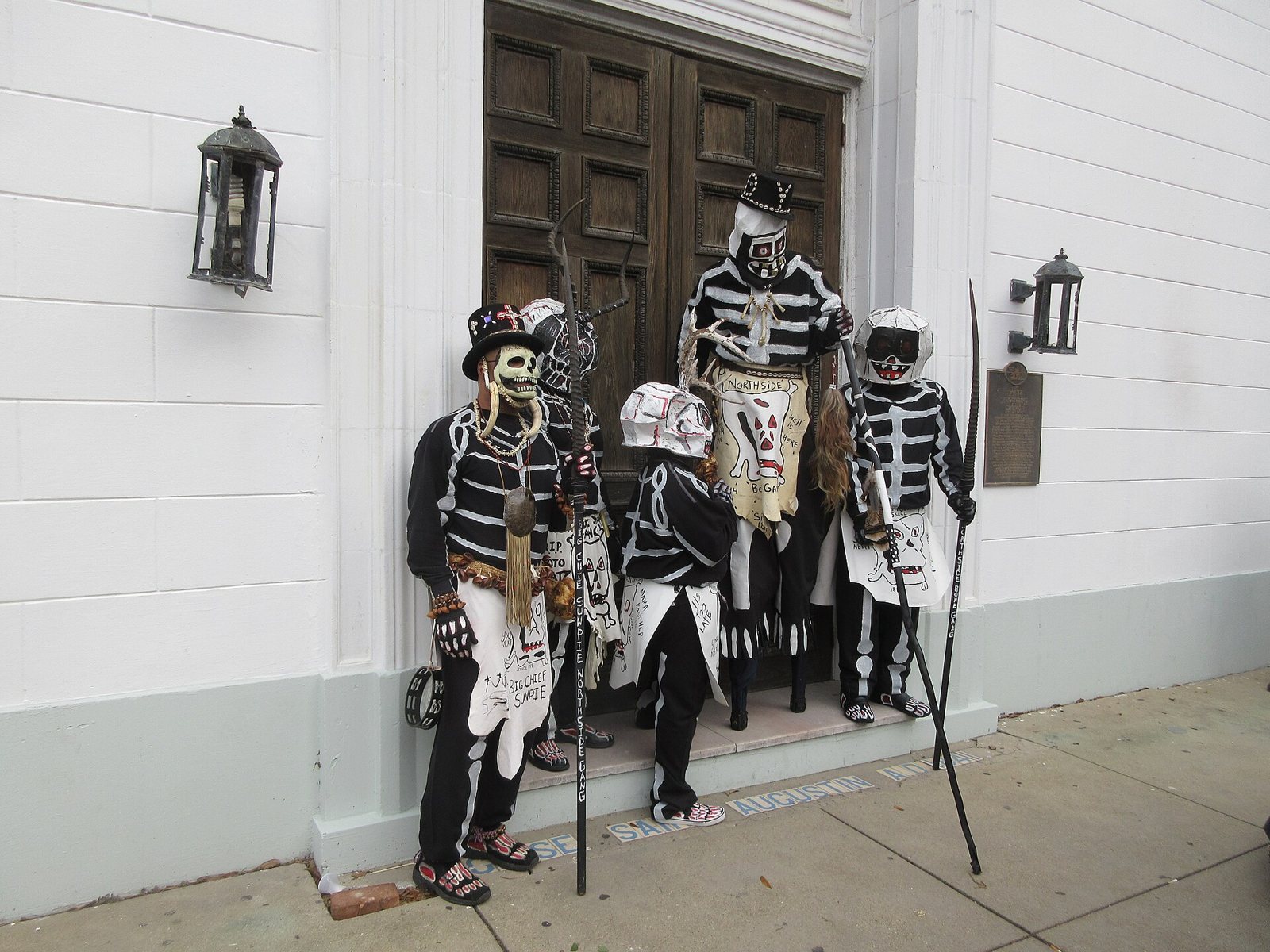
Two calls carry the message. One is "You next!" The other is a warning with a bit of swagger in it: "If you don't live right, the Bone Man is commin' for ya." The performance faces mortality head on. It warns against violence and destructive behavior, honors the ancestors and asks the people hearing it to think again about how they are living.
The gang has its own way of putting the whole thing. It calls this the "literal meaning of carnival," the shedding of flesh. On the one day the city is busiest celebrating life, the skeletons show up first, at the door, to say what that celebration rests on.
An oral history that begins in 1819
The gang dates its beginning to 1819. In its oral history, as told by Via Nola Vie and New Orleans & Company, the first masker was a sailor and merchant mariner from South Africa who masked as a skeleton. The story has been handed down mainly by word of mouth, and that oral history is how the gang tells its own beginning.
The tradition has had quiet years too. Via Nola Vie describes periods of decline and revival in the early twentieth century. The modern chapter opened in 2003, when Al Morris revived the gang and recruited Bruce "Sunpie" Barnes, who would become its Big Chief.
The North Side Skull and Bone Gang, from 1819 to Mardi Gras 2027
Tap or hover a step to follow the order.
1819
The gang's oral history places its beginning in Tremé, with a South African sailor and merchant mariner who masked as a skeleton.
Early twentieth century
The tradition goes through periods of decline and revival.
2003
Al Morris revives the gang and recruits Bruce "Sunpie" Barnes.
2014
A photograph on Wikimedia Commons records gang members during Mardi Gras on March 4.
2026
The National Park Service hosts Barnes, as Big Chief, for a public program on the tradition.
February 9, 2027
Mardi Gras Day in New Orleans.
Big Chief Bruce "Sunpie" Barnes
Bruce "Sunpie" Barnes is the gang's Big Chief and a musician who helped rebuild its public presence after the 2003 revival. He has talked about the tradition with scholars and cultural institutions. In an interview for Xavier University of Louisiana, he discusses his background in Arkansas, the spiritual influences in his family and the 1819 history.
In those conversations, Barnes explains the gang's African spiritual connections, its message centered on mortality and the way its members mask. Sociological Images reported in 2016 that he sees the message as a warning to young people to turn away from violence and destructive lifestyles. That is the heart of the knock on the door: not a scare for its own sake, but a call to stay alive.
The National Park Service hosted him in 2026 as Big Chief of the North Side Skull and Bone Gang for a public program on the living tradition, and described a message of gratitude and love alongside the reminder of death.
Skull masks, bone suits and "You next" aprons
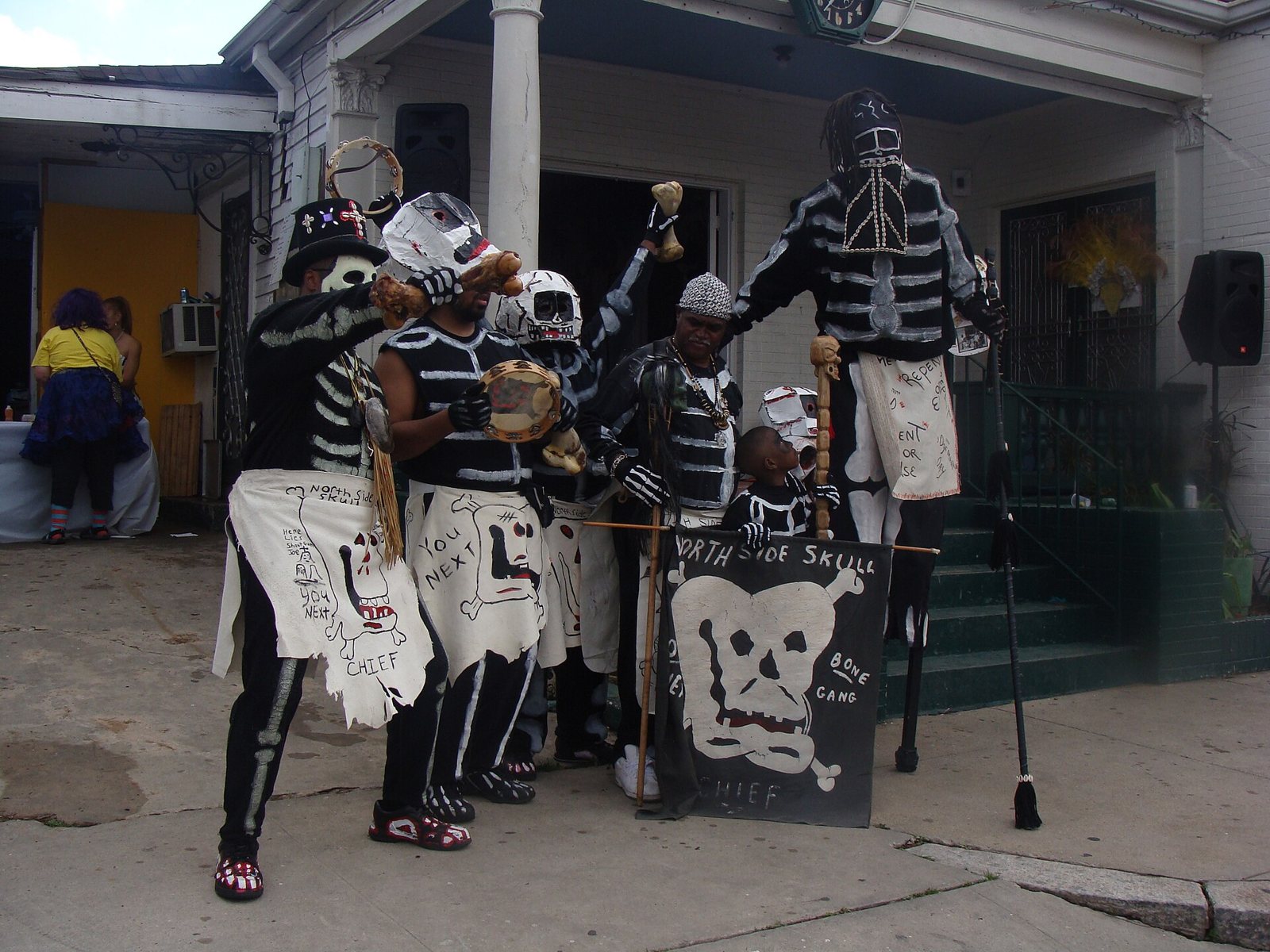
The costume is built by hand. The traditional skull mask is large and made from baling wire, newspaper, flour and water, a papier-mâché head that each masker shapes. Members wear dark clothing painted with white bones and aprons carrying handwritten or painted messages such as "You next."
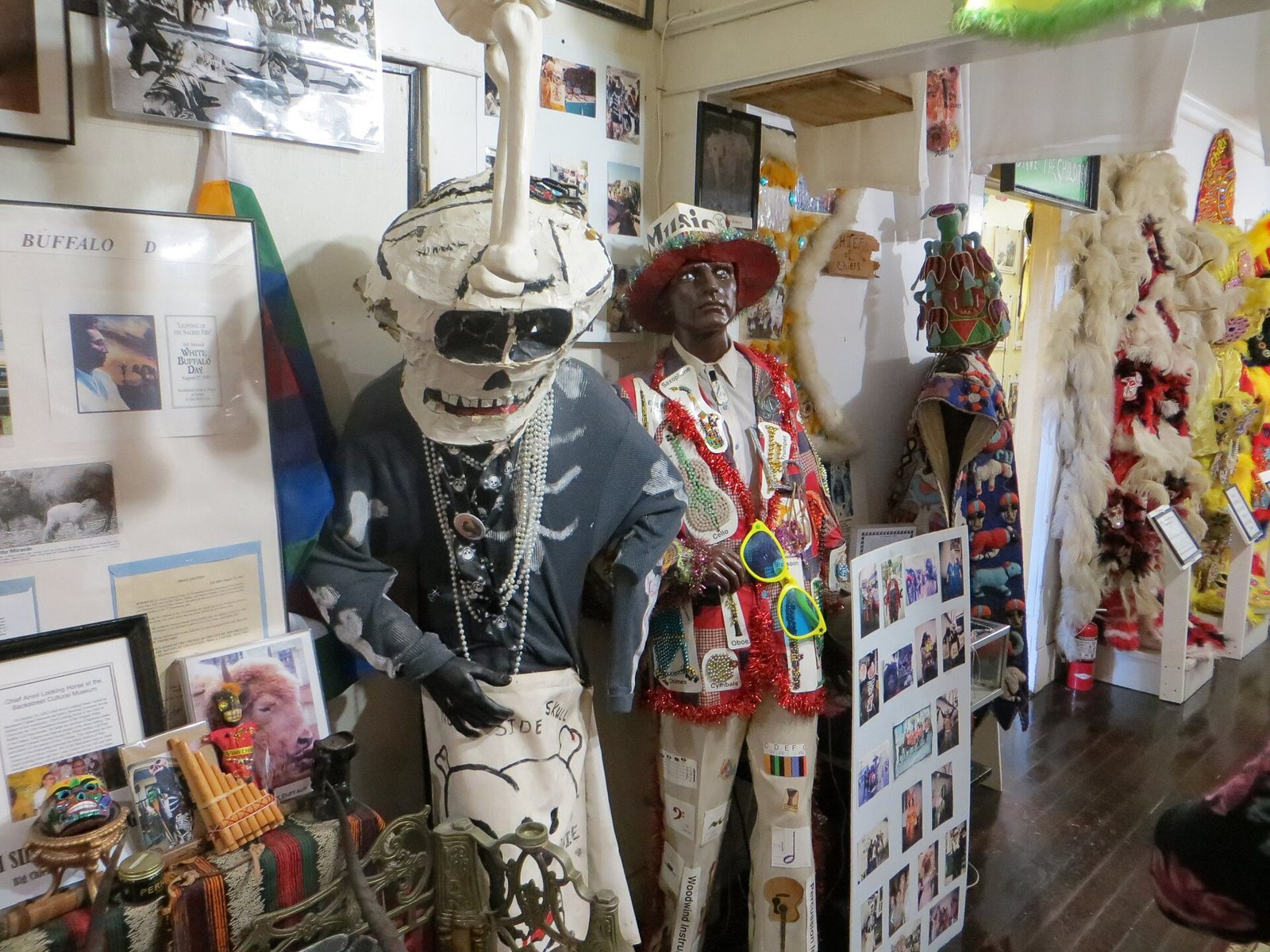
The Historic New Orleans Collection sums the outfit up as skeleton suits, butcher aprons and papier-mâché skulls. The materials reflect the tradition's working-class roots, and they let each masker make a design of their own. A 2025 report from WJCL also describes skeleton masks topped with antlers, so the look on any given morning can surprise you.
For the long history of the skull face worn on the street, see our story of skull masks, and for the skeleton suit across costume history, our story of skeleton costumes.
What the skeletons are saying
The gang stands for mortality, for remembering the ancestors, for a warning against violence and harmful living, and for the renewal that Carnival brings. Its members use the skeleton to say that death is part of life, and that there is still time to change how you live.
That idea has a long life in skull imagery. The old phrase *memento mori*, "remember that you must die," carries a similar thought, and our story on what memento mori means traces it. In Tremé, though, the message comes in the gang's own words and its own setting, sung in the street by people who live there.
The calendar adds a quiet echo. The day after Mardi Gras is Ash Wednesday, when many churches place ashes on foreheads with the words "Remember that you are dust." The two are separate traditions with their own meanings, and the church rite is told in our story of Ash Wednesday and "remember you are dust".
How well do you know the Skull and Bone Gang?
Answer every question to check.
How to see the Skull and Bone Gang respectfully
If you want to see them, plan to be up very early. The gang traditionally begins around 5 a.m. on Mardi Gras morning in Tremé, according to New Orleans & Company; Via Nola Vie describes 5:30 a.m. New Orleans & Company names the Backstreet Cultural Museum as the traditional starting point.
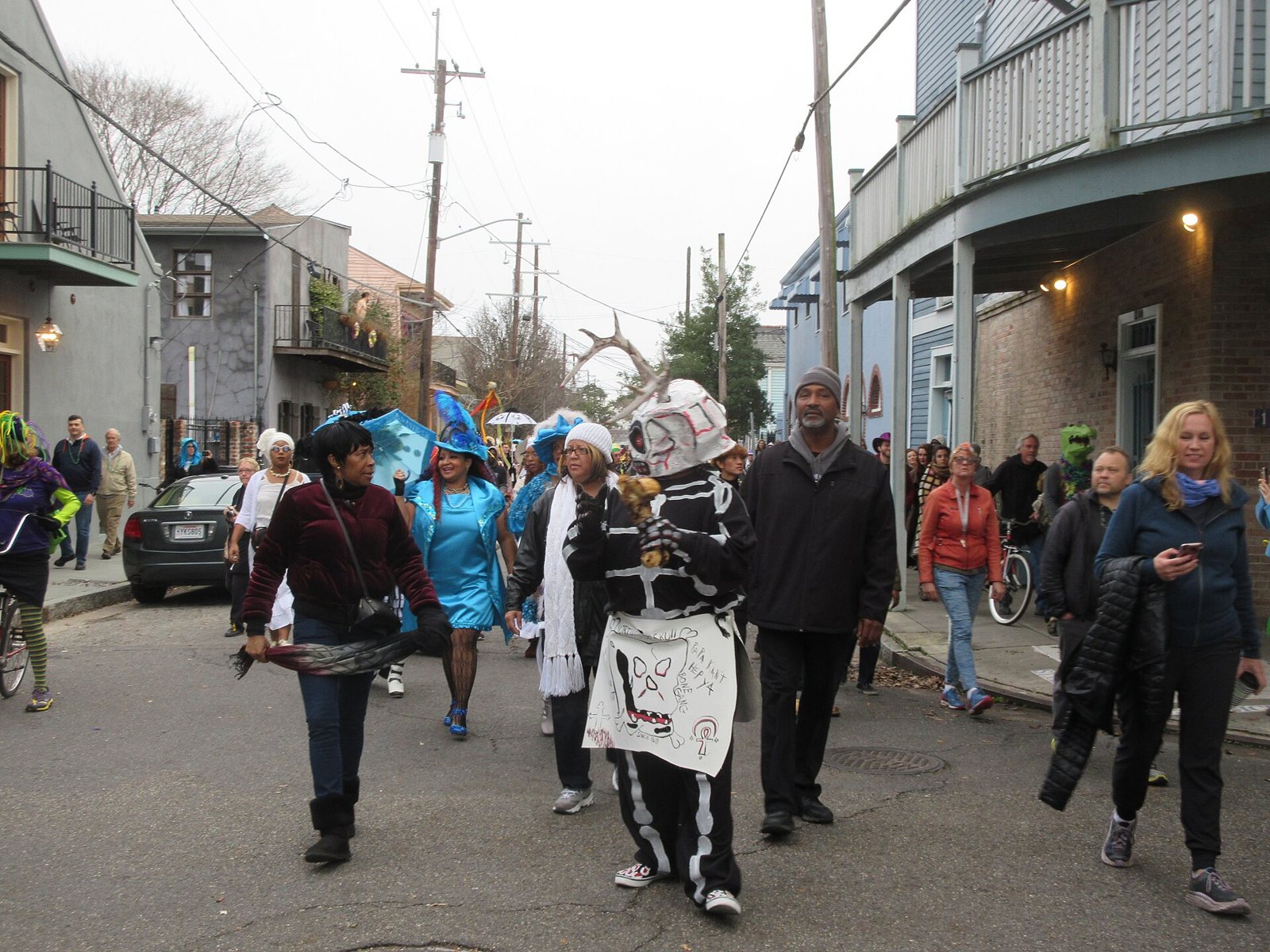
After that, there is no map. The gang follows no fixed route and publishes no parade path; its members meander through Tremé and other parts of the city, so there is no guaranteed spot to stand and wait. Confirm the starting place and timing locally before you go, and check the Backstreet Cultural Museum's current address and Mardi Gras morning arrangements with the museum.
Remember whose morning it is. This is a living community tradition in a residential neighborhood, not a staged show, and the doors being knocked on are people's homes. For 2027, Mardi Gras Day is Tuesday, February 9, according to the City of New Orleans and New Orleans & Company's Mardi Gras calendar.
Watching the Skull and Bone Gang: a respectful checklist
Tap a card to bring it forward.
- Keep your distance: Give the maskers room to move and perform.
- Leave doorways clear: Do not block homes or doorways; the knock is meant for the people who live there.
- Ask before close-ups: Ask before taking a close-up portrait of a masker.
- Confirm locally: Check the start time and starting place locally before you go, since there is no published route.
- Remember whose tradition it is: Treat the morning as a living Tremé tradition, not a tourist show.
Common questions about the Skull and Bone Gang
Visitors and curious readers tend to ask the same few things about the skeletons of Mardi Gras morning.
What time do the skeletons come out on Mardi Gras?
The gang traditionally starts around 5 a.m. on Mardi Gras morning, leaving from the area of the Backstreet Cultural Museum in Tremé. Because it follows no fixed route, the time and place you might cross paths with the maskers later in the morning will vary.
Who are the skeletons of New Orleans Mardi Gras?
They are the members of the North Side Skull and Bone Gang, a Black masking tradition of Tremé. On Mardi Gras morning they dress as skeletons to wake the neighborhood, remember the ancestors and carry a message about mortality, peace and how to live.
When is Mardi Gras in 2027?
Mardi Gras Day 2027 is Tuesday, February 9, according to the City of New Orleans and New Orleans & Company. Mardi Gras is tied to the date of Easter, so it moves from year to year.
Is the Skull and Bone Gang related to Skull and Bones?
No. The Skull and Bone Gang is a Tremé masking tradition of Mardi Gras morning, while Skull and Bones is a different group with its own story, told in our piece on the Skull and Bones society.
Where to go next
The skeletons knock, call "You next!" and move on, and by the time the parades roll, the message has already been delivered. For more on the skull as a reminder to live well, read our story on what memento mori means, and for the next day's rite of ashes, Ash Wednesday and "remember you are dust".
Terms in this story
Tap a term to see what it means.
Tremé. The New Orleans neighborhood where the North Side Skull and Bone Gang begins its walk on Mardi Gras morning.