

No. 305
The Wild Turkey Skull: What It Looks Like and How Hunters Keep One
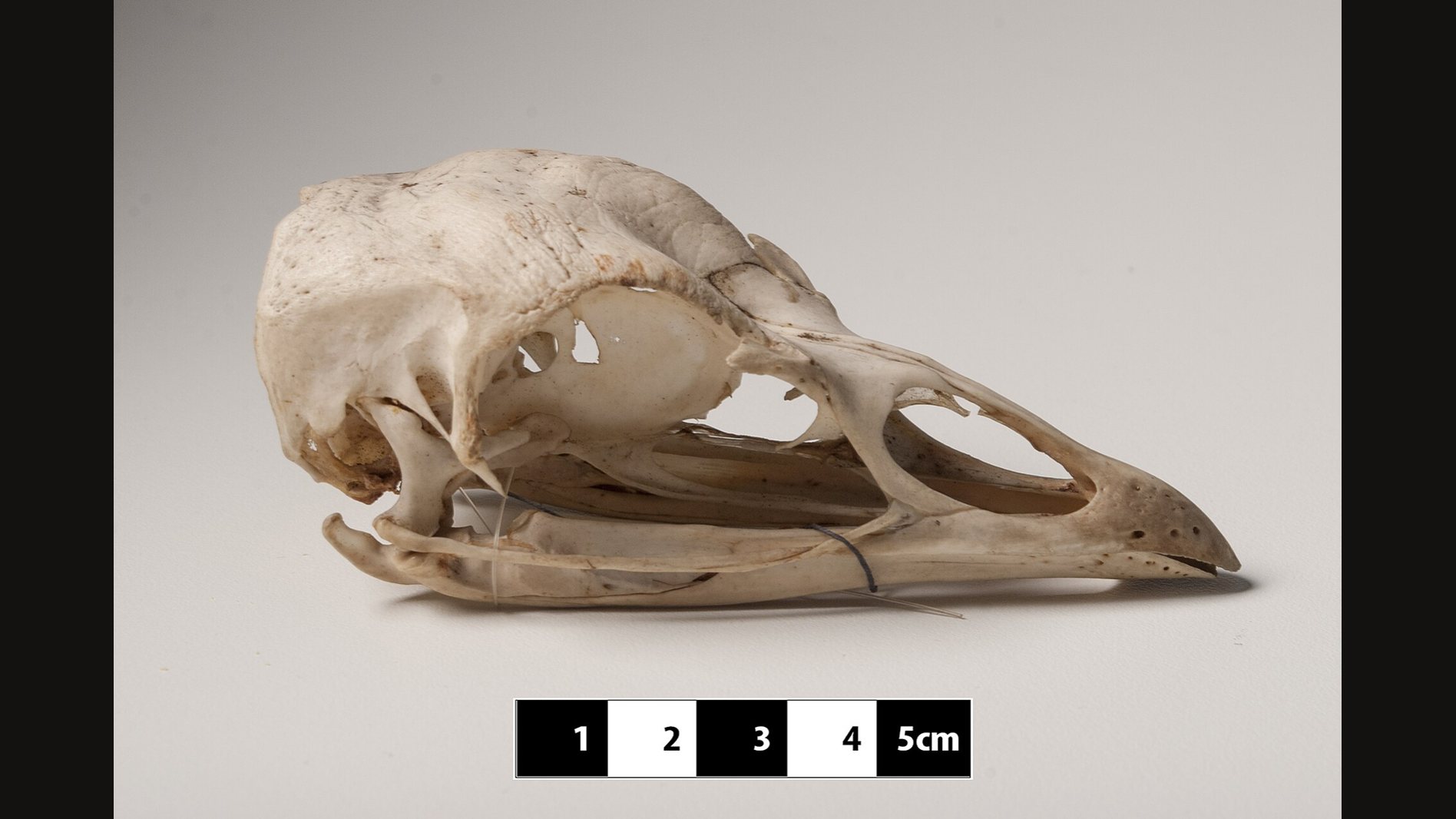
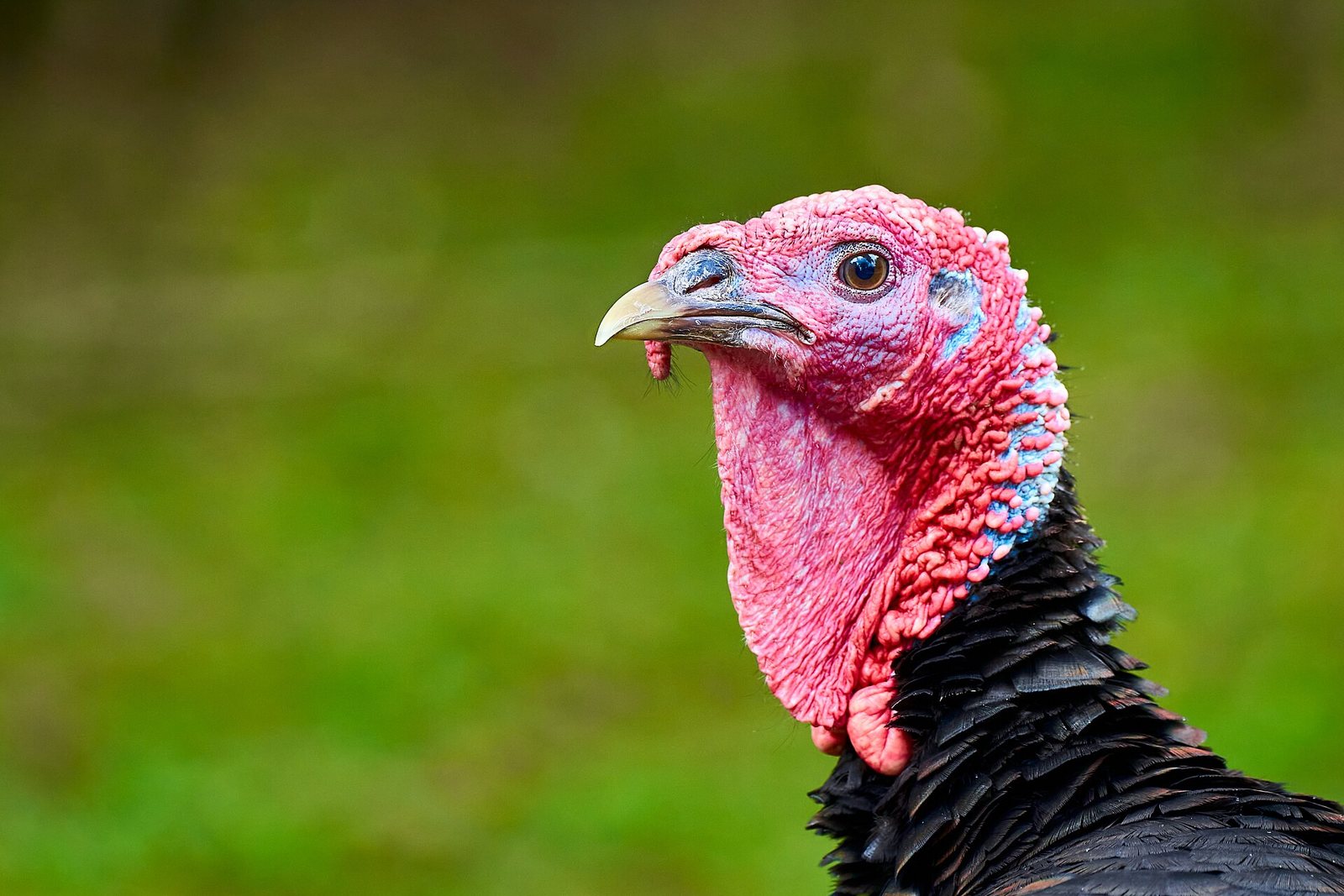
A wild turkey skull is a light, toothless bird skull. It is narrow behind the eyes and stretches forward into a long, pointed beak built from thin facial bones, with a conspicuous nasal opening near the base of the beak. Large eye sockets, a rounded braincase and a slender lower jaw hinged at the back finish the shape. The snood, wattles and beard that make a living gobbler so recognizable are soft tissue, so none of them survive cleaning.
Hunters who want to keep the skull usually clean it with a gentle simmer, following the steps in the University of Kentucky Extension's December 2024 guide to preserving and displaying turkey and deer. Many also keep the tail fan and the beard as a separate fan-and-beard mount. The skull and the feathers are two different keepsakes from the same bird, and plenty of hunters make both.
If you found a beaked skull in the woods rather than bagging a bird, the sections below will help you decide whether it is a turkey, and what to check before you take it home.
What does a turkey skull look like?
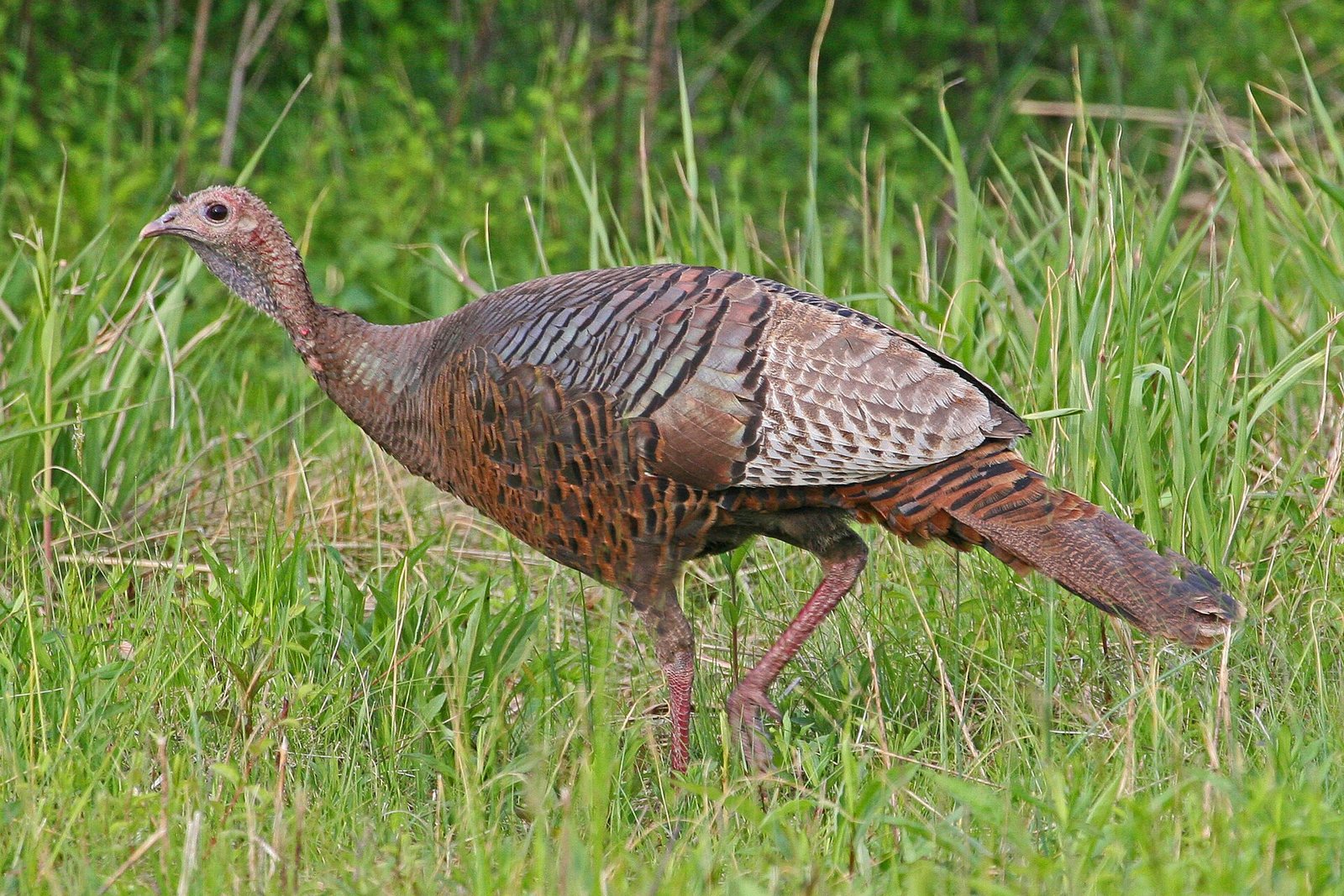
The wild turkey is *Meleagris gallopavo*, and a cleaned skull shows the bird's head stripped down to its frame. The Smithsonian Institution Archives holds a 1959 photograph of a mounted wild turkey skeleton that names the eastern subspecies, *Meleagris gallopavo silvestris*. Its skull is lightweight and elongated, tapering toward a toothless beak.
The upper beak is made of thin facial bones, and near its base sits a large nasal opening. The California Department of Fish and Wildlife's anatomy diagram of an adult male turkey labels the beak and nostril on the living bird, which helps you match the bony opening to the nostril you would see in the field. Behind the beak come the eye sockets, large for the size of the head, and then the rounded braincase. The lower jaw is a slender bone hinged at the rear of the skull.
What you will not see is everything fleshy. The snood, the wattles and the beard on the breast are soft tissues attached to the living bird, so a bare skull shows only the beak, the nasal opening, the eye sockets, the jaws and the braincase. That can make a turkey skull look surprisingly plain to someone who knows the bird mainly from its head.
Size: one specimen's measurements
Turkey skulls vary with subspecies, sex, age and how they were prepared, so there is no single standard size. One informal reference helps as a starting point. A Skullsite specimen record for an adult male wild turkey lists an overall length of 90 mm, a cranium 46 mm long, 37 mm wide and 29 mm high. That is one bird from a private skull collection, not a museum standard, so treat it as a rough comparison rather than a rule.
To size up your own skull, measure the total length, then the cranium's length, width and height. Comparing those numbers with a labelled museum or university collection record gives a far better answer than any single figure online. A university extension office, a natural history museum or the state wildlife agency can also help confirm an identification.
Turkey, domestic turkey or chicken?
A farm turkey and a wild turkey are the same species. The Smithsonian's National Zoo describes the domestic turkey as a domesticated form of *Meleagris gallopavo*, bred to be much heavier in the body. Their skulls keep the same basic pattern: toothless jaws, large eye sockets, a beak of delicate facial bones and a relatively light braincase.
The chicken is another matter. It is *Gallus gallus domesticus*, a domesticated form of the red junglefowl. CT scans from the University of Texas Digimorph project show the chicken skull as a delicate bony frame around the brain and eyes, with sturdier bones in the beak and lower jaw. One science-supply catalogue, from 3B Scientific, gives an approximate chicken skull length of 6 cm, though breed, age, sex and preparation all change that. A turkey skull is generally longer and more substantial than a chicken's, with a longer face and a bigger head overall.
Tap or hover a row to highlight it.
| Subject | Scientific name | Identifying or display fact |
|---|---|---|
| SubjectWild turkey | Scientific nameMeleagris gallopavo | Identifying or display factToothless beak, large nasal opening, large eye sockets, rounded braincase |
| SubjectDomestic turkey | Scientific nameMeleagris gallopavo | Identifying or display factDomesticated form of the same species as the wild turkey |
| SubjectDomestic chicken | Scientific nameGallus gallus domesticus | Identifying or display factDelicate bony frame around brain and eyes; sturdier beak and lower jaw |
| SubjectFan-and-beard mount | Scientific nameNot a skull specimen | Identifying or display factUses the tail feathers and the male's breast beard |
One name causes trouble. The turkey vulture, *Cathartes aura*, is a different bird altogether, and its skull is not a turkey skull despite the name. If your find is smaller, our stories on the chicken skull and the crow skull cover two other common bird skulls, and bird skull meaning looks at what bird skulls have stood for in art and belief.
Cleaning a turkey skull
The University of Kentucky's 2024 guide walks through the whole process for a legally harvested wild turkey: simmering, removing the tissue, preparing the skull and choosing a display. It also notes that you can remove the lower jaw, the mandible, when your chosen mount does not use it.
Start by removing the skin and as much tissue as you can. Then use a controlled simmer, not a long, hard boil. A bird skull is thin, and too much heat can soften the bone. The Alaska Department of Fish and Game's skull-cleaning steps make the same case for working gently.
The University of Arizona Cooperative Extension covers the finishing stages of cleaning, whitening, rinsing, drying and preserving a skull. It also warns that liquid bleach is harsher on bone than an enzyme-based cleaning solution, which matters doubly for a skull this delicate.
If you would rather avoid heat altogether, museums and taxidermists use dermestid beetles, which eat away soft tissue and leave the bone. Our story on dermestid beetles explains how those colonies work, how to clean an animal skull covers the general method for any species, and the same Kentucky guide sits behind our European mount deer skull story if a deer is next.
The fan-and-beard mount
Many turkey hunters care less about the skull than about the fan and beard, and the two are separate projects. The fan is the spread group of tail feathers. The beard is the bundle of long bristles that grows from the breast of a male. Neither is part of the skull, so a fan-and-beard mount keeps feathers and bristles, not bone.
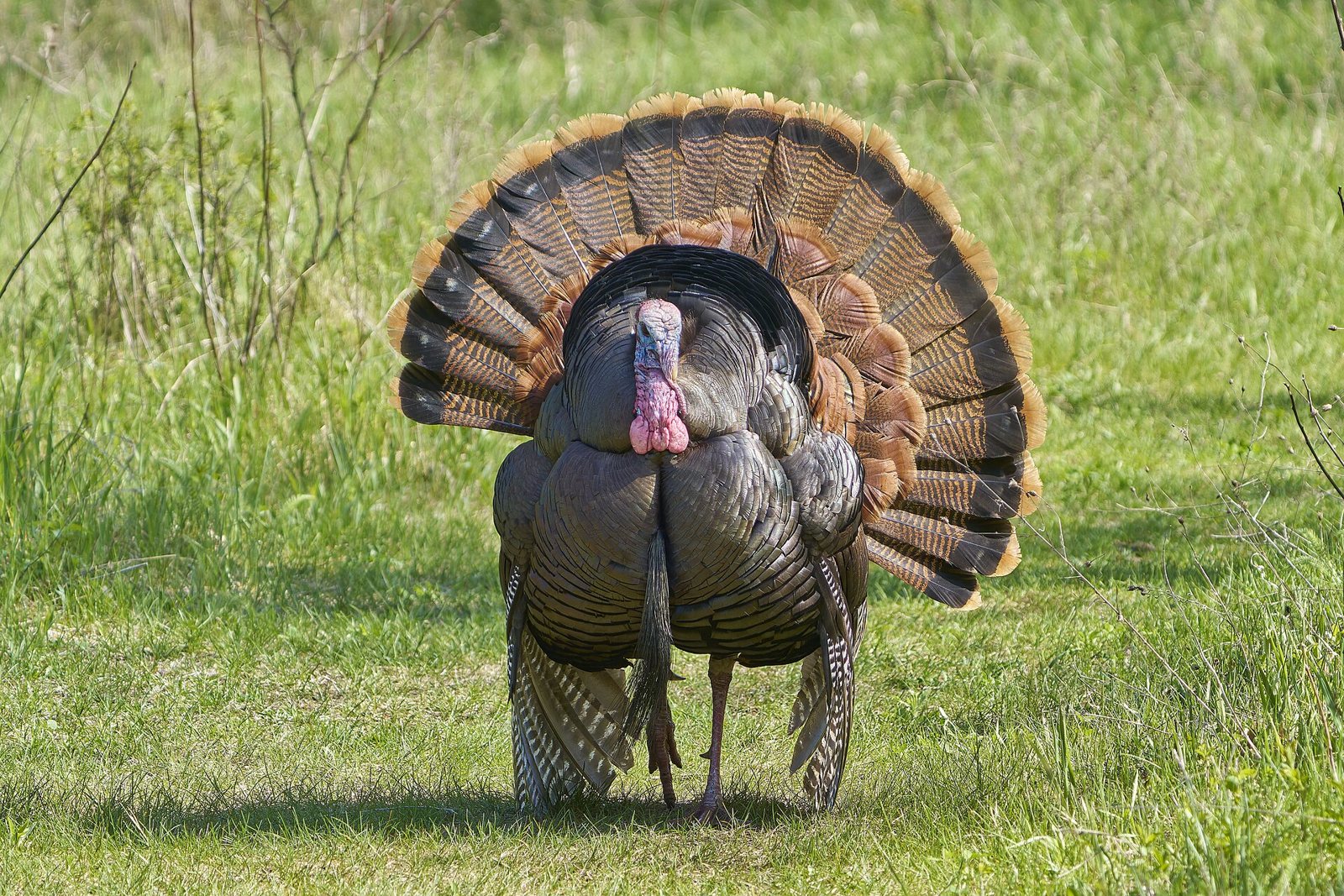
The Missouri Department of Conservation's instructions on cleaning a turkey explain how to take both: remove the beard close to the body, and cut the fan skin away from the tail. From there a hunter can make a skull mount, a fan-and-beard mount or both. Whichever you choose, state rules on tagging, transport, possession and seasons still apply to the bird and its parts.
A game bird that came back
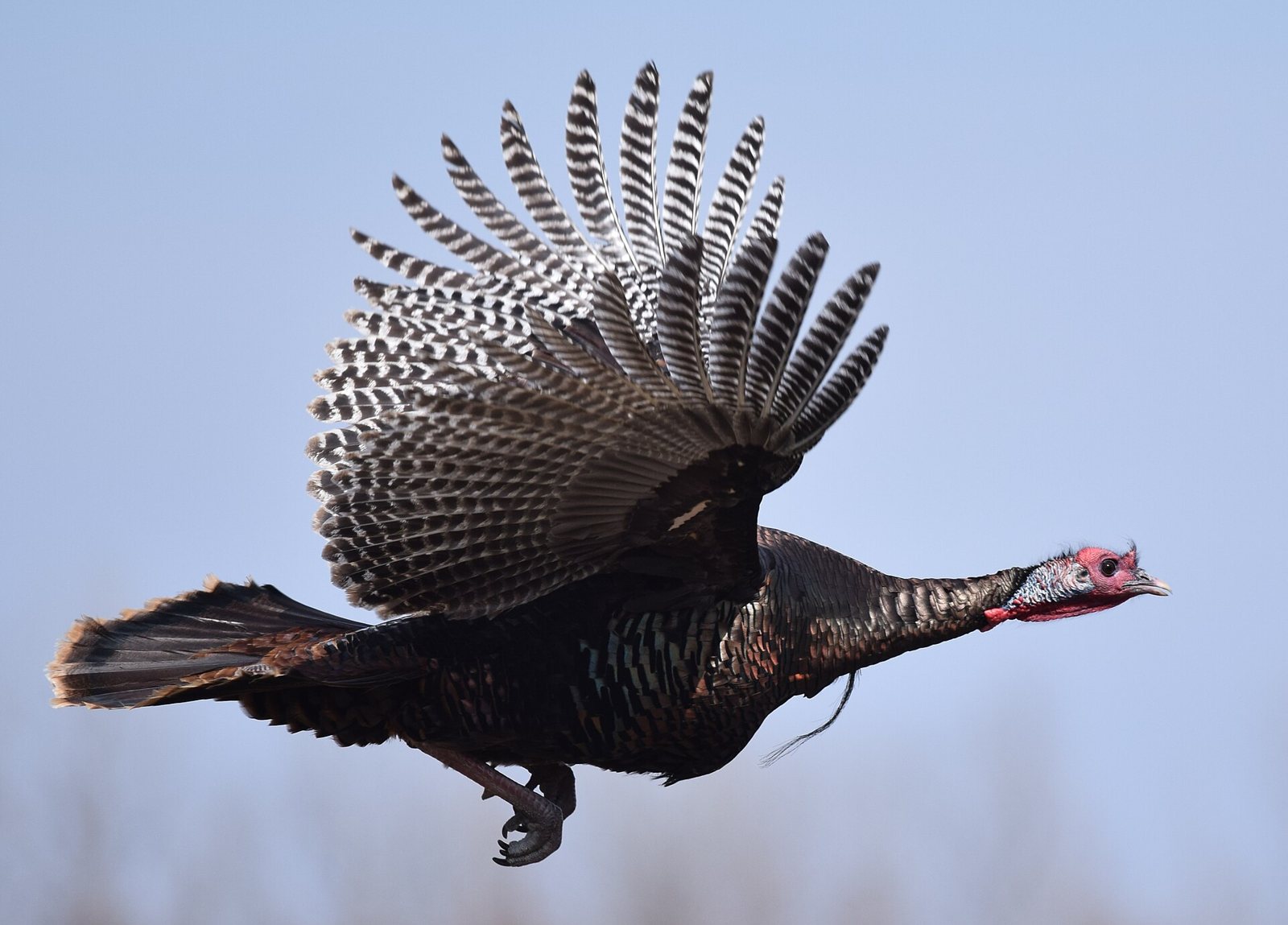
The wild turkey is a native North American upland game bird, managed by state wildlife agencies. The Tennessee Wildlife Resources Agency calls it the state's largest nesting bird and names five subspecies: Eastern, Florida or Osceola, Rio Grande, Merriam's and Gould's.
It was not always plentiful. The National Wild Turkey Federation reports that turkey populations fell sharply because of habitat loss and unregulated hunting. In Tennessee, fewer than 5,000 birds were left by the early 1900s. Releases of pen-raised birds from 1935 through 1951 never produced a flock that could sustain itself. The state switched to live-trapped native birds in 1951, and better rocket-net techniques after 1971 made restoration far more effective. By the 2024 spring season, NWTF reports, Tennessee hunters harvested about 63,000 turkeys.
Louisiana tells a similar story. According to the Louisiana Department of Wildlife and Fisheries, only 14 isolated flocks totaling fewer than 1,500 turkeys remained after World War II. In 1962 the department, with support from NWTF and private landowners, began trapping wild turkeys and releasing them into suitable habitat.
How the wild turkey came back
Tap or hover a step to follow the order.
Early 1900s
Fewer than 5,000 wild turkeys remain in Tennessee, according to NWTF.
1935 to 1951
Tennessee's pen-raised releases fail to establish a self-sustaining flock.
1951
Tennessee begins releasing live-trapped native wild turkeys.
After World War II
Louisiana is down to 14 isolated flocks totaling fewer than 1,500 birds.
1962
Louisiana Department of Wildlife and Fisheries begins trapping and releasing wild turkeys, with NWTF and landowner support.
After 1971
Improved rocket-net techniques make Tennessee's live-trapping more successful.
Spring 2024
Tennessee hunters harvest about 63,000 turkeys, NWTF reports.
December 11, 2024
The University of Kentucky publishes its guide to preserving and displaying turkey and deer.
Rules for hunted and found turkeys
Wild turkeys are game birds, so the state wildlife agency sets the rules. The federal Migratory Bird Treaty Act protects listed native migratory birds and their parts, as the U.S. Fish and Wildlife Service explains, and agency documents treat the wild turkey as an exception to that coverage; the federal list of protected birds is set out in 50 CFR 10.13. Domestic poultry are not covered by the Act. The practical difference for a finder is large: a turkey skull falls under state rules, while the skull of a native wild bird on the federal list falls under the Act. Our owl skull story covers the rules for owls.
> General information, not legal advice: State rules on hunted and found birds differ and are updated from season to season. Ask your state wildlife agency before keeping a turkey skull or any bird part, and contact the U.S. Fish and Wildlife Service about any other wild bird.
State rules can be detailed. The West Virginia Division of Natural Resources turkey regulations, in the document posted in 2021, allow three wild turkeys for qualifying license holders: two bearded turkeys in spring and one turkey of either sex in fall, with no more than one a day. The same document covers tagging and lists the firearms, bows and crossbows allowed. That is one state's published example, not a national rule, so follow the current regulations for your own state and season.
Chronic wasting disease, a common topic for deer and elk hunters, concerns deer-family animals, not turkeys. If your state issues a separate wildlife-disease or carcass-transport notice that applies, follow it. For a skull you found rather than hunted, our story on what to do when you have found an animal skull walks through the questions to ask first.
Turkey skull quiz
Answer every question to check.
Quick answers about turkey skulls
These questions come up often on both sides of the hunt.
How big is a turkey skull?
It varies with subspecies, sex, age and preparation. One informal adult male record lists 90 mm overall, with a cranium 46 mm long, 37 mm wide and 29 mm high, which is a useful comparison but not a standard.
How do you clean a turkey skull?
Remove the skin and as much tissue as you can, then use a gentle simmer or dermestid beetles. The University of Kentucky's 2024 guide covers the steps, and the University of Arizona Cooperative Extension covers whitening, rinsing and drying.
Does boiling damage a bird skull?
Yes, long, hard boiling can soften the thin bones of a bird skull. Keep the heat to a controlled simmer and check the skull often.
How do you preserve a turkey fan and beard?
Start by removing them correctly: Missouri's instructions say to take the beard close to the body and cut the fan skin away from the tail. Tagging and transport rules may still apply to those parts.
Is a wild turkey the same species as a domestic turkey?
Yes, both are *Meleagris gallopavo*. Domestic turkeys are a domesticated form bred to be heavier, and their skulls share the same basic shape.
Can you keep a wild bird skull you found?
It depends on the bird. Listed native migratory birds and their parts are protected by the Migratory Bird Treaty Act, while a wild turkey falls under state game rules, so check with the U.S. Fish and Wildlife Service or your state wildlife agency before keeping any of them.
Is a turkey protected by the Migratory Bird Treaty Act?
No, agency documents treat the wild turkey as an exception to the Act's coverage. Wild turkeys are managed by state agencies instead, so state hunting and possession rules apply.
Whether the skull came off your own bird or out of the leaf litter, a turkey skull is a fine thing to know on sight: light, toothless, long in the beak and wide in the eye. If it turns out to be smaller and sharper, the chicken skull story is the next comparison to make.
Terms in this story
Tap a term to see what it means.
Meleagris gallopavo. The scientific name of the wild turkey, which also covers the domestic turkey.
---