

No. 308
The Chicken Skull, and Why It Looks Like a Small Dinosaur
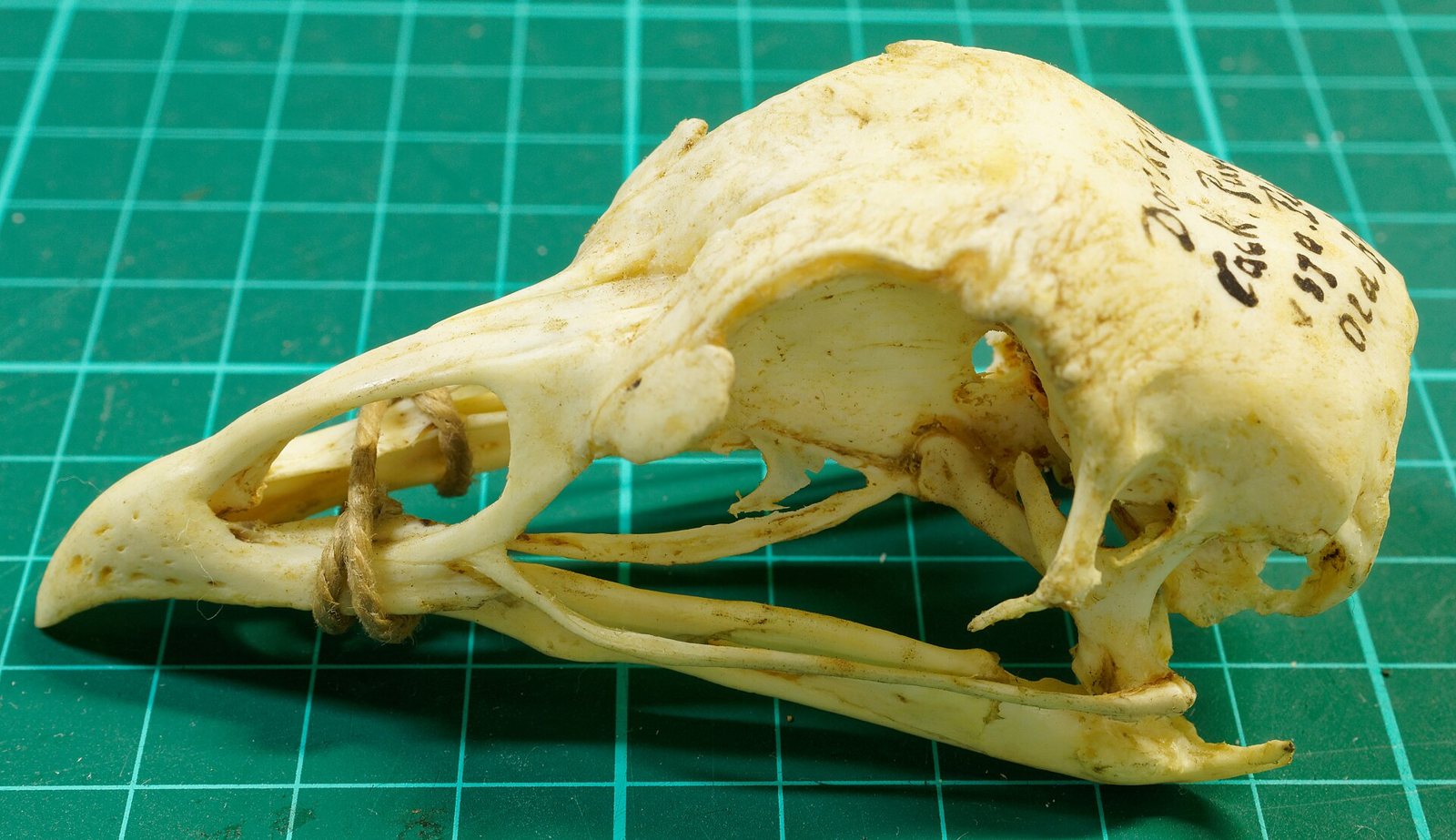
A chicken skull is small, light and mostly fused into one piece, with a toothless beak, enormous eye sockets, a rounded braincase and a ring of tiny bones set around each eye. Hold one up and the resemblance to a little dinosaur is hard to miss, and there is good reason for it. Birds are living theropod dinosaurs, according to the American Museum of Natural History, so the domestic chicken, *Gallus gallus domesticus*, is a dinosaur in the most literal sense science allows.
The famous *T. rex* connection is real too, but it is more specific than the headlines made it sound. Protein recovered from a *Tyrannosaurus rex* fossil grouped with birds, which ties *T. rex* to birds as a group rather than making the chicken its single closest living relative.
Reading a chicken skull, part by part
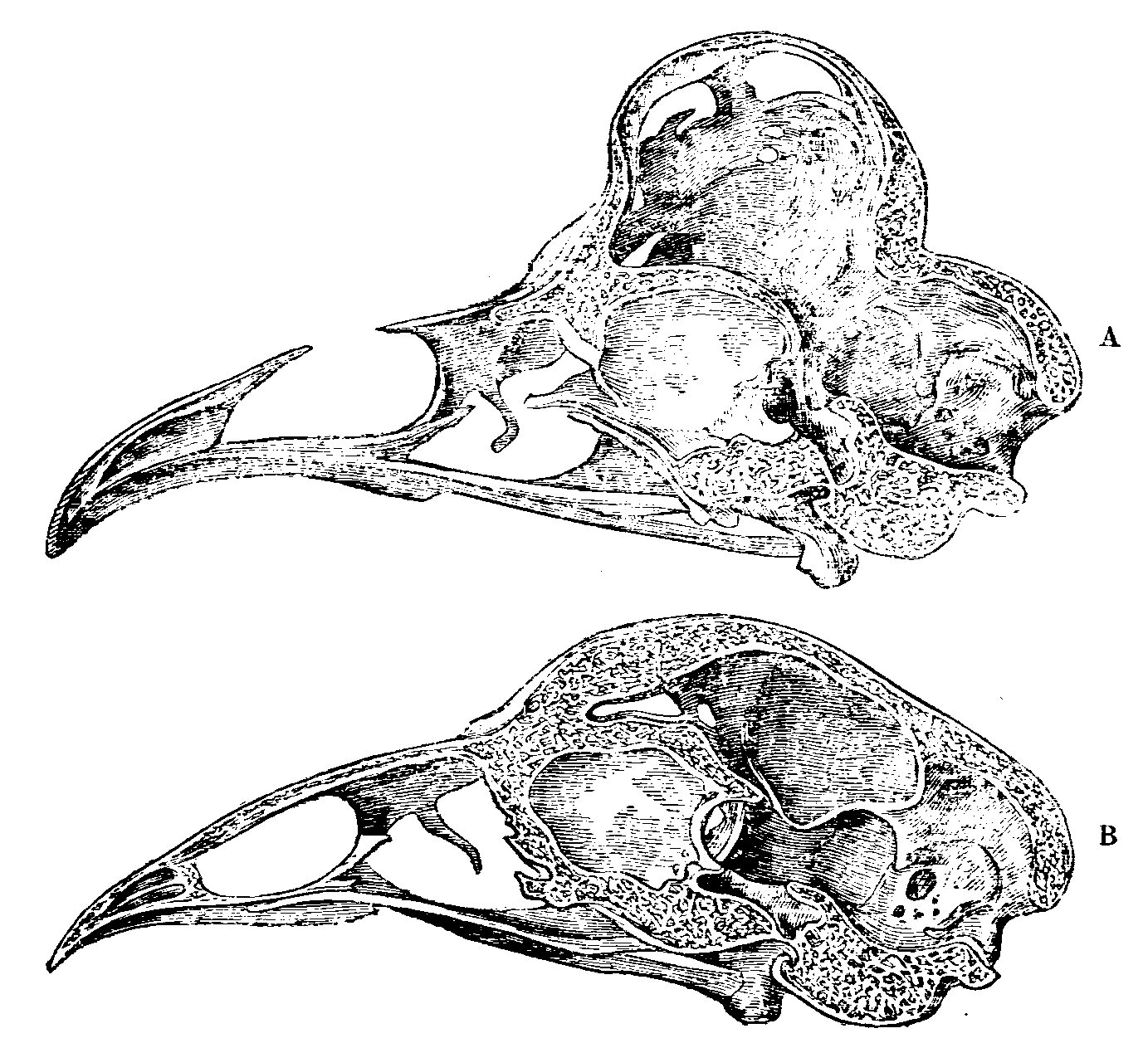
Start with the front. The beak has no teeth at all; it is built from modified jaw bones, as the University of Uttarakhand's anatomy text on the fowl skull describes it. Then look at the eye sockets, which take up a startling share of the skull. They are so large that only a thin wall of bone, the interorbital septum, separates the left one from the right. Behind them sits a rounded braincase, large for the size of the skull, and the bones are largely fused into one light unit.
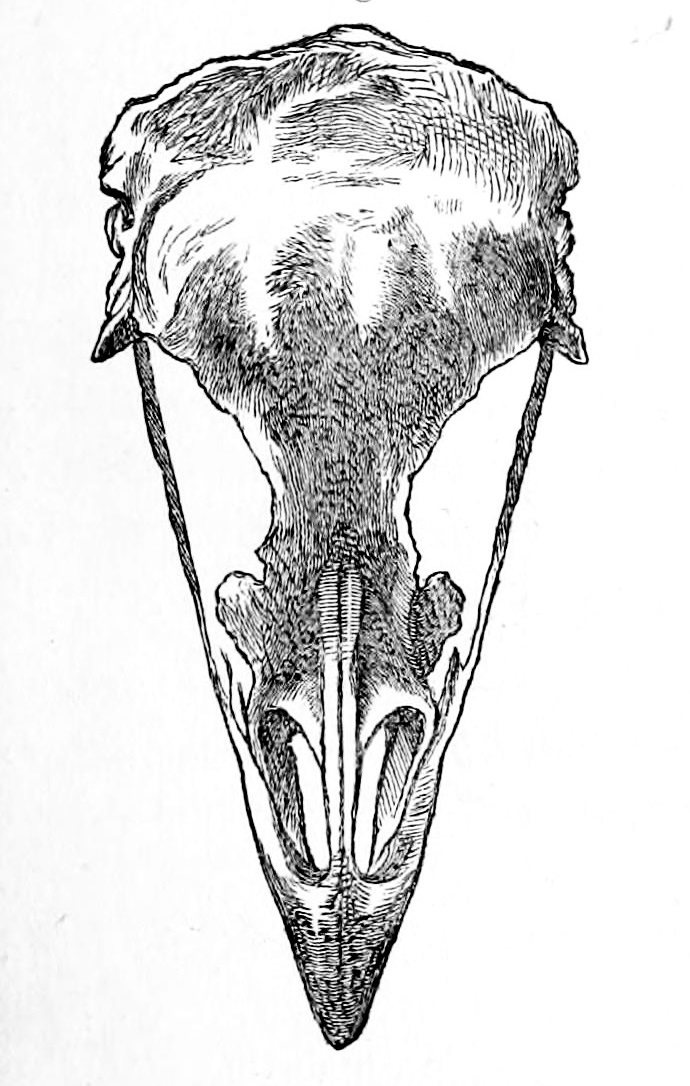
The detail that surprises most people is inside the eye socket. If your skull has a little ring of small bones where the eye used to be, that is the scleral ring, made of bones called sclerotic ossicles that supported the eye. Digimorph, the University of Texas digital collection, has a digital *Gallus gallus* skull and notes that chicken embryos develop these ossicles as the eye skeleton forms. They are tiny bones in a fragile skull, so handle a skull that still has them gently.
Turn the skull over and you will find a single occipital condyle, the knob of bone where the skull meets the neck. For a labelled view of the whole bird, the USDA Agricultural Marketing Service publishes a chicken skeletal diagram that marks the orbital fossa (the eye socket), the visceral cranium (the face and jaw region) and the mandible.
Put those features together, the toothless beak, the huge orbits, the fused and lightweight build, and you have the profile that makes people say "tiny dinosaur" the first time they see one.
Why a chicken counts as a dinosaur
In modern classification, birds are not a group that came after the dinosaurs. They are the surviving avian branch of the theropods, the group of dinosaurs that also includes *T. rex*. A chicken pecking in the yard is, by that reckoning, a living dinosaur.
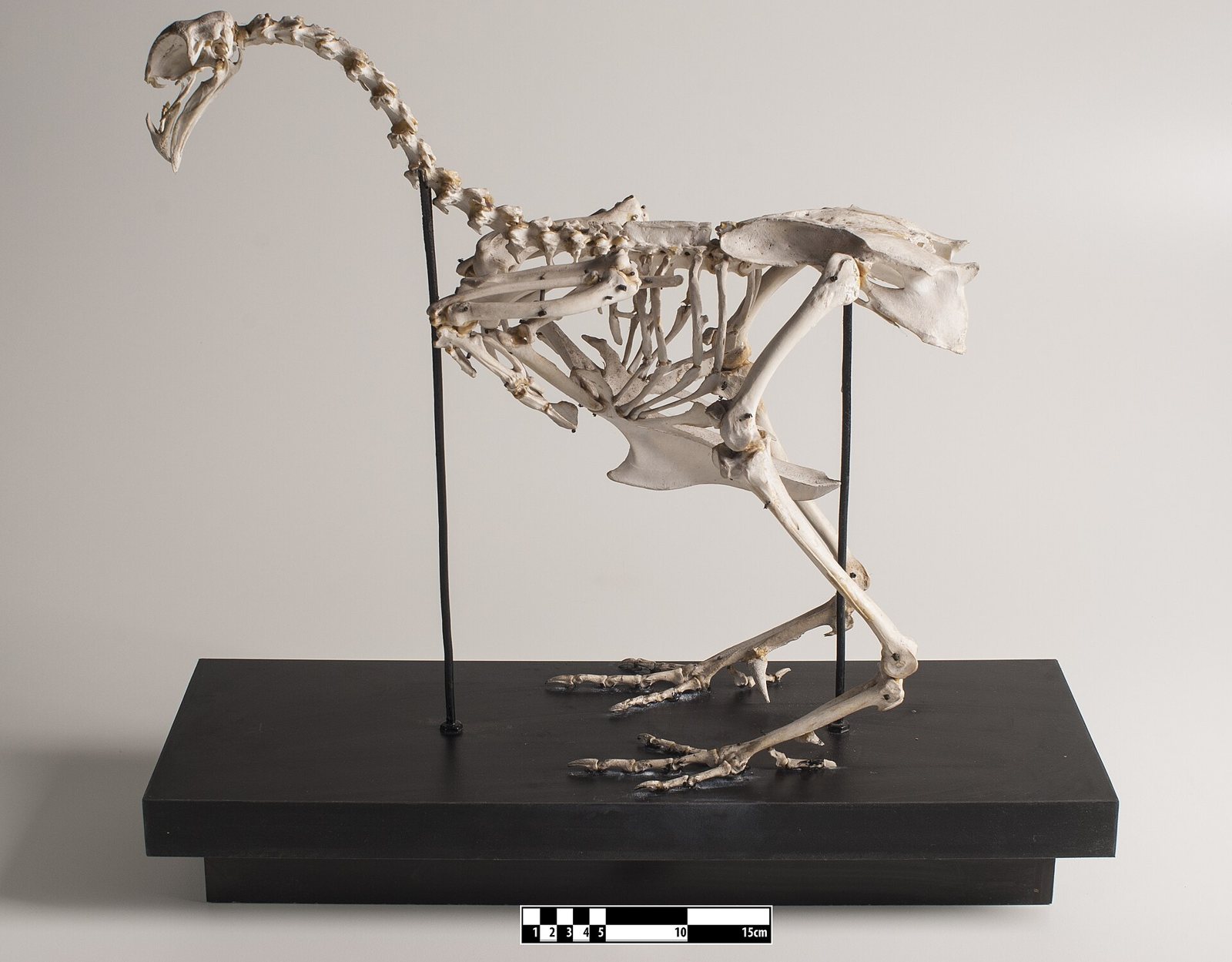
Mark Norell of the American Museum of Natural History points to features birds share with theropod dinosaurs, including the wishbone, and to the feathered ancestor that links modern birds, chickens and *T. rex*. The wishbone in your holiday dinner is a theropod feature that has been passed down for a very long time. If you want to set a chicken beside another theropod, our story on the velociraptor skull is a good companion.
What the T. rex protein study showed
The chicken and *T. rex* got their headline pairing from protein, not bone shape. In 2007, Mary Schweitzer, John Asara and colleagues reported collagen protein recovered from a *T. rex* specimen, MOR 1125, about 68 million years old. A companion paper by Asara and colleagues reported the protein sequences from *T. rex* alongside sequences from a mastodon.
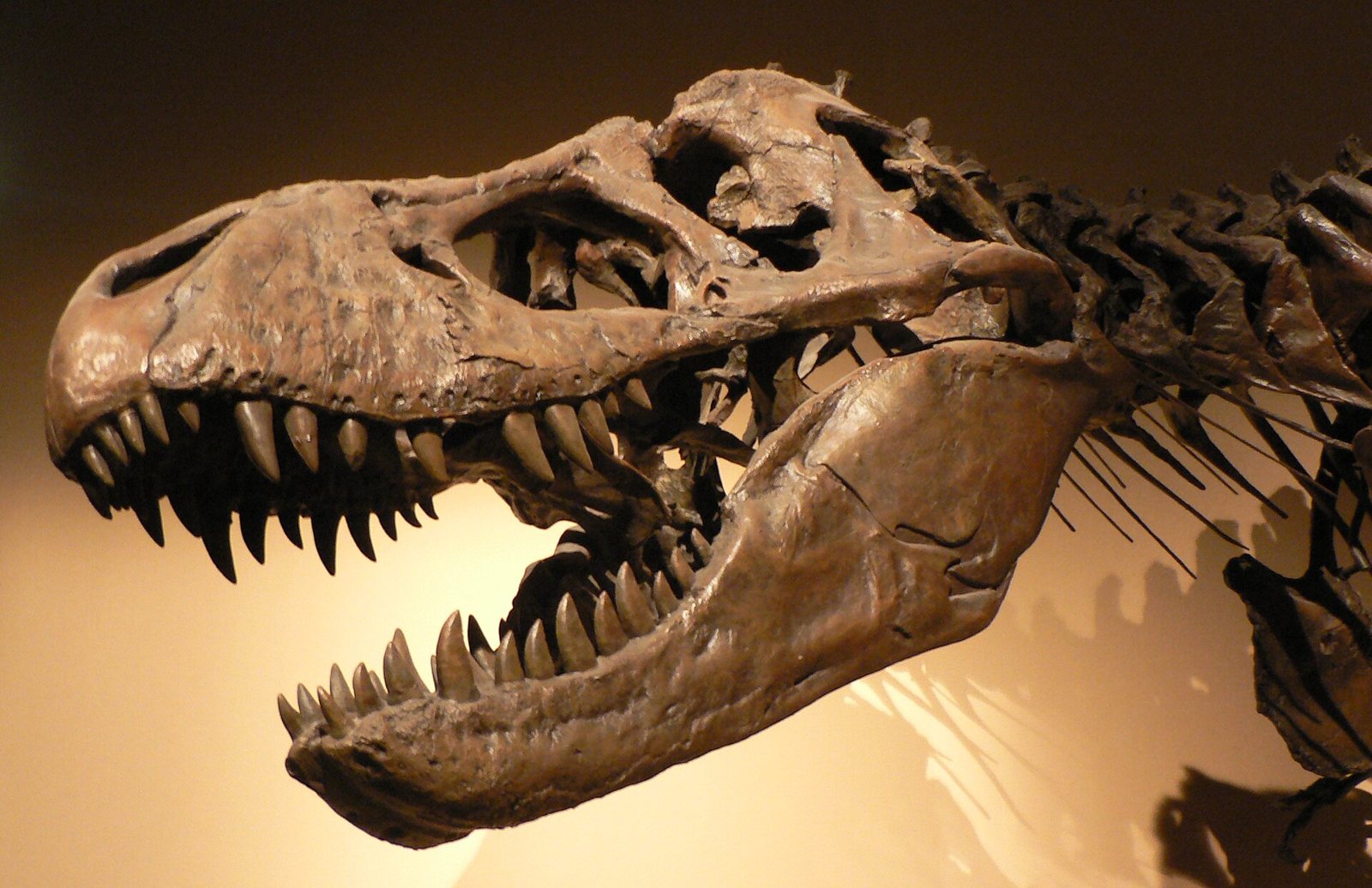
The next year, Chris Organ, Schweitzer, Asara and colleagues used those collagen fragments to build a molecular phylogeny, a family tree based on molecules. The *T. rex* fragments grouped with birds rather than with crocodilians, which is strong molecular support for the bird and dinosaur link.
That result is where the popular line "the chicken is the closest living relative of *T. rex*" came from, and it says more than the study did. The comparison could only use the protein sequences available at the time, and chicken and ostrich were among them. The finding concerned birds as a group. It did not show that chickens descend directly from *T. rex*, or that the chicken is closer to it than any other living bird. For the skull of the most famous *T. rex* of all, see our story on Sue the T. rex.
The chicken skull and its dinosaur story
Tap or hover a step to follow the order.
1868
Charles Darwin compares domestic chicken skulls with Red Junglefowl material while documenting variation among domestic birds.
2007
Mary Schweitzer, John Asara and colleagues report collagen protein from a T. rex specimen, MOR 1125.
2008
Chris Organ, Schweitzer, Asara and colleagues publish a molecular phylogeny grouping T. rex with birds.
2018
Brigida Corrieri compares the back of the skull in chicken, turkey and duck at Cranfield University.
Chicken, turkey or duck?
A small poultry skull from the yard or the kitchen could come from more than one bird. Brigida Corrieri's 2018 Cranfield University thesis compared skull features in chicken, turkey and duck specimens, focusing on the back of the skull.
Chicken, *Gallus gallus*, and turkey, *Meleagris gallopavo*, came out very alike there. Both have a single, elevated, bean-shaped occipital condyle and a drop-shaped foramen magnum, the opening where the spinal cord leaves the skull. The turkey skull was larger, but the shapes matched. The mallard duck, *Anas platyrhynchos*, has a similar single condyle, but its foramen magnum is more oval or pear-shaped.
That gives you a useful first check, with a caution attached. The comparison used a small sample, and skull size varies with age, sex, breed and the individual bird, so it is not a complete field key. When the identification really matters, ask a natural history museum or a qualified osteologist. For the bigger bird, our story on the turkey skull goes further, and if the skull is dark-billed and came from the wild, the crow skull story is the better match. For birds more broadly, see what a bird skull can mean.
Tap or hover a row to highlight it.
| Feature | Chicken, Gallus gallus | Turkey, Meleagris gallopavo | Mallard duck, Anas platyrhynchos |
|---|---|---|---|
| FeatureOverall size in the Corrieri comparison | Chicken, Gallus gallusSmaller | Turkey, Meleagris gallopavoLarger | Mallard duck, Anas platyrhynchosNot directly ranked against chicken |
| FeatureOccipital condyle | Chicken, Gallus gallusSingle, bean-shaped, elevated | Turkey, Meleagris gallopavoSame pattern as chicken | Mallard duck, Anas platyrhynchosSimilar single condyle |
| FeatureForamen magnum | Chicken, Gallus gallusDrop-shaped | Turkey, Meleagris gallopavoSame pattern as chicken | Mallard duck, Anas platyrhynchosMore oval or pear-shaped |
| FeatureBeak | Chicken, Gallus gallusToothless | Turkey, Meleagris gallopavoToothless | Mallard duck, Anas platyrhynchosToothless |
| FeatureCaution | Chicken, Gallus gallusBreed, age and individual variation matter | Turkey, Meleagris gallopavoSize alone is not conclusive | Mallard duck, Anas platyrhynchosDuck species vary |
Cleaning a chicken skull the museum way
A chicken skull is fragile, and the scleral rings are tiny, so gentle methods work best. Museum practice, as the Society for the Preservation of Natural History Collections describes in its ornithology specimen preparation guidance, removes soft tissue with dermestid beetles, maceration (a long soak that lets tissue break down) or burial. The same guidance says boiling is not an accepted method for preparing bird skeletons, which is worth knowing before a skull from the soup pot goes back on the stove.
For a fresh skull, wear gloves and work somewhere well ventilated. A Tasmanian Museum procedure, reproduced by ASSIST, sets out a gentle sequence: freeze the skull for a week before handling it, soak it in biological washing powder dissolved in warm water to loosen tissue and grease, and rinse it thoroughly. If you want it whiter, use 3% hydrogen peroxide, and only in a ventilated space. Hydrogen peroxide is an oxidizer, so keep it in a loose-lidded, labelled container, move the skull with tongs, rinse it afterward and follow your local waste rules.
Skip the chlorine bleach. The Natural History Museum of Los Angeles County, explaining how its beetles prepare specimens, notes that bleaching can strip organic information from bone and weaken it. The University of Arizona Cooperative Extension also has a publication on cleaning and preserving animal skulls. For the full process on larger skulls, see our guides on how to clean an animal skull and how museums use dermestid beetles.
Cleaning a chicken skull the museum way
Tap a card to bring it forward.
- Gloves and fresh air: Wear gloves and keep the work area ventilated.
- Freeze first: Freeze the skull for a week before handling it, per the Tasmanian Museum procedure.
- Gentle soak: Use biological washing powder in warm water to loosen tissue and grease, then rinse well.
- Peroxide, carefully: Use 3% hydrogen peroxide only in a ventilated area, in a loose-lidded labelled container, with tongs.
- No boiling: Museum guidance does not accept boiling for bird skeletons.
- No chlorine bleach: Bleaching can remove organic information and weaken bone.
- Rinse and dispose properly: Rinse after whitening and follow local waste rules.
If the skull is not from your own flock
A skull from your own chickens or your own kitchen is one thing. A bird skull picked up on a walk may not be a chicken at all, and wild birds come with their own rules. If you are not sure what you have, our story on what to do when you find an animal skull is the place to start, and the crow skull story covers the protections on wild native birds in the United States.
> Legal note: Read this as general information, not legal advice. Laws on bird remains differ by state and country, and nothing here settles whether a particular skull may be kept, so ask your state wildlife agency about any skull that may have come from a wild bird.
Darwin's chickens
Long before anyone pulled protein from a fossil, chicken skulls were already helping scientists think about change over time. In 1868, Charles Darwin compared the skulls of domestic chickens with Red Junglefowl material while documenting how much domestic birds had come to vary, as a 2020 open-access article in the Bulletin of the British Ornithologists' Club discusses. The skull on your windowsill sits in that line of inquiry, from Darwin's breeds to a *T. rex* in a lab.
Chicken skull quiz
Answer every question to check.
Quick answers about chicken skulls
These questions come up often once someone has a chicken skull in hand.
What are the main parts of a chicken skull?
A chicken skull has light, heavily fused bones, a toothless beak, large eye sockets, a rounded braincase and small sclerotic bones ringing each eye. Underneath, a single occipital condyle connects the skull to the neck.
What are the rings in a chicken skull's eye sockets?
They are scleral rings, made of small bones called sclerotic ossicles that supported the eye in life. Digimorph at the University of Texas notes that they develop in the chicken embryo as the eye skeleton forms.
Can I boil a chicken skull to clean it?
Museum guidance from the Society for the Preservation of Natural History Collections does not accept boiling for bird skeletons. Beetles, maceration or burial are the preferred routes, followed by a gentle wash and, if you want, careful whitening with 3% hydrogen peroxide.
Do chickens have teeth?
No, a chicken has no teeth; its jaw bones form a toothless beak. That beak, with the large orbits and fused braincase, is a big part of why the skull looks so much like a small dinosaur's.
Where to go next
A chicken skull is a small, cheap window onto dinosaur anatomy, and it pairs well with the big ones. Read about Sue the T. rex for the giant end of the family, the turkey skull for the chicken's larger cousin, and how to clean an animal skull when you are ready to prepare one.
Terms in this story
Tap a term to see what it means.
Gallus gallus domesticus. The scientific name of the domestic chicken.
---