

No. 309
Crow Skull or Raven Skull? How to Tell Them Apart
If the black bird skull in your hand is big, broad and heavily built, with a deep, massive bill, it leans toward a common raven, *Corvus corax*. If it is smaller and more lightly built, with a moderate bill, it leans toward an American crow, *Corvus brachyrhynchos*. The two overlap, so the surest way to decide is to compare the whole skull's size and proportions with a documented museum specimen rather than trusting one feature.
Before it goes on a shelf, there is a second question. In the United States both birds are protected under the Migratory Bird Treaty Act, and the U.S. Fish and Wildlife Service counts skulls and bones as protected parts. Ask USFWS and your state wildlife agency before you keep it; the details are further down.
What a crow skull looks like
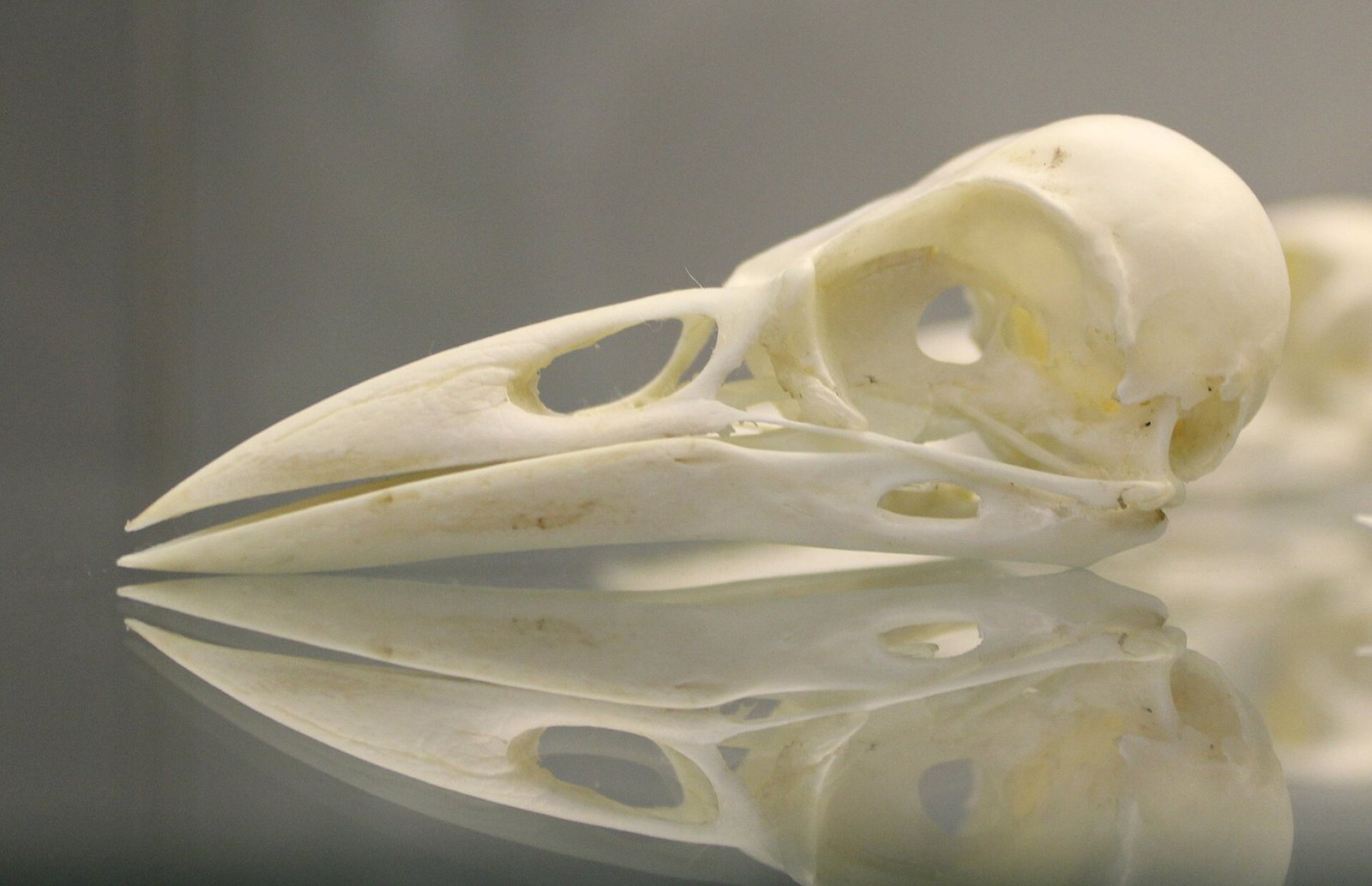
An American crow skull is a compact corvid skull with a strong bill that runs straight or curves only slightly at the tip, large eye sockets and clear nasal openings. When you are trying to name the bird, those are the parts that matter: overall size, how deep and how curved the bill is, the nasal openings, the eye sockets and the proportions of the cranium against the bill.
One thing you will not see on a clean skull is the tuft of stiff nostril bristles a living crow wears over its nostrils. The University of Michigan BioKIDS account of the American crow describes those bristles, and they are feathers, not bone. They go with the rest of the feathers during cleaning, so a field guide trick that works on a live bird is no help with a bare skull.
For a rough sense of size, the Wildlife Trusts skull identification guide gives a crow skull length of about 9 cm. That is a general figure from a UK guide, not a measurement that holds for every crow species, so treat it as a ballpark. A real reference point exists in the Smithsonian's bird collection: American crow skull USNM 224530, photographed by Robert Costello and released under a CC0 licence. Laying your skull's features against a documented specimen like that one beats any single rule of thumb, because no one feature is enough for a confident identification.
Crow or raven: the skull side by side
The living birds make the size gap easy to remember. Cornell's Bird Academy, in its crow and raven comparison, gives approximate whole-bird lengths of 20 inches for an American crow and 27 inches for a common raven, which makes the crow roughly two-thirds the size of its bigger cousin. Cornell describes the crow's bill as moderate and often slightly shorter than the head, while the raven carries a large bill that is often longer than the head. The Natural History Museum of Los Angeles County birding guide adds that ravens are larger, with heavier bills and longer wings.
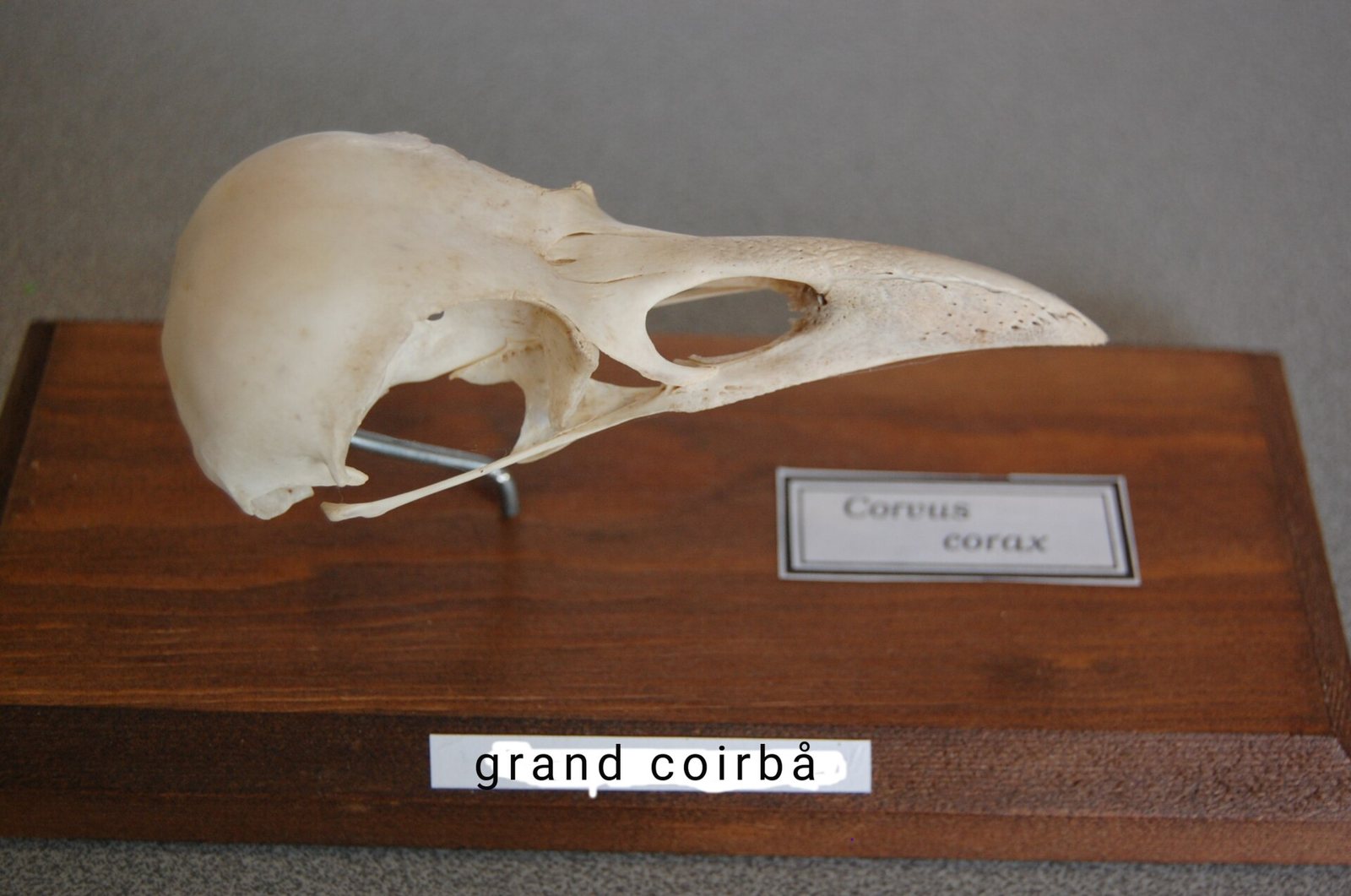
On the skull, that heavier bill shows up as depth and mass. A raven skull is generally larger, broader and more heavily built, with a stronger profile running from the forehead down into the bill. A crow skull looks trimmer by comparison. The comparison that works is proportional: how big the bill is against the cranium, how wide the cranium is, how deep the bill is at its base.
Size alone will not settle it. Species, sex, age, regional variation, damage and the way a skull is measured all blur the line, and a large crow and a small raven can come close. That is why the proportions, taken together, carry more weight than any single number.
Tap or hover a row to highlight it.
| Feature | American crow | Common raven |
|---|---|---|
| FeatureScientific name | American crowCorvus brachyrhynchos | Common ravenCorvus corax |
| FeatureApproximate whole-bird length | American crow20 inches | Common raven27 inches |
| FeatureBill | American crowModerate, often slightly shorter than the head | Common ravenLarge, often longer than the head |
| FeatureTail in flight | American crowSlightly rounded | Common ravenTapered, diamond or wedge shaped |
| FeatureU.S. Migratory Bird Treaty Act | American crowListed as protected | Common ravenListed as protected |
How big is a raven skull?
There is no single standard length for a common raven skull. Museum records describe individual specimens and give no universal number, so the useful move is to measure your skull and compare it with one of them.
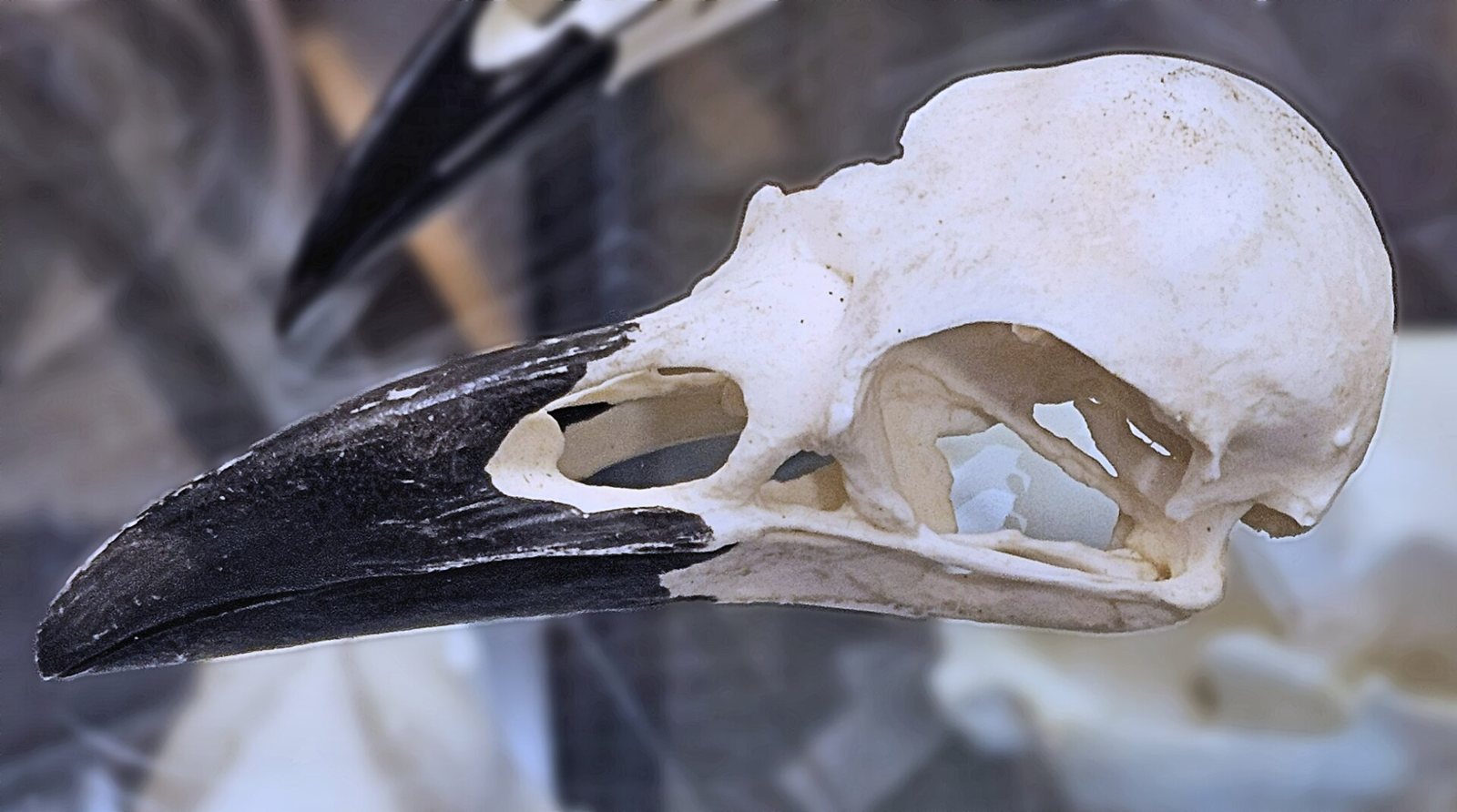
The Idaho Museum of Natural History keeps a good example. Its common raven cranium, specimen IMNH R-1349, belongs to the Marie Hopkins Comparative Osteology Collection, and the museum offers a 3D model of it to view. The record gives measurements for the bird the skull came from, a total length of 59.3 cm and a culmen (the ridge of the upper bill) of 41.1 mm, though it does not list a length for the skull itself. Across the Atlantic, the University of Dundee's D'Arcy Thompson Zoology Museum has a raven skull 3D page for specimen DUNUC 1715, also *Corvus corax*.
Use the total skull length, the depth of the bill and the width of the cranium together, and set them beside a documented raven specimen like these. A raven skull should read as bigger and heavier in all three, not just one.
Comparing a skull you found
A careful look at home gets you most of the way. Lay the skull on a plain surface next to a ruler and photograph it from the side, the top and underneath. Measure its full length from the back of the cranium to the bill tip, then the depth of the bill at its base and the width of the cranium. Note how much the bill curves and how large the eye sockets and nasal openings are.
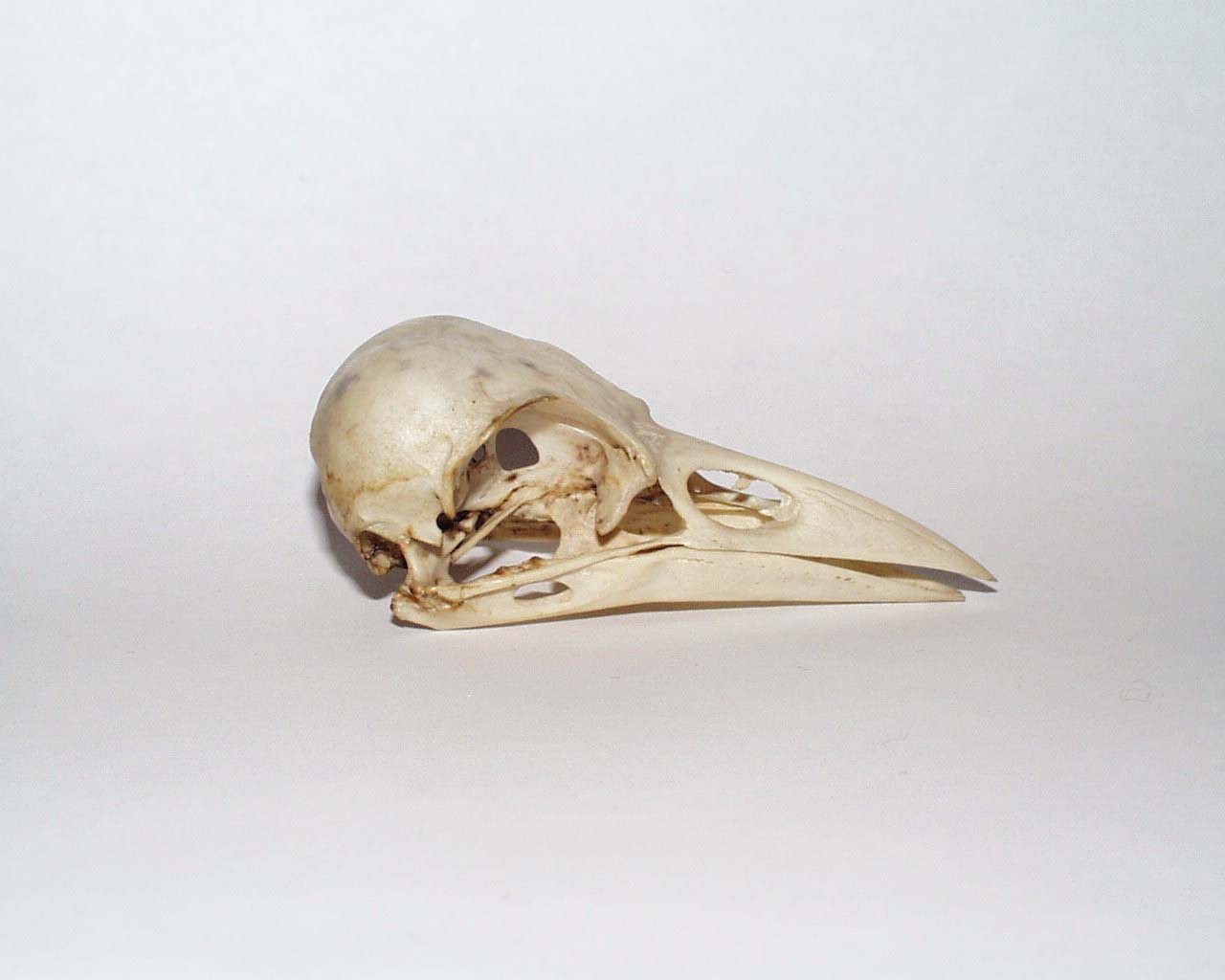
Then compare. The Smithsonian crow skull USNM 224530 and the Idaho raven cranium IMNH R-1349 are both documented specimens you can view online. If the photos still leave you between the two, the proportions are close enough that the fair answer is "a large corvid", and that is a fine label until a closer comparison settles it.
If the skull does not fit either bird, it may not be a corvid at all. Our stories on what a bird skull can mean and the owl skull cover other birds people often find, and the chicken skull and turkey skull stories help when the bird may have come from a farm rather than a treetop. A small skull carrying an enormous, featherlight bill is a different bird entirely, and our toucan skull story shows how that keratin-covered bill stays light.
Comparing a found black bird skull
Tap a card to bring it forward.
- Measure the length: From the back of the cranium to the tip of the bill, next to a ruler.
- Check the bill: Note its depth at the base and how much it curves; a raven's is deeper and heavier.
- Look at the openings: Compare the size of the eye sockets and the nasal openings.
- Measure the cranium: A raven skull is broader as well as longer.
- Compare with a museum specimen: Set your measurements beside USNM 224530 or IMNH R-1349.
- Ask before keeping it: Contact the U.S. Fish and Wildlife Service and your state wildlife agency.
Cleaning comes last, once the question of keeping it is settled. When it is, our guides on how to clean an animal skull and how museums use dermestid beetles cover the safe ways to do it.
The brain behind the beak
Part of the appeal of a crow skull is knowing what it once held. The bird you are holding was smarter than it looks, and named scientists have measured some of that in the lab.
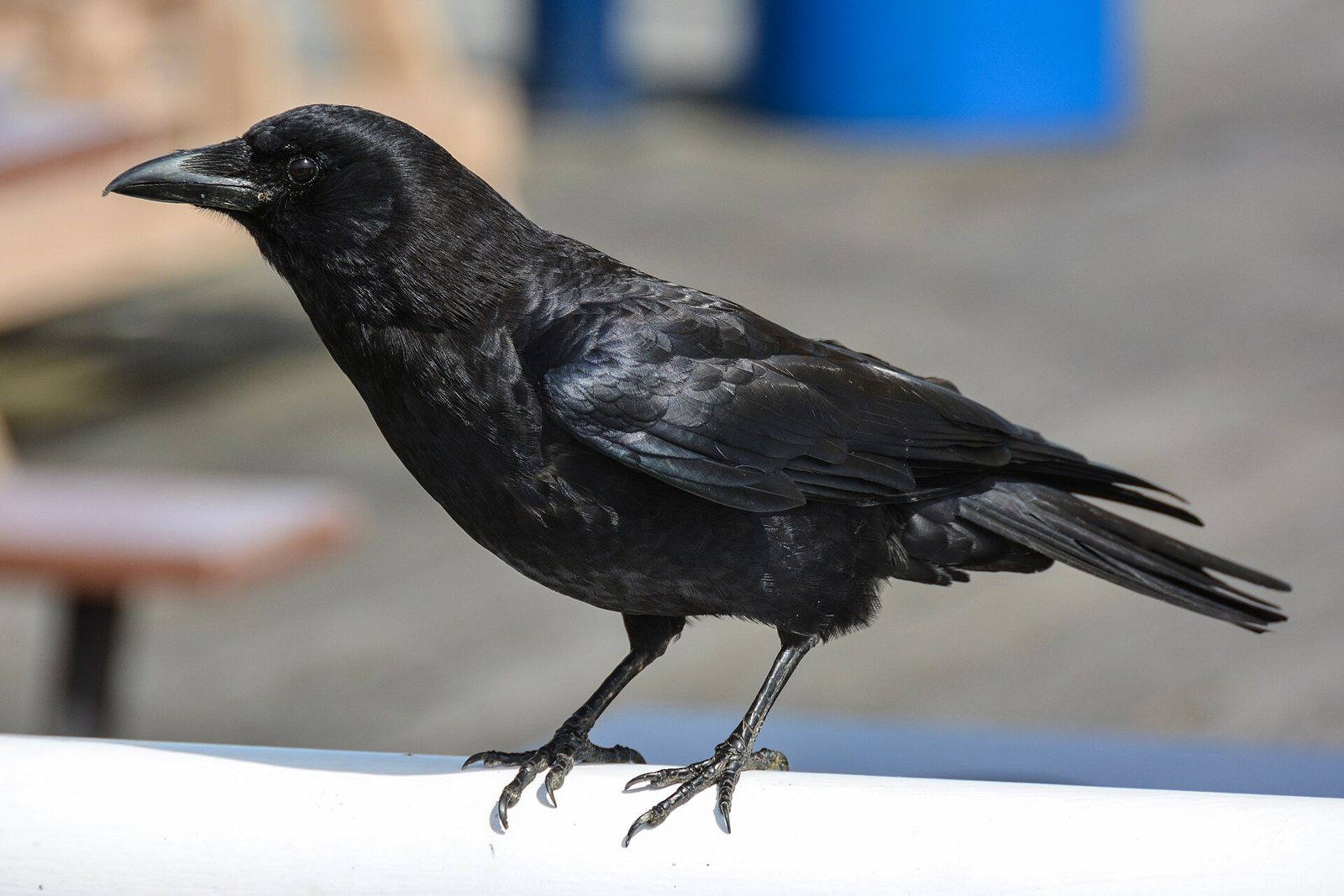
Andreas Nieder of the University of Tübingen, in a 2017 review of numerical cognition in corvids, described neurons in a region of the crow brain called the nidopallium caudolaterale that represent approximate number. He compared these mechanisms with the way primates process number, and described them as solutions that evolved independently but work in comparable ways.
At the University of Washington, John Marzluff and Loma Pendergraft studied American crows learning a water-level task: dropping stones into a water-filled tube to raise a floating piece of food within reach. The 2023 university report describes how brain activity shifted as the birds improved. Beginners showed more activity in sensory and higher-order processing circuits, while birds that had become proficient showed activity moving toward regions for motor learning and tactile control. The UW Psychology report on the same work adds that all the adult females in the experiment learned the task and only one male did, a difference the researchers left as a question for future study.
Corvid brains are small in absolute terms. What these studies describe is how the brain is organized and what it can do, from counting to learning a tool task, rather than a simple size score, so there is no tidy number for how a crow's brain stacks up against a raven's.
The law on crow and raven skulls
The U.S. Fish and Wildlife Service page on the Migratory Bird Treaty Act of 1918, current in November 2026, says the act prohibits taking protected migratory birds without authorization. "Take" covers more than hunting: it includes collecting and possessing protected birds or their parts. The protected list in 50 CFR 10.13 names the American crow and the common raven, along with other native crow and raven species.
That protection reaches bones. The USFWS migratory bird permit guidance says it covers whole and partial remains, feathers, bones and skulls, and that possessing, transporting, selling or buying listed birds or their parts requires authorization unless a specific exception applies. Domestic poultry fall outside the act, subject to other federal, state and local rules, but that exception has nothing to do with a wild crow or raven.
Outside the United States the rules are different, and they vary from country to country. Wherever you are, finding a skull does not by itself make it yours to keep. Contact the U.S. Fish and Wildlife Service and your state wildlife agency, or the wildlife authority where you live, before keeping, moving, selling or displaying one. Our story on what to do when you find an animal skull covers wildlife remains more generally.
> Legal note: Treat this section as general information, not legal advice. Wildlife laws differ between states and countries and can change, and only the agency responsible can answer for the skull you have.
Crows, ravens and the law, from 1918
Tap or hover a step to follow the order.
1918
The United States enacts the Migratory Bird Treaty Act.
1936
The United States and Mexico enter a migratory bird conservation treaty, carried out through the same law.
2017
Andreas Nieder publishes a review of numerical cognition and its neural mechanisms in corvids.
2023
The University of Washington reports brain activity changes in American crows learning a stone-dropping task.
November 2026
USFWS guidance covers protected bird parts, including bones and skulls, under migratory bird permitting.
Crows and ravens as symbols
A raven skull on a desk carries more than anatomy, and plenty of artists want one for that reason. For the long history of the raven beside the skull in art and story, see our piece on raven and skull meaning.
Crow or raven quiz
Answer every question to check.
Quick answers about crow skulls
These come up once the crow or raven question is settled.
How big is a crow skull?
The Wildlife Trusts skull guide gives about 9 cm for a crow skull. It is a general UK guide figure rather than a rule for every crow species, so measure yours and compare it with a documented specimen such as the Smithsonian's USNM 224530.
Is a cuervo a crow or a raven?
The word cuervo can cover several *Corvus* species. Mexico's protected areas commission, CONANP, in its bird guide to Parque Nacional Cumbres de Monterrey, and Audubon's Spanish crow and raven comparison call *Corvus corax* the cuervo común, also known as cuervo grande or cuervo de la sierra. Either bird's skull is light and elongated, with a strong curved bill, large eye sockets and large nasal openings.
Can I keep a bird skull I picked up in a field?
For a wild native bird in the United States, possession usually needs authorization, because USFWS counts skulls and bones of protected migratory birds as protected parts. Ask USFWS and your state wildlife agency about the specific skull before you keep it.
Why does my crow skull have no bristles over the nostrils?
Those bristles are feathers, so they come away with the rest of the feathers during cleaning. A clean skull is identified by its bone proportions instead.
Where to go next
If your skull turned out to be a crow or a raven, start with found an animal skull for what to do next with wildlife remains. If it turned out to be something else, the bird skull and owl skull stories are good next stops, and the chicken skull story shows how a farmyard bird compares.
Terms in this story
Tap a term to see what it means.
Corvid. A bird of the crow family. The American crow and the common raven both belong to the genus Corvus.
---