

No. 242
Squirrel Skull: How to Identify It (and Tell It From a Rat or Rabbit)
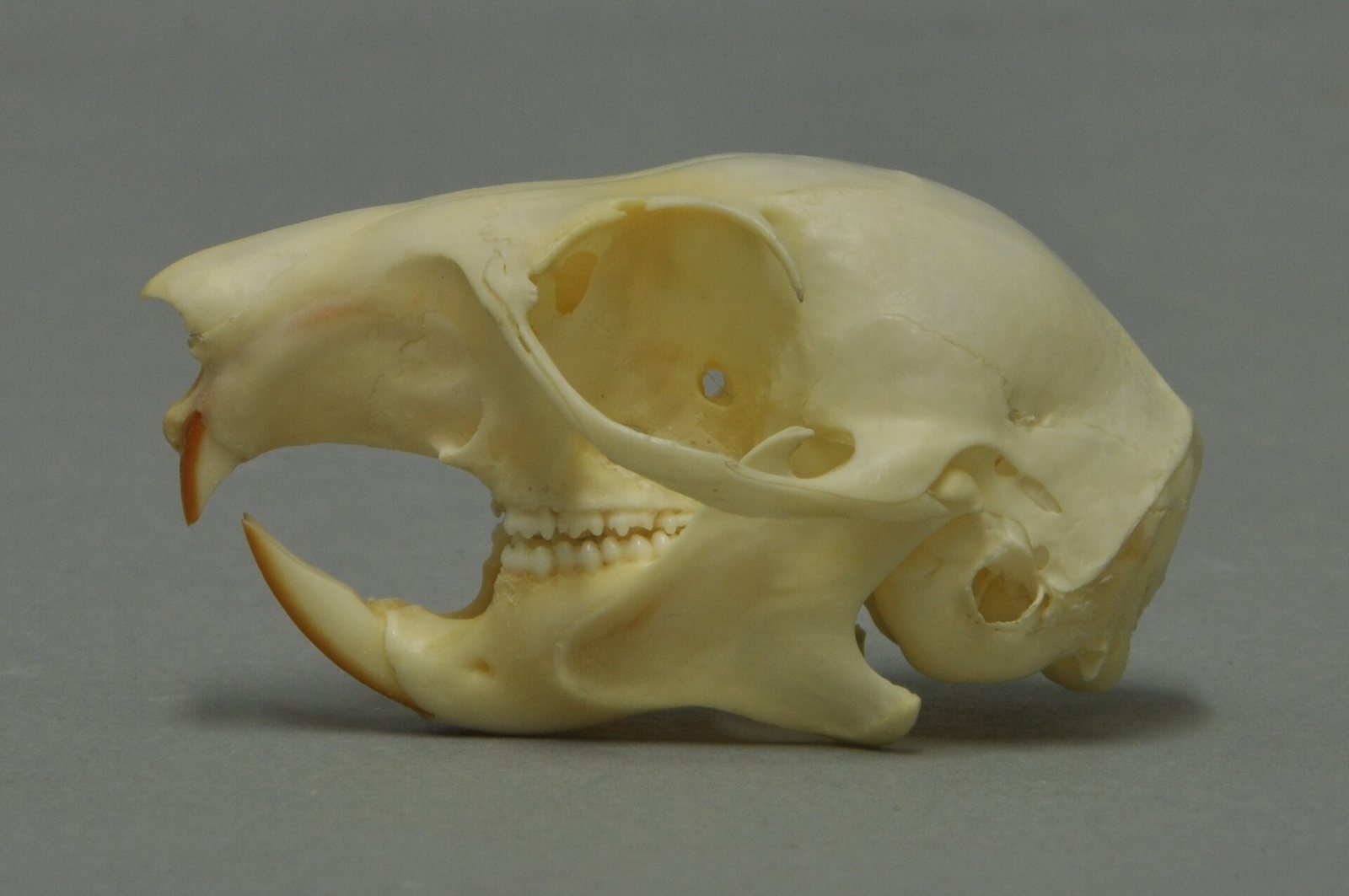
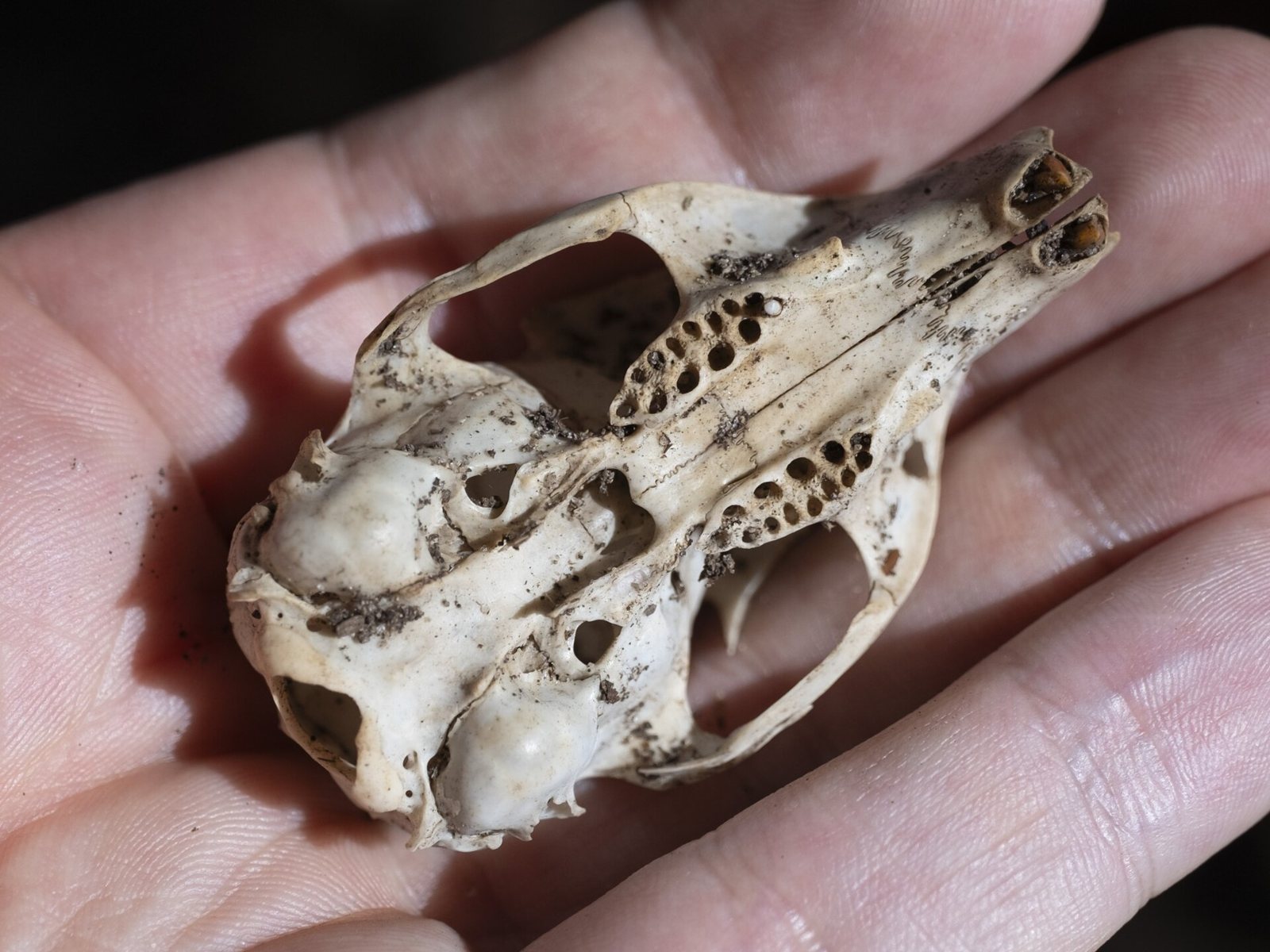
A small, rounded skull with one pair of long orange-brown teeth on top and one pair below is very likely a squirrel. Look for no canine teeth, a long toothless gap behind the front teeth, small openings on the sides of the snout, and, most telling of all, a pointed bony spur sticking out above each eye socket. An eastern gray squirrel, *Sciurus carolinensis*, has 22 teeth in all, according to the Texas Tech University account of the species.
Those spurs above the eyes are the quick tell, because rats and rabbits do not have the squirrel version. The orange teeth help too, though on their own they only tell you that you are holding a rodent.
Reading the skull, from teeth to eye sockets
Hold the skull so you are looking at it from the side. A squirrel skull is broad and rounded, with a relatively short, deep snout. The Maryland Department of Natural Resources skull key and the University of Texas at El Paso account of the squirrel family list the same set of features.
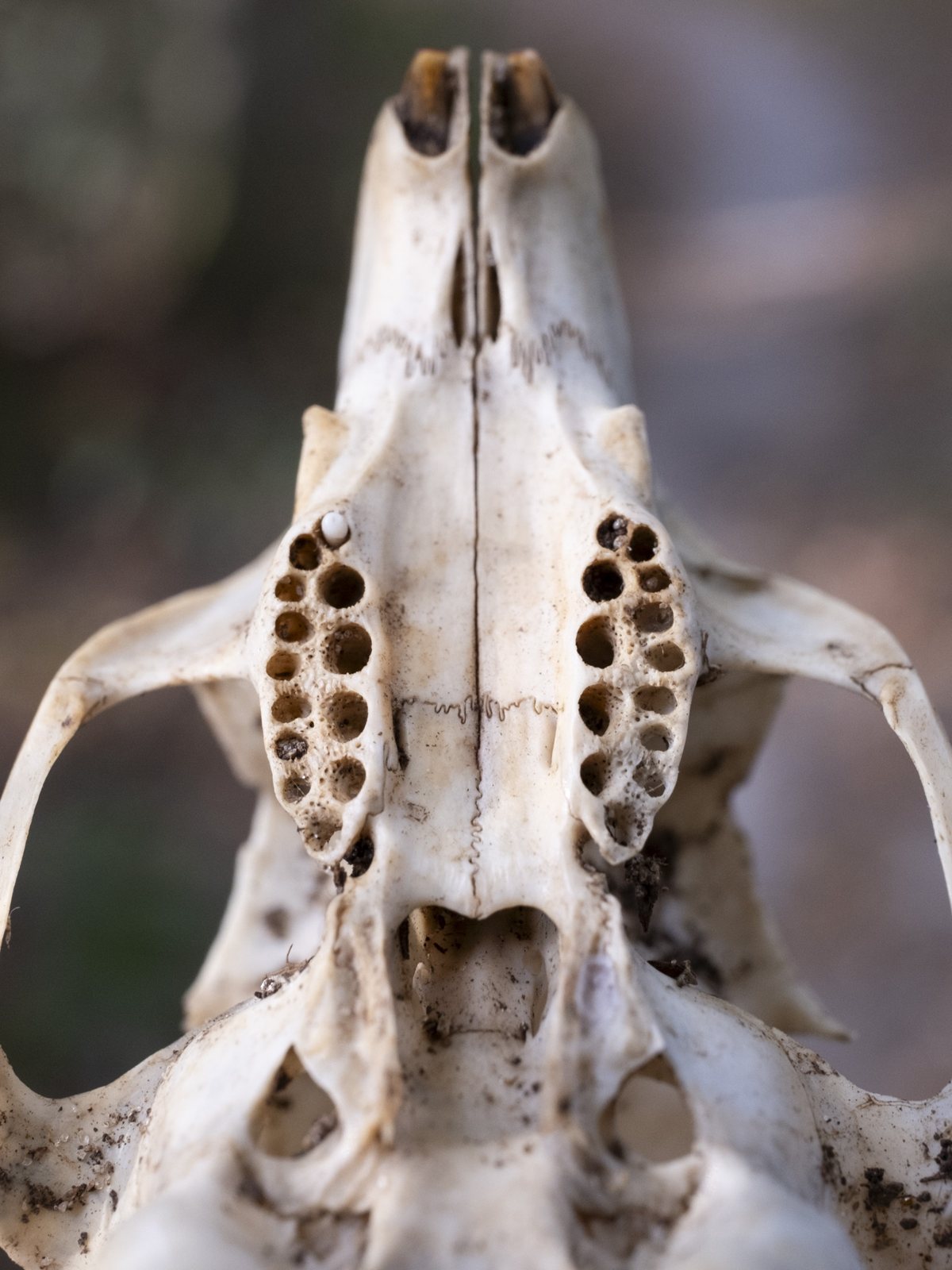
At the front sit the incisors, one large pair above and one below. A squirrel has no canines. Behind the incisors is a long, empty stretch of jaw called the diastema, and only after that do the cheek teeth begin. On the side of the snout you will find a small opening on each side called the infraorbital foramen. In a squirrel it is small; keep that in mind, because it matters when you compare with a rat.
Now look down on the skull from above. Just behind each eye socket, a pointed flange of bone juts outward. These are the post-orbital processes, and in squirrels they are large and sharp. Maryland's key uses them to separate squirrels from other rodents, and once you have seen them, they are hard to miss.
The tooth count is written as a dental formula. For the eastern gray squirrel it is I 1/1, C 0/0, Pm 2/1, M 3/3: one incisor, no canines, two premolars and three molars on each upper side, with one incisor, no canines, one premolar and three molars on each lower side. Double it for both sides and you get 22 teeth. The squirrel family as a whole, Sciuridae, ranges from 20 to 22 teeth, the University of Texas at El Paso notes, so a count gets you to the family rather than naming the species.
Is it a squirrel skull?
Tap a card to bring it forward.
- Front teeth: One upper pair and one lower pair. A rabbit has two upper pairs.
- Canines: Absent. Carnivores have prominent canines.
- Gap behind the incisors: A long diastema, typical of rodents.
- Eye-socket area: Pointed post-orbital processes. They are less pronounced or absent in rats.
- Infraorbital opening: Small, near the front of the snout. Rats often have larger, slit-like openings.
- Cheek teeth: Premolars and molars. Rat-like rodents lack premolars.
- Size and shape: A broad, compact skull. A regional skull key narrows it to species.
Why are squirrel teeth orange?
Squirrel incisors are orange-brown on the front because of a thin, specialized surface layer on the enamel, and they never stop growing. Both facts explain why the teeth look the way they do in a skull you pick up from the grass.
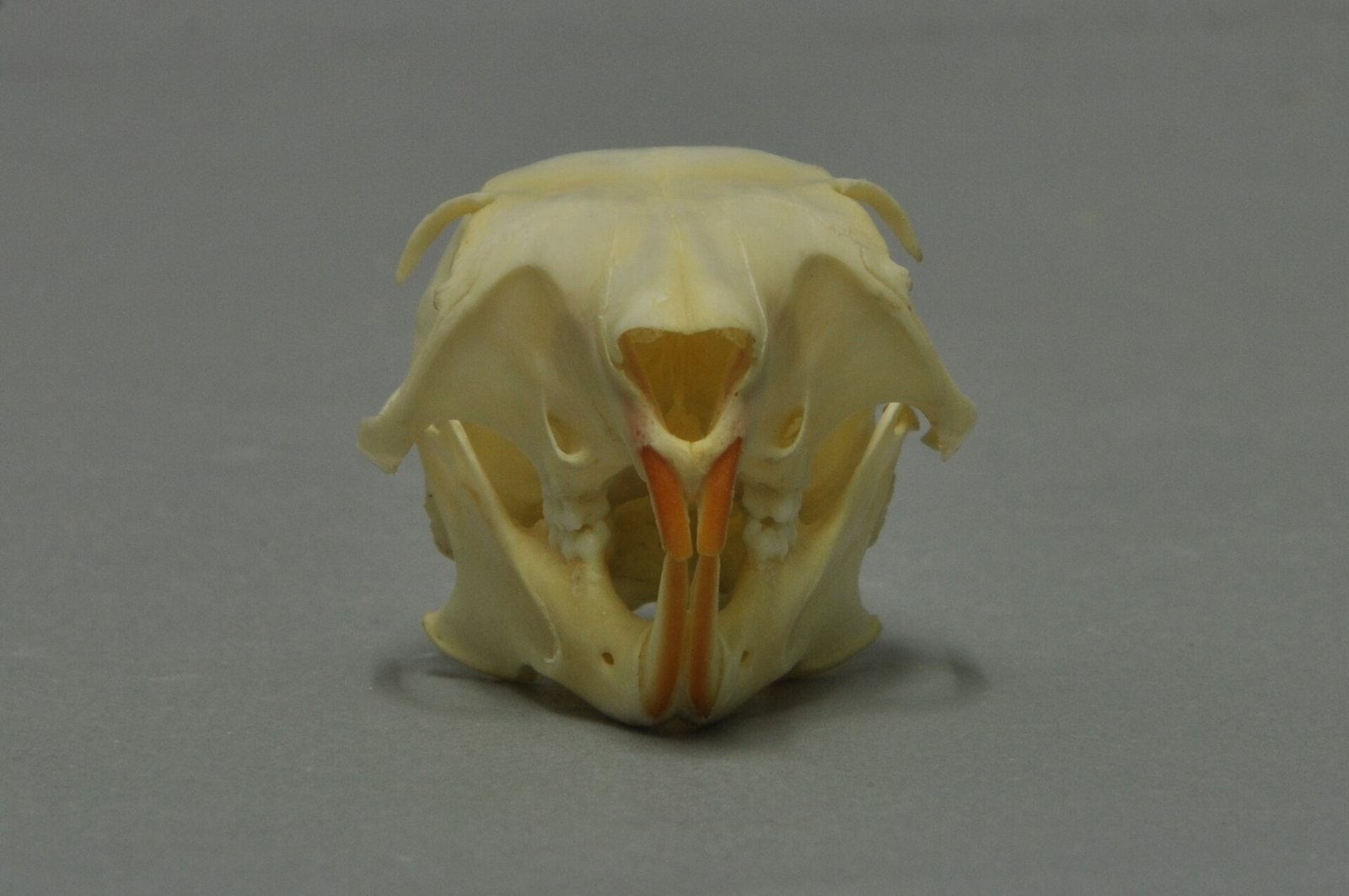
Start with the growth. Rodent incisors are what scientists call elodont: they keep growing and erupting for the animal's whole life, without the ordinary roots our teeth have. The front face is covered with hard enamel, and the back is softer dentine. Every time the squirrel gnaws, the soft back wears away faster than the hard front, which leaves a sharp chisel edge. Smithsonian Q?rius describes these incisors as self-sharpening. A squirrel, in other words, never needs a dentist, only a steady supply of things to chew.
The color is where the science moved in 2024. Iron has long been linked with the orange of rodent teeth, and the iron is real: a study published in *ACS Nano* and summarized by the American Chemical Society found that iron-rich structures in the enamel strengthen and protect it. The strong orange-brown color, though, comes mainly from a thin surface layer of organic and inorganic material on the outside of the tooth, rather than from the iron-rich pockets alone. The Max Planck Institute for Solid State Research has its own summary of the work for anyone who wants the details.
Tree squirrel, ground squirrel or chipmunk
Tree squirrels, ground squirrels and chipmunks all belong to the squirrel family, so they share the same basic plan: paired, ever-growing incisors, no canines, a diastema and squirrel-type post-orbital processes. Telling them apart takes a closer look.
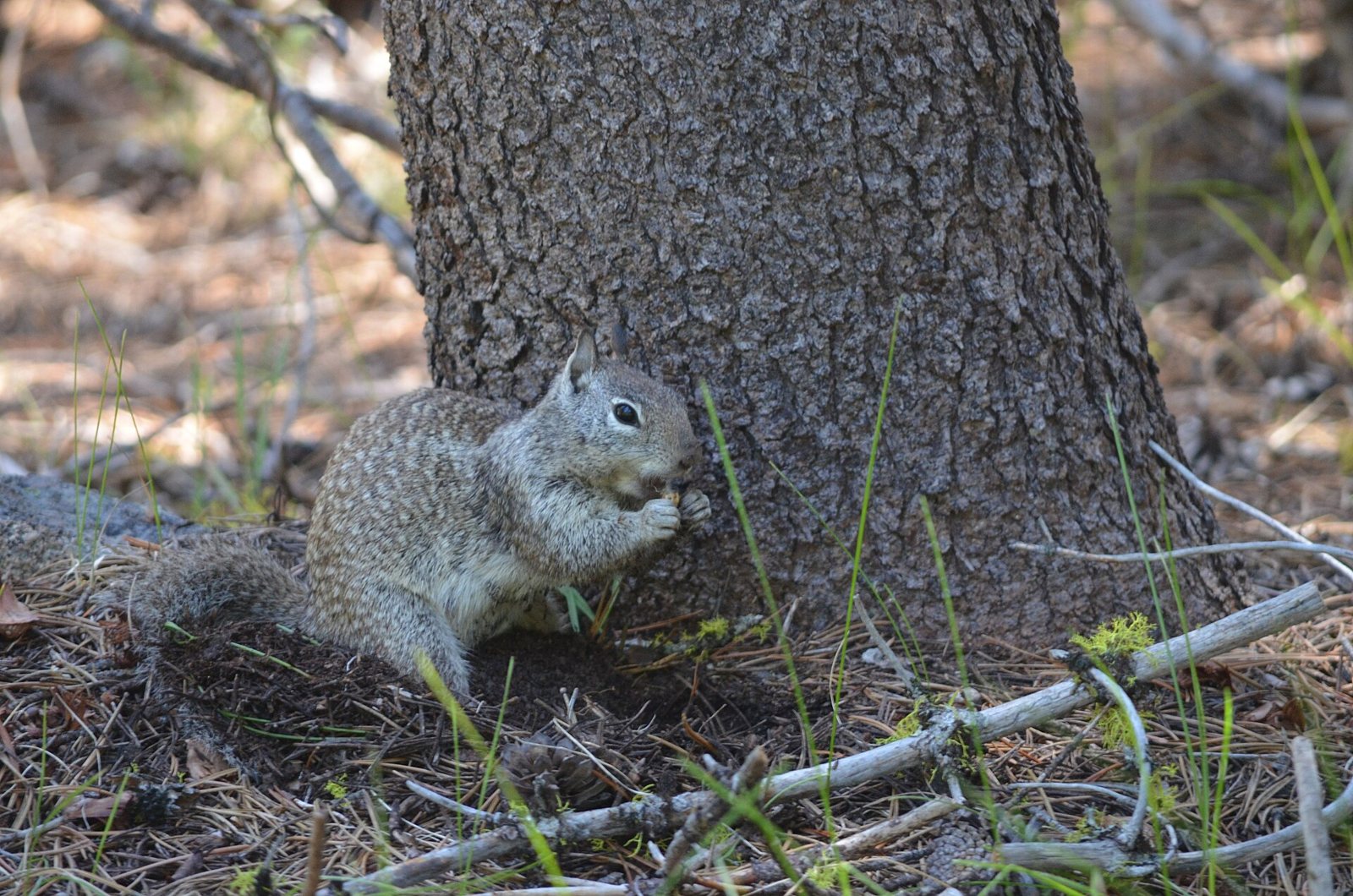
Among the tree squirrels, the Maryland key compares the eastern gray squirrel with the eastern fox squirrel, *Sciurus niger*. In that key, a fox squirrel skull is under about 76 mm long and has developed temporal ridges on top that come together into a small sagittal crest. A gray squirrel skull lacks those ridges. If you want to compare a skull on screen, the University of Texas Digimorph collection has a 3D scan of a fox squirrel skull.
Ground squirrels vary a great deal by genus, and there is no single ground-squirrel skull shape to compare against. The one big relative that is easy to separate is the groundhog, *Marmota monax*, which the Maryland key sets apart from smaller squirrels by its skull length. If your skull is noticeably bigger and heavier than a squirrel's, our story on the groundhog skull is the next stop.
Chipmunks are the small end of the family. The Oregon State University Mammal Collection describes the eastern chipmunk, *Tamias striatus*, as having proportionally smaller post-orbital processes, a larger braincase for its size, and round infraorbital foramina that pierce a flat plate of bone on the cheek called the zygomatic plate. Under magnification its incisors can show fine grooves running lengthwise. These skull features are more reliable than where the skull turned up.
Squirrel, rat or rabbit?
A young rabbit, an adult squirrel and a rat can look alike at first glance, since all three are small skulls with big front teeth. A few checks settle most cases.
Tap or hover a row to highlight it.
| Feature | Squirrel | Rat | Rabbit |
|---|---|---|---|
| FeatureUpper incisors | SquirrelOne pair | RatOne pair | RabbitTwo pairs |
| FeatureCanines | SquirrelAbsent | RatAbsent | RabbitAbsent |
| FeaturePremolars | SquirrelPresent | RatAbsent in rat-like rodents | RabbitPresent, with the cheek teeth |
| FeaturePost-orbital processes | SquirrelLarge and pointed | RatUsually absent or less pronounced | RabbitNot the squirrel type |
| FeatureInfraorbital opening | SquirrelSmall | RatLarger or slit-like | RabbitLarge openings on the snout may be present |
Rabbit first, because it is the easiest. Turn the skull over and look behind the big upper incisors. A rabbit has a second, smaller pair of peg-like incisors tucked right behind the first. The Maryland key identifies the eastern cottontail, *Sylvilagus floridanus*, by its four or six upper incisors and by a rostral fenestra, an open, window-like area of bone on the side of the snout. Rabbit cheek teeth also keep growing, unlike the rooted cheek teeth of squirrels and rats. Count two pairs on top and you are holding a rabbit; our rabbit skull story picks it up from there.
A rat is the closer call, since it has the same single pair of ever-growing incisors and the same diastema. The differences are in the cheek teeth and the skull's shape. Rat-like rodents lack premolars, which squirrels have. Their infraorbital opening is typically larger and more slit-like, and the skull tends to be narrower and more smoothly sloping, without the squirrel's sharp spurs over the eyes. Our story on the rat skull goes through rats, mice and voles in detail.
One more look-alike deserves a mention. If the skull has orange incisors but is much bigger, with long ear canals pointing upward underneath, it is worth comparing with a beaver skull.
Squirrel skull quiz
Answer every question to check.
Before you keep or clean it
Once you know it is a squirrel, two practical questions follow: whether you may keep it, and how to clean it without wrecking those delicate little bones.
> Legal note: This is general information for readers, not legal advice. Whether a skull may be moved or kept depends on the species, its protected status, who owns the land, and the state or country you are in. Nothing in this story says that a particular skull is legal to keep, so check with your state wildlife agency or the U.S. Fish and Wildlife Service, and with the landowner or land manager, first.
The rules are real and they differ. Alberta's found-dead-wildlife guidance tells people to contact Fish and Wildlife before keeping a skull and explains its permits, while the Wisconsin DNR sets out its own possession and sale rules for wild animal parts, including squirrel skulls. Our story on what to do when you have found an animal skull walks through the general questions to ask.
If you have the go-ahead, a small skull calls for a gentle hand. Wear disposable gloves and eye protection, and remove any remaining tissue carefully. Cold-water maceration, a long soak in cold water, is one of the gentler home methods. After that, a soak in soapy water lifts out grease, and a bath in 3% hydrogen peroxide can whiten the bone if you want it brighter. Two things to avoid: household chlorine bleach, and long boiling, which can crack bone, split the teeth, break the fine nasal bones and loosen the joints between skull bones. The Alaska Department of Fish and Game guide to skulls also stresses gentle handling of those thin nasal bones, and it notes that protected species can be illegal to possess. Let the skull dry completely before it goes on a shelf.
Our full guide to cleaning an animal skull covers each step, and how museums use dermestid beetles explains the method collections rely on for small, fragile skulls. The *Journal of Mammalogy* was already writing about them in 1933.
Small skulls, studied and cleaned
Tap or hover a step to follow the order.
1933
The Journal of Mammalogy publishes "Dermestid Beetles as an Aid in Cleaning Bones"
2001
The University of Texas Digimorph collection publishes a 3D skull of the eastern fox squirrel, Sciurus niger
2022
Kerry Wixted's Maryland mammal skull key sets out squirrel, rabbit and rodent differences
2024
The American Chemical Society reports new findings on how orange-brown rodent incisors are built and colored
Quick answers about squirrel skulls
A few more questions come up once the skull is on the table.
How many teeth does a squirrel have?
An eastern gray squirrel has 22 teeth. Other members of the squirrel family have 20 to 22, depending on the species, and every one of them lacks canines.
What does a squirrel skull look like?
It is small and fairly broad, with big incisors in front, a toothless gap behind them and no canines. The giveaway is a pointed bony projection above each eye socket.
Can I keep a squirrel skull I found?
That depends on the species, the place and who owns the land. Ask your state wildlife agency and the landowner or land manager before you take it home or start cleaning it.
What small skull has orange front teeth?
Orange-brown, ever-growing incisors are a rodent trait, so a rat can have them as well as a squirrel. To narrow it down, check for the pointed spurs over the eye sockets and the premolars that squirrels have and rats lack, then measure the skull.
Where to go next
If your skull is a squirrel, the rules in found an animal skull come first, then how to clean an animal skull once you know it is yours to keep. If it looks weathered and you are curious about its age, how old are these bones explains what the condition of bone can tell you. And if the skull is a little too narrow or a little too big to be a squirrel, the rat skull and groundhog skull stories are the next places to compare.
Terms in this story
Tap a term to see what it means.
Sciuridae. The squirrel family, which includes tree squirrels, ground squirrels, chipmunks and the groundhog.
---