

No. 171
Groundhog Skull: How to Identify a Woodchuck Skull and Its Look-Alikes
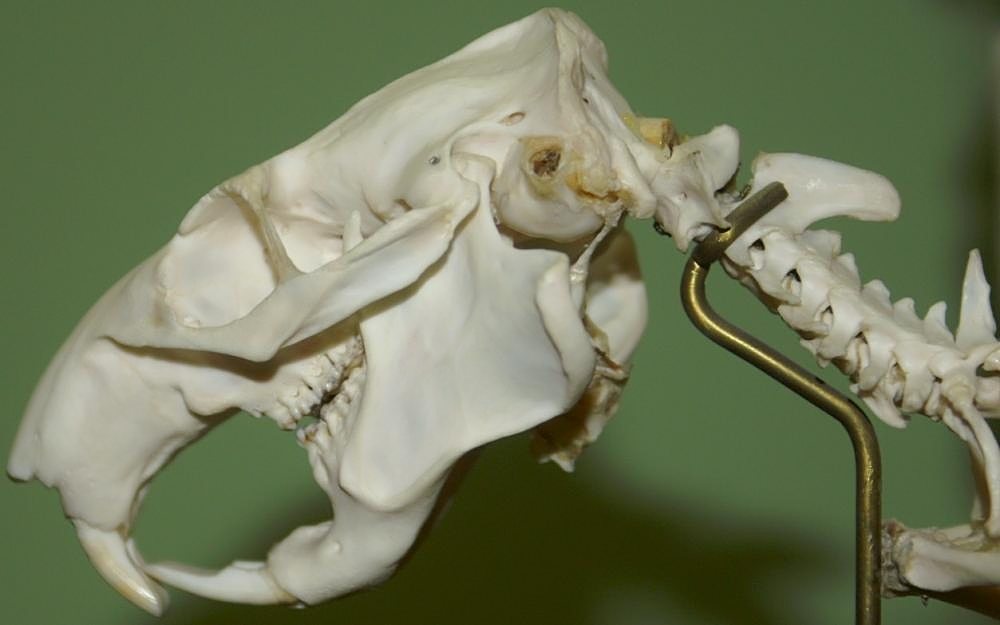
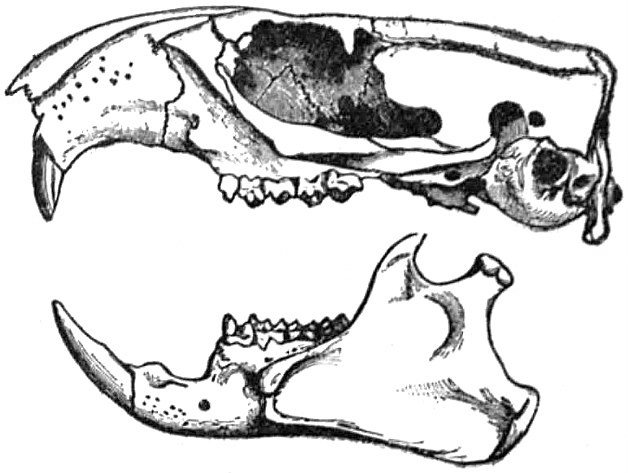
A broad, heavy rodent skull about three inches long, with big front teeth, a blunt snout and no canines, is very likely a groundhog. Groundhog and woodchuck are two names for the same animal, *Marmota monax*. Its skull has large eye sockets, pronounced bony spurs behind them called post-orbital processes, a ridge along the top called a sagittal crest, and a wide toothless gap, the diastema, between the incisors and the cheek teeth.
Count the teeth if they are all still there. The University of Texas at El Paso dental formulas give a groundhog 22. For size, adult skulls in the Dokkyo Medical University mammal collection measured about 76.9 to 83.0 mm, roughly three inches.
Reading a groundhog skull
Set the skull on a table and look at it from above. A groundhog skull is broad and sturdy, wider and heavier-looking than you might expect from a rodent. The snout is blunt rather than tapered, and the eye sockets are large. Behind each one, a pronounced spur of bone juts outward; these post-orbital processes are one of the clearest groundhog clues. Along the top of the braincase runs a sagittal crest, a raised ridge of bone.
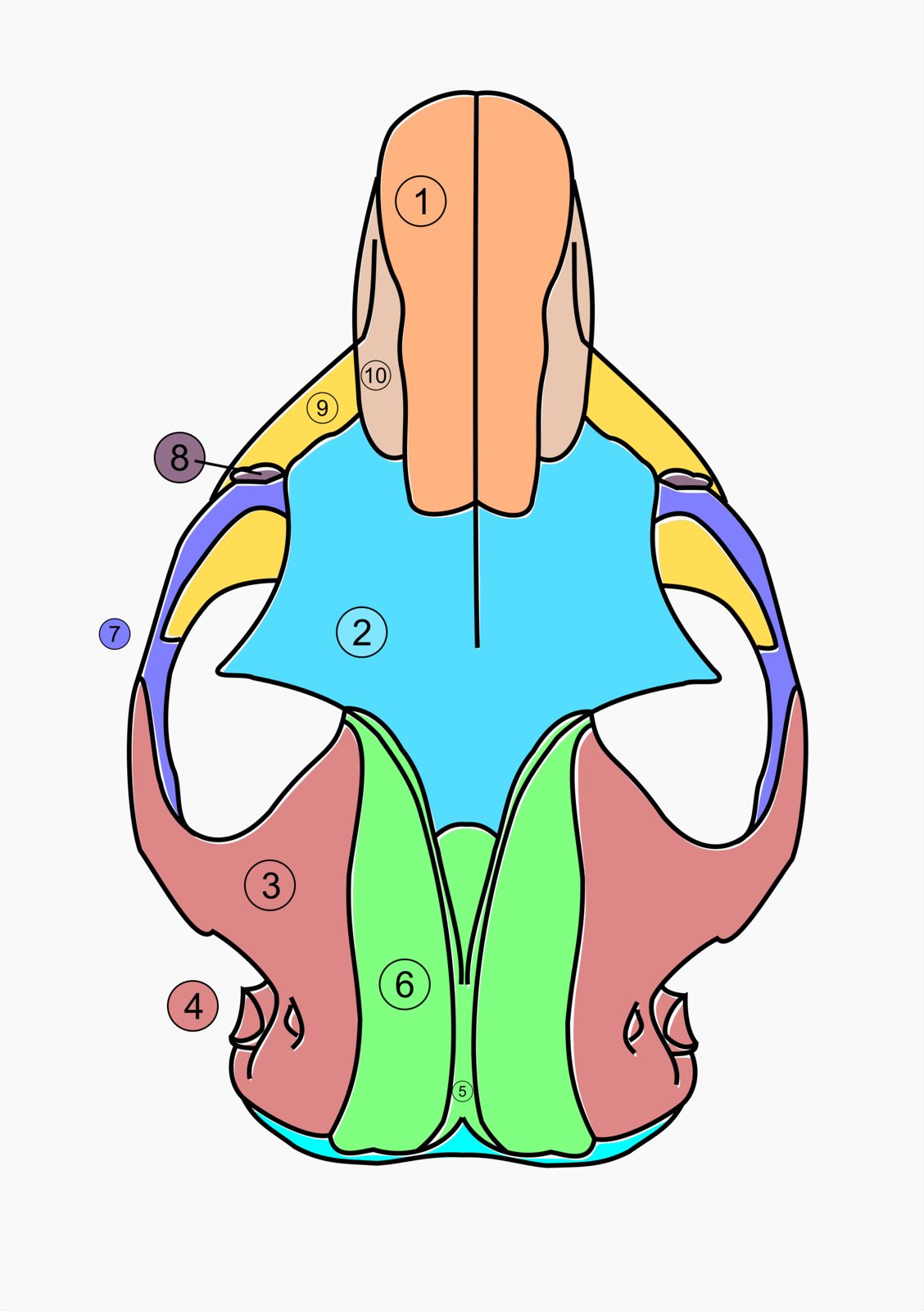
If you want names for every part, Wikimedia Commons has a labeled diagram of a *Marmota monax* skull seen from above, shared under a CC BY-SA 4.0 licence by Lmalena. It marks the nasal, frontal, temporal, parietal, zygomatic, lacrimal, maxillary and premaxillary bones along with the sagittal crest, so you can match each bump on your skull to a word.
Now turn it over and look at the teeth. The dental formula is written 1.0.2.3 / 1.0.1.3. Upper row first: one incisor, no canines, two premolars and three molars on each side. Lower row: one incisor, no canines, one premolar and three molars on each side. Add both sides and you get 22 teeth. Between the big incisors and the first cheek tooth there is a wide, empty stretch of jaw. That diastema is typical of rodents, and on a groundhog it is broad.
For a real specimen with a date and a place, the Smithsonian Collections record lists a male *Marmota monax monax* skeleton and skull collected at Front Royal, Virginia, on December 18, 2008.
Is it a groundhog skull?
Tap a card to bring it forward.
- Incisors: One upper and one lower incisor on each side, four in all.
- Canines: None.
- Total teeth: 22 in a complete adult set.
- Diastema: A broad gap between the incisors and the cheek teeth.
- Skull shape: Broad and sturdy, with large eye sockets and pronounced post-orbital processes.
- Size: About 76.9 to 83.0 mm in the Dokkyo Medical University adult specimens.
- Comparison: A beaver has long, upward-pointing ear canals; a muskrat has an upper cheek-tooth row under 23 mm.
A giant ground squirrel
The groundhog is a squirrel, just a very large one. *Marmota monax* belongs to the squirrel family, Sciuridae, and to the genus *Marmota*, the marmots. Rutgers Cooperative Extension describes marmots as large ground squirrels and counts 15 species across Europe, northwestern Asia and North America. That family tie explains the post-orbital processes, which squirrels have too; our story on the squirrel skull shows the smaller version.
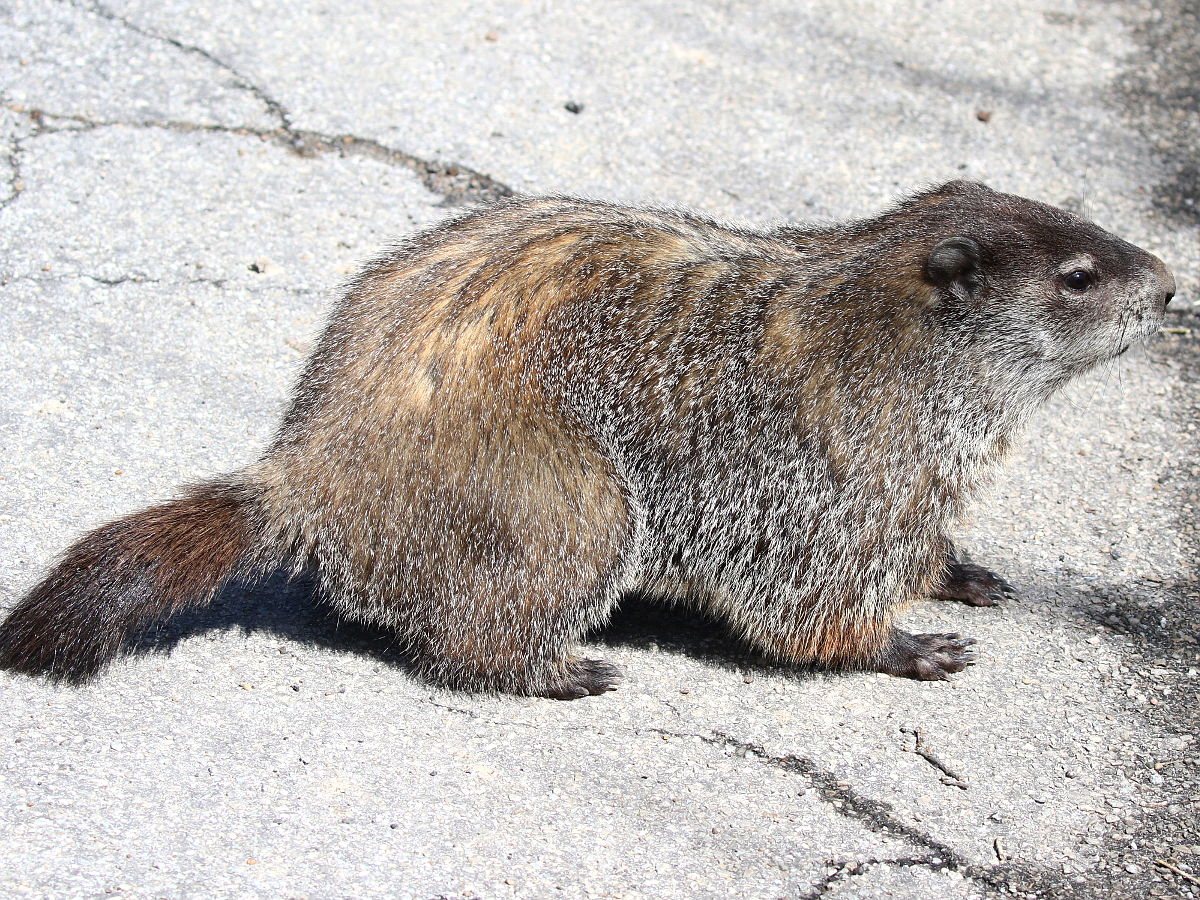
In North America the groundhog lives across much of Canada and the eastern United States. Rutgers gives adults at about 5 to 15 pounds and 16 to 26 inches long, and lists a handful of other names: woodchuck, whistle pig and land beaver among them. The Rutgers publication is titled *Ecology and Management of the Groundhog*, which says something about how many gardeners have met a whistle pig in the lettuce.
Where you picked up the skull matters too. Virginia Tech's guide to mammals in Virginia advises using teeth, skull features and range maps together, because some rodents are hard to tell apart by shape alone. A heavy rodent skull from a field edge inside the groundhog's range is a strong candidate before you even count the teeth.
Those big front teeth, and what happens when they overgrow
A groundhog has four incisors, two upper and two lower, and they never stop growing. Rutgers explains that the growth makes up for the wear from grazing on plants and gnawing through roots while digging burrows. The Cleveland Museum of Natural History gives an approximate growth rate of 1/16 inch per week, which adds up fast for an animal that is not constantly wearing them down.

Normal wear depends on the upper and lower incisors meeting properly, so that each pair grinds against the other. When they do not line up, there is nothing to stop them. The Carnegie Museum of Natural History curator Suzanne McLaren documented that misaligned incisors can grow unchecked until the animal can no longer feed, and the condition can end in death by starvation.
That is worth knowing if your skull has incisors that look far too long or curve off in odd directions. A skull like that can record a hard end for the animal it belonged to. It is also one of the more striking things a skull can teach, since the teeth kept growing on their schedule whether or not they could do their job.
Groundhog, beaver or muskrat?
Big incisors and no canines narrow it to rodents, and three of the larger rodents are the usual suspects. The Maryland Department of Natural Resources Simplified Key to Furbearer Skulls separates them by a few features you can check at home.
Start underneath, at the ear canals. A beaver, *Castor canadensis*, has long ear canals that point upward. A groundhog does not. If the skull has those long, upturned tubes, our beaver skull story is the place to continue.
A muskrat, *Ondatra zibethicus*, has short ear canals and a smaller skull. The Maryland key measures the upper cheek-tooth row, leaving out the incisors: under 23 mm points to a muskrat. A nutria, *Myocastor coypus*, also has short ear canals, but its upper cheek-tooth row is over 23 mm.
The groundhog sits between them. Its skull is broad and heavy-looking, larger than a muskrat's, with conspicuous spurs over the eye sockets, and it lacks the beaver's long upward-pointing ear canals. A ruler and a look underneath usually settle it.
Groundhog, raccoon or opossum?
Garden and field skulls also come from meat-eaters and omnivores, and the fastest way to sort them is to look for canines. In the Maryland key, a skull with large incisors and no canines is a rodent. A skull with both incisors and canines belongs to a raccoon, an opossum or another carnivorous or omnivorous mammal.
Tap or hover a row to highlight it.
| Animal | Canines | Total teeth | Other clues |
|---|---|---|---|
| AnimalGroundhog, Marmota monax | CaninesNone | Total teeth22 | Other cluesBig incisors and a broad diastema |
| AnimalRaccoon, Procyon lotor | CaninesPresent, sharp | Total teeth40 | Other cluesSix upper cheek teeth and a more varied tooth row |
| AnimalVirginia opossum, Didelphis virginiana | CaninesPresent | Total teeth50 | Other cluesFive incisors on each upper side and four on each lower side |
A raccoon, *Procyon lotor*, is a carnivoran with incisors, sharp canines, six upper cheek teeth and 40 teeth in all, according to the UTEP formulas; Oregon State University's raccoon skull record shows a museum example. A Virginia opossum, *Didelphis virginiana*, has even more: five incisors on each upper side, four on each lower side, plus canines, for 50 teeth, more than twice a groundhog's count. Our stories on the raccoon skull and the opossum skull cover both, and the skunk skull is another canine-bearing skull worth comparing if neither fits.
Groundhog skull quiz
Answer every question to check.
Before you take it home
Once you have a name for the skull, the next question is whether it can come inside.
> Legal note: Treat this as general information rather than legal advice. Whether you may keep a wild animal's skull depends on the species, the land it came from and the state or country you live in, and those rules can change. This story cannot say that any particular skull is legal to keep; your state wildlife agency or the U.S. Fish and Wildlife Service can.
Ask the landowner as well if the skull came from someone else's field or garden. Our story on what to do when you have found an animal skull goes through the general questions and the federal laws that apply to skulls.
For handling, wear gloves and wash your hands when you are done. If you get the go-ahead to clean it, our guide to cleaning an animal skull covers the steps. And if it is bleached, cracked or stained and you are wondering how long it lay there, how old are these bones explains what bone condition can and cannot tell you.
Quick answers about groundhog skulls
These come up often once the teeth have been counted.
How big is a groundhog skull?
About 77 to 83 mm long, roughly three inches, in adult specimens. Those figures come from adult skulls in the Dokkyo Medical University mammal collection, and size varies with age and sex, so use length together with tooth count and shape.
What does a marmot skull look like?
A marmot skull is large and sturdy, with strong incisors, a wide diastema, marked post-orbital processes and a sagittal crest. The groundhog is the North American marmot with 22 teeth, and the Alpine marmot, *Marmota marmota*, is another member of the same genus.
Is a woodchuck skull different from a groundhog skull?
No, they are the same animal. Groundhog, woodchuck, whistle pig and land beaver are all common names for *Marmota monax*.
Where to go next
If your skull is a groundhog, read found an animal skull before it comes home, and how to clean an animal skull once it can. If it is smaller and narrower, with no pointed spurs over the eyes, the rat skull story covers the small rodents, and the squirrel skull story covers the groundhog's smaller cousins.
Terms in this story
Tap a term to see what it means.
Marmota monax. The scientific name of the groundhog, also called the woodchuck, a large ground squirrel of Canada and the eastern United States.
---