

No. 267
Moose Skull: How to Identify It and Tell It From an Elk or Deer Skull
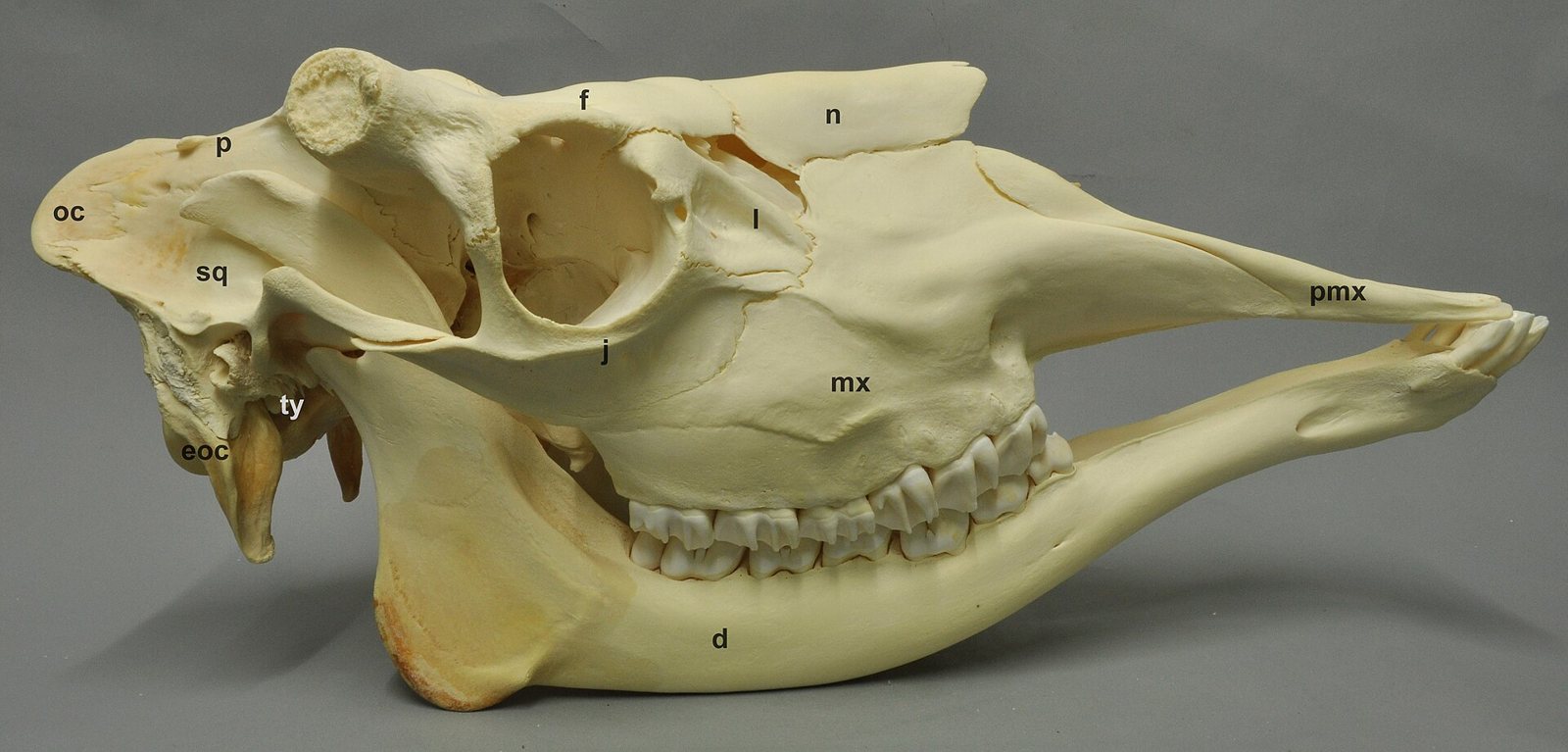
If the skull at your feet is huge, long in the face and has no front teeth on top, there is a good chance it belongs to a moose, *Alces alces*. The Alaska Department of Fish and Game skull guide and the University of Arizona Cooperative Extension guide describe an adult moose skull as more than 550 mm, or about 25 inches, at its greatest length, with a long nasal region, no upper incisors and no upper canines.
That last clue does the most work. Elk also lack upper incisors, but they carry a pair of small, rounded upper canines. A big deer-family skull with no canines at all, and a nose that seems to go on forever, is pointing hard at moose.
Whether you can take it home is a separate question, and the answer changes from one state or province to the next. That part comes further down, along with what to do before you lift it.
> Legal note: What follows is general information and not legal advice. Wildlife laws differ by state, province and country, and they are revised over time. Only the agency responsible for the place where the skull lies can say whether you may keep it, so ask your state wildlife agency or the U.S. Fish and Wildlife Service before it leaves the woods.
The features that say moose
Start with the length, because it is the first thing anyone notices. A moose skull is very large and slender, and in the regional keys it usually runs about 20 to 25 inches from end to end. Much of that length is nose. The nasal region is drawn out far in front of the eyes, which gives the skull its long profile and the nasal opening its unusual size.
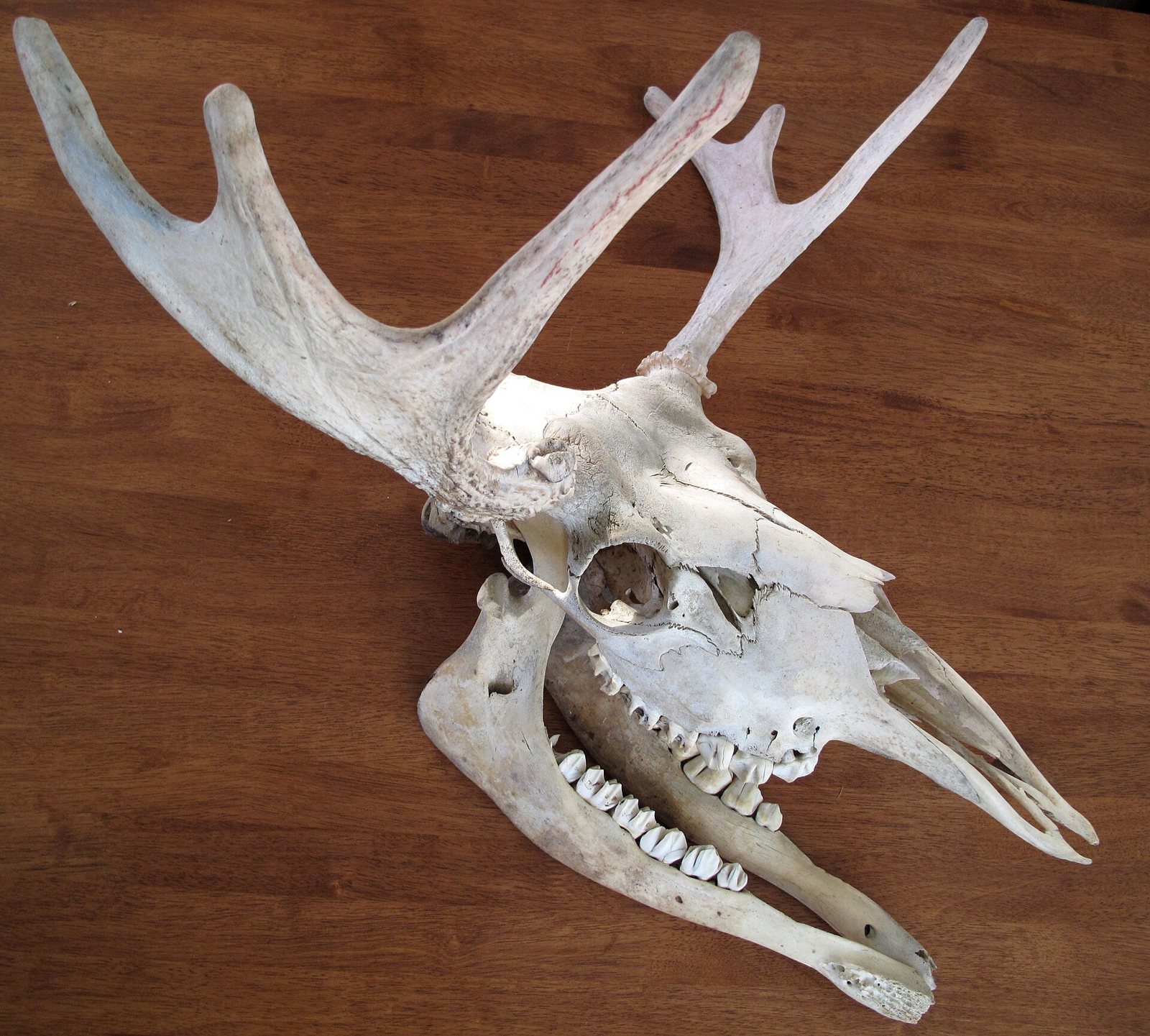
Now turn it over and look at the teeth. The front of the upper jaw has no incisors at all. Instead, the Alaska guide describes a toothless upper dental pad, a tough surface that the lower incisors bite against. The skull has no upper canines either, and no lower ones.
The full count is written as a dental formula: I 0/3, C 0/0, P 3/3, M 3/3. Read it as incisors, canines, premolars and molars, upper over lower, on one side of the head. Double it and you get 32 permanent teeth. The cheek teeth at the back have vertical, crescent-shaped ridges of enamel, which give them their grinding surface.
So, the quick checklist reads like this: very long skull, very long nose, no upper front teeth, no canines anywhere, and crescent-ridged cheek teeth. If the skull still carries broad, flattened antlers, the case is close to closed.
Moose, elk or deer?
A large skull with no upper incisors belongs to the deer family, but that feature alone does not make it a moose. Elk and deer share it. The useful comparisons are size, canines, the shape of the nose and a small pit in front of the eye socket. The Purdue University Extension skull key gives these traits for the North American species:
Tap or hover a row to highlight it.
| Clue | Moose, Alces alces | Elk, Cervus canadensis | Deer, Odocoileus species |
|---|---|---|---|
| ClueTypical skull length | Moose, Alces alces20 to 25 inches | Elk, Cervus canadensis15 to 21 inches | Deer, Odocoileus speciesAbout 8 to 12 inches for white-tailed deer; 9 to 12 inches for mule deer |
| ClueUpper incisors | Moose, Alces alcesAbsent | Elk, Cervus canadensisAbsent | Deer, Odocoileus speciesAbsent |
| ClueUpper canines | Moose, Alces alcesAbsent | Elk, Cervus canadensisSmall, round canines present | Deer, Odocoileus speciesUsually absent in the North American deer keys |
| ClueNasal region | Moose, Alces alcesVery elongated | Elk, Cervus canadensisSlender and tapering | Deer, Odocoileus speciesSmaller and more delicate |
| ClueAntler clue | Moose, Alces alcesBull may have broad, palmate antlers | Elk, Cervus canadensisBull has branched antlers | Deer, Odocoileus speciesBuck has branched antlers |
The elk, *Cervus canadensis*, is the closest call. Its skull is slender and tapers toward the front, and a big one can come near a small moose in length. Look inside the upper jaw just behind where the front teeth would be. Purdue's key describes elk as having small, rounded upper canines. A moose has none, so on a clean skull look for the teeth or their empty sockets. That makes the canine check the strongest practical test between the two.
Deer are easier to rule out on size alone. A mule deer, *Odocoileus hemionus*, usually has a skull of about 9 to 12 inches and a deep pit in front of the eye socket. A white-tailed deer, *Odocoileus virginianus*, runs about 8 to 12 inches, with a shallower pit. Both are smaller and lighter built than either moose or elk. Our story on deer skull meaning covers the deer side of the family in more detail.
If you want a second opinion from a printed key, the University of Illinois *Fieldbook of Illinois Mammals* includes an ungulate skull key with elk, and Peter Ommundsen's British Columbia skull identification guide sets out the technical differences among moose, elk, mule deer and related species.
What antlers on the skull tell you
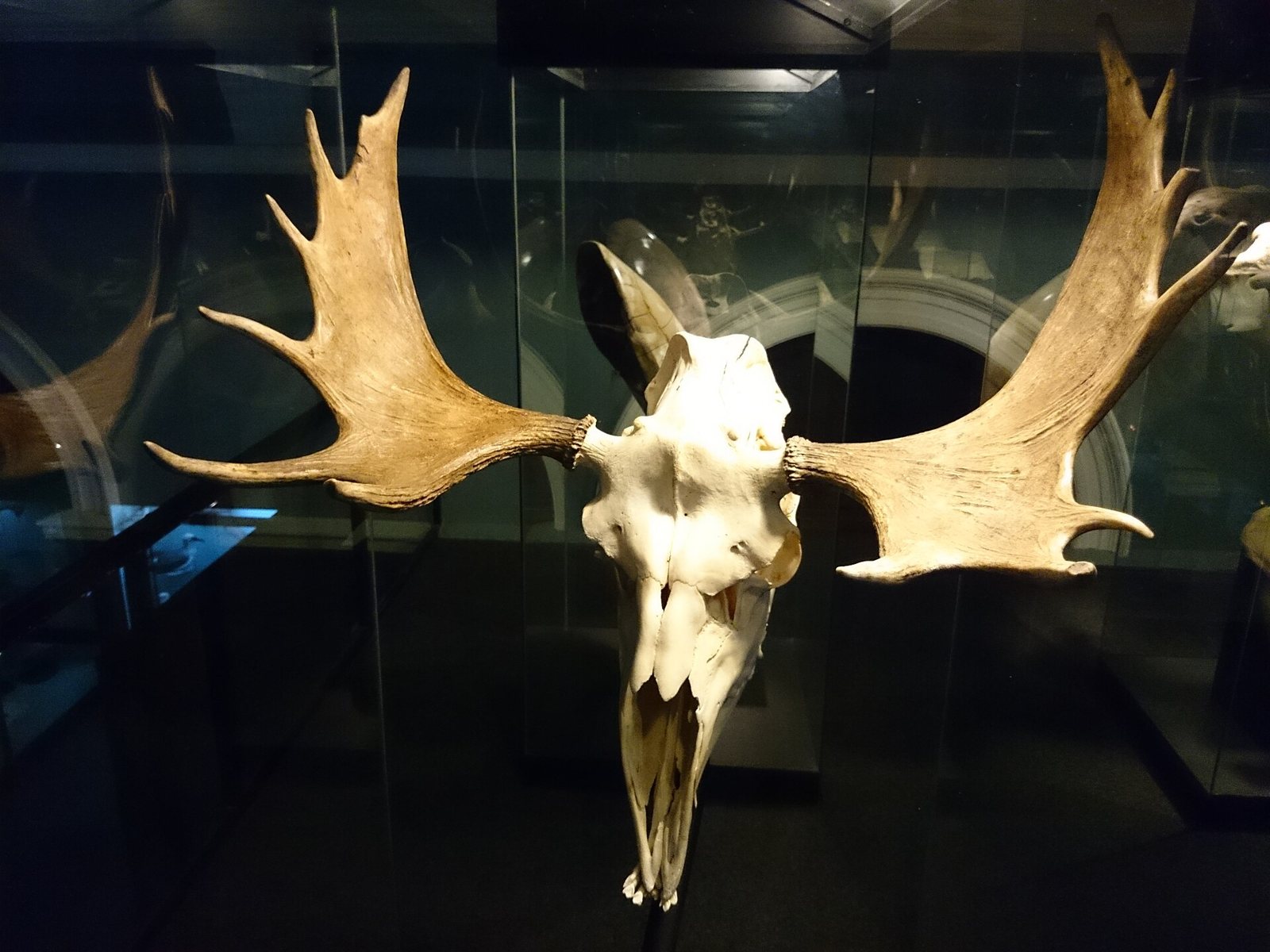
Moose antlers are bone, not horn, and they do not last the animal's lifetime. The U.S. Fish and Wildlife Service explains that antlers are shed and regrown every year. In Alaska, the state's skull guide says bull moose drop their broad, palmate antlers in late fall, and new growth begins around March or April.
The moose antler year, and the rules on found skulls
Tap or hover a step to follow the order.
Late fall
Bull moose shed their antlers, according to the Alaska Department of Fish and Game guide
March or April
New antler growth begins
October 2017
Alaska Department of Fish and Game publishes guidance on keeping found skulls and bones
2021
Wisconsin DNR guidance PUB-LE-685A-2021 bars possession of found moose skulls, antlers and bones without authorization
May 17, 2025
Washington's amended rule takes effect, generally barring possession of wildlife found dead while allowing naturally shed deer, elk and moose antlers
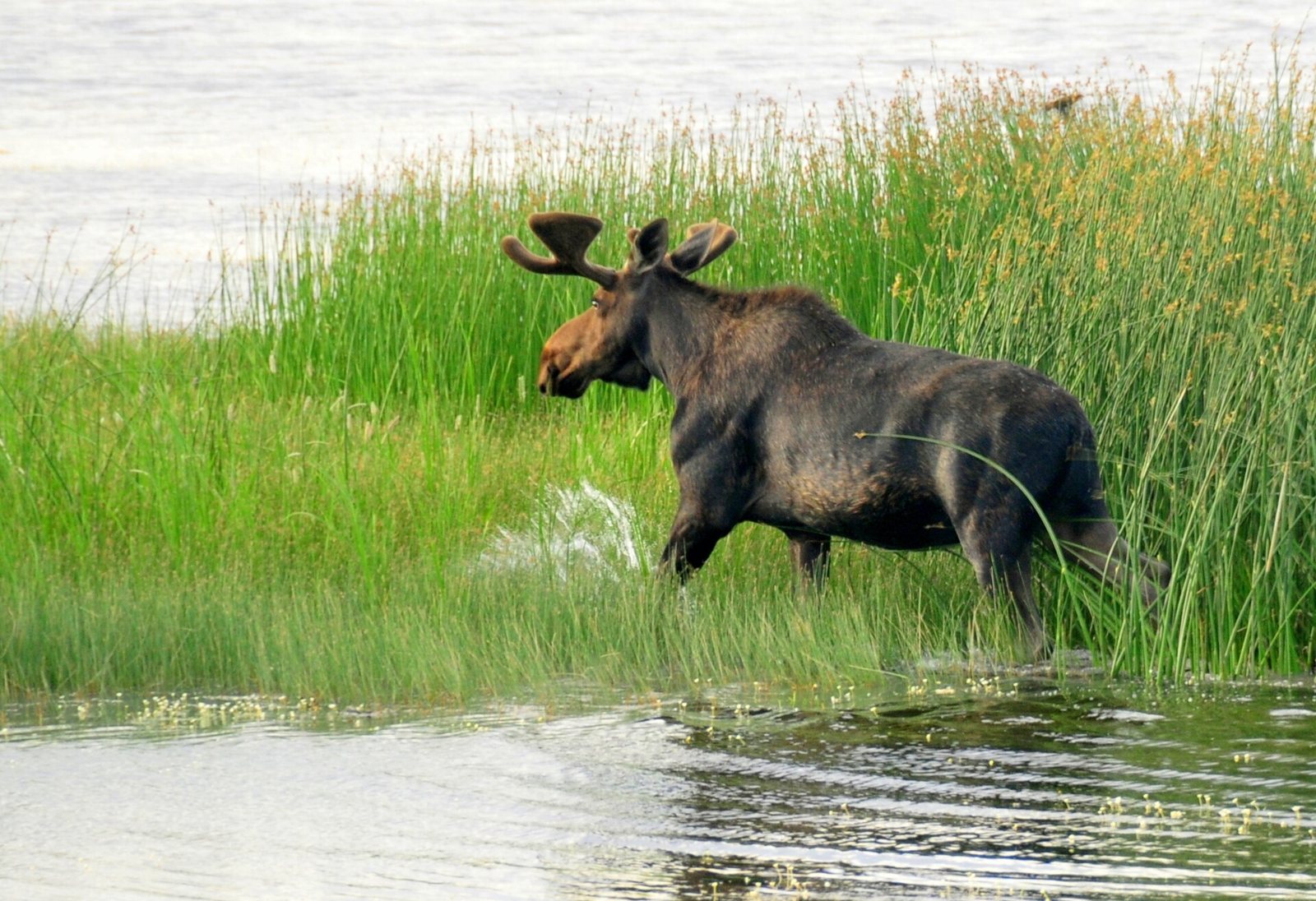
Female moose normally do not grow antlers, so a skull with a large rack still attached is generally from a bull. A skull without antlers can be either sex; on a bull you may still see the bony stubs, called pedicles, where the antlers grew. When antlers stay with the skull, the piece of upper skull that holds them together is called the skull plate.
An attached rack tells you something about timing. The animal died before it shed that year's antlers, or the antlers were kept with the skull after death. It does not tell you how the animal died. That is why wildlife agencies care about these finds. The Utah Division of Wildlife Resources calls an antlered skull found outdoors a "deadhead" and warns that it may be evidence of an illegally killed animal, so it asks people to leave it where it is and report it.
If what you have has permanent horns instead of antlers, it is a different animal altogether. Our stories on the cow skull, the ram skull and the bison skull, along with the goat skull, cover the horned skulls that turn up in fields and pastures.
How big a moose skull gets, and the record books
A typical adult moose skull can pass 550 mm, about 25 inches, in greatest length, according to the Alaska guide. Size still varies with sex, age, subspecies and region, so a young or female skull may come in shorter.
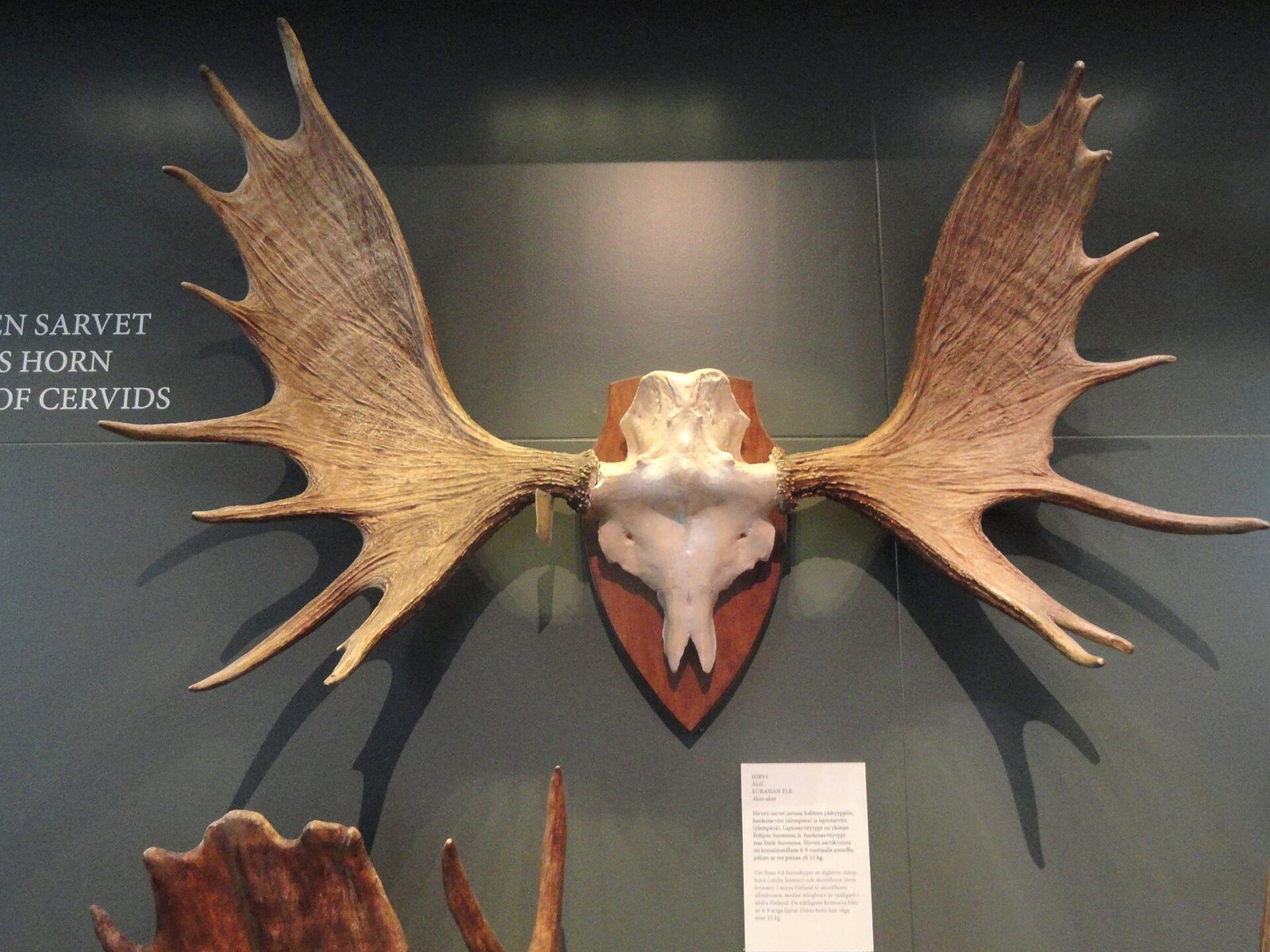
The big ones are very big. A 1914 natural history, *The American Natural History*, recorded a moose skull 28 3/4 inches long, with the dry skull and antlers together coming to 93 1/4 pounds. That was one trophy specimen with its rack, not an average, and the antlers account for much of the figure. Still, it gives a fair sense of why nobody carries one of these out of the woods with one hand.
Hunters measure the antlers rather than the skull. The Boone and Crockett Club scores moose racks using greatest spread, palm width, palm length and symmetry, among other measurements, and it keeps separate categories for different moose. In the Club's Summer 2021 trophy list, the figures stood like this:
- Canada moose: world record 242 points; minimum entry score 185.
- Alaska-Yukon moose: world record 266 4/8 points; minimum entry score 210.
- Shiras' moose: world record 205 4/8 points; minimum entry score 140.
Records change as new trophies are accepted, so the Club's current records page has the latest numbers. A score describes a rack, and it says nothing about whether a skull you found is a moose; for that, go back to the teeth and the nose.
Can you keep a moose skull you find?
It depends on where you are standing. Rules vary by state, province and land manager, and by whether you have a naturally shed antler, a clean skull, or a skull with antlers still attached. Never assume a find is yours to keep. These dated examples show how far apart the rules can be:
- Wisconsin. The Wisconsin DNR, in guidance published as PUB-LE-685A-2021, says it is illegal to collect, possess, buy, sell or trade moose antlers, skulls or bones found in the field unless specifically authorized. It tells finders to contact a conservation warden about a possible tag or permit.
- Utah. The Utah Division of Wildlife Resources requires an antler-gathering certificate from January 1 through May 31. A skull with antlers attached should not be moved; it is reported through the state's deadhead reporting system.
- Washington. A rule effective May 17, 2025 generally prohibits possession of wildlife found dead, while allowing naturally shed deer, elk and moose antlers. Found wildlife remains state property under the rule.
- Alaska. Alaska Department of Fish and Game guidance from October 2017 says naturally shed antlers, skulls and bones of deer, elk, moose and caribou can generally be kept, though land ownership and special land rules still matter.
- New Mexico. New Mexico Department of Game and Fish guidance says skulls of protected species found in the field remain state property unless they came from an animal legally taken during an approved season, and it asks finders to leave an antlered skull in place and contact a conservation officer.
- Montana. Montana Fish, Wildlife & Parks allows possession of naturally shed antlers, certain antlers still attached to part of the skull from game animals that died naturally, and bones of elk, antelope, moose or deer that died naturally and were not killed unlawfully or by accident, with further limits that include state-park rules.
Two neighbors on a map can sit on opposite sides of this list. In Canada the provincial wildlife office is the one to ask, and tribal and federal lands have their own offices to call. Our story on what to do when you have found an animal skull covers the general federal laws and the questions that apply to any skull.
Before you move it
The safest order of operations is simple, and it costs nothing but a little patience.
Before you move a moose skull
Tap a card to bring it forward.
- Photograph it: Shoot it from several angles, with the teeth and any antlers in view.
- Record the location: Note where it lies and whose land it is on, because the rules follow the place.
- Leave an antlered skull where it lies: Utah and New Mexico both ask finders not to move a skull with antlers attached.
- Call the agency first: Contact the state, provincial, tribal, federal-land or local wildlife office before taking possession.
In the United States, the first call is the state wildlife agency or the U.S. Fish and Wildlife Service. Ask the land manager too, because a skull on a national forest, a park or a neighbor's property may fall under rules that differ from the state's. If you do get the go-ahead, our guide to cleaning an animal skull covers the next steps, and if the bone looks weathered and old, how old are these bones explains what its condition can and cannot tell you.
Moose skull quiz
Answer every question to check.
Quick answers about moose skulls
A few more questions tend to come up once the skull is identified.
Do moose have upper front teeth?
No. A moose has no upper incisors; its lower incisors bite against a toothless upper dental pad, and it has no upper canines either, which is why the front of the upper jaw looks bare.
What does a moose skull look like?
It is large and elongated, with a long nasal region that stretches well in front of the eyes. An adult skull can pass 550 mm, about 25 inches, and the upper jaw has neither incisors nor canines.
How is a moose skull different from a deer skull?
A moose skull is about twice the length of a deer skull, roughly 20 to 25 inches against 8 to 12. Deer also have a noticeable pit in front of each eye socket, deeper in mule deer than in white-tailed deer, and their noses are smaller and more delicate.
Can a big elk skull be mistaken for a moose?
Yes, because large elk overlap with smaller moose in length and both lack upper incisors. Check the upper jaw for small, rounded canines or their sockets: an elk has them and a moose does not.
Where to go next
If your find turned out to be a moose, start with the rules in found an animal skull and a call to your wildlife agency. Once you know it is yours to handle, how to clean an animal skull takes it from there. And if the skull in your hands is smaller and lighter, the deer skull story is the next place to compare.
Terms in this story
Tap a term to see what it means.
Alces alces. The scientific name of the moose, the largest member of the deer family in North America.
---