

No. 266
Jebel Irhoud: The Oldest Known Homo sapiens Fossils and How Old They Are
Jebel Irhoud is a cave site in Morocco, about 100 kilometres west of Marrakesh, that has yielded pieces of human skulls, a child's jaw and other bones. In 2017, a team led by Jean-Jacques Hublin and Abdelouahed Ben-Ncer described these fossils as early *Homo sapiens*.
Heated flint tools found with the fossils were dated by thermoluminescence to about 315,000 years ago, 315 ± 34 thousand years. That makes them the oldest fossils attributed to our species so far reported, about 120,000 years older than the fossils from Omo Kibish in Ethiopia that held that place before.
The headline holds up, and the story behind it is richer than the headline. These people had faces much like ours and braincases that were not quite ours yet, and scientists still discuss exactly where they fit in the human family.
A cave opened by miners
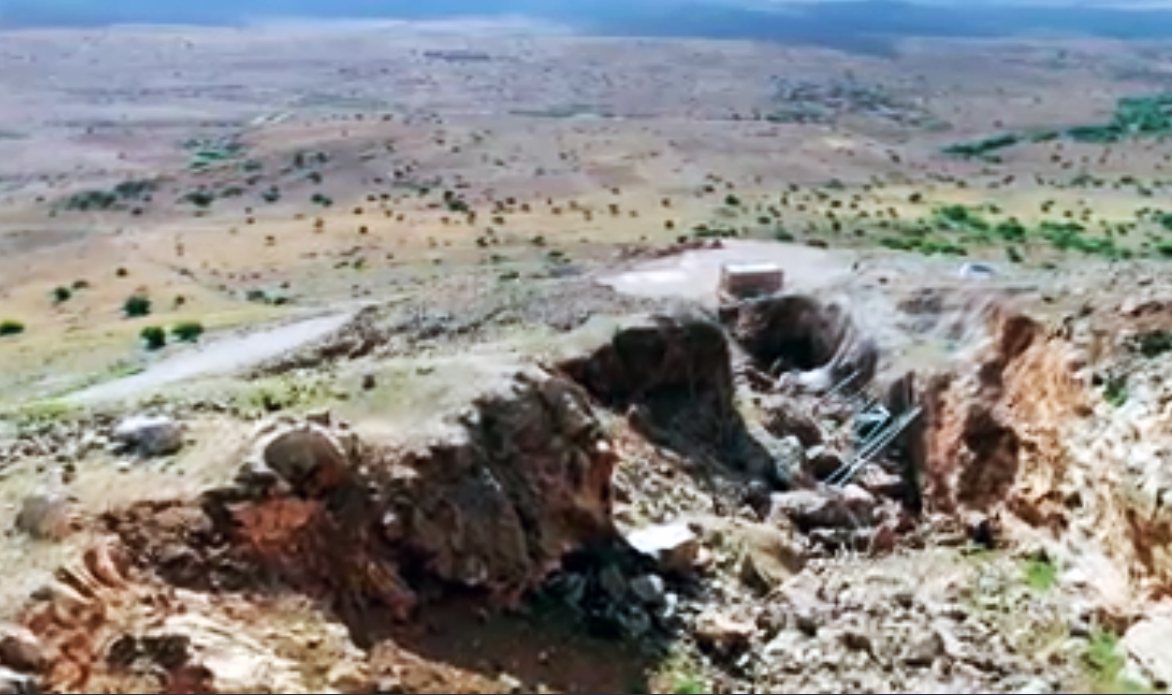
Jebel Irhoud sits about 100 kilometres west of Marrakesh and roughly 50 kilometres southeast of Safi, according to the Max Planck Institute for Evolutionary Anthropology. Its story as a fossil site began by accident. Around 1960, mining for baryte, a heavy mineral, exposed the cave.
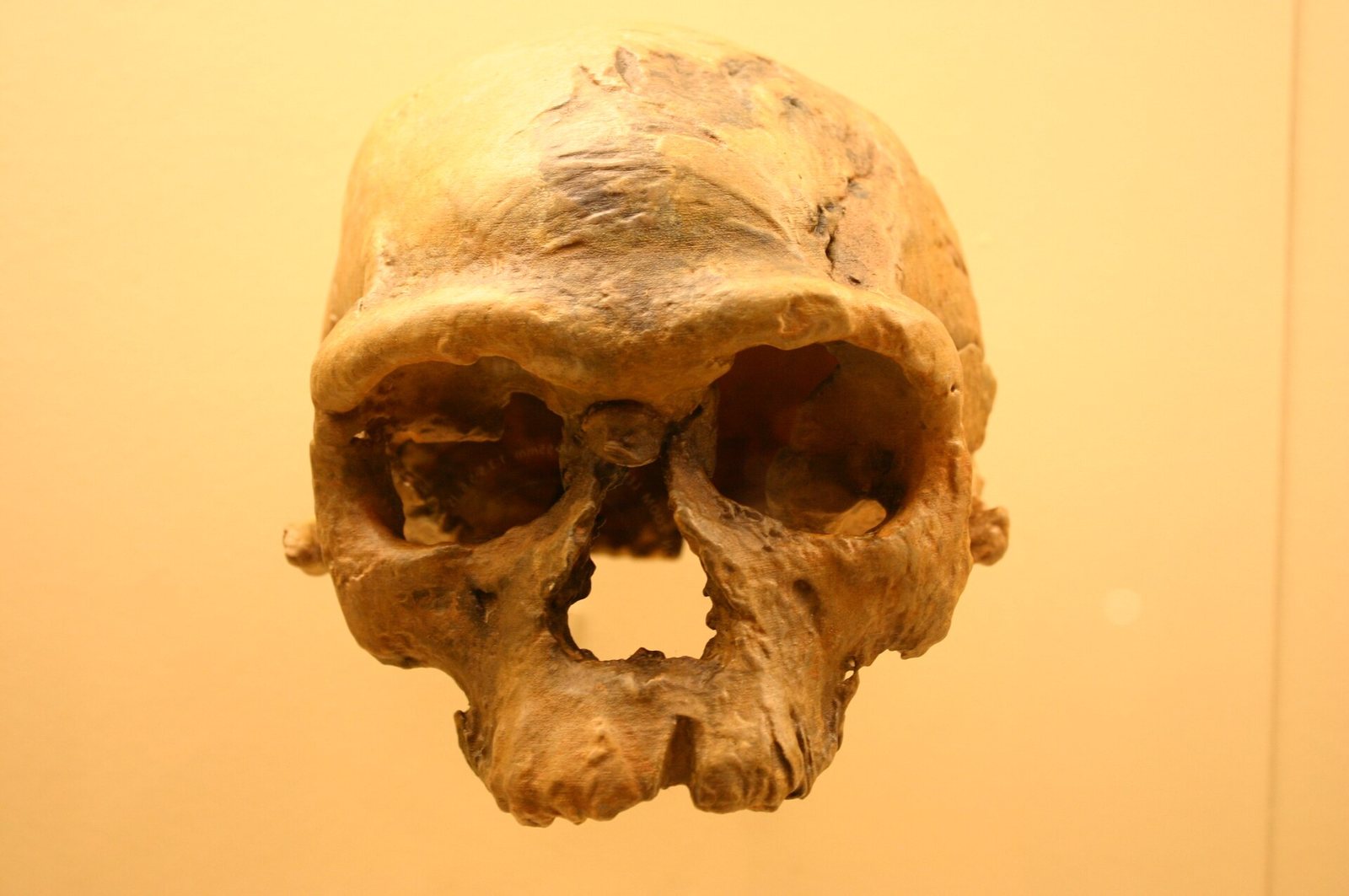
A mine worker came across the first human cranium, now known as Irhoud 1. The archaeologist Émile Ennouchi then began work at the site and recovered a second skull, Irhoud 2, in 1961. Because these early specimens came out during quarrying, not a careful excavation, nobody could be sure exactly which layer they came from, and their age stayed uncertain for decades.
At first, the Irhoud fossils were classed as North African Neanderthals. Later study reassessed them as early *Homo sapiens*. If you want the Neanderthal side of that comparison, our Neanderthal skull story covers it.
Back to the cave in 2004
Some of the cave's deposits survived the quarrying in place. In 2004, Hublin's team began a new excavation and dating project together with Morocco's Institut National des Sciences de l'Archéologie et du Patrimoine, known as INSAP, and worked those surviving deposits, so the new finds came with their layers intact.
New fossils followed, including Irhoud 10 and Irhoud 11. The site's human remains now include pieces of adult skulls, a child's lower jaw and a child's upper arm bone, but not one complete, intact skull. The researchers counted 22 human fossils representing at least five individuals, according to their 2017 announcement as covered by RTVE.
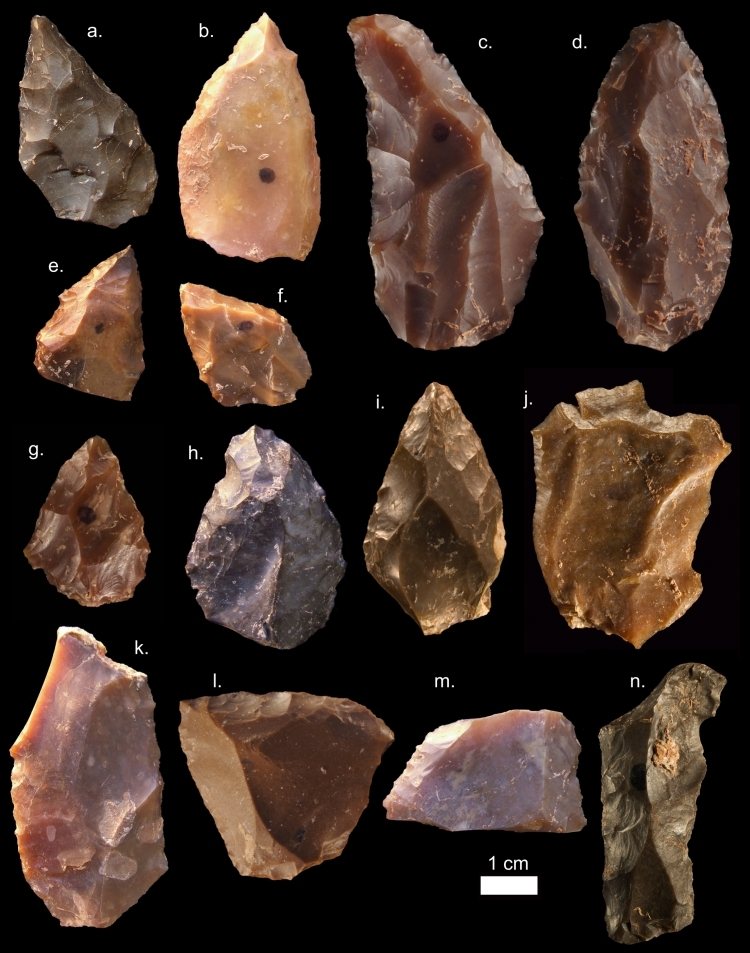
Stone tools came out of the same layers. They belong to the African Middle Stone Age and include Levallois technology, a way of shaping a stone core so that a flake of planned size and shape can be struck off it. Some of these flint pieces had been heated, and that detail turned out to matter a great deal.
How old the fossils are, and how the date was reached
On 8 June 2017, the journal *Nature* published two companion papers. One, by Hublin, Ben-Ncer and colleagues, described the fossils: "New fossils from Jebel Irhoud, Morocco and the pan-African origin of Homo sapiens". The other, by Daniel Richter and colleagues, dated them.
Richter's team used thermoluminescence on the heated flint found directly with the fossils. In plain terms, heating resets a kind of natural clock in the stone, and measuring the clock tells scientists how long ago the flint was last heated. The weighted average was 315 ± 34 thousand years, with an approximate range of 350,000 to 280,000 years given by the authors.
A second, independent method pointed the same way. A recalculated uranium-series and electron spin resonance date for a tooth from Irhoud 3 came out at 286 ± 32 thousand years. Taken together, the authors treat the fossils and tools as the oldest reported fossil evidence attributed to *Homo sapiens*. For more on how dating methods like these work, see our story on how old these bones are.
Tap or hover a row to highlight it.
| Material | Method | Result |
|---|---|---|
| MaterialHeated flint found with the fossils | MethodThermoluminescence | Result315 ± 34 thousand years |
| MaterialTooth from Irhoud 3 | MethodUranium-series and electron spin resonance | Result286 ± 32 thousand years |
| MaterialOmo Kibish fossils, Ethiopia (the earlier reference point) | MethodDated before 2017 | ResultAbout 195,000 years |
A modern face on a long braincase
What did these people look like? Hublin and colleagues describe a mosaic of features. The face, jaw and teeth resemble those of early or recent *Homo sapiens*. The neurocranium, the part of the skull that holds the brain, is more primitive.
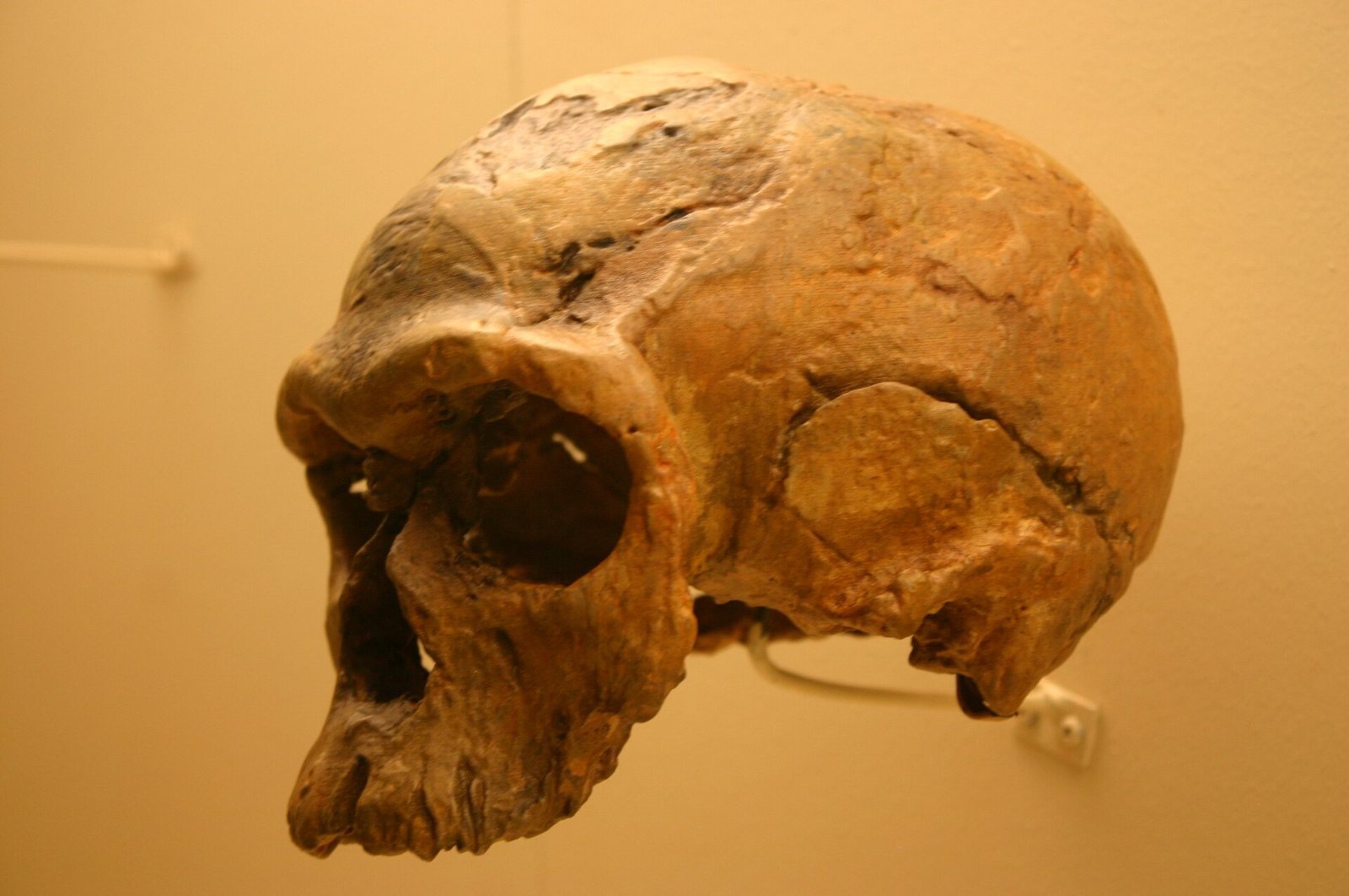
Philipp Gunz built a virtual reconstruction from scans of the fossils. It shows a relatively modern-looking face on a long, low braincase, and the inside of the braincase shows that the brain was not yet as rounded, or globular, as in people living today, according to the Max Planck Society.
The result suggests that the face became modern before the braincase took its fully rounded shape, and that different parts of our anatomy changed at different rates. Put another way, the face you might recognize across a room came first, and the shape of the head behind it caught up later. Our story on facial reconstruction follows how specialists rebuild faces from skulls like these.
What it changed about where Homo sapiens arose
Before 2017, the oldest securely dated *Homo sapiens* fossils were generally associated with Omo Kibish in Ethiopia, at about 195,000 years old. That encouraged a tidy model: an East African origin for our species around 200,000 years ago.
Jebel Irhoud moved the date back to about 315,000 years and placed early *Homo sapiens* in North Africa, on the other side of the continent. Hublin, Ben-Ncer and colleagues argue that our species emerged from populations spread across Africa, rather than from one small East African birthplace. That is what the "pan-African origin" in the title of their paper means. Morocco did not replace East Africa as a single cradle; in their view, the whole continent was involved.
For the wider question of which skull holds the title of oldest human skull, and how the answer depends on what counts as human, our oldest human skull story lays out the contenders.
Where scientists see it differently
Scientists do not all read the Jebel Irhoud fossils the same way, and the question is still open.
Hublin and colleagues place the fossils within the early *Homo sapiens* group, and Max Planck researchers group them with early anatomically modern humans such as those from Qafzeh and Skhul. Other researchers put more weight on the archaic shape of the braincase and on features the fossils share with Neanderthals.
Mounier and Mirazón Lahr, writing in 2019, proposed that the Irhoud fossils could represent a North African population related to later *Homo sapiens*, possibly one that exchanged genes with populations ancestral to European Neanderthals, as summarized in the PubMed record of their paper. A 2024 review by Hautavoine and colleagues still describes the place of Middle Pleistocene African fossils in the human story as debated.
So, the safe summary is this: the 2017 papers support an early *Homo sapiens* classification, and the wider question of how these people relate to us and to other fossil groups is still being worked out. Fossils such as the Kabwe skull and the Dragon Man skull have their own places in that wider conversation about human diversity.
Jebel Irhoud, from the mine to the 2017 papers
Tap or hover a step to follow the order.
Around 1960
Baryte mining exposes the Jebel Irhoud cave, and a worker comes across the first cranium, Irhoud 1.
1961
Émile Ennouchi recovers Irhoud 2 as archaeological work begins.
2004
A new excavation and dating project begins under Jean-Jacques Hublin's team with INSAP.
2004 to 2011 and later
New fossils, including Irhoud 10 and Irhoud 11, come from deposits still in place.
8 June 2017
The fossil study and the dating study are published in Nature.
2017
Thermoluminescence gives 315 ± 34 thousand years for the heated flint found with the fossils.
Where the Jebel Irhoud fossils are kept
The principal fossil material is associated with INSAP in Rabat, Morocco's national institute for archaeology and heritage, which describes the site on its page Jbel Irhoud, aux origines d'Homo sapiens. Morocco's National Museum of History and Civilizations in Rabat is the country's official archaeological museum and holds its national prehistoric collections.
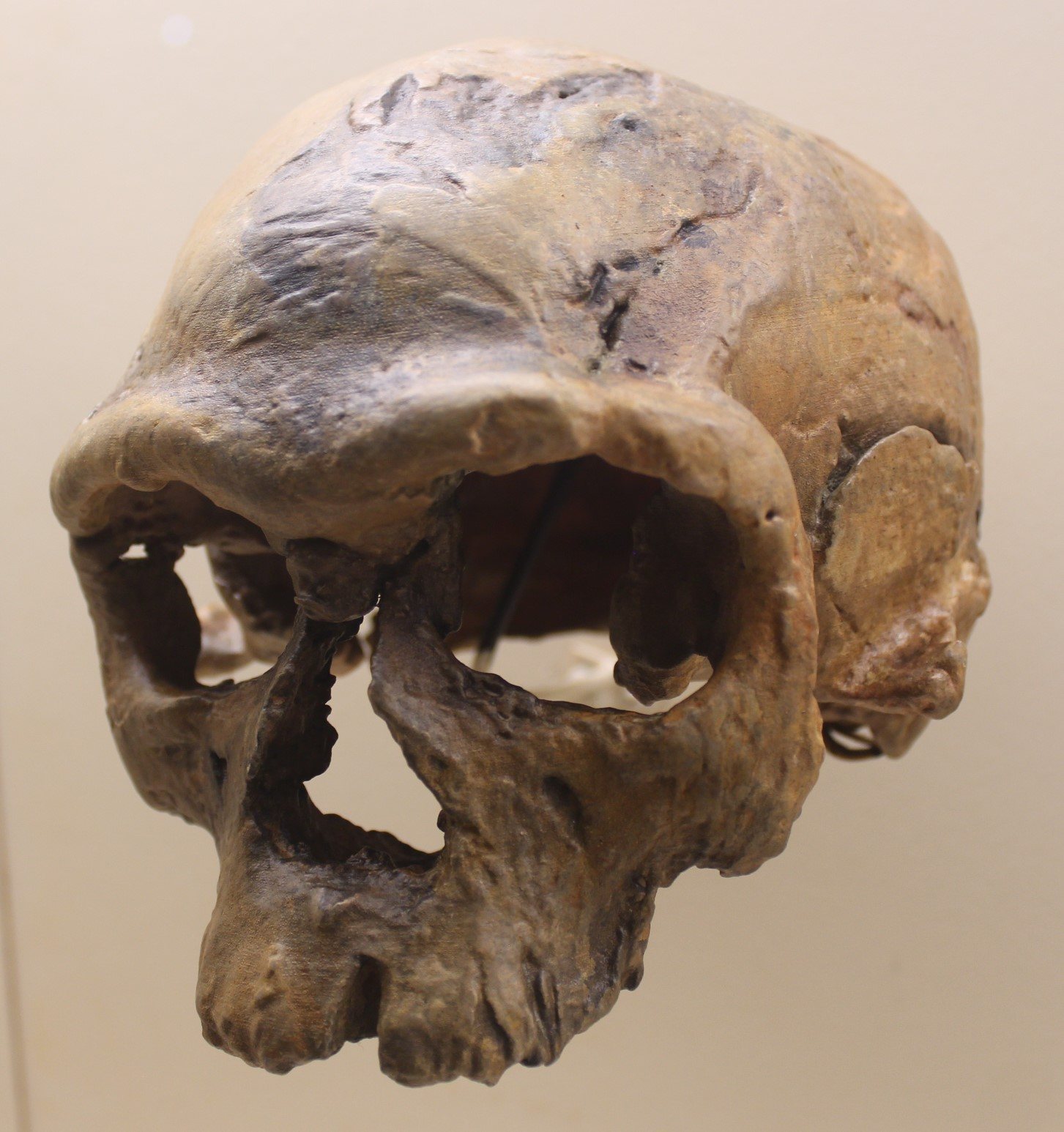
Outside Morocco, you are most likely to meet Irhoud 1 as a cast. The Smithsonian's National Museum of Natural History in Washington, D.C., displays a cast of the skull, and the photo of it shared widely online shows that cast, not the original fossil. If you want to see Jebel Irhoud material in person, ask the museum in advance what is on view, since displays change.
How well do you know Jebel Irhoud?
Answer every question to check.
Questions about Jebel Irhoud
A few more questions come up often.
What is the oldest Homo sapiens skull, and where was it found?
The oldest skull material attributed to *Homo sapiens* comes from Jebel Irhoud in Morocco, dated by its associated flint to about 315,000 years ago. The fossils are linked to collections in Rabat, while casts and reconstructions are shown in museums elsewhere.
Is Jebel Irhoud the first modern human?
Not quite in the everyday sense. The Irhoud fossils are the oldest so far attributed to *Homo sapiens*, with faces like ours, but their long, low braincases show the fully rounded modern head had not yet developed. Scientists describe them as early members of our lineage rather than people identical to us.
Are the Jebel Irhoud people our direct ancestors?
That is still open. Hublin and colleagues place them early in the *Homo sapiens* lineage, while Mounier and Mirazón Lahr suggested they may represent a North African population related to later *Homo sapiens* rather than a straight line to living people.
Is there a complete Jebel Irhoud skull?
No single complete, intact skull came from the site. The finds include pieces of adult skulls, a child's lower jaw and a child's upper arm bone, from at least five individuals, and Philipp Gunz's well-known face is a virtual reconstruction built from scans.
The people of Jebel Irhoud
The fossils from Jebel Irhoud belonged to real people, adults and children, who lived in North Africa some 300,000 years ago and made Middle Stone Age tools. Thanks to a mine, a careful return to the cave by Moroccan and European scientists, and a few pieces of heated flint, they now sit at the start of our own species' story. If you want to keep going, Turkana Boy and Little Foot go much further back in the human family, and Sima de los Huesos is another famous fossil site from the same long chapter.
Terms in this story
Tap a term to see what it means.
Jebel Irhoud. A cave and Middle Stone Age site in Morocco, about 100 km west of Marrakesh, known for early Homo sapiens fossils.
---