

No. 148
Turkana Boy: Who He Was, How Old He Was, and What His Skeleton Shows
Turkana Boy is the nickname for KNM-WT 15000, the skeleton of a child who lived about 1.5 to 1.6 million years ago in what is now West Turkana, Kenya. His remains came to light near the Nariokotome River in 1984. He was probably about 8 or 9 years old when he died, although earlier estimates put him at 11 or 12, and he stood about 160 centimetres tall.
About 40 percent of his skeleton survived, which is unusually complete for a fossil this old. That is why he matters so much: his bones showed scientists, for the first time in such detail, the body shape of early *Homo erectus*.
If you met him in a museum hall or a documentary, you were most likely looking at a cast. The original rests in Nairobi, in the care of the National Museums of Kenya, which calls him Kenya's Eternal Ambassador. What follows is his story as the scientists who studied him tell it, and the places where they still disagree.
The find at Nariokotome, August 1984
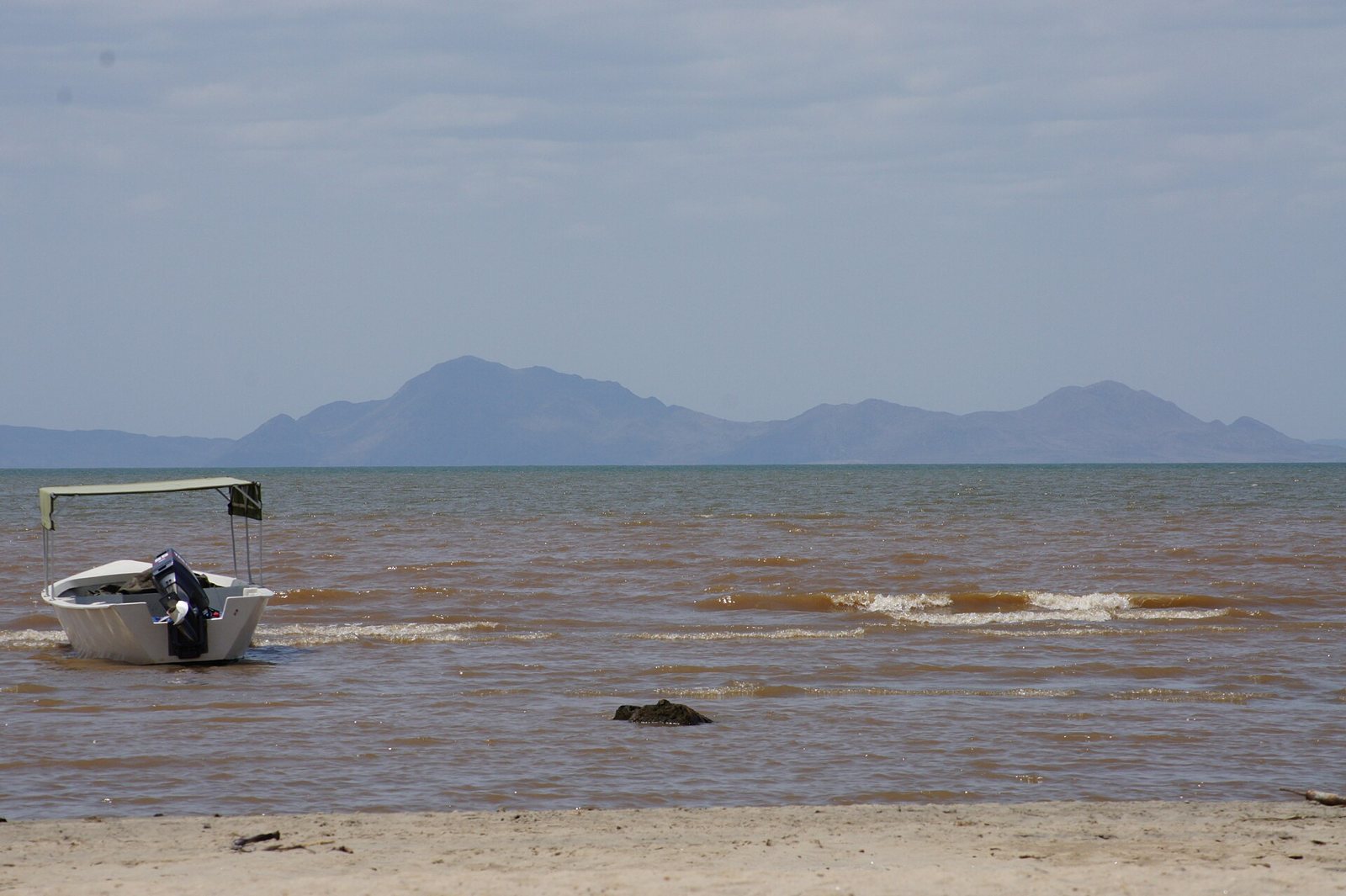
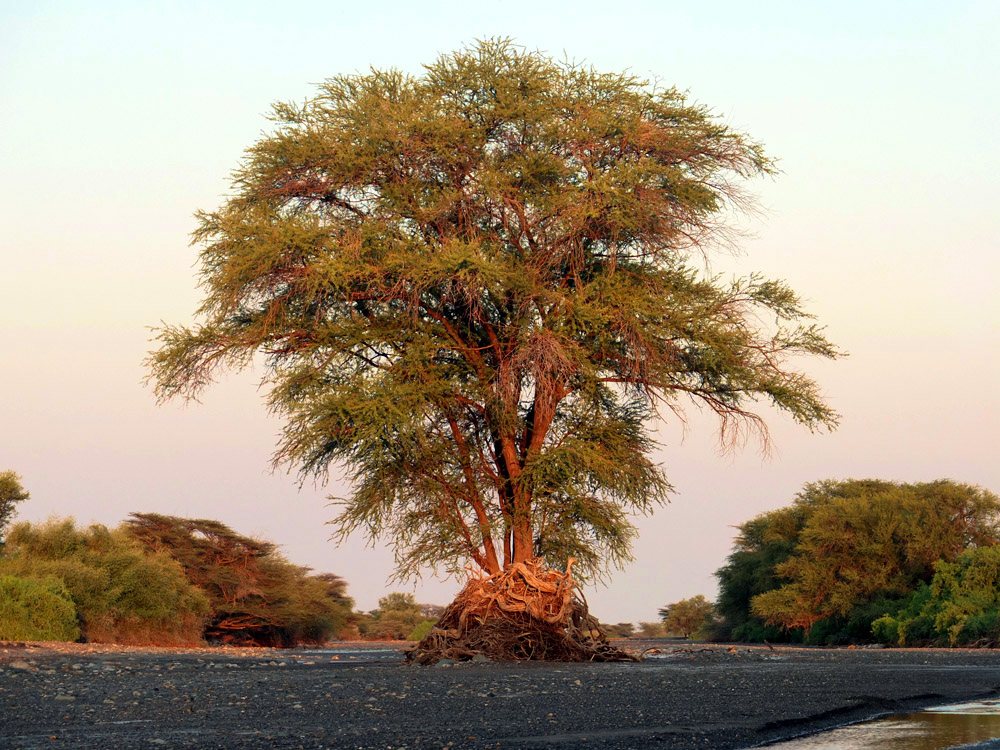
On 23 August 1984, the Kenyan fossil finder Kamoya Kimeu spotted a small piece of bone near the Nariokotome River, west of Lake Turkana. It was a fragment of frontal bone, the bone of the forehead. Kimeu was working on a survey led by Richard Leakey and Alan Walker, and that one fragment led to excavations that ran from 1984 to 1988.
The team recovered about 40 percent of a single young skeleton: the skull and jaw, the spine, the pelvis, ribs and most of the limb bones, according to the Smithsonian Human Origins Program. The two nicknames people use, Turkana Boy and Nariokotome Boy, both come from the place where he lay.
Walker and Leakey later edited the major scientific study of the skeleton, *The Nariokotome Homo Erectus Skeleton*, published in 1993. Much of what is known about him starts there.
Tap or hover a row to highlight it.
| Field | Data |
|---|---|
| FieldFossil number | DataKNM-WT 15000 |
| FieldCommon names | DataTurkana Boy, Nariokotome Boy |
| FieldDate found | Data23 August 1984 |
| FieldPlace found | DataNariokotome, West Turkana, Kenya |
| FieldFound by | DataKamoya Kimeu |
| FieldGeological age | DataAbout 1.5 to 1.6 million years |
| FieldAge at death | DataAbout 8 to 12 years, depending on method |
| FieldHeight at death | DataAbout 160 cm |
| FieldWeight at death | DataAbout 48 kg |
| FieldCompleteness | DataAbout 40 percent |
| FieldHeld by | DataNational Museums of Kenya, Nairobi |
| FieldSpecies names used | Data*Homo erectus* or *Homo ergaster* |
How old he was, and how scientists can tell
He lived about 1.5 to 1.6 million years ago, and he died in childhood. The harder question is exactly how old he was, and the honest answer is a range.
Teeth and bones grow on their own schedules, and the age a scientist reads from a skeleton depends on which schedule, or growth model, they compare it with. Walker and Leakey's 1993 study looked at skeletal maturity, how far his bones had grown and fused, and placed him at about 11 to 12 years old. Later work on his teeth told a different story. Dental development studies by Dean, Leakey and colleagues in 2001, followed by later analysis of the microscopic structure of his teeth, support an age of about 8 to 9 years.
Today the Smithsonian gives eight or nine years, and the National Museums of Kenya gives about 8 to 9. The gap comes from the comparison: bones and teeth mature at different rates, so the result depends on the growth model a scientist measures him against. The Turkana Basin Institute sets out both the dental and skeletal estimates. The safe way to say it is that he was a child, probably 8 to 12, with most recent accounts favoring 8 or 9.
How tall he was and what his body showed
When Turkana Boy died, he was about 160 centimetres tall, a little over 5 feet 3 inches, and weighed about 48 kilograms, according to the reconstruction Ruff and Walker published in 1993.
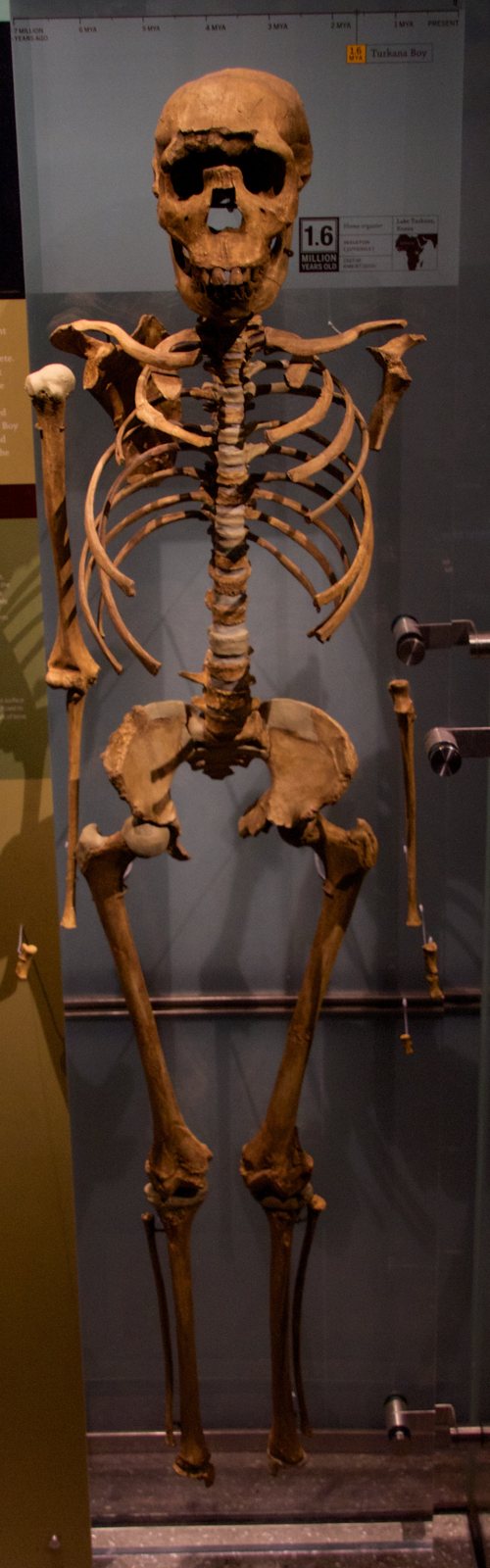
His proportions are what caught scientists' attention. He had long legs, relatively short arms, a narrow pelvis and a barrel-shaped torso, with a larger braincase than earlier hominins. The Smithsonian's overview of *Homo erectus* describes this as a body built for efficient walking on two legs, and possibly for long-distance running, in a hot, open environment. In other words, a child already carried a body plan close to our own.
How tall he would have grown is a separate and much less certain question. Using a modern human growth model, Ruff and Walker projected an adult height of about 185 centimetres. Later models gave shorter estimates. Any adult figure you see depends on which model is behind it.
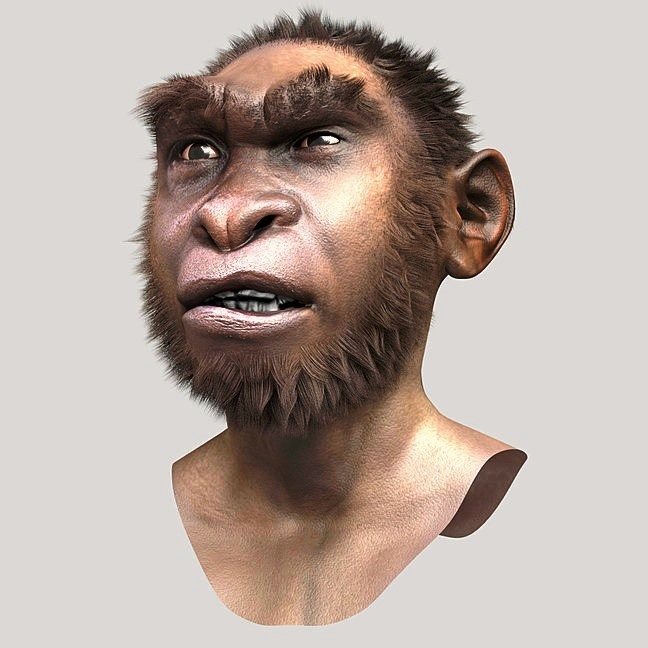
As for his face, no photograph exists, of course. Museum reconstructions of Turkana Boy are informed artistic interpretations built on his skull, not a direct record of how he looked. If you are curious how those faces are made, our story on facial reconstruction follows the process.
What is known about how he died
The cause of his death is not known, and the Smithsonian says so plainly. His skeleton does carry one clue to his life, though not to his death.
In 2012, Haeusler, Schiess and Boeni described changes in his lower spine consistent with a juvenile traumatic disc herniation, an injury to one of the cushions between the vertebrae, which they think happened several months before he died. An injury like that may have limited how he moved for a time, but it does not show what ended his life. The Turkana Basin Institute's account also mentions a proposed explanation involving an infection in his mouth, which remains a proposal rather than a settled answer.
What can be said with care is this: a young boy died in what is now northern Kenya, and his bones survived for about one and a half million years. How his life ended stays with him.
Turkana Boy, from his lifetime to today
Tap or hover a step to follow the order.
About 1.6 million years ago
Turkana Boy lived and died in the region now called West Turkana, Kenya.
23 August 1984
Kamoya Kimeu spotted a skull fragment near the Nariokotome River.
1984 to 1988
Excavations recovered about 40 percent of the skeleton.
1993
Walker and Leakey edited the major scientific study of the skeleton.
2001
Dental development work by Dean, Leakey and colleagues pointed to a younger age.
2012
Haeusler, Schiess and Boeni described a possible juvenile disc herniation in his spine.
Homo erectus or Homo ergaster?
The team that studied him, and the Smithsonian today, call Turkana Boy *Homo erectus*. You will also see him labelled *Homo ergaster*, and both names are in use.
The difference is about how to divide the human family tree, not about the boy himself. Bernard Wood and Mark Collard argued that the early African fossils deserve their own species name, *Homo ergaster*. Other researchers see the African and Asian fossils as regional forms of one widespread, variable species, *Homo erectus* in the broad sense, which scientists write as *Homo erectus sensu lato*. The Australian Museum explains the *ergaster* view, and a 2018 review by Villmoare, "Early Homo and the role of the genus in paleoanthropology", traces the history of the debate.
For the wider species, its skulls and how far it spread, our Homo erectus skull story picks up where this one stops.
Where Turkana Boy is today
The original skeleton is held by the National Museums of Kenya in Nairobi. The museum keeps the bones themselves in its collection, and what most visitors see on display at the Nairobi National Museum is a lifelike cast. Casts have also traveled to exhibitions in other countries, which is how many people meet him far from Kenya.
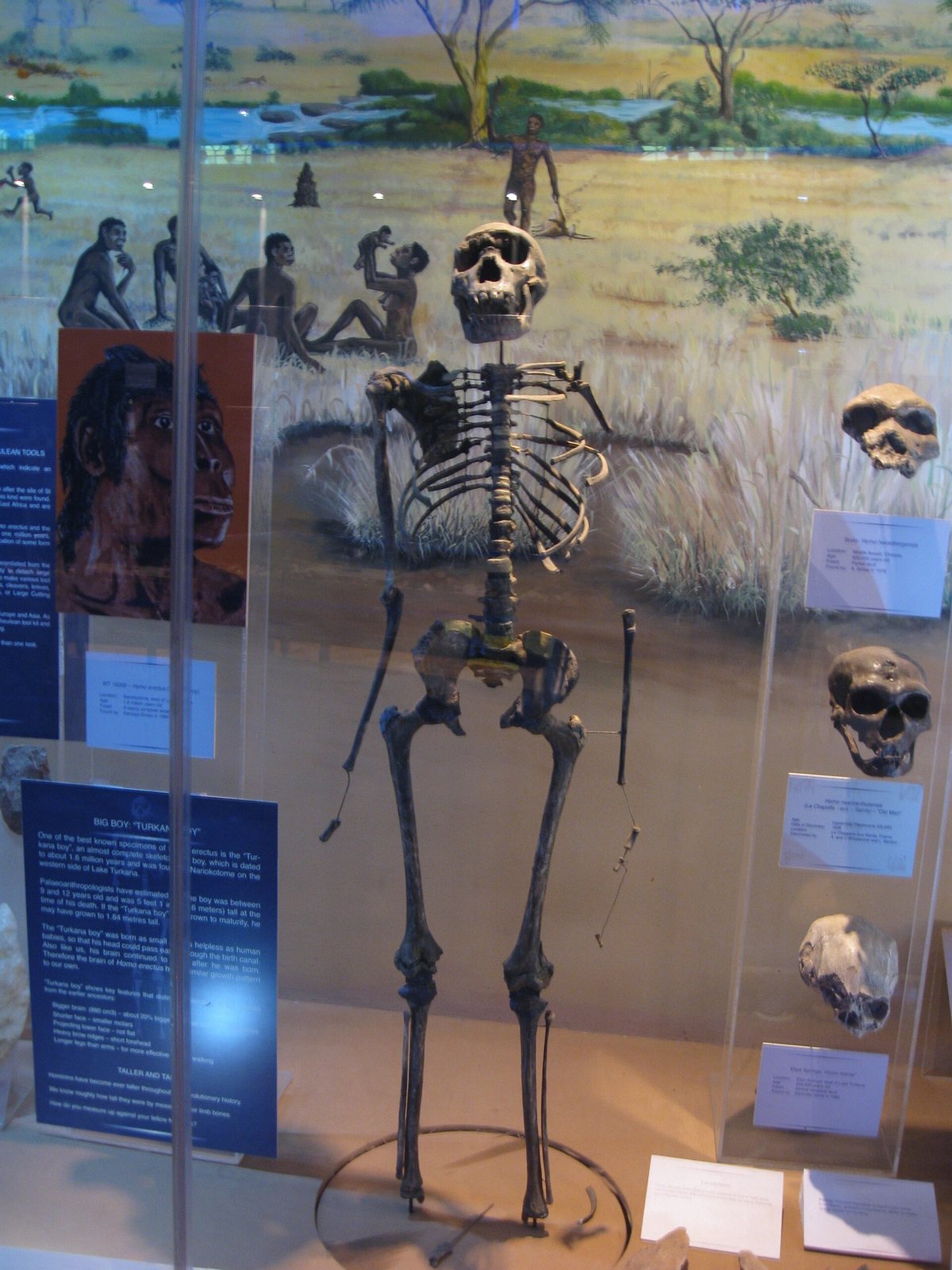
The museum's own description, Kenya's Eternal Ambassador, suits him. He is part of Kenya's national heritage, and the original stays at home. If you hope to see the display in Nairobi, check opening times and access directly with the National Museums of Kenya before you go.
Why he still matters
Turkana Boy preserves parts of the body that are rarely found together: skull, spine, pelvis, ribs and limbs from one individual. That lets scientists study his proportions, how he walked and how he was growing, all from the same person, as Walker and Leakey's study set out.
He belongs to a small group of fossils known around the world by a nickname. Lucy is one, and the Taung Child, another young individual, is another. Early *Homo* skulls such as Dmanisi Skull 5 and Peking Man have their own stories, and from South Africa's Sterkfontein Caves comes Little Foot, another rare, nearly whole skeleton that took about 20 years to free from the rock.
How well do you know Turkana Boy?
Answer every question to check.
Questions about Turkana Boy
A few more questions come up often.
Who found Turkana Boy?
Kamoya Kimeu, the Kenyan fossil finder, spotted the first piece of his skull on 23 August 1984. He was part of a survey led by Richard Leakey and Alan Walker, whose team then excavated the skeleton between 1984 and 1988.
Is Nariokotome Boy the same as Turkana Boy?
Yes. Both nicknames refer to the same fossil, KNM-WT 15000. One name comes from Lake Turkana and the other from the Nariokotome River, close to where he was found.
How complete is the Turkana Boy skeleton?
About 40 percent of his skeleton survives, including the skull, jaw, spine, pelvis, ribs and most limb bones. That is an unusually large share for a fossil about 1.5 million years old, and it is why scientists could study his body proportions from one individual.
Can you see the real Turkana Boy skeleton?
The original stays in the collection of the National Museums of Kenya in Nairobi, and the skeleton on public display is a lifelike cast. Casts have traveled to museums elsewhere, so a display abroad is a copy of the bones kept in Kenya.
A child who still teaches
Turkana Boy never reached adulthood, yet his skeleton still shapes what scientists know about the early human body. He is a child of Kenya's past, known to us thanks to the sharp eyes of Kamoya Kimeu and the patient work that followed. If he caught your attention, the stories on Homo erectus, what bones tell archaeologists and how scientists date old bones are good next stops, along with Morocco's Jebel Irhoud fossils, the oldest yet attributed to our own species.
Terms in this story
Tap a term to see what it means.
KNM-WT 15000. The museum number of Turkana Boy's skeleton, marking it as a Kenya National Museums specimen from West Turkana.
---