

No. 085
Dmanisi Skull 5 and the Early Humans Who Left Africa
Dmanisi Skull 5 is an adult skull of an early human, made up of the cranium D4500 and its lower jaw D2600, from the site of Dmanisi in southern Georgia. It is about 1.8 million years old; the fossil layers are generally dated to about 1.77 million years. What makes it famous is the mismatch you notice at once: a very small braincase, about 546 cubic centimeters, sitting above a large, strongly projecting face.
When it was described in Science in 2013, it was the most complete adult skull of early *Homo* known from that early stretch of time. It matters for two reasons. Dmanisi holds some of the earliest well-documented *Homo* remains outside Africa, and its five skulls show how much early humans could differ from one another.
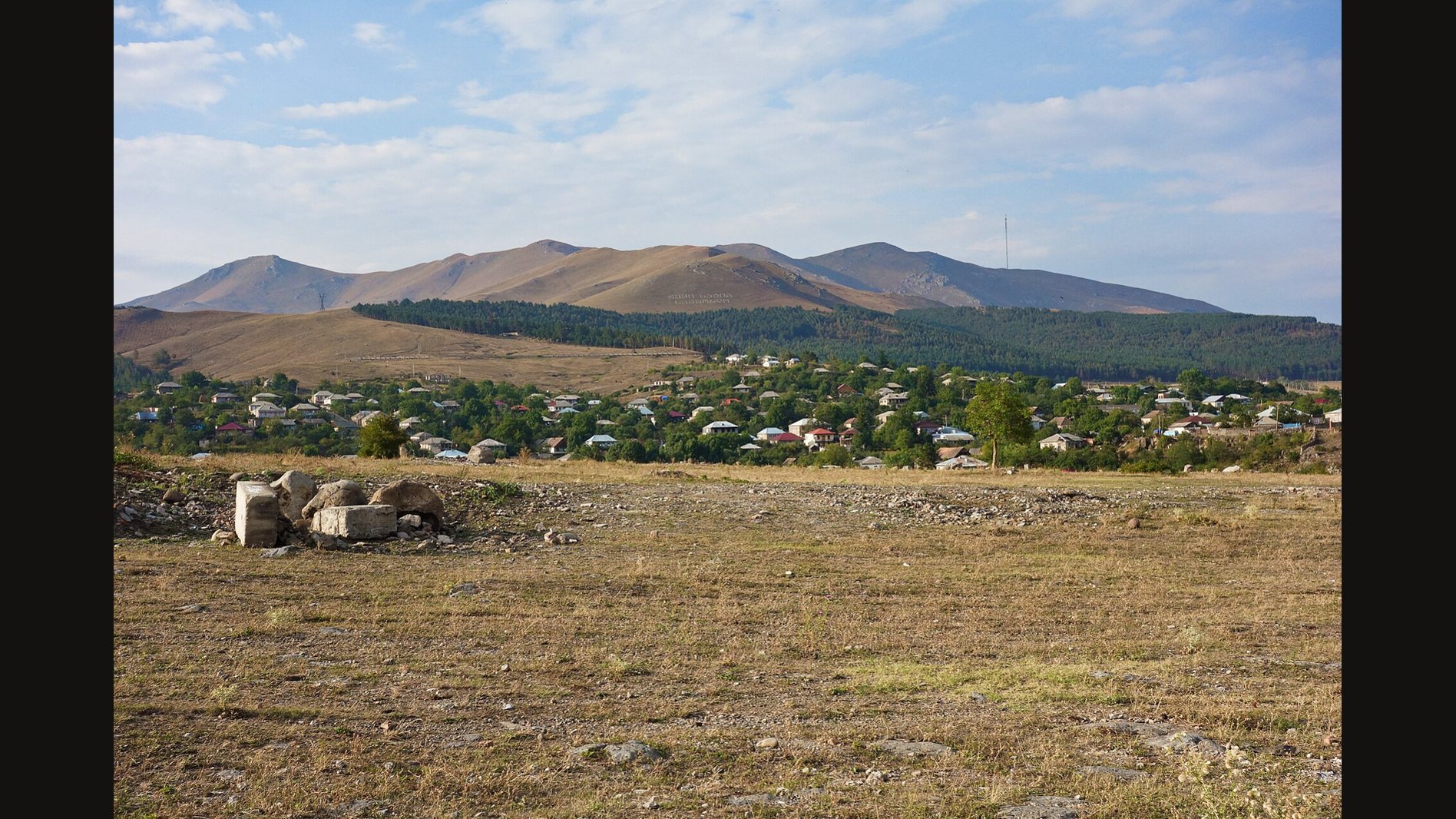
A deep-time site under a medieval town
Dmanisi did not start out as a fossil site. It is a medieval town and fortress in southern Georgia, and excavation of the medieval settlement began in 1936. Underneath those ruins lie much older Lower Paleolithic deposits, and the clue came from an unexpected animal: in 1983 a rhinoceros tooth showed that the layers beneath the town were far older than anything medieval, according to the IUGS Dmanisi Collection record. Stone tools were identified in 1984, as UNESCO's listing notes.
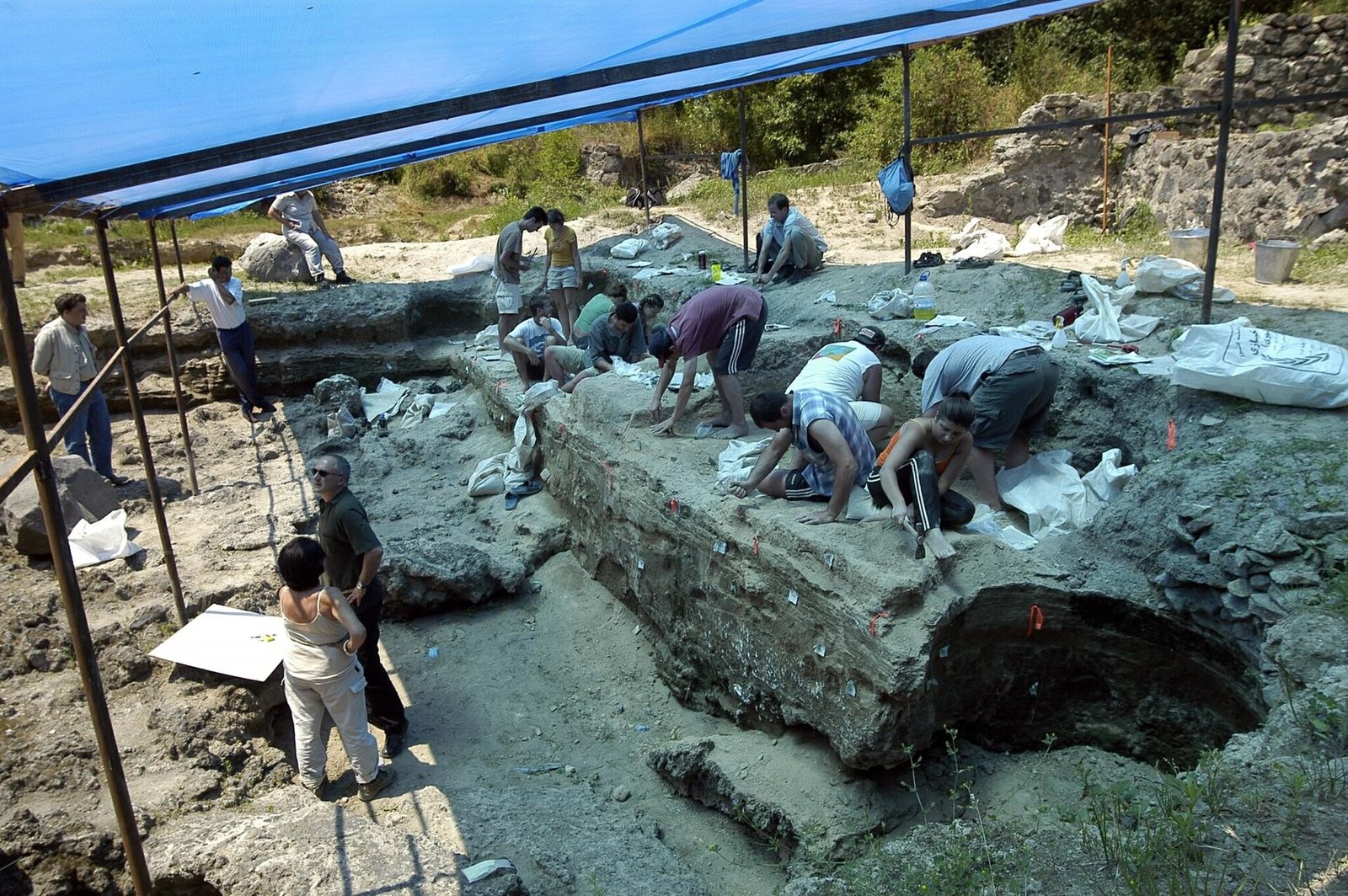
Then the human fossils began to appear. The first, a lower jaw catalogued as D211, came in 1991. Two partial crania followed in 1999, a large mandible in 2000, and a nearly complete skull of a young individual, Skull 3 (D2700), in 2001. Skull 4 (D3444) came in 2002, and Skull 5 in 2005. Alongside them the site has produced more jaws, loose teeth, other bones, animal fossils and stone tools.
One hill in Georgia, in other words, holds a castle town above and some of the oldest human fossils outside Africa below.
Tap or hover a row to highlight it.
| Find | Catalogue number | Year found | What it is |
|---|---|---|---|
| FindFirst hominin fossil | Catalogue numberD211 | Year found1991 | What it isA mandible, or lower jaw |
| FindTwo partial crania | Catalogue numberTwo specimens | Year found1999 | What it isPartial skulls |
| FindSkull 3 | Catalogue numberD2700 | Year found2001 | What it isNearly complete skull of a subadult |
| FindSkull 4 | Catalogue numberD3444, with mandible D3900 | Year found2002 | What it isOlder adult who had lost all but one tooth |
| FindSkull 5 | Catalogue numberD4500, with mandible D2600 | Year found2005 | What it isAdult skull with a braincase of about 546 cc |
How old is the Dmanisi skull?
The short answer is about 1.8 million years. The layers that hold the human fossils are generally dated to about 1.77 million years ago, using three lines of evidence: magnetostratigraphy, which reads the record of Earth's magnetic field in the rock; biostratigraphy, which compares the animal fossils with those from layers of known age; and argon-argon dating of volcanic material.
A 2011 study by Ferring and colleagues in PNAS dated the earliest occupation of the site to between 1.85 and 1.78 million years ago. They based this on a known flip in Earth's magnetic field, the Olduvai-Matuyama boundary, and on dating the Masavera Basalt, a volcanic layer at the site. The skull-bearing layers are younger than those first traces of people, which is why you will see the fossils described as about 1.8 or about 1.77 million years old. An earlier 2002 Science paper on another Dmanisi skull gave about 1.75 million years.
All of these figures date the rock around the fossils rather than the bones themselves. Our story on how old bones are dated covers the general idea.
Why Skull 5 surprised scientists
Skull 5 came together in two parts. The cranium, D4500, was recovered in 2005. Its lower jaw, D2600, had been found earlier, and when the two were fitted together they made a complete adult skull. Lordkipanidze and colleagues described it in Science in 2013, and a later paper, "Skull 5 from Dmanisi", followed in 2017.
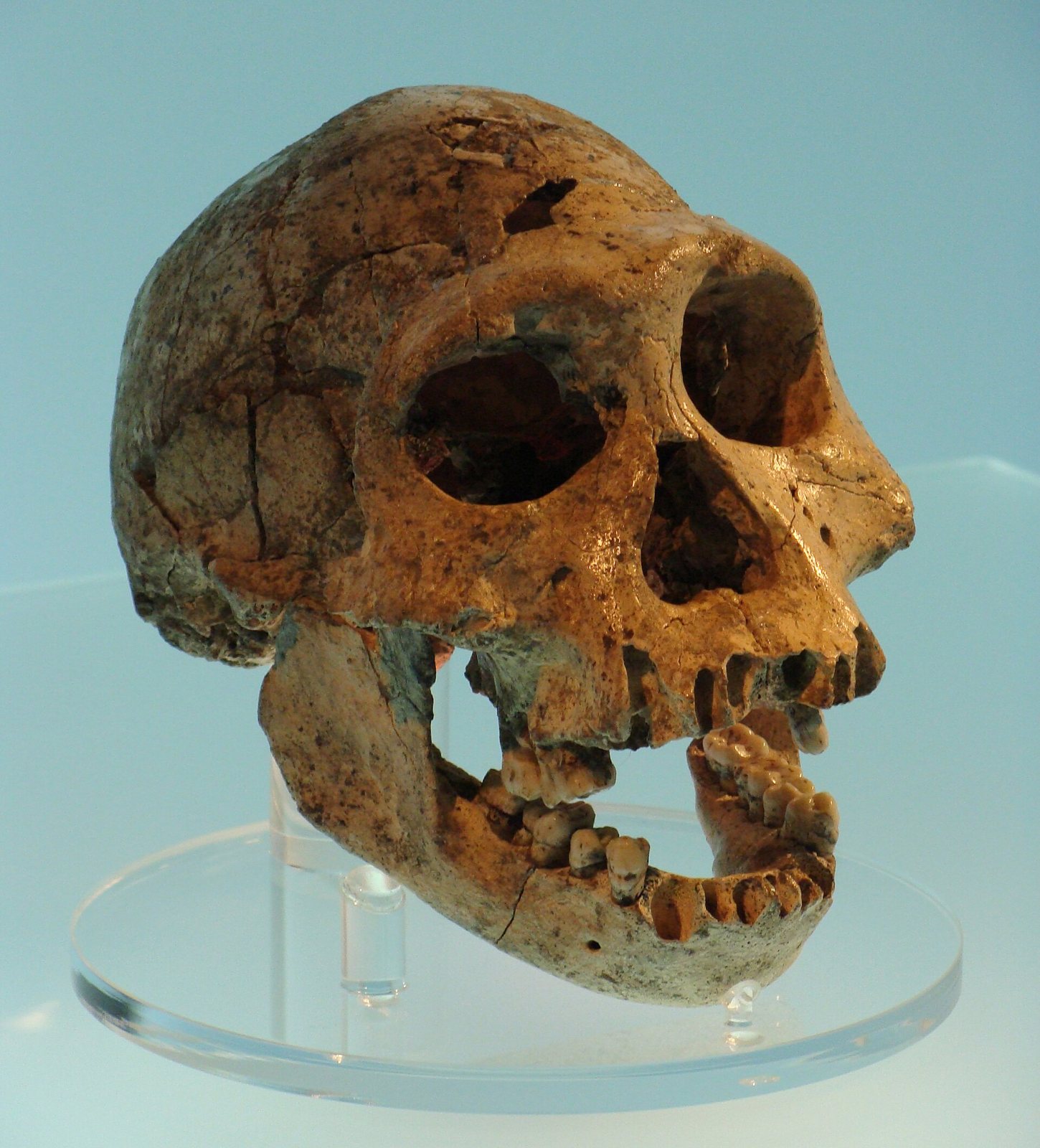
The surprise was in the proportions. The braincase holds about 546 cubic centimeters, among the smallest known for any fossil assigned to *Homo*. Yet the face is large and strongly projecting, with big jaws and big teeth. The skull also mixes traits seen in early African *Homo* with traits seen in later *Homo erectus*.
In later *Homo* fossils, a large, projecting face is often associated with a larger braincase. Skull 5 broke that pattern. It widened the known range of how early *Homo* could look, and it blurred the neat line some scientists had drawn between fossils that look like *Homo habilis* and fossils that look like *Homo erectus*. For the modern skull, with its much larger braincase, see our human skull facts.
Skull 5 at a glance
Tap a card to bring it forward.
- Catalogue numbers: Cranium D4500 with mandible D2600
- Cranium recovered: 2005
- Described: Science, 2013, by Lordkipanidze and colleagues
- Braincase: About 546 cubic centimeters
- Age: About 1.77 million years, commonly rounded to 1.8 million
- Where it has been displayed: The National Museum of Georgia in Tbilisi
Were the five Dmanisi skulls one species?
This is the big argument, and it is still going. The five Dmanisi crania range from about 546 to 775 cubic centimeters in braincase volume, and they differ a lot in the shape of the face and skull. Two readings of that variety compete.
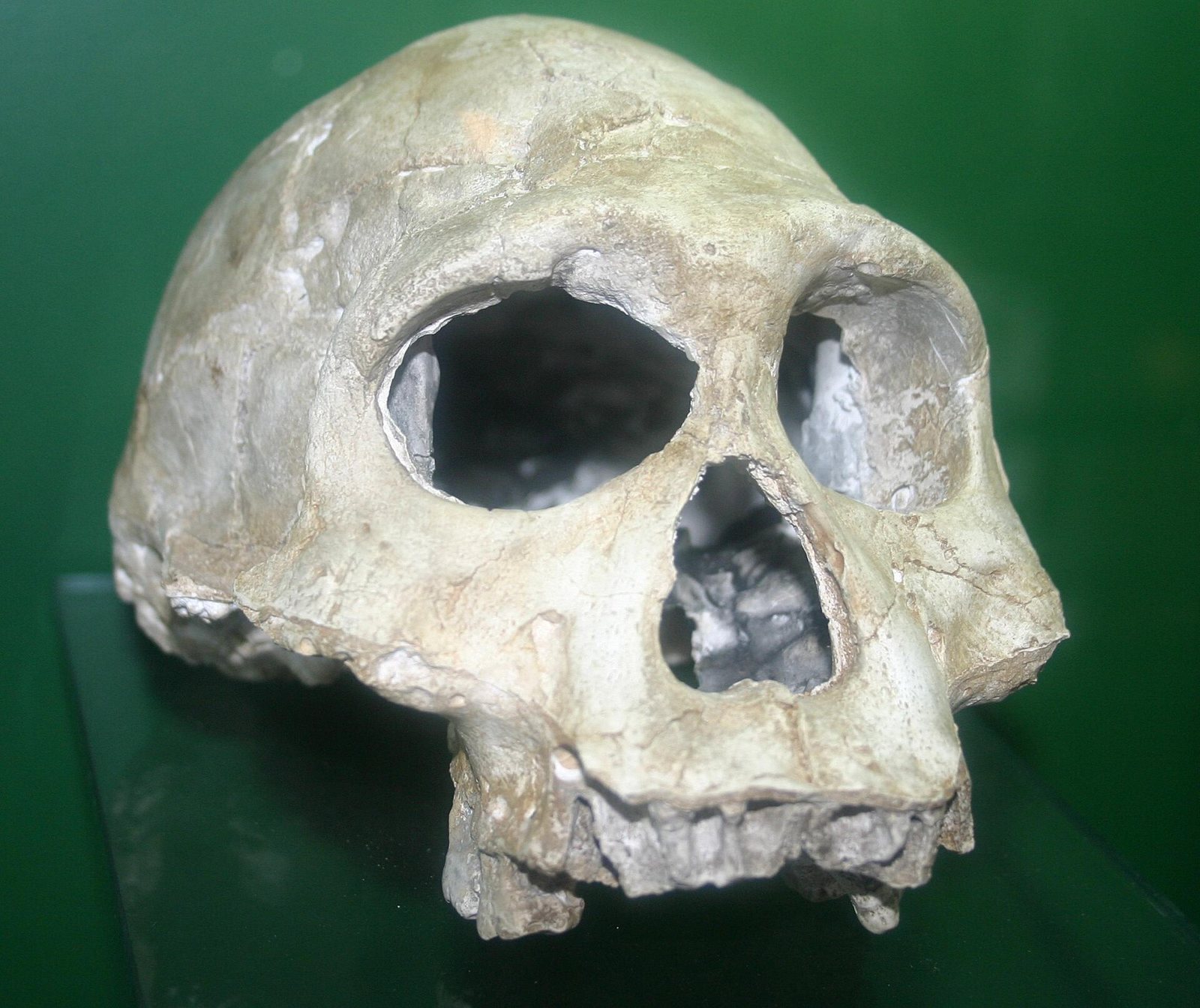
In 2013 Lordkipanidze, Marcia Ponce de León, Yoel Rak, G. Philip Rightmire, Abesalom Vekua and Christoph Zollikofer argued that all five belong to a single lineage, usually placed within *Homo erectus*. Their case rested on how closely the fossils are tied together in place and time, on comparisons with the range of variation in chimpanzees, bonobos and modern humans, and on geometric-morphometric analysis, a way of measuring and comparing skull shape mathematically. They concluded that Dmanisi documents unusually wide variation inside one early *Homo* population, and that similar variation may have been underestimated among early *Homo* fossils in Africa.
Not everyone agreed. In a 2014 Science comment, Jeffrey Schwartz, Ian Tattersall and Zhang Chi argued that the teeth, jaws and skulls show more than one kind of hominin. They supported keeping the name *Homo georgicus* for at least part of the sample.
Later studies have split. Some quantitative analyses, such as the work titled "More Than One Species? Variation in Dmanisi Crania", did not reject the single-species idea, while later dental work has again argued for more than one lineage. A discussion of the Dmanisi mandibles adds to the jaw side of the debate. The species question remains open. For more on the species most often named here, see our story on the Homo erectus skull.
Does the toothless Skull 4 show that early humans cared for their elders?
It might, but it cannot prove it. Skull 4, the cranium D3444 with the lower jaw D3900, belonged to an older adult who had lost every tooth but one before death. The empty tooth sockets show extensive bone resorption, meaning the bone around them had been reabsorbed and remodelled. That takes time, so the teeth were lost years before this person died, not shortly before.
Living for years with almost no teeth raises a natural question: how did this person eat? In 2005 in Nature and in 2006 in the Anatomical Record, Lordkipanidze and colleagues suggested that others in the group may have supplied or prepared soft food. That idea is often repeated as early evidence of care.
Daniel DeGusta offered a caution. Toothless primates can sometimes survive by choosing naturally soft foods, so tooth loss on its own cannot demonstrate active care. The careful reading is this: Skull 4 shows a long survival with severe dental loss, which fits with help from the group but does not prove it. Either way, it is the skull of an elderly person who kept living a long time after the teeth were gone. Our story on what bones tell archaeologists covers how specialists read age and health from bone.
Where the skulls are kept, and the site today
The Dmanisi human fossils are under the protection of the Georgian National Museum and the Dmanisi Reserve Museum. Skull 5, D4500 with D2600, has been displayed at the National Museum of Georgia in Tbilisi. The excavation area itself is preserved as the Dmanisi Archaeological Museum-Reserve, an open-air field museum built around the dig, which the Georgian National Museum describes as opened in 2009. Dmanisi is on Georgia's UNESCO Tentative List, the list of sites a country is preparing to nominate, rather than on the World Heritage List.
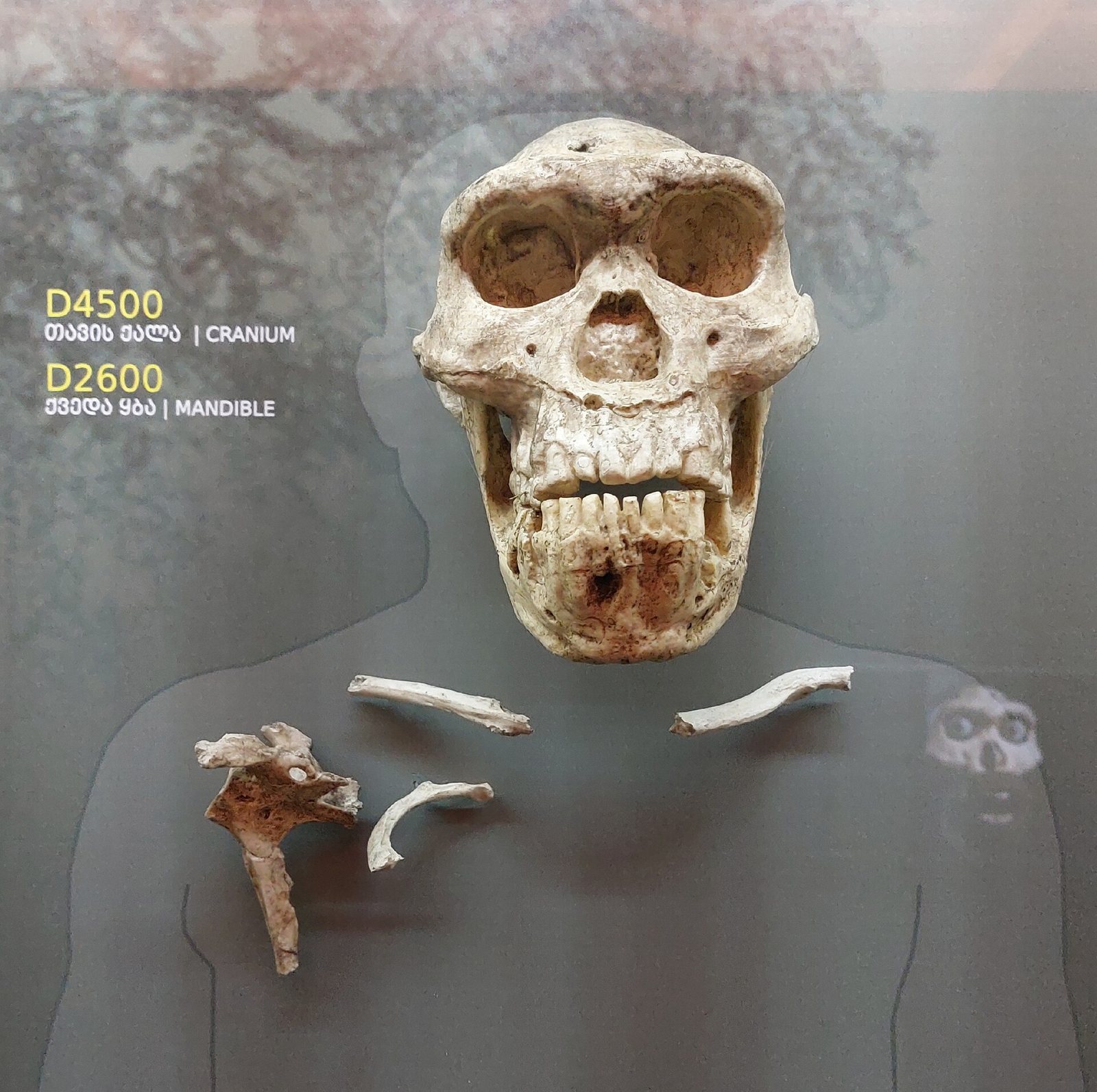
If you hope to see the skulls or the site, confirm the current display status with the Georgian National Museum, and opening hours and access with the Dmanisi Archaeological Museum-Reserve, before you go.
Dmanisi from medieval town to Skull 5
Tap or hover a step to follow the order.
1936
Excavation of the medieval settlement begins.
1983
A rhinoceros tooth shows that the deposits beneath the medieval town are much older.
1984
Stone tools are identified at the site.
1991
The first hominin fossil, the mandible D211, is found.
1999
Two partial crania are found.
2001
The nearly complete subadult Skull 3, D2700, is found.
2002
Skull 4, D3444, comes to light.
2005
Skull 5, D4500, is recovered.
2011
The earliest occupation is dated to 1.85 to 1.78 million years ago.
2013
Skull 5 is described in Science.
How well do you know Dmanisi Skull 5?
Answer every question to check.
Short answers about Dmanisi
These questions come up often.
What is Dmanisi Skull 5?
It is cranium D4500 with its lower jaw D2600, an adult human fossil about 1.8 million years old from Dmanisi, Georgia. The cranium came out of the ground in 2005, and the complete skull was described in Science in 2013.
Why is Dmanisi important?
Dmanisi preserves some of the earliest well-documented *Homo* remains outside Africa, together with stone tools, animal fossils and a well-dated geological sequence. UNESCO's listing highlights that combination, and the five skulls give scientists a rare look at variation within one site.
What species is Dmanisi Skull 5?
Lordkipanidze and colleagues classify it within *Homo erectus*. Jeffrey Schwartz, Ian Tattersall and Zhang Chi argue that the Dmanisi fossils include more than one kind and support the name *Homo georgicus* for part of the sample, so the label is still debated.
How did early humans get to Dmanisi?
The fossils show that *Homo* was in the southern Caucasus by about 1.85 to 1.77 million years ago, with stone tools and animal remains beside them. They record that people arrived, not the route they took, so the path out of Africa stays an open question.
Skull 5 rewards a long look: a small brain, a big face and a lot of argument packed into one head. For where Dmanisi sits among other very old skulls, see our guide to the oldest human skull. For an earlier, small-brained relative from Ethiopia, read about Lucy; for another famous *Homo erectus* find, Peking Man; and for the heavy-jawed relatives who lived beside early *Homo* in Africa, the Black Skull.
Terms in this story
Tap a term to see what it means.
D4500. The catalogue number of the Skull 5 cranium, recovered at Dmanisi in 2005.
---