

No. 089
The Black Skull (KNM-WT 17000) and the Robust Paranthropus
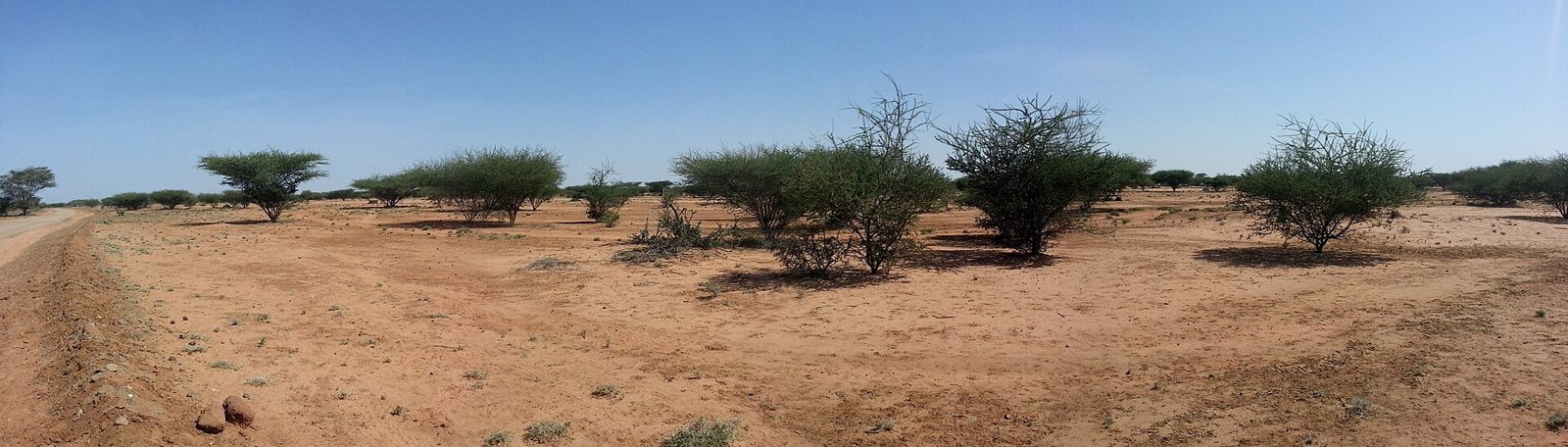
The Black Skull is KNM-WT 17000, a nearly complete adult cranium of *Paranthropus aethiopicus*, an extinct member of the human family. Alan Walker found it in 1985 at West Turkana, Kenya, during Richard Leakey's research program, and it is about 2.5 million years old. The dark color came later: manganese-rich minerals from the soil seeped into the bone as it fossilized. The huge crest along the top of the head anchored enormous chewing muscles.
As for the human story, *Paranthropus* lived alongside early members of our own genus, *Homo*. The Smithsonian Human Origins Program presents it as a side branch of the family tree rather than a direct ancestor, and scientists still argue over exactly where that branch sprouts.
A dark skull from West Turkana
The skull came out of the ground in 1985 on the west side of Lake Turkana in northern Kenya. Walker, Leakey, John Harris and Frank Brown described it in Nature in 1986, and at first they identified it as *Australopithecus boisei*, a heavy-jawed species already known from eastern Africa. Later comparisons supported placing it in a separate, earlier species, *Paranthropus aethiopicus*.
That makes the Black Skull rare in a very specific way. According to the Smithsonian, it is still the only known adult cranium confidently assigned to *P. aethiopicus*. Much of what anyone can say about how that species looked rests on this one head.
It is not a perfect specimen. Many of the front teeth were lost or broken after death, so the mouth looks oddly empty in photographs. The roots of the big molars and premolars survive, though, and they show how large the chewing teeth once were. The braincase was small, with a cranial capacity of about 410 cubic centimeters by the Smithsonian's figure. For a sense of scale against a modern head, our page of human skull facts covers the skull you carry around.
Black Skull quick facts
Tap a card to bring it forward.
- Specimen: KNM-WT 17000
- Nickname: The Black Skull
- Species: Paranthropus aethiopicus
- Found at: West Turkana, Kenya
- Year found: 1985
- Finder named by the Smithsonian: Alan Walker
- Approximate age: About 2.5 million years
- Cranial capacity: About 410 cc
- Distinctive features: Dark manganese staining, projecting face, flaring cheekbones, large sagittal crest
- Collection: National Museums of Kenya
How old is the Black Skull?
The short answer is about 2.5 million years, the figure the Smithsonian gives. More detailed estimates land in the same place. One later geochronological study puts it at 2.50 million years, plus or minus 70,000 years, and a 2025 review of the Omo-Turkana Basin fossil record gives 2.53 million years, plus or minus 50,000.
Those numbers are not a date taken from the bone itself. They come from geological dating of the deposits around the fossil, the layers it was buried in. That is the usual way very old fossils get their ages, and our story on how old bones are dated explains the general idea. The ranges are narrow, so the 2.5 million figure is a safe one to repeat.
Why is the Black Skull black?
It turned black underground. The skull was bone-colored when its owner was alive. During burial and fossilization, manganese-rich minerals from the surrounding soil worked their way into the fossil and stained it dark, nearly black.
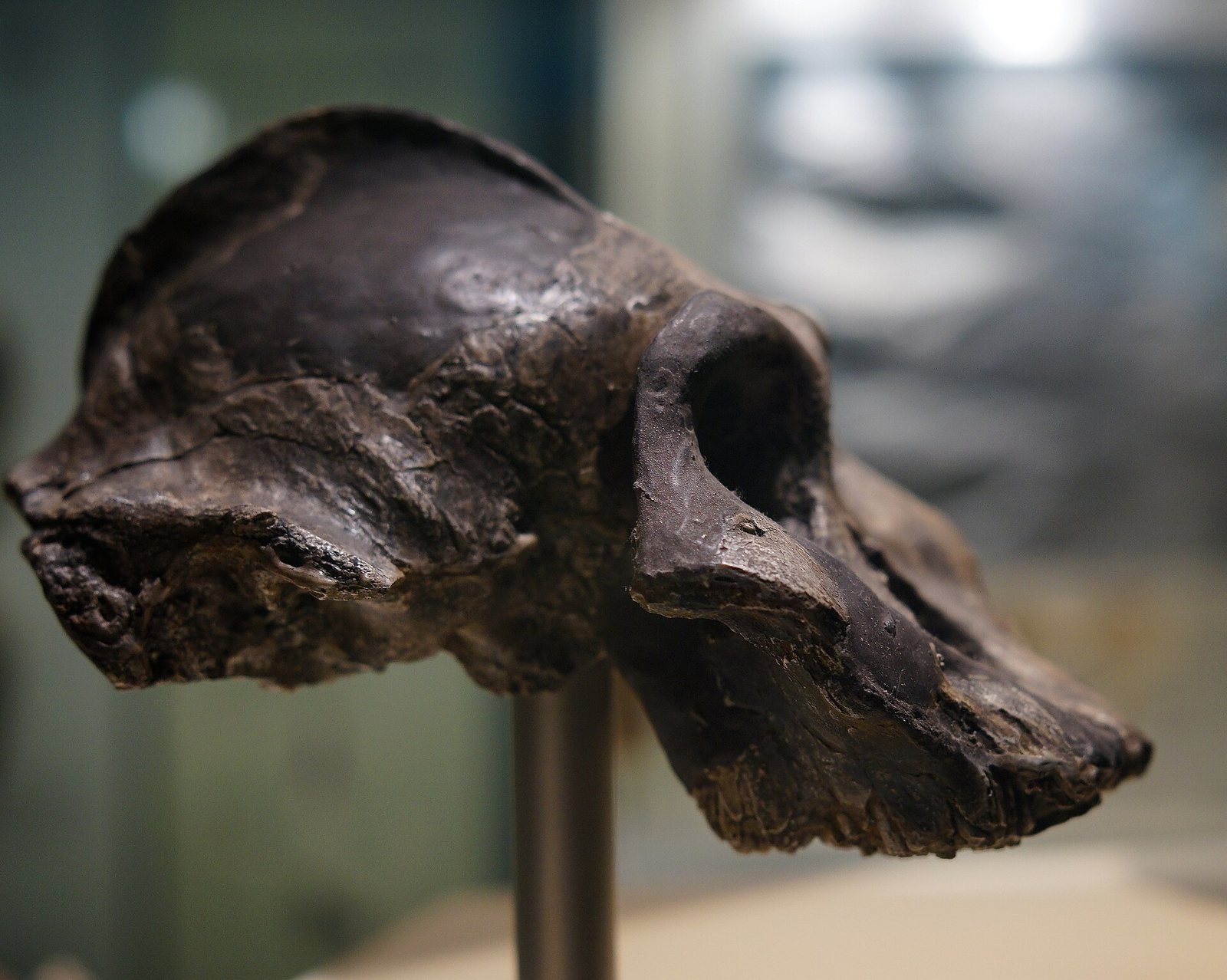
That staining is a big part of why the skull is so recognizable. It looks almost like cast iron, which makes the crest and the wide cheekbones stand out sharply in photographs and museum displays.
What did Paranthropus eat? The crest, the cheeks and the teeth
Look at the top of the skull and you will see a tall ridge of bone running front to back. That is the sagittal crest. It gave extra space for the temporalis muscles, the big muscles on the sides of the head that close the jaw. The cheekbones flare out wide, the jaw architecture is heavy, and the molar and premolar roots are very large. All of it adds up to an animal built for forceful chewing.
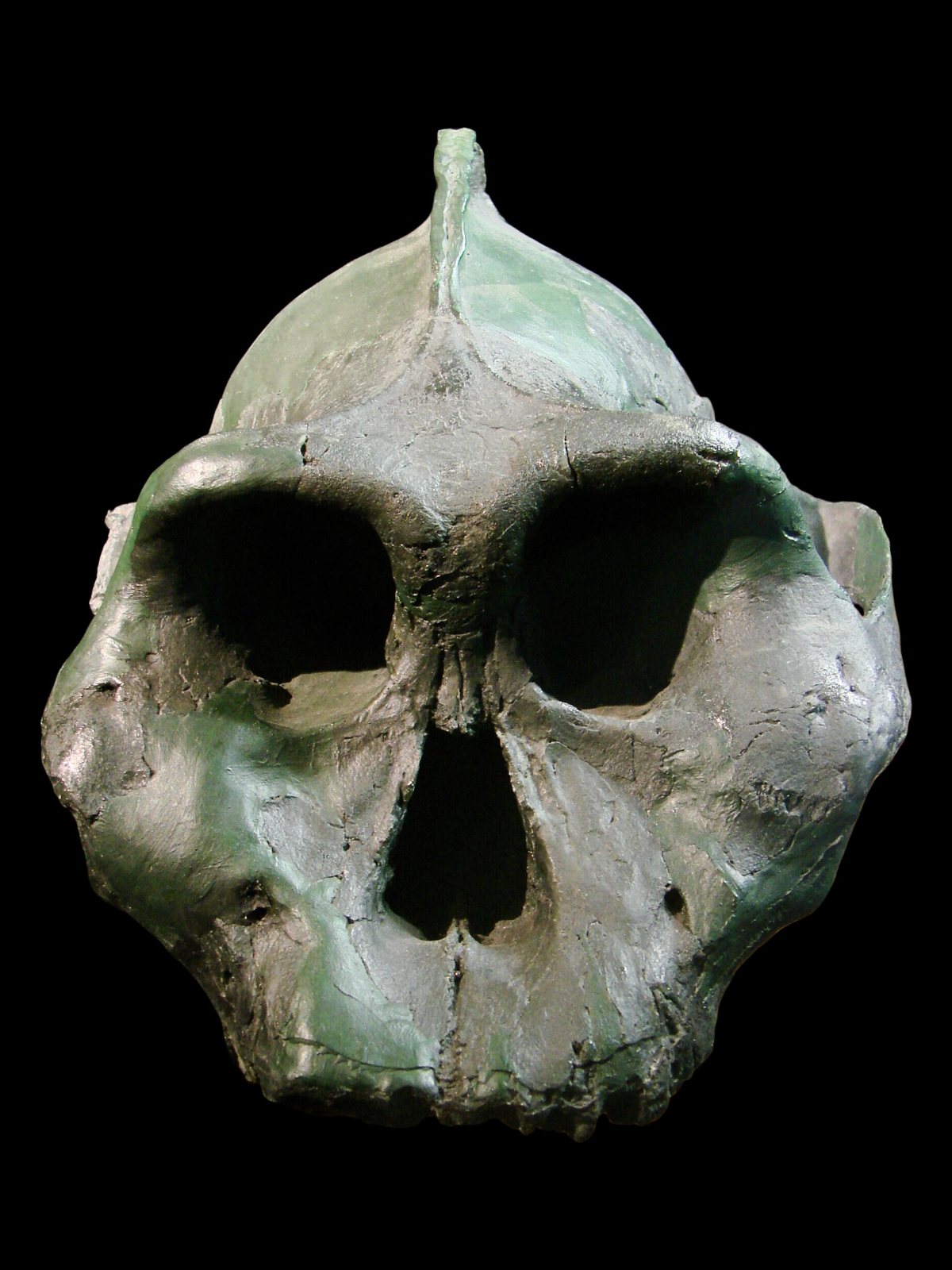
What that chewing power was used for is a more open question. The anatomy shows what the jaws could do, not one exact food. Earlier interpretations leaned on nuts, seeds and hard fruits, and that idea gave the related species *Paranthropus boisei* its famous nickname, "Nutcracker Man."
Later work looked at the teeth in other ways. Dental microwear studies, such as the one by Ungar and colleagues, examine the tiny scratches and pits that food leaves on tooth surfaces. Carbon isotope studies, such as Cerling and colleagues' work on the diet of *P. boisei*, read the chemical signature that different plants leave in tooth enamel. Together they point to *P. boisei* often eating C4 resources such as grasses or sedges. The Smithsonian's *P. boisei* page notes that the microwear does not show hard foods being eaten constantly; hard items may have been fallback foods for lean times.
So, "Nutcracker Man" captures the jaws but not the whole menu. The South African species, *P. robustus*, seems to have eaten a more varied range of plant foods, with hard foods possibly kept in reserve as well, according to the Smithsonian's *P. robustus* page. If you are curious how much a set of teeth can reveal about a life, our story on what bones tell archaeologists goes further.
Three species with giant chewing teeth
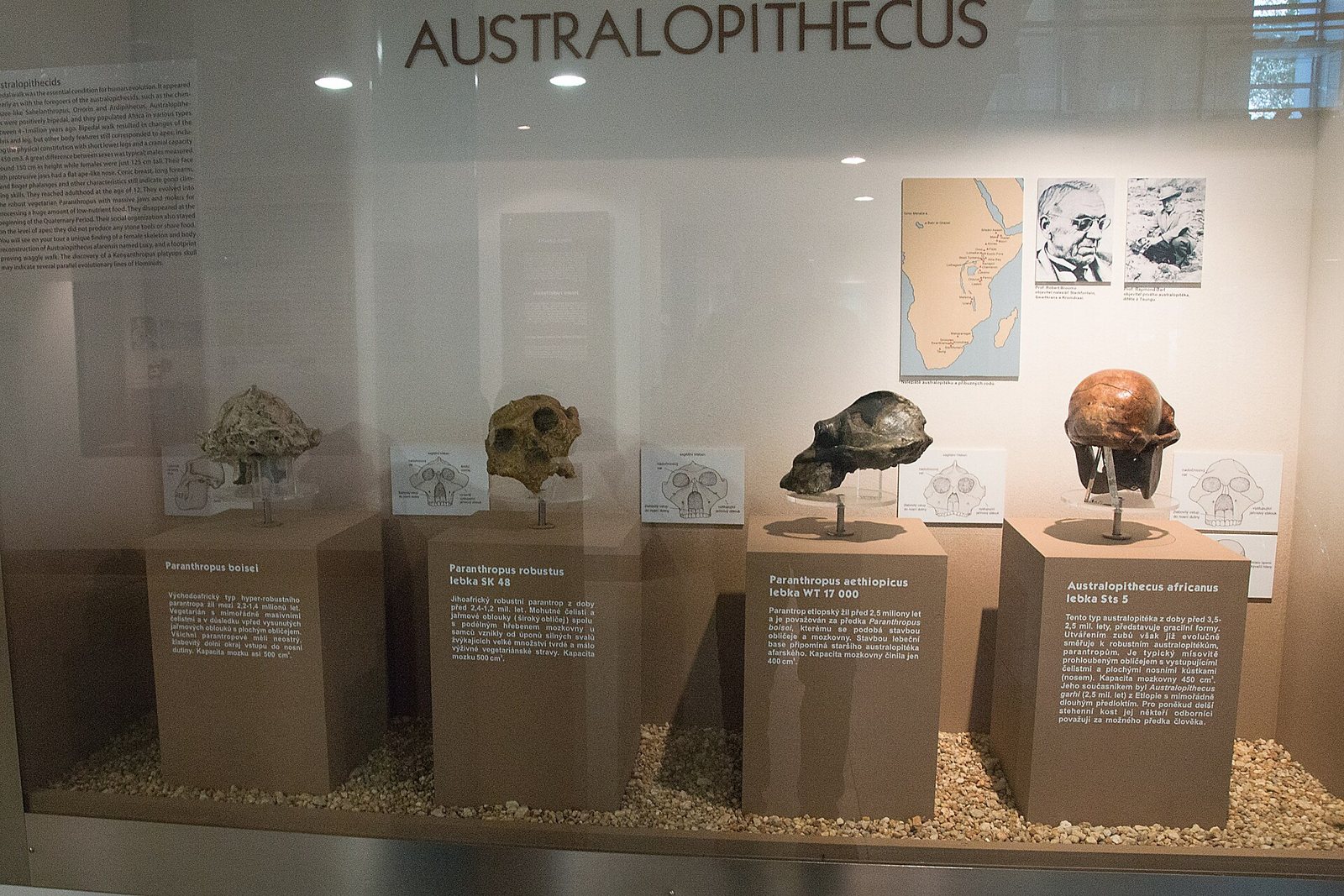
The Black Skull belongs to a small group of species that scientists put in the genus *Paranthropus*. The name means "beside man," which fits the way these species ran parallel to early humans. Three are commonly recognized.
Tap or hover a row to highlight it.
| Species | Main region | Approximate age | Key points |
|---|---|---|---|
| SpeciesParanthropus aethiopicus | Main regionTurkana Basin of Kenya and southern Ethiopia | Approximate age2.7 to 2.3 million years ago | Key pointsThe earliest commonly recognized species of the group; KNM-WT 17000 is its only known adult cranium |
| SpeciesParanthropus boisei | Main regionEthiopia, Kenya, Tanzania and Malawi | Approximate age2.3 to 1.2 million years ago | Key pointsExtremely large cheek teeth, thick enamel and a broad, dished face |
| SpeciesParanthropus robustus | Main regionSouth Africa | Approximate age1.8 to 1.2 million years ago | Key pointsNamed by Robert Broom in 1938 from Kromdraai material; large cheek teeth, thick enamel and a sagittal crest |
The oldest of the three was named before the Black Skull turned up. In 1967 Camille Arambourg and Yves Coppens proposed *P. aethiopicus* from the Omo 18 mandible, a lower jaw from Ethiopia with no teeth left in it. A toothless jaw is a thin base for a species, and the Black Skull, found nearly twenty years later, became the main adult cranium behind it.
Names can be confusing here. Some scientists place one or more of these species in *Australopithecus* instead, so older books and labels may say *Australopithecus aethiopicus* or *Australopithecus boisei*. They mean the same fossils.
The Black Skull and its species
Tap or hover a step to follow the order.
1967
Camille Arambourg and Yves Coppens propose Paranthropus aethiopicus from the toothless Omo 18 mandible.
1985
Alan Walker finds KNM-WT 17000 in West Turkana, Kenya.
1986
Walker, Leakey, Harris and Brown publish the specimen as a 2.5-million-year-old Australopithecus boisei.
Later comparisons
The skull becomes the principal adult cranium supporting recognition of Paranthropus aethiopicus.
2008
Stable isotope research shows that P. boisei consumed a large proportion of C4 resources such as grasses or sedges.
Living beside early Homo, and where scientists disagree
*Paranthropus* walked upright, and it shared its world with early *Homo*. In eastern Africa, fossils of *P. boisei* and early *Homo* species turn up in the same broad regions and, in some cases, in the same layers of rock. Two kinds of upright relatives were living through the same stretch of time, one with huge jaws and one that eventually led to us.
The Smithsonian presents *Paranthropus* as a side branch that did not lead to *Homo sapiens*. The details of that branch are where scientists disagree, and the disagreements are worth stating plainly:
- Many regard *P. aethiopicus* as an earlier form that gave rise to *P. boisei*. Others stress how much it resembles *Australopithecus afarensis*, the species of Lucy.
- *P. robustus* may be a southern African lineage related to *P. aethiopicus*, or a regional lineage closer to *Australopithecus africanus*, the species of the Taung Child and of Mrs. Ples.
- The genus boundary itself is debated, which is why some researchers keep these species in *Australopithecus*.
A Smithsonian Magazine piece on the Black Skull is a readable way into that argument. For the *Homo* side of the same period, see our story on the Homo erectus skull, and for the wider line-up of very old skulls, our guide to the oldest human skull.
Where is the Black Skull kept?
KNM-WT 17000 belongs to the National Museums of Kenya. Its catalogue number says so: the KNM-WT prefix marks a Kenya National Museum specimen from West Turkana. The National Museums of Kenya manages the country's paleontological collections, and its Nairobi National Museum has a gallery on human origins called the Cradle of Humankind.
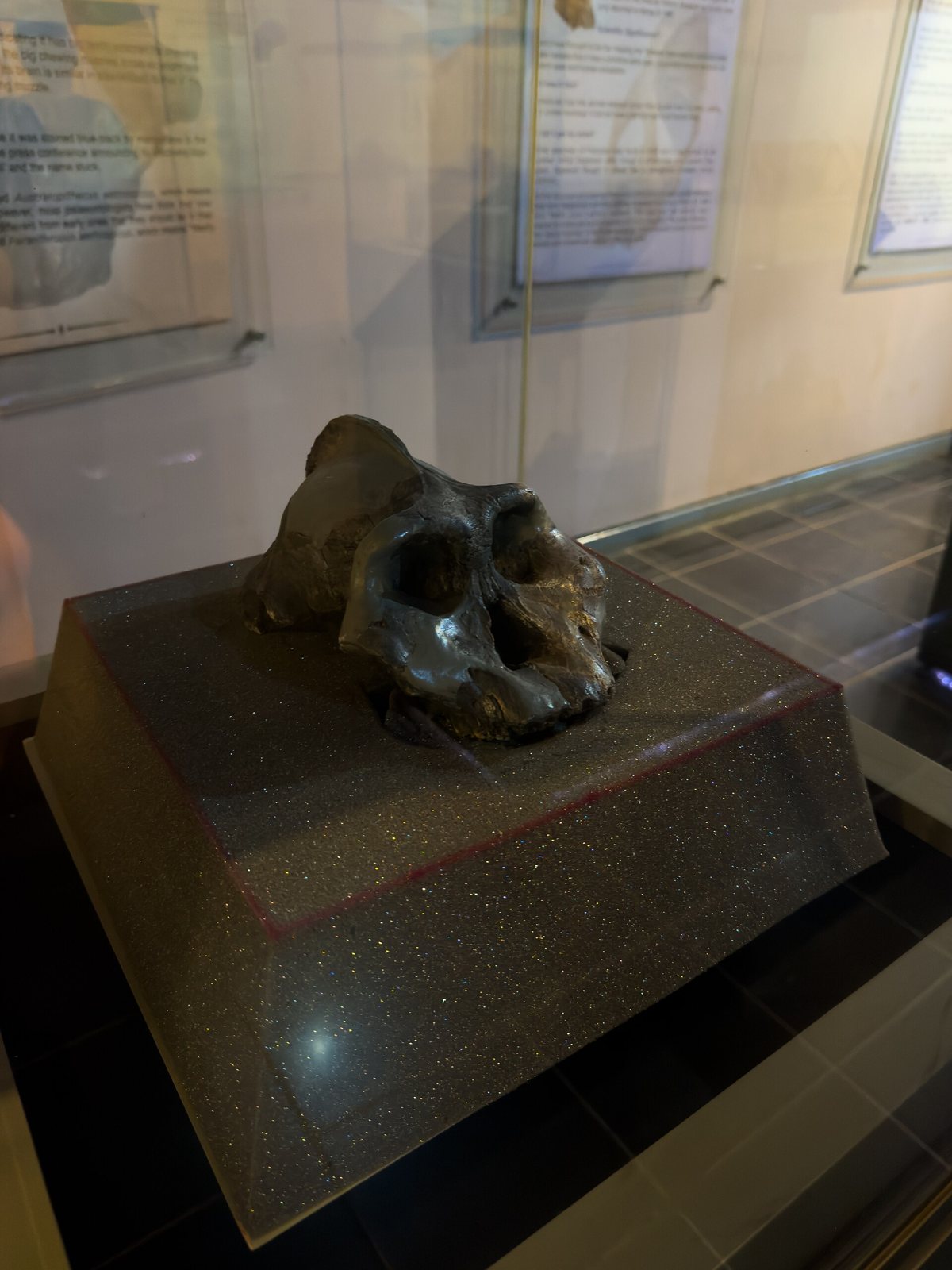
Museums in other countries show casts, so the dark skull you saw abroad may well have been a replica. If you hope to see the original or its display in Nairobi, confirm the current display status with the Nairobi National Museum before you go.
How well do you know the Black Skull?
Answer every question to check.
Quick answers about the Black Skull
A few more questions come up often about this skull and its relatives.
Who found the Black Skull?
Alan Walker found it in 1985 at West Turkana, Kenya, while working in Richard Leakey's research program. He published it the next year in Nature with Leakey, John Harris and Frank Brown, who first called it *Australopithecus boisei*.
Did Paranthropus use tools?
The Black Skull cannot answer that question. A cranium records how an animal chewed, not what it did with its hands. What the skull does show is a species built for heavy chewing, living in the same regions, and sometimes the same layers, as early *Homo*.
Is Paranthropus a human ancestor?
It is a close extinct relative, but the Smithsonian and most scientists place it on a side branch rather than the line leading to *Homo sapiens*. It lived beside early *Homo*, and how the *Paranthropus* species relate to each other is still argued.
What is the difference between Paranthropus boisei and Paranthropus robustus?
They lived far apart: *P. boisei* in eastern Africa, from Ethiopia to Malawi, about 2.3 to 1.2 million years ago, and *P. robustus* in South Africa, about 1.8 to 1.2 million years ago. Isotope evidence points to *P. boisei* eating many grasses or sedges, while *P. robustus* seems to have had a more varied plant diet.
The Black Skull is one of those fossils that rewards a second look. Its color tells the story of its burial, its crest tells the story of its jaws, and its place in the family tree is a reminder that early human history had more than one branch growing at once. If it caught your eye, the Taung Child and Lucy are the next two skulls to get to know.
Terms in this story
Tap a term to see what it means.
KNM-WT 17000. The catalogue number of the Black Skull. KNM marks the National Museums of Kenya and WT marks West Turkana, where it was found.
---