

No. 083
The Kabwe Skull (Broken Hill) and Zambia's Call to Bring It Home
The Kabwe skull, also called Kabwe 1 or the Broken Hill skull, is the cranium of an ancient human found on 17 June 1921 at the Broken Hill mine in what is now Kabwe, Zambia, then Northern Rhodesia. A 2020 study in Nature dated it to about 300,000 years old, with a best estimate of 299,000 years, plus or minus 25,000. It is usually classified as *Homo heidelbergensis*, though it was first named *Homo rhodesiensis*, and scientists still debate the naming.
The original is held by the Natural History Museum in London. Zambia has sought its return since at least the 1970s. In October 2023 the government told its National Assembly that it planned to reclaim the skull, with the possibility of burial in Kabwe, while UK representatives said the decision rests with the museum's trustees. For Zambia, this is the remains of a person from Kabwe and part of the nation's heritage.
A skull from the Broken Hill mine, 1921
The skull came to light during mining, not a planned dig. On 17 June 1921, work at Broken Hill, a lead and zinc mine in what was then Northern Rhodesia, exposed a human cranium. The Natural History Museum records two finders: a Swiss miner, Tom Zwigelaar, and an African miner whose name was not recorded.
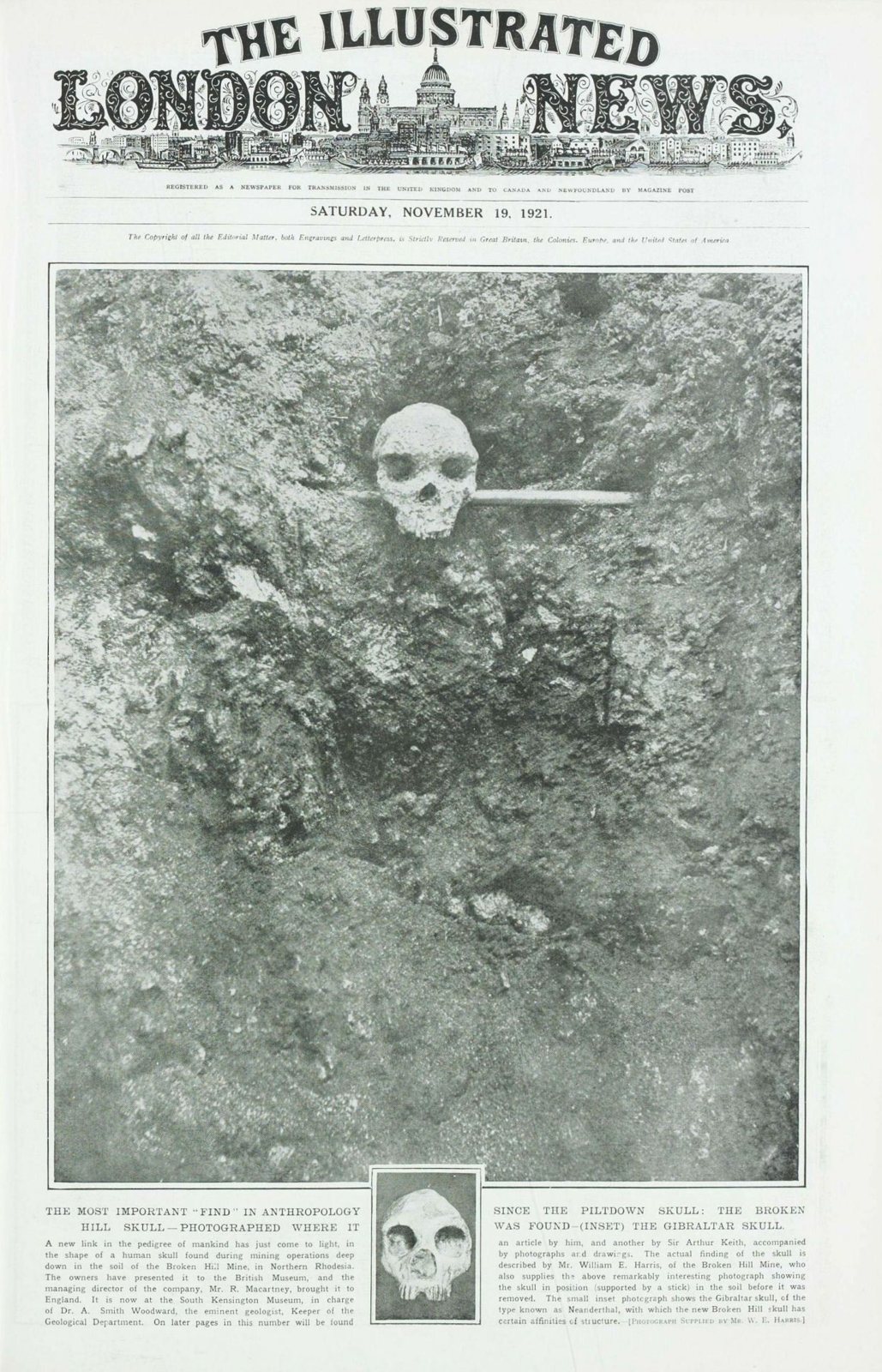
The original account, published in Nature in 1921, placed the skull in the mine about 90 feet below ground level and 60 feet below the water level. The lower jaw was missing. The mine company later gave the fossil to the British Museum, the institution that is now the Natural History Museum in London.
Because it surfaced in the middle of mining work, nobody recorded the find systematically, and some details of exactly where and how it lay are uncertain.
Tap or hover a row to highlight it.
| Detail | Answer |
|---|---|
| DetailCatalogue number | AnswerPA E 686 |
| DetailAlso called | AnswerThe Broken Hill skull, Kabwe 1 |
| DetailFound | Answer17 June 1921 |
| DetailPlace | AnswerBroken Hill mine, now Kabwe, Zambia |
| DetailDepth in the 1921 account | AnswerAbout 90 feet below ground, 60 feet below the water level |
| DetailWhat survives | AnswerThe cranium; the lower jaw was missing |
| DetailAge | Answer299,000 years, plus or minus 25,000 (Nature, 2020) |
| DetailSpecies names | AnswerHomo heidelbergensis; first named Homo rhodesiensis |
| DetailBraincase | AnswerAbout 1,300 cubic centimetres, per the Smithsonian |
| DetailHeld by | AnswerNatural History Museum, London |
Who this was, and which species
In 1921, the same year the skull was found, Arthur Smith Woodward named it *Homo rhodesiensis*. Older names such as Rhodesian Man and Broken Hill Man are still in use for the same skull.
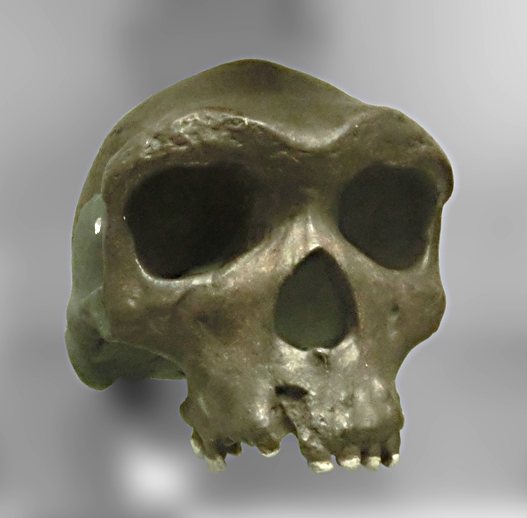
Today the Natural History Museum and the Smithsonian Human Origins Program commonly classify the skull as *Homo heidelbergensis*. The authors of the 2020 Nature study use the combined label *Homo heidelbergensis/Homo rhodesiensis*, because the relationship between those two names is still debated. Both names point to the same skull; the argument is about how to draw lines between related ancient human groups.
The Smithsonian describes the skull as having heavy brow ridges and a large braincase of about 1,300 cubic centimetres. The museum's collection record lists the individual as an adult male. For a sense of the modern skull beside it, see our human skull facts.
How old is the Kabwe skull?
The best answer is about 300,000 years. In a paper published in Nature on 1 April 2020, Grün, Pike, McDermott and colleagues gave a best estimate of 299,000 years, plus or minus 25,000, with that margin expressed as two standard deviations. In plain terms, the person most likely lived between about 324,000 and 274,000 years ago.
The method matters here. The team analysed the skull itself, using uranium-series and electron-spin-resonance approaches. The result is much younger than the figure of roughly 500,000 years that had often been repeated before. The Natural History Museum's 2020 summary and the paper's DOI are the places to read more on how the date was reached.
That age puts the Kabwe person close in time to the Jebel Irhoud fossils from Morocco, about 300,000 years old, which appear in our story on the oldest human skull. For how scientists date ancient bones in general, see how old bones are dated.
What the teeth say
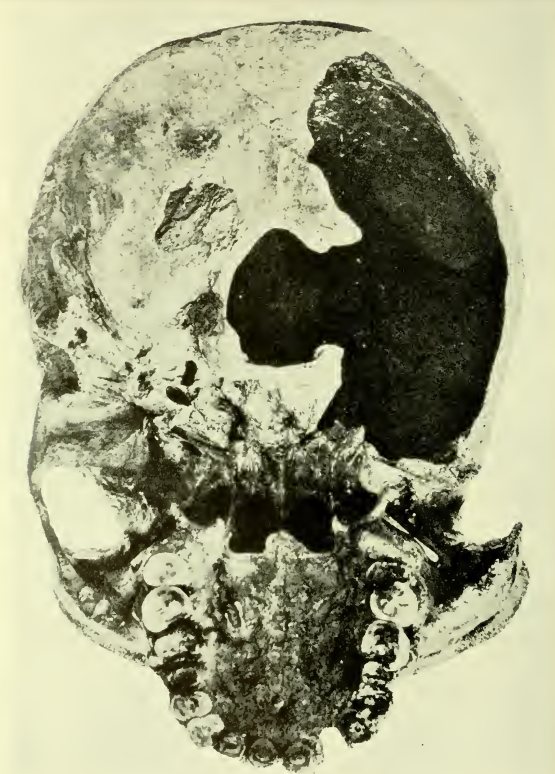
The teeth of the Kabwe skull show serious dental disease. In a 2014 peer-reviewed study, Sarah A. Lacy recorded cavities on ten teeth, along with several other problems.
What the teeth show
Tap a card to bring it forward.
- Cavities on ten teeth: Dental caries, the decay that makes holes in teeth.
- Periapical lesions: Infections at the tips of the tooth roots, in more than one place.
- Periodontal disease: Disease of the gums and the bone that holds the teeth.
- Severe wear on the front teeth: Heavy wearing down of the teeth at the front of the mouth.
- Hypercementosis: Extra build-up of cementum, the tissue that covers tooth roots.
Some of the lesions reached the pulp chamber, the inner part of the tooth, and the study describes evidence of substantial infection and inflammation. The findings show that severe dental disease already existed among humans of the Middle Pleistocene.
They do not point to one cause. Lacy discusses several possible contributors: reduced saliva with age, wear on the teeth, possible lead exposure and diet. The Smithsonian notes that this person may have died from an infection linked to the dental disease, or from a chronic ear infection. That remains a possibility, not a known cause of death. What the teeth do show clearly is a person who lived with serious dental disease. Our story on what bones tell archaeologists covers how specialists read health from teeth and bone.
Why does Zambia want the Kabwe skull back?
Zambia regards the skull as part of the country's heritage and as the remains of an individual from Kabwe, and it has sought the skull's return since at least the 1970s.
The clearest recent statement came on 4 October 2023. In a statement to the National Assembly of Zambia, Tourism Minister Rodney Sikumba said the government planned to reclaim the skull. He reported bilateral talks with UK representatives at the Natural History Museum on 27 and 28 April 2023, and set out Zambia's position: the skull should return to its country of origin, with the possibility of burial in Kabwe. The National Museums Board of Zambia published a statement on its campaign for the return in 2024.
The same parliamentary statement reported the UK side's answer. UK representatives said the UK government had no plan to change its restitution legislation or to instruct the Natural History Museum to return the skull, because the museum is independent and the decision rests with its trustees. The museum itself said in 2020 that it was committed to constructive bilateral dialogue with Zambia.
The question has also reached UNESCO. In 2018, a UNESCO committee recommended continued negotiations between Zambia and the UK.
Behind the formal positions, Zambia's case rests on its own stated reasons: the skull is part of the country's heritage, it is the remains of an individual from Kabwe, and it could be laid to rest there. For how other museums and countries have handled the return of human remains, see our story on the repatriation of human remains. For later developments on Kabwe, follow the National Assembly of Zambia or Zambia's Ministry of Tourism, which have spoken for the government on the request.
The Kabwe skull, from the mine to the talks
Tap or hover a step to follow the order.
17 June 1921
Kabwe 1 is found at the Broken Hill mine, now Kabwe, Zambia.
1921
Arthur Smith Woodward names the specimen Homo rhodesiensis.
Since at least the 1970s
Zambia seeks the skull's return.
2014
Sarah A. Lacy documents cavities on ten teeth and several other dental diseases.
2018
A UNESCO committee recommends continued negotiations between Zambia and the UK.
1 April 2020
Nature publishes a best age estimate of 299,000 years, plus or minus 25,000; the museum says it is committed to bilateral dialogue.
27 and 28 April 2023
Bilateral talks take place with UK representatives at the Natural History Museum.
4 October 2023
Zambia's Tourism Minister tells the National Assembly the government plans to reclaim the skull.
September 2025
The museum's collection record for the skull is updated.
Where is the Kabwe skull now?
The original cranium is in the Natural History Museum's palaeoanthropology collection in London, under catalogue number PA E 686. The museum's collection record lists the locality as Broken Hill, Kabwe, Zambia, classifies the skull as *Homo heidelbergensis*, and was updated in September 2025.
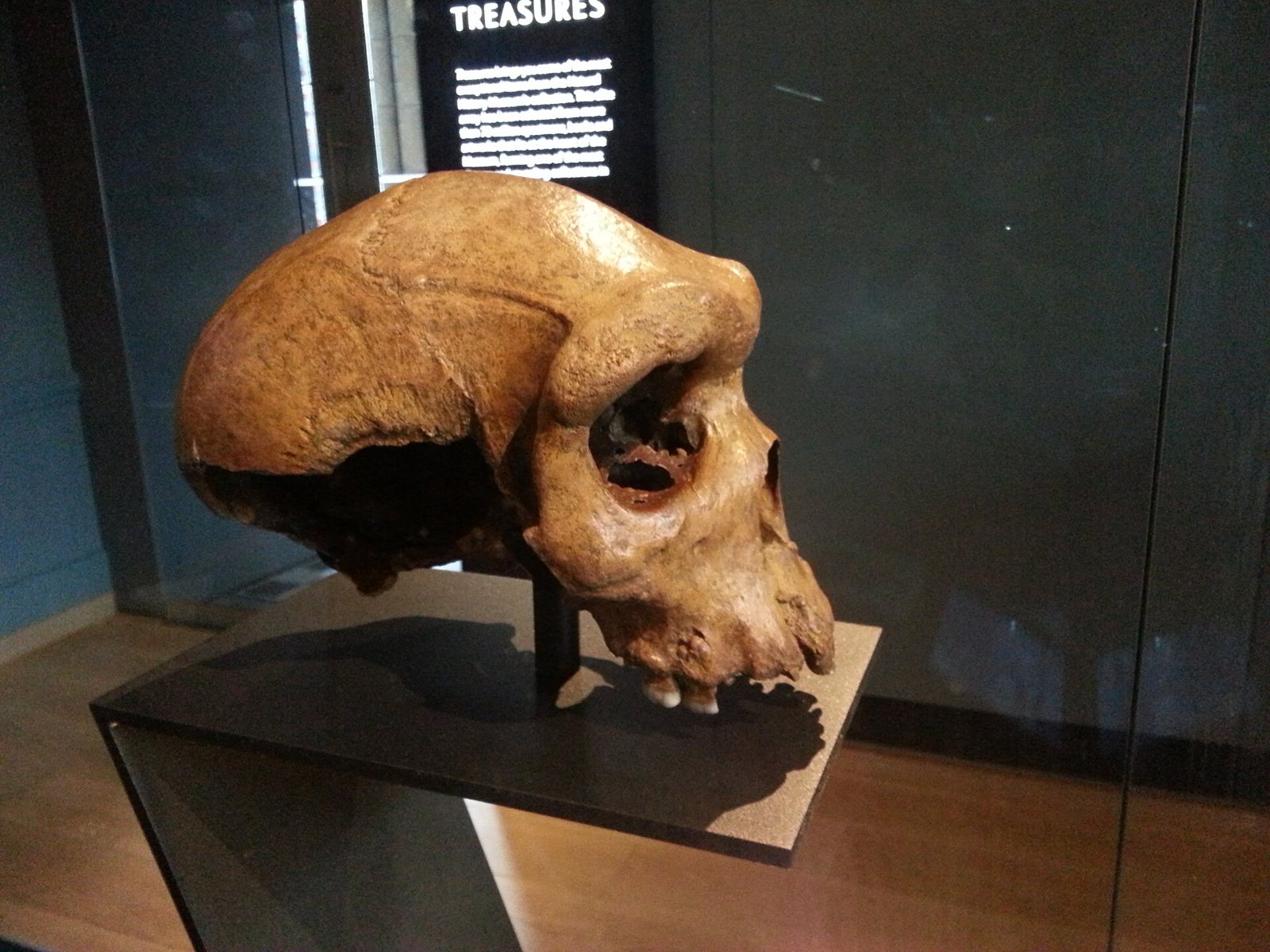
Whether it is on show today is less certain. The museum said on 1 April 2020 that the skull was shown in its Human Evolution gallery, and a 2013 photograph shows it in the museum's Treasures exhibition. The museum's palaeoanthropology collection page says that access to the anthropology collection is restricted during the collections move, while enquiries about returns are exempt from that restriction.
If you plan a visit hoping to see it, confirm the current gallery and access with the Natural History Museum first.
How well do you know the Kabwe skull?
Answer every question to check.
Short answers about the Kabwe skull
A few more questions come up often.
What species is the Kabwe skull?
It is usually classified as *Homo heidelbergensis*, the label used by the Natural History Museum and the Smithsonian. Arthur Smith Woodward first named it *Homo rhodesiensis* in 1921, and the 2020 Nature authors keep both names because the relationship between them is still debated.
Who found the Kabwe skull?
The Natural History Museum names two miners: Tom Zwigelaar, who was Swiss, and an African miner whose name was not recorded. They were working at the Broken Hill mine on 17 June 1921, and the mine company later gave the skull to the British Museum.
Is the Kabwe skull on display?
The Natural History Museum said in 2020 that it was in the Human Evolution gallery. Access to the anthropology collection has since been restricted during a collections move, so check with the museum before you go.
Has the Kabwe skull been returned to Zambia?
The skull remains in the Natural History Museum's collection, and its record was updated in September 2025. Zambia's request stands as the government set it out in 2023, so follow the National Assembly of Zambia or the Ministry of Tourism for news.
The Kabwe skull is a scientific landmark, a man who lived around 300,000 years ago with badly diseased teeth, and an ancestor whose country is asking for him back. All three are true at once. For older members of the human family, see the Dmanisi Skull 5 and the Homo erectus skull.
Terms in this story
Tap a term to see what it means.
Kabwe 1. Another name for the Broken Hill skull, found in 1921 at the mine in what is now Kabwe, Zambia.
---