

No. 265
The Dullahan: Ireland's Headless Horseman Legend
The Dullahan is the headless rider of Irish folklore, a death omen who travels by night, sometimes carrying his own head and sometimes driving the cóiste bodhar, a black death coach pulled by headless horses. His best-known written form comes from Thomas Crofton Croker, who gathered a group of Munster stories under the heading "The Dullahan" in *Fairy Legends and Traditions of the South of Ireland*, Part II, published in London in 1828.
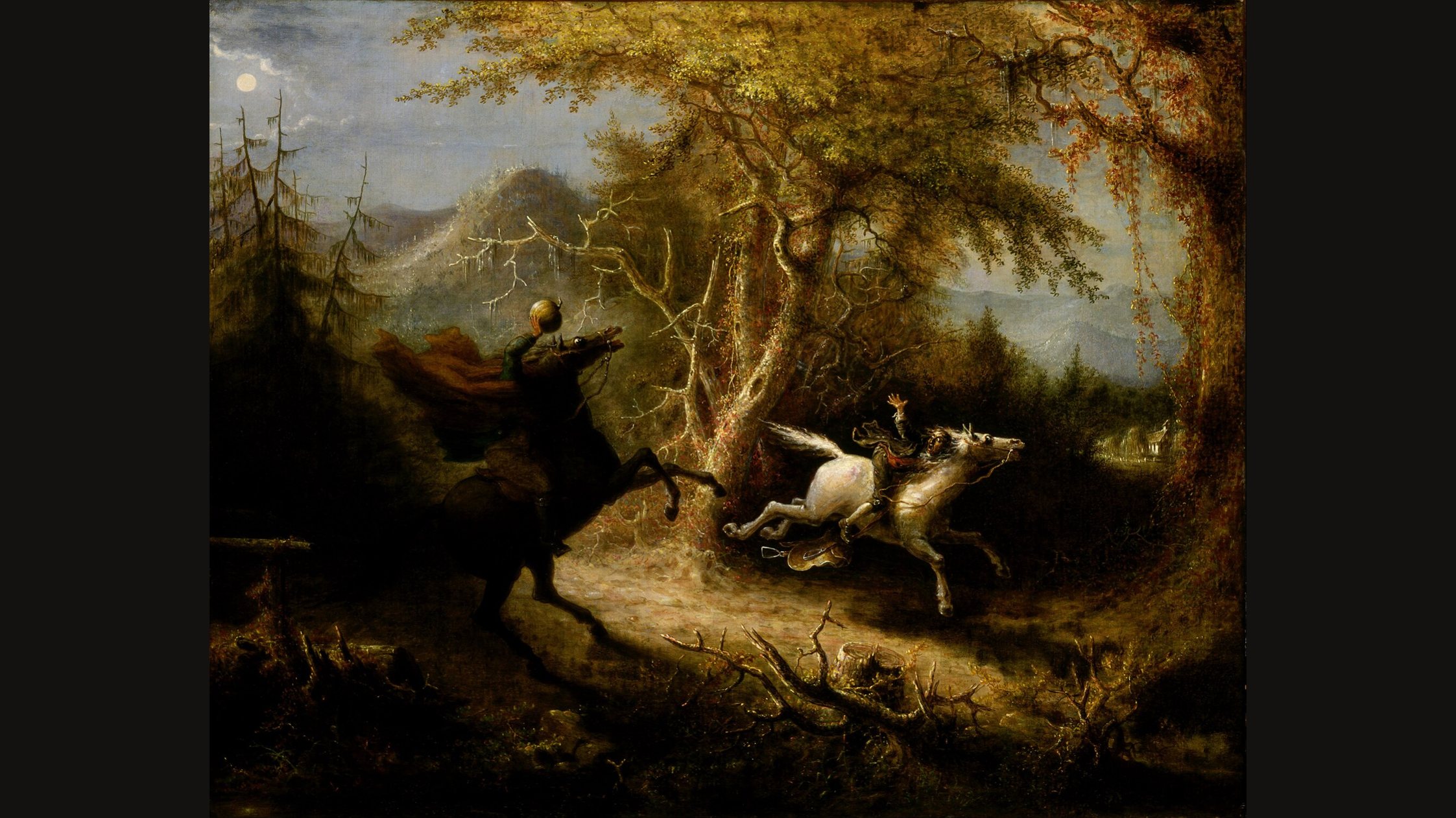
If you met a headless rider first in Sleepy Hollow, you have met a relative. Washington Irving's Headless Horseman, from 1820, belongs to the same wide family of headless riders, but he is an American literary ghost rather than the Irish figure.
The Dullahan in Croker's stories
Croker's 1828 volume, which you can read in a scan of Fairy Legends, set down several accounts from Munster, in the south of Ireland, under one name. The most famous is "The Headless Horseman," set at Ballyhooley in County Cork. In it, a man named Charley Culnane meets a rider on the road who has no head on his shoulders. As the University of Notre Dame's Rare Books and Special Collections summarizes the tale, the rider carries his head in his coat pocket, while his horse's head travels separately from its body.
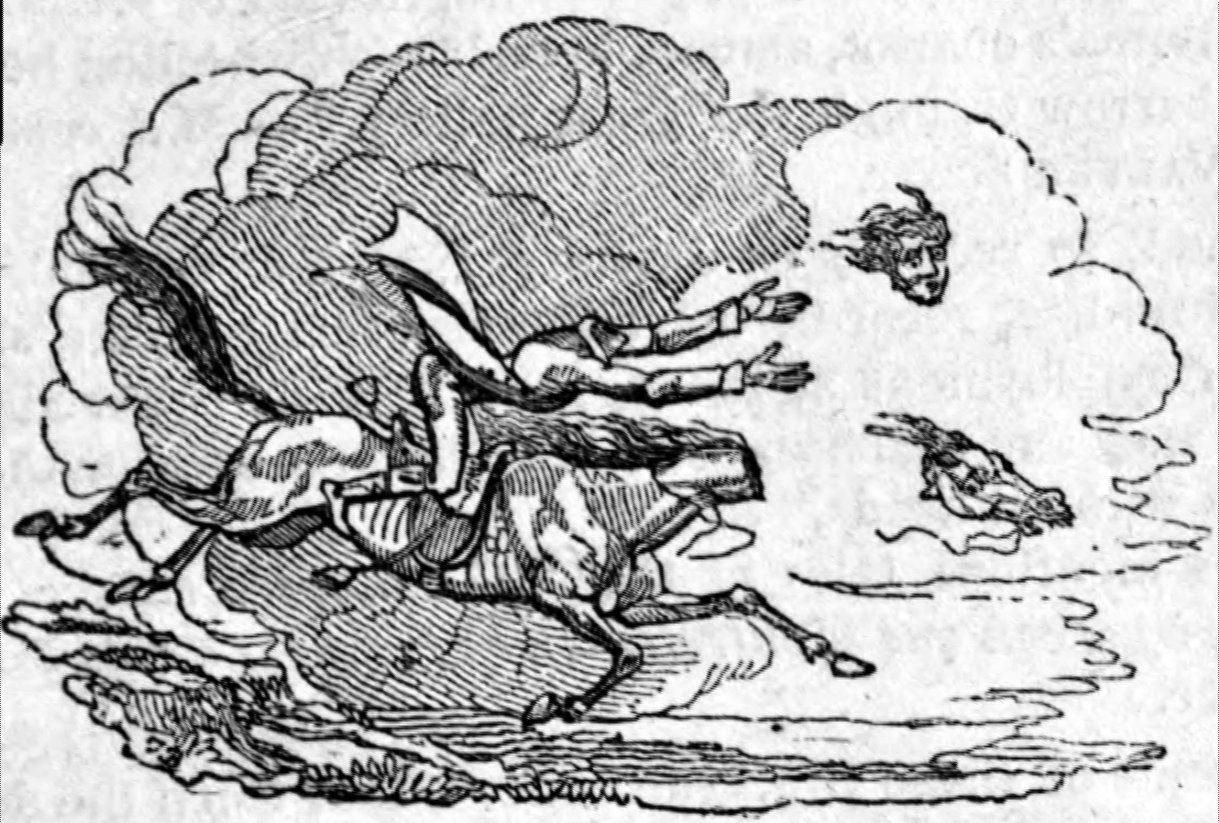
Charley is not the only one to meet such a thing. Croker records other headless riders and headless horses in the same group of stories, and one account describes a terrifying head with enormous moving eyes and a mouth stretching toward its ears. These are legends, told as Croker gathered them, and they are the root of almost everything the name Dullahan means today.
The death coach, or cóiste bodhar
The Dullahan does not always ride. In Croker's material, he also drives the cóiste bodhar, which Croker spelled for English readers as "coach-a-bower." It is a large black coach drawn by headless horses with a headless driver at the reins. The Irish phrase is often translated as "deaf coach," though "death coach" is the name most English speakers know.
The coach is a death omen in these stories, and it comes with rules nobody would want to test. One account tells of a coach passing through Doneraile on Saturday nights and stopping at doors. Anyone who opened the door, the story goes, got a basin of blood thrown in the face.
Sixty years later, the poet W. B. Yeats took up the same material in *Fairy and Folk Tales of the Irish Peasantry* (1888). As the writer Doris V. Sutherland explains, Yeats repeated and reshaped it, describing a black coach carrying a coffin, drawn by headless horses and driven by a Dullahan.
What the Dullahan does, and what seeing one means
Put the stories together and the Dullahan has a clear job. He rides at night, drives the death coach, races living riders, appears with headless horses and, above all, warns that a death is coming. Croker also records a long and dangerous whip, and a coach that stops at doors.
What happens to the person who sees him depends on the tale. In some, the meeting itself is the warning. In others, the danger is physical, from the lash of the whip or from opening the door when the coach goes by. There is no single rule across the stories, which is part of what makes them unsettling to read.
Tap or hover a row to highlight it.
| Figure | Where from | In print or period | What it does |
|---|---|---|---|
| FigureDullahan | Where fromMunster, Ireland | In print or periodCroker, 1828 | What it doesA headless rider or coachman who rides at night and warns of death |
| FigureHeadless Horseman | Where fromNear Tarrytown, New York | In print or periodIrving, 1820 | What it doesThe ghost of a Hessian trooper who rides at night searching for his head |
| FigureAnkou | Where fromLower Brittany, France | In print or periodBreton churches and literature from the 16th and 17th centuries | What it doesDeath's servant with a cart whose creaking wheels announce a death |
The name, and how to say it
In English, the name is usually said "DULL-uh-han." Its meaning is less settled. Croker printed an explanation from Edward O'Reilly that "Dulachan" or "Dullahan" meant a dark or sullen person. Croker himself questioned that, as Atlas Noctis notes, and suggested that the Irish word dubh, meaning black or dark, might be involved.
What the name does not mean is "headless." The Irish for headless is a different phrase, gan ceann, so whatever the name's exact origin, it is not the Irish word for the missing head.
Gold, the spine whip and later additions
Many readers first met the name in anime and games. Modern versions of the Dullahan often come with extra rules, a fear of gold or a whip made of bone, and it helps to know which details come from the old Irish stories and which were added later.
Gold is the best-known example. Many modern books, games and websites say that gold drives the Dullahan away. Doris V. Sutherland traces a link between gold and a Dullahan story to a later anonymous account in Croker's commentary, so gold belongs to the tradition as a later or variant belief. It is not a fixed rule in the best-known stories of Croker, Yeats, Lady Wilde or Patrick Kennedy, and the summary at Irish Folklore treats it the same way.
The whip made of a human spine is newer still. Croker's whip is simply long and dangerous; Sutherland connects the spine to retellings from later in the twentieth century. It is a vivid image, and a skull-and-bones fan can enjoy it for what it is, a modern addition to an old legend.
And why does the Dullahan carry his head at all? The early written stories give the image without one agreed explanation. The severed head works as a sign of what the figure is, something supernatural and tied to death. Ideas about the head as the seat of the soul come from wider writing on head-taking and beheading, not from a rule stated in Croker's Dullahan stories. For that wider story of the head in Celtic Europe, read about the Celtic head cult.
Irving's Headless Horseman
Washington Irving's "The Legend of Sleepy Hollow" was published in 1820 in *The Sketch Book of Geoffrey Crayon, Gent.*, and you can read it free at Project Gutenberg. The story is set near Tarrytown, New York, around 1790. Its Headless Horseman is said to be the ghost of a Hessian trooper whose head was carried away by a cannonball during the Revolutionary War, and who rides at night near a church, looking for it.
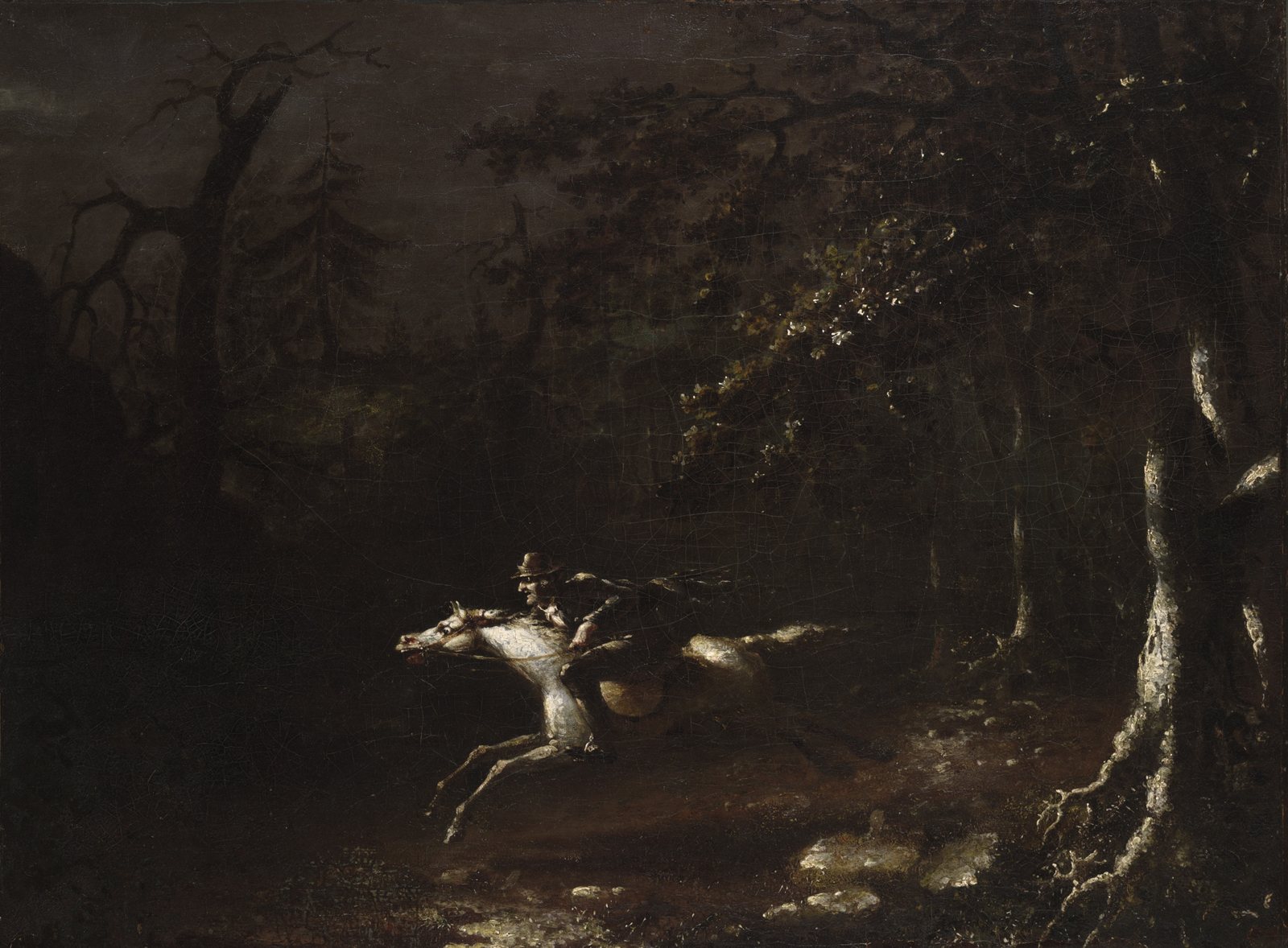
Ichabod Crane meets the rider after a harvest gathering full of ghost stories, which is exactly the wrong evening for a nervous man to ride home alone. Irving leaves the encounter open. The rider may be supernatural, but the ending strongly suggests that Brom Bones used the local legend to frighten him. It is a fine joke at a ghost story's expense, and a fine ghost story all the same.
Irving's horseman is a work of American literature, printed eight years before Croker's Dullahan volume, so he is a cousin of the Irish figure rather than the same character. Both belong to the larger family of headless riders, and the Sleepy Hollow rider is still a familiar Halloween costume; for the bonier side of the season, read about skeletons and Halloween.
Headless riders in print
Tap or hover a step to follow the order.
14th century
Sir Gawain and the Green Knight presents a beheaded figure who survives and carries his head.
1820
Washington Irving publishes "The Legend of Sleepy Hollow," with its American Headless Horseman.
1828
Thomas Crofton Croker publishes Part II of Fairy Legends and Traditions of the South of Ireland, including "The Dullahan."
1847
The English phrase "Grim Reaper" appears in The Circle of Human Life.
1888
W. B. Yeats republishes and reshapes Irish death-coach material in Fairy and Folk Tales of the Irish Peasantry.
Headless riders and death figures across Europe
Headless riders are much older than Irving. The University of Notre Dame points to the fourteenth-century English poem *Sir Gawain and the Green Knight*, in which the Green Knight survives his beheading and carries his own head. Croker's 1828 collection also mentions the Wild Huntsman, and European poets wrote their own supernatural chases, among them Gottfried August Bürger's "Der Wilde Jäger" in Germany and Robert Burns's "Tam o' Shanter" in Scotland. The historian Ronald Hutton, in a 2014 study of the Wild Hunt, shows that even "the Wild Hunt" as one tradition is largely a category scholars built later. These are related motifs, not branches of one proven family tree.
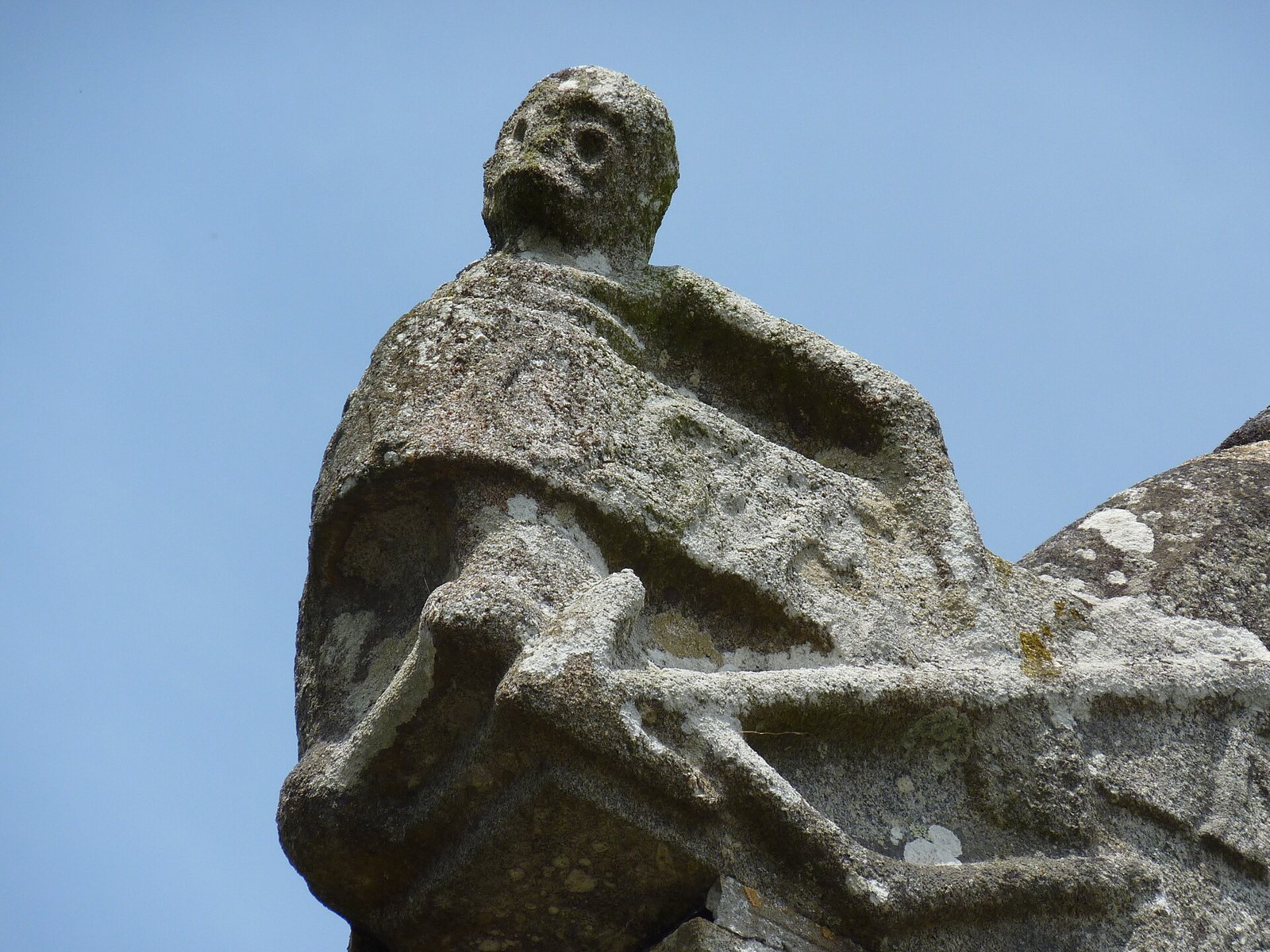
In Lower Brittany, death has a different driver. The Breton Ankou is Death's servant, or Death itself, travelling with a cart whose creaking wheels announce that someone will die. The folklorist Daniel Giraudon, writing for Bretagne Culture Diversité, records that the Ankou appears in Breton churches and literature from the sixteenth and seventeenth centuries, and that later oral tradition gave the role for a year to the first or last person to die in a parish. A seventeenth-century wooden Ankou from the church of Saint-Mathieu in Morlaix is recorded by Bretagne Musées. The Ankou is its own figure, not another name for the Dullahan.
The Grim Reaper is broader again. Europe's skeletal personification of Death grew from medieval religious art, plague-era images and the Danse Macabre, and PBS dates important skeletal Death imagery to at least the late thirteenth century, while the English phrase "Grim Reaper" turns up only in 1847. The Dullahan is something narrower and more local, an Irish death omen on horseback or at the reins of a coach. For more of the world's death figures side by side, see our story on gods of death.
Dullahan quiz
Answer every question to check.
Questions about the Dullahan
A few more questions follow the headless rider around.
What is the Dullahan afraid of?
Modern retellings usually say gold. That belief is a later or variant tradition rather than a steady feature of Croker's 1828 stories, so the old Munster tales leave the Dullahan without one reliable weakness.
What happens if you see a Dullahan?
In the stories, seeing the Dullahan is a sign that a death is near. Some of Croker's accounts add real danger, from the coachman's whip or from opening a door as the death coach passes, and the outcome changes from tale to tale.
Does the Dullahan kill people?
In Croker's legends, the Dullahan is above all a warning of death rather than a hunter. The harm the stories describe comes from his whip or from the coach at the door, and each tale tells it differently.
Are all Dullahans female?
No. Croker's main accounts describe male headless riders and coachmen, while later folklore and modern retellings also show female Dullahans, so the figure has no fixed gender, as PBS's look at the original headless horseman also describes.
Where the road goes next
The Dullahan rides out of a handful of Munster stories, a black coach at a Doneraile door and a rider with his head in his pocket on the road near Ballyhooley, and into every headless figure that followed. For the Irish season he belongs to, read about Samhain, and for another of Europe's messengers of death, meet the Breton Ankou.
Terms in this story
Tap a term to see what it means.
Dullahan. A headless rider or coachman of Irish folklore, a death omen recorded by Thomas Crofton Croker in 1828.
---