

No. 178
How to Identify a Fox Skull and Tell It From a Coyote, Dog or Raccoon
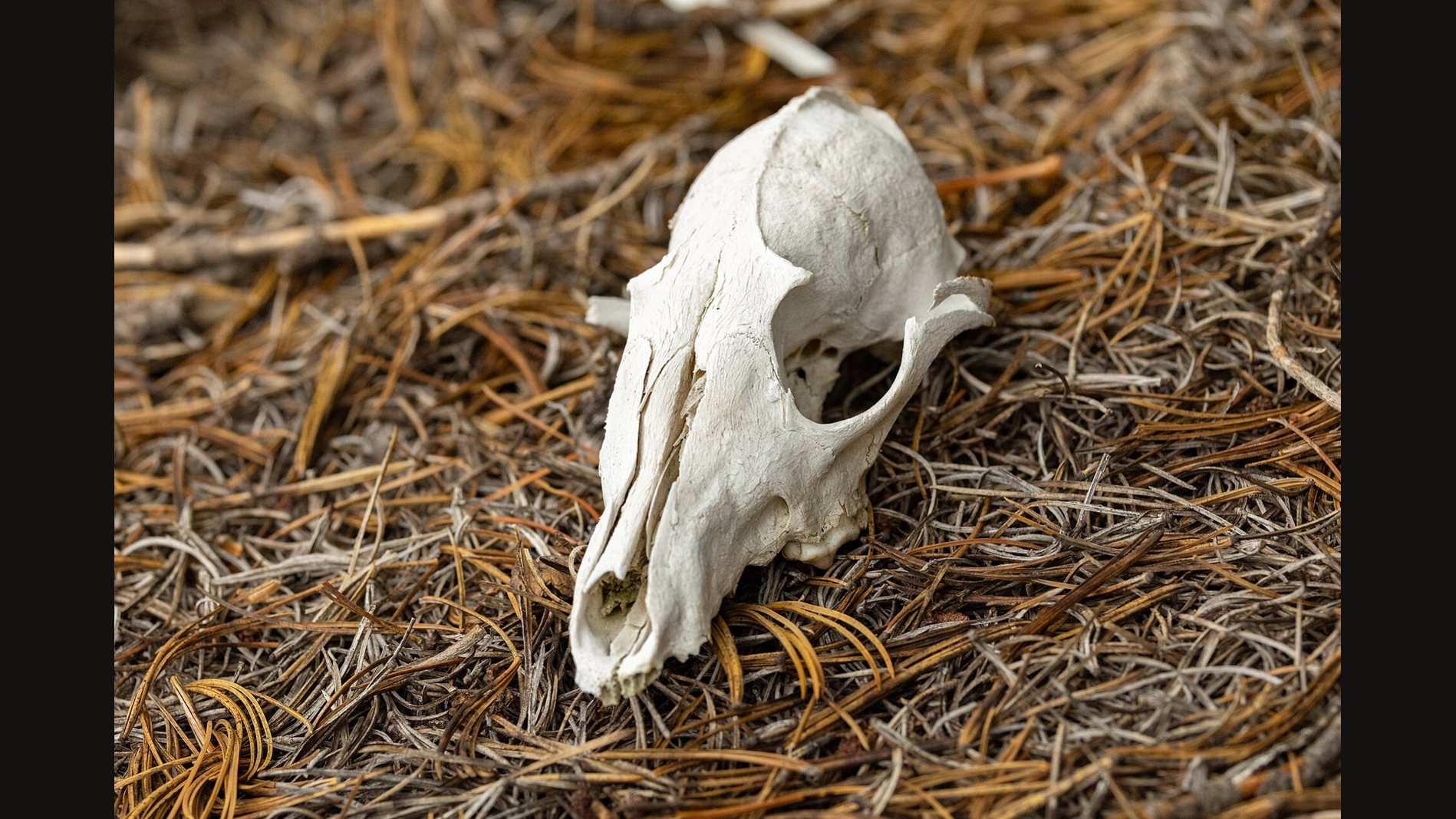
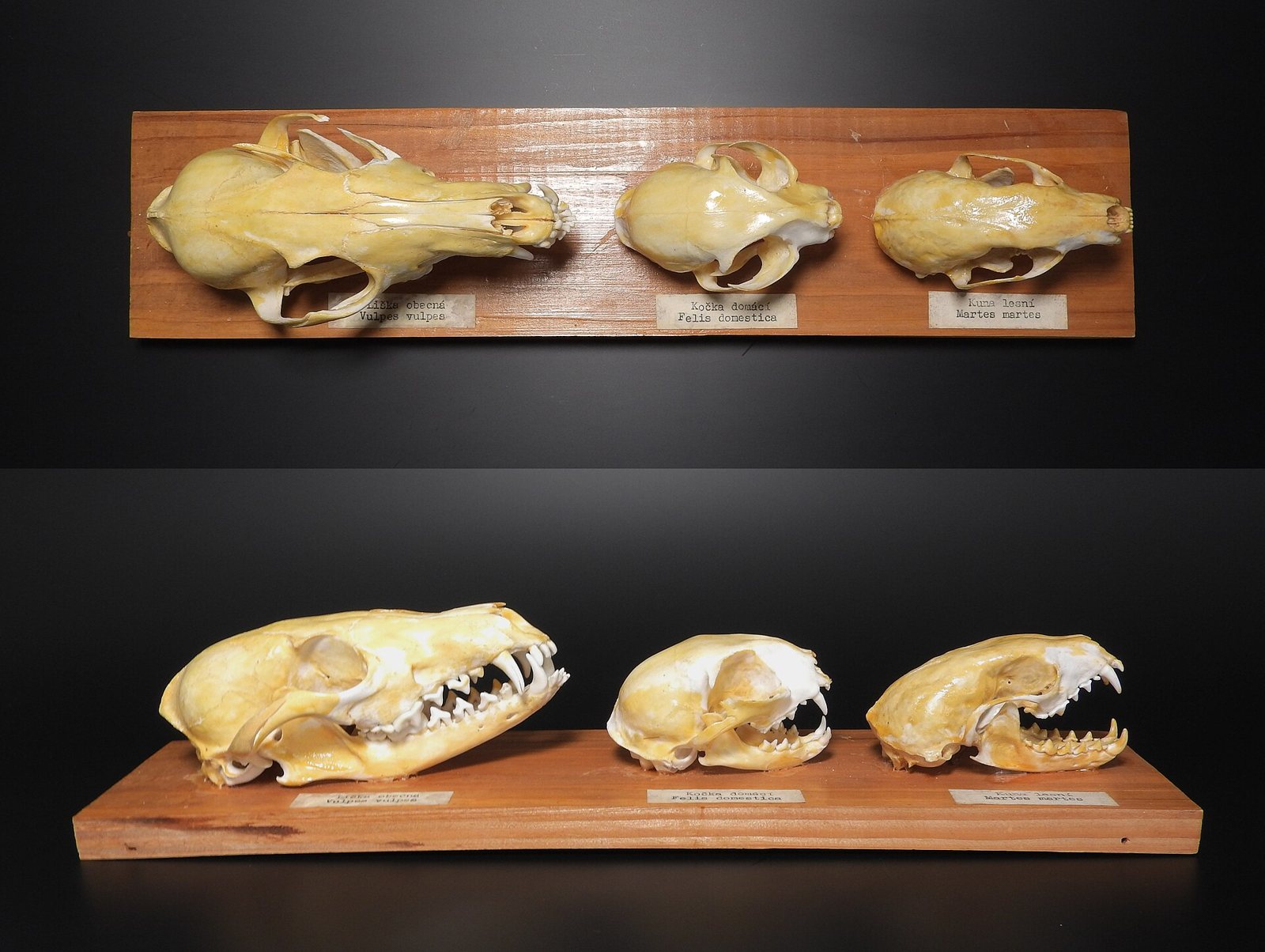
A fox skull is long and slim, with a narrow snout, slender canines, sharp shearing cheek teeth and, in a complete adult, 42 teeth. To tell which fox, look at the top of the skull. In the Maryland Department of Natural Resources skull key, bony ridges that form a V mean red fox, *Vulpes vulpes*, and ridges that form a U mean gray fox, *Urocyon cinereoargenteus*.
Then get out a ruler. In the same key, a coyote skull is more than 200 millimeters long and a fox skull is under 200. A raccoon skull is shorter and broader, with wide, crushing back teeth instead of blades.
Those three checks, the teeth, the ridges and the length, settle most long-snouted skulls. A dog is the trickier comparison, because dog skulls come in so many shapes.
What makes a fox skull
The University of Arizona Extension's teaching guide to the skulls of Alaskan mammals describes the red fox skull in a few strokes: small incisors at the front, larger canines behind them, specialized carnassial teeth and a long, narrow rostrum. The rostrum is the snout part of the skull, in front of the eyes, and carnassials are the blade-like cheek teeth that meat-eaters use to shear flesh.
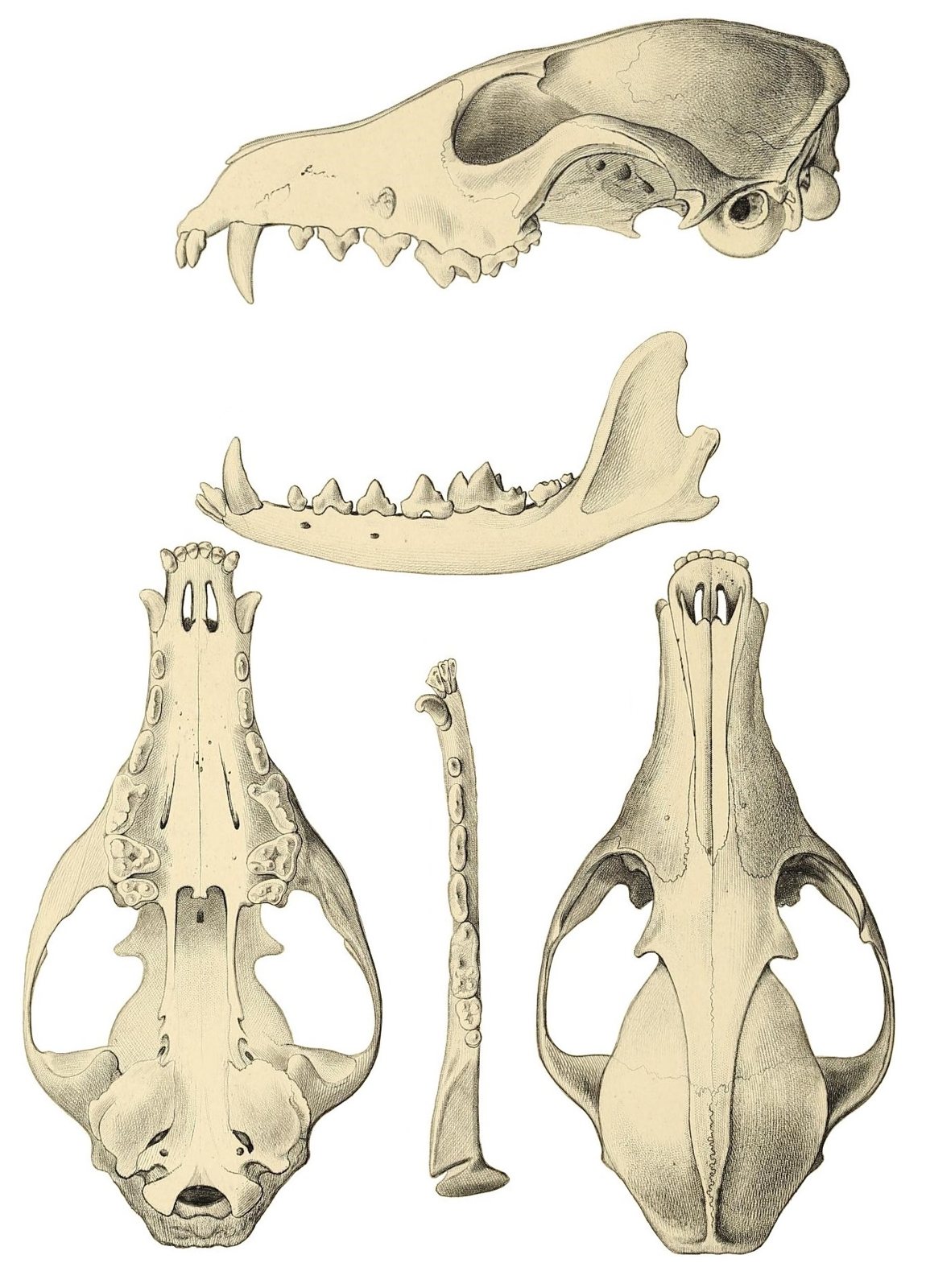
The teeth follow a set pattern, written as the dental formula I 3/3, C 1/1, P 4/4, M 2/3. Read it as three incisors, one canine, four premolars and two molars on each side of the upper jaw, and three incisors, one canine, four premolars and three molars on each side of the lower jaw. That makes 21 on each side and 42 in all. Gray foxes have 42 as well, so the count tells you fox, not which fox.
The University of Texas DigiMorph project, which scans museum specimens, adds a few finer points about the red fox skull. Compared with dogs and their relatives in the genus *Canis*, a red fox has a relatively long muzzle, flatter frontal bones on the forehead, short nasal bones, no frontal sinuses and relatively long, slender canines. If your skull has a smooth, low forehead and needle-like canines, that fits.
One caution before you count. Lost teeth, a young animal's teeth, damage and the occasional abnormal tooth can all make a count unreliable. Count the sockets along with the teeth, and lean on the shape when the count is incomplete.
Red fox or gray fox: the V and the U
This is the neatest trick in fox skulls. Along the top of the skull run two bony lines called temporal ridges, which mark where the big jaw muscles attach. Their shape differs between the two common North American foxes.
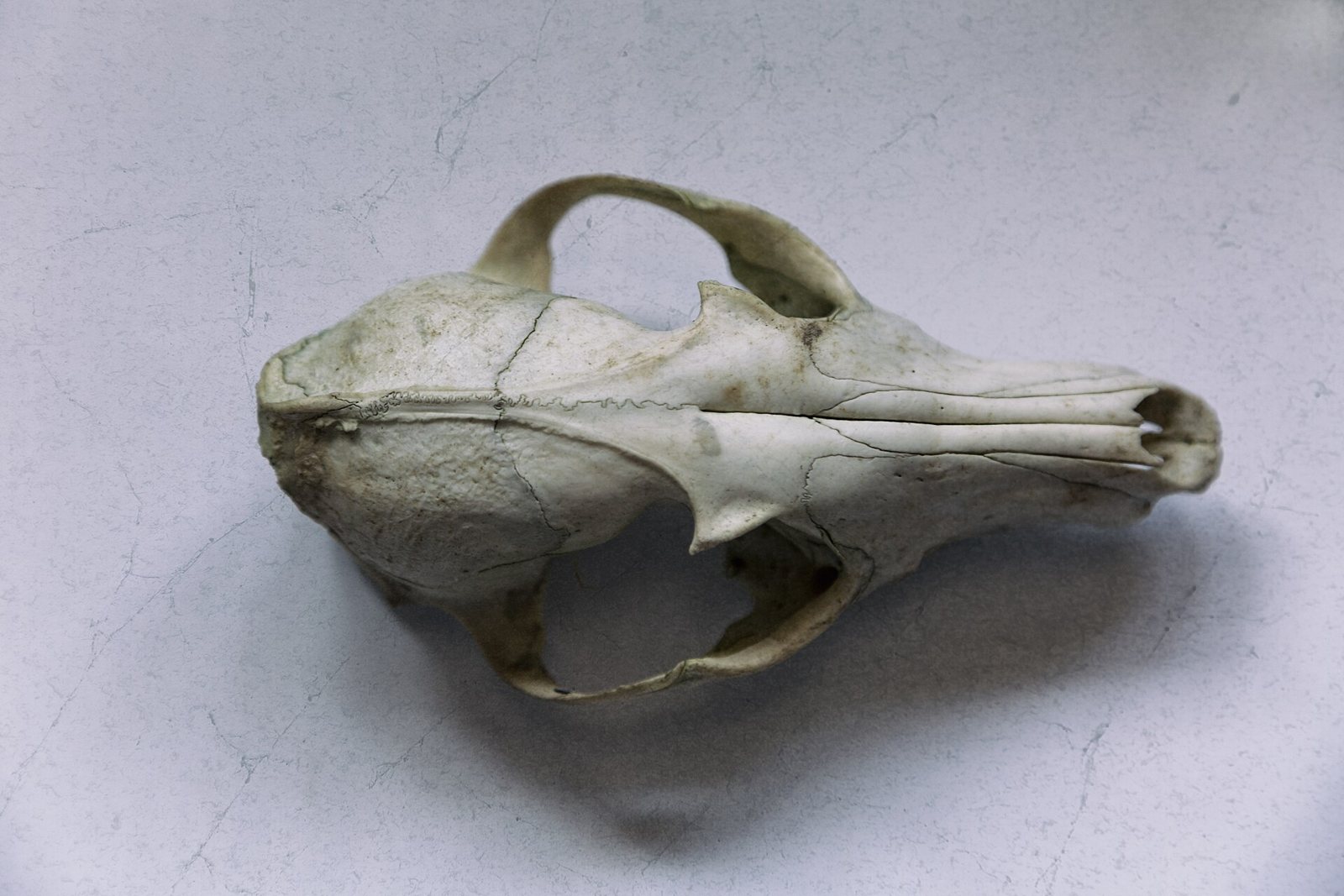
In a red fox, the ridges come together in a V. In a gray fox, they form a U. Texas Tech University's account of the common gray fox describes the gray fox ridges as distinctly lyrate, shaped like a lyre, and notes that they meet near the back of the skull. Maryland's simplified key to furbearer skulls uses exactly that V and U split, and places both foxes under 200 millimeters in greatest skull length.
To see the ridges, set the skull down so you are looking at it from above, in good light, ideally from one side so the lines cast a shadow. Start just behind the eye sockets and follow the two ridges back toward the rear of the skull. If they run together into a point, think red fox. If they stay apart and curve like the arms of a lyre, think gray fox.
Fox or coyote?
Size does most of the work here. Measure the greatest length of the skull, from the tip of the snout to the very back. In Maryland's key, a coyote, *Canis latrans*, has a skull over 200 millimeters long, while red and gray fox skulls are below 200. Once you are under that line, the V or U ridges take over.
Two things blur the line. A young coyote has a smaller skull than an adult, and a broken skull may be missing the part you need to measure. Maryland's key is also a regional teaching tool, so an unusual individual can fall outside its numbers. If your skull sits close to 200 millimeters, give the other features more weight. The coyote skull story covers the coyote's own features, along with how it compares with a wolf.
Fox or dog?
A dog is the hardest comparison, because dogs have been bred into so many skull shapes, so lean on several traits rather than one. Compare them together: the teeth, the size, the length and width of the muzzle, the canines and the profile of the forehead. A fox's slender canines and flat forehead are worth checking against a labeled museum specimen or a state key.
For coyotes, there is a measured test that separates them from dogs using the length of the tooth row against the width of the palate, and the coyote skull story walks through it. If your skull is larger than a fox's and looks dog-like, start there.
Fox or raccoon?
A raccoon, *Procyon lotor*, is not a canid at all, and its skull shows it. It is shorter and broader than a fox's, with broad crushing molars and much less specialized carnassials. The Smithsonian National Museum of Natural History notes that raccoon molars are wide and suited to both crushing and shearing, the teeth of an animal that eats a bit of everything, and the University of Florida IFAS account of the northern raccoon describes it as an omnivore with a different dental formula from the fox. Our raccoon skull story has the full side-by-side.
And if your skull is small and round with a very short face, it is probably not a fox or a raccoon. A cat has about 30 teeth and a far shorter face, and how to identify a cat skull takes that one from there.
Tap or hover a row to highlight it.
| Check | Fox | Coyote | Raccoon |
|---|---|---|---|
| CheckScientific name | FoxVulpes vulpes or Urocyon cinereoargenteus | CoyoteCanis latrans | RaccoonProcyon lotor |
| CheckGeneral shape | FoxLong, narrow muzzle | CoyoteLarger canid skull | RaccoonShorter, broader skull |
| CheckGreatest skull length in Maryland's key | FoxLess than 200 mm | CoyoteMore than 200 mm | RaccoonSeparate raccoon branch, generally under 200 mm |
| CheckTemporal ridges | FoxRed fox V-shaped; gray fox U-shaped | CoyoteNot the fox V or U pattern | RaccoonNot the fox V or U pattern |
| CheckTeeth | FoxUsually 42 in a complete adult skull | CoyoteCanid teeth | RaccoonDifferent raccoon teeth, with broader molars |
| CheckCheek teeth | FoxSpecialized carnassials and pointed shearing teeth | CoyoteCanid carnassials | RaccoonBroader crushing molars and less specialized carnassials |
A step-by-step check for your skull
Put the skull on a table with a ruler and good light, and wear gloves if it is not fully clean. Then go through it in this order.
Is it a fox skull? A six-step check
Tap a card to bring it forward.
- Measure it: Measure the greatest length, snout tip to back of skull. Over 200 mm in Maryland's key points to coyote.
- Look at the snout: Long and narrow suggests a fox; short and broad suggests a raccoon.
- Count the teeth: Count only if the skull is complete and undamaged. A complete adult fox has 42.
- Check the cheek teeth: Fox carnassials look like blades; raccoon molars are broad and crushing.
- Look at the top: Follow the temporal ridges back from the eyes. A V means red fox, a U means gray fox.
- Compare: Check your skull against a state wildlife key or a labeled museum specimen.
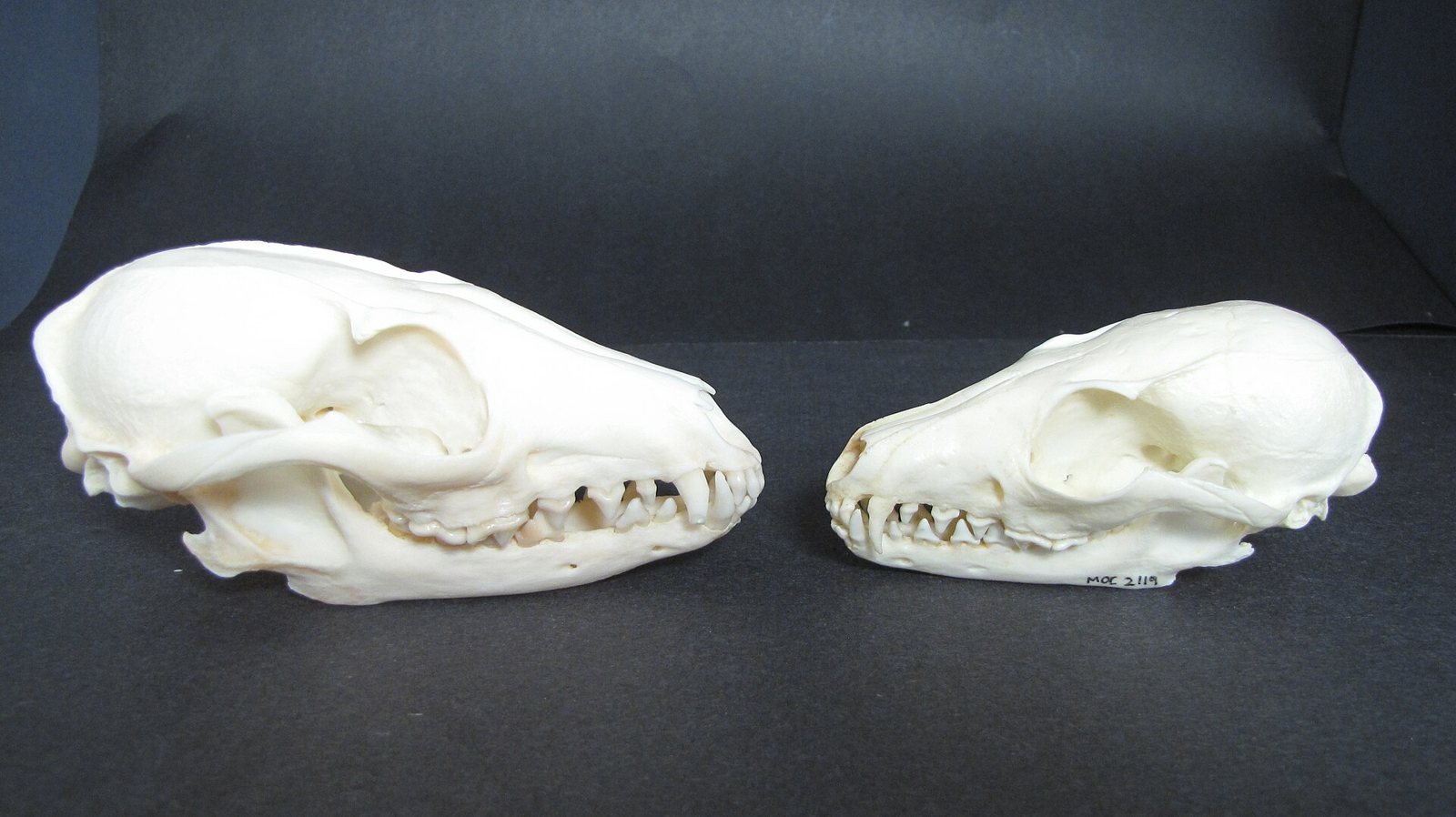
Good comparison skulls are easy to look at online. The National Park Service has shared Jacob W. Frank's photograph of a red fox skull from Yellowstone National Park.jpg), in the public domain. Two public-domain illustrations from 1856 show a gray fox skull.jpg) and an American red fox skull.jpg), the second labeled *Vulpes fulva* on the plate. H.-M. Ducrotay de Blainville's red fox skull plate.jpg), from a work published between 1839 and 1864, is a lovely old reference too. And OsteologicalsRock's photograph of an island fox skull beside a gray fox skull_compared_with_that_of_a_gray_fox_(left).jpg), shared under CC BY-SA 3.0, puts a replica island fox next to a gray fox skull from central Minnesota.
Fox skull quiz
Answer every question to check.
Foxes in an ancient burial
A fox skull has no single meaning that holds everywhere. What a fox stood for belongs to a particular people, place and time, and one of the clearest documented cases comes from the ground rather than from folklore.
At Motza, a Pre-Pottery Neolithic site in Israel, archaeologists writing in the journal *Antiquity* described a joint burial of humans and foxes, with fox remains placed in the grave of people buried there. The authors interpret the placement as a sign that foxes held symbolic importance in a ritual setting, tied to changing relationships between people and the animals living around them. That is their reading of one site, and a striking one, since fox remains were laid in the grave alongside people.
It does not mean that every fox skull stands for cleverness, protection or death. Those readings come from other times and places, or from modern taste. For how archaeologists read finds like Motza, see what bones tell archaeologists, and for the wider story of what skulls have meant, skull symbolism.
Keeping a fox skull
This is general information rather than legal advice; each state and country writes its own rules for fox parts, and those rules get revised.
Foxes are regulated wildlife in some places, and whether you may keep a skull can depend on the state, the species, how the animal died, where it lay and whether it was legally taken. Texas Parks and Wildlife, for example, lists foxes as furbearers and requires a hunting license to take them, with separate rules for commercial sale. North Carolina's Wildlife Resources Commission restricts the sale of wildlife parts from animals found dead and sets specific conditions for fox carcasses and pelts.
Those are two states, not a rule for yours. Confirm the rule with the wildlife agency in the state where the skull turned up before you keep, move, sell or display it. Our story on what to do when you find an animal skull covers the wider federal and state rules, including Wisconsin's rules on clean skulls, and how to clean an animal skull goes through cleaning once you know it is yours to handle. We Dig Skulls sells skull designs, not real skulls.
Fox skull questions, answered
A few more points about the skull in your hands.
What does a fox skull look like?
A fox skull has a long, narrow snout, slender canines and sharp cheek teeth made for cutting meat. On top, two ridges run back from the eyes and form a V in a red fox or a U in a gray fox.
How many teeth does a fox skull have?
A complete adult fox skull has 42 teeth, in both red and gray foxes. If your count comes up short, check for empty sockets, since teeth often fall out of old skulls.
What do the ridges on top of a fox skull mean?
They are temporal ridges, the lines where the jaw muscles attach, and their shape tells the two common foxes apart. In Maryland's key a V means red fox and a U means gray fox, and Texas Tech University notes that the gray fox ridges meet near the back of the skull.
What does a fox skull symbolize?
It depends on the people and the period. At Neolithic Motza in Israel, archaeologists read fox remains placed in a human burial as evidence that foxes carried symbolic weight in ritual there.
Where to go next
If your skull turns out to be bigger and more dog-like, the coyote skull story is the next stop. If it is short and broad, try the raccoon skull, and if it is small and round-faced, the cat skull. Whatever it is, the found an animal skull story is the place to check before it goes on a shelf.
Terms in this story
Tap a term to see what it means.
Vulpes vulpes. The scientific name of the red fox.
---