

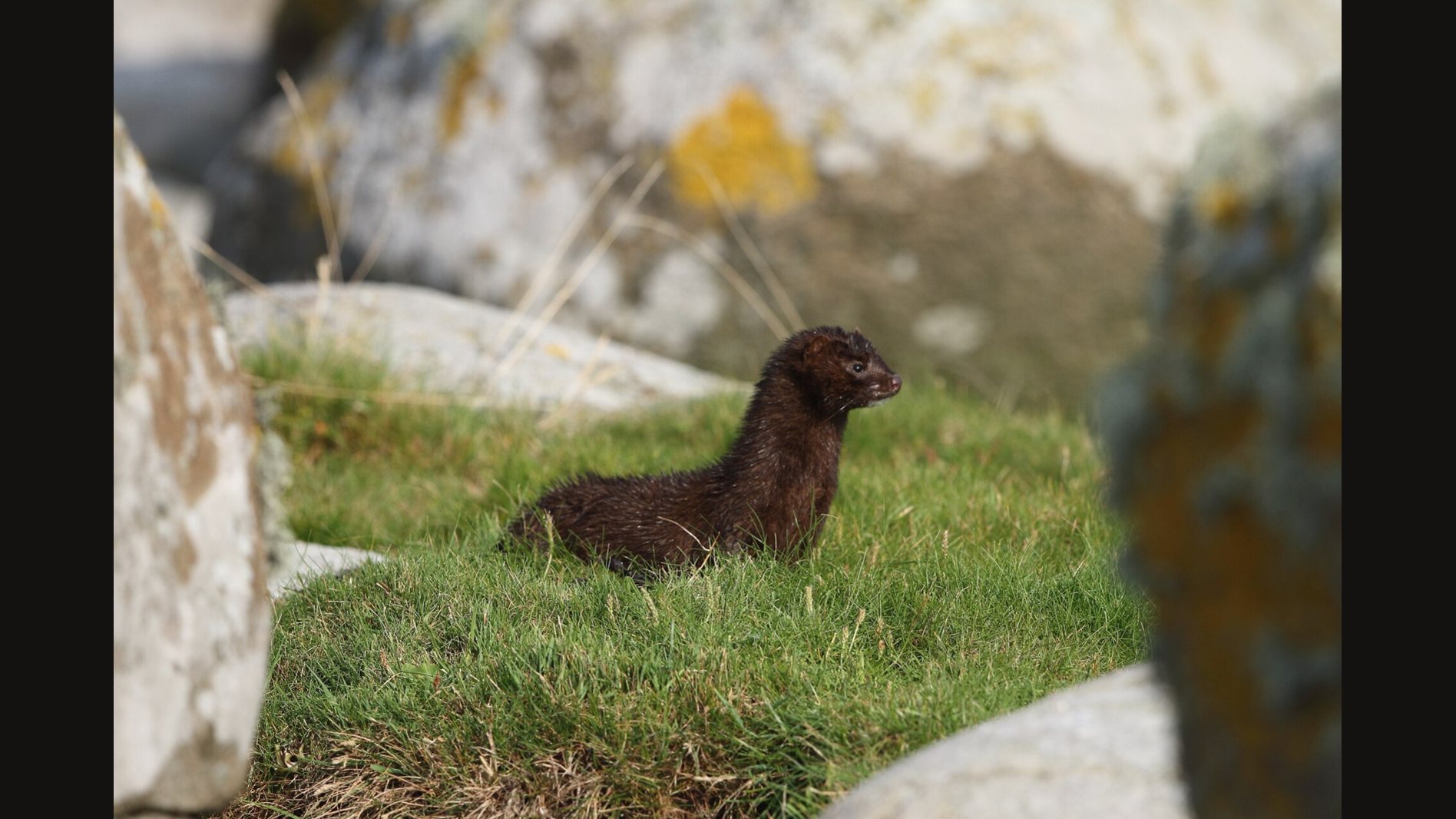
No. 292
Mink Skull vs Weasel Skull: How to Identify the Small Hunters
A small, flat, long skull with sharp, blade-like cheek teeth and 34 teeth in all belongs to the weasel family, the mustelids. To tell a mink from a weasel, start with a ruler. In the Maryland Department of Natural Resources skull key, an American mink, *Neogale vison* (formerly *Mustela vison*), has a skull longer than 58 millimeters, while a long-tailed weasel measures between 40 and 58 millimeters.
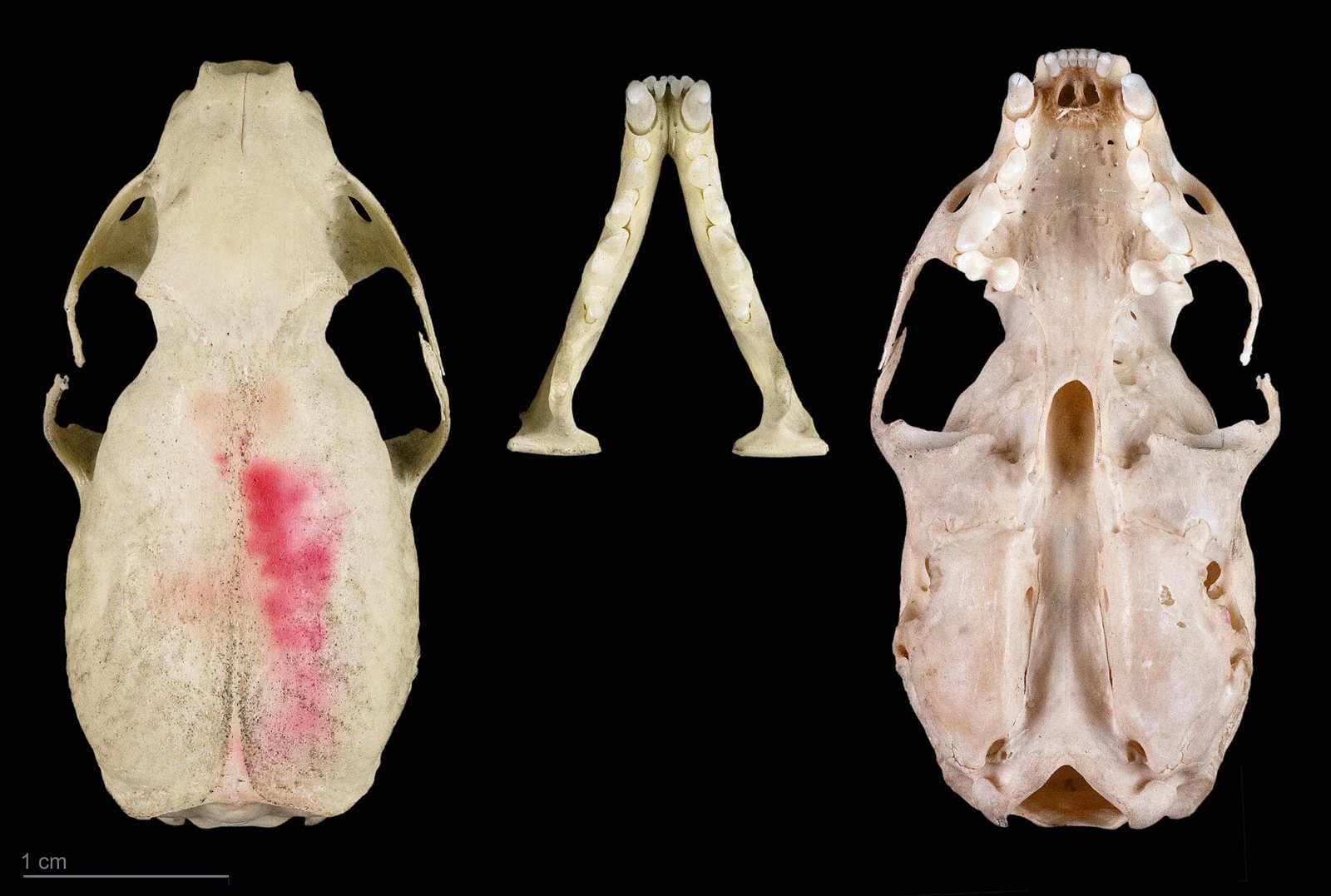
Then turn the skull over. A mink's last upper tooth on each side is shaped like a dumbbell, and its ear capsules, the auditory bullae, are long and prominent. Sizes do overlap a little at the edges, so the measurement works best alongside the teeth and the place where the skull turned up.
That covers most finds from a creek bank, a pond edge or the back of a barn. The rest of the details, from ermine to ferret to the question of keeping it, come below.
Is it from the weasel family?
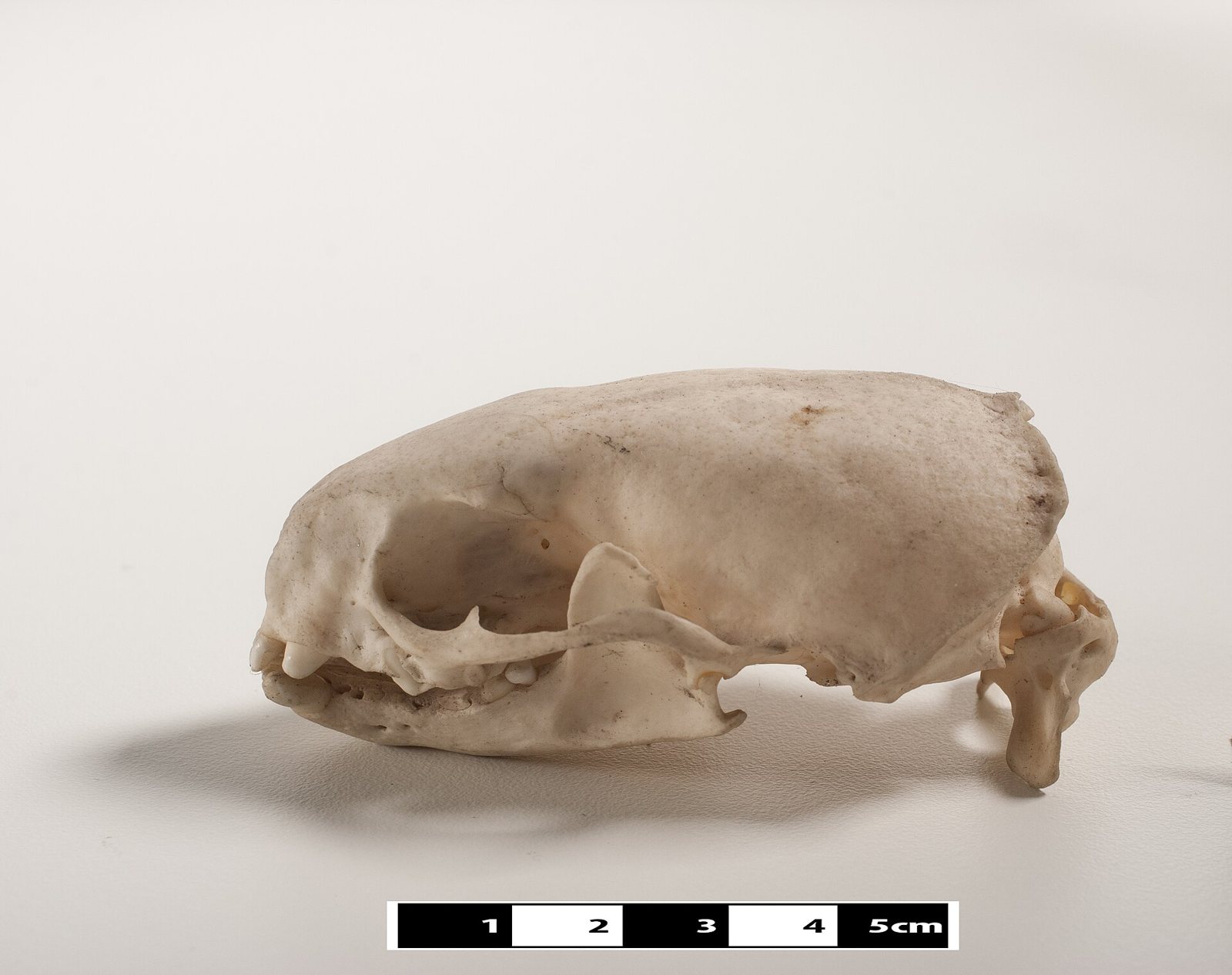
Before mink versus weasel, it helps to be sure the skull is a mustelid at all. The family look is fairly consistent. The skull is long, low and flat, as if someone pressed a cat skull under a book for a week. The snout, called the rostrum, is short and blunt, and the braincase behind it is relatively large for an animal this size.
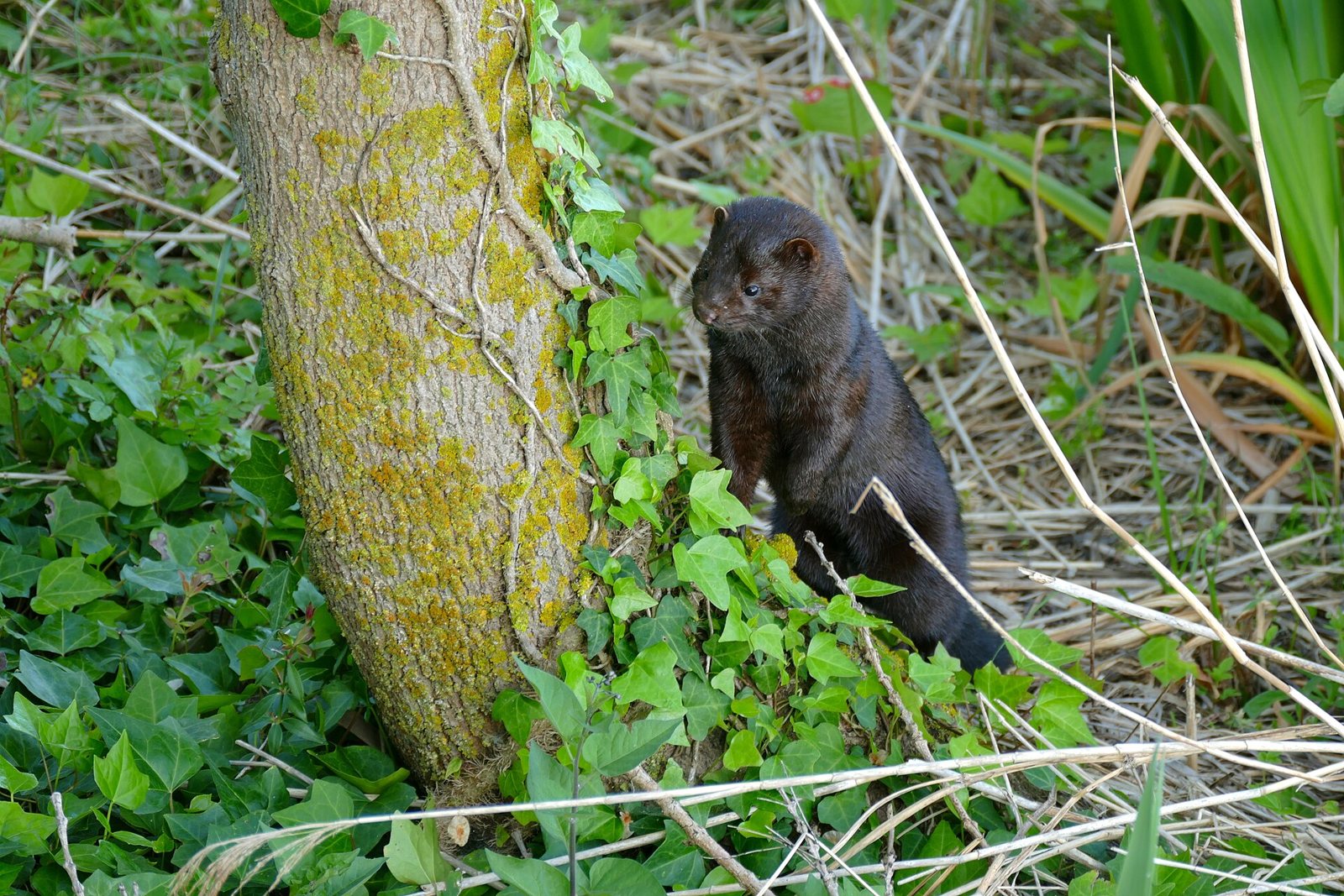
Seen from above, there is a clear pinch just behind the eye sockets, where the skull narrows before widening again into the braincase. Scientists call this the postorbital constriction, and in mink it is marked. The cheek teeth are the giveaway for a meat-eater: the carnassials, which the Maryland key describes as blade-like teeth that work like shears, slice past each other when the jaw closes.
Where the skull lay can help, but only so far. A mink spends a lot of its life along water, so a skull near a stream fits. Water alone does not separate a mink from a river otter, though, and the Maryland key handles that split with the teeth instead.
The American mink skull up close
The American mink has 34 teeth. Its dental formula is I 3/3, C 1/1, P 3/3, M 1/2, which reads one side of the mouth at a time: three incisors above and three below, one canine above and below, three premolars above and below, one molar above and two below. That gives 17 per side and 34 in all.
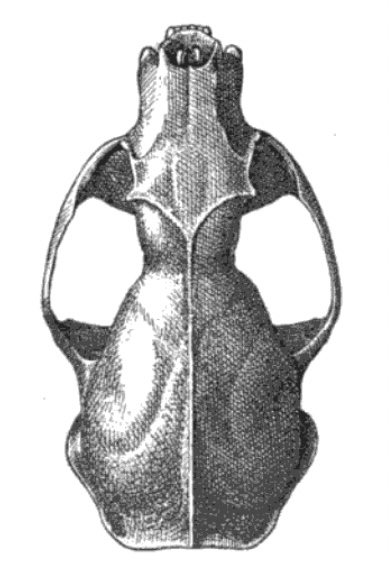
The Alaska Department of Fish and Game's skull guide gives the mink skull as roughly 57 millimeters long, with a short, blunt rostrum and prominent carnassials. Maryland's key adds the features it uses to separate mink from long-tailed weasel: a skull over 58 millimeters, four upper cheek teeth on each side (the three premolars plus the single molar), the dumbbell-shaped upper molar and a prominent, elongated auditory bulla.
A closer description comes from a 1980 study by A. W. Park and B. J. Nowosielski-Slepowron, Aspects of skull and dentition morphology of the mink. They noted the marked postorbital constriction, broad and flattened tympanic bullae, and a large upper molar whose inner lobe is much bigger than the outer one. That uneven molar is what gives the dumbbell its lopsided look.
Notice that Alaska's "about 57 millimeters" sits just under Maryland's 58-millimeter line. Neither figure is wrong. Mink vary in size, and males run larger than females, so a length is a strong guide rather than a wall. A skull of 57 millimeters with a dumbbell molar and long ear capsules is still a good mink candidate.
The weasels: long-tailed, ermine and least
North America has three weasels whose skulls get mixed up with mink, and all three share the same 34-tooth formula. Counting teeth will not separate them, so size and shape do the work.
The long-tailed weasel, *Mustela frenata*, is the closest match. The USDA Forest Service key to the mammals of the South places its skull above 40 millimeters, and Maryland puts it in the 40 to 58 millimeter band. If a whole animal is available, the tail helps: it is usually more than 45 percent of the total body length.
The least weasel, *Mustela nivalis*, is tiny. The same Forest Service key puts its skull under 40 millimeters and its total body length usually under 300 millimeters. A review of the mustelid family describes it as the smallest living carnivore, with a body around 19 centimeters long.
The short-tailed weasel, also called the ermine or stoat, is *Mustela erminea*. Alaska describes its skull as about 50 millimeters long, with a short, blunt rostrum, specialized carnassials and 34 teeth. That length lands it in the same range as a long-tailed weasel, which is why locality matters so much. The species that live in your area narrow the list before the ruler comes out.
Because the lengths overlap, put several clues together: overall length, how the teeth are arranged, the shape of the last upper molar and the form of the ear capsules. One clue can mislead. Four in agreement rarely do.
Mink, otter, marten or ferret?
A mink skull from a riverbank has a few other neighbors to rule out. The Maryland key deals with the river otter first. An otter has four upper and three lower premolars, a well-developed bony point behind each eye socket (the postorbital process) and an opening below the eye, the infraorbital foramen, wider than 8 millimeters. Our otter skull guide covers that skull properly. The same key also has a skunk branch, recognizable by a rectangular upper molar rather than a dumbbell, and the skunk skull story handles that one.
Martens are another relative. The Alaska guide counts 38 teeth in a marten against the mink's 34, so a careful tooth count settles that pairing quickly. The Missouri Department of Conservation says that in Missouri, mink are most often confused with long-tailed weasels and North American river otters.
A ferret is the trickiest. Domestic ferrets are a captive form associated with the European polecat, *Mustela putorius*, and a key built for wild mink and weasels is not designed to identify one. If you suspect a ferret, compare the skull with a reference specimen at a university mammal collection or a regional natural history museum.
Tap or hover a row to highlight it.
| What to check | Points to mink | What it rules out |
|---|---|---|
| What to checkTotal teeth | Points to mink34 | What it rules outA marten has 38 |
| What to checkSkull length | Points to minkOver 58 mm in Maryland's key | What it rules outA long-tailed weasel is 40 to 58 mm |
| What to checkLast upper molar | Points to minkDumbbell-shaped | What it rules outThe skunk branch has a rectangular upper molar |
| What to checkEar capsules (auditory bullae) | Points to minkProminent and elongated | What it rules outThe river otter sits on a separate branch, with four upper and three lower premolars |
| What to checkCarnassials | Points to minkStrong shearing teeth | What it rules outShared across the mustelids |
Male or female, adult or young?
Size carries one more complication: male mink are bigger than females. The Missouri Department of Conservation gives males at about 1.5 to 3.25 pounds and females up to about 2 pounds. That spread shows up in the skull too.
Park and Nowosielski-Slepowron measured 97 mink skulls, 56 from males and 41 from females, and saw differences in size between the sexes. In their sample the difference was not statistically significant, largely because many of the animals were young adults whose skulls had not finished growing. A later study of cranial shape in mink measured males and females separately and treated sex as one source of variation in skull size and shape.
The practical upshot is simple. A large female long-tailed weasel and a small male mink can sit close together on the ruler, and a young animal can read small for its species. Size is a supporting clue for species and sex, never the whole answer.
A quick check at the kitchen table
Most mustelid skulls can be sorted with a ruler, good light and a bit of patience. A kitchen ruler marked in millimeters is fine, though calipers make the job easier if you have them. Measure from the front of the upper jaw to the back of the skull, then work through the teeth and the underside.
Sorting a small mustelid skull
Tap a card to bring it forward.
- Measure the length: Front of the upper jaw to the back of the skull. Over 58 mm leans mink; 40 to 58 mm leans long-tailed weasel or ermine; under 40 mm leans least weasel.
- Count the teeth: Thirty-four in a mink and the weasels, 38 in a marten. Count empty sockets as teeth.
- Check the last upper molar: A dumbbell shape, with a larger inner lobe, fits mink.
- Look underneath: Long, prominent ear capsules (auditory bullae) fit mink.
- Note the place: Which species live there, and whether pet ferrets are likely nearby.
Small teeth drop out of old skulls, so a gap in the row is normal. A socket where a tooth used to sit counts the same as the tooth. If the skull still needs cleaning before you can see the details, the guide to cleaning an animal skull and the story of the dermestid beetles museums use cover the gentle options.
If none of this lines up, the skull may not be a mustelid at all. Barns and stream banks also turn up raccoon skulls, rat skulls and squirrel skulls, and a slightly larger carnivore skull may be a fox skull. For anything you are unsure of, the human vs animal skull guide is a good first stop.
Keeping a mink skull: the rules
Treat this section as general information rather than legal advice. Rules for wildlife parts vary between states, provinces and countries, and the agency where the skull lay is the one that decides.
Mink are regulated furbearers, which means trapping and possession are managed by wildlife agencies. Maryland's furbearer page lists both the mink and the long-tailed weasel among the species whose harvest is regulated. The Indiana Department of Natural Resources describes *Neogale vison* as a semiaquatic furbearer and calls regulated trapping an important tool for managing it.
Wisconsin offers one state's example of how the details work. Its guidance on wild animals and their parts says mink parts other than fur or hides may be possessed at any time, while raw mink fur needs the right license or permit. It also says the rules of the place where the animal was taken apply, and that you need permission to collect animal remains from private land. That is Wisconsin's rule, not a blanket answer for everywhere else.
Before you keep, move, sell or give away a mink or weasel skull, ask the state wildlife agency and the landowner or land manager where you picked it up. Our page on what to do with an animal skull you come across explains who to ask.
Mink and weasel skulls on paper
Tap or hover a step to follow the order.
1896
C. Hart Merriam publishes Synopsis of the Weasels of North America, with an illustration of an eastern Great Lakes stoat skull.
1980
A. W. Park and B. J. Nowosielski-Slepowron publish their study of mink skull and tooth shape, based on 97 specimens.
2007
The USDA Forest Service publishes a key that separates least weasel, long-tailed weasel and American mink by teeth and skull size.
2016
The Maryland Department of Natural Resources publishes its simplified furbearer skull key.
2021
Wisconsin DNR publishes guidance on possessing and using wild animals and their parts.
2024
The Missouri Department of Conservation reviews its American mink field guide.
Mink skull questions
A few questions tend to come up once the skull is on the table.
How many teeth does a mink have?
An adult mink has 34 teeth, with the dental formula I 3/3, C 1/1, P 3/3, M 1/2. The lower jaw carries one more molar on each side than the upper jaw, so check the very back of the lower jaw before you settle on a count.
What does a mink skull look like?
A mink skull is small, long and flat, with a short, blunt snout, a pinched waist behind the eyes, sharp shearing cheek teeth and long, prominent ear capsules underneath. Its last upper molar has a large inner lobe and a smaller outer one, which gives it a lopsided dumbbell shape.
How big is a mink skull?
A mink skull is around 57 millimeters long or a little more, just over two inches. Alaska gives about 57 millimeters, and Maryland uses more than 58 millimeters as its mink threshold, with males generally larger than females.
Can I keep a mink skull I found?
Whether you can keep a mink skull depends on where it was and who owns the land, so ask before you take it home. Mink are regulated furbearers, and states such as Wisconsin set specific rules on parts, fur and collecting on private land. Contact the state wildlife agency and the landowner first.
Mink or weasel? Test yourself
Answer every question to check.
Ruler first, then ask
A mustelid skull tells you a lot once you know where to look. Length over 58 millimeters, a dumbbell molar and long ear capsules point to a mink; a shorter skull with the same 34 teeth points to one of the weasels, and one under 40 millimeters to the least weasel. If an otter, a marten or a pet ferret is in the running, the premolars, the tooth count or a museum reference specimen will settle it. Then, before the skull finds a spot on a shelf, a call to the wildlife agency settles the rest. If your collection runs to other finds from the woods and fields, the porcupine skull and armadillo skull stories are good company for this one.
Terms in this story
Tap a term to see what it means.
Mustelid. A member of the weasel family, Mustelidae, which includes mink, weasels, otters, martens and ferrets.
---