

No. 289
Gorilla Skull: The Crest, the Teeth and the Human Comparison
The big ridge running along the top of a gorilla skull is the sagittal crest. It is a fin of bone along the midline of the skull, and it gives the temporalis muscles, the muscles that close the jaw, extra room to attach. It is largest in adult males. The Smithsonian's National Zoo says the crest anchors the massive muscles that work a gorilla's jaws and teeth.
Set your own skull beside it and the differences are plain. A human skull has a high, rounded braincase, a forehead that rises almost straight up, small jaws and canines, and no prominent crest. The opening where the spinal cord meets the brain, the foramen magnum, sits underneath a human skull, which helps balance the head on an upright body.
A tour of the gorilla skull
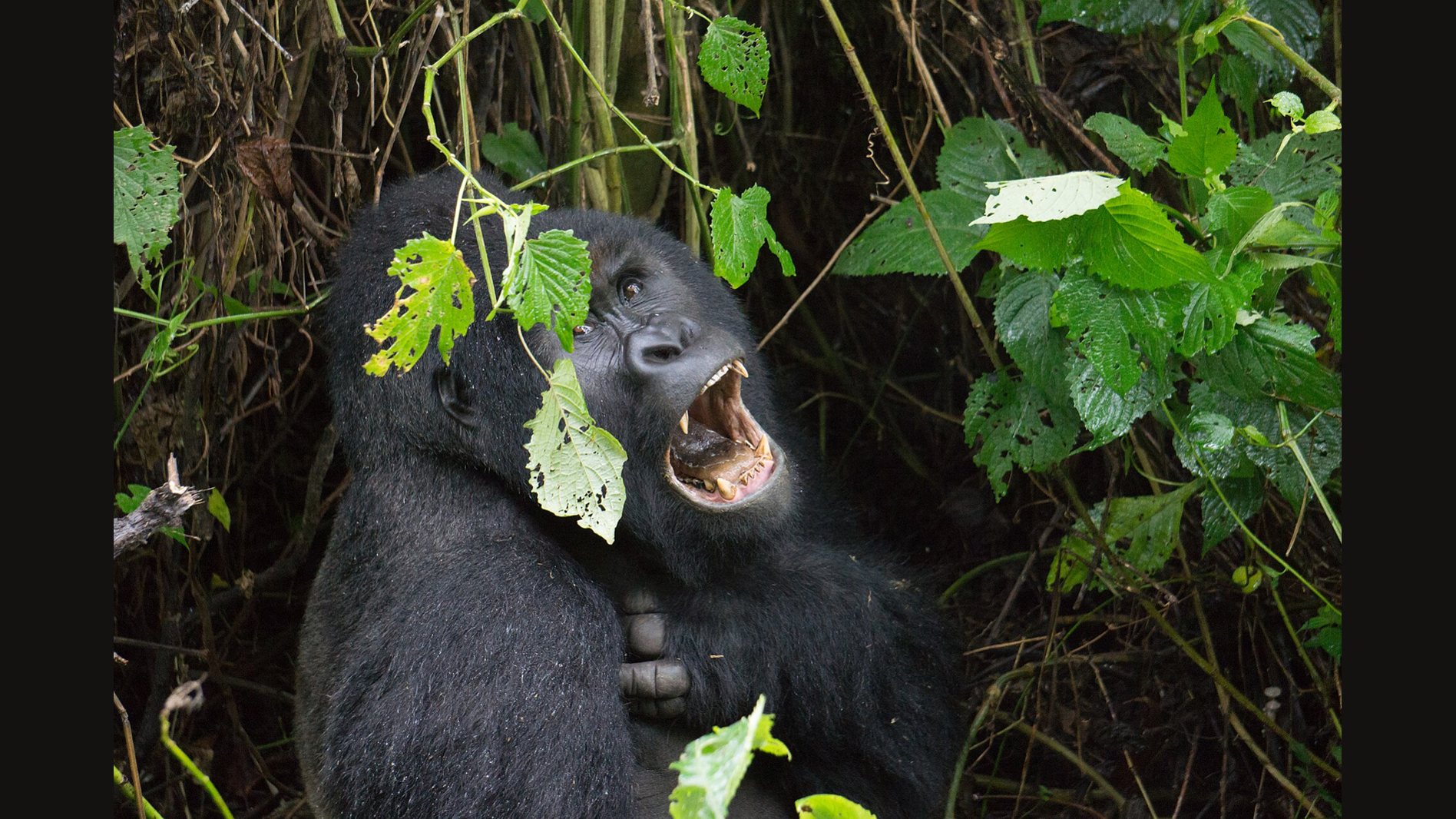
If the skull in the case came from an adult male western gorilla, *Gorilla gorilla*, it probably stopped you for a moment. Everything about it is big and heavily built. The face juts forward, a thick brow ridge shelves out over the eye sockets, the jaws are large and the canine teeth are long enough to make a dentist step back.
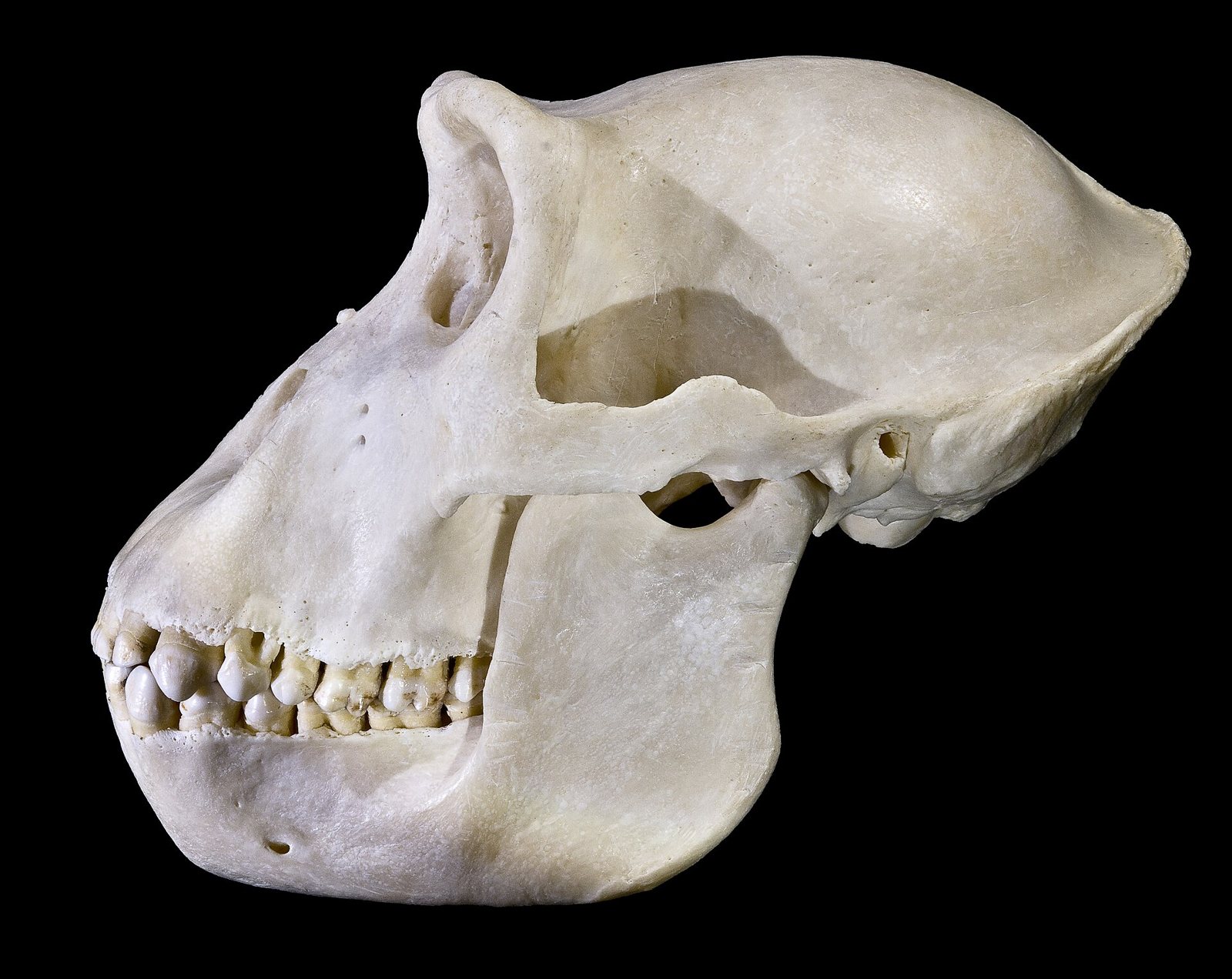
Start at the top. The sagittal crest runs front to back along the middle of the skull like a bony mohawk. Follow it to the back and it meets a second ridge running side to side, the nuchal crest, where the powerful neck muscles attach. Together the two crests give the skull its helmeted look.
Now look at the mouth. Ape canines are much larger than ours, and the Smithsonian Human Origins glossary explains that they fit into a gap called a diastema, a space between the lower canine and the first premolar that makes room for the big upper canine when the jaw closes. A human jaw has no comparable gap, because our canines are small enough not to need one.
Not every gorilla skull is the same size. The western lowland gorilla has a wider and larger skull than the mountain gorilla, according to the National Zoo. And not every skull in a museum case is bone. The Smithsonian's Q?rius collection lists a *Gorilla gorilla* juvenile male skull cast, catalog number 67551, and its cast collection labels specimens by sex and life stage.
What to look for on a gorilla skull
Tap a card to bring it forward.
- Sagittal crest: A ridge of bone along the top midline, where the jaw-closing temporalis muscles attach. Largest in adult males.
- Nuchal crest: A ridge across the back of the skull, where the neck muscles attach.
- Brow ridge: A thick shelf of bone over the eye sockets.
- Canines and diastema: Large canine teeth, with a gap between the lower canine and first premolar that the upper canine fits into.
- Projecting face: The face and jaws push forward well ahead of the braincase.
What the crest does
The crest is there for muscle. The temporalis muscles run from the side and top of the skull down to the lower jaw, and when they contract, the jaw closes. In a gorilla these muscles are large and powerful, which supports forceful chewing. A small skull surface can only hold so much muscle, so a bigger muscle needs more bone to grip.
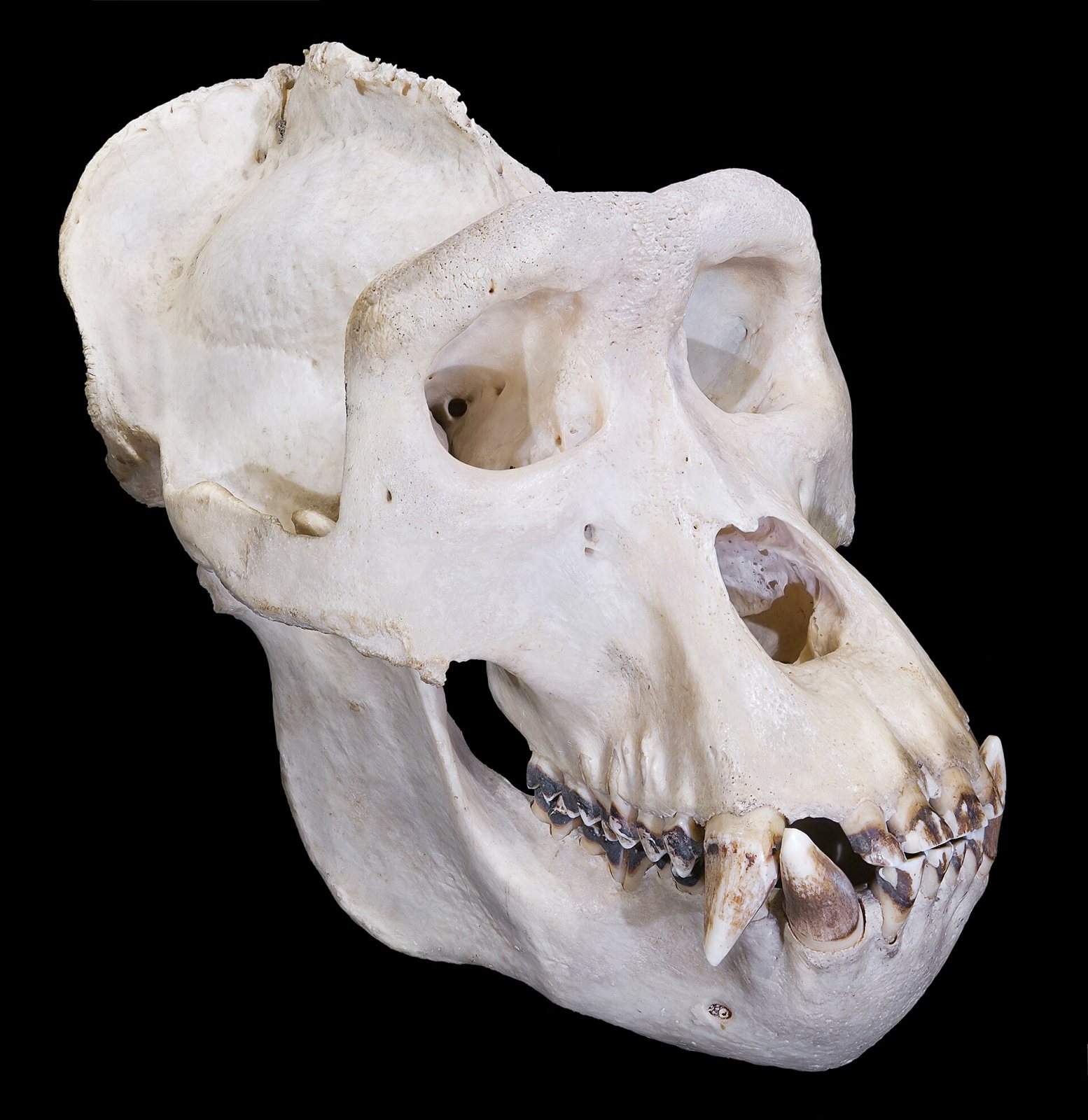
Smithsonian anthropologist Douglas Owsley describes how this happens in a National Museum of Natural History webinar. The edges of the temporalis muscles are marked on the skull by the temporal lines, one on each side. As the muscles become more extensive, the two lines converge toward the midline, and where they meet, the crest develops.
Chewing is not the whole story, though. In a 2017 study in the Journal of Anatomy, Balolia, Soligo and Wood found that muscle attachment alone does not explain all the variation in male gorilla crests. Their results point to a mix of chewing demands, growth and a possible role for social signaling, the idea that a big crest may also say something to other gorillas. A 2024 study by Hooge and colleagues also discusses the limits of explaining crests through muscle attachment alone.
One thing the crest is not: a sign of a bigger brain. It sits on the outside of the skull, it is made for muscle, and its size says nothing about how intelligent a gorilla is.
Males, females and growing up
Male and female gorilla skulls are easy to tell apart once you have seen both. Males are generally larger and more heavily built, with a pronounced sagittal crest, a strong nuchal crest, a longer face that pushes further forward and bigger canines. Females have smaller skulls and less pronounced crests. They can still grow a sagittal crest, but it tends to be smaller.
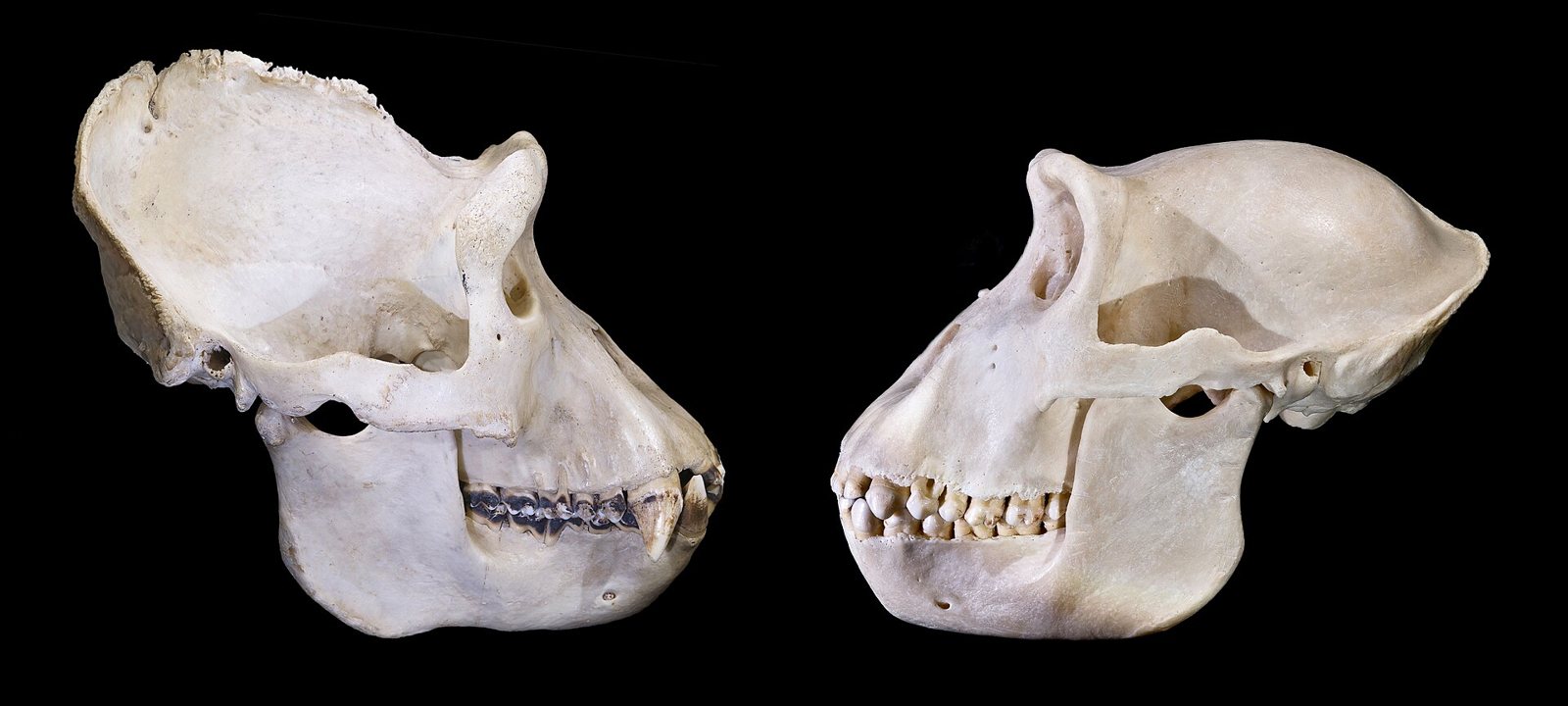
Age matters too. Balolia, Soligo and Wood studied skulls of western lowland gorillas, *Gorilla gorilla gorilla*, and grouped them by age. About 80 percent of the young adult males in their sample had a sagittal crest, and every male in the next adult age group had one. In females, crest development increased more gradually and less consistently. The same paper cites earlier work by Ashton and Zuckerman, who reported a sagittal crest in 37 percent of a sample of 51 female gorillas.
Those percentages come from particular museum collections, so they describe those samples rather than every gorilla population. They do explain why two skulls in the same case can look so different. A young male, an older male and an adult female can carry three quite different tops.
Gorilla, chimpanzee and human side by side
Put three skulls in a row and the gorilla is the heaviest of the group. It has the projecting face, the big jaws and canines, the broad areas for chewing muscles and, in adult males, the crest. The chimpanzee skull is more lightly built, but it still has a projecting face, large canines and a foramen magnum set toward the back. The modern human skull is the odd one out: a high, rounded braincase, a forehead that rises nearly straight up, a smaller face and jaws, small canines and no prominent crest.
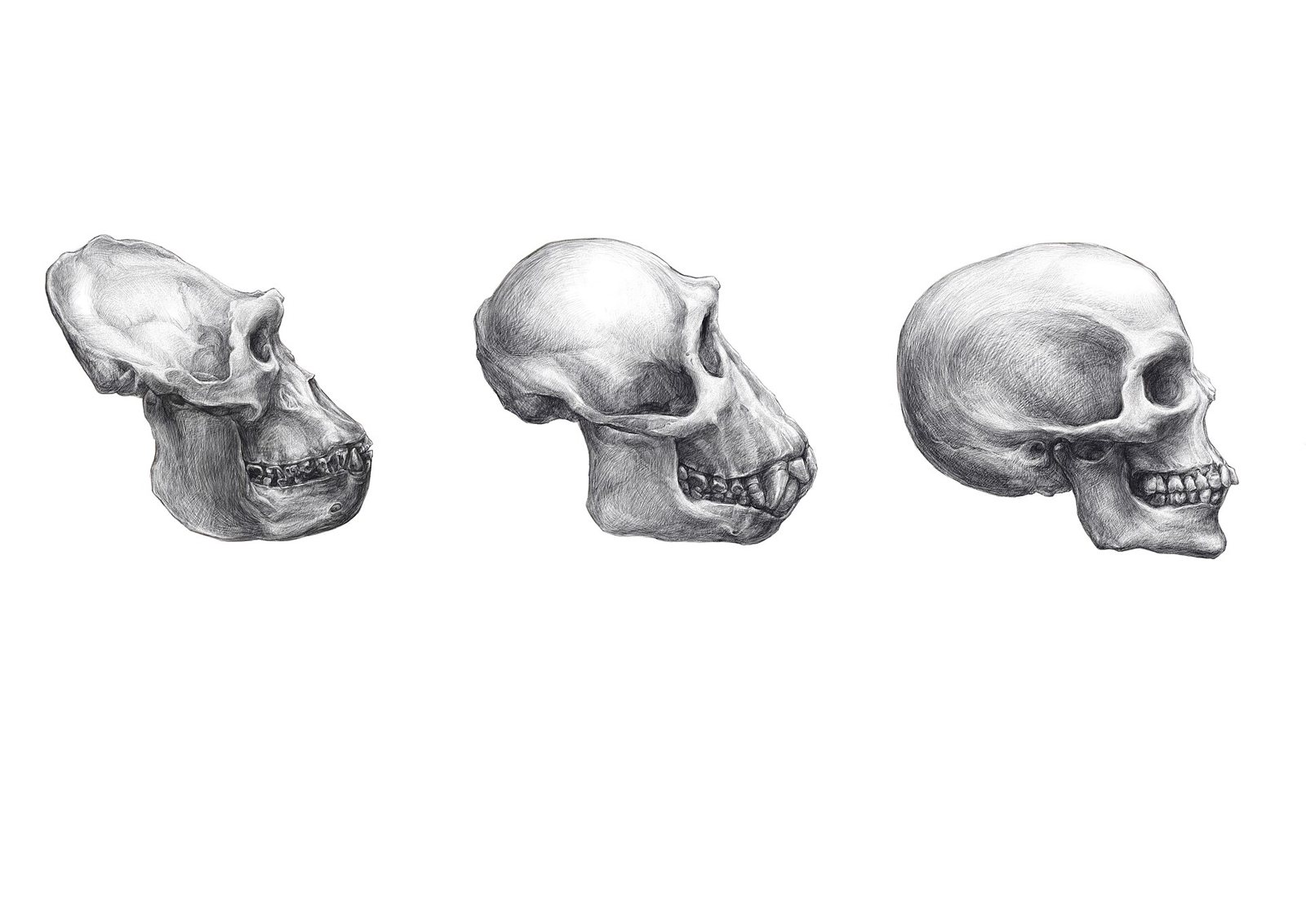
The foramen magnum is the detail worth bending down for. The Smithsonian's Walking Upright page explains that in humans this opening sits underneath the skull, which helps support a head balanced on top of an upright spine. In great apes it sits farther toward the back, reflecting a different head and body posture. A skull tells you something about how its owner stood, even with no other bones in sight.
The Smithsonian's cranial comparison lesson uses exactly this kind of side-by-side look to teach how skulls differ. If you want the general tricks for telling a person's skull from any animal's, our human vs animal skull guide covers them, and human skull facts fills in the human side.
Tap or hover a row to highlight it.
| Feature | Gorilla | Chimpanzee | Modern human |
|---|---|---|---|
| FeatureSagittal crest | GorillaProminent in many adult males; females may have smaller crests | ChimpanzeeRare, especially compared with gorillas | Modern humanNo prominent sagittal crest |
| FeatureFace | GorillaStrongly projecting | ChimpanzeeProjecting | Modern humanRelatively flat |
| FeatureCanines | GorillaLarge, with an ape-type diastema | ChimpanzeeLarge, with an ape-type diastema | Modern humanSmall, with no comparable canine gap |
| FeatureForamen magnum | GorillaToward the rear of the skull | ChimpanzeeToward the rear of the skull | Modern humanUnderneath, nearer the center |
| FeatureOverall build | GorillaPowerful chewing apparatus, heavily built skull | ChimpanzeeMore lightly built ape skull | Modern humanHigh rounded braincase, upright head posture |
Relatives, not a ladder
Standing in front of a gorilla skull, it is natural to wonder how closely it is related to your own. The answer is that humans, chimpanzees and gorillas are cousins who share a common ancestor. The Smithsonian's genetics page places the common ancestor of humans and chimpanzees between 8 and 6 million years ago. Each line has changed in its own way since then, so a living gorilla is a relative rather than an earlier stage of us.
That is why the gorilla skull is such a good comparison piece. It shows one direction a great ape skull can take, toward big jaws and big chewing muscles, while the human skull went toward a large rounded braincase and a smaller face. If you want to follow the human side further back, the stories of Toumaï, Lucy and the oldest human skulls are good next stops, along with Homo erectus and the Neanderthal skull.
Owning a gorilla skull: CITES and replicas
This part is general information, not legal advice. The short version is that a real gorilla skull is not an ordinary collectible.
CITES, the international treaty that controls trade in endangered plants and animals, lists both the western gorilla, *Gorilla gorilla*, and the eastern gorilla, *Gorilla beringei*, in Appendix I. Appendix I covers species threatened with extinction and allows international trade only in exceptional circumstances. The treaty covers parts and derivatives, such as skulls and bones, not only living animals, and commercial international trade in wild-taken Appendix I specimens is generally prohibited. A 2025 CITES document prepared for its CoP20 meeting (Doc. 78.2) states that all great ape species are in Appendix I and reports continuing illegal trade in great ape carcasses and body parts.
So, a real gorilla skull may not be traded as a decorative object. National laws can be stricter than CITES, and the status of any older specimen depends on the country, its provenance, its date and its paperwork. Before possessing, importing, exporting or selling one, confirm the rules with your national wildlife authority or CITES Management Authority.
Replicas and casts are the normal way to own a gorilla skull for display. For the wider question of animal skulls and the rules around them, our page on what to do with an animal skull is the general starting point.
Where to see one
Many natural history museums have gorilla skulls in their collections or on display, and several have been photographed and shared under open licenses. Wikimedia Commons holds photographs of a skull at the Darwin Museum in Moscow, male and female western gorilla skulls from the Muséum de Toulouse and a skull on display at the Göteborgs Naturhistoriska Museum in Sweden. There is also an illustration by Kaiwei Zhang comparing the skulls of the gorilla, chimpanzee and human. The Toulouse pair is a good way to compare a male and a female skull without leaving home.
Gorilla skull questions
These come up often once people have seen the crest up close.
What does a gorilla skull look like?
A gorilla skull is large and heavily built, with a forward-jutting face, a thick brow ridge, strong jaws and long canine teeth. Adult males usually carry a tall sagittal crest on top and a nuchal crest across the back, which together make the skull look as if it is wearing a bony helmet.
Do female gorillas have a sagittal crest?
Yes, female gorillas can have a sagittal crest, but it is usually smaller and develops less consistently than in males. An older sample described by Ashton and Zuckerman found crests in 37 percent of 51 female skulls, so a crested skull is not automatically male.
Does a bigger crest mean a smarter gorilla?
No, crest size has nothing to do with intelligence. The crest is an anchor for jaw muscles on the outside of the skull, and its size reflects chewing muscles, age, sex and possibly social signaling.
Is it legal to own a gorilla skull?
There is no single worldwide answer, but a real gorilla skull is tightly controlled. Both gorilla species are in CITES Appendix I, which generally bars commercial international trade in wild-taken specimens, and national laws can add further limits. Check with the CITES Management Authority in your country; a replica avoids the wildlife-trade question entirely.
Is a museum gorilla skull real or a cast?
It can be either, so read the label. The Smithsonian, for example, keeps gorilla skull casts identified by sex and life stage, such as the juvenile male cast with catalog number 67551.
Gorilla skull quiz
Answer every question to check.
The crest, the canines and you
A gorilla skull is a skull built around chewing. The sagittal crest gives huge temporalis muscles room to grip, the nuchal crest holds the neck muscles that carry that heavy head, and the long canines sit in their own gap in the jaw. Next to it, the human skull trades most of that hardware for a tall, rounded braincase and a head balanced right on top of the spine. The two are cousins, shaped in different directions from a shared ancestor. If heavy jaws and tall crests are your thing, the hyena skull is another one worth a look, and how strong a human skull is makes a fair comparison from our side of the family.
Terms in this story
Tap a term to see what it means.
Sagittal crest. A ridge of bone along the top midline of the skull where the jaw-closing temporalis muscles attach; largest in adult male gorillas.
---