

No. 282
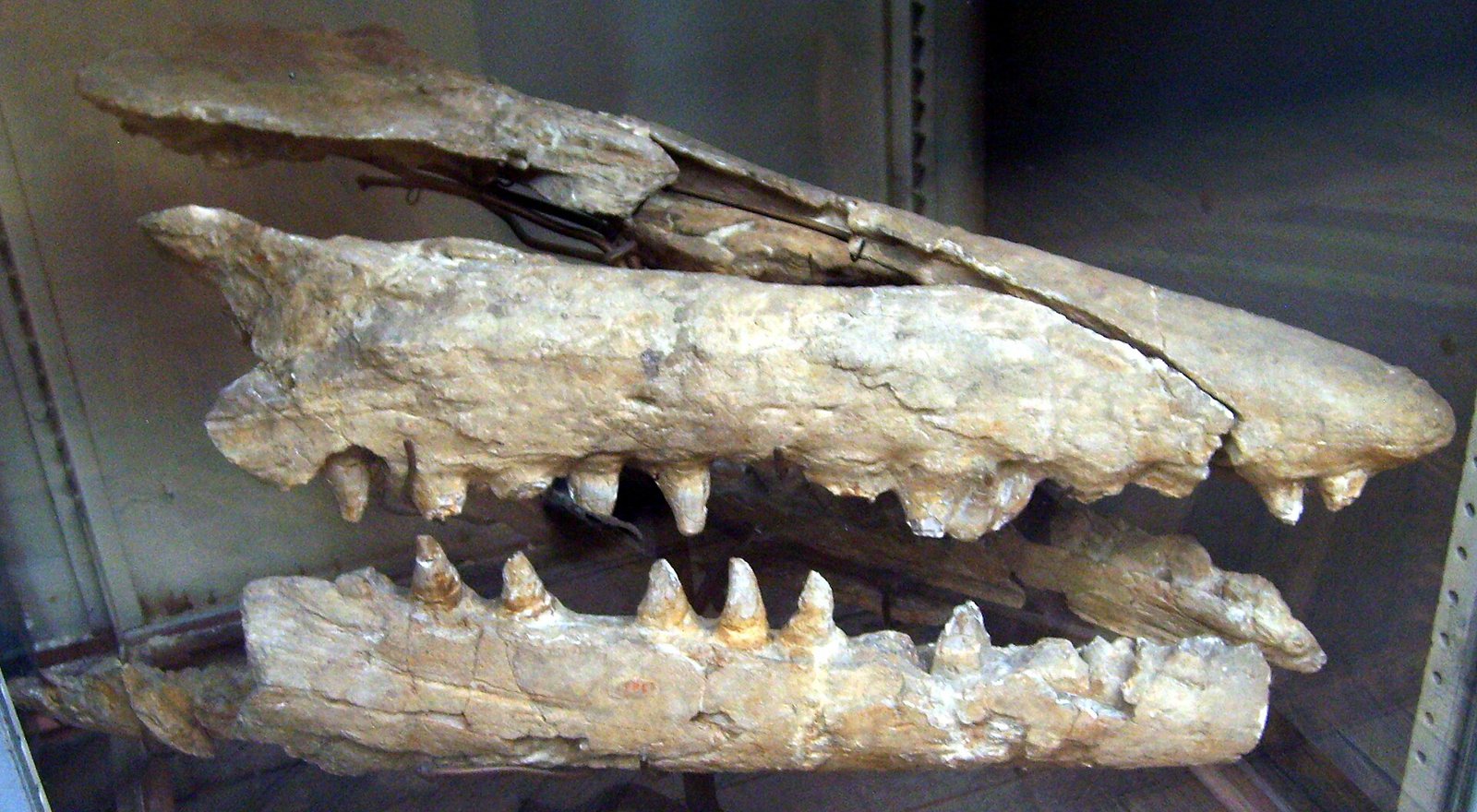
Mosasaur Skull: The Sea Reptile with a Double Row of Teeth
A mosasaur was an extinct marine reptile that hunted in the seas of the Cretaceous Period. It belonged to the squamates, the same reptile group as today's lizards and snakes, as the Natural History Museum, London explains, so it was a sea-going cousin of lizards rather than a dinosaur.
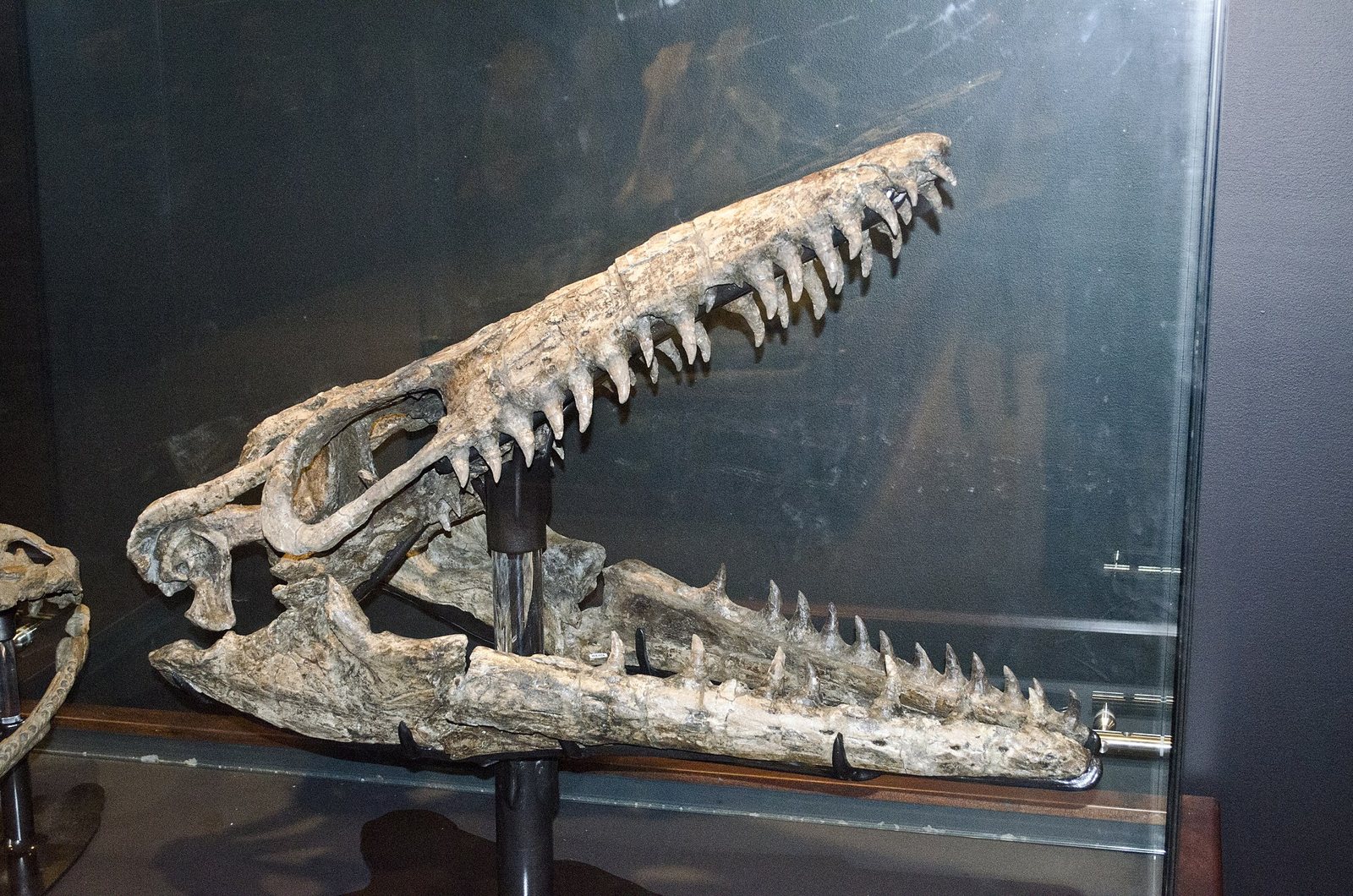
That second row of teeth you noticed sits on the pterygoid bones in the roof of the mouth. Those pterygoid teeth helped the animal grip its prey. A joint partway along each half of the lower jaw, and a highly mobile quadrate bone at the back of the skull, let the head flex so a mosasaur could work large prey back into its mouth (Natural History Museum, London; University of Michigan, Structure and Action of Mosasaur Jaws).
Whether you met one in a museum hall or on a cinema screen, the skull itself is the best place to start.
The skull and its two rows of teeth
Look along a mosasaur skull and the jaws seem to go on forever. Their edges carry conical teeth, the main row that does the first grab. Then, inside the mouth, comes the second set: pterygoid teeth growing from bones in the roof of the mouth. Marc Jones, a curator at the Natural History Museum, London, explains that these inner teeth helped mosasaurs grip prey, and that they resemble tooth arrangements still seen in snakes (Natural History Museum, London).
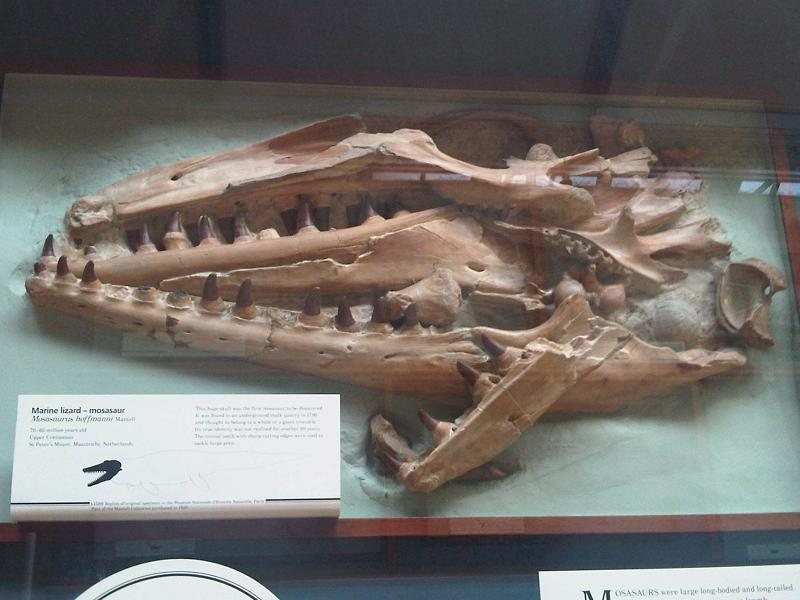
The teeth were only half of the system. Each half of the lower jaw had a joint near its midpoint, so the two halves could flex independently. At the back of the skull, a highly mobile quadrate bone allowed parts of the skull to move on their own, a kind of flexibility comparable to a snake's skull. Working together, the museum says, these features helped mosasaurs seize and swallow relatively large prey.
So, the double row works as a second gripping surface inside the mouth, holding prey while the flexible jaws and skull bones moved it further into the mouth. The teeth themselves have been studied closely too: Caldwell's work on mosasaur dentition looks at how the teeth developed, attached to the bone and were replaced over an animal's life (Caldwell, Zoological Journal of the Linnean Society).
How a mosasaur skull handled prey
Tap a card to bring it forward.
- Marginal teeth: Conical teeth along the edges of the jaws made the first grab.
- Pterygoid teeth: A second row on the roof of the mouth helped hold prey once it was caught.
- Lower-jaw joint: A joint near the midpoint of each lower jaw let the two halves flex independently.
- Mobile quadrate: A highly movable bone at the back of the skull let parts of the head move on their own, comparable to a snake's skull.
A lizard of the sea, related to snakes
Mosasaurs belong to Squamata, the reptile group that includes lizards and snakes. Their skulls show it: a lizard-like ear region and that mobile quadrate bone are both squamate features (Natural History Museum, London).
Exactly where they sit inside that group is still debated. Marc Jones describes the evidence as compatible with two versions of the family tree: mosasaurs as marine relatives of monitor lizards, or as relatives closer to snakes. In a 1997 analysis, the paleontologist M. S. Y. Lee identified mosasauroids as the nearest relatives of snakes, supported by many shared skeletal features (Lee, 1997).
That is a scientific hypothesis about relationships, and it does not mean mosasaurs were snakes. It does explain why the roof of a mosasaur's mouth looks familiar to anyone who has looked inside a snake's. For the land-bound side of the family, our snake skull story shows how those flexible jaws and inner teeth work in living animals.
The Maastricht skulls that started it all
The first mosasaur skulls came out of the ground long before anyone knew what a mosasaur was. In 1764, a partial skull turned up in an underground chalk quarry beneath Sint-Pietersberg, near Maastricht in the Netherlands. That specimen is now at Teylers Museum in Haarlem, which says its fossil collection includes the first known example of *Mosasaurus* (Teylers Museum; Schulp and colleagues, 2024). It came out of the chalk decades before the word "dinosaur" was coined.
A second, more complete skull followed, and it became famous. A 2024 paper by Schulp and colleagues from Naturalis, Utrecht University, Teylers Museum and the Muséum national d'Histoire naturelle dates its find near Maastricht to October 1778. It became known as "le grand animal fossile des carrières de Maestricht," the great fossil animal of the Maastricht quarries. During the French revolutionary occupation of Maastricht, French forces seized it, and it reached the Muséum national d'Histoire naturelle (MNHN) in Paris in 1795 (MNHN).
The dates are told a little differently in Paris. The MNHN's own history page places the find of the Paris specimen between 1770 and 1774, and separately dates another Maastricht jaw to 1766. The two accounts differ, and both come from the institutions closest to the fossils.
In Paris, the skull met Georges Cuvier. He studied it in 1808 and used it in developing his ideas about extinction, the idea that whole kinds of animals can die out completely (MNHN). The genus finally got its name in 1822: *Mosasaurus*, "lizard of the Meuse," after the river that runs past Maastricht (Natural History Museum, London).
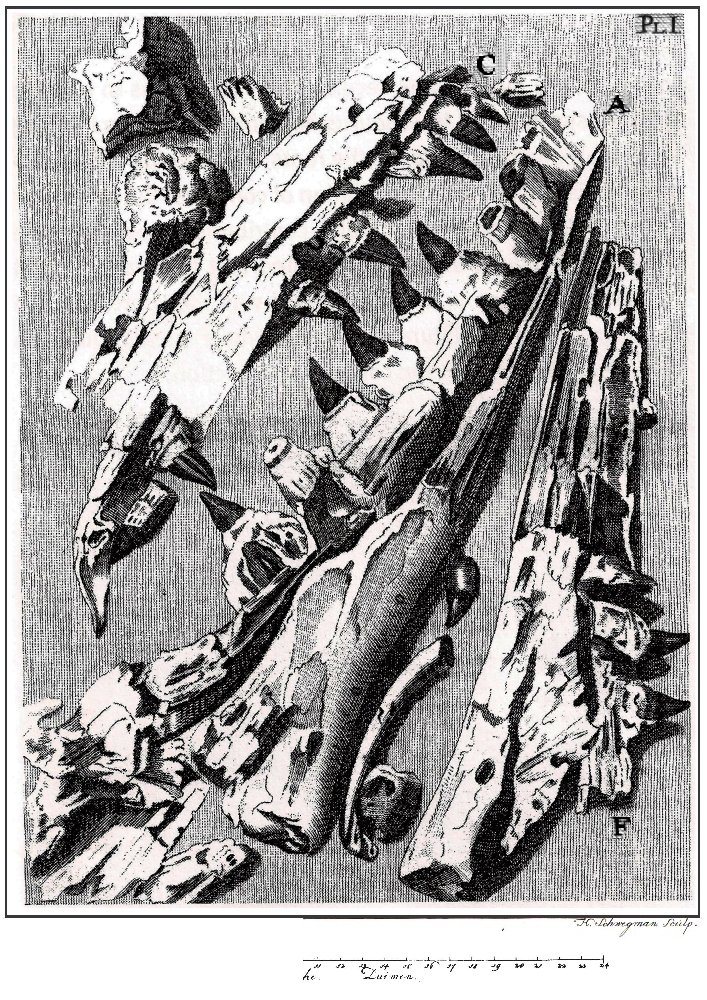
An early image of the skull survives as well. A 1790 illustration attributed to Barthélemy Faujas de Saint-Fond and Martinus van Marum is now in the public domain, a look at the fossil as the naturalists of the 18th century saw it.
The mosasaur skull through time
Tap or hover a step to follow the order.
1764
A partial mosasaur skull comes out of the chalk beneath Sint-Pietersberg near Maastricht.
October 1778
A more complete Maastricht specimen is found, per Schulp and colleagues.
1795
The Paris specimen enters the collections of the Muséum national d'Histoire naturelle.
1808
Georges Cuvier studies the Maastricht fossil.
1822
The name Mosasaurus, lizard of the Meuse, is proposed.
1996
The Safford Plioplatecarpus skull is found on a student field trip in Alabama.
1998
Remains of the Prognathodon known as Bèr are found near Maastricht.
How big was a mosasaur skull?
Large mosasaur skulls could reach about 2 meters in length, according to the Natural History Museum, London. The museum names *Mosasaurus hoffmannii*, the Maastricht species, as one of the largest of its genus, with estimates of total body length ranging from roughly 11 to 18 meters depending on the method (Natural History Museum, London). The MNHN gives it a possible body length of up to 15 meters (MNHN).
One famous big individual lives in Canada. Bruce, a *Tylosaurus pembinensis* in Morden, Manitoba, measures 13.05 meters long and is among the largest mosasaurs on public display, according to Guinness World Records. That figure is for the whole animal, not the skull alone.
Size is not the only thing that makes a skull special; completeness counts too. The Alabama Museum of Natural History holds a roughly 75 percent complete *Plioplatecarpus* skull from near Safford, Alabama, which came out of the ground in 1996 during a student field trip led by Mona Williams, with Jon Bryan named as collector. The museum reports a mosasaur collection of more than 1,000 specimens (Alabama Museum of Natural History).
Tap or hover a row to highlight it.
| Specimen or measure | Size | Who gives it |
|---|---|---|
| Specimen or measureLargest mosasaur skulls | SizeUp to about 2 m long | Who gives itNatural History Museum, London |
| Specimen or measureMosasaurus hoffmannii, whole body | SizeAbout 11 to 18 m, by estimate | Who gives itNatural History Museum, London |
| Specimen or measureMosasaurus hoffmannii, whole body | SizeUp to 15 m | Who gives itMuséum national d'Histoire naturelle |
| Specimen or measureBruce, Tylosaurus pembinensis | Size13.05 m, whole animal | Who gives itGuinness World Records |
| Specimen or measureBèr, Prognathodon reconstruction | SizeAbout 11 m | Who gives itNatural History Museum Maastricht |
| Specimen or measureSafford Plioplatecarpus skull | SizeAbout 75% complete | Who gives itAlabama Museum of Natural History |
A family with many kinds of skull
"Mosasaur" covers a whole family, the Mosasauridae, not one animal. The Natural History Museum, London names several members: *Mosasaurus*, *Tylosaurus*, *Prognathodon* and *Plioplatecarpus* among them (Natural History Museum, London).
Maastricht has its own favorite. Bèr is a *Prognathodon* whose remains were found near the city in 1998 (Visit Maastricht). The Natural History Museum Maastricht has turned Bèr into a life-size, 3D-printed reconstruction about 11 meters long, built from scans and modelling developed with Naturalis (Natural History Museum Maastricht).
The family is still growing. In 2023, Caitlín Kiernan and Adiel Klompmaker described a new species from Alabama, *Ectenosaurus shannoni* (Alabama Museum of Natural History collections).
Where to see a mosasaur skull
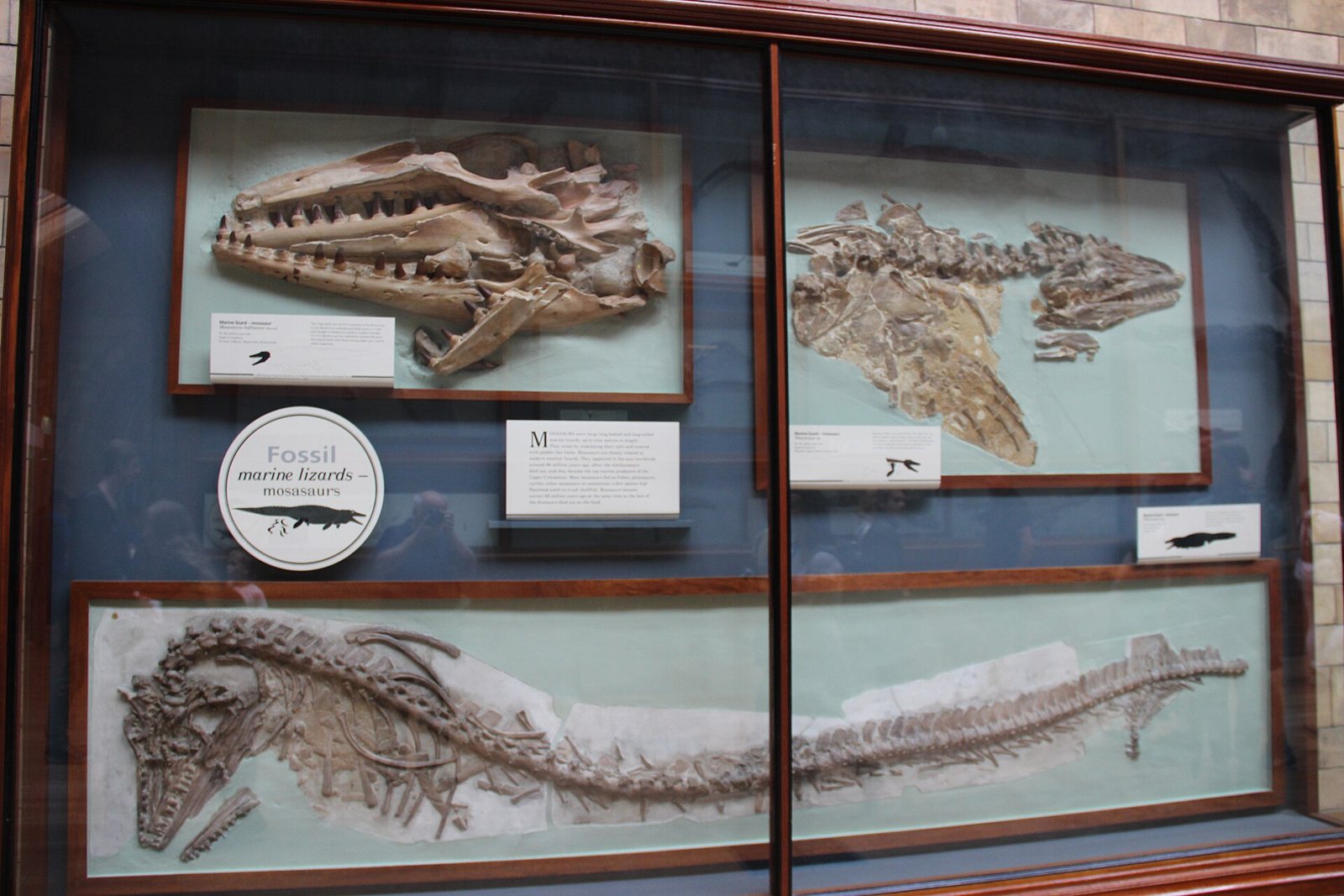
The skull that went to Paris is still there. The Muséum national d'Histoire naturelle holds the Paris specimen of *Mosasaurus hoffmannii* in its Galerie de Paléontologie et d'Anatomie comparée (MNHN). In Haarlem, Teylers Museum displays the partial skull from 1764 (Teylers Museum).
In London, the Natural History Museum displays a cast of the Paris skull, an exact copy made from a mould of the original (Natural History Museum, London). Back in the city where it all started, the Natural History Museum Maastricht shows local mosasaur remains along with the Bèr reconstruction (Natural History Museum Maastricht).
In North America, the Safford *Plioplatecarpus* skull is held in the paleontology collections of the Alabama Museum of Natural History, and Bruce the *Tylosaurus* is on show in Morden, Manitoba. Museums are also the reliable place to see skulls whose identity and completeness have been studied and published.
Displays change, so confirm current access and opening arrangements with the museum before you travel.
How well do you know the mosasaur skull?
Answer every question to check.
Frequently asked questions
A few more questions about mosasaurs, answered briefly.
What is a mosasaur?
A mosasaur is an extinct marine reptile of the family Mosasauridae that lived during the Cretaceous Period. It was a squamate, related to lizards and snakes, and its best-known genus, *Mosasaurus*, is named "lizard of the Meuse" after the river beside Maastricht (Natural History Museum, London).
Is a Mosasaurus a dinosaur?
No, a *Mosasaurus* was a marine squamate reptile, not a dinosaur. Its closest living relatives are lizards and snakes, and Naturalis in the Netherlands describes *Mosasaurus hoffmannii* the same way (Naturalis).
How big was a Mosasaurus?
*Mosasaurus hoffmannii* was one of the giants, with body-length estimates of roughly 11 to 18 meters from the Natural History Museum, London. The Muséum national d'Histoire naturelle puts it at up to 15 meters.
Did mosasaurs replace their teeth?
Yes, mosasaur teeth developed and were replaced over the animal's life. Caldwell's study of mosasaur dentition traces how the teeth formed, attached and were replaced (Caldwell).
More fossil skulls to look at next
If the mosasaur ruled the Late Cretaceous seas, other famous skulls held the land. The Velociraptor skull is a small, feathered hunter from Mongolia, SUE the T. rex skull is the giant meat eater, and the Triceratops skull carries its three horns and frill. For the snake side of the family tree, read the snake skull story, and for another very large skull from the sea, try the whale skull.
Terms in this story
Tap a term to see what it means.
Mosasaur. An extinct marine reptile of the family Mosasauridae that lived in the Cretaceous seas.
---