

No. 300
Elk Skull Identification: Size, Teeth and Antlers
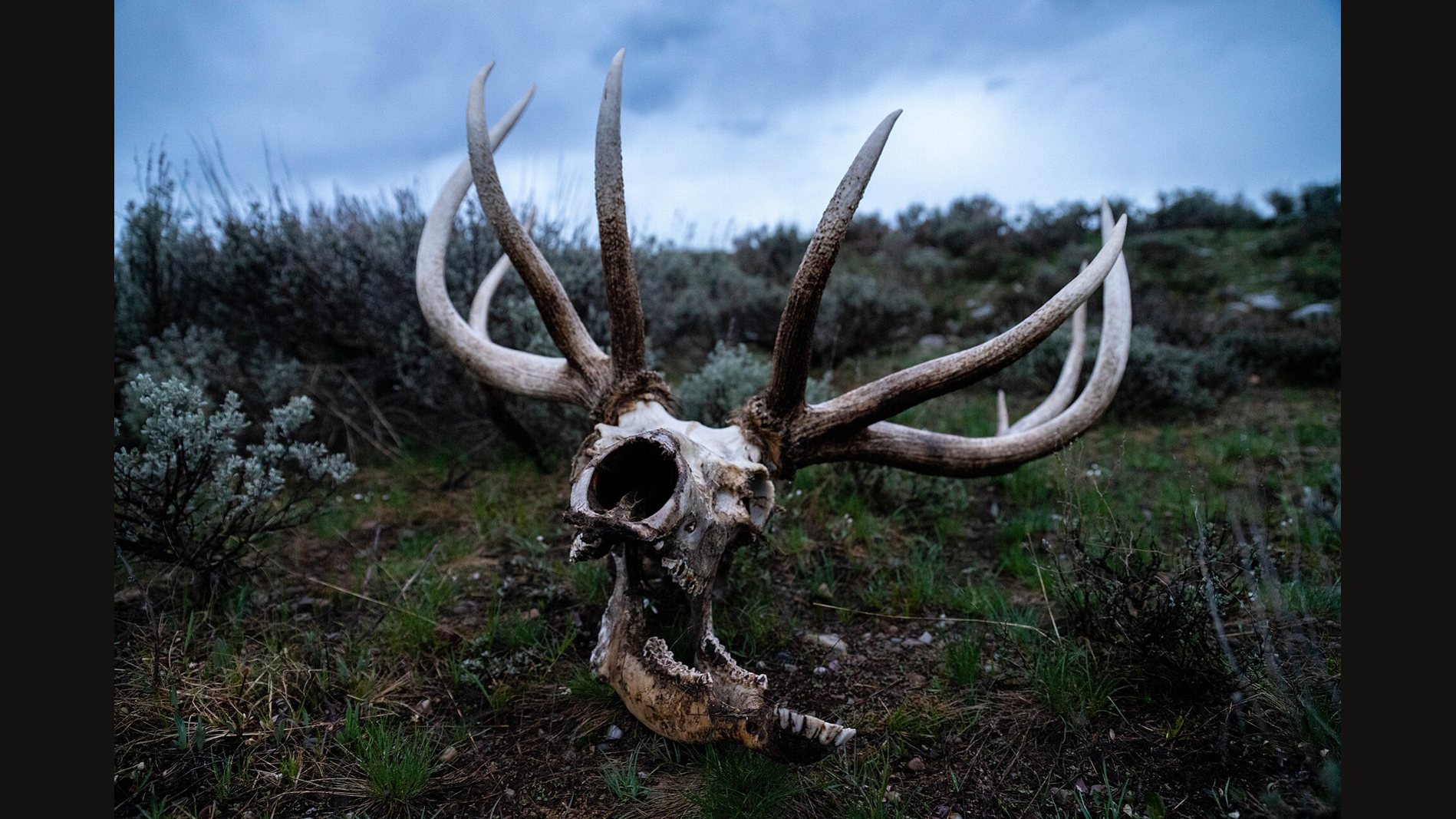
An elk skull is big, long and slender. Purdue Extension's wildlife identification key puts the North American elk, *Cervus canadensis*, at about 15 to 21 inches from nose to back of skull. That is well beyond a Rocky Mountain mule deer at about 9 to 12 inches, and usually short of a moose at about 20 to 25. The detail that settles most cases sits in the upper jaw: elk carry one small, rounded canine tooth on each side, the teeth hunters call ivories. A moose has none.
So, if the skull at your feet is too large for a deer, start with a tape measure and then look for those two little teeth, or the empty sockets where they sat. Between them, size and canines answer the question far more often than not. The sections below fill in the rest: whether it was a bull or a cow, what the ivories are, how the antlers fit in and what to think about before you carry it home.
How big is an elk skull, and what does it look like?
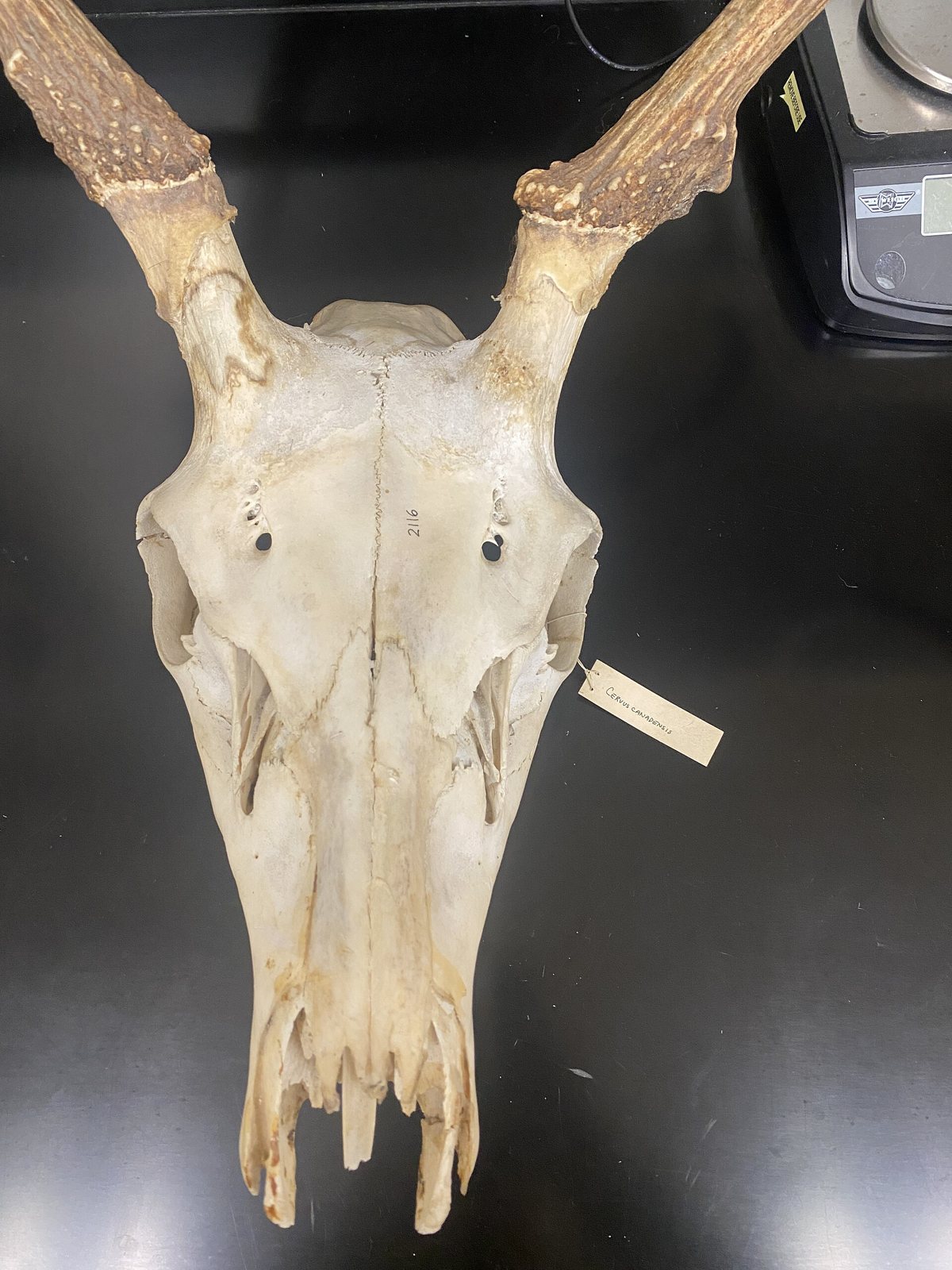
Purdue's key describes the elk skull as large and slender, tapering toward the nose, at roughly 15 to 21 inches long. Measure it from the front of the snout to the back of the skull, and treat the number as one clue among several, since a young animal or a damaged skull can come in short.
Next, turn to the teeth. Like the rest of the deer family, elk have no upper incisors at the front of the mouth. They do have upper canines, one on each side. The Texas Tech University mammal account for the wapiti or elk gives the dental formula as I 0/3, C 1/1, Pm 3/3, M 3/3. Read it as incisors, canines, premolars and molars for one side, upper over lower, then double it: 34 teeth in all.
Two smaller features help when the teeth are missing. The University of Illinois *Fieldbook of Illinois Mammals* points to a fully enclosed eye socket and an open space between the lacrimal and nasal bones, in front of the eye. On a bull, the bony antler bases called pedicles may still be there even if the antlers are gone.
Elk, mule deer or moose?
These three overlap in some features, so it helps to set them side by side. The figures come from Purdue's key, with the mule deer entry for the Rocky Mountain mule deer, *Odocoileus hemionus*, and the moose entry for *Alces alces*.
Tap or hover a row to highlight it.
| Clue | Elk | Mule deer | Moose |
|---|---|---|---|
| ClueApproximate skull length | Elk15 to 21 inches | Mule deer9 to 12 inches | Moose20 to 25 inches |
| ClueUpper incisors | ElkNone | Mule deerNone | MooseNone |
| ClueUpper canine ivories | ElkPresent | Mule deerNot a defining feature in the key | MooseAbsent |
| ClueEye-area clue | ElkLarge skull with a tapering face | Mule deerDeep pit in front of the eye socket | MooseLarge, slender skull |
| ClueAntler clue | ElkBull pedicles may remain | Mule deerBuck pedicles may remain | MooseBull pedicles may remain |
Size and canines make the strongest pair. A skull of 20 to 25 inches with no upper canines points to moose. A skull of 9 to 12 inches with a deep pit in front of the eye socket points to mule deer. The elk sits in between, and its two ivories are the tiebreaker. Notice that the elk and moose ranges touch at 20 to 21 inches, so a big elk or a small moose can land in the same spot on the tape. When that happens, the upper jaw decides: teeth or empty canine sockets mean elk.
Our deer skull identification story covers whitetail, mule deer and European deer in detail, and the moose skull story covers the largest member of the family.
Is it an elk skull?
Tap a card to bring it forward.
- Length: Is the skull roughly 15 to 21 inches long?
- Upper canines: Are there two small upper canine teeth, or empty sockets where they were?
- Upper incisors: Does the front of the upper jaw lack incisors?
- Face bones: Is there an open space between the lacrimal and nasal bones?
- Pedicles: Are large antler pedicles present? They suggest a bull.
Bull or cow?
The most reliable sex clue on a complete elk skull is on top of the head. A bull normally has two prominent bony pedicles, the bases where antlers grow, and they stay even after the antlers are shed. A cow normally has none. If small, unbranched antlers are still attached, the skull came from a spike or yearling bull, not a cow.
Montana Fish, Wildlife & Parks defines an antlered bull for hunting purposes as an elk with at least one antler measuring 4 inches or more from the top of the skull. Its identification guide shows mature bull antlers with several tines rising from a main beam.
Body size is a weaker clue for a skull lying in the grass. The Kentucky Department of Fish and Wildlife Resources gives average weights of about 800 pounds for bulls and about 450 pounds for cows or yearling spikes, but nobody can rebuild a live weight from a bare skull. And because both sexes grow ivories, the canines tell you elk, not bull or cow.
The ivories
Those two small teeth have a story of their own. Montana Fish, Wildlife & Parks describes elk ivories as the reduced remnants of larger tusks carried by the elk's ancestors. Hunters have a handful of names for them: ivories, tusks, buglers, whistlers and eyeteeth, all recorded in the 2012 Montana Outdoors article "Rocky Mountain Ivory".
They take a while to grow in. According to Montana FWP, temporary calf canines appear early and stay for about a year before permanent ones replace them. The permanent canines can then take several years to fully emerge and fill with dentine. Even a big one is modest in size: Montana Outdoors gives a large bull's ivory, root included, as about 1.25 inches long by 0.75 inches wide.
Small as they are, ivories mean a lot to the people who keep them. Montana Outdoors describes collecting them as a hunting tradition and reports that they have been kept as jewelry and mementos for generations. A tooth the size of a thumbnail carrying that much weight is one of the nicer facts about this animal.
Antlers, not horns
If the skull still has its rack, you are looking at bone that was never meant to last. The Alaska Department of Fish and Game skull guide explains that elk antlers grow from the skull, are covered in velvet while growing and are shed every year. Horns, by contrast, are permanent.
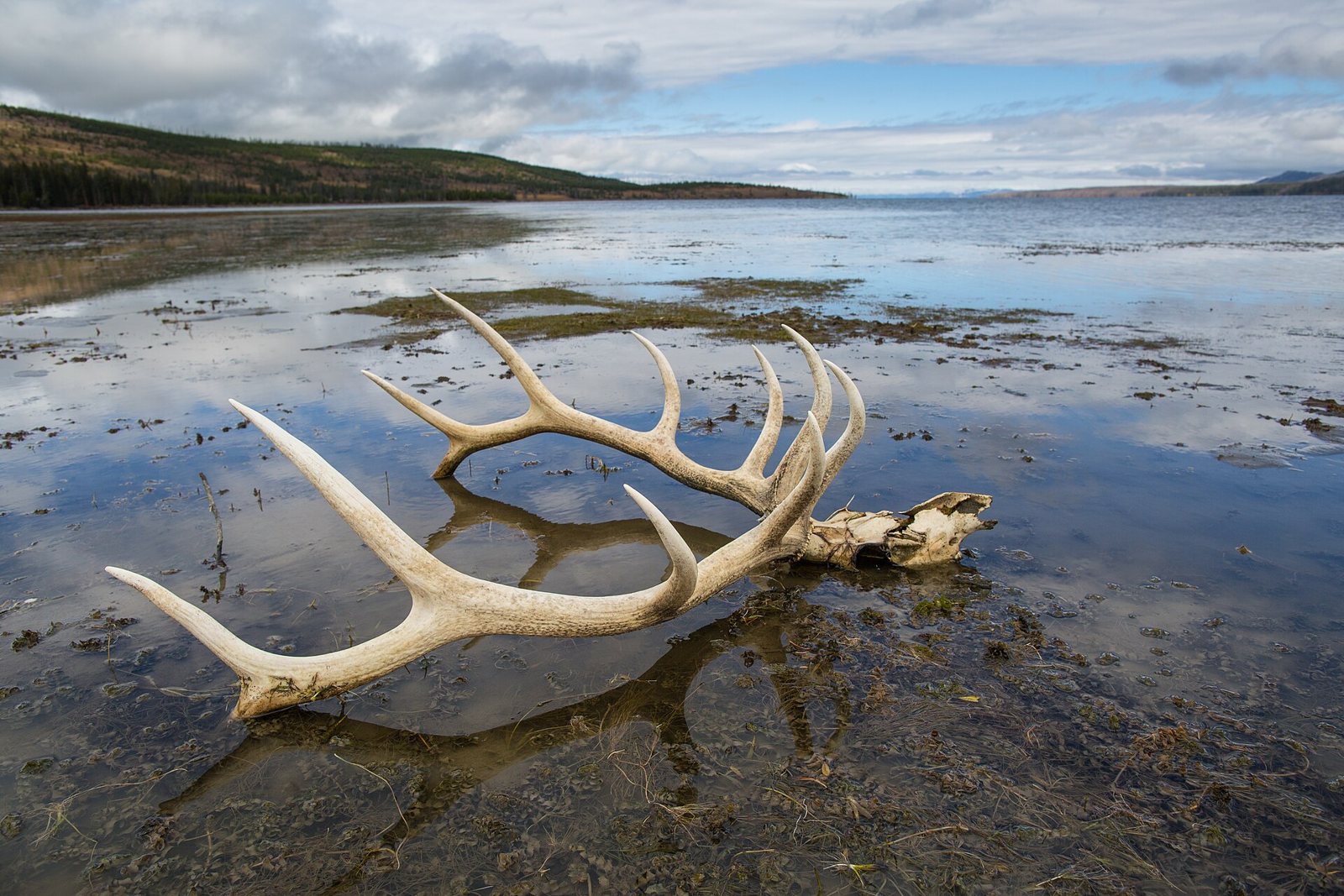
Elk antlers are also large. The U.S. Fish and Wildlife Service reports that a mature bull's antlers can reach seven or eight points per side, four feet in length and about 20 pounds each. Carrying an antlered elk skull out of the backcountry is a two-handed job.
Cleaning an elk skull without losing the teeth
If you have the right to keep the skull and decide to clean it, the teeth deserve the most care. The Alaska Department of Fish and Game's skull-cleaning advice is to work gently, because teeth loosen during heating and cleaning. Collect any loose teeth, let them dry, and glue them back in place with white glue. Avoid too much heat or long soaking, because teeth can crack.
For the full process, from simmering to whitening to hanging, our European mount deer skull story walks through the steps for an antlered skull, and how to clean an animal skull covers the basics for any species.
Chronic wasting disease and moving elk parts
Chronic wasting disease affects elk as well as deer, and it shapes what hunters may move between areas. The CDC's page on chronic wasting disease, dated January 21, 2026, advises wearing gloves, avoiding contact with brain and spinal tissue, and following state rules on testing and transport.
Those state rules vary. Wyoming Game and Fish lists cleaned skulls, skull plates, antlers and teeth among the parts allowed to move under its CWD requirements, and other states set their own lists. Confirm the current transport and CWD rules with the wildlife agency for the state where the elk was taken, and for any state you will pass through, before relying on them.
Keeping a found elk skull or ivory
A skull you found is a different case from one you hunted, and the rules change with the state, the land manager and the part involved.
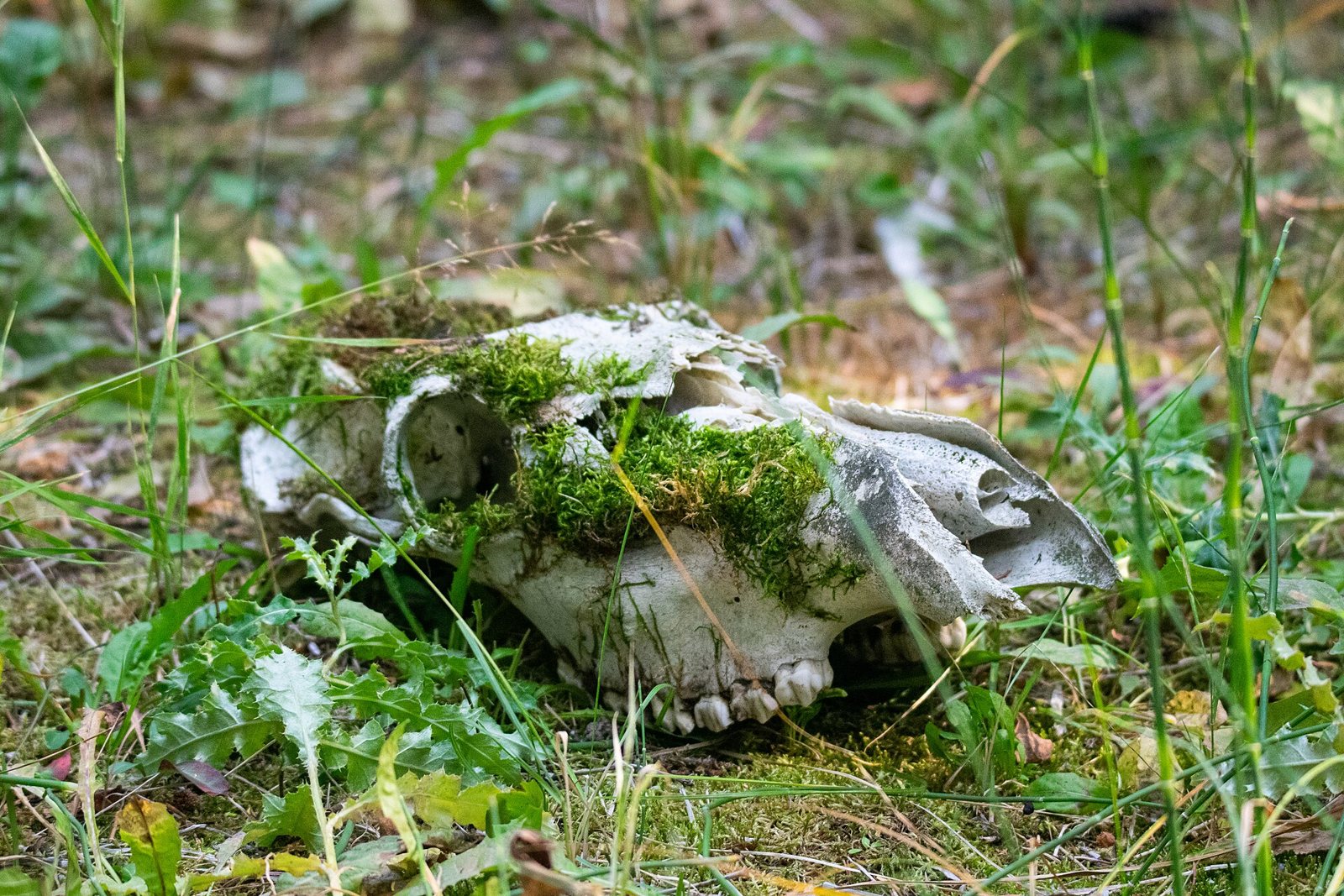
> General information, not legal advice: Laws on wildlife parts differ between states and land managers, and they are revised. Before you possess, transport, sell or give away an elk skull, tooth or antler, ask the state wildlife agency and the land manager, or the U.S. Fish and Wildlife Service where federal rules may apply.
Alaska Department of Fish and Game makes the same point in its skull-cleaning advice: check the wildlife regulations before possessing, transporting, selling or giving away any skull, tooth or other animal part. Our story on what to do when you have found an animal skull goes through the general questions to ask before a skull leaves the woods.
The other elk, and the alce
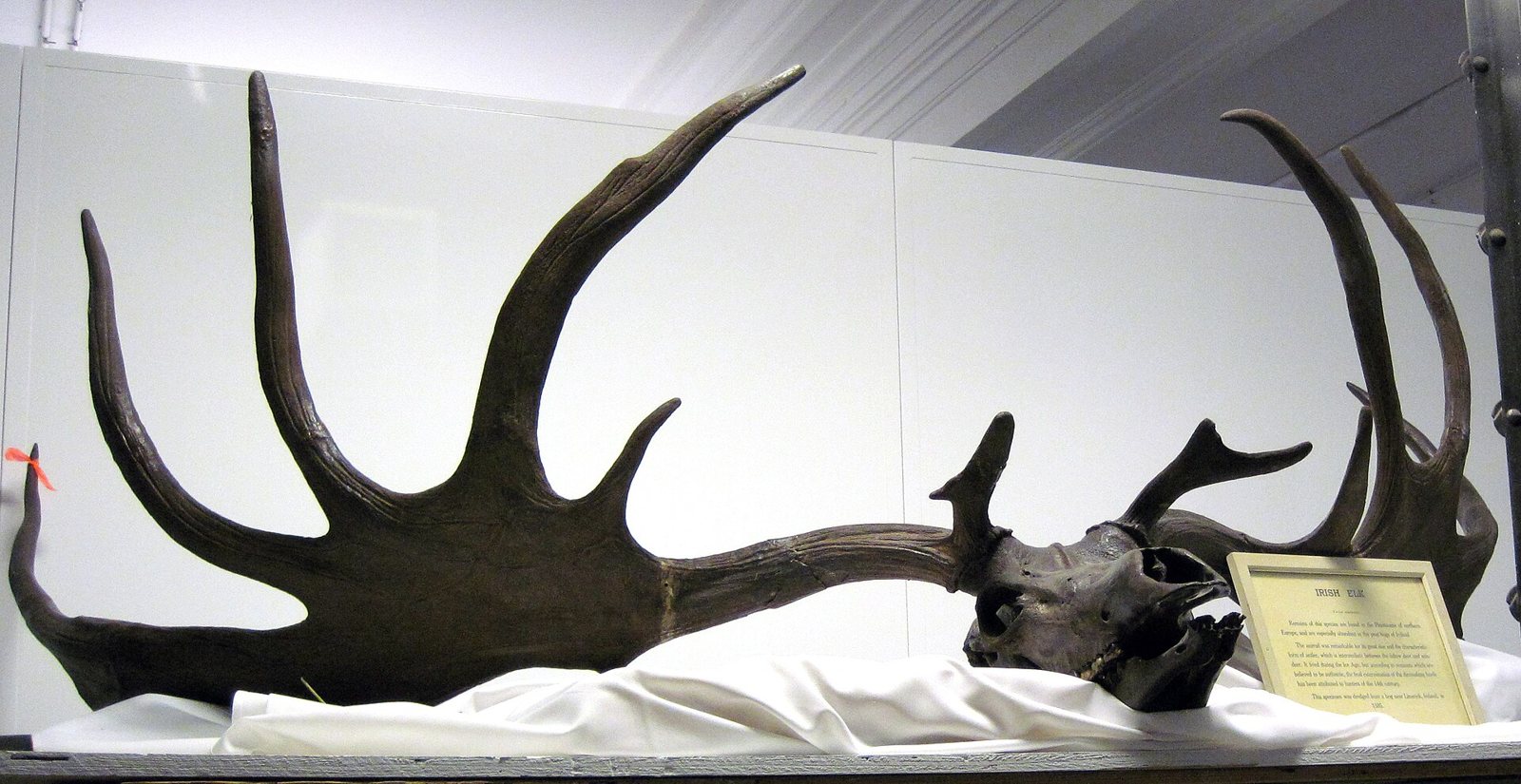
Two naming tangles catch people out. The first is the Irish elk, *Megaloceros giganteus*, an extinct giant deer and a different animal from the North American elk. Its skulls come from Pleistocene peat bogs, such as one near Limerick in southwestern Ireland held as a Denver Museum of Nature and Science specimen, and a skeleton is displayed at the Museum of Liverpool. Neither has anything to do with the elk skull you might find in the Rockies.
The second is the word alce. In Spanish, alce is the moose, *Alces alces*, while the North American elk is the wapití or ciervo canadiense. Spanish museum records keep the two apart: the Museo Nacional de Ciencias Naturales lists a "Cráneo de alce" for *Alces alces* from 1900, and a separate museum record catalogues a "Cráneo de Wapiti" from 1912 to 1913. The alce, then, is the 20 to 25 inch skull with no upper canines, and the wapití is the elk with its ivories.
Elk skull quiz
Answer every question to check.
Quick answers about elk skulls
These questions follow most elk finds home.
Do elk have canine teeth?
Yes, elk have one upper canine on each side of the front of the upper jaw. Hunters call them ivories, and their presence is the quickest way to tell an elk skull from a moose skull.
Are elk ivories really ivory?
They are canine teeth that hunters call ivories. Montana Fish, Wildlife & Parks describes them as reduced remnants of the larger tusks of the elk's ancestors.
Do cow elk have ivories?
Yes, both bulls and cows grow upper canine ivories. That is why the teeth confirm an elk but do not tell you its sex; look for pedicles instead.
How do you preserve elk teeth?
Handle the skull gently during cleaning, because heat loosens teeth and long soaking can crack them. Alaska Department of Fish and Game advises saving any loose teeth, drying them and setting them back with white glue.
How is an elk skull different from a deer skull?
An elk skull is far larger, about 15 to 21 inches against roughly 9 to 12 for a mule deer. Both lack upper incisors, but the elk has upper canine ivories, while the mule deer has a deep pit in front of each eye socket.
Can you keep an elk skull found in the woods?
That depends on the state and the land manager, so ask the state wildlife agency before you take it. Rules also cover teeth and antlers, so the same check applies to a single ivory.
If you are still holding a big skull and wondering, measure it, look at the upper jaw and check the top of the head for pedicles. For the symbolism side of the deer family, deer skull meaning is the next read.
Terms in this story
Tap a term to see what it means.
Cervus canadensis. The scientific name of the North American elk, also called the wapiti.
---