

No. 299
Deer Skull Identification: Whitetail, Mule Deer or Roe Deer?
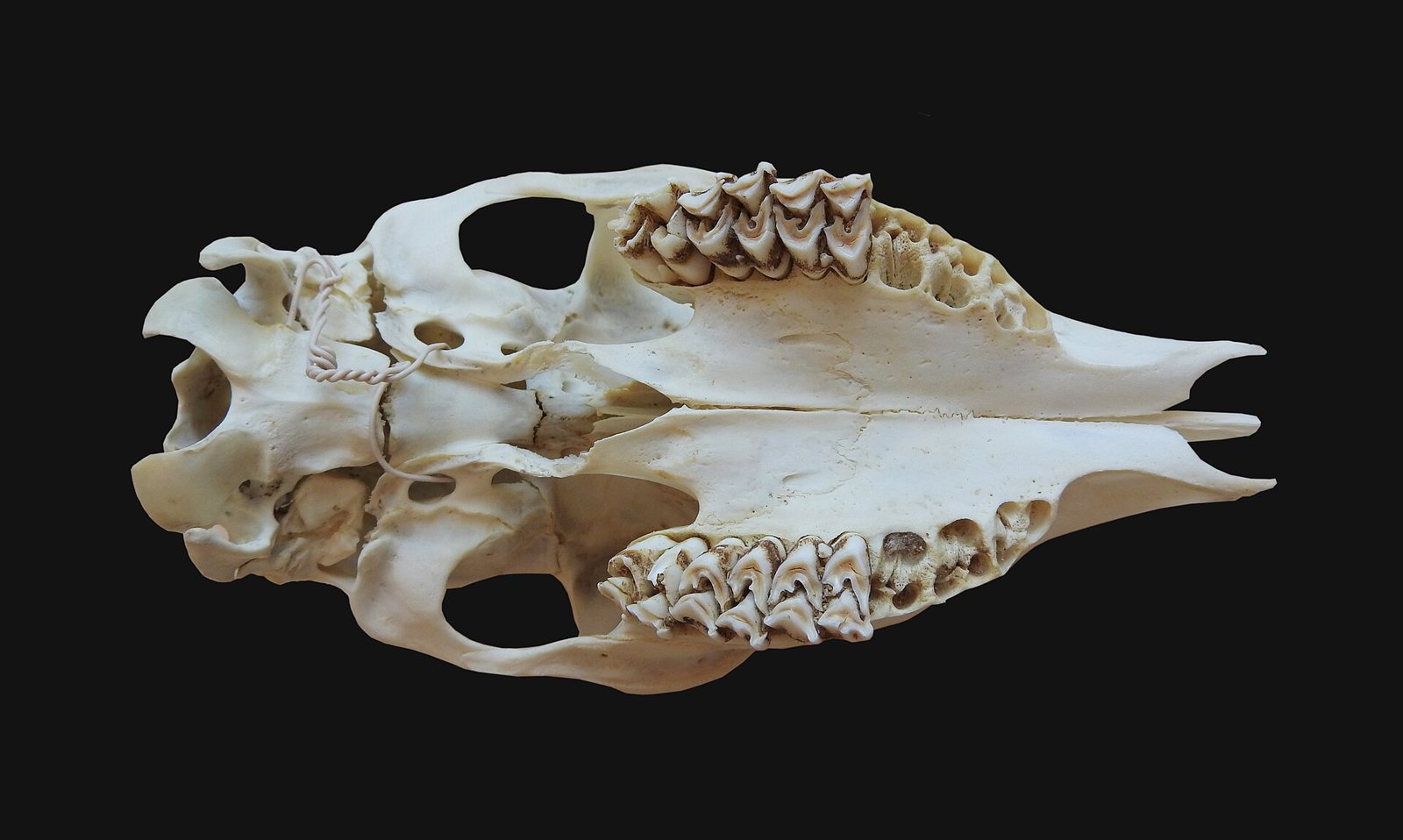
A deer skull gives itself away at the front of the mouth. The upper jaw has no incisors; instead the lower front teeth bite against a tough dental pad. Behind them comes a long toothless gap, then a row of grinding cheek teeth, and just in front of each eye socket sits a shallow pit. Once you know it is a deer, the antlers do most of the work of telling whitetail from mule deer: whitetail points rise from one main beam, while mule deer antlers fork. A buck shows antlers or the paired bony stubs where they grew, and age is read from tooth replacement and wear on the lower jaw.
Those clues come from university mammal collections and state wildlife agencies, and they work best together. No single feature settles every skull, because deer vary with age, injury and genetics, and a skull lying in a field for a season may be missing pieces. Take the checks in order, and the answer usually narrows quickly.
First check: is it a deer at all?
Turn the skull over and look at the front of the upper jaw. A deer has no upper incisors, a point the Internet Center for Wildlife Damage Management uses as one of its first sorting clues. The lower incisors meet a pad of tough tissue that does not survive cleaning, so on a bare skull that spot simply looks empty.
The full tooth count is written as a dental formula, upper over lower, for one side of the mouth. For the white-tailed deer, *Odocoileus virginianus*, the Texas Tech University Natural Science Research Laboratory gives it as I 0/3, C 0/1, P 3/3, M 3/3: no upper incisors, three lower; no upper canine, one lower; three premolars and three molars above and below. Double that and you get 32 permanent teeth. The University of Texas at El Paso dental formula key lists the same pattern for *Odocoileus*.
Next, look just in front of each eye socket. The shallow depression there is the lacrimal or preorbital pit, linked to the preorbital gland of the living animal. The DePauw University skull guide treats it as a useful deer-family feature, though its size varies among species.
One surprise is worth knowing about. Nebraska Game and Parks has documented rare individual white-tailed and mule deer with upper canine teeth. So, a single upper tooth near the front does not automatically rule out deer; it just makes the rest of the checklist matter more.
Tap or hover a row to highlight it.
| Identification clue | Likely interpretation |
|---|---|
| Identification clueNo upper incisors | Likely interpretationDeer or another ruminant with a dental pad |
| Identification clueDental formula I 0/3, C 0/1, P 3/3, M 3/3 | Likely interpretationWhite-tailed deer and related deer pattern, 32 permanent teeth |
| Identification cluePoints rising from one main antler beam | Likely interpretationTypical whitetail pattern |
| Identification clueMain antler beam forking into smaller forks | Likely interpretationTypical mule deer pattern |
| Identification cluePermanent horn core | Likely interpretationSheep or goat rather than deer |
Whitetail or mule deer?
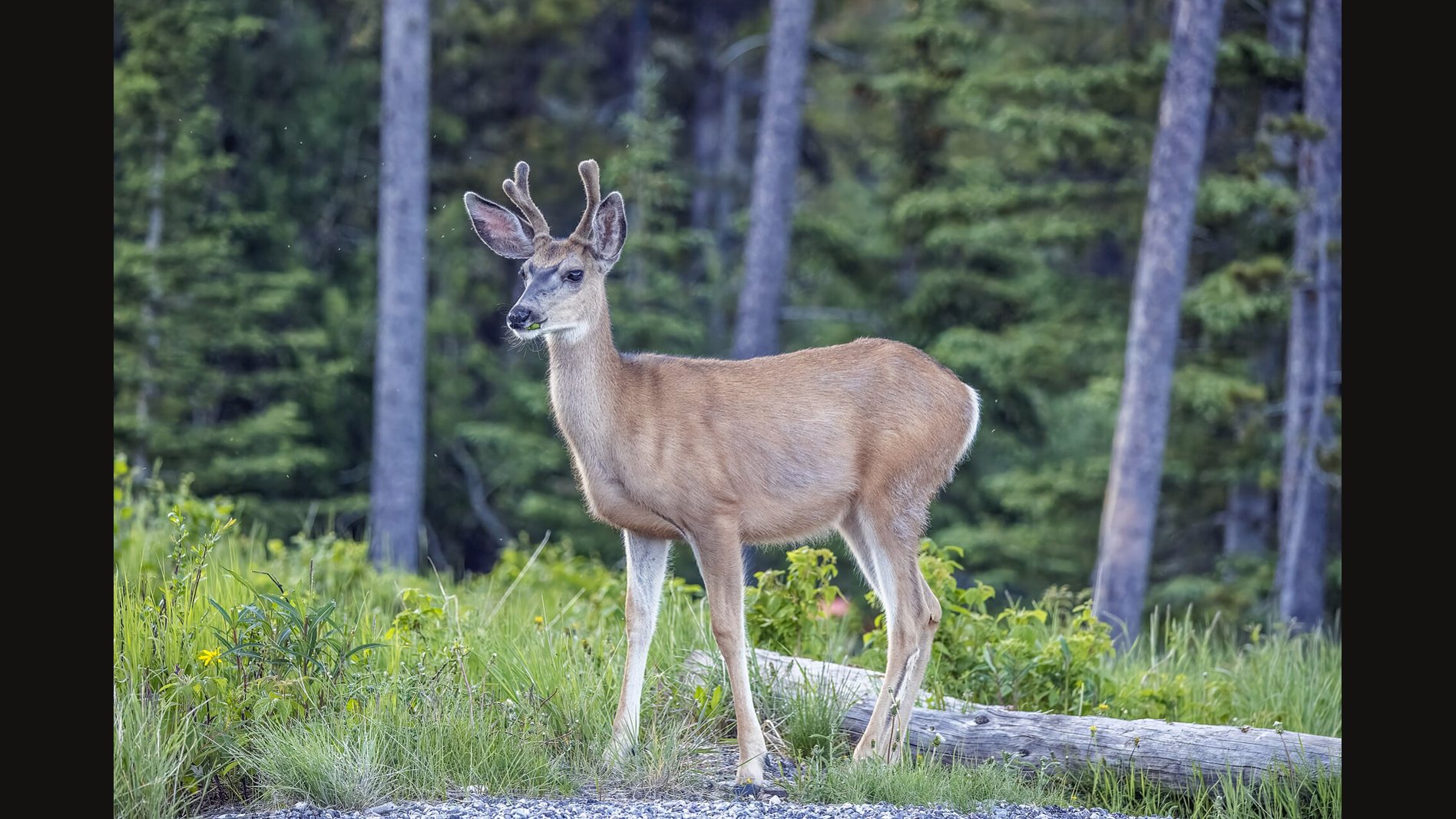
In North America the usual question is which of the two common deer you are holding. Without antlers, the skull itself gives some hints. White-tailed deer usually have a relatively narrower, more delicate skull with a longer, broader muzzle. Mule deer, *Odocoileus hemionus*, generally have a heavier-looking skull. The mule deer's famous big ears help only when the head is still intact, which is rarely the case with a bleached find.
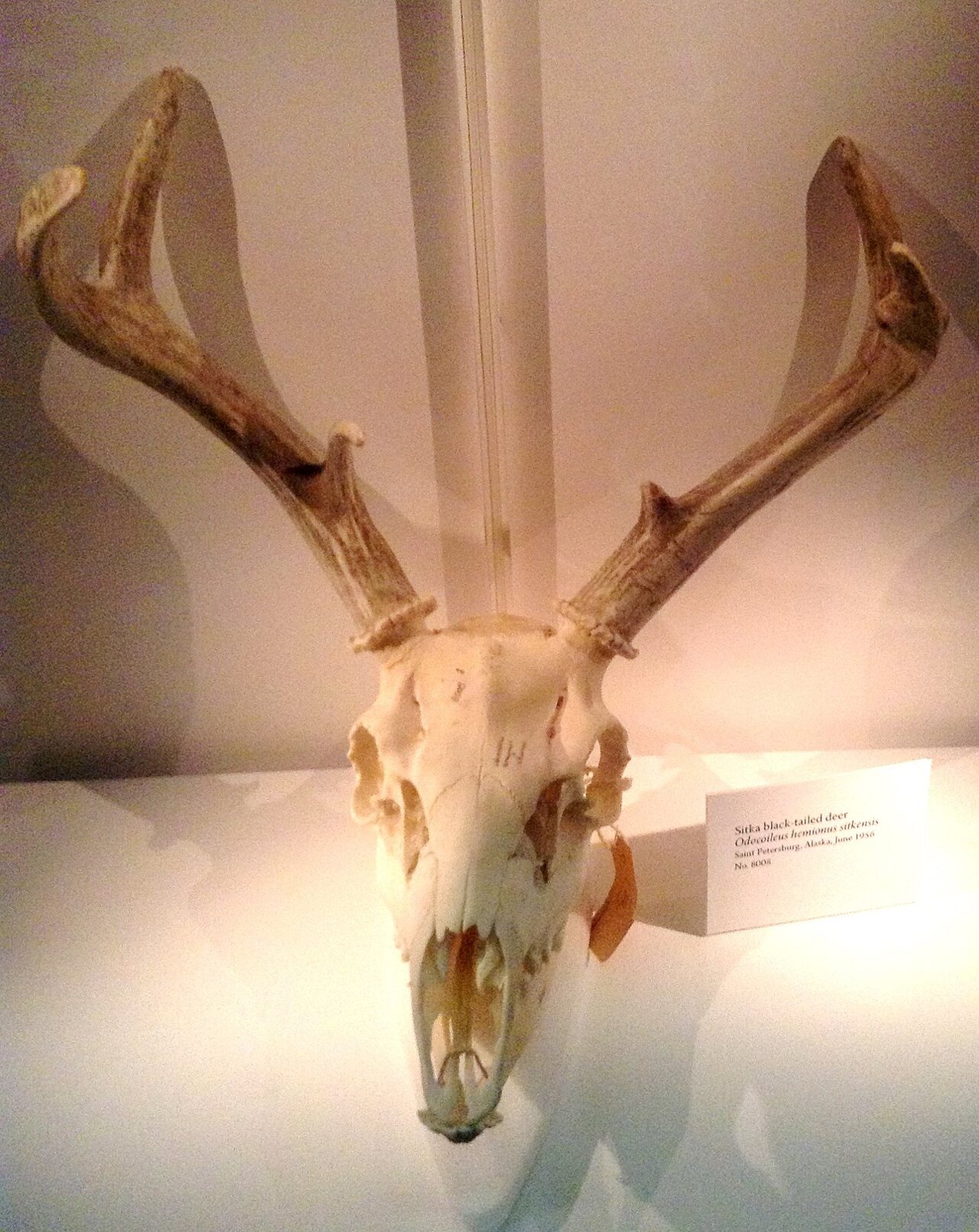
Antlers are the stronger clue. In a 1989 comparison for the Nebraska Game and Parks Commission, David Oates described the whitetail antler as a single main beam with points arising from it, and the mule deer antler as a main fork that divides again into smaller forks. That second pattern often produces the two-by-two look hunters recognize. Nebraska's 2024 article Two Deer, One State adds that mule deer antlers tend to be larger and more irregular, with tines that spread horizontally.
Antler form still varies with age, injury and genetics, so a young buck or a damaged rack can mislead. Use the antler pattern together with skull shape and muzzle proportions rather than relying on any one of them.
Roe, red and fallow deer in the UK and Europe
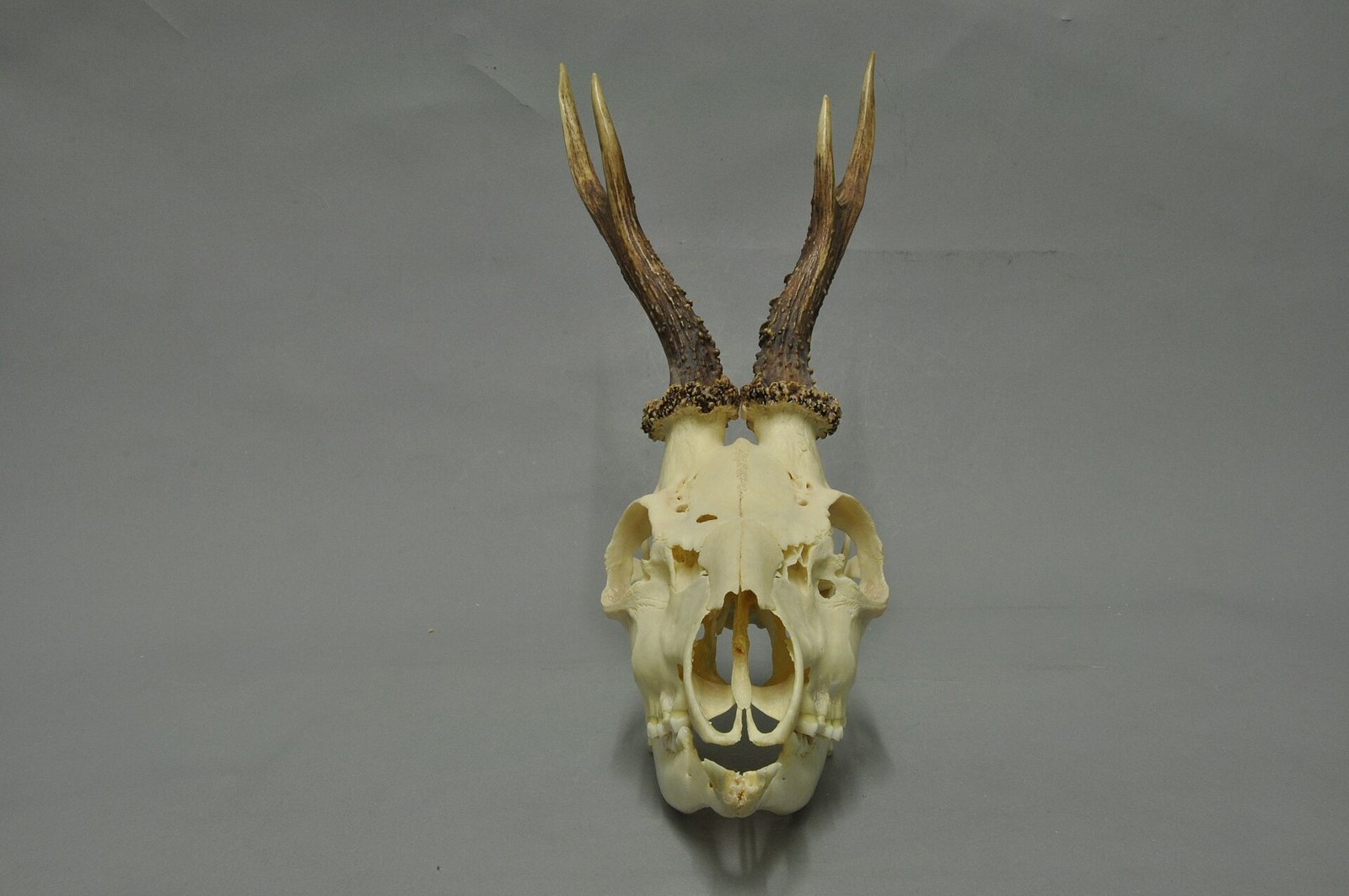
If the skull turned up on a British hillside or a European forest path, the cast of likely deer changes. The roe deer, *Capreolus capreolus*, is much smaller than the red deer, *Cervus elaphus*. According to the Mammal Society, male roe deer have small antlers, usually with no more than three points. A red deer skull is much larger, and mature stags carry big, branched antlers.
Fallow deer, *Dama dama*, sit between the two in many comparisons. Without antlers, a fallow skull can be confused with a large roe deer or even a sheep. With antlers, mature fallow bucks are easy: their antlers are broad and flattened, a shape called palmate.
Museums hold good reference material for these species. The Horniman Museum and Gardens records a fallow deer cranium and mandible from Knole Park near Sevenoaks, Kent. The CENIEH Virtual Collection of Comparative Anatomy lists three-dimensional skull models of roe, fallow and red deer, including female and immature specimens, which helps when the skull in hand is not a mature stag. For the harder cases, Adrian Lister's 1996 study from the Natural History Museum, London tested differences between red and fallow deer in antlers, permanent teeth and bones of the body.
Buck or doe?
A skull with antlers still attached came from a male, a buck or a stag in ordinary North American and British usage. Antlers are shed every year, though, so many male skulls turn up bare. In that case, look on top of the skull for the pedicles: two short bony projections where the antlers grew and later dropped. A skull with pedicles is male even without its rack.
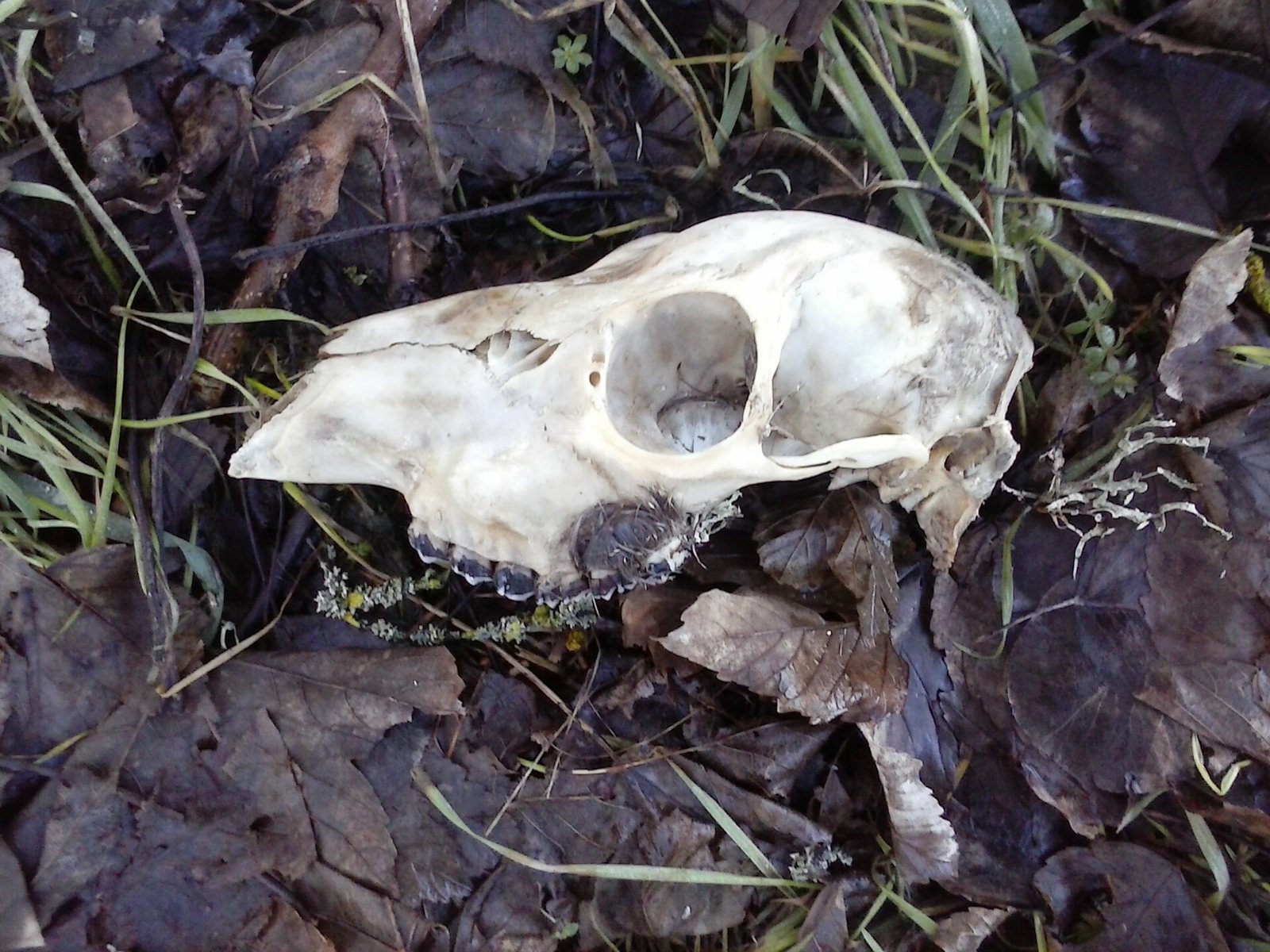
A skull without pedicles is generally from a doe, or from a young animal whose pedicles had not yet developed enough to show. That second possibility is why missing pedicles are not proof on their own. A young, damaged or incomplete skull can leave the question open. Pedicle size, likewise, hints at maturity but is not a precise measure of age.
How old was the deer?
For age, set the cranium aside and pick up the lower jaw. State wildlife biologists sort deer into fawns, yearlings and adults by looking at which teeth have been replaced and how worn the cheek teeth are. Minnesota Department of Natural Resources research describes this method, and notes that when a closer year estimate is needed, a laboratory can count the growth layers in a tooth's cementum, called cementum annuli.
Tooth wear gives an estimate, not a birth date. Treat it as an approximate age class unless a wildlife biologist or a laboratory examines the tooth more closely. If the lower jaw is missing, the skull alone will tell you far less about age. For aging skulls more generally, our story on how to tell age from a skull covers the wider principles.
Deer skull checks, in order
Tap a card to bring it forward.
- Upper incisors: None, with a gap where a dental pad was, points toward a deer.
- Preorbital pit: A shallow pit in front of each eye socket is a deer-family feature.
- Antlers or pedicles: Either one means a male; neither usually means a doe or a young deer.
- Antler pattern: One main beam suggests whitetail; a main fork suggests mule deer.
- Lower jaw: Tooth replacement and wear give an approximate age class.
- Horn core or pedicle: A permanent bony horn core means sheep or goat, not deer.
Deer, elk, sheep or goat?
Some skulls sit close enough to a deer to cause doubt. Elk are deer-family animals, or cervids, too, and their skulls share the missing upper incisors, the dental pad, the long toothless gap and the grinding cheek teeth. The difference is scale. An elk is much larger than a whitetail, mule deer, roe deer or most fallow deer, and a mature bull carries large branching antlers with a long main beam. Our elk skull story covers its size and teeth, and the moose skull story covers the biggest of the family.
Sheep and goats belong to a different family, the bovids, and the giveaway is on top of the head. Their horns are permanent and grow from horn cores, bony cores that stay on the skull behind the eye sockets for life. A deer instead has pedicles, where antlers, shed and regrown each year, were once attached. The Hillson osteological atlas illustrates these differences, along with the deer's lacrimal pit, and the Maryland Department of Natural Resources skull key defines the landmarks, such as the orbit and the infraorbital foramen, that skull keys use. If you find horn cores, our stories on the sheep skull and the goat skull are the next stop. If you are not sure the bone came from an animal at all, human vs animal skull walks through the basic differences.
If you plan to keep it
Identifying a skull and keeping it are separate questions. Rules differ by state, by who owns the land, by species and by whether the antlers are still attached.
> General information, not legal advice: Possession rules for wildlife parts vary between states and change over time. Before you collect or keep a deer skull, ask your state wildlife agency and the land manager, and contact the U.S. Fish and Wildlife Service where federal land or protected species are involved.
A few agencies show how different the answers can be. The Wisconsin Department of Natural Resources allows clean deer skulls, bones and shed antlers under listed conditions, including the landowner's permission. The Utah Division of Wildlife Resources asks people to report a skull with antlers attached, because it may be evidence of poaching. New Jersey Fish and Wildlife says antlers from roadkill or naturally deceased deer cannot be kept there. Washington's rules treat possessing wildlife found dead as generally unlawful unless an exception applies. Our story on what to do when you have found an animal skull covers the questions that apply to any species.
Chronic wasting disease is part of handling deer in some regions. The CDC gives handling guidance for deer and elk in areas where the disease occurs, including wearing gloves, and the state wildlife agency's own CWD and possession instructions are the ones to follow.
Deer skull quiz
Answer every question to check.
Quick answers about deer skulls
These come up often once the skull is on the table.
How do you identify a deer skull?
Check for missing upper incisors, a long toothless gap before the cheek teeth and a shallow pit in front of each eye socket. Then compare the skull's size, muzzle shape, pedicles and any antlers to narrow down the species.
What does a deer skull look like?
A deer skull has a bare front to the upper jaw where a dental pad sat, lower incisors at the front of the bottom jaw, a toothless gap before the cheek teeth and a shallow pit in front of each eye socket. On a male, two pedicles or a pair of antlers rise from the top of the skull.
Can you tell a buck from a doe without antlers?
Often, yes, because a buck's skull keeps its pedicles after the antlers drop. A skull without pedicles is usually a doe, but a young buck's pedicles may be too small to notice, so a juvenile skull can stay uncertain.
Is it a deer skull or a sheep skull?
Look at the top of the head: a sheep has permanent horn cores, while a deer has pedicles or antlers. Without either, the deer's preorbital pit and its tooth pattern are the next clues to compare.
What to do next
If your skull is cleared to keep and needs cleaning, how to clean an animal skull covers the basics, and our European mount deer skull story walks through simmering, whitening and hanging an antlered skull. And if you want to know what deer skulls have meant to people across cultures and centuries, deer skull meaning picks up that story.
Terms in this story
Tap a term to see what it means.
Dental pad. The tough, toothless surface at the front of a deer's upper jaw that the lower incisors bite against. It does not survive cleaning, so a bare skull shows a gap there.
---