

No. 273
How to Tell Age From a Skull: How Experts Estimate It
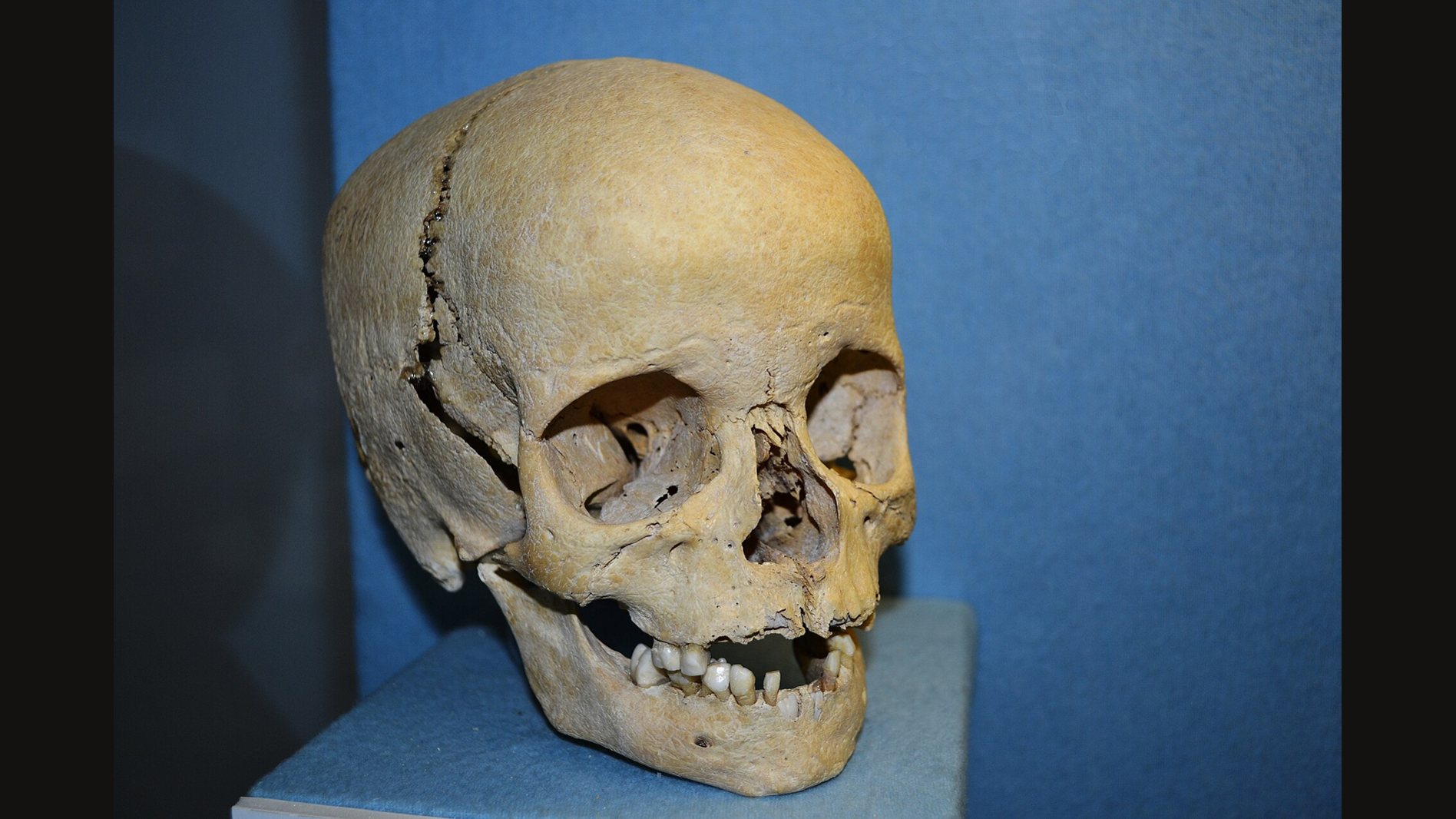
Yes, experts can estimate a person's age from a skull, but the answer comes as a range, not an exact number. In children and teenagers, the teeth are the best guide, because they form, grow roots and erupt in a fairly ordered sequence. In adults, analysts combine several clues, such as dental wear, changes in the bone and how far the skull's joints have closed, and the ranges get wider as people get older. The American Board of Forensic Anthropology adds one limit: the skull on its own is less reliable than a full skeleton, and the adult pelvis usually gives a better age estimate.
If you are here because you came across what may be human bones, the first step is simple. Leave them where they are and call the police. Our page on what to do if you find human bones covers the rest.
For everyone else, this is how the reading works, from a child's first molars to the worn teeth of an older adult.
Teeth tell a child's age best
A child's mouth is a timetable. Teeth form, harden, grow roots and push through the gums in a sequence that stays fairly consistent from one child to the next, which is why dental development is usually the strongest age indicator for young people. The Australian Museum gives typical eruption ranges for the permanent molars: the first molars usually appear at 6 to 7 years, the second at 11 to 13, and the third molars, the wisdom teeth, anywhere from 17 to 25.
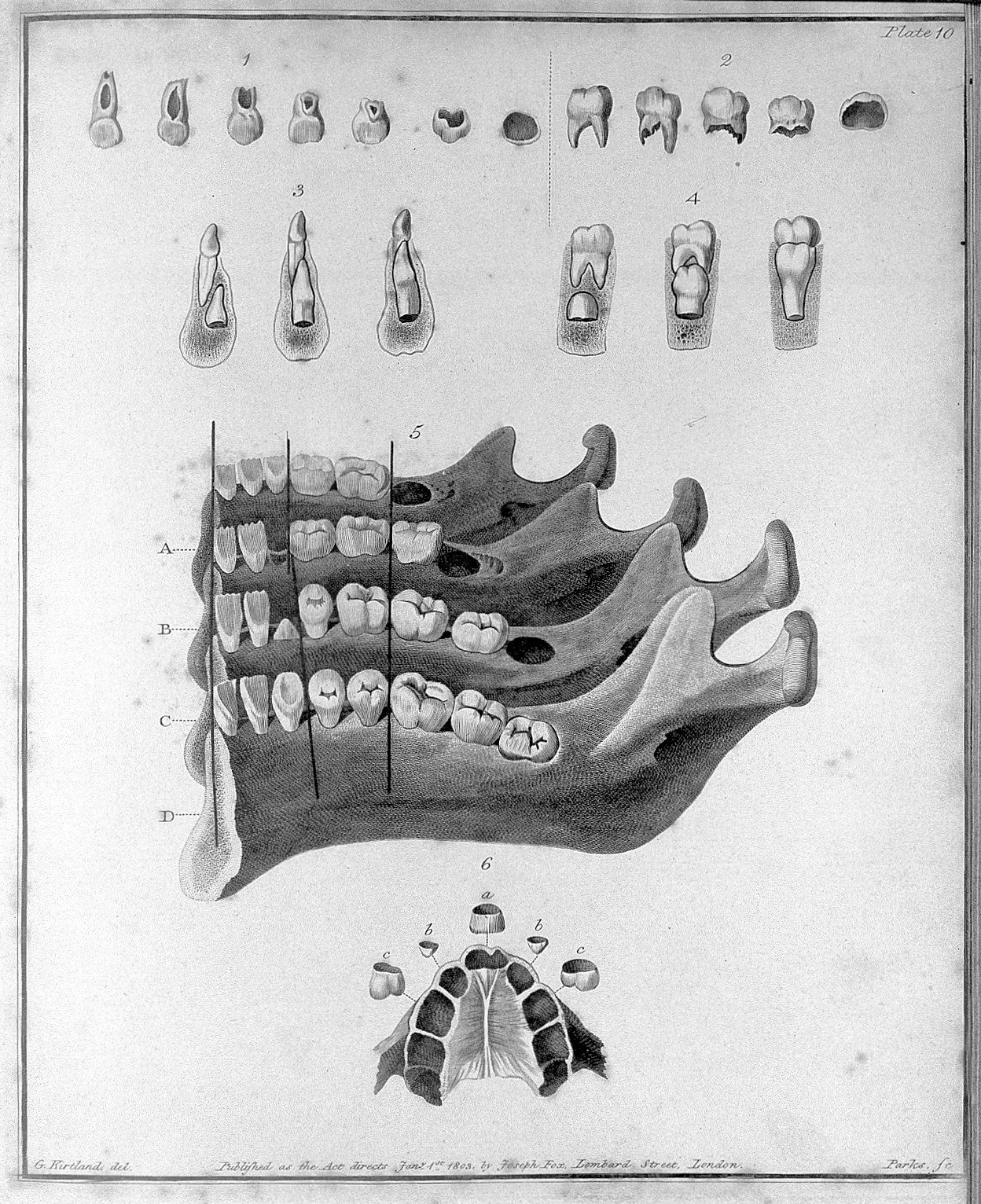
Eruption is only part of it. X-rays show teeth still waiting inside the jaw and roots that have not finished growing, so a skull can show a tooth that never had the chance to come in. The Australian Museum also describes microscopic growth lines in tooth enamel, laid down as a tooth forms, as an extra way to count developmental time. The Smithsonian National Museum of Natural History explains that bone and tooth development together help separate children from adults.
The payoff is precision. Guidance from the National Institute of Standards and Technology notes that younger people can generally be aged more accurately than older ones, and dental development supports narrower estimates than the wear-based methods used for adults.
Tap or hover a row to highlight it.
| Tooth | Typical age at eruption |
|---|---|
| ToothFirst permanent molar | Typical age at eruption6 to 7 years |
| ToothSecond permanent molar | Typical age at eruption11 to 13 years |
| ToothThird molar (wisdom tooth) | Typical age at eruption17 to 25 years |
How the growing skull changes
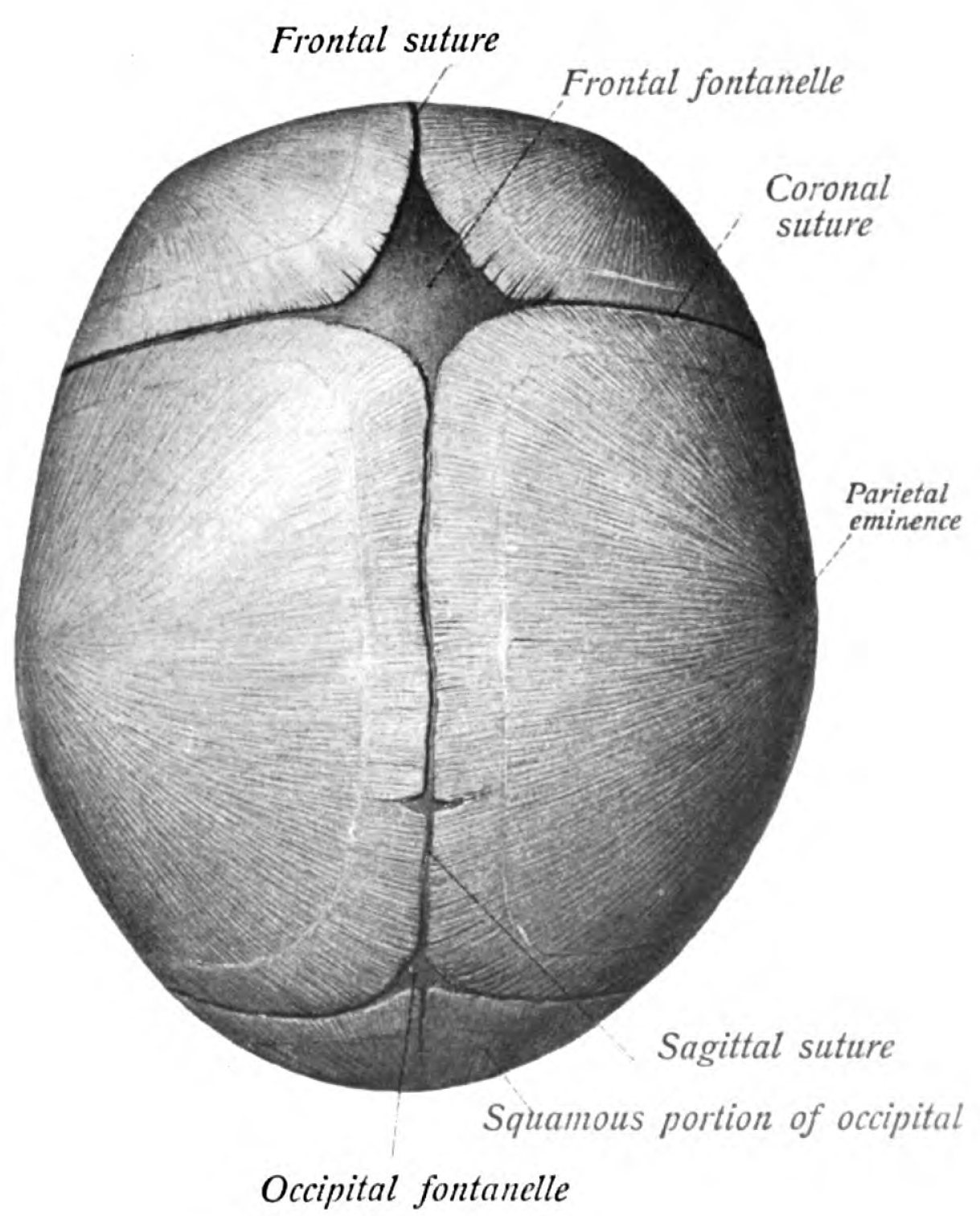
The skull itself grows up alongside the teeth. The bones of the skull meet at fibrous joints called sutures, and in a growing child they close on their own schedule. Children's Hospital of Philadelphia explains that the metopic suture, which runs down the middle of the forehead, normally closes in early childhood, while the other major sutures generally stay open until late adolescence. That is normal development, not a way to put an exact age on an adult. Our story on the soft spots in a baby's skull covers the infant skull in more detail.
At the base of the skull, growth joints that fuse as a young person matures offer another clue. When those joints are fused, the skull belonged to someone who had reached skeletal maturity, which is useful in telling an older teenager from a young adult.
What skull sutures can and cannot tell you
Do skull sutures close with age? They tend to close more, or become harder to see, as people get older, but the timing varies so much from person to person that sutures alone make a poor clock.
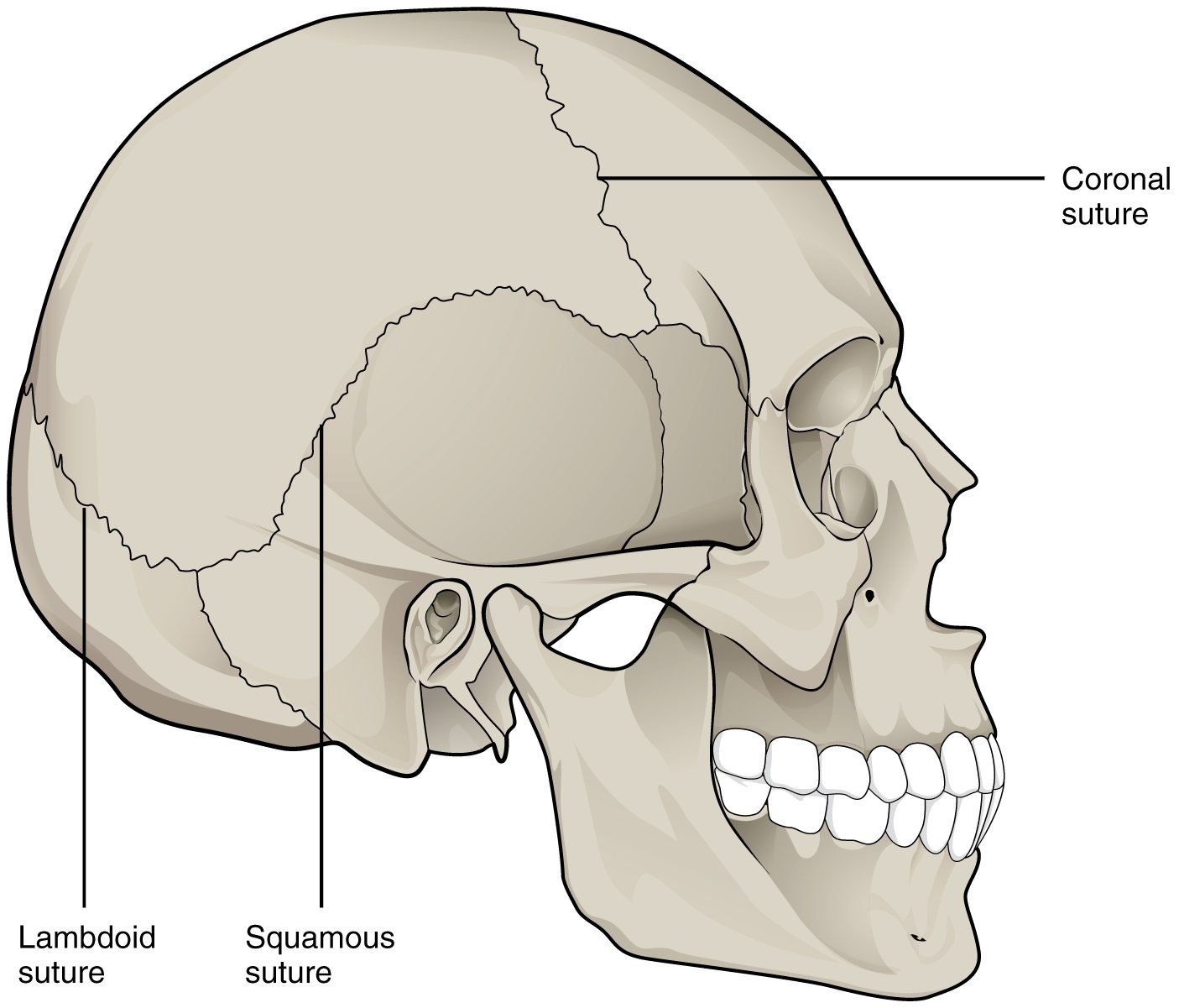
A 2025 study from Jagiellonian University Medical College in Kraków, Poland, tested this directly with postmortem CT scans of 114 male skulls from people aged 14.26 to 95.8 years. All of them came from one Polish collection, and all were male, so the results describe that group. The authors concluded that suture closure was not reliable enough to estimate age on its own. It was mainly useful for broad calls, such as whether someone was younger than roughly 30 to 35 or older than roughly 50. Most observations of the lambdoid suture, at the back of the skull, carried little age value.
That matches how the field treats sutures in general. The American Academy of Forensic Sciences age estimation standard, published in 2024, sets out how methods should be applied and reported, and sutures sit among several indicators rather than standing alone.
What an older adult's skull looks like
Once growth stops, aging becomes less predictable, so adult estimates lean on wear and change rather than development. Experts look at tooth wear, at dentin translucency in the tooth roots, at secondary dentin built up inside the tooth, and at layers of cementum on the roots. They also look at how bone has been remodeled over a lifetime, at its microscopic structure, at thinning of the parietal bones on the sides and top of the skull, and at general degenerative changes.
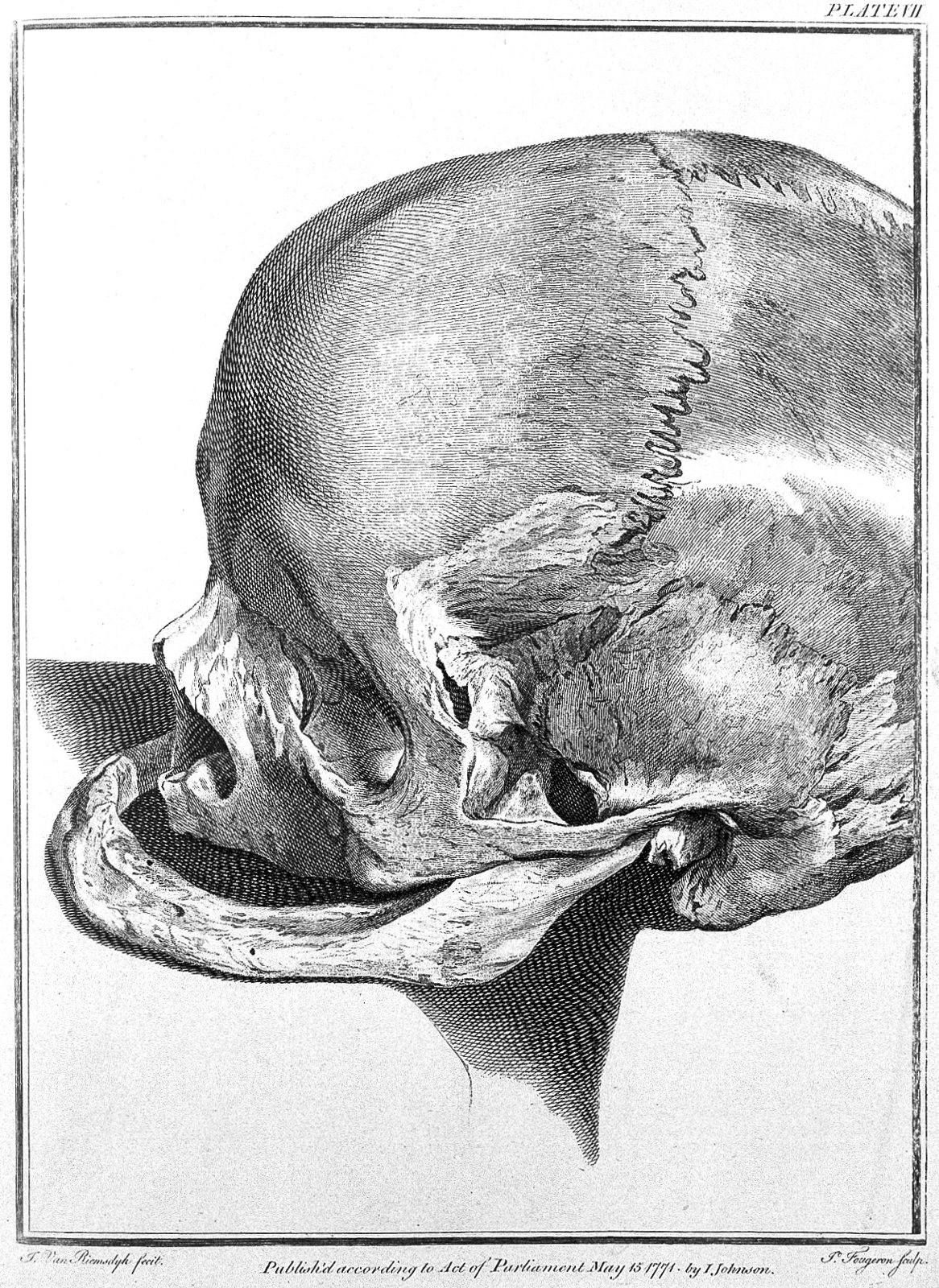
An older adult's skull, then, often shows more worn teeth, more closed sutures and more of these slow changes. None of them reads like a birth certificate. When Heather M. Garvin and Nicholas V. Passalacqua surveyed 145 forensic anthropologists in 2011, the method favored most for adults was the Suchey-Brooks method, which reads the pubic symphysis of the pelvis. Cranial sutures and dental wear were among the least preferred adult methods. The American Board of Forensic Anthropology says the same in plain terms: the adult pelvis generally gives more reliable age estimates than the skull.
How experts read age from a skull
Tap a card to bring it forward.
- Are baby teeth present?: Points to early childhood.
- Which permanent teeth have erupted?: Gives a broad childhood or teenage range.
- Are tooth roots still growing?: Shows developmental age, especially in young people.
- Are the growth joints at the skull base fused?: Shows skeletal maturity, especially in younger individuals.
- Are the sutures partly or mostly closed?: Gives broad adult age information only.
- Is there dental wear, bone remodeling or degeneration?: Helps with adult age when combined with other signs.
- Is more of the skeleton available?: Usually improves the estimate, especially when the pelvis is present.
Why the answer is always a range
People do not age in step. Environment, diet, disease, physical activity, population history, sex and plain individual variation all affect how bones and teeth look at a given age. Two people of the same age can have skulls that look quite different.
That is why the professionals refuse to name a birthday. NIST warns against reporting overly precise ages and asks analysts to document error and variation. The American Board of Forensic Anthropology says estimates should be given as statistical ranges or probabilities. Forensic anthropologist and odontologist Joe Adserias-Garriga, interviewed by El País in 2024, put the difference neatly: an estimate for a young person may span only a few years, while an adult's may span decades. The 2024 AAFS standard text asks experts to account for statistical frequencies, error probabilities, confidence intervals and the limits of the reference samples behind each method.
A famous child's skull, re-aged
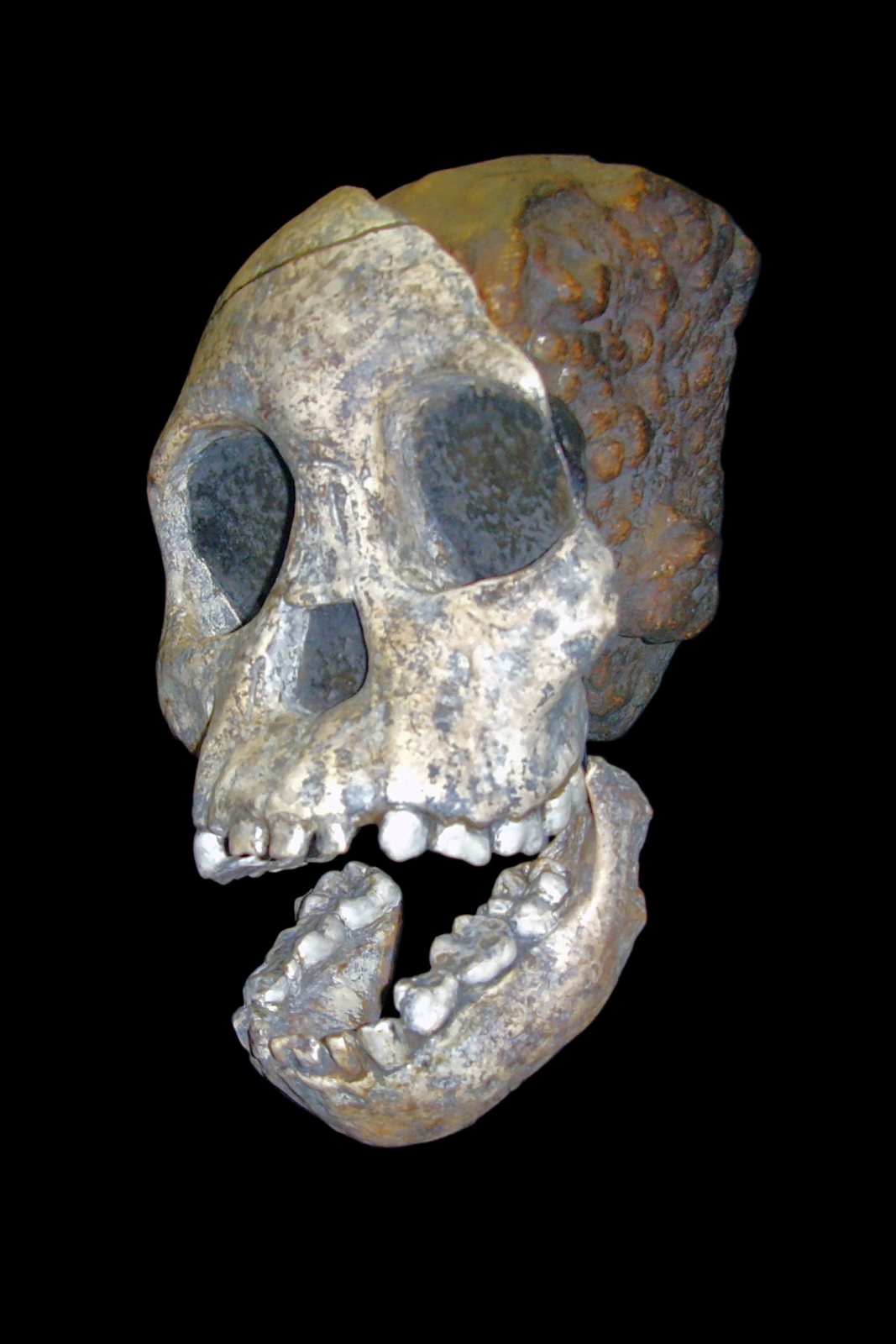
Even a child's teeth can be read differently once better tools arrive. The Taung Child, one of the best-known fossil children in human evolution, was once thought to be about six years old, based on its first molar. The Australian Museum reports that CT scans and counts of enamel growth lines later supported an age of about three and a half. The same skull, read with finer tools, gave a younger answer, which is a good lesson in why every estimate carries its range.
How labs and museums write it down
In a forensic lab, age is one part of a biological profile, alongside sex, stature and other observations. The New York City Office of Chief Medical Examiner's forensic anthropology manual lists ancestry or population affinity among those observations too. The manual asks analysts to inventory every skeletal and dental piece, choose age methods suited to the remains, record which indicators they used, and build an age interval from several developmental or degenerative signs together. Sex is the other half of that profile, and our companion story on male vs female skulls covers how it is estimated.
The Smithsonian describes the tools behind the work: photography, X-rays, CT scanning, microscopes, DNA analysis and comparison with reference collections of people whose ages were known. Museum records can separate a person's chronological age from an estimated biological age and state the uncertainty. Archaeological collections also note the period, the burial setting, where the remains came from and any consultation or reburial requirements, part of the care described in our story on the repatriation of human remains. For a broader look at what a skeleton can say about a life, see what bones tell archaeologists.
If you have found a skull
A skull outdoors may be human or animal, and the right step depends on which. If it may be human, leave it in place, do not pick it up or clean it, and call the police. State agencies say the same: Delaware's guidance asks people to leave remains where they are and notify the authorities, and the Mississippi Department of Public Safety tells people to call law enforcement. The full steps are on our page about finding human bones.
If it looks like an animal, our guide to human vs animal skulls helps with the first question, and what to do if you found an animal skull covers the next.
More questions about telling age from a skull
A few more answers, for readers who want to go one step further.
How do forensic anthropologists estimate age?
They compare the features they see on the bones and teeth with validated reference standards built from people of known age. For children they focus on tooth formation, eruption and skeletal growth; for adults they look at dental wear, bone remodeling, joint surfaces, rib ends, the pubic symphysis and the sutures, and they report the result as an interval with its uncertainty.
How can you tell if a skull is a child's or an adult's?
Start with the teeth and the growth joints. Baby teeth, unerupted permanent teeth or unfinished roots point to a child, while fully erupted permanent teeth and fused joints at the skull base point to someone who had reached skeletal maturity.
Can teeth show how old someone was?
Yes, and most precisely in children, where eruption and root growth follow a fairly steady sequence. In adults, wear, dentin translucency and secondary dentin still help, but the ranges are much wider.
How is the age of a skull determined?
It is determined by combining several indicators into a biological age range rather than reading one feature. Tooth development leads for young people, degenerative changes in teeth and bone lead for adults, and the sutures add only general information because they vary so much.
Can you tell how old a bone is just by looking at it?
Looking closely can give a broad estimate of a person's age at death, especially for a child. How long ago that person lived is a separate question with its own dating methods, covered in our story on how old bones are dated.
How well do you know age estimation?
Answer every question to check.
Every one of these skulls belonged to someone, and the care in the numbers is part of the respect. For more about the human skull itself, our human skull facts are a good next read.
Terms in this story
Tap a term to see what it means.
Cranial suture. A fibrous joint between the bones of the skull. Sutures tend to close with age, but the timing varies widely between people.