

No. 317
Sheep Skull vs Goat Skull, With and Without Horns
To tell a sheep skull from a goat skull, look at the whole skull rather than one feature. A domestic sheep, *Ovis aries*, usually has a strongly domed cranial roof, a depression in front of each eye socket and horn cores that are short, tightly curved and round in cross-section. A goat's horn cores are usually longer, less curved and sharply keeled, almost triangular in section.
Horns will not tell you ram from ewe on their own. Some breeds grow horns in both sexes, and polled breeds grow none at all. And if the skull is broken or missing pieces, "sheep or goat" may be the most anyone can say with confidence.
What a sheep skull looks like
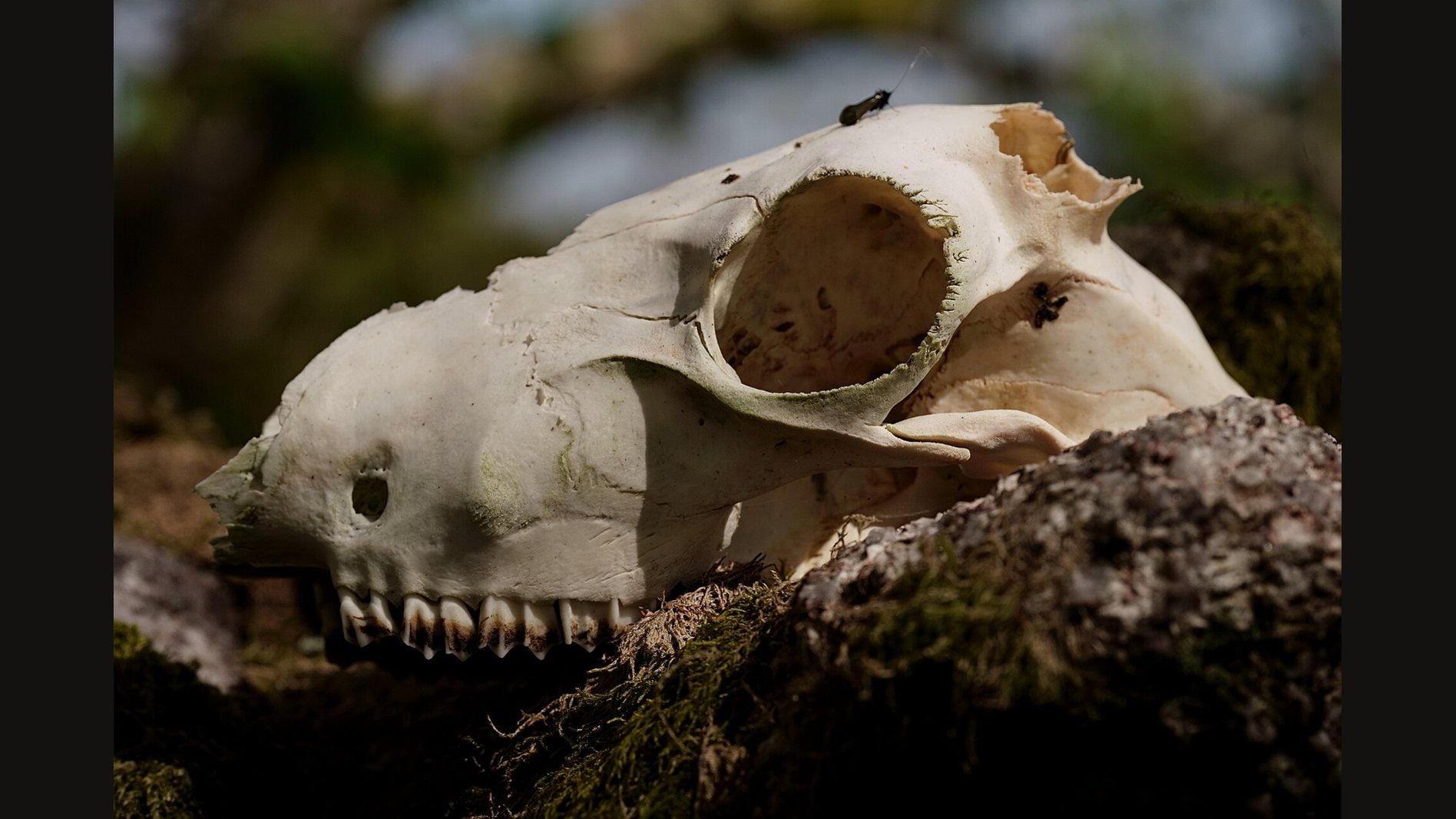
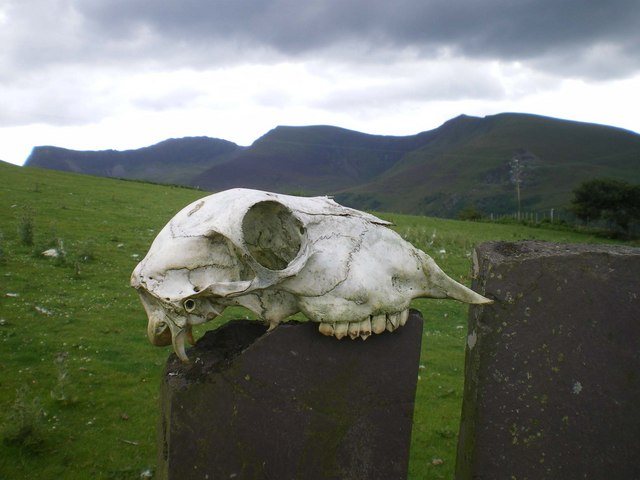
Set a sheep skull down in profile and the first thing to notice is the top of the head. The Texas Tech Natural Science Research Laboratory describes a strongly convex cranial roof, a domed braincase that slopes toward the back of the skull, and a depression in front of the eye socket. The face is long and the eye sockets are large. On a horned animal, the horn cores, the bony cores that once sat inside the horns, rise close behind the eye sockets.
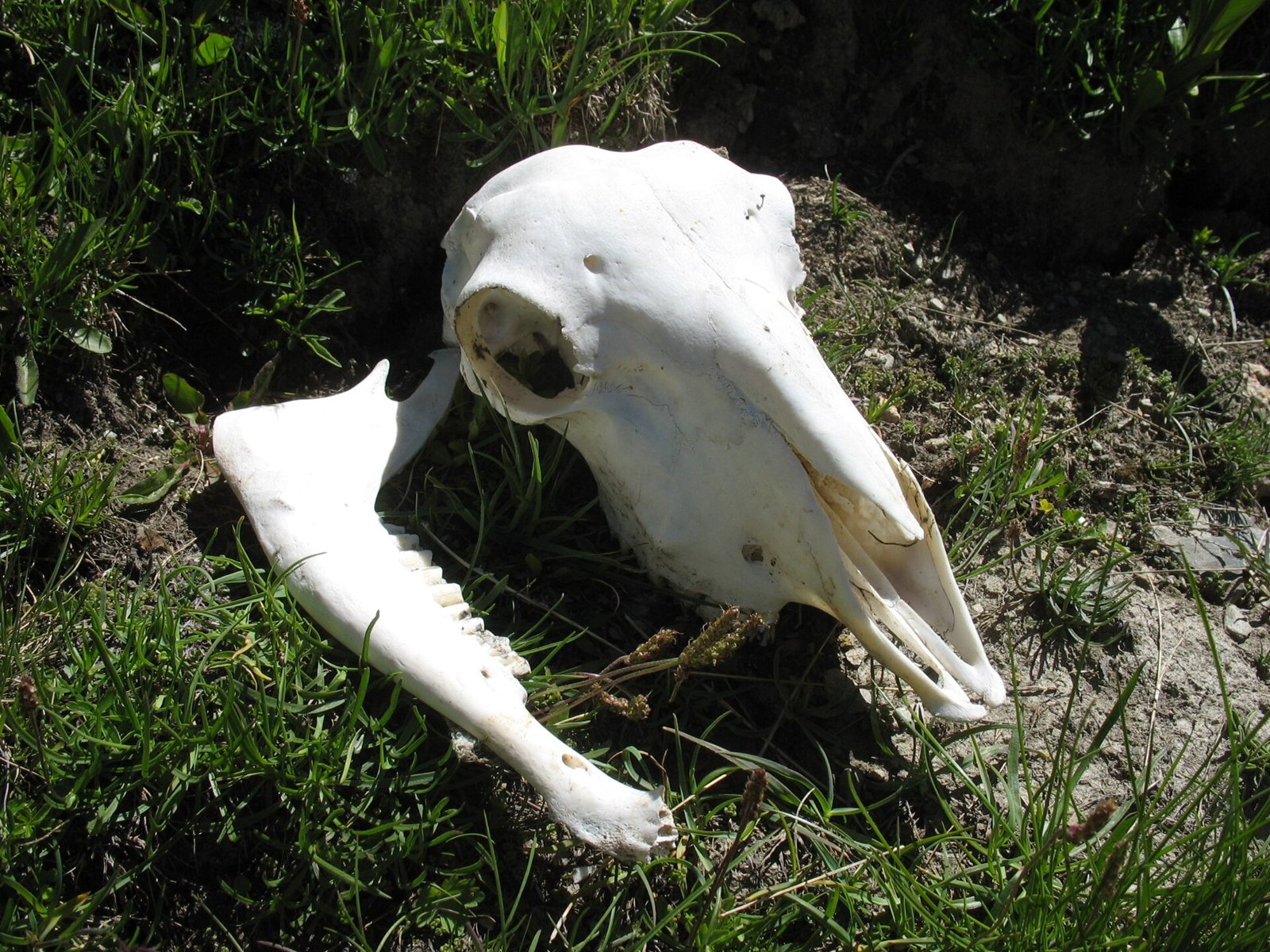
Then look at the mouth, which holds a surprise for anyone expecting a full set of front teeth. An adult sheep has 32 permanent teeth, with the dental formula I 0/3, C 0/1, P 3/3, M 3/3, according to NC State Extension's sheep facts. The upper jaw has no incisors at all. In their place is a dental pad. The lower jaw carries four pairs of incisors at the front, and a long, toothless gap called the diastema runs back to the cheek teeth. The University of Minnesota's Large Animal Anatomy textbook covers the same pattern. So, if the top front of the jaw on your skull has no teeth, nothing has gone missing; that is how a sheep is built.
Sheep or goat: the features that separate them
Sheep and goats are close relatives, and their skulls are famous among bone people for looking alike. A damaged, young, hornless or jawless skull can be hard to sort even for a specialist. The best results come when the skull, the horn cores and the facial bones are all there together.
With a complete skull in hand, a handful of features do most of the work. Studies including a PLOS One morphometric comparison, the Texas Tech account, Robeerst's paper on telling sheep from goat in *Cranium*, and a palatine bone study in the *International Journal of Morphology* point to these:
Tap or hover a row to highlight it.
| Feature | Sheep | Goat |
|---|---|---|
| FeatureCranial roof | SheepStrongly convex, with a depression in front of the eye socket | GoatLess strongly convex |
| FeatureHorn cores | SheepUsually shorter, more curved, more circular in section | GoatUsually longer, less curved, sharply keeled or triangular in section |
| FeatureSuborbital crest | SheepGenerally on the jugal, or cheek, bone | GoatNearer the jugolacrimal suture or lacrimal bone |
| FeatureLacrimal fossa | SheepPresent | GoatAbsent |
| FeatureUpper front teeth | SheepNone, a dental pad instead | GoatNone, a dental pad instead |
That last row matters because it fools people. Both animals lack upper incisors, so an empty upper jaw tells you that you have a sheep or a goat, not which one.
Breed, sex, age, horn damage and plain individual variation can blur every line in that table. When a skull is too fragmentary to decide, specialists call it an ovicaprid, a word that simply means sheep or goat, and that is a perfectly respectable label. For the goat's side of the story in full, see our story on the goat skull. If the skull has no horn cores at all and you are wondering whether it is even a sheep or goat, the deer skull identification story may help.
Ram or ewe, horned or polled
A ram is a male sheep and a ewe is a female. In many breeds where both sexes are horned, rams carry the larger, heavier horns. That sounds like an easy test, but it is not a universal one, because breed and genetics decide so much.
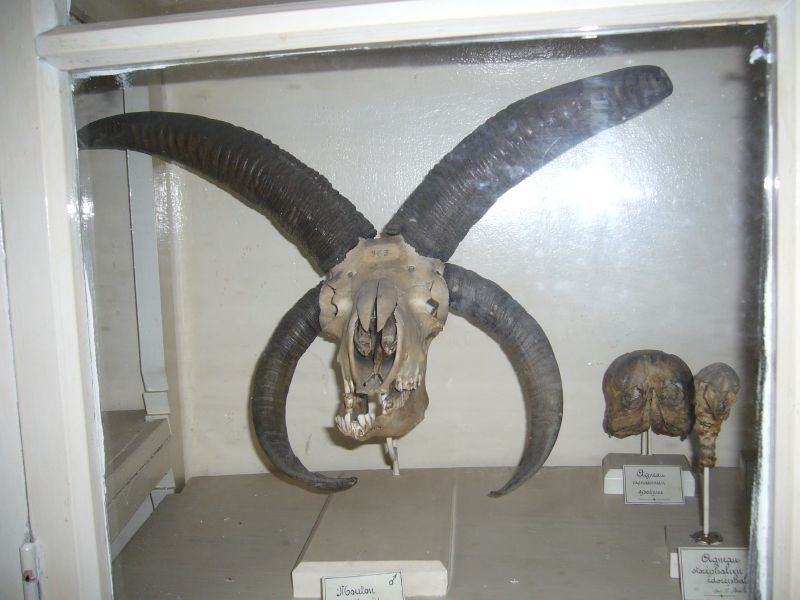
Domestic sheep have been selectively bred into breeds with horns and breeds without them. The polled breeds were bred to lack horns entirely, as the NSW Department of Education's sheep introduction explains. Other breeds have horns in both sexes, and some have horns mainly or only in males, according to Animal Diversity Web and NC State Extension.
So, a horn core does not prove a skull came from a ram, and a hornless skull does not prove it came from a ewe. Treat horn presence and size as clues that depend on breed and age, and leave the sex of the animal open unless a specimen record or other evidence settles it. If you are drawn to the ram's horns for what they mean rather than what they prove, our story on ram skull meaning covers the symbol.
How old was it? Reading the teeth
The lower incisors give a rough age. A lamb starts with deciduous, or milk, incisors, and the permanent ones replace them in pairs over about four years. After that, the teeth record age through wear. NC State Extension lays out the sequence, and it is easiest to read as a table.
Tap or hover a row to highlight it.
| Approximate age | What the incisors show |
|---|---|
| Approximate ageBirth to about 1 year | What the incisors showDeciduous incisors |
| Approximate ageAbout 1 year | What the incisors showFirst pair of permanent incisors |
| Approximate ageAbout 2 years | What the incisors showSecond pair of permanent incisors |
| Approximate ageAbout 3 years | What the incisors showThird pair of permanent incisors |
| Approximate ageAbout 4 years | What the incisors showFourth pair of permanent incisors |
| Approximate ageAbout 5 years | What the incisors showPermanent incisors close together |
| Approximate ageAbout 6 years | What the incisors showIncisors begin spreading |
| Approximate ageAbout 7 to 8 years | What the incisors showSome incisors may be broken |
| Approximate ageAbout 10 to 12 years | What the incisors showIncisors may be missing |
These ages are approximate, and the lower jaw has to be with the skull for any of it to work. A skull found without its mandible keeps its age to itself.
Wild sheep: bighorn skulls
Not every sheep skull came off a farm. Bighorn sheep are wild sheep in the same genus, *Ovis*, and their skulls look different. The National Park Service identifies the desert bighorn of Grand Canyon National Park as *Ovis canadensis nelsoni*, and describes rams with large, strongly curved horns and ewes with shorter horns that curve much less.
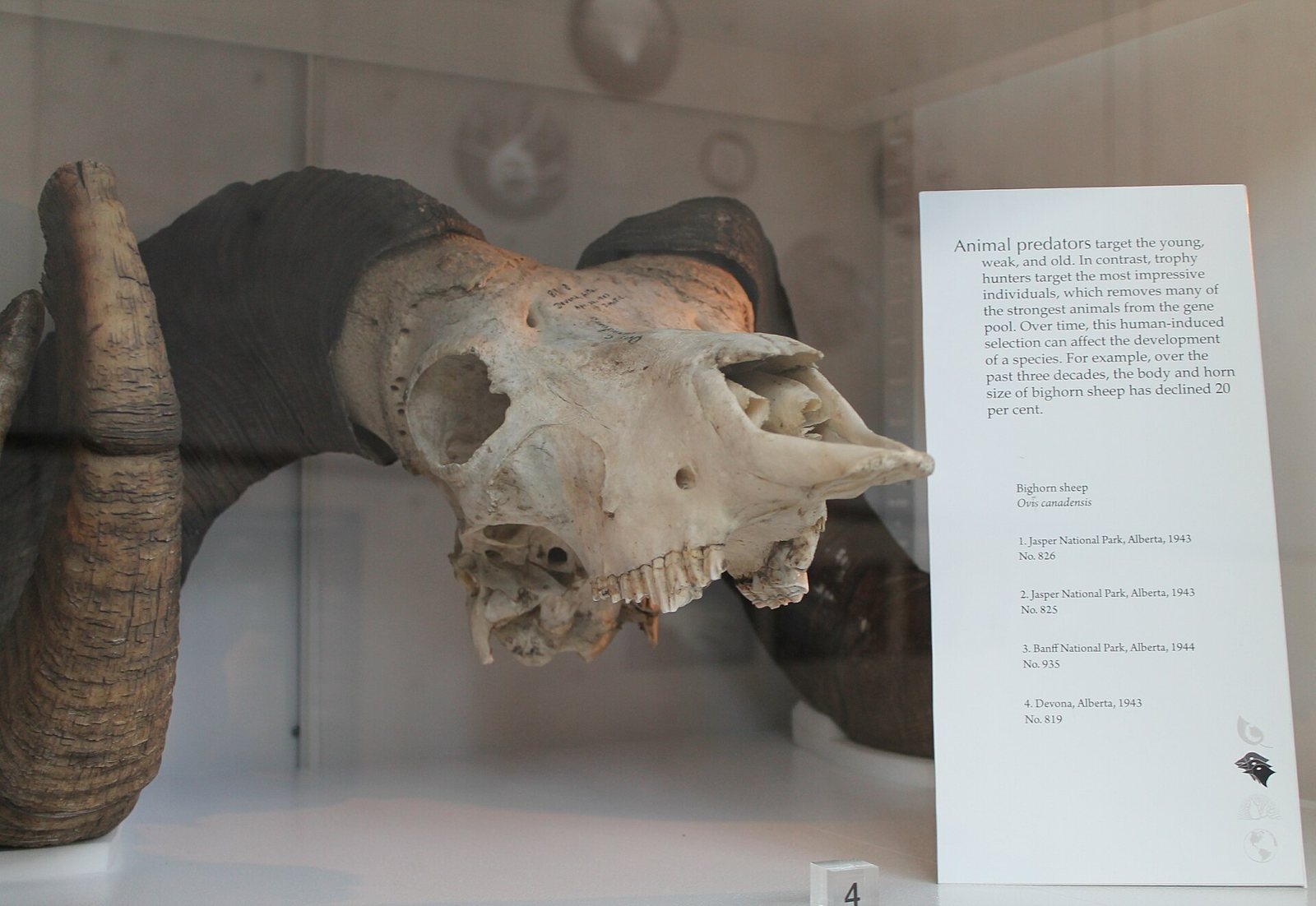
Female bighorns are not hornless. The California Department of Fish and Wildlife, in its guidance on Sierra Nevada bighorn, says both males and females have horns, even young lambs. Adult rams' horns are much larger, thicker at the base and more flared.
The horn itself has two parts. The New Mexico Department of Game and Fish explains that it is a bony core attached to the skull, covered by an outer sheath of keratin. Unlike antlers, the sheath is not shed each year, and its growth rings can help estimate age. On a cleaned skull you are usually looking at the core alone.
Inside, a bighorn skull is built for collisions. The NPS describes it as reinforced by internal bony structure that helps protect the brain during head impacts. The teeth match a domestic sheep's: David M. Shackleton's *Mammalian Species* account of *Ovis canadensis* gives the same 32-tooth formula, I 0/3, C 0/1, P 3/3, M 3/3.
A public-domain National Park Service photograph by Jacob W. Frank, taken June 8, 2018, of a bighorn ram skull lying in a patch of heartleaf arnica.jpg) in Yellowstone National Park, and it makes the point well: a wild sheep skull is a different thing from a domestic one. Species, location, horn form, skull size and local wildlife rules all come into it.
Found it in a pasture, or bought it for decor
A pasture skull raises practical questions before decorating ones. Work out the species and note where the skull was before you move it or keep it, then ask the landowner, the land manager and the relevant wildlife agency what rules apply. A domestic sheep from a farm field and a wild bighorn can fall under different rules, because a wild animal's skull may carry wildlife law that a farm animal's does not. Our story on what to do when you find an animal skull covers the general steps.
> Legal note: Take this as general information, not legal advice. Rules on keeping animal remains vary by state and country and by who owns the land, so the landowner and the wildlife agency are the ones who can answer for your skull.
If the skull still leaves you unsure, good photographs make an expert's job much easier. Photograph the whole skull, the bases of the horn cores, the area around the eye sockets, the nasal profile, the palate and the teeth, then send them to a university mammal collection or a qualified osteologist.
Is it a sheep or a goat?
Tap a card to bring it forward.
- Check the teeth: Look for the ruminant pattern: no upper incisors, a dental pad, lower incisors and a diastema.
- Note the horn cores: Record whether horn cores are present at all.
- Compare the horn cores: If present, look at their curvature, length, cross-section and position behind the eye sockets.
- Inspect the skull roof: Look at how domed the cranial roof is and for the pit in front of each eye socket.
- Use several features together: If the skull is incomplete, call it sheep-or-goat rather than forcing an answer.
- Ask before keeping it: Identify the species and location, then ask the land manager and the wildlife agency about the rules.
A skull bought for the wall is a happier problem. Our skull home decor story has ideas for showing one off, and for a painter's view of the subject, see Georgia O'Keeffe's skull paintings. If yours needs cleaning first, start with how to clean an animal skull.
Sheep or goat quiz
Answer every question to check.
Quick answers about sheep skulls
A few more questions tend to follow the big one.
What are the main features of a domestic sheep skull?
A domestic sheep skull has a very convex cranial vault, a depression in front of each eye socket and a long face. The lower jaw has incisors while the upper jaw has a dental pad instead, and horn cores may or may not be present depending on breed and sex.
Is a hornless sheep skull always a ewe?
No, a hornless skull does not prove the animal was a ewe. Polled breeds were selectively bred to lack horns, so the absence of horns can say more about the breed than about whether the animal was male or female.
Can I keep a sheep skull I found?
That depends on where it was found, who owns the land and whether the animal was domestic or wild, so ask the landowner and your state wildlife agency first. A wild sheep such as a bighorn can fall under wildlife rules that a farm animal does not.
What photos help someone identify a sheep skull?
Take clear shots of the whole skull, the horn-core bases, the eye socket area, the nasal profile, the palate and the teeth. Those views show the features that separate sheep from goats, and they give a university mammal collection or osteologist what they need.
Where to go next
If your skull turned out to be a goat after all, the goat skull story takes it from there. If the horns are the reason it caught your eye, read about ram skull meaning. And if it came out of a field, found an animal skull is the place to start before it goes on the wall.
Terms in this story
Tap a term to see what it means.
Ovis aries. The scientific name of the domestic sheep.
---