

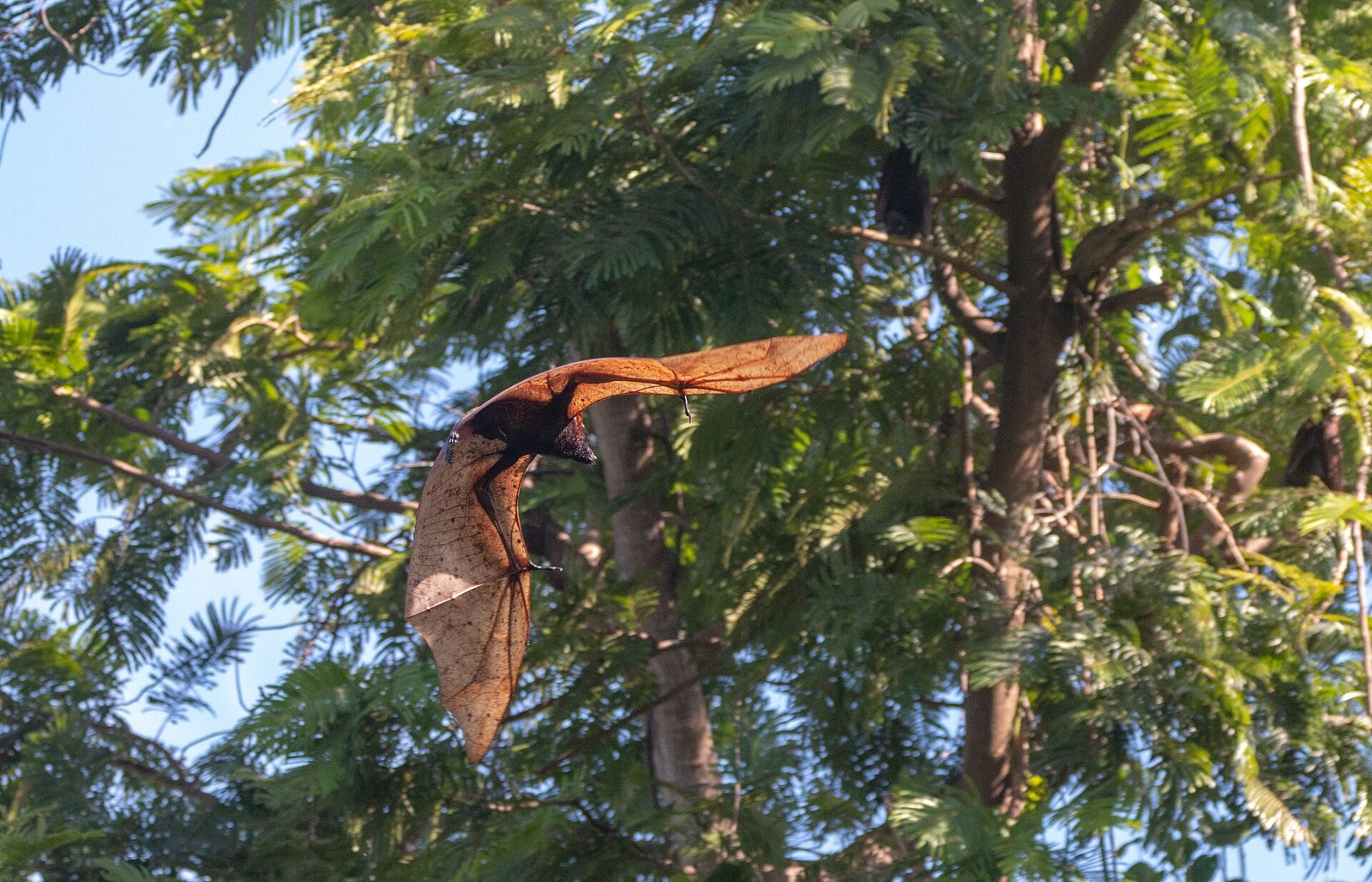
No. 290
What a Bat Skull Looks Like, and What to Do If You Found One
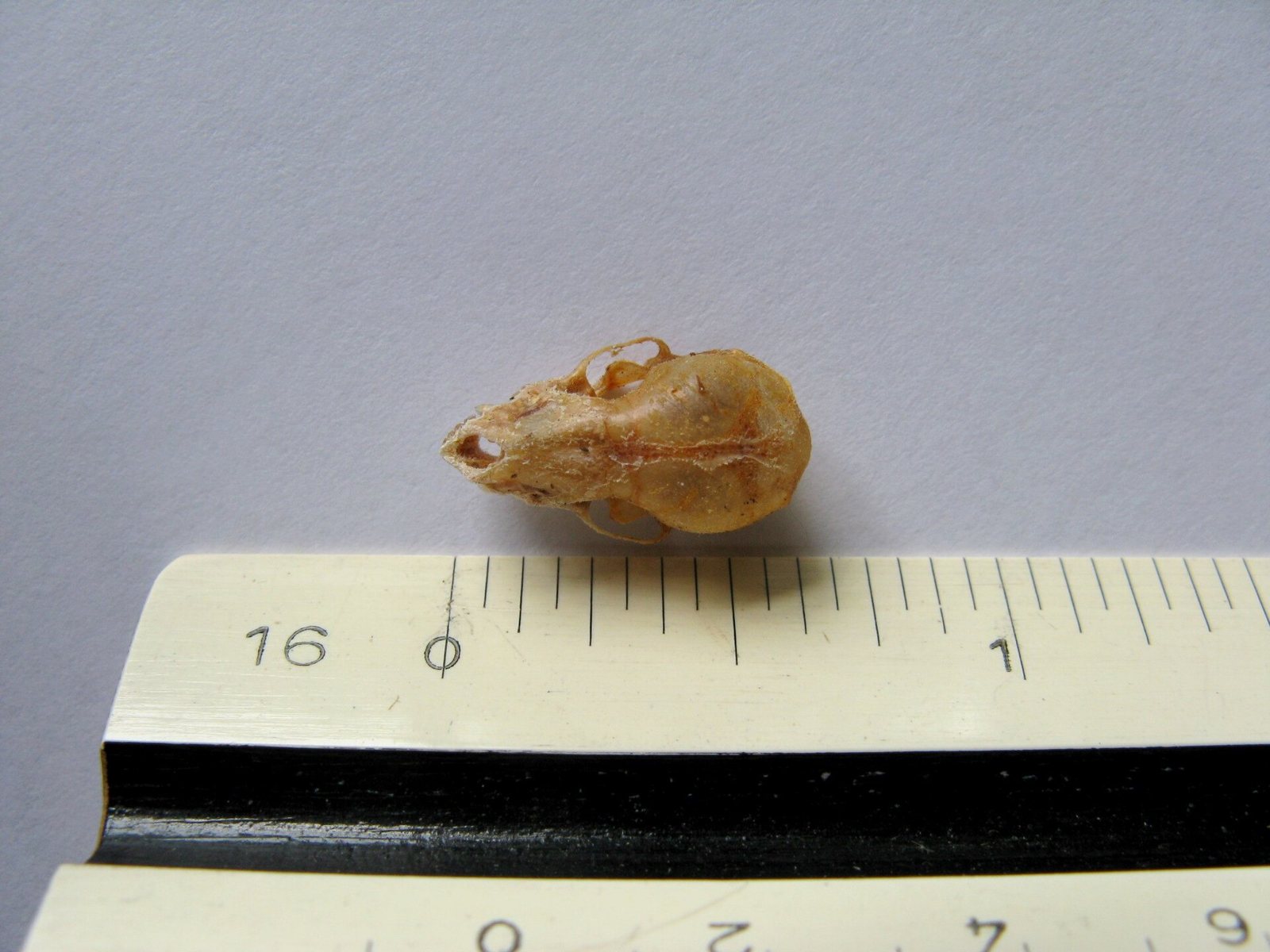
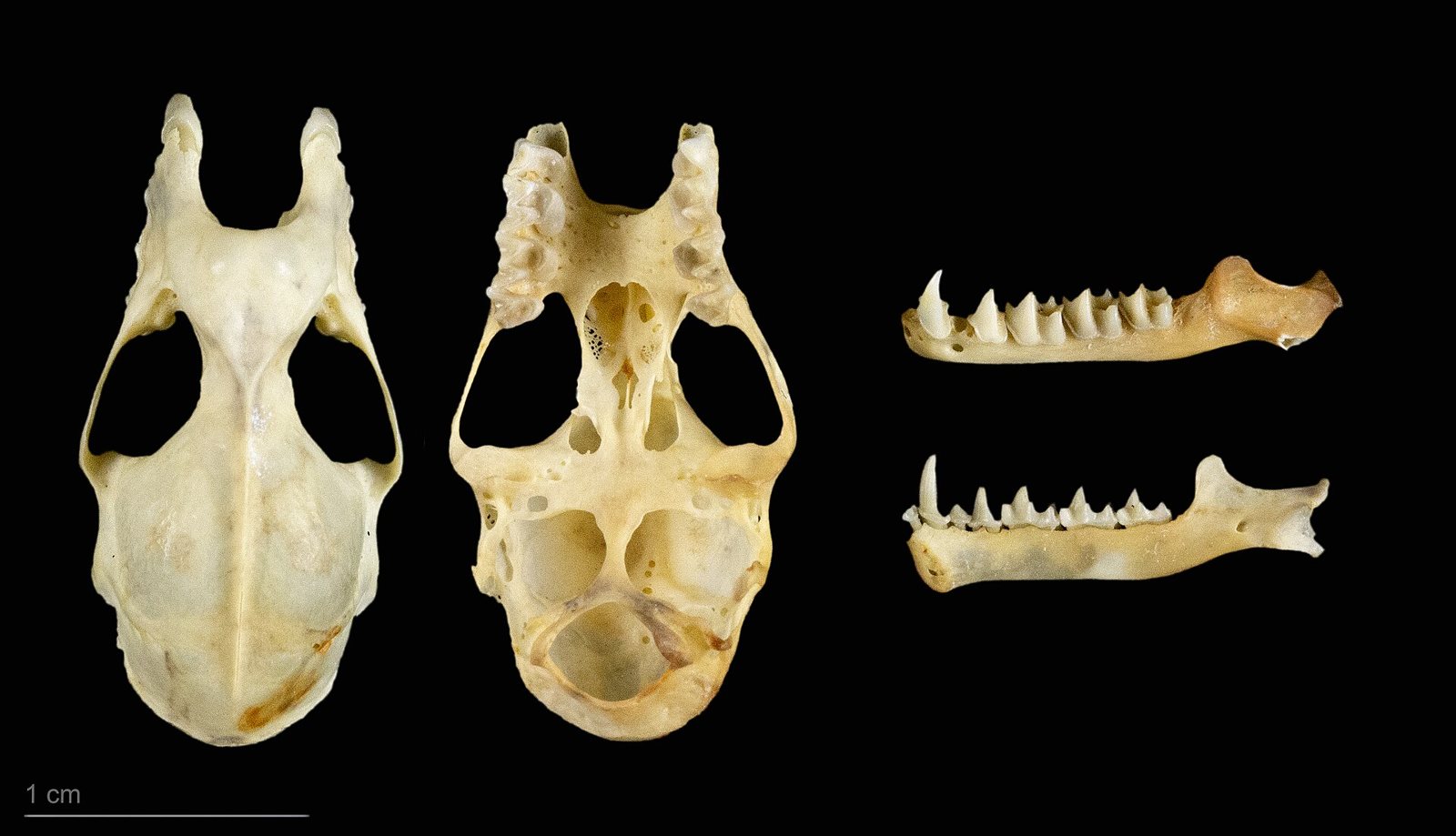
A bat skull is tiny and delicate. A typical one is only about 1.5 cm long, according to the Wildlife Conservation Society Canada and BatCaver collection guide. It has a short face, large forward-facing eye sockets, prominent canines and sharp, pointed cheek teeth. Look for a gap near the front of the upper tooth row and a saddle-like curve when you view the skull from the side.
If the skull in your attic or cave matches that description, there is a good chance it came from a bat. One safety point comes before anything else. The CDC says never to touch a bat with bare hands, and that includes fresh bat remains. The full steps are in the safety section further down.
What to look for in a bat skull
Start with size. The WCS Canada guide puts a typical bat skull at about 1.5 cm, small enough to sit on a fingertip, and the same guide notes that a bat's wing bones can be thinner than toothpicks. Everything about the animal is built light.
Then turn the skull over and look at the teeth. A bat has teeth along both sides of the jaw, with a gap near the front of the tooth row. The canines stand out clearly, and the cheek teeth behind them often look sharply pointed or cusped, like tiny crowns with several points. Seen from the side, the skull has a saddle shape, dipping between the face and the braincase.
The face itself is short, and the eye sockets are large and face forward. Put those features together, short face, big forward eyes, visible canines, sharp cheek teeth and that front gap, and you have the classic bat skull.
Bats are a big and varied group, though. The American Museum of Natural History, whose bat collection description names curator Nancy Simmons, notes that bat skulls vary widely in size and shape, with snout length linked partly to diet and behavior. The museum's collections core displays 28 bat skulls alongside 45 study skins, an articulated skeleton and a taxidermy mount, which gives a sense of how much variety there is to compare. A tiny skull with sharp teeth may well be a bat, but size and teeth alone do not settle it. The next step is to rule out the other small skulls that turn up in the same places.
Bat, mouse, rat or shrew: telling the small skulls apart
Attics, sheds and caves collect small skulls, and the four most likely suspects are a bat, a mouse, a rat and a shrew. Each one gives itself away at the front of the mouth.
Mice and rats are rodents. Their incisors are long, continuously growing and much more prominent than any other teeth, and a clear gap separates those chisel-like front teeth from the cheek teeth. A rat skull is usually larger and heavier than a mouse skull. Our story on the rat skull covers how to tell those two apart with a ruler, and the squirrel skull story covers the larger rodent that often gets mixed in.
A shrew skull is long and narrow, with a pointed snout and very small eyes. It has no rodent-style incisors. The biology laboratory key "Skulls Tell Stories" by Mills, LaBonty, Hasan and Seliga sets the two side by side. The bat has short incisors, present canines, sharp premolars and molars, forward-facing orbits, a short nasal passage and large auditory bullae, the rounded bony capsules that hold the middle ear. The shrew has absent canines, a longer nasal passage and very small orbits that face the side.
The S4 Science Mammal Skull Guide takes a similar route, sending the larger skull with small, rounded back teeth down the rat or mouse path and keeping it separate from the bat path.
Tap or hover a row to highlight it.
| Feature | Bat | Mouse or rat | Shrew |
|---|---|---|---|
| FeatureOverall size | BatOften very small and delicate | Mouse or ratMouse small, rat larger and heavier | ShrewSmall, but usually long and narrow |
| FeatureFront teeth | BatShort incisors, visible canines | Mouse or ratLarge chisel-like incisors | ShrewNo large rodent-style incisors |
| FeatureCheek teeth | BatOften sharp or pointed | Mouse or ratMore rounded or ridged depending on species | ShrewIntermediate, often pointed |
| FeatureSnout | BatUsually short | Mouse or ratTypically rodent-shaped | ShrewLong and pointed |
| FeatureEye sockets | BatRelatively forward-facing | Mouse or ratMore side-facing | ShrewVery small and side-facing |
| FeatureAuditory bullae | BatLarge | Mouse or ratVariable | ShrewLarge |
| FeatureUseful clue | BatGap near front of tooth row and saddle-like profile | Mouse or ratIncisor gap before cheek teeth | ShrewLong pointed snout and absent canines |
A skull with sharp canines that looks too big for a bat may belong to a small carnivore instead. The mink skull is a different, larger animal and worth a look if your find does not fit the table. A tiny skull with a beak and no teeth at all points to a bird, and our story on bird skulls picks up from there. If you are not even sure the bones are animal, start with human vs animal skulls.
Some finds will not sort out cleanly. A damaged skull, a lone jaw or a skull from a region you do not know well may need a natural history museum, a university mammalogy collection or a licensed wildlife professional. Clear photos from several angles, a measurement beside a ruler and the place where you found it will give them what they need.
Do bats have teeth? Yes, and diet shapes them
Bats are mammals, and they have teeth. The number and shape of those teeth vary by species, and the quickest way to understand the differences is to ask what the bat eats.
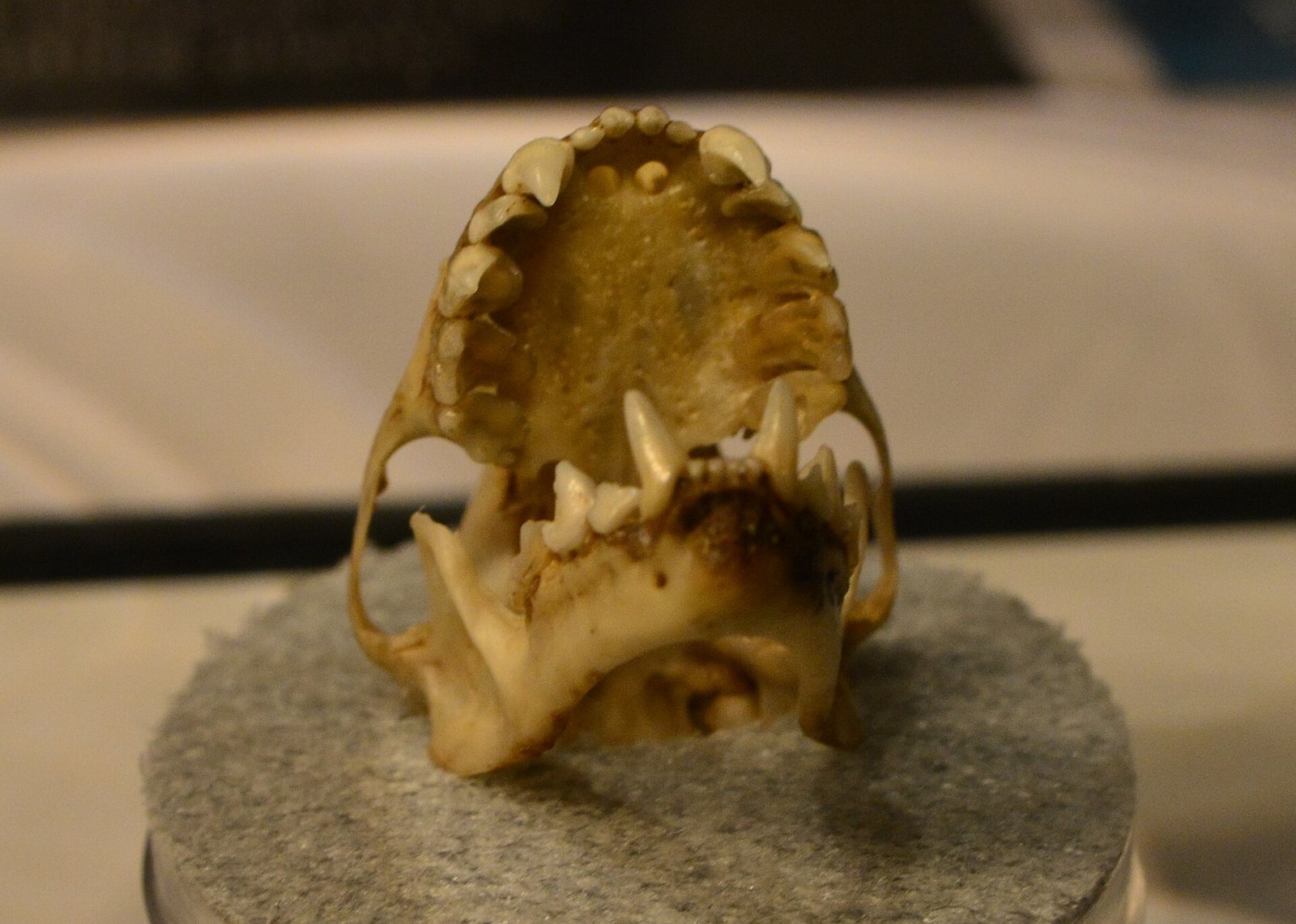
Start with the insect-eaters. The little brown bat, *Myotis lucifugus*, is a common cave bat, and the WCS Canada guide uses it as an example of the gap at the front of the tooth row. Insect-eaters like it generally have short, narrow skulls and pointed teeth, suited to gripping and breaking the hard bodies of insects.
Fruit-eating bats show a wider range of skull shapes. In a 1988 study through the University of Nebraska State Museum, Patricia W. Freeman found that the most derived fruit-eating bats have small canines, wide palates and molars with cutting edges. That is a different toolkit from the insect-eater's needle points. Museum specimens show the range well: the great fruit-eating bat, *Artibeus lituratus*, and the Mexican long-tongued bat, *Choeronycteris mexicana*, both have skulls photographed at the Burke Museum, University of Washington, and openly licensed on Wikimedia Commons.
Bat teeth have drawn careful study. A Smithsonian report describes work by Sharlene Santana, Betsy Dumont and Suzanne Strait comparing the molars of 17 species of New World leaf-nosed bats with insect, fruit and mixed diets. A skull that fits on a fingertip turns out to carry a fairly detailed record of the animal's menu.
The vampire bat skull
The vampire bat has one of the most distinctive bat skulls. The common vampire bat, *Desmodus rotundus*, has a skull built around a single way of feeding.
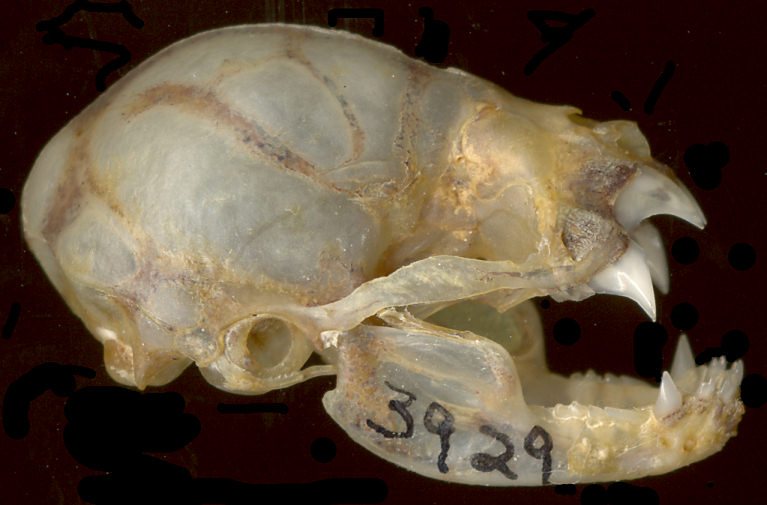
Florida Museum researchers describe the genus *Desmodus* as having unusually shaped upper incisors, large blade-like incisors and canines, a short rostrum (the snout section of the skull) and an arched skull. The rear teeth are small and comparatively reduced, because a bat that feeds on blood has no need to chew solid food.
If you would like to see one, a common vampire bat skull and mandible from the University of Texas at El Paso Biodiversity Collections, specimen M 3929, is photographed and openly licensed under CC BY-SA 3.0. Set it beside the shorter, pointed teeth of an insect-eater and the difference is plain at a glance.
How echolocation shows in the skull
Many bats find their way and their food by sound. The American Museum of Natural History explains that echolocation helps bats determine the distance, shape and size of objects. Most echolocating bats produce high-frequency sounds in the larynx and receive the returning echoes through their ears, and that leaves marks on the skull.
In February 2026, the Natural History Museum in London published an article by Josh Davis on research involving Dr Carlo Meloro of Liverpool John Moores University, Anthony Herrel of the Muséum national d'Histoire naturelle in Paris and Davide Tamagnini of La Sapienza University in Rome. Their study of hundreds of bat skulls found associations between skull form and echolocation frequency. Species using higher frequencies tended to have shorter faces and relatively wider ear bones.
How the sound leaves the body matters too. Bats that call through the mouth often have upward-tilted skulls. Nasal emitters, which include horseshoe bats and leaf-nosed bats, tend to have larger ear bones and more elaborate nasal structures. A greater horseshoe bat skull, *Rhinolophus ferrumequinum*, from the Muséum de Toulouse collection is one openly licensed example of a nasal emitter's skull.
Echolocation does not make every bat skull look the same. Old World fruit bats and flying foxes, including *Pteropus* species, generally do not use laryngeal echolocation, while most other living bats do. And the story goes back a long way: a 50-million-year-old skull of *Vielasia sigei*, reported in Current Biology in 2023, was presented as evidence on the early evolution of modern laryngeal echolocation.
Bat skulls in science
Tap or hover a step to follow the order.
1988
Patricia W. Freeman publishes a study of dental and cranial adaptations in fruit-eating and animal-eating bats through the University of Nebraska State Museum.
2016
Wildlife Conservation Society Canada publishes a bat-remains collection and identification guide.
2023
A 50-million-year-old Vielasia sigei skull is reported as evidence on the early evolution of modern laryngeal echolocation.
2026
The Natural History Museum reports links between bat skull shape, sonar frequency and the way sound is emitted.
Found a bat or bat remains at home: what to do
This part matters most. The CDC says not to touch a bat with bare hands. Bat bites can be tiny, and the CDC Yellow Book notes that bats' very small, sharp teeth may leave no obvious mark.
If someone was bitten or scratched, or may have had contact with a bat, the CDC says to wash any wound with soap and water and contact a healthcare professional or the public health department immediately. If bat saliva or nervous-system tissue got into the eyes, nose, mouth or an open wound, seek urgent medical care.
If a bat turns up inside your home, contact animal control or the local health department about safe capture and rabies testing. The CDC says not to release the bat before you have spoken with public health officials. A bat found in a room with a sleeping person, a young child or someone who cannot tell you whether contact happened can represent a possible unrecognized exposure, so mention that when you call.
Remains need the same care. A fresh carcass, or bat remains with any soft tissue still attached, should be handled by public health, animal control or a trained wildlife professional. A completely dry, clean skull is not the same exposure risk as a fresh carcass, but bat skulls are extremely fragile and should not be picked up casually.
The reason for all this caution is real. The CDC's MMWR describes a case from October 2024. A woman in California handled a bat that appeared dead. She felt movement and a possible bite, but discarded the bat without seeking medical advice, and she later died of rabies. Her case is why the CDC asks people to call for help even when a bat looks lifeless and no bite mark is visible.
If you find a bat or bat remains
Tap a card to bring it forward.
- Hands off: The CDC says never to touch a bat with bare hands, because bites can be tiny and leave no mark.
- Clear the room: Keep children and pets away from the bat or the remains.
- Wash right away: If contact happened, wash any wound with soap and water, as the CDC advises.
- Call promptly: Contact a healthcare professional or the public health department immediately after possible contact.
- Ask about testing: Animal control or public health officials can advise on safe capture and rabies testing.
- Do not let it go: The CDC says not to release a bat involved in possible human contact before speaking with public health officials.
- Check the rules: Bats are protected in places such as England and Michigan, so check local wildlife rules before possessing, moving or keeping bat remains.
For general questions about other finds, our story on what to do when you have found an animal skull covers the basics.
Bats are protected: the rules before you keep anything
> Legal note: The bat rules below are offered as general information, not legal advice. Laws on bats and bat parts differ from one state, province and country to the next, and they change. Before keeping or moving any bat remains, put the question to your state or provincial wildlife agency; in the United States, that is your state wildlife agency or the U.S. Fish and Wildlife Service.
Bats are protected in many places, and several governments spell it out. As their official guidance stood in 2026:
- England: GOV.UK says all bat species, their breeding sites and resting places are protected, and the rules restrict possession, sale, control or transport of bats and bat parts.
- Michigan: the Michigan Department of Natural Resources says bats are protected and lethal control is generally prohibited except in human-safety situations.
- Arizona: Arizona Game and Fish says bats are protected and cannot be collected or killed.
- British Columbia: the provincial government says all 15 bat species in the province are protected from killing or harassment.
- Alberta and Saskatchewan: Alberta treats its bats as protected, and Saskatchewan protects bats and their habitats from interference, harassment and harm.
A dry skull from an attic can fall under different rules from one jurisdiction to the next, which is why the agency's answer comes first. Owls raise a similar question, and our owl skull story covers the rules for that common attic and barn find.
Bat skull quiz
Answer every question to check.
More questions about bat skulls
A few practical questions come up once you have a small skull in front of you.
Is it safe to pick up a bat skull I found in my attic?
Not with bare hands. A completely dry, clean skull is a lower exposure risk than a fresh carcass, but it is extremely fragile, and any remains with soft tissue belong with animal control or public health. If anyone may have touched a fresh bat, the CDC advises washing with soap and water and calling a healthcare professional or the health department.
How big is a bat skull?
A typical bat skull is about 1.5 cm long, according to the WCS Canada and BatCaver guide. Size varies widely by species, as the American Museum of Natural History notes, so a measurement is a clue rather than a verdict.
What does a fruit bat skull look like?
Patricia W. Freeman's 1988 study found that the most derived fruit-eating bats have small canines, wide palates and molars with cutting edges. Fruit bats are not all alike, either: the Old World fruit bats and flying foxes, including *Pteropus* species, generally do not use laryngeal echolocation, while most other living bats do.
Can I keep a bat skull I found?
It depends on where you live, and bats are protected in many places, so check with your state or provincial wildlife agency first. Take that as general information about bats, not legal advice for your own find.
Where to go next
If the tooth row says rodent, the rat skull and squirrel skull stories will take you the rest of the way. If the skull looks too big for a bat, compare it with the mink skull. And for any find you are still unsure about, found an animal skull covers the general questions to ask before you do anything else with it.
Terms in this story
Tap a term to see what it means.
Auditory bullae. Rounded bony capsules on the underside of the skull that hold the middle ear. They are large in bats and shrews.
---