

No. 295
Armadillo Skull: The Peg Teeth and How to Identify One
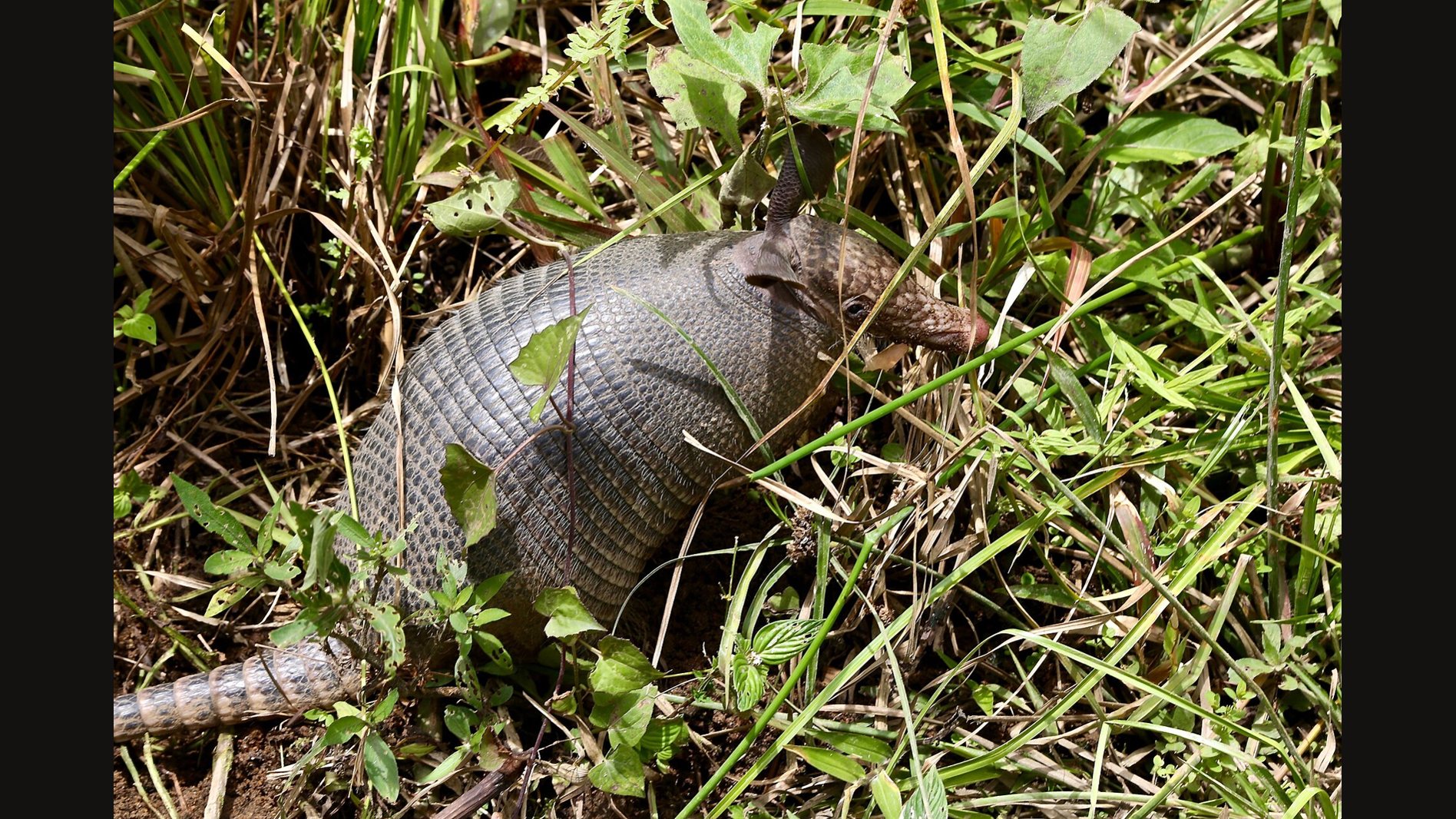
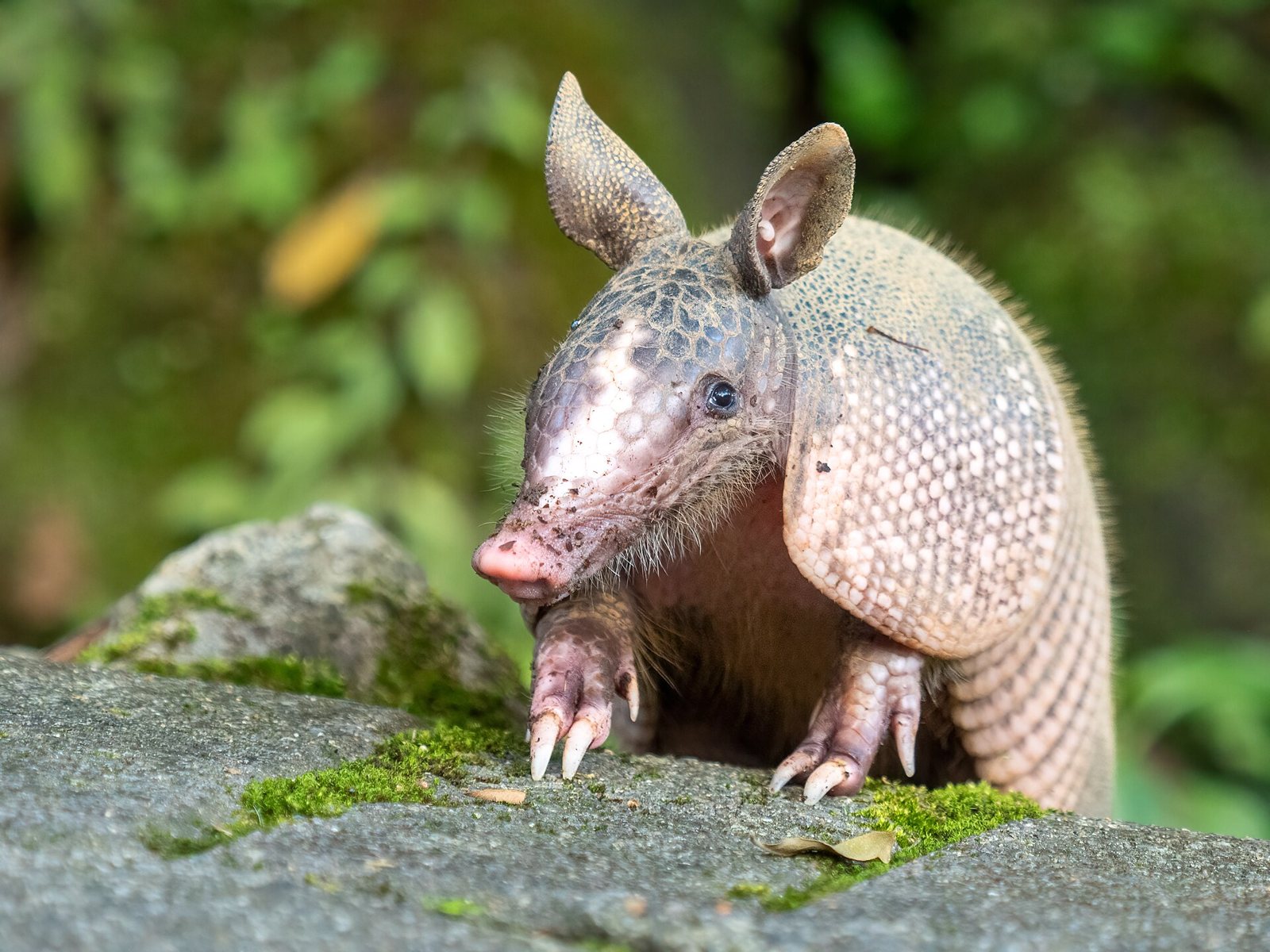
A long, flattened skull with a narrow snout, a slender V-shaped lower jaw and a row of small, matching, cylindrical teeth that look like tiny pegs is very likely a nine-banded armadillo, *Dasypus novemcinctus*. It is the armadillo of the southern United States, and those peg teeth are its signature.
If you are not sure about picking it up, a calm note helps. The CDC says some armadillos in the southern United States carry the bacteria that cause Hansen's disease, but the risk to people is very low. Wear gloves, especially if any tissue is left, and wash your hands afterward.
What an armadillo skull looks like
Seen from the side, an armadillo skull is long and low, almost like a tube that tapers into a snout. The University of Georgia Cooperative Extension describes it as tubular, with a long, slender lower jaw, and the South Carolina Department of Natural Resources species sheet notes the long snout that goes with it.
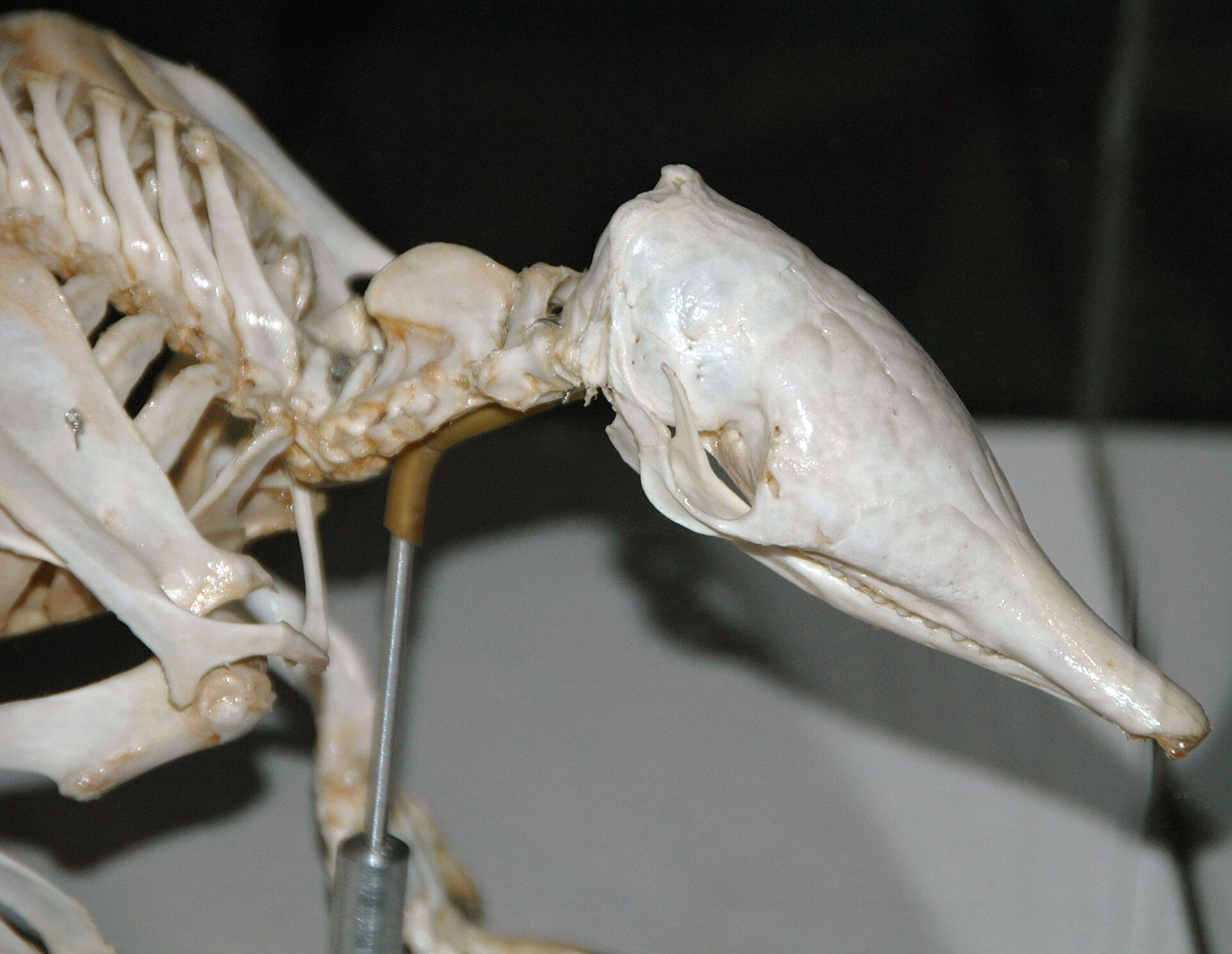
From above, the skull is flattened, and the two halves of the lower jaw meet in a narrow V. Turn it over and you will notice something missing. Animal Diversity Web points out that the nine-banded armadillo lacks ossified auditory bullae, the rounded bony capsules around the ear that many mammals have on the underside of the skull.
The name fits the animal well. The South Carolina sheet explains that armadillo is a Spanish word meaning "little armored one," a nod to the bony shell. The armor is part of how scientists sort these animals, too: the University of Texas mammal key identifies the armadillo group by its bony plates.
Do armadillos have teeth?
Yes, armadillos have teeth, and quite a few of them. An adult nine-banded armadillo has about 28 to 32, usually described as eight cheek teeth on each side of each jaw, according to Animal Diversity Web.
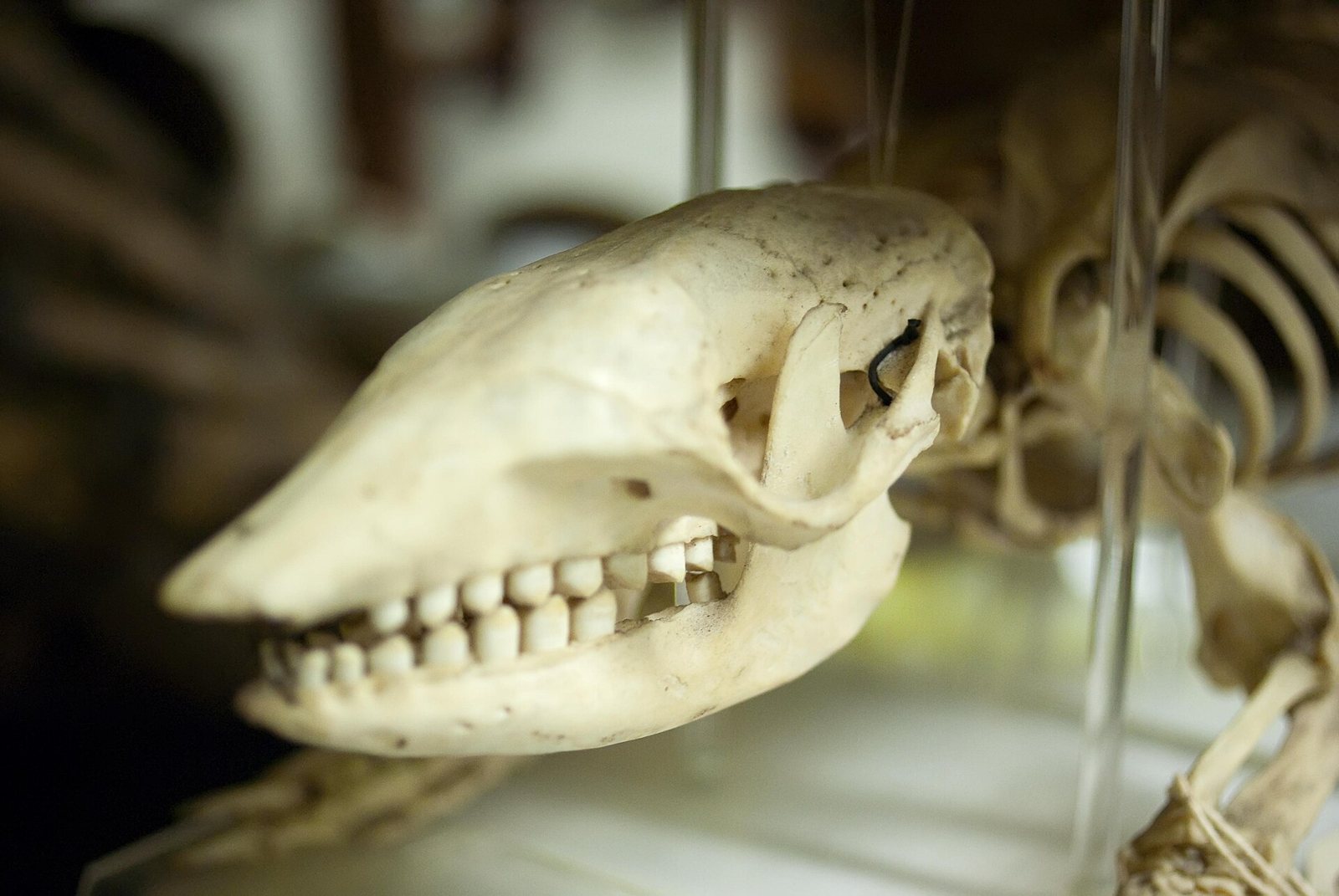
They just do not look like most mammal teeth. Each one is a small, simple cylinder, and they are all much the same size and shape, lined up along the jaw like a row of pegs. There are no prominent canines, and the upper incisors are absent or highly reduced in adults, so the front of the snout is bare.
Those pegs also keep growing throughout the animal's life. A tooth that never stops growing can keep up with wear, which helps explain how such simple teeth last a lifetime.
Why the teeth have so little enamel
Most mammal teeth wear a hard cap of enamel. Adult armadillo teeth are generally described as having little or none, and the University of Texas overview of cingulates treats enamel loss as a feature of the group.
The nine-banded armadillo adds an interesting wrinkle. In a study of dental enamel in long-nosed armadillos, Ciancio and colleagues documented thin enamel in the genus *Dasypus*, including in juvenile teeth. So, the safer way to say it is that adult armadillo teeth are enamel-less or nearly so, while young *Dasypus novemcinctus* still start out with a thin layer.
What makes up for the missing enamel? Daniela C. Kalthoff and colleagues, in their work on the dental hard tissues of fossil and living xenarthrans, describe teeth built from modified dentine and cementum that stand up to wear. Xenarthrans are the larger group of mammals that armadillos belong to.
Why enamel faded in the first place is still an open question. Davit-Béal and colleagues, reviewing the loss of teeth and enamel in tetrapods, link high-crowned, ever-growing teeth with abrasive diets, but they say the exact process behind enamel loss remains unknown. The teeth plainly work; how they came to be this way remains an open question.
Armadillo or opossum?
In the South, the other long-snouted skull people turn up is the Virginia opossum, *Didelphis virginiana*. The two are easy to tell apart once you look at the teeth.
An opossum skull is crowded with them: 50 in all, with the formula I 5/4, C 1/1, P 3/3, M 4/4, meaning five upper and four lower incisors, one canine, three premolars and four molars on each side. The Maryland Department of Natural Resources skull key and the Santa Barbara Museum of Natural History both point to its prominent canines and five upper incisors on each side. An opossum also has a large sagittal crest, a ridge of bone running along the top of the skull, over a small braincase.
An armadillo has none of that. Its row of similar pegs, the clue the University of Texas key uses for *Dasypus novemcinctus*, has no fangs at the front and no crowded incisors. Our opossum skull story has more on the opossum side, and if there is any question about whether the bones are animal at all, how to tell a human skull from an animal skull is the place to begin.
Tap or hover a row to highlight it.
| Feature | Nine-banded armadillo | Virginia opossum |
|---|---|---|
| FeatureScientific name | Nine-banded armadillo*Dasypus novemcinctus* | Virginia opossum*Didelphis virginiana* |
| FeatureSnout | Nine-banded armadilloLong and narrow | Virginia opossumSlender, with a small braincase |
| FeatureTeeth | Nine-banded armadilloAbout 28 to 32, mostly uniform pegs | Virginia opossum50 total |
| FeatureCanines | Nine-banded armadilloNot prominent | Virginia opossumProminent |
| FeatureUpper incisors | Nine-banded armadilloAbsent or highly reduced in adults | Virginia opossum5 per side |
| FeatureSkull crest | Nine-banded armadilloNot the defining feature | Virginia opossumLarge sagittal crest |
| FeatureLower jaw | Nine-banded armadilloV-shaped | Virginia opossumRear portion angled inward in the Maryland key |
The giant armored relatives
Armadillos have some very large relatives in the fossil record. Glyptodonts were extinct armored mammals in Cingulata, the same broad group that includes living armadillos. The University of Texas lists the Pleistocene cingulates as two families, armadillos and glyptodonts, and notes that they reached North America after the Central American land bridge formed in the Pliocene.
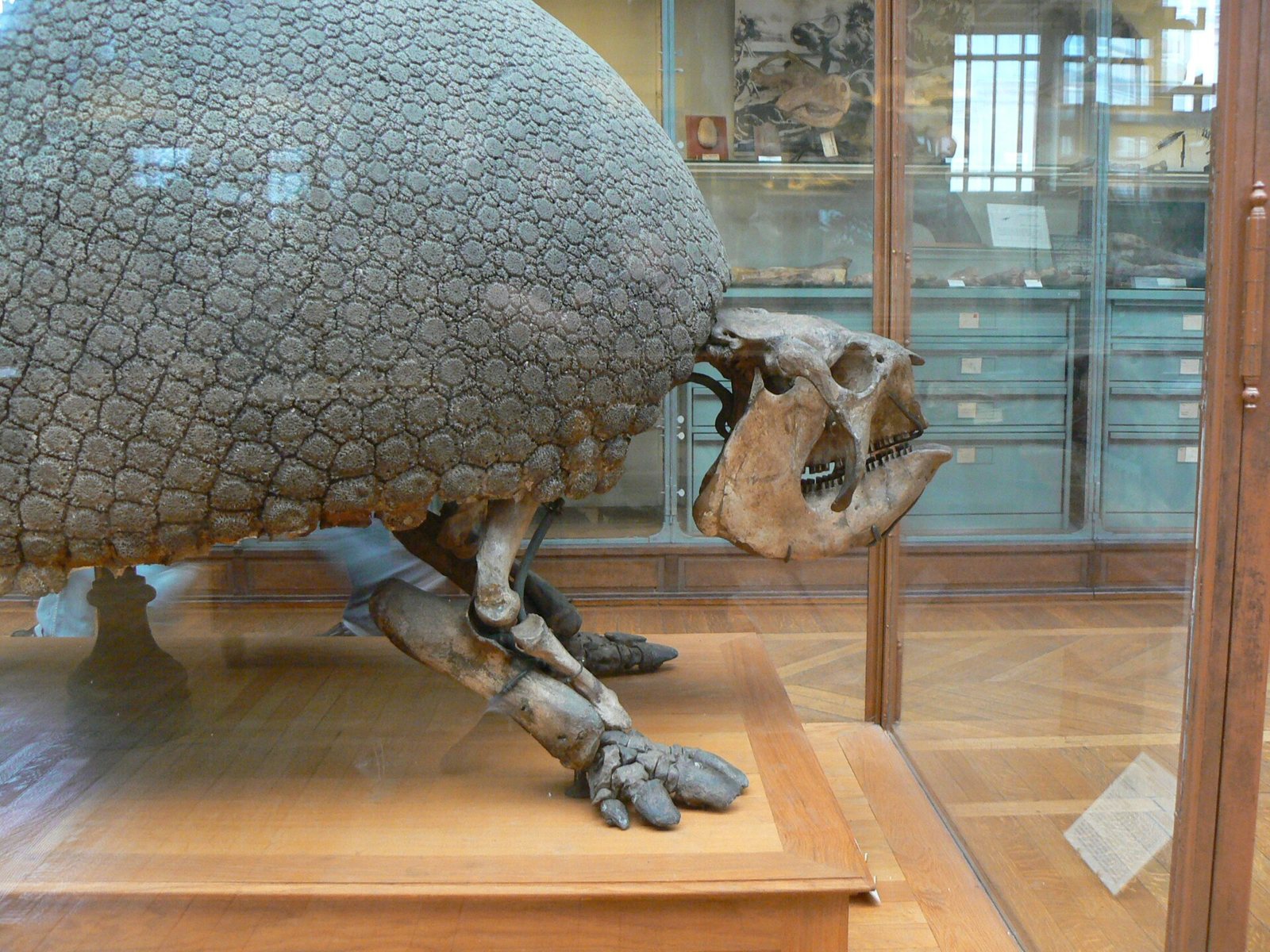
Their teeth tell their own story. The Natural History Museum in London describes glyptodonts as armored relatives of armadillos with grooved teeth suited mainly to grasses and other low plants, and notes that some lived in South America until the late Pleistocene.
One skull in particular came with a good story. A glyptodont skull from Muaco, Venezuela, attributed to *Glyptotherium cylindricum*, was studied by Professor Alfredo Carlini of the Museo de La Plata and colleagues. Because the local museum had no scanner, the skull was scanned on hospital CT equipment. The Muaco site has been dated to about 16,000 years ago, and the museum's account connects it with early human activity alongside the glyptodonts.
Armadillos and their armored relatives through time
Tap or hover a step to follow the order.
Late Paleocene or early Cenozoic
Early cingulates appear in South America.
Eocene
Fossil armadillos show that some early forms still had enamel on their teeth.
Pliocene
Cingulates reach North America after the Central American land bridge forms.
About 16,000 years ago
The Muaco site in Venezuela preserves evidence linked to glyptodonts and early human activity.
Is it safe to touch an armadillo skull?
Yes, with simple care. The CDC says some armadillos in the southern United States carry *Mycobacterium leprae*, the bacterium behind Hansen's disease, also called leprosy. It also says the risk to people is very low, and that most people who come into contact with armadillos will not develop the disease.
The practical steps are the same ones that apply to any dead animal. The CDC's guidance on handling dead animals calls for gloves and handwashing, and the South Carolina sheet advises against bare-hand contact with armadillos, their blood and fluids. For a skull, that adds up to a short list.
Handling an armadillo skull: the simple steps
Tap a card to bring it forward.
- Gloves on: Wear disposable gloves before you pick it up.
- No bare hands on fresh remains: Take extra care if any tissue, blood or fluid is still on the bone.
- Keep the dust down: Avoid brushing, scraping or anything else that puts dust in the air.
- Wash up: Wash your hands with soap and water after taking the gloves off.
- Ask a doctor if needed: Contact a healthcare provider if you had meaningful exposure.
These steps follow the CDC's general guidance and are not medical advice. If you later get the go-ahead to keep the skull and want to clean it, how to clean an animal skull covers that separately.
Keeping an armadillo skull you found
This section is general information, not legal advice. Whether you may keep a wild animal's skull depends on the state, whoever manages the land, the species and how the animal died, so the answer in one place is not the answer in the next.
States run their own systems. North Carolina, for example, has a wildlife possession and salvage permit, and Texas Parks and Wildlife publishes its own regulations for nongame species. Those are examples of how states set rules, not a guide to what is allowed where you are.
Before you pick it up to take home, contact your state wildlife agency and ask. A skull that is already clean and dry is not automatically legal to keep. Our story on what to do after finding an animal skull lists the agencies and questions to start with. Out in the Southwest, a tusked skull raises a different set of questions, and our javelina skull story takes those on.
Armadillo skull questions, answered
A few more questions come up after the main ones.
Do armadillo teeth keep growing?
Yes, armadillo teeth keep growing throughout the animal's life. That steady growth helps the simple, low-enamel pegs keep pace with wear.
Do all armadillo skulls look the same?
No, tooth patterns vary among armadillo species, according to Animal Diversity Web's account of the armadillo family. The nine-banded armadillo, *Dasypus novemcinctus*, is the species of the southern United States, so it is the likeliest match for a skull found there.
What does the word armadillo mean?
Armadillo is a Spanish word meaning "little armored one," according to the South Carolina Department of Natural Resources. The name points to the bony plates that also help scientists classify the group.
Armadillo skull quiz
Answer every question to check.
Where to go next
An armadillo skull is a small lesson in doing things differently: no fangs, little enamel, teeth that never stop growing and a family tree that once held armored giants. Keep the gloves handy, check with your state before anything goes home, and if you are curious about the other skulls you might meet in the woods, our opossum and javelina stories are good company.
Terms in this story
Tap a term to see what it means.
Dasypus novemcinctus. The scientific name of the nine-banded armadillo, the species of the southern United States.
---