

No. 333
How to Make a Paper Calavera and Dress a Paper Catrina, Step by Step
To make a paper calavera, build a skull frame from cardboard, cover it with newspaper strips dipped in flour paste, laying them crisscross, and let it dry. Then paint it white and add color.
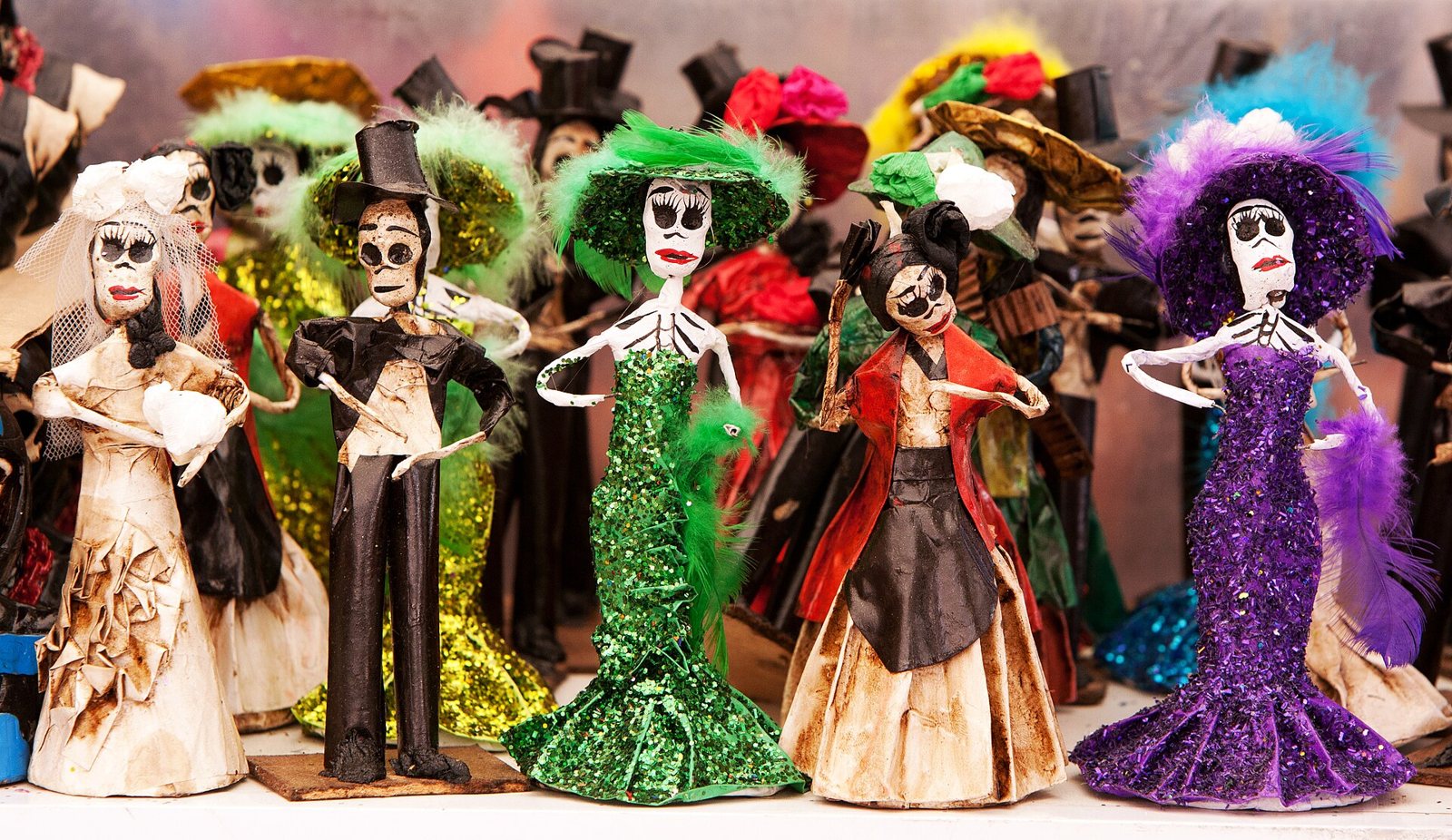
To turn it into a catrina, dress the dried figure in tissue, crepe or craft paper and top it with a wide hat and paper flowers. It is the method of the Mexico Arte Museum, the children's guide of the Museo de Arte Moderno in Mexico City and cartonería artisans such as the Ronces family of Xochimilco.
A calavera like this suits a home ofrenda or a school project, and it is a forgiving craft. Paper paste wipes off a table, a lumpy cheek reads as character, and the only real test of patience is the drying.
What you need
Most of the materials are already in a kitchen or classroom. The paste is flour and water, the body is cardboard and newspaper, and the clothes are paper. The one thing worth planning for is an adult on hand for the steps that involve heat or sharp tools.
Paper calavera checklist
Tap a card to bring it forward.
- Cardboard or thick cardstock: The frame of the skull, or the base of a mask.
- Newspaper or recycled paper: The strips that build up the papier-mâché layers.
- Flour, water and a container: For the paste that holds the layers together.
- Masking tape: Holds the frame and the raised features in place.
- Rounded-tip scissors: Safer cutting for children.
- White and colored acrylic paint: A white base first, then the color.
- Tissue, crepe or craft paper: Clothing for a catrina.
- Paper flowers and hat materials: The finishing touches.
- Elastic or yarn: To hold a mask on.
- An adult: For cooking the paste, craft knives, sharp pins and strong adhesives.
- Patience: Dry each stage fully before painting or decorating.
Build a cardboard calavera step by step
The Mexico Arte Museum's Day of the Dead activity guide builds a skull you assemble yourself, a calavera para armar. Cut a front skull shape and side shapes from cardboard, then join them with cardboard strips about 1½ inches wide, taped all the way around the edge. That gives you a hollow head with real depth.
Next comes the paste. The Museo de Arte Moderno's children's guide uses one cup of flour to three cups of water, cooked slowly with an adult's help, then cooled. Keep any leftover paste in the refrigerator between sessions.
Tear newspaper into strips, dip each one in the paste and lay it over the frame. The Mexico Arte Museum crosses the strips in a crisscross pattern, which makes the shell much stronger than strips laid all one way. For the face, roll or crumple newspaper into raised eyes, a nose and cheekbones, tape them in place and cover them with more strips so they become part of the skull.
Then wait. The museum lets the piece dry in the sun for about a day between stages, and the Museo de Arte Moderno dries its sculpture for a day before painting. Once it is dry and hard, paint the whole skull white, let that dry, and add your colors on top.
From cardboard to calavera
Tap or hover a step to follow the order.
Build the frame
Cut front and side skull shapes from cardboard and tape them together with strips about 1½ inches wide.
Make the paste
Cook one cup of flour with three cups of water slowly, with an adult, and let it cool.
Lay the layers
Dip newspaper strips in the paste and lay them crisscross over the frame.
Add the features
Tape on raised eyes, nose and cheeks of rolled or crumpled newspaper, then cover them with more strips.
Dry
Let the piece dry in the sun for about a day between stages.
Paint
Paint the skull white, then add color once the base is dry.
For a quicker classroom version, the museum's mask material suggests drawing a skull from a half-skull template on a sturdy paper plate or cardstock. Cut out the eyes, nose and mouth, then fold and tape the cut sections so the flat face becomes three-dimensional. A layer or two of papier-mâché strips over the top makes it sturdy enough to paint.
A balloon makes a rounder skull with no cardboard at all. In Howcast's papier-mâché skull method, you inflate a balloon, rest it on a jar and wrap masking tape around the lower third, pressing gently to shape a jaw. Cover it with at least two layers of torn tissue or newspaper brushed with wheat paste or diluted white glue, hang it by the knot until it is completely dry, then pop the balloon and pull it out.
Cut the eyes, nose, mouth and an opening in the base, reinforce the edges from inside with more paper and paste, and paint. If the skull is going to glow on the altar, use a battery light inside rather than a candle, and keep broken balloon pieces away from small children, as Crayola's craft safety guide advises.
How Mexican cartonería artisans work
Cartonería, the craft of shaping figures from paper and paste, is a living trade in Mexico, and the people who practice it explain the steps in their own words. Watching how they work helps a kitchen-table version come out better.
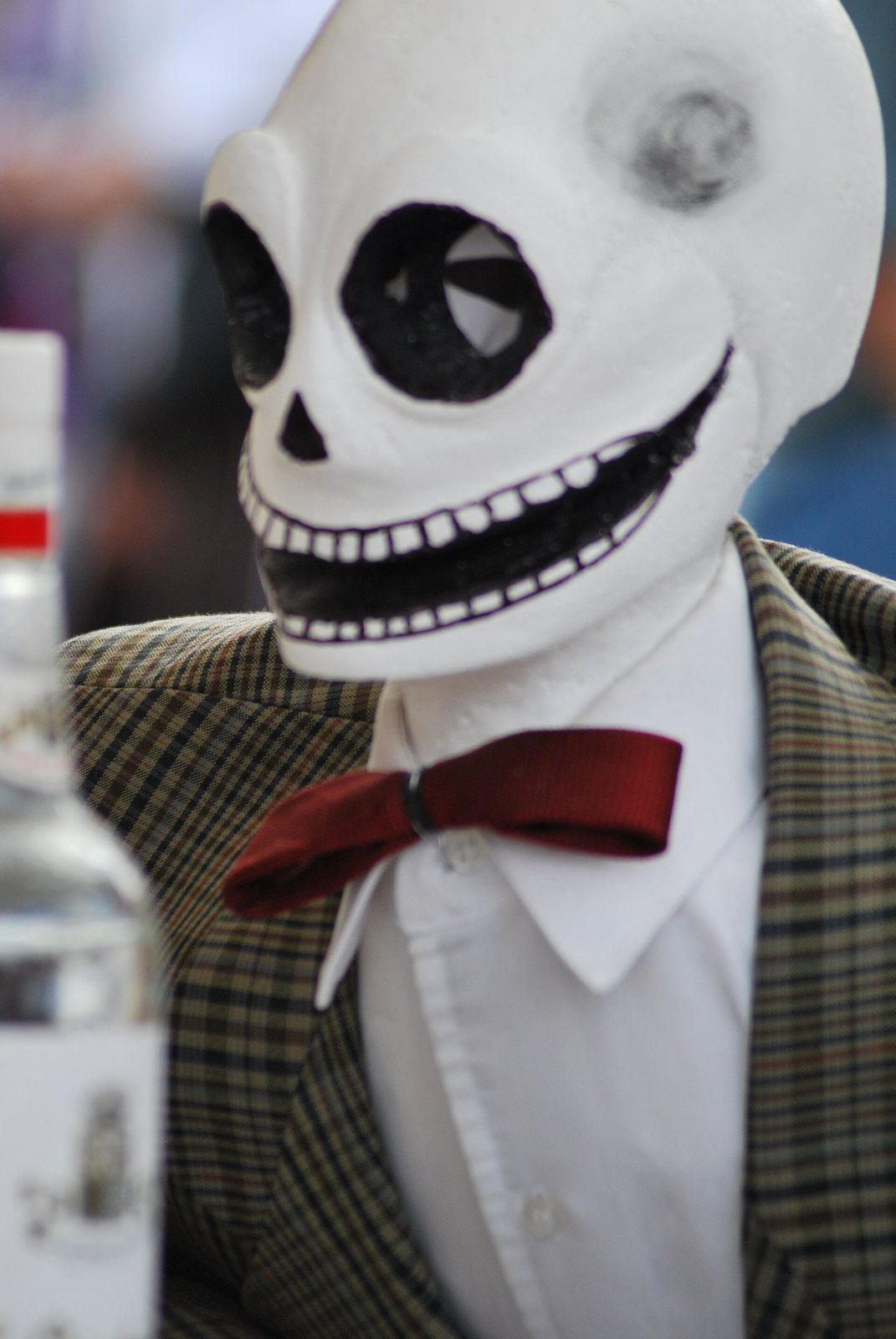
In Xochimilco, in Mexico City, the Ronces family has made paper-mâché catrinas, masks and skeletons across three generations, as UNAM Global reports. Ernesto Ronces forms molds from kraft paper, and recycled office paper is cut for the layers. The paste is cooked in a saucepan until thick. The pieces are covered layer by layer, dried in the sun, painted and decorated, and then assembled with clothing and personal details.
Mexico City artisan Francisco Javier Macedo Álvarez led a four-session cartonería workshop that INBAL, Mexico's national fine arts institute, announced in 2024 at the Sala de Arte Público Siqueiros. He calls the inner structure of cardboard or paper the piece's "alma," its soul. Modeling, finishing, painting and a coat of lacquer follow.
In Morelia, the Museo del Estado de Michoacán announced a 2022 workshop in which Nicolasa Moreno Caballero taught participants to make a paper-mâché Catrina, building the skull over a wire base. Participants were asked to bring newspaper, rounded-tip scissors and white glue, a supply list any family can match.
Finished pieces also reach museum collections. The Museo Nacional de Culturas Populares holds a 2010 paper-mâché calavera attributed to Carlos Hanh and linked to Oaxaca. Not every catrina is paper, either: in Michoacán, the artisans of Capula shape theirs in clay, as told in Capula catrinas.
Dress your paper catrina
Dress the figure only once the body is dry and stable, so the paper clothes have something firm to hold. The dressing steps here adapt what the Ronces family, UNAM and the museums describe, so treat them as a starting point for your own design.
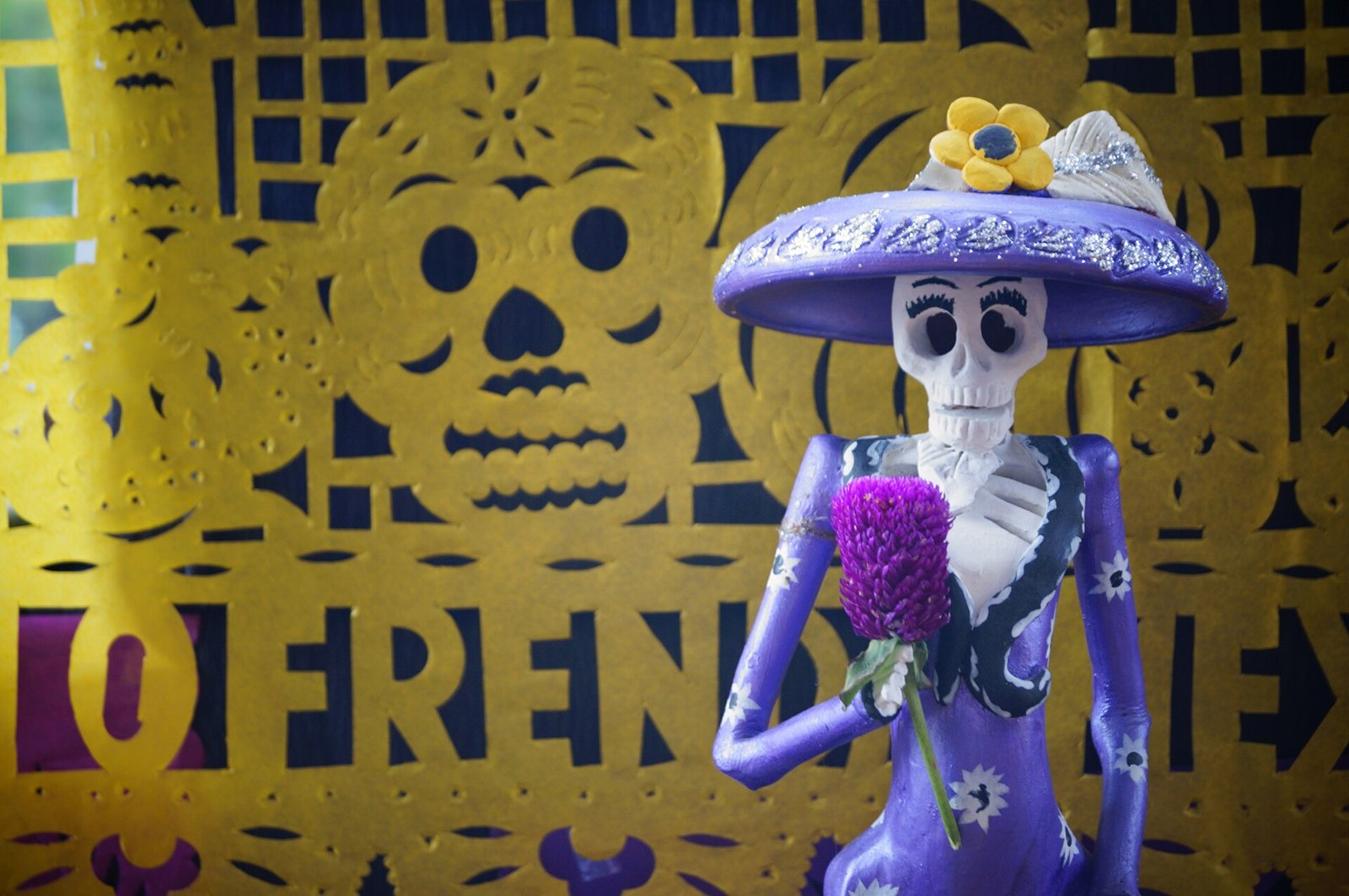
The Ronces family dresses its figures in papel de China, a thin tissue paper. They connect that paper to air, one of the four elements of the altar, which is their own reading of the material. They cut paper patterns for the torso, head and limbs, and they choose clothing and accessories to match the person being remembered.
You can follow the same idea at home. Cut a fitted bodice and a long skirt or dress from tissue, crepe or craft paper and attach it with white glue, layer by layer, like a dressmaker working in paper. Then add a wide hat, set at a slight tilt, with paper flowers at the crown or along the brim. A CEPE-UNAM article on La Catrina describes exactly that look: a fine dress, a large inclined hat and flowers.
For a bolder design, take a cue from a monumental Catrina in Tláhuac, Mexico City. UNAM's Punto y Línea describes her craft-paper hat and dress painted black and decorated in the Tenango style with birds, deer, flowers, plants and rabbits. Paint those motifs onto black paper and your catrina has a regional design of her own.
Who La Catrina is, and how the skeleton lady became a symbol of Día de Muertos, is a story told in full in La Catrina. If you would rather wear the look than build it, Catrina makeup covers the face paint.
Decorate a foam (unicel) skull
A ready-made foam skull, called unicel in Mexico, skips the papier-mâché and goes straight to painting. The craft instructions from Lumen start with a white or light-colored acrylic base.
Once the base is dry, paint black around the eyes, nose and teeth. Then add colored grecas (geometric border patterns), dots and flowers, working from the larger shapes down to the small details and leaving a few minutes between layers for the paint to dry. Lumen adds a half-flower at the chin, outlines the eyes and jaw in a darker color, and finishes with flowers or branches around the skull.
Sequins add sparkle and can go on with liquid silicone or with pins. An adult handles the pins, and a pinned skull is best kept out of reach of young children. If you want to sketch your design first, how to draw a skull helps with the shapes, and the sweets that inspired so many of these designs are in sugar skulls.
Make a paper skull mask
A skull mask uses the same paste and paper on a flat base. The Mexico Arte Museum's mask activity starts with a paper plate or thick cardstock, a skull template, scissors, a pencil, tape, flour paste, newspaper, white and colored paint and elastic or chenille stems.
Trace the skull, cut the eye, nose and mouth openings, then fold and tape the cut sections so the face takes on a three-dimensional shape. Cover it with short newspaper strips dipped in paste, let it dry, paint it white and then decorate it. An adult should handle any craft knife used for the openings.
The J. Paul Getty Museum's paper-mask activity adds a smart fitting tip: measure where the wearer's eyes sit with a strip of paper before cutting, and cut the eye openings larger than the eyes themselves so the wearer can see clearly. Yarn or elastic holds the finished mask in place. The masks of the season, and what people make them from, are the subject of Day of the Dead masks.
Cut a skull papel picado garland
For a garland of little paper skulls, stack a skull outline over two or more sheets of tissue paper. Following a skull papel picado template, fold along the marked lines, cut out the inner shapes and the outline, and unfold. Tape each skull to a length of string or yarn and repeat until the banner is as long as your altar.
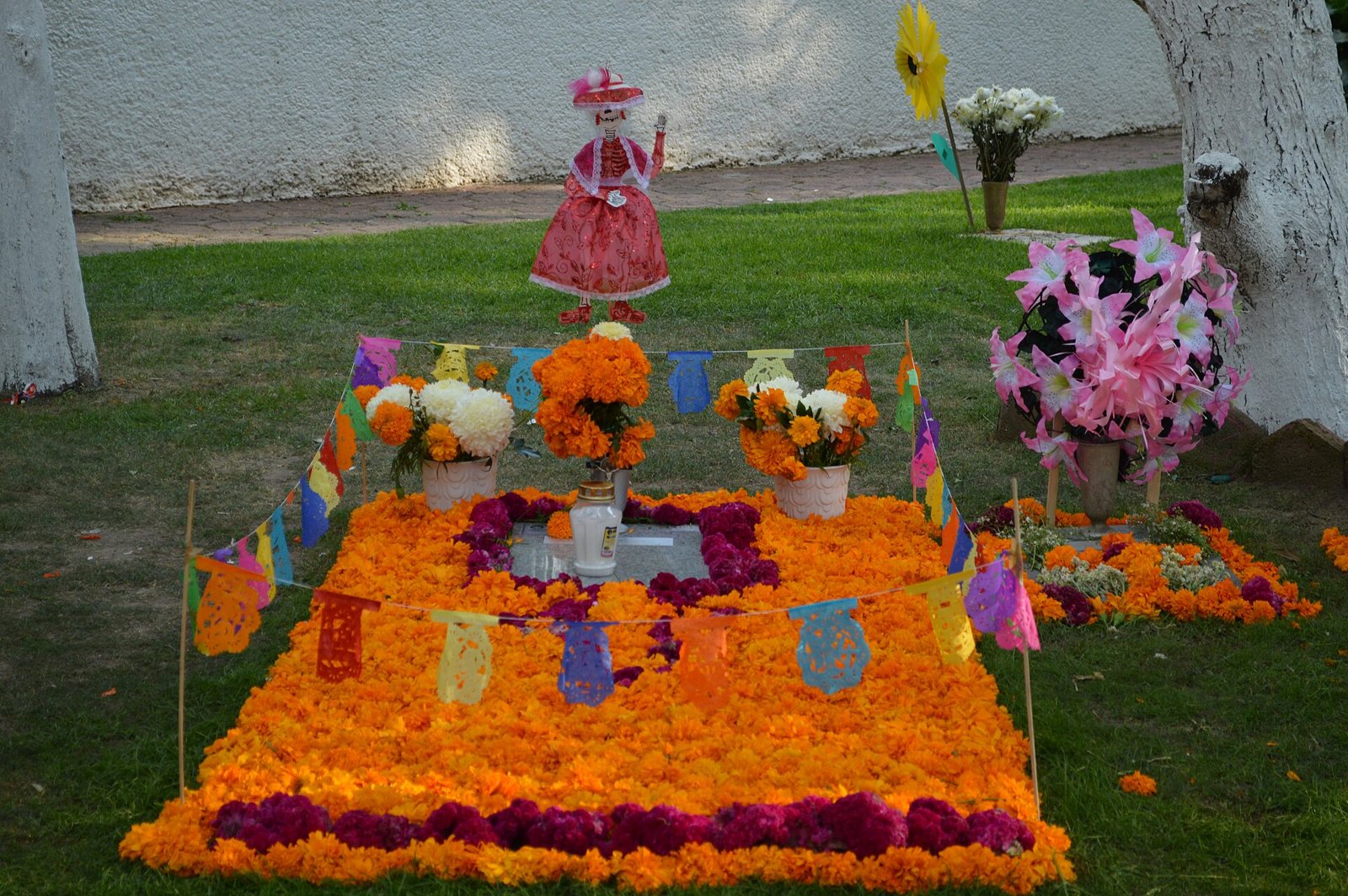
Cut paper banners have their own tradition and meaning on the ofrenda, told in papel picado. Paper marigolds strung beside the skulls echo the real flowers of the season, the cempasúchil.
Tap or hover a row to highlight it.
| Project | Base | Main materials | Safety note |
|---|---|---|---|
| ProjectCardboard calavera | BaseFront and side skull shapes joined with 1½-inch strips | Main materialsNewspaper, flour paste, masking tape, white and colored paint | Safety noteAn adult cooks the paste |
| ProjectClassroom skull | BasePaper plate or cardstock from a half-skull template | Main materialsTape, newspaper strips, flour paste, paint | Safety noteAn adult cooks the paste and uses any craft knife |
| ProjectBalloon skull | BaseAn inflated balloon resting on a jar | Main materialsMasking tape, tissue or newspaper, wheat paste or diluted white glue, paint | Safety noteKeep broken balloon pieces from small children; a battery light, not a candle |
| ProjectFoam (unicel) skull | BaseReady-made foam skull | Main materialsAcrylic paint, brushes, sequins, liquid silicone or pins | Safety noteAn adult handles the pins; keep away from young children |
| ProjectPaper skull mask | BasePaper plate or thick cardstock | Main materialsSkull template, tape, flour paste, newspaper, paint, elastic or chenille stems | Safety noteAn adult cuts with any craft knife; eye holes larger than the eyes |
| ProjectPapel picado garland | BaseTwo or more sheets of tissue paper | Main materialsSkull outline, scissors, tape, string or yarn | Safety noteRounded-tip scissors for children |
Place it on the ofrenda
A paper calavera on an ofrenda is more than decoration when it is made for someone. The Ronces family shapes the clothes and accessories of a figure to match the person being remembered, and the same idea works at home. A tiny paper apron for a grandmother who loved to cook, a paper guitar for an uncle who played, or a hat in a favorite color makes the calavera theirs.
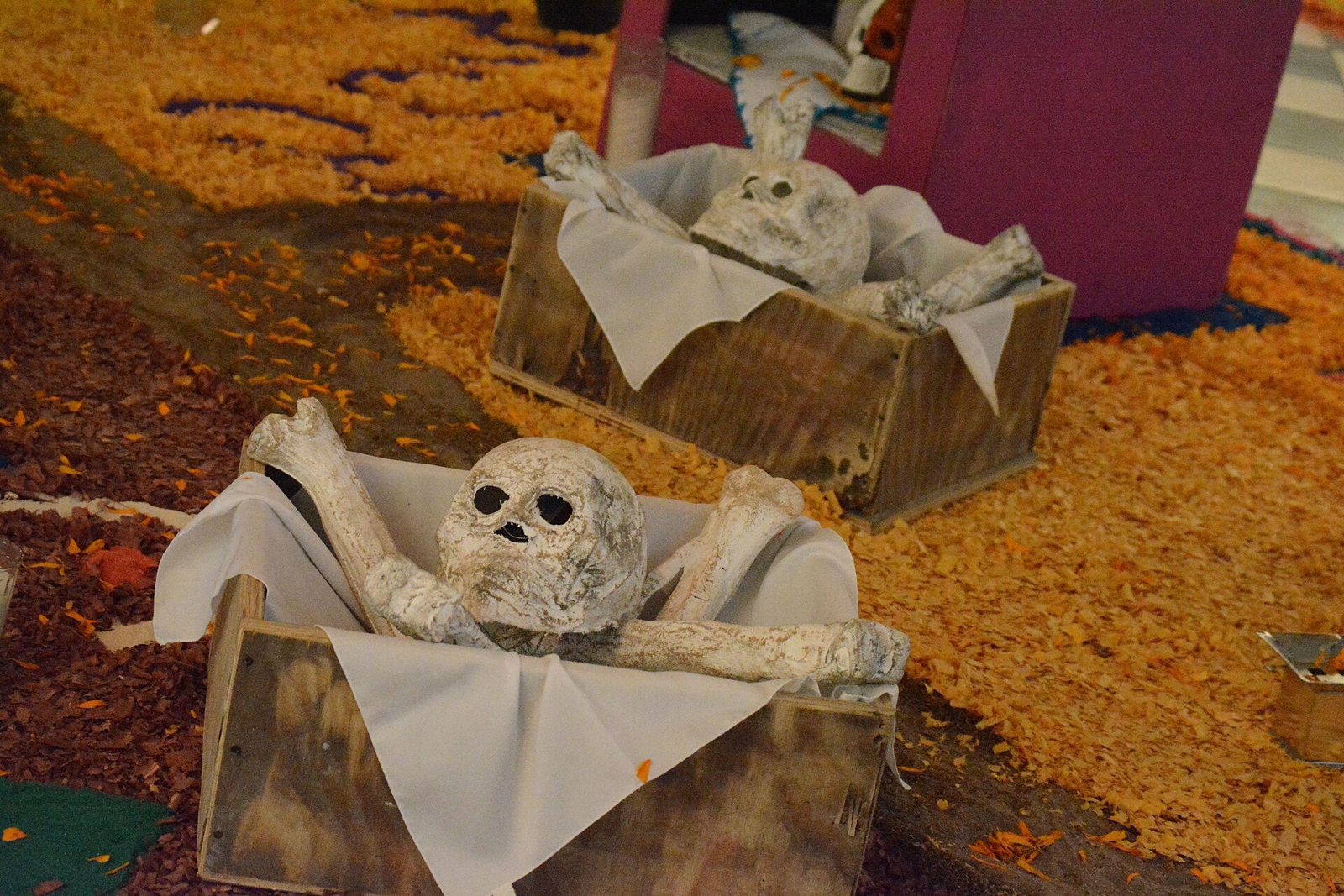
Set it among the photographs, food and flowers of the altar, which how to make an ofrenda walks through step by step. A small card beside it with a few words of remembrance completes the scene, and Day of the Dead sayings has traditional lines and their meanings to choose from.
FAQ
Quick answers on drying, shaping, dressing, safety, paint, moving skeletons and origami.
How long does papier-mâché take to dry?
Plan on about a day for each stage. The Mexico Arte Museum dries its skulls in the sun for about a day between layers, and the Museo de Arte Moderno dries its sculpture for a day before painting. Paint only once the shell is dry all the way through.
How do I make the skull look three-dimensional?
Give it depth at the frame and at the face. Join cardboard front and side shapes with strips so the head is hollow and round, and build up the eyes, nose and cheeks with rolled or crumpled newspaper under the paste. On a flat plate, folding and taping the cut sections lifts the face off the paper.
How do I attach a hat and flowers?
Glue them on with white glue once the body is fully dry and stable. Attach the hat first, at a slight tilt, then add paper flowers around the crown or brim.
Can children make a paper calavera safely?
Yes, with an adult handling the risky steps. The adult cooks the paste and handles craft knives, sharp pins and strong adhesives, while children tear paper, dip strips, glue clothes and paint. Rounded-tip scissors, the kind the Morelia workshop asked participants to bring, are the safer choice for small hands.
What paint works on a foam skull?
Acrylic paint, the paint Lumen uses for its unicel skulls. Start with a white or light base and let each layer dry for a few minutes before the next.
How do you make a movable cardboard skeleton?
Cut the skeleton as separate cardboard bones and join them at the shoulders, elbows, hips and knees with paper fasteners, loose enough to swing. The Institution of Engineering and Technology's dancing skeleton activity then tapes short pieces of drinking straw to the backs of the bones and threads string through them, so a pull on the string lifts the arms and legs. Place an eraser or a lump of sticky tack behind each joint when you poke the holes, and let an adult do the poking for young children.
How do you make an origami skull?
Fold it from a single square sheet by following a diagram, such as the skull designed by Sébastien Limet, known as Mister Paperfold, and diagrammed by Peter Buchan-Symons for Origami.me. After the first creases, the corners and top edge fold in, the model is turned over, and the upper layers are opened to shape the eyes and nose, with reverse folds for the jaw and teeth. Open the eye and nose layers gently, because the paper can tear at those steps.
Paper calavera quiz
Answer every question to check.
Ready for the altar
Cardboard, newspaper, flour and a bit of patience are all it takes to make a calavera that belongs to your family. Whether yours ends up as a plain white skull, a catrina in a black Tenango dress or a garland across the altar, it carries the same idea as the Ronces family's figures: something made by hand for someone remembered.
The wider celebration it is made for is told in Día de Muertos. Skull lamps of a different kind, carved from squash and pumpkins, light the way for children in pedir calaverita.
Terms in this story
Tap a term to see what it means.
Calavera. Skull; on Día de Muertos it also names skull-shaped figures, sweets and decorations.
---