

No. 255
Xantolo: Día de Muertos in the Huasteca, Its Arches and Its Dances
Xantolo is the Huasteca's own celebration of Todos Santos and of the family dead. UNESCO describes the Xantolo of the Huasteca Potosina as a ritual period from October 31 to November 2, tied to the end and the renewal of the maize cycle. San Luis Potosí's tourism office calls it the name Indigenous communities give to the festivities for their deceased relatives.
It is kept across the Huasteca of San Luis Potosí, Hidalgo and Veracruz, and every community keeps it in its own way. What they share is a welcome: the dead come home, and the family is ready for them.
The flower arches over the altars, the masked dancers in the street and the zacahuil on the table all belong to it. In 2026, the core days run from Saturday, October 31 through Monday, November 2.
A feast for the souls, kept community by community
The Huasteca is a region, not a single town, and Xantolo changes as you move through it. UNESCO's account centers on the Teenek communities of the Huasteca Potosina, where the days from October 31 to November 2 close one maize cycle and open the next. The Universidad Veracruzana writes about the celebration in the Huasteca of Veracruz, and federal and state bodies document it in the Huasteca Hidalguense as well.
Across those places, San Luis Potosí's tourism office describes a festival dedicated to relatives who have died, with the dead received as family rather than as frightening figures. That is the heart of it. The arches, the food, the music and the dances are all ways of making a grandmother or a child who has died feel at home again.
The name itself is usually explained as the Huasteca's word for Todos Santos, or as the "Feast of the Souls." Its meaning and pronunciation shift with the language and the community, and you will also see it written Xantoloj.
The arch and the household altar
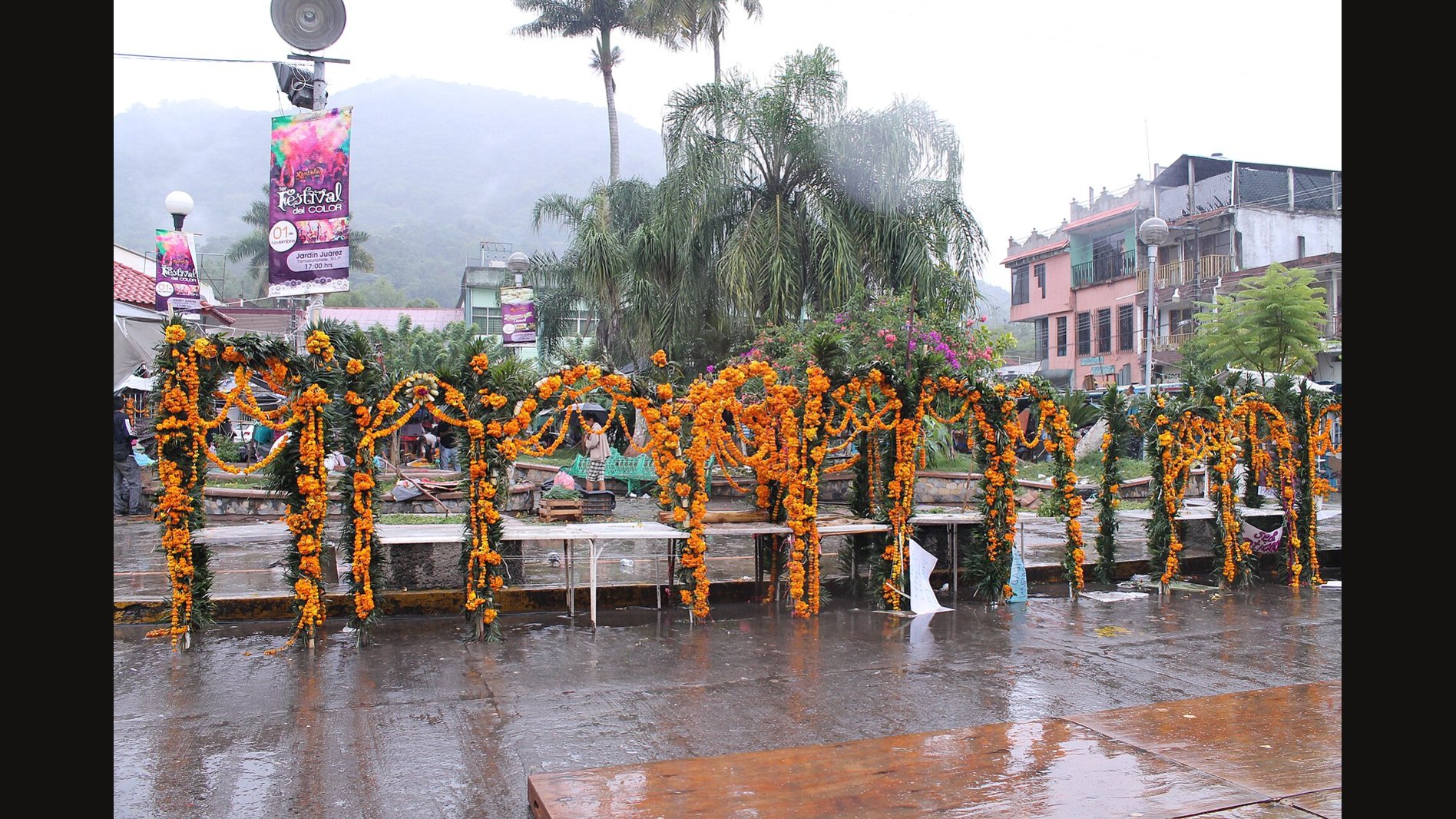
The altar is where the dead are received, and in many Huasteca homes it is framed by an arch. In Acatitla, a Nahua community in Chicontepec, Veracruz, INAH describes the altar as a sacred domestic space with an arch dressed in cempasúchil, mano de león and white flowers. The household altar and the cemetery are the two main settings of the celebration there.
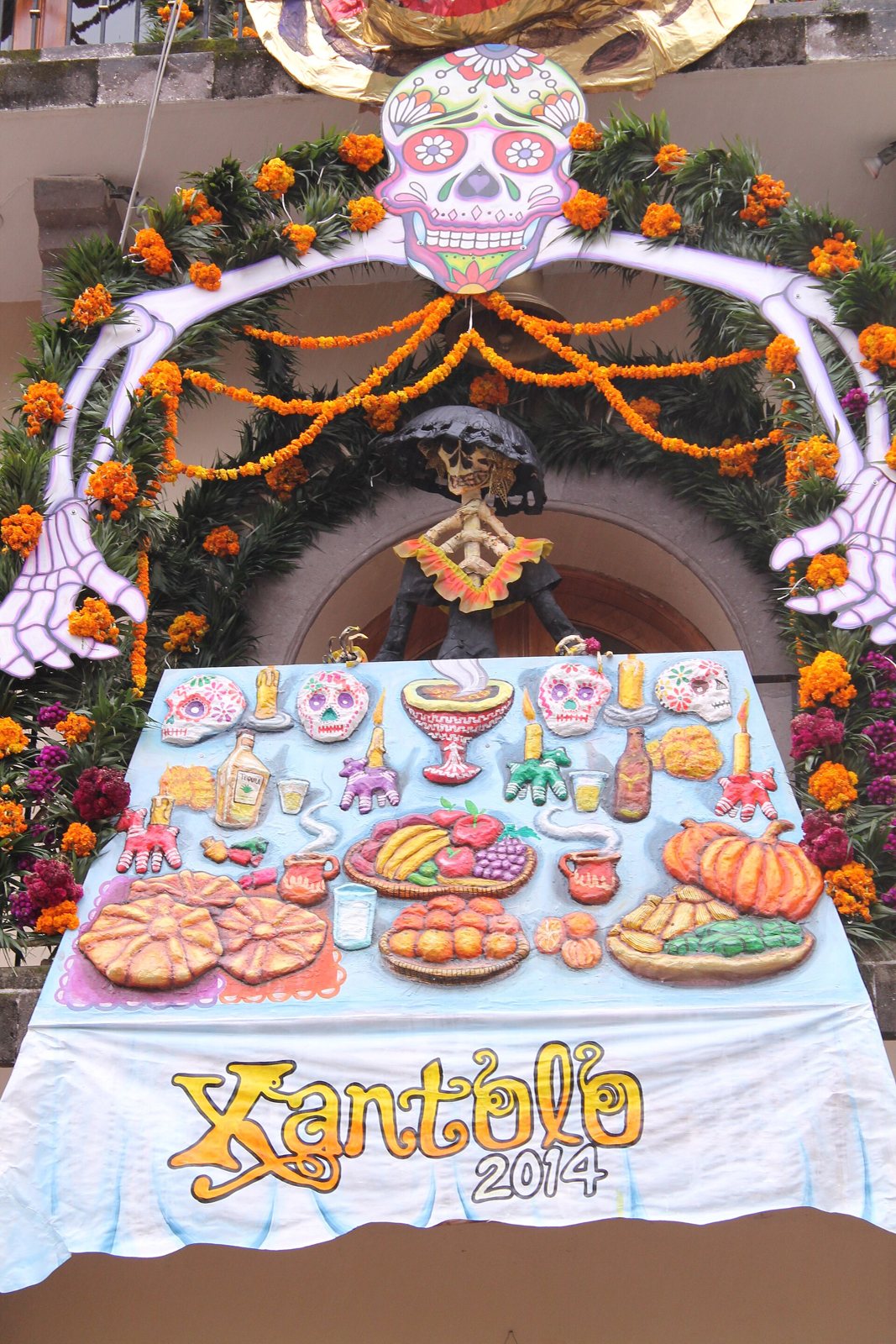
In the Huasteca Hidalguense, the arch is also described as a connection between the world of the living and the world of the dead.
What goes on the altar depends on the community and on the person being remembered. Families may set out flowers and greenery, cempasúchil, candles, copal or another incense, photographs, water, coffee, chocolate, bread, fruit and the foods the dead person loved. In Acatitla, INAH records coffee, chocolate, bread and water among the first things placed for the souls. The marigold has its own story in our piece on cempasúchil, and the incense has its own in the story of copal.
What may go on a Xantolo altar
Tap a card to bring it forward.
- An arch of flowers and greenery: In Acatitla, Chicontepec, Veracruz, it is dressed in cempasúchil, mano de león and white flowers.
- Cempasúchil: The marigold on the arch, and in the Huasteca Hidalguense the path that leads the children to the altar.
- Candles: Set on the altar in many Huasteca communities.
- Copal or another incense: Burned at the altar; which incense a family uses depends on the community.
- Photographs: Of the relatives the family is welcoming home.
- Water, coffee, chocolate and bread: Among the first things set out for the souls in Acatitla, as INAH records.
- Fruit and favorite foods: Whatever the dead person enjoyed, from tamales to sweets.
If you are building an altar of your own somewhere else, our guide to making an ofrenda covers the basics.
The days of Xantolo, from preparation to farewell
The central days are October 31, November 1 and November 2, but the work starts sooner and the calendar is not the same everywhere. In the community described by the Universidad Veracruzana, families begin preparing the altar and the arch around October 28.
Some local calendars set aside October 29 for people who died by drowning. That belongs to particular places, not to the whole region. In the Huasteca Hidalguense, INPI describes October 31 as the day for the children, the angelitos, with a path of cempasúchil petals leading them toward the altar. Our story on angelitos follows the children's days in other parts of Mexico.
By November 2 the visit is ending. In Acatitla and other communities, INAH documents cemetery visits and farewells as the close of the celebration.
The days of Xantolo, place by place
Tap or hover a step to follow the order.
October 28
Preparation of the altar and arch begins, in a Huasteca community described by the Universidad Veracruzana.
October 31
The children, or angelitos, are received in the Huasteca Hidalguense.
October 31 to November 2
The core Xantolo period in the Huasteca Potosina, per UNESCO.
November 2
Cemetery visits and farewells in Acatitla, Chicontepec, Veracruz, and other communities.
October 16 to November 2, 2026
The public "Xantolo se Vive en tu Ciudad" program across San Luis Potosí state.
The dancers: huehues, viejos and la viejada
The masked dancers are the part of Xantolo most visitors remember, and their name depends on where you are standing. People speak of the danza de los viejos, la viejada or the dance of the huehues. In Tempoal, Veracruz, the tradition is widely known as La Viejada.
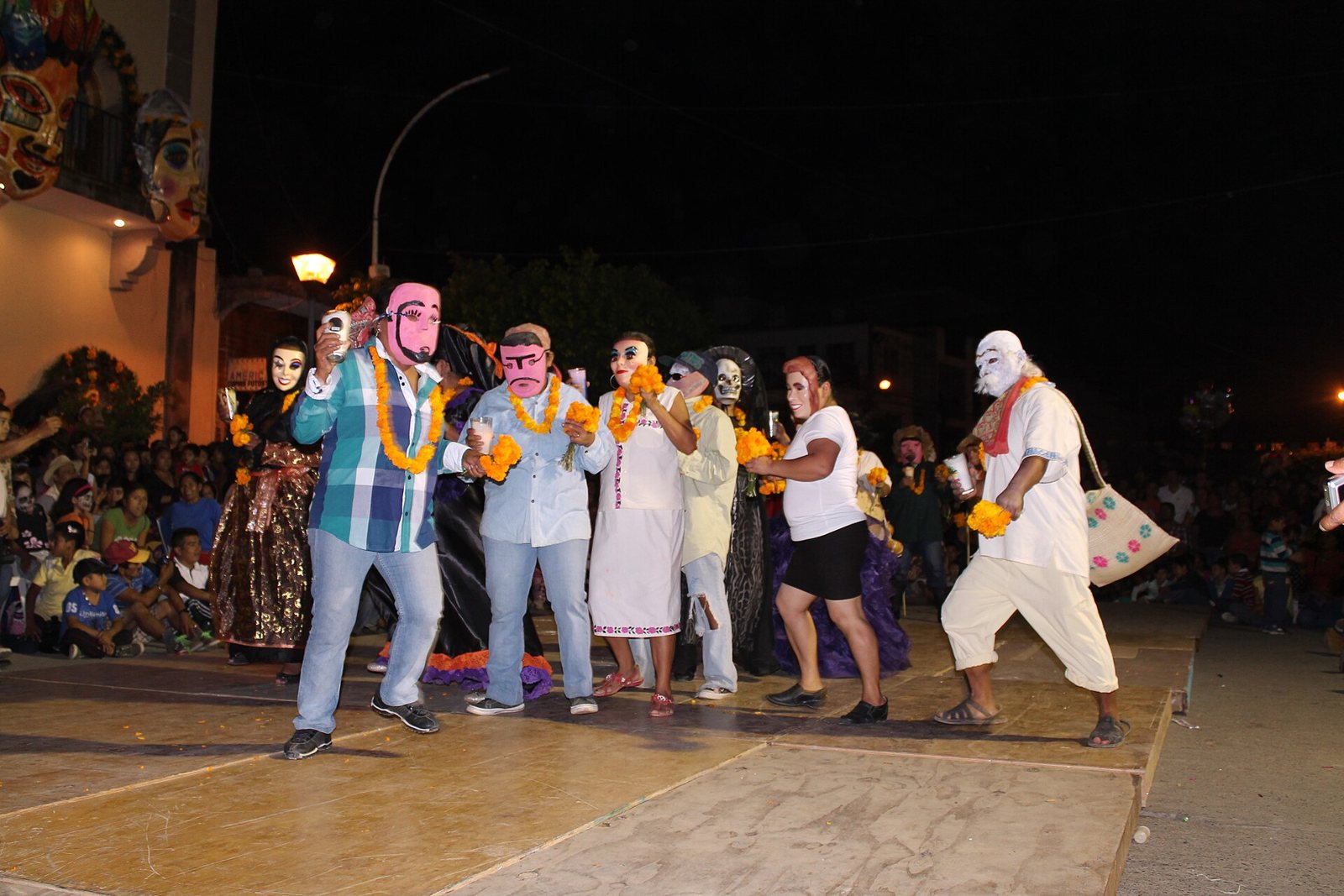
UNESCO describes the huehues as masked figures who guide or represent the returning dead. In its account of the Huasteca Potosina, the dancers go from house to house, dance for each family and then carry on at the cemetery.
The disguises are part of the fun and part of the meaning. Dancers wear masks and costumes for old men and old women, death, the devil, the vaquero and other local characters, and the clothing changes from one community to the next. In the Huasteca Hidalguense, INPI notes that men perform both the male and the female roles. The FONADAN documents held by the CID Alberto Beltrán record how much the huehue and viejo dances vary by region. For masks across the wider season, see our story on Day of the Dead masks.
The devil, the pregnant woman and the rest of the comparsa
A troupe of dancers is called a comparsa, and each one has its own cast. The characters documented most often are the huehues or viejos, the viejas, the devil, death, the vaquero, the pregnant woman and the calavera, along with regional figures such as coles or comanches. One comparsa may have a character the next village has never used.
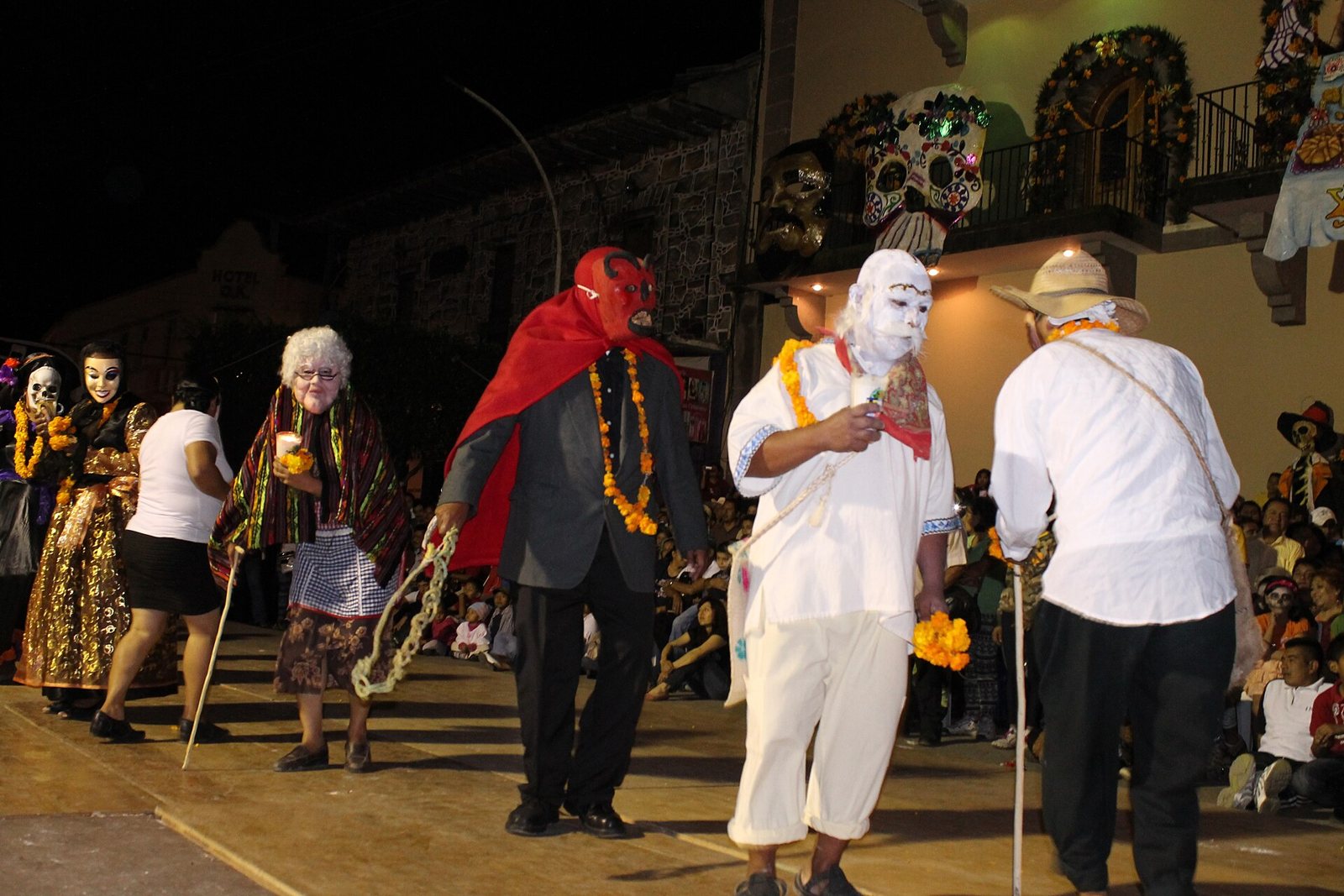
The devil turns up in many comparsas, and his meaning is set locally. A community may read him one way and its neighbor another, so no single symbol fits him across the Huasteca. If you want to know what he stands for in a particular dance, ask the comparsa or the community organizers how the character is understood there. They are the people who keep the dance going.
Zacahuil and the food of the season
Xantolo is also a season of cooking, and its best-known dish is zacahuil, a large Huasteca tamal of maize dough and meat. INAH's food research calls it an emblematic food of the Huasteca Veracruzana and records regional versions in the Huasteca Hidalguense, Potosina, Tamaulipeca and Poblana. A Universidad Veracruzana recipe collection says it was traditionally prepared for Xantolo.
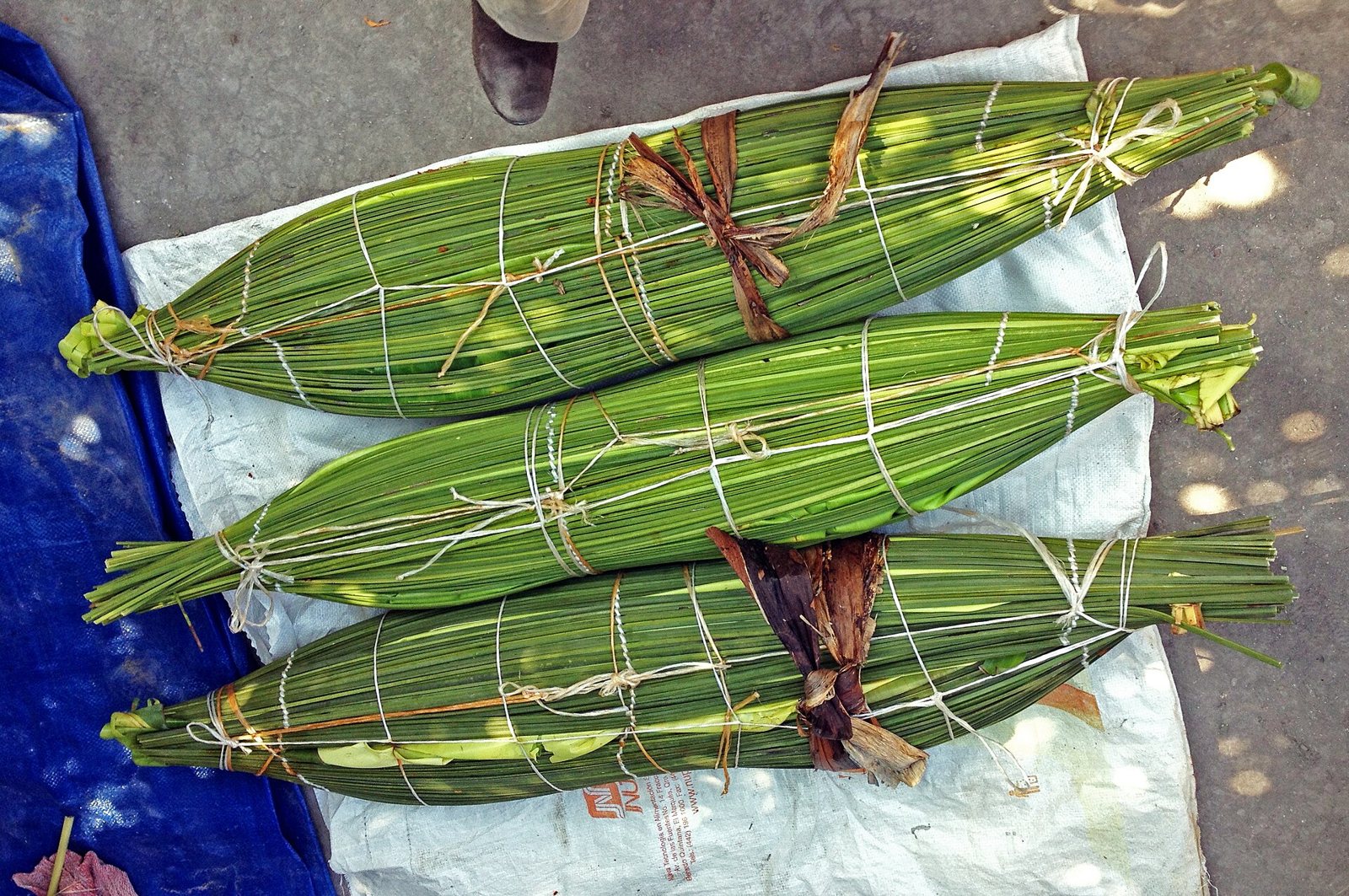
INAH links zacahuil with communal eating as well as with the altar, which suits a feast where the living cook for the dead. Around it go coffee, chocolate, bread, fruit, tamales, sweets and squash preserves, and the dishes a family remembers as the favorites of the person they are welcoming back.
Seeing Xantolo in 2026
The core days in 2026 are October 31 through November 2, the period UNESCO gives for the Huasteca Potosina. On October 6, 2026, the Government of San Luis Potosí announced its public program, "Xantolo se Vive en tu Ciudad," running from October 16 through November 2 in different cities across the state.
Tap or hover a row to highlight it.
| Dates (2026) | Where |
|---|---|
| Dates (2026)October 16 and 17 | WhereMatehuala |
| Dates (2026)October 23 to 25 | WhereSan Luis Potosí, Soledad de Graciano Sánchez and Villa de Pozos |
| Dates (2026)October 30 to November 2 | WhereMunicipalities of the Huasteca Potosina |
Those are dates for public events, not a schedule for every community in Hidalgo, Veracruz or San Luis Potosí. The Secretaría de Cultura de San Luis Potosí posts its cultural agenda online. Before you travel, confirm the date, the venue, access rules, the weather and any local guidance with the municipality or the state cultural office.
Much of Xantolo happens in homes and cemeteries, which are family spaces. When the dancers come to a door or a family is gathered at a grave, follow their lead and ask before you take photographs.
How well do you know Xantolo?
Answer every question to check.
Questions about Xantolo
Xantolo raises a handful of practical questions, from the calendar to the costumes.
Is Xantolo the same as Day of the Dead?
Xantolo is the Huasteca's own celebration of Todos Santos and the dead. It shares its dates and its Catholic calendar with Día de Muertos elsewhere in Mexico, while keeping its own languages, dances, characters, foods and arches. You can compare it with other regions in our story on Day of the Dead by region and in the wider guide to Día de Muertos.
What happens during Xantolo?
Families build altars and arches, set out food and drink for the souls, pray, play music, visit the cemetery and welcome the masked dances of the huehues or viejos. Each community arranges these in its own order and its own way.
What do Xantolo dancers wear?
Dancers wear masks and disguises for old men, old women, death, the devil, the vaquero and other local characters. Costumes differ by community, and in some places, such as the Huasteca Hidalguense, men dance both male and female roles.
Which souls arrive on October 29?
In some local calendars, October 29 is for people who died by drowning. It is a local custom rather than a rule for the whole Huasteca; in the Huasteca Hidalguense, the children arrive on October 31.
When is Xantolo celebrated?
The central dates are October 31, November 1 and November 2. Many communities start preparing earlier, around October 28 in one Universidad Veracruzana account, and some keep local observances beyond those days.
Other places that welcome their dead
The Huasteca is one of many places where families remember their dead at the start of November. In Yucatán, Maya families keep Hanal Pixán. In Guatemala, the people of Sumpango raise giant kites beside the cemetery, and in the Philippines families keep Undas at the family graves. In Mexico City, the same season brings giant alebrijes into the streets. For the incense on Mexican altars, read the story of copal.
Terms in this story
Tap a term to see what it means.
Xantolo. The Huasteca's celebration of Todos Santos and the family dead, centered on October 31 to November 2; also written Xantoloj.
---