

No. 243
Sumpango Kites: The Giant Barriletes of Guatemala's All Saints' Day
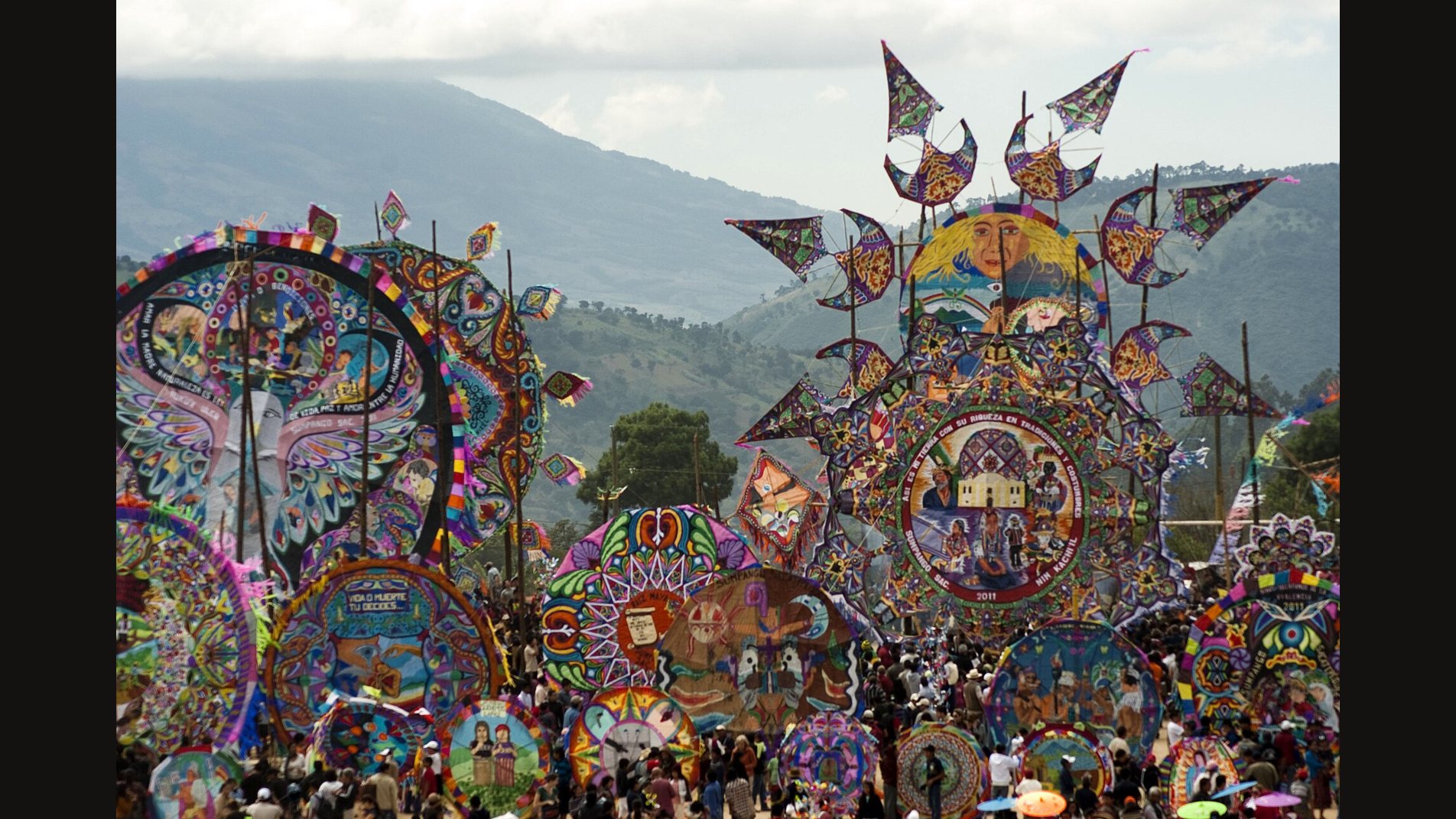
The giant round kites in those photos are the barriletes gigantes of Sumpango, in the Guatemalan department of Sacatepéquez. Maya-Kaqchikel kite groups build them over months and show them each 1 November, All Saints' Day, at the Festival de Barriletes Gigantes, on the field beside the town's municipal cemetery.
They carry meaning for the families who make them. Guatemala's Ministry of Culture says the communities use the kites to communicate with their ancestors, and the Sumpango festival committee's oral tradition calls them a link between the underworld and the world of the living.
In 2024, UNESCO inscribed the technique of making the giant kites of Sumpango and neighboring Santiago Sacatepéquez as intangible cultural heritage. In 2026, the festival falls on Sunday, 1 November.
A festival beside the cemetery on 1 November
Sumpango's kites come out on one day. Each 1 November, the Festival de Barriletes Gigantes fills the field next to the municipal cemetery, so the kites stand beside the graves on the day the Church sets aside for the saints.
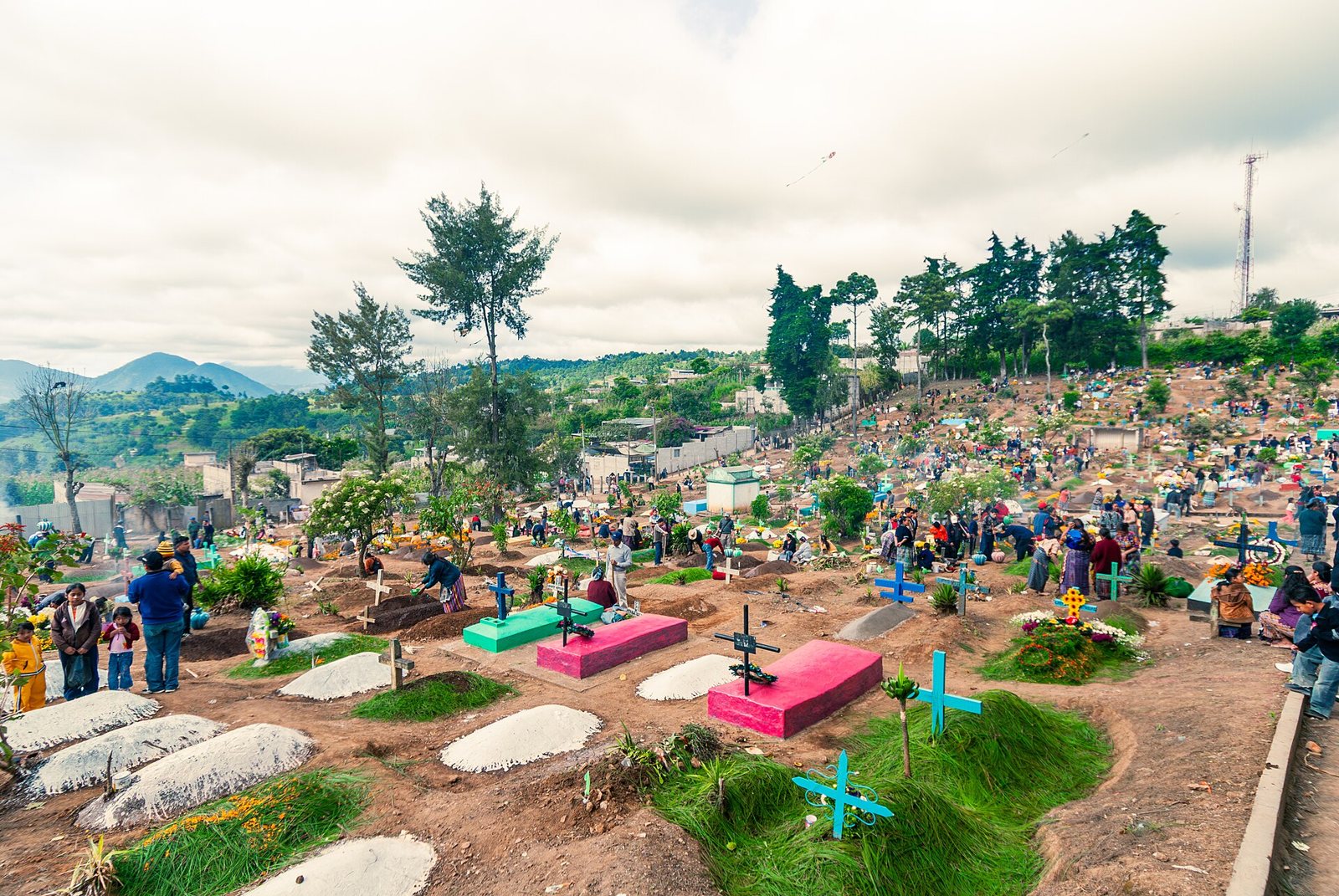
The organized contest is younger than the custom. The festival website says it began in 1978, created to renew the participation of families and young people. UNESCO describes the wider tradition, in Sumpango and in Santiago Sacatepéquez, as a living practice shown during the fairs of the Day of the Saints and the Dead.
The two towns sit in the same department and share the craft, but each keeps its own festival. What you see in Sumpango belongs to Sumpango.
Kites between the living and the dead
In Sumpango, people describe the barriletes as a connection between the living and their ancestors. The festival committee's oral-tradition account goes further and calls them a link between the underworld and the world of the living. In that sense, a kite on 1 November is a way of reaching the family dead on the day set aside for them.
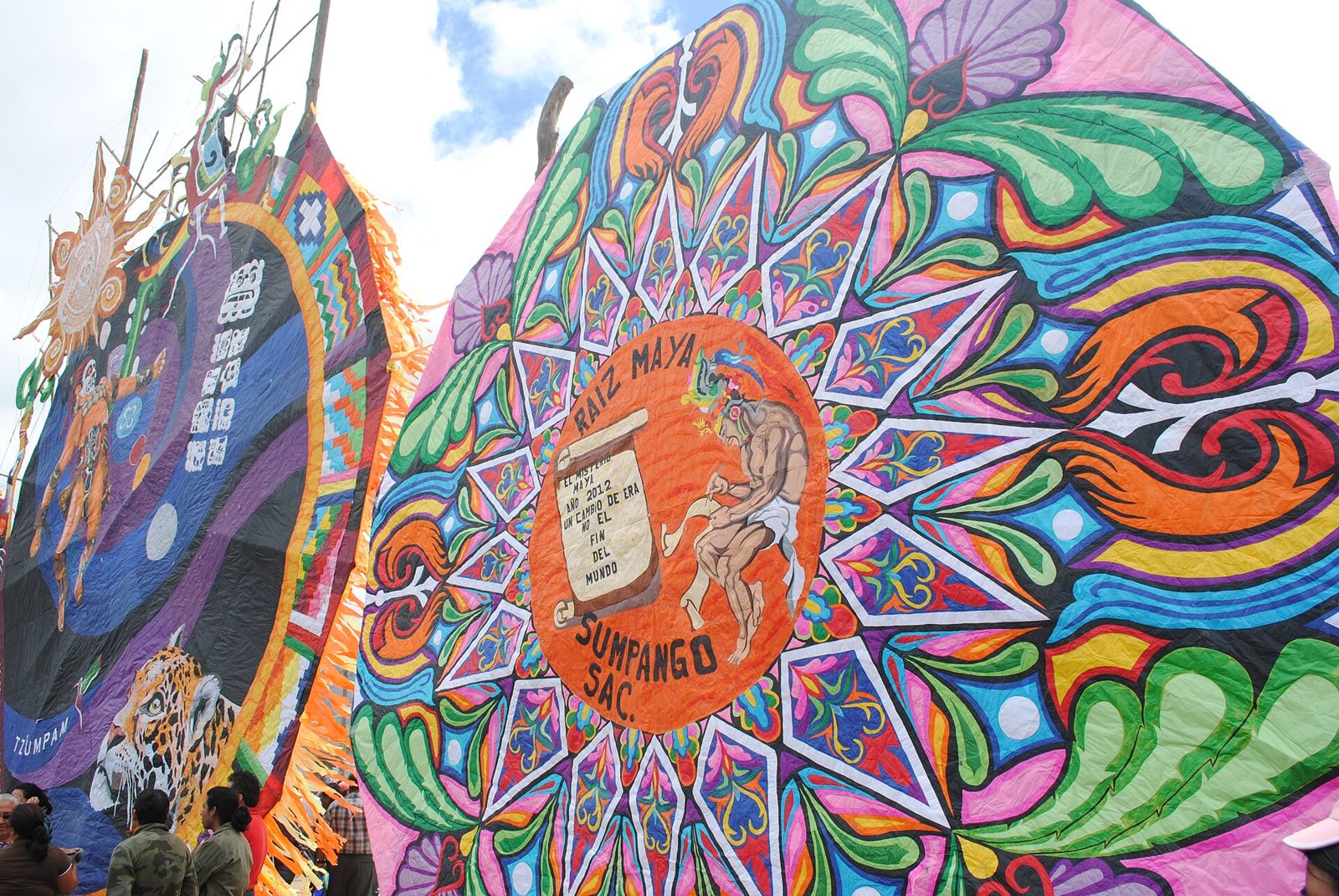
UNESCO records more meanings alongside that one: connecting with ancestors, warding off negative spirits and promoting renewal. The Ministry of Culture adds that the Maya-Kaqchikel communities use the kites to speak about the present as well, through social, political, cultural and environmental themes.
That is why the designs repay a close look. Among the themes UNESCO lists are environmental concerns, violence and human rights, all worked in tissue paper. The committee itself says the full history of the giant kites is not settled; its firm date is the organized contest of 1978.
Four months of work: how a giant kite is built
A giant kite is a group project, and it takes most of a season. According to the Ministry of Culture, kite groups begin around July and finish by 31 October, the day before the festival.
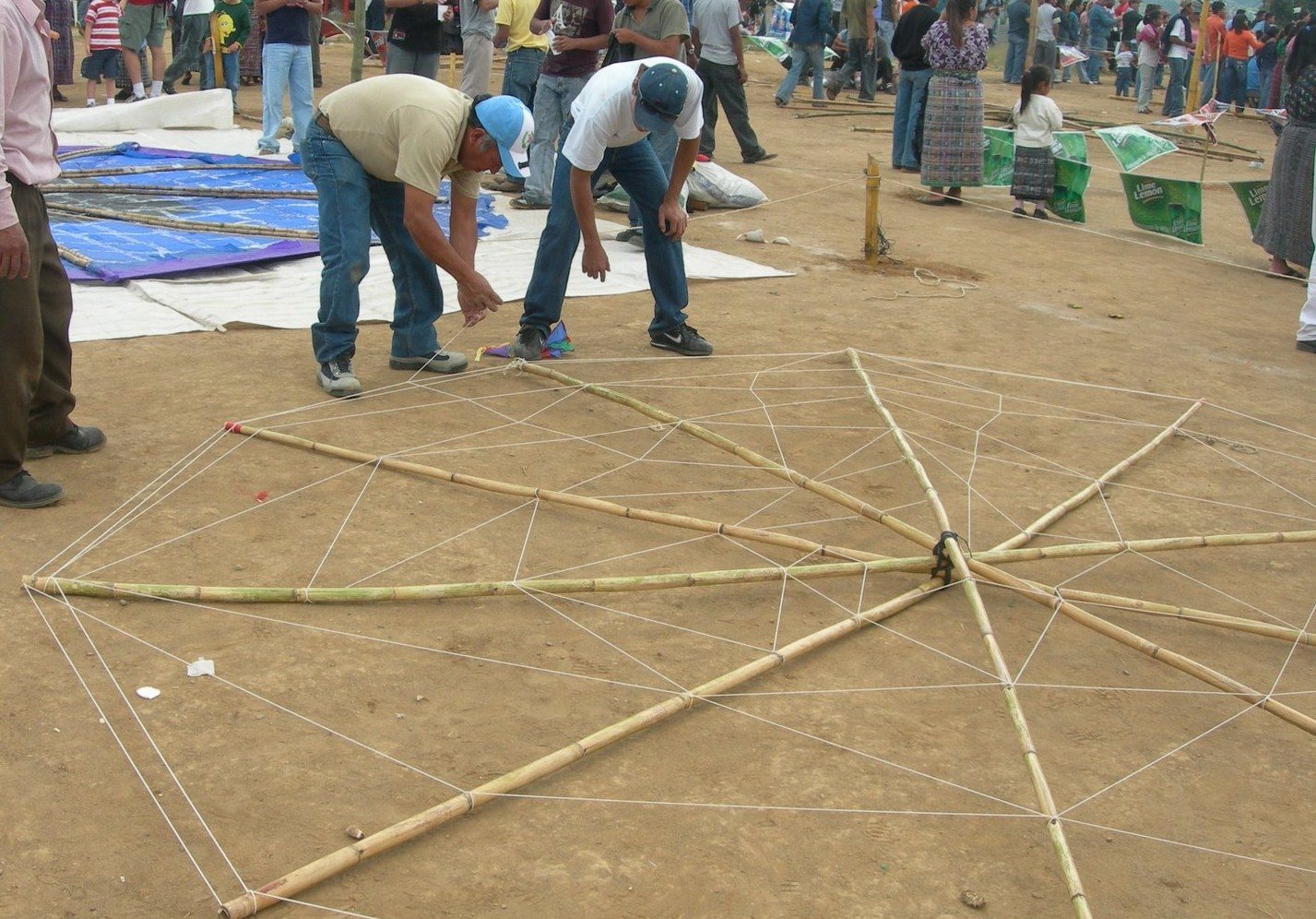
The work starts with a design. The group transfers it to a full-size canvas and decorates it with colored tissue paper, piece by piece. A reverse lining is prepared for the back. Then the canvas, the lining, the fringes and the tail are attached to a frame of bamboo or castilla cane, the kite's skeleton, which has to hold a paper circle many meters across.
How a Sumpango giant kite comes together
Tap a card to bring it forward.
- Choose the design: The group settles on the image the kite will carry.
- Transfer to a full-size canvas: The design is drawn out at its real size.
- Decorate with tissue paper: Colored tissue paper fills in the image.
- Prepare the reverse lining: A backing is made for the other side.
- Build the frame: Bamboo or castilla cane gives the kite its structure.
- Attach everything: Canvas, lining, fringes and tail are fixed to the frame.
- Finish by 31 October: The kite is ready for the 1 November festival.
From 2 meters to 22
The size is what stops people scrolling. The Ministry of Culture records giant kites from 2 to 22 meters in diameter. Visit Guatemala sorts them into two kinds: monumental kites of about 10 to 20 meters, and smaller flying kites of about 4 to 8 meters.
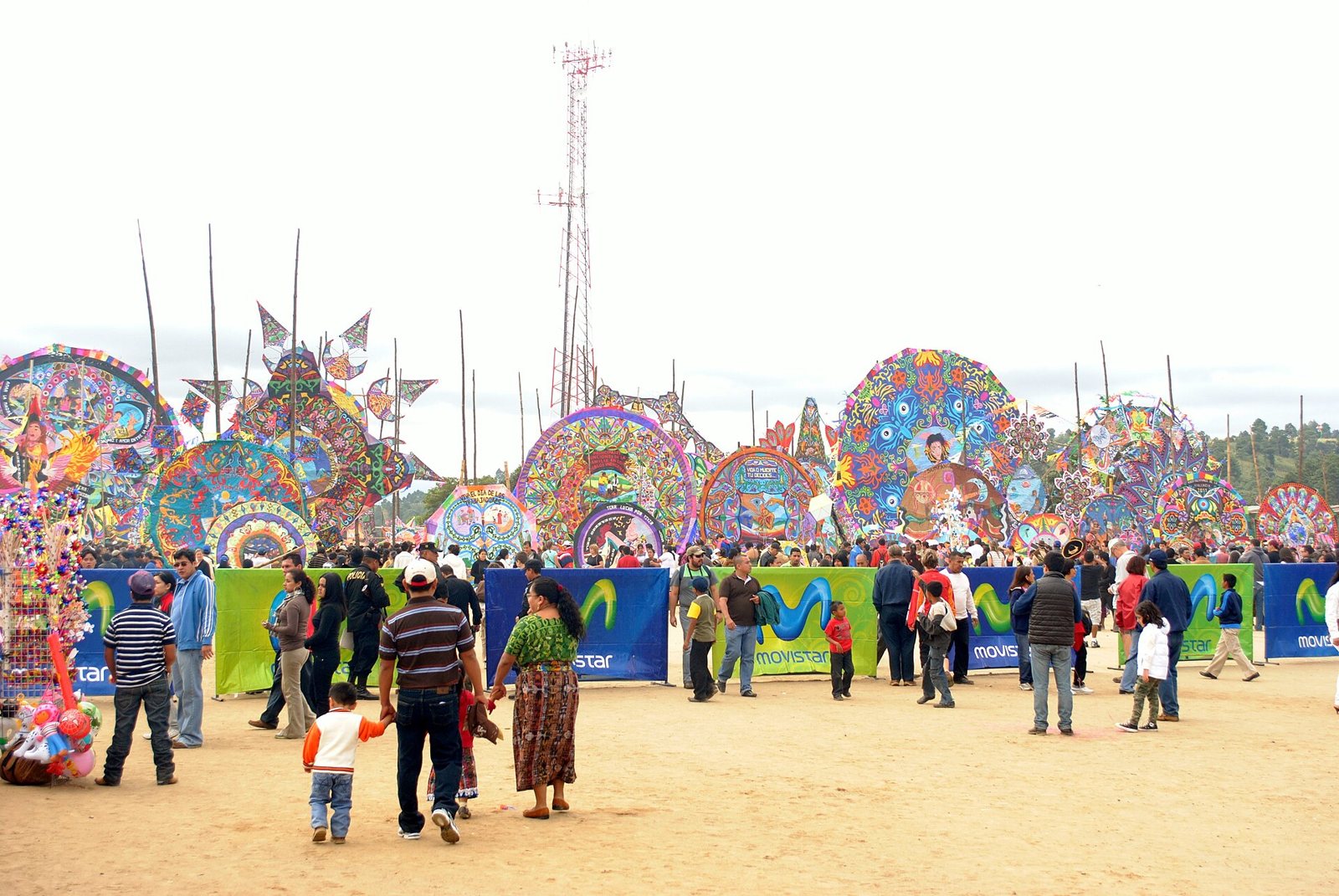
The monumental ones are generally shown standing upright on the field rather than flown. The smaller kites are the ones made to go up into the air.
Tap or hover a row to highlight it.
| Fact | Detail |
|---|---|
| FactMain date | Detail1 November each year |
| Fact2026 central date | DetailSunday, 1 November 2026 |
| Fact2026 coordinated logistics period | Detail30 October to 2 November 2026 |
| FactWork period | DetailAbout July through 31 October |
| FactRecorded diameter range | Detail2 to 22 meters |
| FactMonumental kites | DetailAbout 10 to 20 meters |
| FactFlying kites | DetailAbout 4 to 8 meters |
| FactOrganized Sumpango contest began | Detail1978 |
| FactUNESCO inscription | Detail2024 |
| FactMain place in Sumpango | DetailThe field beside the municipal cemetery |
Santiago Sacatepéquez, the other kite town
Santiago Sacatepéquez is a separate Maya-Kaqchikel community in the same department as Sumpango. It holds its own giant-kite observance on 1 November, centered at its municipal cemetery, as the Government of Guatemala describes it.
The two towns share the kite-making technique that UNESCO recognized in 2024, and they keep distinct festivals. Someone deciding between them is choosing between two communities, each with its own kite groups, its own cemetery and its own way of keeping the day.
Fiambre and the 1 November table
Kites are not the only thing on the calendar. Fiambre is Guatemala's traditional All Saints' Day dish, a cold mixed salad of meats, sausages, vegetables, cheeses and pickled ingredients.
The government's Agencia Guatemalteca de Noticias counts fiambre and the giant kites of Sumpango and Santiago Sacatepéquez among the country's 1 November traditions, and records more than 50 family recipes, in red and white varieties. The kites belong to two towns; fiambre is made by families across Guatemala.
Visiting the festival in 2026
The 2026 festival falls on Sunday, 1 November. In an announcement dated 29 July 2026, the Government of Guatemala set a coordinated safety and logistics period from 30 October through 2 November 2026. The agencies named in that planning include Provial, the Municipality of Sumpango, CONRED, INGUAT, police, emergency services, the Ministry of Culture and representatives of the local kite groups.
A 2026 event listing on Guatemala.com gives the venue as Avenida Calvario, zone 3, with free admission and hours of 7:00 a.m. to 1:00 p.m., and warns that event details may change. Confirm the final schedule, access arrangements, transportation and any fees with the Sumpango organizers and local authorities close to 1 November 2026.
The field sits beside a cemetery, on a day set aside for the dead. Follow local guidance, give the graves room, and ask before photographing people.
How well do you know the Sumpango kites?
Answer every question to check.
Questions about the Sumpango kites
The kites raise a few practical questions, from flight to admission.
What messages do the kite designs carry?
The designs carry messages to the ancestors and messages about life today. The Ministry of Culture says the Maya-Kaqchikel communities use them for social, political, cultural and environmental themes, and UNESCO lists environmental concerns, violence and human rights among them.
Do the giant kites fly?
The smaller kites, about 4 to 8 meters across, are made to fly. The monumental kites of about 10 to 20 meters are generally exhibited upright on the field.
Does the Sumpango festival charge admission?
The 2026 event listing on Guatemala.com gives free admission. It also warns that details may change, so confirm fees with the Sumpango organizers close to the date.
How do I get to Sumpango from Antigua?
Confirm transportation and access with the Sumpango organizers and local authorities close to 1 November 2026. The Government of Guatemala coordinates safety and logistics for the festival period with Provial, the municipality and other agencies, and the arrangements are set anew each year.
Is the kite festival like Día de Muertos or Halloween?
Each of these remembers the dead from its own roots. The Sumpango kites belong to the Maya-Kaqchikel communities of Sumpango and Santiago Sacatepéquez and to Guatemala's All Saints' Day; Mexico's Día de Muertos and the customs behind Halloween skeletons grew from different histories.
Other ways the dead are remembered in November
Sumpango's kites share their dates with the Catholic feasts told in our story on All Souls' Day. Elsewhere, families keep their own customs at the same time of year. In the Philippines, they gather at the family graves for Undas, and in the Huasteca of Mexico they build flower arches for Xantolo. Japan's Obon and China's Qingming welcome and honor the ancestors in their own seasons.
Terms in this story
Tap a term to see what it means.
Barriletes gigantes. The giant kites made in Sumpango and Santiago Sacatepéquez, Guatemala, and shown each 1 November.
---