

No. 229
Obon: Japan's Festival for the Returning Dead
Obon, also called Bon or Urabon, is a Buddhist-rooted Japanese time for honoring the family's dead. Many places keep it from August 13 to 16, some in July, and Okinawa and other communities by the lunar calendar. Many families describe it as the few days when the ancestors come home to visit.
They are welcomed with small fires and lanterns, given food, flowers and a clean grave, danced for in the circle of Bon Odori, and then sent back with fires on the mountainsides and paper lanterns floating on the water. Customs differ by town and by Buddhist tradition, and some Buddhist communities speak less of spirits visiting and more of gratitude and remembrance, as the Japanese Cultural Center of Hawaiʻi explains.
What Obon is and when it falls
The short name, Bon, comes from Urabon, the Japanese form of the Buddhist rite at the center of the season. The Japanese Cultural Center of Hawaiʻi describes Obon as a period for honoring deceased ancestors through remembrance, graveside visits, temple services, family gatherings, dances and lanterns.
There is no single national date. Many communities keep the central days from August 13 to 16, others from July 13 to 16, and Okinawa and some other places follow the lunar calendar, so the dates move from year to year. The Japan National Tourism Organization says Bon dances are especially common in mid-August. In many communities the core observance lasts about four days, while a town's public dance may run for one or two evenings.
The dates belong to the local temple or festival committee, not to the country as a whole. If you want to go to a particular Bon dance or temple service, the organizer's own announcement is the one to follow.
Welcoming the ancestors home
The season opens with a light. In the Japanese Cultural Center of Hawaiʻi's account, families light mukaebi, welcoming fires, at the start of Obon to guide the ancestors home. Some households use lanterns for the same welcome.
At home, the family altar is tended and set with flowers and food. Families clean the graves of their relatives, visit the temple and attend Buddhist services. Not every family does all of this, and the mix changes from one region and one Buddhist tradition to the next.
The most charming detail comes from the kitchen. Some Japanese families make shōryō uma, small animal figures made from vegetables: a cucumber horse so the ancestors can arrive quickly, and an eggplant cow so they can return slowly. The Japan National Tourism Organization counts the figures among Japan's summer customs, and they say a good deal about how the visit is imagined: a homecoming worth hurrying to, and a leave-taking nobody wants to rush.
Bon Odori, the dance in the circle
Bon Odori simply means "Bon dance." Dancers move in a ring around a raised wooden platform called a yagura, where singers, shamisen players and taiko drummers keep the beat, live or recorded. The Japan National Tourism Organization notes that the movements repeat and are easy for beginners to pick up, so a newcomer can usually follow the dancer just ahead.
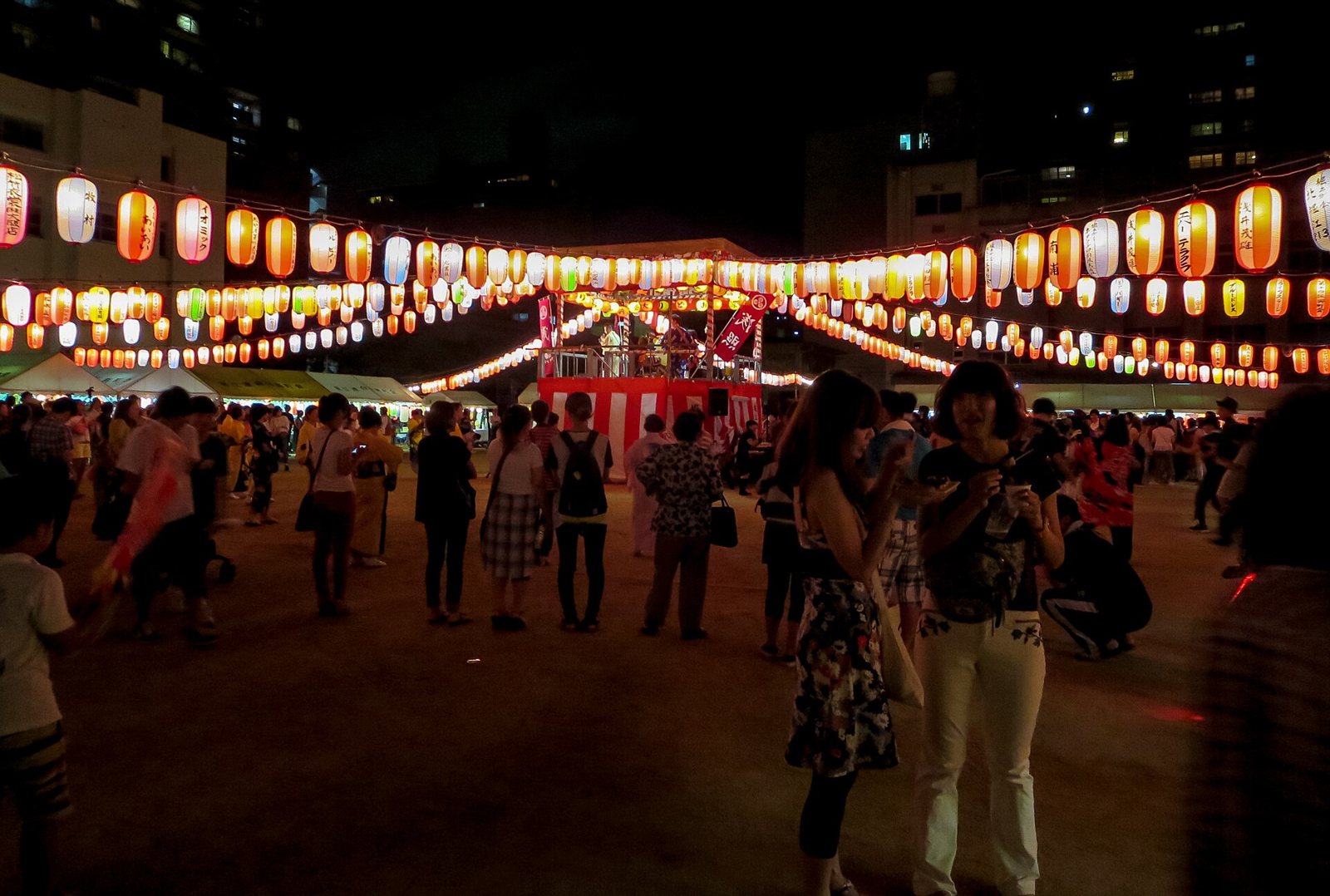
The dance carries the meaning of the season. The Japanese Cultural Center of Hawaiʻi calls Bon Odori a dance of appreciation for the sacrifices of the ancestors and, in its own account, dates the tradition back more than 600 years.
There is no single choreography. Tokyo Ondo, Tankō Bushi and Gujō Odori are regional dances, Okinawa has Eisa-related practices of its own, and Japanese communities abroad have made up new dances to fit their own lives. Many dancers wear a yukata, a light cotton summer kimono, but you do not need one to join.
Okuribi and Kyoto's five mountain fires
At the end of Obon the lights point the other way. Okuribi are send-off fires, lit to guide the ancestors back after their visit.
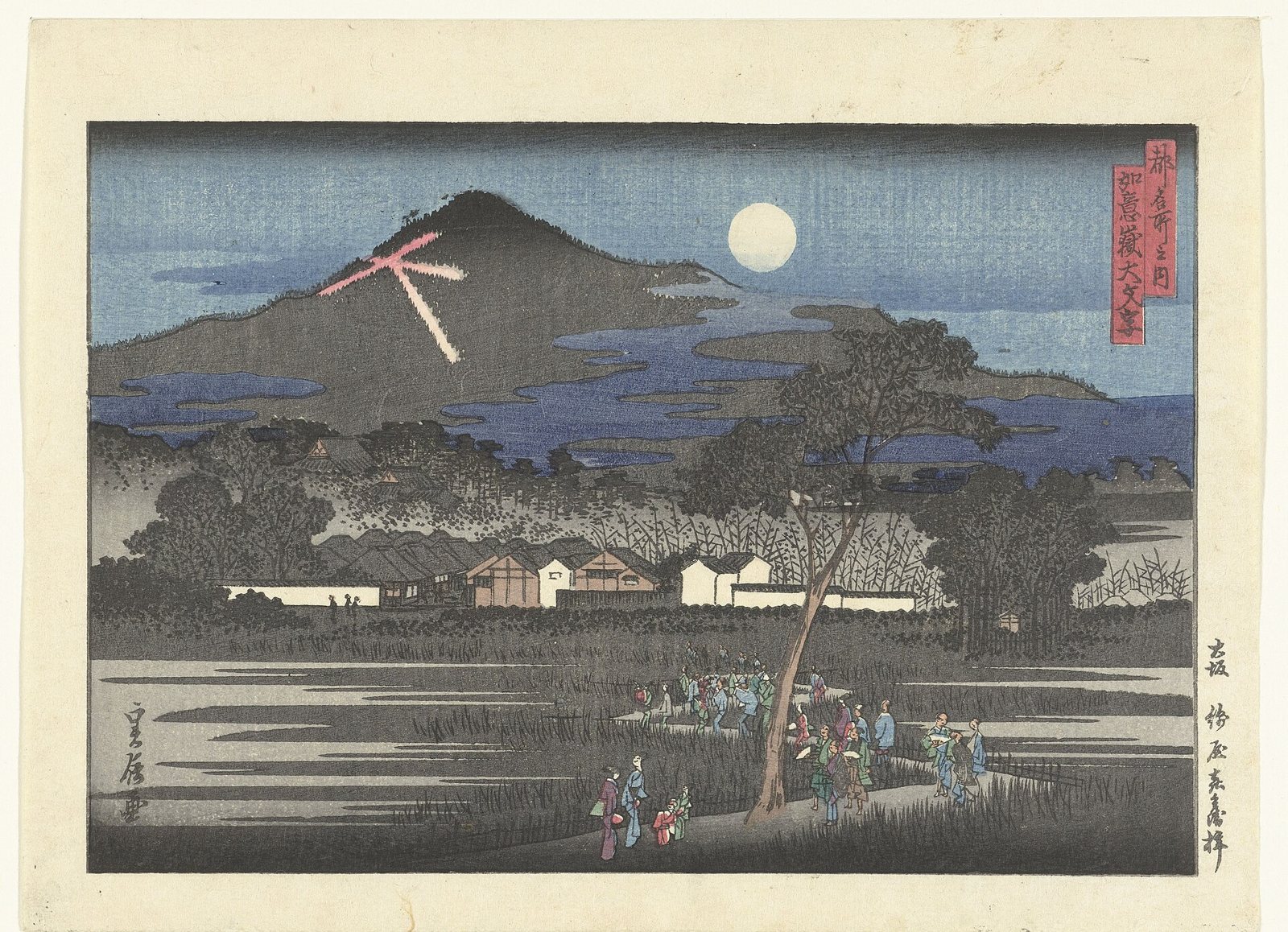
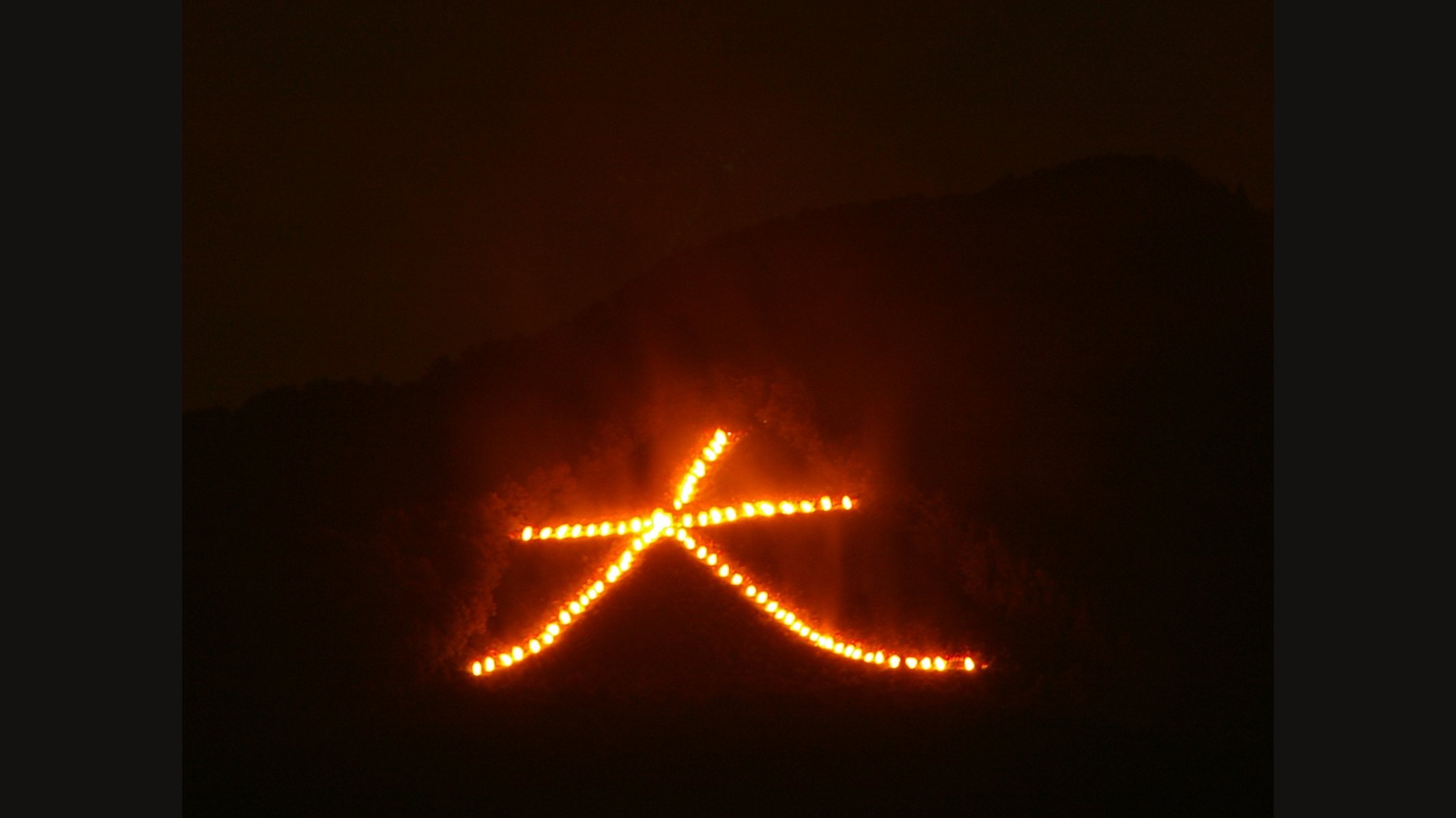
Kyoto does this on a scale no backyard can match. Gozan no Okuribi, held every year on August 16 according to the Japan National Tourism Organization, sets five great fires on the mountains around the city. Three form written characters, Dai, Myō and Hō; the other two form a boat and a torii gate. The tourism organization says the first fire is lit at 8 p.m., the others follow at five-minute intervals, and each burns for roughly 40 minutes. The Kyoto Online Tourist Information Center lists all five as Kyoto City Intangible Folk Cultural Properties.
For one evening, the farewell that families make at home is written across the hills for the whole city to see.
Tōrō nagashi: lanterns on the water
Many people first meet Obon through a photograph of lanterns on a dark river. Tōrō nagashi means floating lanterns, and the Japan National Tourism Organization describes it as a send-off in which lit paper lanterns are floated down a river to guide or accompany the spirits of the dead, usually on the last evening of Obon. Its account dates one modern form to 1946, when people floated lanterns decorated with family crests.
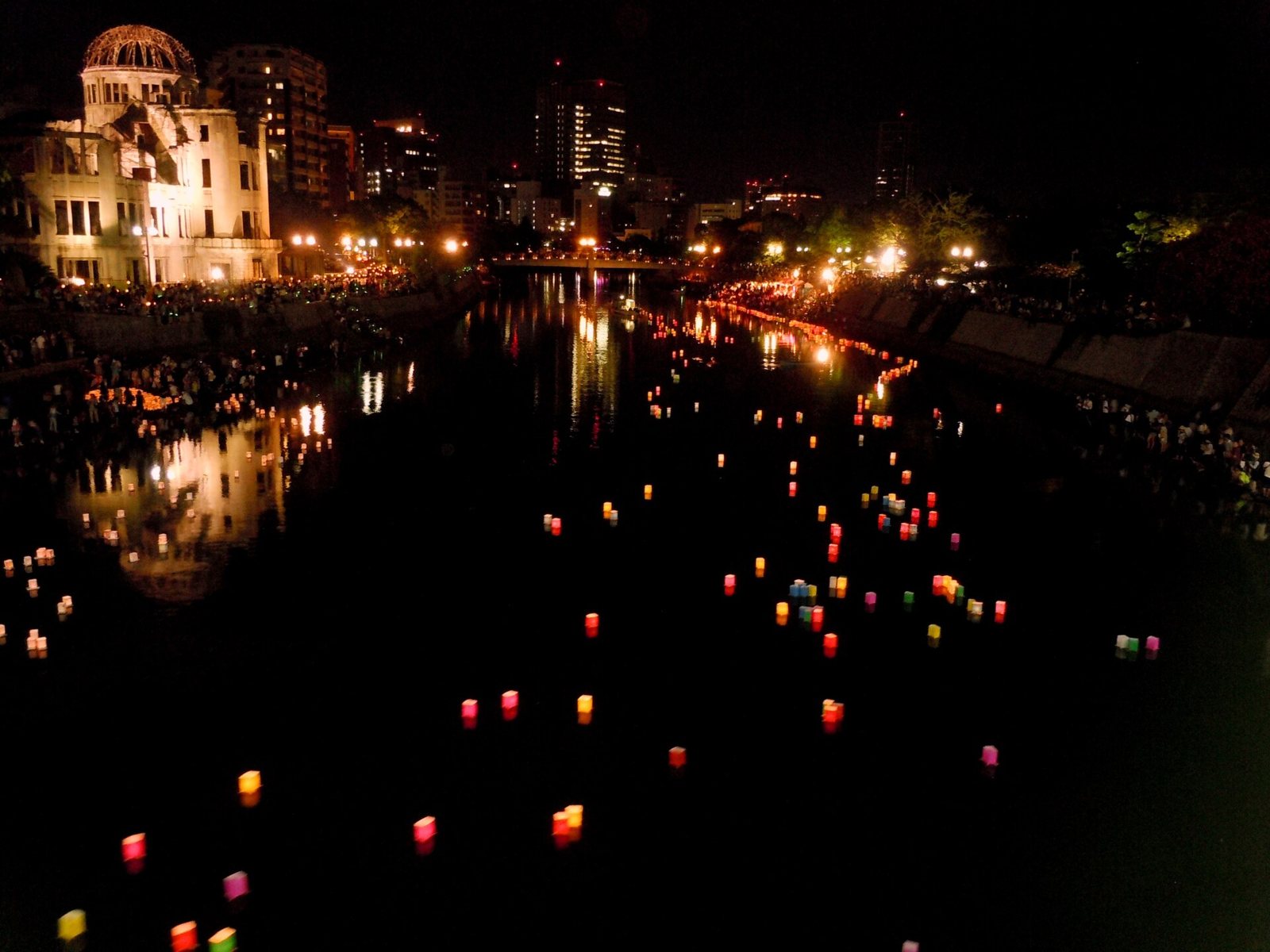
The Japanese Cultural Center of Hawaiʻi places the floating lantern in okuri-bon, the send-off period at the close of the season. In Miyazu, in Kyoto Prefecture, the Government of Japan's Highlighting Japan describes the lanterns as sending the ancestors' souls back across the sea.
Lantern ceremonies on water are also held for other losses, such as the war dead or the victims of a disaster, so a floating lantern you see may belong to a memorial other than Obon. Either way, each light stands for someone a family remembers.
Obon, from welcome to send-off
Tap a card to bring it forward.
- Mukaebi: A welcoming fire or lantern at the start of Obon guides the ancestors home.
- Household altar: Cleaned and set with flowers and food for the family's dead.
- Shōryō uma: A cucumber horse for a quick arrival and an eggplant cow for a slow departure.
- Grave and temple: Families wash the gravestone, leave flowers and attend Buddhist services.
- Bon Odori: The community dances in a circle around the yagura.
- Okuribi: Send-off fires, including Kyoto's five mountain fires on August 16.
- Tōrō nagashi: Paper lanterns float on the water on the last evening.
Mokuren, his mother and the Ullambana Sutra
The Buddhist story behind the season is about a son and his mother. The Ullambana Sutra, called Urabon-kyō in Japanese, tells of Mahāmaudgalyāyana, known in Japan as Mokuren, a disciple of the Buddha. He sees that his dead mother is suffering after death and asks the Buddha how to help her. The Buddha tells him to give food and gifts to the monks on the fifteenth day of the seventh month, when they finish their three-month retreat. The merit of that giving relieves his mother's suffering.
The Buddhist Text Translation Society's introduction to the sutra adds the history. The text was traditionally credited to the translator Dharmarakṣa of the Western Jin period, but modern scholarship generally treats it as composed in China in the mid-sixth century. The same introduction says the earliest record of an urabon festival in Japan appears in the Nihonshoki chronicle for the year 606, and that the rite became an official observance of the imperial household in 733.
Why "ullambana"? Scholars still debate it. A long-told explanation links the word to "hanging upside down," but that reading is not secure. The Buddhist Text Translation Society notes that some scholars connect the word with the Iranian urvan, the soul of the dead, while the scholar Seishi Karashima proposed a link through a Middle Indo-Aryan language to a rice bowl used for giving food. These remain competing ideas.
Obon through the centuries and the calendar
Tap or hover a step to follow the order.
606
The Nihonshoki records the earliest known urabon festival in Japan.
733
Urabon becomes an official observance of the imperial household.
July or August
Regional Obon dates follow different calendars and local choices.
August 13 to 16
The common Obon period in many Japanese communities.
August 16
Kyoto's Gozan no Okuribi sends off the ancestors with five mountain fires.
Obon beyond Japan
Obon traveled with the people who kept it. In Hawaiʻi, the Japanese Cultural Center of Hawaiʻi says it arrived in the late nineteenth century with Japanese plantation workers. Today bon dances take place across the islands from June through September, as temples spread their dances through the summer.
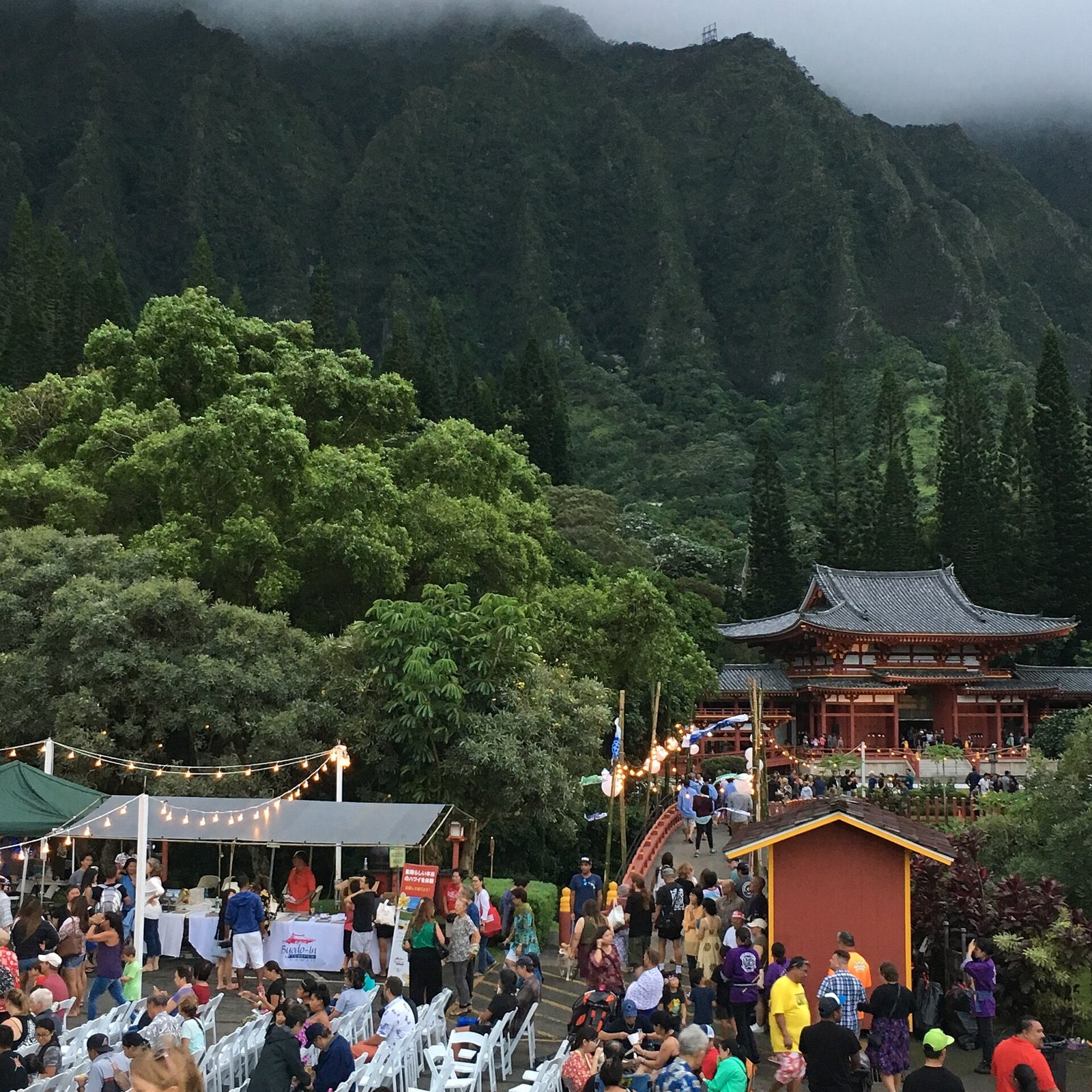
In California, Japanese American Buddhist temples built one- and two-day Obon events around Hatsubon, the first memorial service after a family member's death, along with bon odori, food, cultural demonstrations and fundraising. The Library of Congress publication Dancing the Body Politic describes temples taking turns to host, so that the season runs across about two months.
Brazil has its own calendar. A Jōdo Shu account says Japanese immigrants brought Obon in the early twentieth century, and some Brazilian communities moved it to November 2, Brazil's national day for remembering the dead, because Japan's summer falls in South America's winter and November 2 comes in the southern spring. Particular Brazilian Buddhist communities hold Bon Odori and tōrō nagashi. The Japan America Society of Greater Philadelphia notes that Japanese immigrants in the United States, Canada, Brazil and elsewhere created new dances, and Obon is also kept in Peru and Europe. Each of these is a community's own way of keeping the season, not a copy of one standard form.
Food, clothes and joining a Bon dance
What goes on the altar depends on the family, the Buddhist school and the region. Fruit, vegetables, rice and somen noodles are common, set on the household altar or brought to the grave and the temple. Public bon dances usually have festival food stalls with whatever the region is known for, which is where most visitors eat.
For the dance itself, a yukata is common but not required. A temple service is a different setting, where modest everyday clothes are the respectful choice.
If you want to find a Bon dance near you, outside Japan the Japanese Buddhist temples and Japanese community groups that keep Obon are the place to start, as in Hawaiʻi and California. Dates, times, venues and any rules for guests change from year to year, so confirm them with the specific temple or festival organizer before you go.
How well do you know Obon?
Answer every question to check.
Questions about Obon
A few more questions come up often.
Is Obon like Day of the Dead?
Obon and Día de Muertos both gather families to remember their dead, but each comes from its own roots. Obon grew from Japanese Buddhist observance and local Japanese customs, while Día de Muertos developed in Mexico from Indigenous traditions and Catholic observance. They share a human wish to welcome the dead home, and each keeps its own history, calendar and words.
Is Obon like Halloween?
Obon and Halloween come from different roots: Obon is a family time for remembering ancestors, with Buddhist services, graves, dances, fires and lanterns. Halloween grew from Christian All Hallows' Eve and older European seasonal customs, and its skeletons and costumes belong to that history rather than to Obon.
How long does Obon last?
In many Japanese communities the central observance lasts about four days, commonly August 13 to 16 or July 13 to 16. A town's public dance may last one or two nights, and in places like California, where temples take turns, the bon dance season can stretch over two months.
Do I need a yukata to join a Bon dance?
No, a yukata is common but not required. The light cotton kimono is a summer festival favorite, and the repeated steps let anyone in ordinary clothes follow along too.
Is Obon the same everywhere in Japan?
No, it changes from place to place. The dates move between July, August and the lunar calendar, the dances differ by region, and only some cities hold great send-off fires like Kyoto's or float lanterns on the water.
A summer homecoming
Obon is a family festival before it is anything else: a clean grave, a cucumber horse on the altar, a circle of dancers under paper lanterns, and a light set on the water so the visitors can find their way back. In Buddhist terms it begins with a son trying to help his mother, and it still turns on that same care for the people who came before.
Other traditions keep their dead close in their own ways. Qingming brings Chinese families to the graves in spring, Pchum Ben fills Cambodia's pagodas with food for the monks, and Undas is the Filipino time for remembering the dead. For how Buddhist art and teaching treat death, see skull symbolism in Buddhism, and for Christian days of remembrance, All Souls' Day.
Terms in this story
Tap a term to see what it means.
Obon. A Buddhist-rooted Japanese time for honoring the family's dead, kept in July, in August or by the lunar calendar depending on the place.
---