

No. 225
Qingming Festival: What Families Do on Tomb-Sweeping Day and Why
Qingming (清明节), also called Tomb-Sweeping Day or Ching Ming, is both the fifth solar term of the traditional Chinese calendar and a spring festival for honoring ancestors. It usually falls on April 4 or 5, about 15 days after the spring equinox, and its name means "clear and bright."
On or around that day, many families go to the graves of their relatives to clean and decorate them. They set out food and flowers, light incense and, in some traditions, burn paper money, then share a meal or spend the rest of the day outdoors. What each family does depends on its lineage, religion and home place, so no two graveside mornings look exactly alike.
What Qingming is and when it falls
Qingming is a date on two calendars at once. As a solar term, it marks a point in the year, the first warm stretch of spring; as a festival, it is the time to remember the family's dead. The Smithsonian National Museum of Asian Art describes it as a festival for honoring ancestors that falls around April 4 or 5, and the Singapore National Heritage Board explains that "clear and bright" points to the turn of the season.
The festival goes by several names. Qingming and Qing Ming are the Mandarin forms, Ching Ming is the spelling used in Hong Kong and in Sydney's Australian Museum, and in Penang, Malaysia, it is known as Cheng Beng. Its other common name, Tomb-Sweeping Day, tells you plainly what the morning involves.
As a solar term, it lands on April 4 or 5 in most years. Some families go on the day itself, while others visit in the days before or after, around work, travel and when the cemetery is open.
Sweeping the graves
Tomb-Sweeping Day means what it says. In mainland China, the Smithsonian describes people sweeping and decorating gravesites, and Beijing's official tourism site, Visit Beijing, describes tomb sweeping as cleaning the graves of relatives, ancestors and others whom a family respects or cares about.
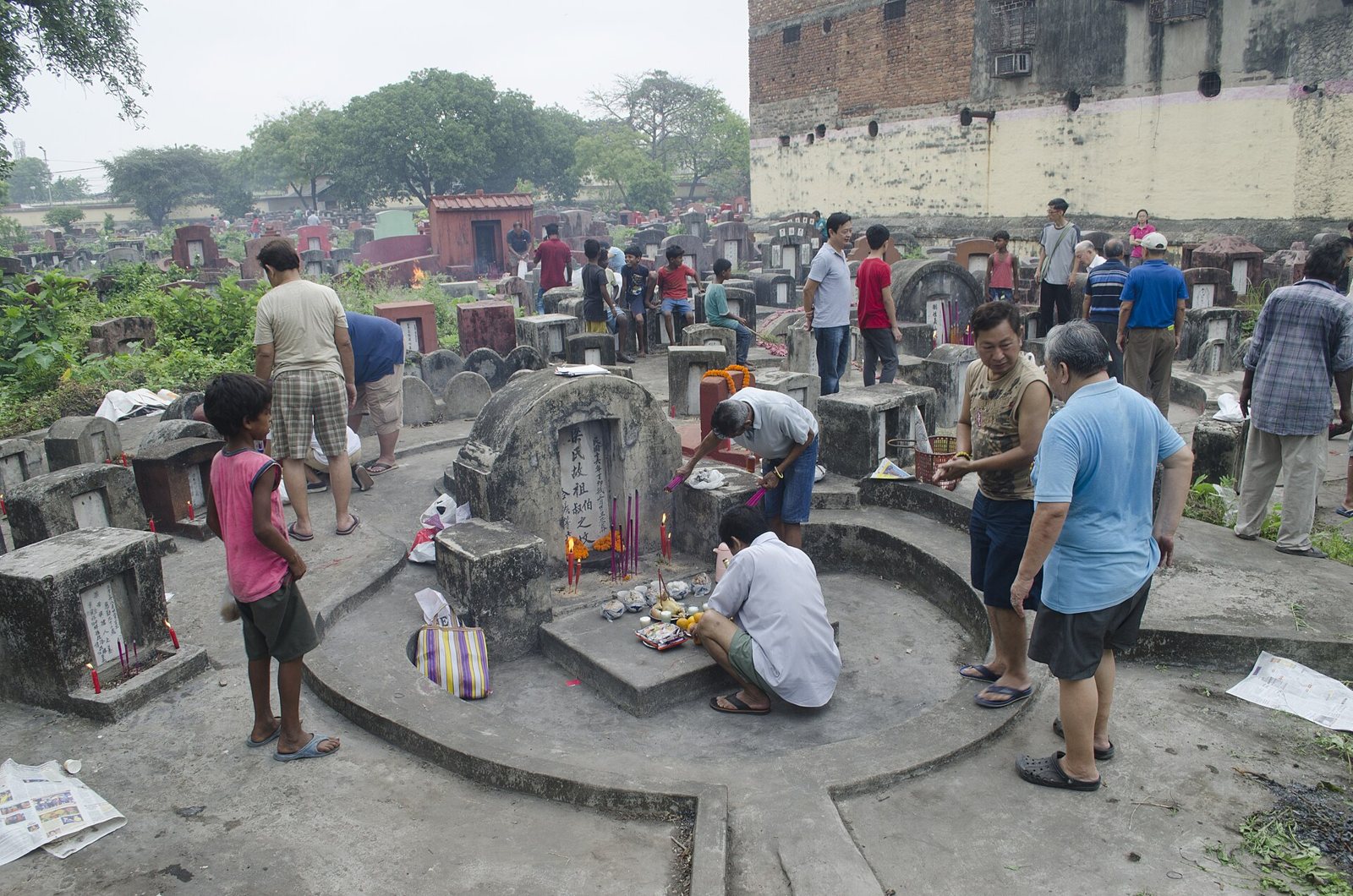
It can be real work. Families clear weeds and debris, repair the grave, clean the inscription so the name reads clearly again, and arrange fresh flowers. The Australian Museum, describing the Chinese community at a Sydney cemetery, records families cleaning and repairing graves, arranging flowers, food and drink, and then sharing the food together after the family ritual.
Once the grave is tidy, people bow or pray to the relatives buried there, and the work of the morning becomes a moment of remembrance.
Food, incense and joss paper
What families bring to the grave is generous and practical: food, fruit, drink, flowers, candles and incense, all recorded by the Smithsonian and the Australian Museum. Some families also burn paper money and paper copies of everyday goods, and the Australian Museum records joss paper, paper money and paper replicas of goods being burned at the Sydney cemetery.
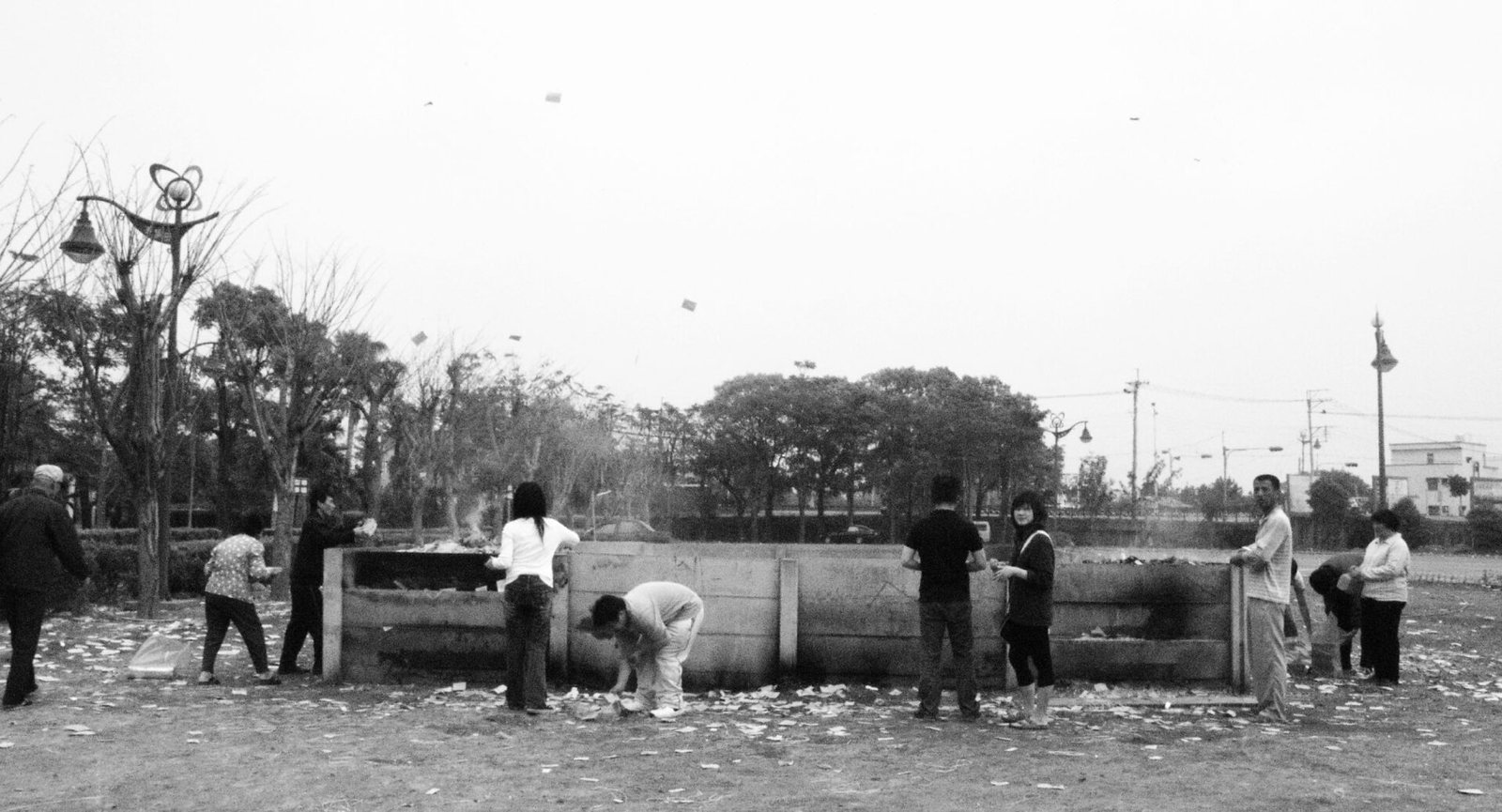
These customs are not shared by everyone, and their meaning sits inside each family's religious tradition. Burning paper may stand for sending goods to relatives who have died, while incense can go with prayer, respect or simple remembrance. Families of different faiths and lineages keep different mixes of these customs, and some burn nothing at all.
Fire in a cemetery brings its own rules. The Taipei City Government encourages centralized burning and suggests alternatives such as rice or charitable acts in place of joss paper, and the Singapore Civil Defence Force publishes fire-safety advice for incense paper, candles and joss sticks during Qing Ming. If you are going to a cemetery, follow the rules posted there.
Tap or hover a row to highlight it.
| Question | Answer |
|---|---|
| QuestionWhat is Qingming? | AnswerA Chinese solar term and remembrance festival for honoring ancestors |
| QuestionWhen does it usually fall? | AnswerAround April 4 or 5, about 15 days after the spring equinox |
| QuestionWhat is the main practice? | AnswerVisiting, cleaning and caring for ancestral graves or columbaria |
| QuestionWhat do families bring? | AnswerFood, fruit, flowers, drink, incense, candles and, in some traditions, joss paper |
| QuestionIs every family's practice the same? | AnswerNo; customs vary by place, lineage, religion and family |
The Cold Food Festival and the story of Jie Zitui
Qingming has a quieter neighbor in its history. The Cold Food Festival, or Hanshi, was traditionally kept by avoiding fire and eating food prepared cold. China's Ministry of Culture material on China Culture says the Cold Food Festival fell on the eve of Qingming and was later absorbed into it.
A popular legend connects the cold meals with Jie Zitui, a loyal retainer from Shanxi. In the story, Duke Wen of Jin set fire to a mountain to force Jie Zitui out of it, and the retainer died in the fire. The legend ties the day without fire to his death.
It is a story people have told for a long time, and it is told as legend, tied to Hanshi rather than to all of Qingming. The festival also grew from older spring and ancestral customs, so the cold meals are one thread in its history, not the whole cloth.
A day outdoors in spring
The graves are only part of the day. Once the sweeping is done, some families picnic, fly kites or take a spring walk, which is why the festival is also linked to outings in the new green season. The Smithsonian mentions picnics, kites and qingtuan among the customs, Shanghai's municipal government describes spring outings, and China Culture mentions willow branches and kite flying.
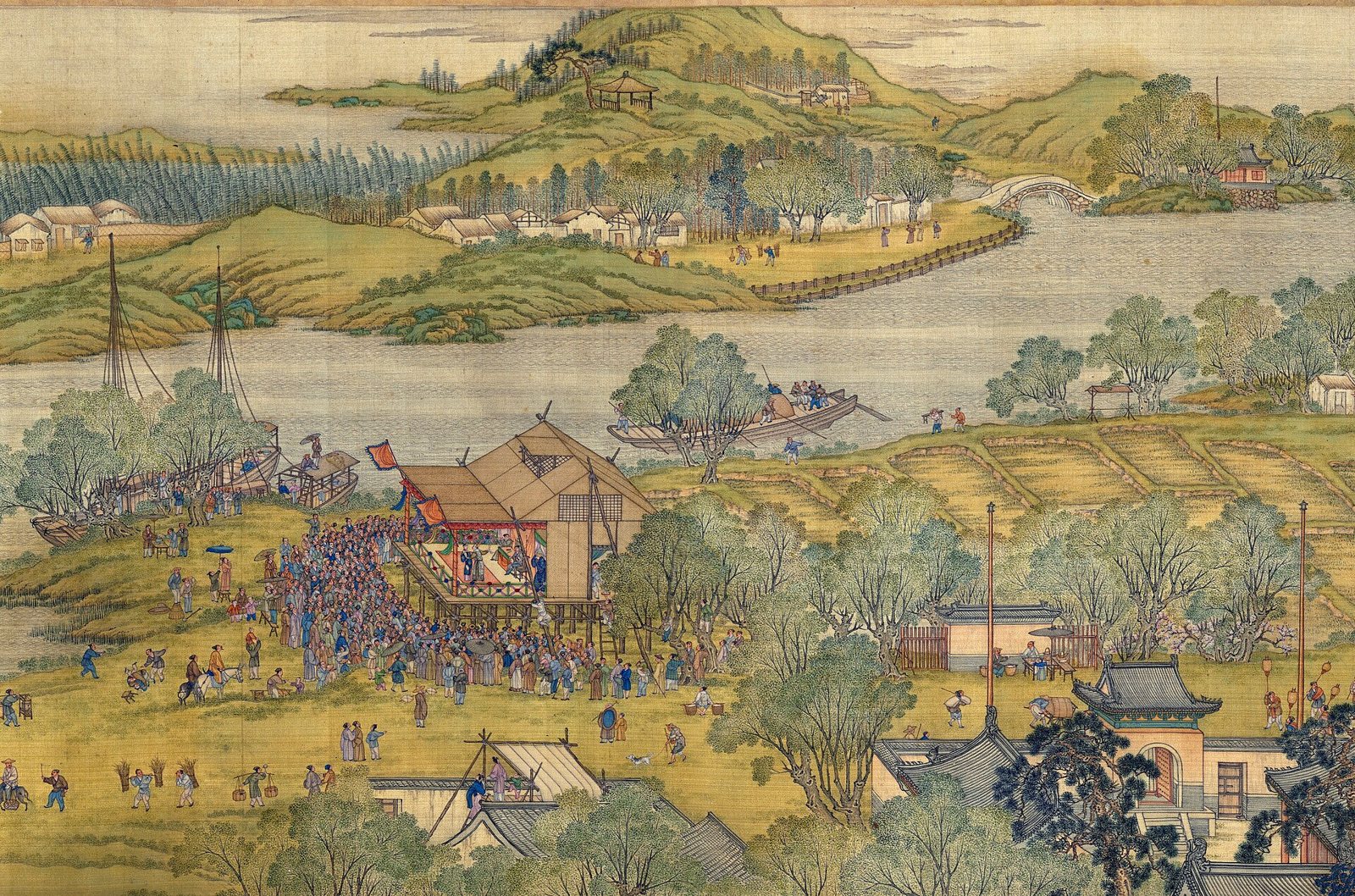
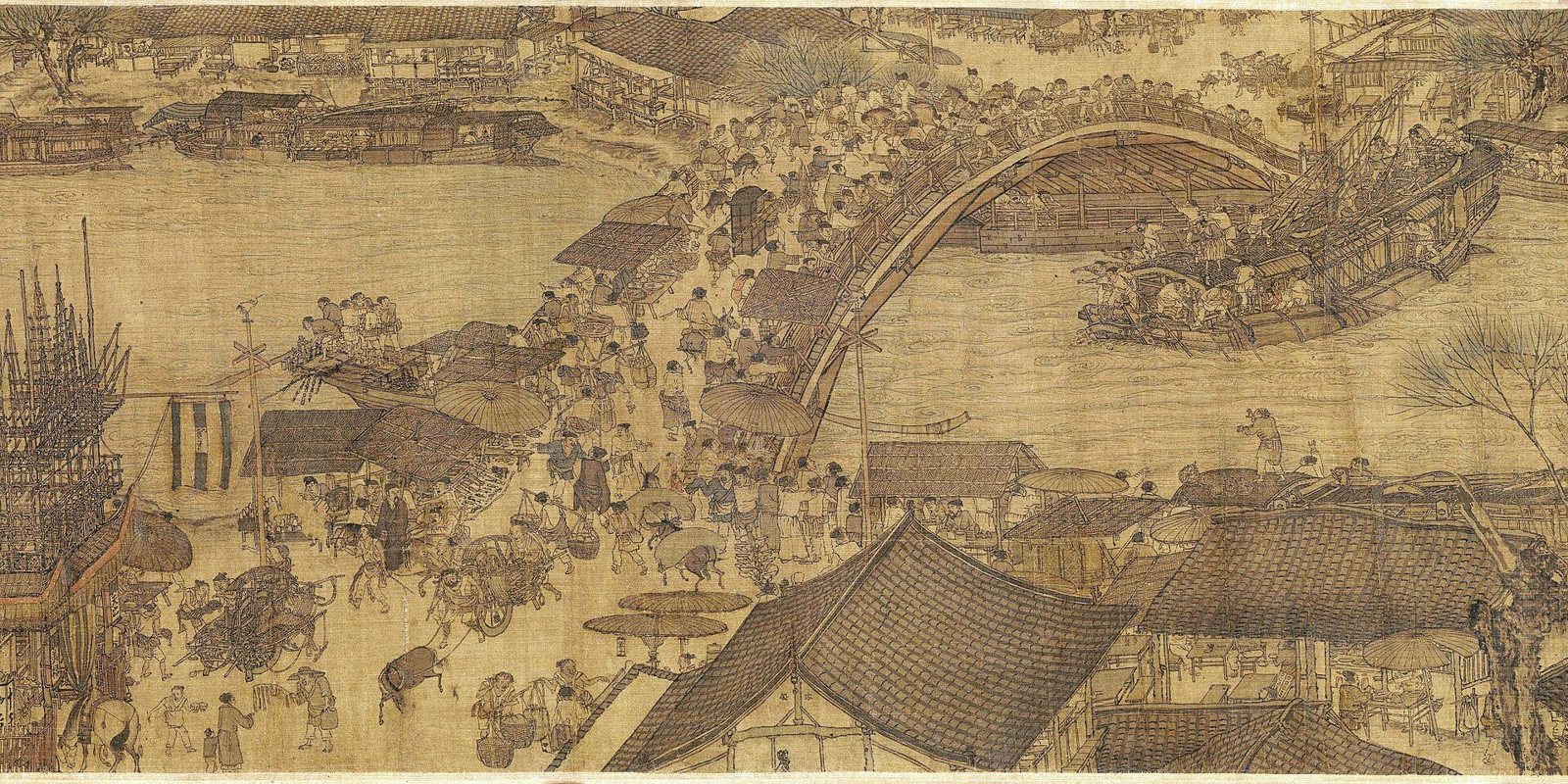
The season itself has a famous portrait. The Northern Song handscroll Along the River During the Qingming Festival shows a crowded riverside world of bridges, boats, merchants and travelers. Its title uses Qingming as a time of year, and the painting shows how full of life that time could be.
Eating at the cemetery belongs to the same idea. In the Sydney community the Australian Museum documents, the food set at the grave is shared among the living once the ritual ends, so the meal is both a gift to the dead and a family lunch.
How the Qingming season unfolds
Tap or hover a step to follow the order.
Around the spring equinox
Qingming approaches as the fifth solar term.
Around April 4 or 5
Families observe Qingming and visit ancestral graves.
Before, during or after the date
Some families plan visits around travel, cemetery access and who can come.
April 2026
Shanghai gave April 5 as Qingming; Beijing's public holiday ran April 4 to 6.
After the graveside ritual
Some families share food, picnic, fly kites or take a spring outing.
Qingming beyond mainland China
Qingming travels with the families who keep it, and each place keeps it in its own way. In Singapore, the National Heritage Board describes Qing Ming around April 4 to 6. Families visit cemeteries and columbaria, tend graves or urns, and bring food, flowers, incense and paper, either on the day or within a wider period around it.
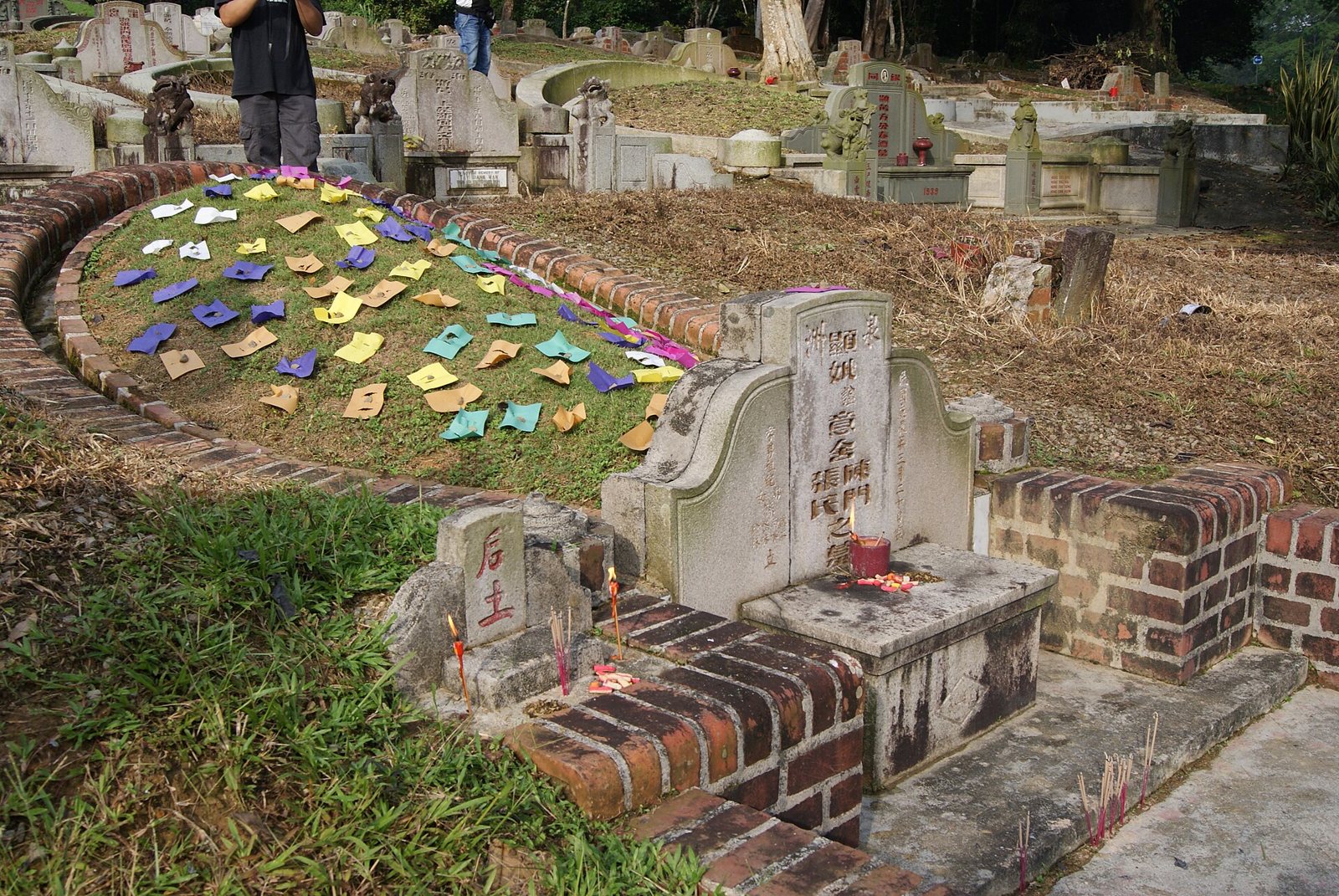
In Penang, Malaysia, the George Town World Heritage Incorporated inventory documents Cheng Beng as an annual practice among Chinese families and clan associations, including the Leong San Tong Khoo Kongsi, on Penang Island and in Butterworth. The inventory notes how the custom is passed on: children come along with their parents and learn by taking part from childhood.
In Taiwan, Qingming is commonly observed on April 4 or 5. The Taipei City Government describes families burning joss paper and clearing vegetation in the cemeteries, and practice differs among Hoklo, Hakka, Indigenous, religious and family communities. For Taiwan's exact dates and local customs in a given year, confirm with the Taiwan National Immigration Agency or the local government.
Far from Asia, the Australian Museum's account of Sydney shows the same care at an Australian cemetery: graves cleaned and repaired, flowers and food arranged, paper burned, and the meal shared afterward.
Why families do it
Ask why families sweep the graves and the answer is about particular people. Qingming honors a family's own relatives, the grandparents and great-grandparents whose names are on the stones, and keeps the living family connected to them and to each other. The Singapore National Heritage Board frames it in terms of filial piety, the duty and care owed to parents and ancestors.
The Penang inventory records the same two sides: ancestor veneration on one hand, and a family or clan gathering on the other. The grave, and the remains of the people buried in it, are part of a living family's remembrance, looked after every spring by the people who loved them or who grew up hearing about them.
How well do you know Qingming?
Answer every question to check.
Questions about Qingming
A few more questions come up often.
When was Qingming in 2026?
Shanghai's municipal government gave April 5, 2026, as the date of Qingming. In Beijing, the official public holiday ran from April 4 to April 6, 2026, and cemetery services there covered a wider period around it.
Why do people burn paper money at Qingming?
In the families that keep the custom, burning paper may stand for sending money and goods to relatives who have died. Some families burn paper replicas of everyday things for the same reason, and cities like Taipei now encourage centralized burning or alternatives such as rice or charitable acts.
Why do families eat at the cemetery?
The food set at the grave is shared among the family once the ritual is over. In the Sydney community the Australian Museum documents, that shared meal is part of the day, and many families make the rest of it a spring picnic or outing.
What if a family's graves are far away?
Each family decides how to remember relatives buried far away, and practice varies. Many communities spread visits across the days before and after Qingming to fit travel and family schedules, and the heart of the festival, honoring particular relatives and keeping family ties, does not depend on a single date.
Is Qingming like Día de Muertos or Halloween?
Qingming, Día de Muertos and Halloween each come from their own roots. Qingming is a Chinese spring festival tied to a solar term and to the care of family graves, while Día de Muertos developed in Mexico and Halloween grew from European customs that gave us skeletons on the porch. They share an attention to the dead, and each keeps its own history and meaning.
The same care, in many places
Qingming is a festival of brooms, flowers and shared food, of children learning which grandparent is buried where, and of a spring day spent outdoors once the work is done. Its simplest meaning is in the name Tomb-Sweeping Day: the family goes back to the grave and makes it clean again.
Many traditions look after the dead in their own ways. In Japan, Obon welcomes the ancestors home each summer; in Cambodia, Pchum Ben fills the pagodas with food for the monks; and in the Philippines, Undas brings families to the cemetery. Families in Pomuch, Mexico, clean the bones of their relatives, and the Toraja of Indonesia tend their dead in their own way, each from its own history. For the Christian day of remembrance, see All Souls' Day.
Terms in this story
Tap a term to see what it means.
Qingming. A Chinese solar term and spring festival, usually April 4 or 5, when many families honor their ancestors; the name means "clear and bright."
---