

No. 244
Alebrijes: Where the Fantastic Creatures Come From and How They Are Made
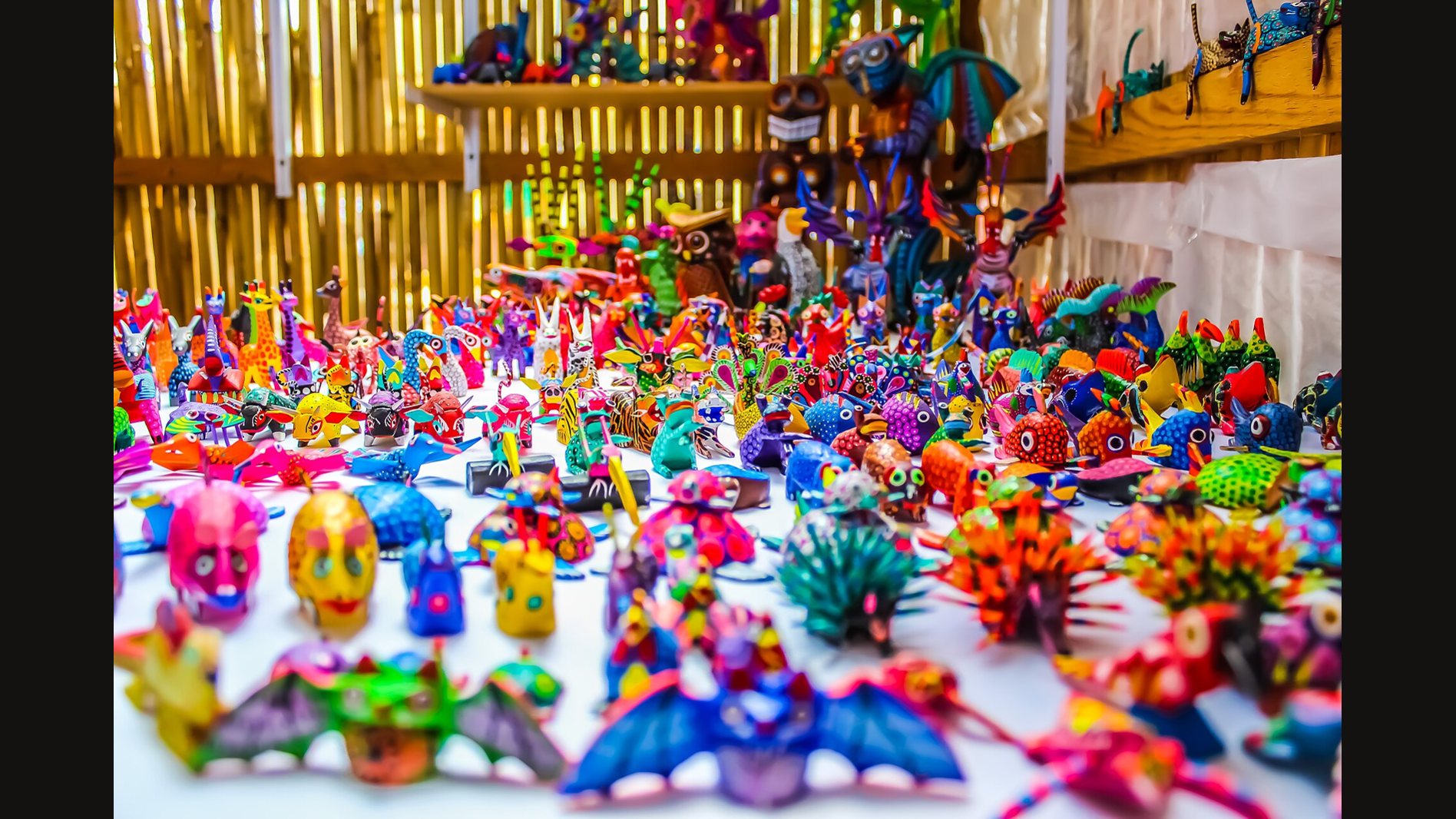
Alebrijes are brightly colored fantastic creatures, often built from the parts of several animals at once. The first ones were made in Mexico City in the 1930s by the cartonero Pedro Linares López, out of cardboard and papier-mâché. Later, carvers in Oaxaca took up the name for painted wooden figures, above all in San Antonio Arrazola and San Martín Tilcajete.
Their link to Día de Muertos is newer. Pixar made them spirit guides in *Coco* in 2017, and Mexico City parades giant ones through its streets in the same season. Whether you met one on screen or on a market table, it belongs to one of two craft families, Mexico City paper or Oaxacan wood.
Pedro Linares and the dream that named them
Pedro Linares López (1906 to 1992) was a cartonero, a maker of figures in cardboard and paper, working in Mexico City. The Glencairn Museum tells the story that gave the creatures their name. In the 1930s, ill with a fever, Linares dreamed of a forest full of hybrid animals. Among them were a donkey with butterfly wings and a lion with an eagle's head, and the creatures were shouting one word: "¡Alebrijes!"
When he recovered, he made them. Linares rebuilt the animals of his dream in cardboard and papier-mâché, and the word from the dream stayed with them. The year 1936 is often attached to the fever; the museum's account places it in the 1930s.
It is a fine origin for a craft: a man gets sick, sees a winged donkey, and then builds it out of paper so the rest of us can see it too.
From Mexico City cartonería to Oaxacan wood
Linares's alebrijes were paper creatures, made in the cartonería workshops of Mexico City. The carved wooden figures many visitors now think of first came afterward, and they came from somewhere else.
In Oaxaca's Central Valleys, artisans began giving the name to brightly painted wooden animals, especially in San Antonio Arrazola and San Martín Tilcajete. Oaxaca's tourism authority dates Tilcajete's alebrije tradition to the second half of the twentieth century and ties it directly to Linares's papier-mâché creatures. The Oaxacan pieces are usually carved from copal or other local woods.
So, there are two families of alebrije, and both are real. One is paper over a frame, born in the capital; the other is carved wood, grown up in Oaxacan communities such as Arrazola and Tilcajete.
Tap or hover a row to highlight it.
| Form | Place and period | Material |
|---|---|---|
| FormOriginal Linares alebrijes | Place and periodMexico City, 1930s | MaterialCardboard and papier-mâché |
| FormOaxacan carved alebrijes | Place and periodSan Martín Tilcajete and other Central Valley communities, second half of the twentieth century onward | MaterialCopal and other woods |
| FormMonumental parade alebrijes | Place and periodMexico City, 2007 onward | MaterialLarge paper and cardboard constructions |
How a carved Oaxacan alebrije is made
A proposed geographical indication published in Mexico's Diario Oficial, the federal government's official gazette, lays out the Oaxacan process step by step. It starts with copal or another suitable wood, and it starts while the wood is still green.
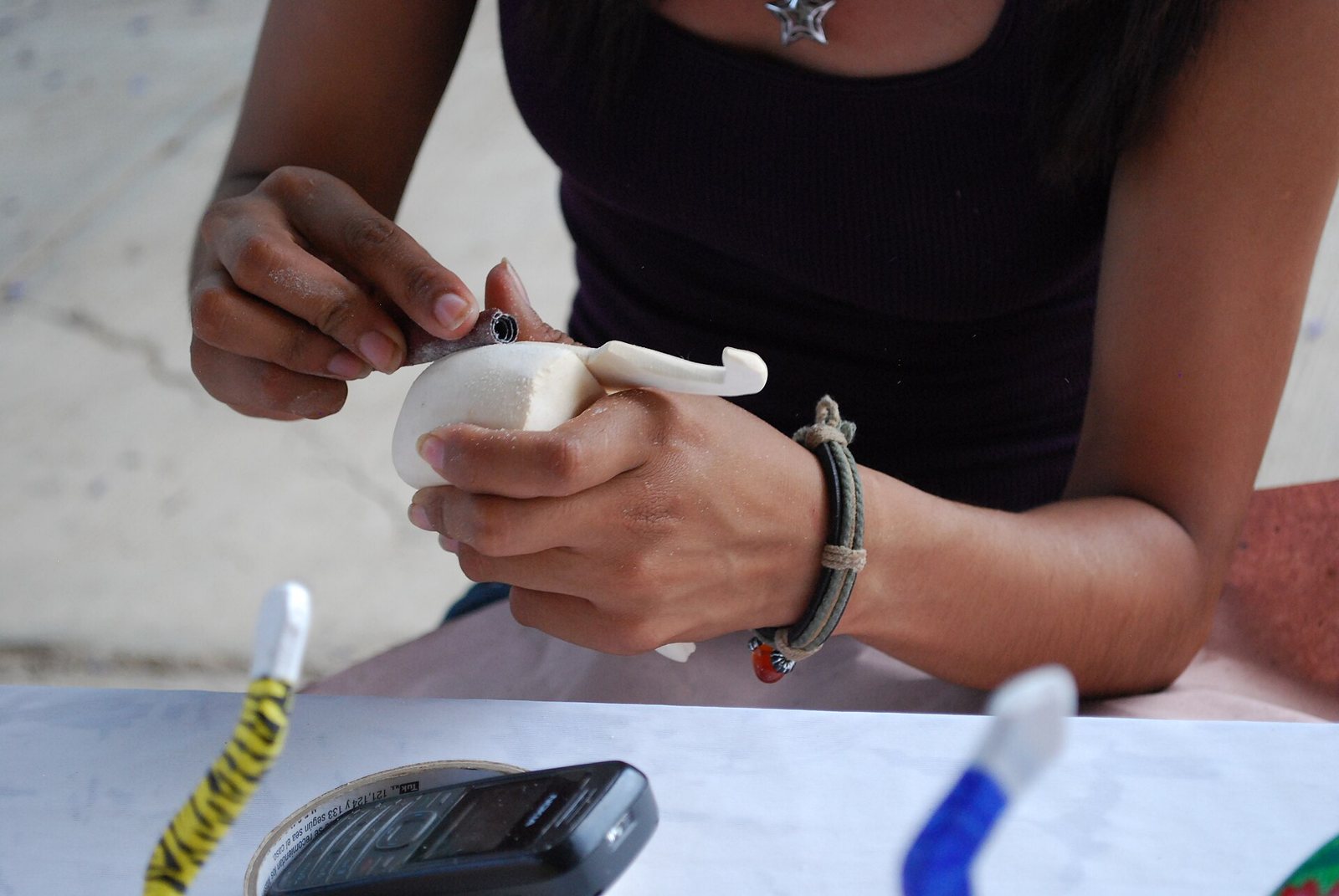
The carver strips the bark from the green wood and roughs out the shape with machetes and knives. Gouges, chisels and other tools refine the form. Then the piece goes into the sun to dry, which can take several days, a month or longer. A complex alebrije may take anywhere from several hours to a year to carve, depending on its size and detail.
Once dry, the figure is sanded, treated against insects and given a base coat. Then comes the part everyone stops to look at: brushwork in fine geometric patterns, in synthetic or natural pigments. Oaxaca's tourism authority names grana cochinilla, indigo, lime, lemon and pomegranate among the materials some workshops use, often alongside acrylic or vinyl paint.
From green copal to painted alebrije
Tap a card to bring it forward.
- Choose the wood: Copal or another suitable wood, worked while still green.
- Strip the bark: The bark comes off before the wood dries.
- Rough out the shape: Machetes and knives give the animal its first form.
- Refine the carving: Gouges, chisels and other tools add the detail.
- Dry in the sun: From several days to a month or longer.
- Sand and treat: The piece is smoothed and treated against insects.
- Base coat: A ground color goes on before the decoration.
- Paint the patterns: Brushes add fine geometric designs in synthetic or natural pigments.
How a papier-mâché alebrije is made
Mexico City cartonería works from the inside out. The artisan builds a form of wire and paper or cardboard, which is the creature's skeleton, then covers it in layers of papier-mâché. When the layers dry, the figure is painted and decorated.
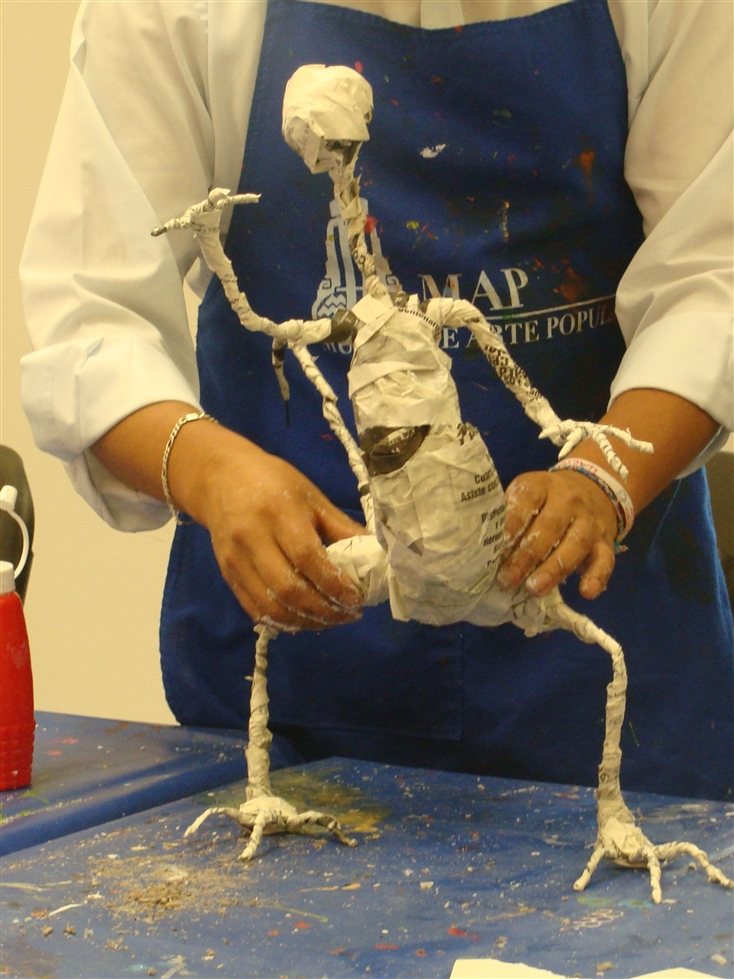
The craft is still taught. An INAH book fair listing describes artisan David Linares learning to model papier-mâché figures over wire structures. For a site about skeletons, it is a pleasing detail: every paper alebrije has a wire one hidden inside it.
Alebrijes, Coco and Día de Muertos
Alebrijes are a Mexican folk art tied above all to Mexico City cartonería and to Oaxaca. Pixar's filmmakers describe them as handcrafted folk art, and in *Coco* (2017) they turned them into spirit guides for the dead. Pepita, the winged wildcat with eagle talons, is Mamá Imelda's alebrije guide, and Dante becomes an alebrije-like guide as the story goes on.
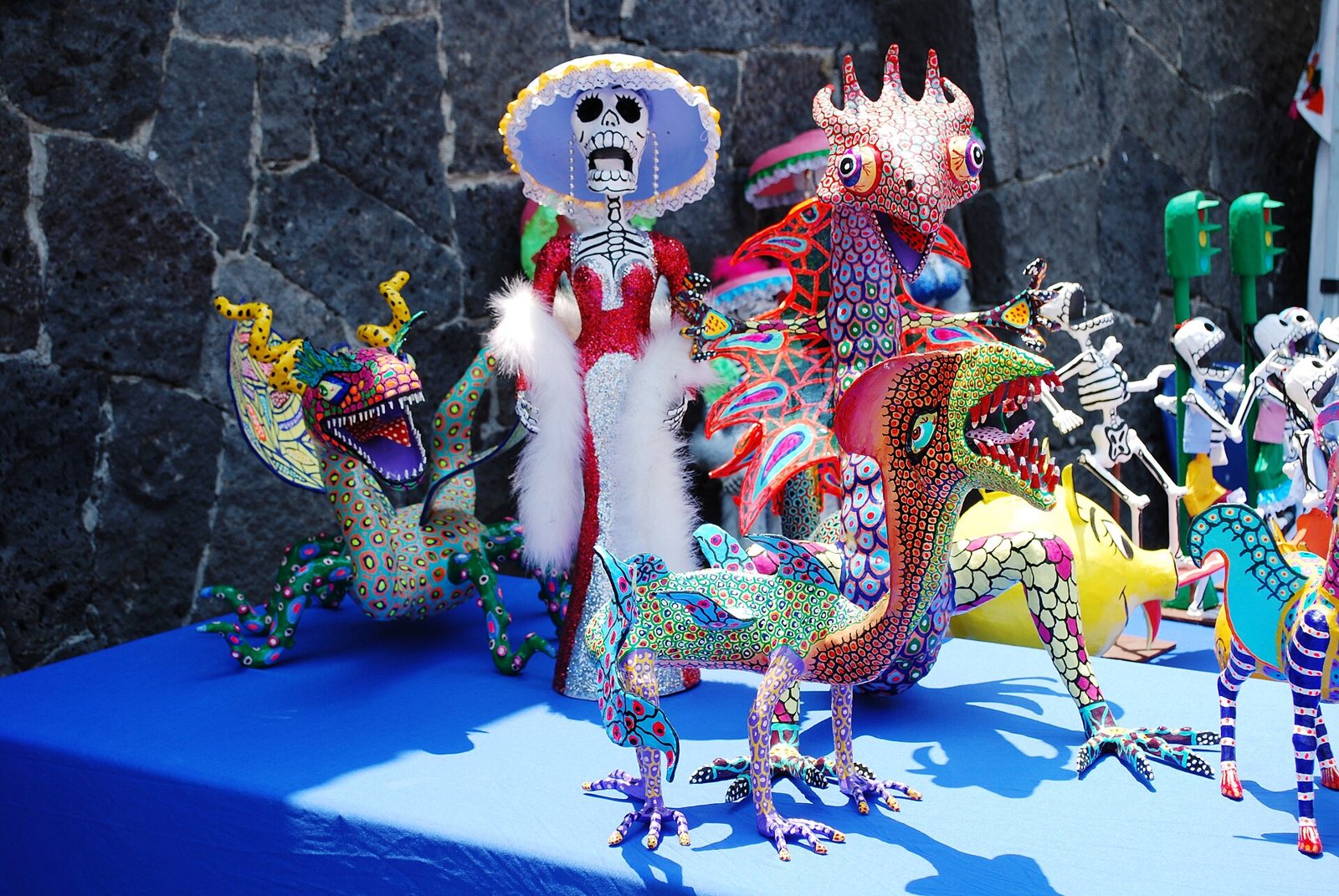
The filmmakers spent time in real workshops. Disney reports that Pixar's filmmakers visited Oaxaca from 2011, including the workshop of Jacobo and María Ángeles. Jacobo Ángeles has described alebrijes as spiritual and connected to animal protectors.
That is how alebrijes came to sit beside marigolds and sugar skulls in so many people's idea of the holiday. Their place in the Día de Muertos season comes from the film and from modern Mexico City events, while the older family observances, the altars and cemetery visits, grew from other roots. The film itself has its own story on our site, in the skeletons of Coco, and Dante's breed has one in our piece on the Xolo dog.
The Mexico City alebrije parade
Since 2007, Mexico City has put giant alebrijes into the street. The Museo de Arte Popular began its monumental alebrije parade in 2007, according to the Secretaría de Cultura, and the giant figures are built from paper and cardboard in the same cartonería tradition Linares worked in.
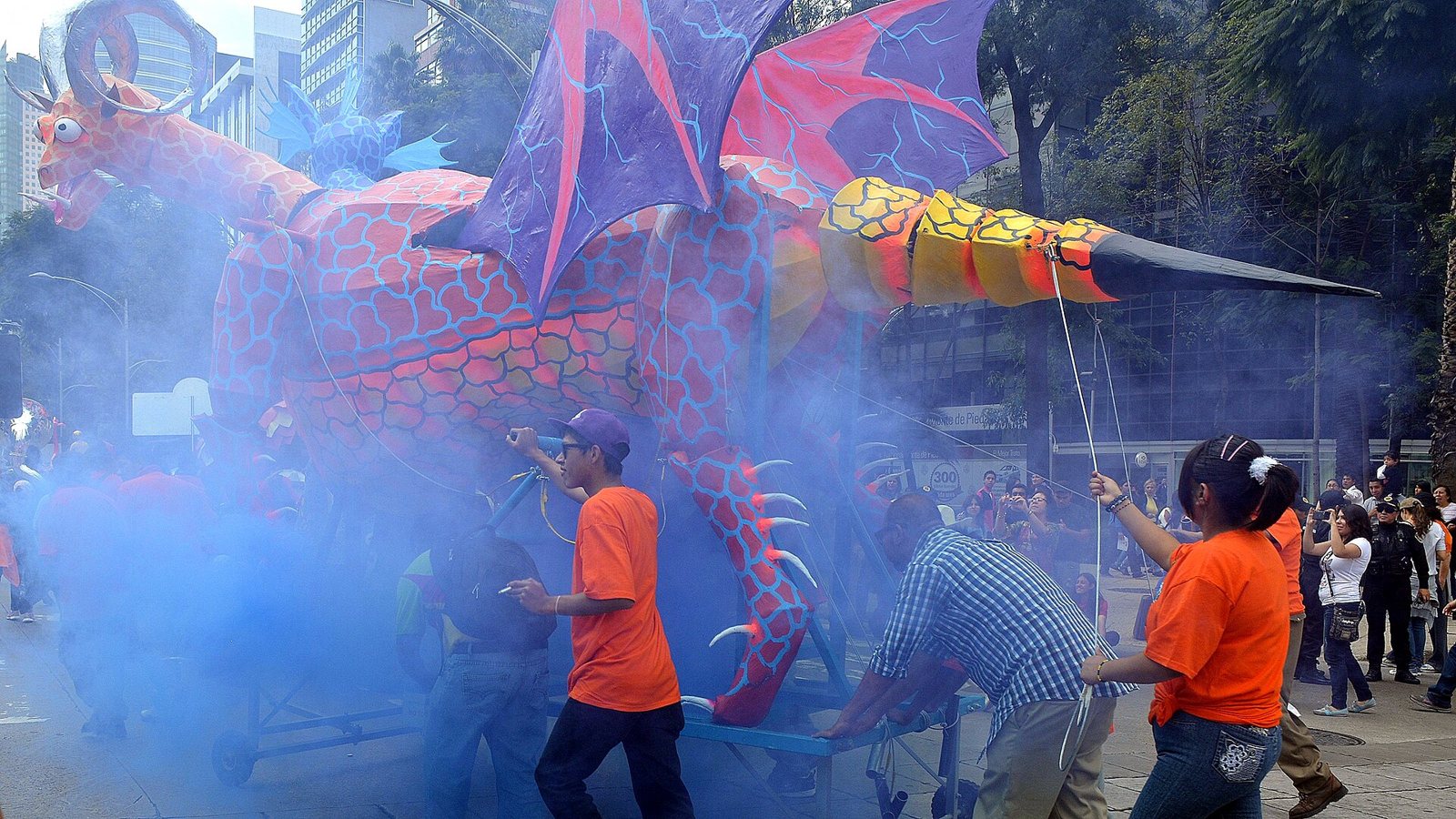
The parade belongs to the season and to the city. In 2018, the city's Día de Muertos program listed alebrijes among its floats, dancers, marionettes and mobile ofrendas. It is a contemporary Mexico City event, separate from the way towns and families elsewhere in Mexico keep the days. The city's big Día de Muertos parade has a story of its own, told in the Spectre parade.
Alebrijes, from a fever dream to the big screen
Tap or hover a step to follow the order.
1906
Pedro Linares López is born.
1930s
Linares's fever dream, and his first papier-mâché alebrijes in Mexico City.
Second half of the twentieth century
Carvers in San Martín Tilcajete, Oaxaca, build a wood-carving tradition around the alebrije.
1992
Pedro Linares López dies.
2007
The Museo de Arte Popular begins its monumental alebrije parade in Mexico City.
2011
Pixar's filmmakers visit Oaxaca workshops while preparing *Coco*.
2017
*Coco* is released, with alebrijes as spirit guides.
2018
Alebrijes appear in Mexico City's Día de Muertos program.
Buying an alebrije from the people who make it
If you want a piece that came straight from its maker, the best tool is a few questions. Ask who carved it and who painted it, where the workshop is, what wood or material was used, and whether the work is signed.
The geographical-indication filing lists alebrijes being sold through workshops, markets, stores, catalogs and websites. It also notes that a signature may name an individual carver, a painter or a family workshop. A signature helps, but on its own it does not prove that a piece was made in a particular community.
For Oaxacan wood, ask whether the piece comes from San Antonio Arrazola, San Martín Tilcajete or another named community. Ask about the wood, how long it dried, how it was treated and whether the workshop supports copal reforestation. For papier-mâché, which is light and fragile, ask how to carry it home and how to display it. Prices follow the size, the complexity, the hours of labor and the maker's reputation.
How well do you know alebrijes?
Answer every question to check.
Questions about alebrijes
Alebrijes raise a few practical questions, from materials to makers.
What are alebrijes made of?
Alebrijes are made of cardboard and papier-mâché over a wire frame in the Mexico City cartonería tradition, and of carved copal or other woods in Oaxaca. Both kinds are painted by hand, the Oaxacan ones often in fine geometric patterns.
Where does the word alebrije come from?
The word comes from Pedro Linares's fever dream, as the Glencairn Museum tells it: the hybrid creatures in his dream were shouting "¡Alebrijes!" He gave the name to the figures he made after he recovered.
What do alebrijes symbolize?
Alebrijes have no single fixed meaning; they began as the fantastic creatures of one artisan's dream. The Oaxacan carver Jacobo Ángeles describes them as spiritual and linked to animal protectors, and *Coco* presents them as guides for the dead.
What is the alebrije in Coco called?
The best-known alebrije in *Coco* is Pepita, the winged wildcat with eagle talons who guides Mamá Imelda. Dante also becomes an alebrije-like guide during the film.
How can I tell who made an alebrije?
Ask the seller for the maker's name, the workshop and its community, and look for a signature. A signature can identify a carver, a painter or a family workshop, though it does not prove on its own where a piece was made.
More Mexican folk art of the season
Alebrijes share the Día de Muertos season with other crafts that started in workshops and print shops. The paper banners strung over altars have their own story in papel picado, the dancing skeleton figures in calacas, and the skeleton lady Mexico City artists made famous in La Catrina. For the holiday itself, start with Día de Muertos, and for the way the Huasteca keeps it, read about Xantolo.
Terms in this story
Tap a term to see what it means.
Alebrije. A brightly colored fantastic creature, often combining several animals, first made in papier-mâché by Pedro Linares in Mexico City and later carved in wood in Oaxaca.
---