

No. 332
Pedir Calaverita: What It Means When Children Ask for Their Calaverita
Pedir calaverita, "asking for one's calaverita," is a Día de Muertos custom in which children go to homes, neighbors and shops asking for fruit, bread, sweets or a coin. In some places adults join in. The usual words are "¿Me da mi calaverita?", will you give me my calaverita?
Calaverita means "little skull," and in this custom it names the small gift itself. The request is simple, but what children carry, which night they go out and what they sing all change from one community to the next.
In Xochimilco, in Mexico City, people have gone out with skull lamps carved from chilacayote squash. In Zacatecas, children chant cheeky verses about a dead man who wants his sweet potato. In Mixquic, children once rang a bell, asked permission to come in and prayed before the family altar before they were given food.
What children say and what they carry
The request comes in a few familiar forms. "¿Me da mi calaverita?" is the most common, along with "¿Me da para mi calaverita?", will you give me something for my calaverita? In some places a group calls out together, "¡Queremos calaverita!", we want calaverita! What they receive depends on the household: fruit, bread, sweets, other food, or a coin.
What children say
Tap a card to bring it forward.
- ¿Me da mi calaverita?: Will you give me my calaverita?
- ¿Me da para mi calaverita?: Will you give me something for my calaverita?
- ¡Queremos calaverita!: We want calaverita!
- ¡El muerto pide camote!: The dead man asks for sweet potato! (Zacatecas)
- La calavera tiene hambre: The skull is hungry. (Morelos)
What children carry is where the custom gets its skulls. In Culhuacán and Iztapalapa, in Mexico City, an INAH ethnographic study published in 2011 describes children and young people going out with a chilacayote, a squash, carved with the features of a skull and lit with a candle inside. The same study notes that pumpkins are used today in place of the chilacayote.
In Xochimilco, the national Indigenous peoples' institute, INPI, describes people asking for "La Calavera" with chilacayote skull lamps, carrying bags or baskets for the food neighbors give them. Elsewhere in Mexico City, one writer on the education site Profelandia remembers children in the 1960s and 1970s carrying decorated cardboard boxes and asking passersby for coins, a memory of one city and one era.
When children ask for their calaverita
There is no single date across Mexico. Documented local practice centers on the nights of November 1 and November 2, and some communities begin on October 31. In Culhuacán and Iztapalapa, the people INAH spoke with went out in the evening, roughly between 20:00 and 22:00.
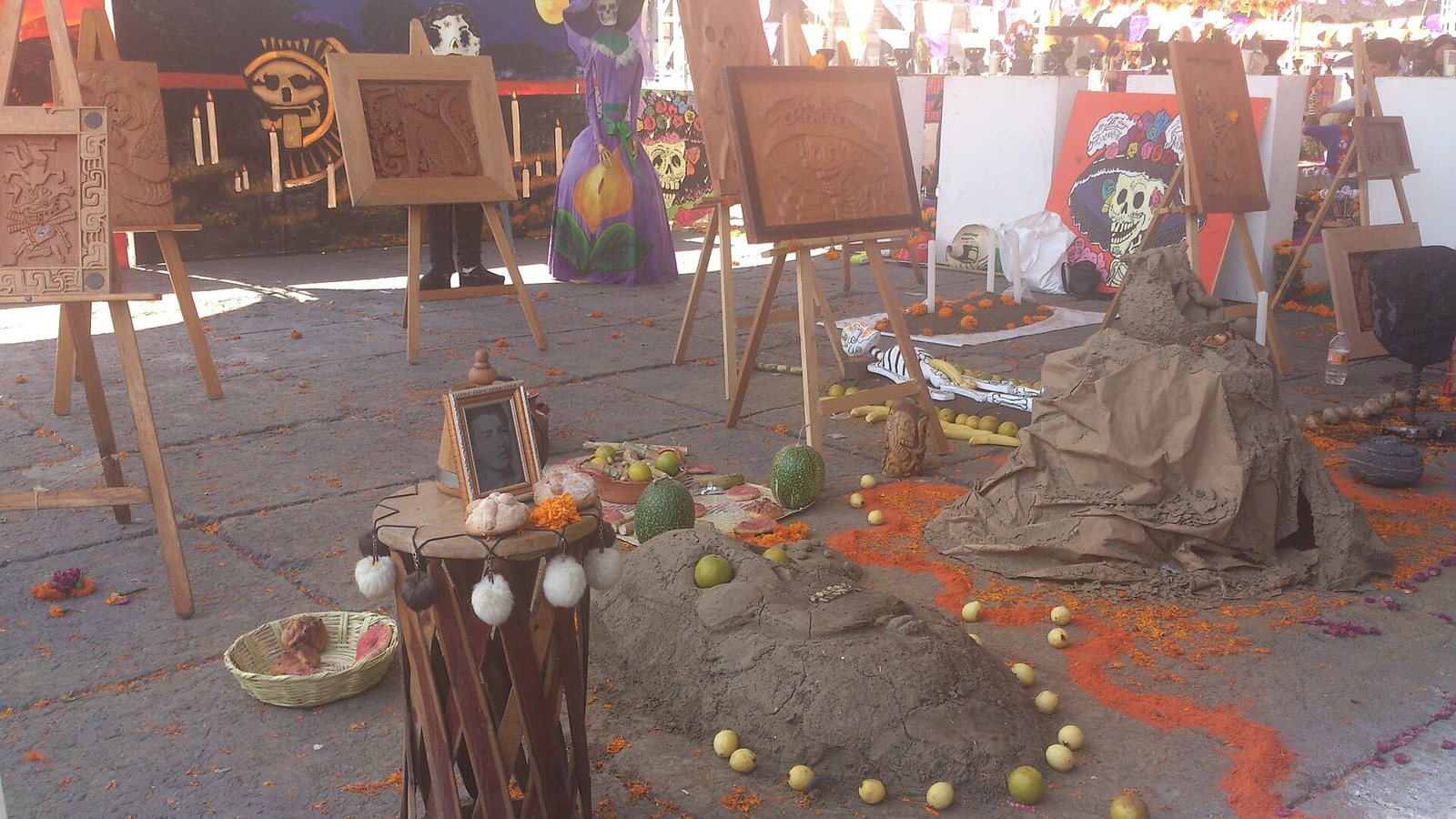
Those dates line up with the days when, in many Mexican homes, the dead are welcomed back to the family ofrenda. The Day of the Dead calendar sets out which days belong to whom, and in many places children who died are remembered on their own day, as told in angelitos. If you are visiting a particular town, the local families are the best guide to which night the children will knock.
Where the custom comes from
The clearest historical account ties calaverita to Catholic charity for the souls of the dead. A 2024 bulletin of the Archivo Histórico del Estado de Guanajuato, Guanajuato's state historical archive, describes "calaverita," also called "ofrenda" or "tumba" in nineteenth-century Mexico, as a form of alms connected with the souls of the dead.
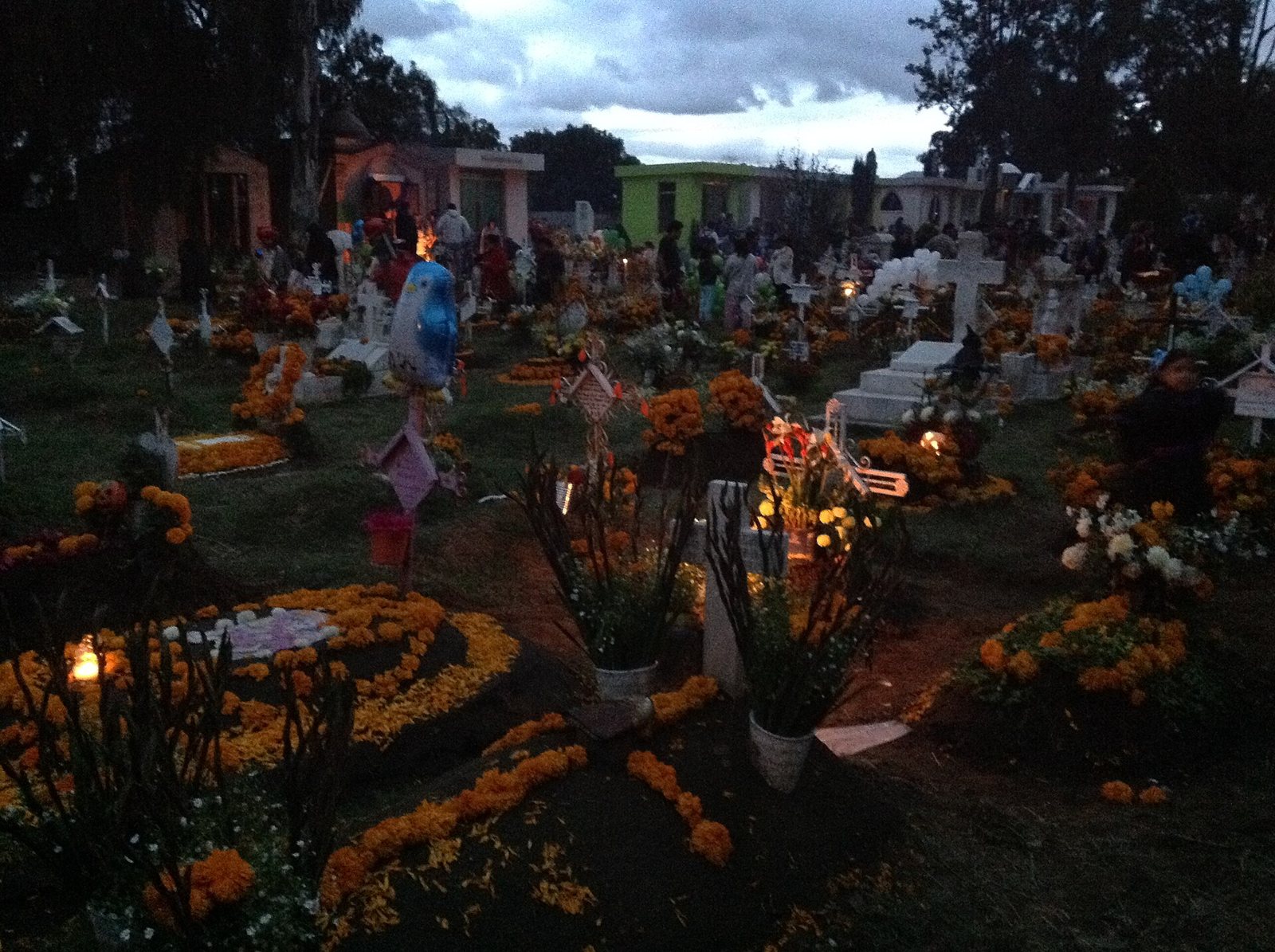
The bulletin links it to older European customs in which poor people asked the better-off for food or gifts in exchange for prayers for the dead on All Saints' Day and All Souls' Day. It places the Mexican word beside Portugal's pão-por-Deus, Spain's "pedir los santos," Peru's "angelitos somos" and the medieval English practice of souling. It also says the custom took two forms in nineteenth-century Mexico, one rural and one urban. The Catholic feast behind those dates is told in All Souls' Day.
Local memory carries its own history. The Culhuacán and Iztapalapa residents in the INAH study called their custom "pedir el huesito," asking for the little bone, or "calaverita." They dated it to the 1930s and 1940s in their own families and said it had nothing to do with Halloween.
A popular story is also widely told about a poor orphan before the Spanish conquest who painted his face and asked for food. Mexico's public education platform, Nueva Escuela Mexicana Digital, presents it as a commonly told account and notes that the custom has no exact starting date. It is best enjoyed as a legend.
Pedir calaverita through time
Tap or hover a step to follow the order.
Medieval Europe
The Guanajuato archive bulletin names English souling, asking for food in exchange for prayers for the dead, as a related Catholic custom.
Colonial and nineteenth-century Mexico
The same bulletin records "calaverita," "ofrenda" and "tumba" as names for alms for the souls.
1930s and 1940s
Residents of Culhuacán and Iztapalapa in Mexico City practice "pedir el huesito" or "calaverita," by their own account.
2011
INAH publishes its ethnographic account of the Culhuacán and Iztapalapa custom.
2017
Fieldwork in Milpa Alta records chilacayote skulls, food from the ofrenda, music and bonfires.
2023
UNAM's Repositorio Nacional de Materiales Orales catalogues a Xochimilco song for asking calaverita.
2023
El Sol de Zacatecas reports children chanting "El muerto pide camote" on November 1 and 2.
How pedir calaverita changes from place to place
The custom is regional, and the clearest way to understand it is town by town. Several of the best-documented examples come from communities in Mexico City's southern boroughs, each with its own way of doing it.
In Xochimilco, INPI describes children and adults going out dressed as frightening or popular-culture characters to ask for "La Calavera." Their chilacayote lamps stand for forgotten dead who must go out to ask for alms, which gives the custom a quiet seriousness under the costumes. In Santa Cruz Acalpixca, those who go asking are called "limosneros," alms seekers.
In Milpa Alta, a UNAM thesis based on 2017 fieldwork gathered accounts from San Salvador Cuauhtenco, San Francisco Tecoxpa, San Jerónimo Miacatlán and San Juan Tepenahuac. A resident of San Salvador Cuauhtenco put the local rule plainly: "Aquí para pedir calavera debemos llevar una calavera de chilacayote," here, to ask for calavera, we have to carry a chilacayote skull. Children there may receive fruit, bread and tamales from the ofrenda and gather around a bonfire afterward, and some groups go out with children dressed as bears while others play instruments and sing.
In Mixquic, a UNAM thesis interview describes "el campanero." Children carried a bell and sang to ask permission to enter a house, prayed before the household offering and then received food set aside for them. The person interviewed said the practice was already becoming less common. Mixquic's wider celebration is told in Mixquic Day of the Dead.
Farther north, Zacatecas has its chant, and in Morelos children sing about a hungry skull. Each place keeps its own words.
Tap or hover a row to highlight it.
| Place and period | Local name | What children carry or do |
|---|---|---|
| Place and periodCulhuacán and Iztapalapa, Mexico City; 1930s and 1940s, recorded by INAH in 2011 | Local namePedir el huesito, or calaverita | What children carry or doA chilacayote or pumpkin carved as a skull with a candle; evening visits around 20:00 to 22:00 |
| Place and periodXochimilco, Mexico City; described by INPI | Local namePedir La Calavera; limosneros in Santa Cruz Acalpixca | What children carry or doChilacayote skull lamps; bags or baskets for food from neighbors |
| Place and periodMilpa Alta, Mexico City; 2017 fieldwork | Local namePedir calavera, or pedir calaverita | What children carry or doChilacayote skulls; fruit, bread and tamales; some groups with music and costumes |
| Place and periodMixquic, Mexico City; UNAM thesis interview | Local nameEl campanero | What children carry or doA bell, a song asking to enter, a prayer before the ofrenda and food set aside for children |
| Place and periodZacatecas; report of November 1, 2023 | Local nameEl muerto pide camote | What children carry or doChildren sing for sweets on November 1 and 2 |
The rhymes and songs
There is no single national rhyme, and the local verses are half the fun. In Zacatecas, El Sol de Zacatecas reported in 2023 that children sing these lines while asking for sweets on November 1 and 2:
"¡El muerto pide camote, si no se le cae el bigote!" The dead man asks for sweet potato, or else his mustache falls off.
"¡La viuda pide una ayuda para su pobre criatura, que tiene calentura y la panza bien boluda!" The widow asks for help for her poor little one, who has a fever and a big round belly.
The same report records what children say afterward. A generous house hears "¡Esta casa está bendita porque sí nos dieron comidita!", this house is blessed because they gave us a little food. A house that gives nothing gets the joking curse "¡Esta casa está embrujada, porque no nos dieron nada!", this house is bewitched, because they gave us nothing. Consider yourself warned.
In Morelos, Azteca Morelos records a different song that begins "La calavera tiene hambre, ¿no hay un pedazo de pan?", the skull is hungry, isn't there a piece of bread? It goes on to ask the household to leave half the food and to mention tacos with chile and salt, because the calavera wants to eat. The wording changes by municipality and even by neighborhood.
Xochimilco's song has been preserved on tape. UNAM's Repositorio Nacional de Materiales Orales holds a 2023 recording, "Canción para pedir calaverita", made for the project "Voces vivas de Iztapalapa." It runs 1 minute and 42 seconds, with Samuel Anzures Bonilla as the speaker and Suzette Selena García San Luis as the documenter. To hear the full song, listen to the recording through the UNAM repository.
These chants share their cheek with another seasonal tradition, the rhyming verses that joke with death, told in calaveras literarias. For more traditional wording, Day of the Dead sayings gathers refranes and lines for the ofrenda.
Families and churches with concerns
Not every household takes part, and some have reasons they state clearly. The Archdiocese of Toluca, in the State of Mexico, addressed the custom in its October 2021 publication *Génesis*.
The archdiocese acknowledged that children in some places ask for calaverita and described it as a way for children to socialize, value traditions and sometimes help people in need. It also asked adults not to let children go out without supervision, not to open the door to strangers, to prefer family activities at home and to avoid crowds. It tied those cautions to crime risks and, at that time, to the spread of SARS-CoV-2. Its own emphasis was on the rosary and Catholic devotion, and it treated the custom as something to do with care rather than something to condemn.
Some families simply prefer to keep these days for remembrance and prayer at home, around the ofrenda, rather than for collecting sweets. That is a choice each family makes for itself, and it is no more the view of all Mexico than the custom itself is.
If your family takes part
The practical advice follows from what the archdiocese and families describe. An adult goes along with the children, the group sticks to familiar streets and homes it knows, and a house that does not answer is simply passed by.
Customs differ so much that the best way to learn the local one is to ask. Families who live there, a local cultural center or the municipal authorities can tell you which night children go out, what they carry and what they sing in that community. If you are the one answering the door, fruit, bread, sweets and other food are the gifts these communities describe. In Mixquic, food was set aside for the visiting children ahead of time, which is a kind habit anywhere. To set up the altar they may visit, see how to make an ofrenda.
FAQ
Short answers on the name, the dates, the comparison with trick-or-treating and safety.
What does pedir calaverita mean?
It means "to ask for one's calaverita," the little gift of food, sweets or a coin that children request around Día de Muertos. Calaverita is "little skull," a word that also names the sugar skulls of the season, told in sugar skulls. In Culhuacán and Iztapalapa the same custom was also called "pedir el huesito," asking for the little bone.
Is pedir calaverita a Mexican tradition?
Yes, it is documented in many Mexican communities, from Xochimilco, Milpa Alta and Mixquic in Mexico City to Zacatecas and Morelos. Each place has its own name, night, objects and songs, so it is a family of local customs rather than one national routine.
Is pedir calaverita the same as trick-or-treating?
Pedir calaverita is its own Mexican custom, rooted in alms asked for the souls of the dead around All Saints' and All Souls' days. People often compare the two because children go door to door in both, and residents of Culhuacán and Iztapalapa described their custom as older than Halloween's popularity in Mexico and unrelated to it. How skeletons came to Halloween is told in skeletons and Halloween.
Is it wrong or unsafe for children to ask for calaverita?
It is a long-standing community custom, and families decide whether it fits their faith and household. The Archdiocese of Toluca in 2021 described it as social and sometimes charitable, while asking that adults supervise children and avoid strangers and crowds.
When do children ask for calaverita in Mexico?
Most often on the nights of November 1 and 2, with some communities starting on October 31. Hours vary too; in Culhuacán and Iztapalapa, children went out between about 20:00 and 22:00.
Pedir calaverita quiz
Answer every question to check.
A small skull at the door
Whether it comes with a candle-lit chilacayote, a bell, a cardboard box or a chant about a dead man's mustache, pedir calaverita keeps the dead in the evening's conversation. Children ask in the name of the calavera, and households answer with something from their table.
The wider celebration these nights belong to is told in Día de Muertos, and the day set aside for children who died is in angelitos. If you would like to make a skull of your own for the altar, how to make a paper calavera has the steps.
Terms in this story
Tap a term to see what it means.
Calaverita. Little skull; in this custom, the small gift of food, sweets or a coin children ask for around Día de Muertos.
---