

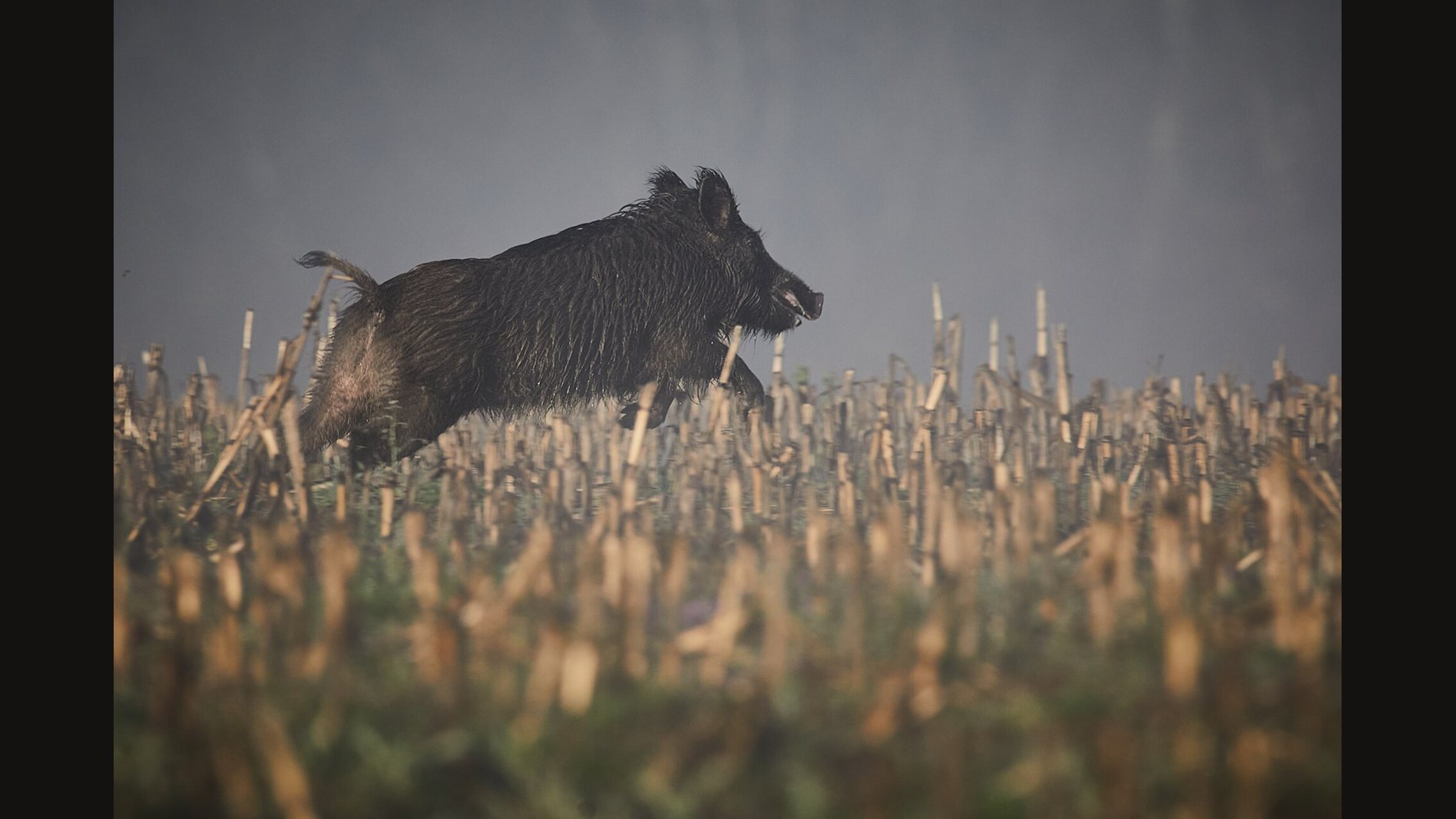
No. 125
Pig Skull: How to Identify One and Tell It From a Human or Dog Skull
A pig skull is long and front-heavy: a reinforced snout, a large nasal opening, broad cheek arches, a braincase that looks small next to the face, rows of grinding cheek teeth and, in a complete adult, 44 permanent teeth. The canines are the giveaway. In pigs they are enlarged, and in many adults, especially males, they grow into tusks.
That build is very different from a human skull, which has a large rounded braincase over a short, flat face and no snout at all. A whole pig skull is rarely hard to tell from a person's. Loose teeth and broken pieces are another matter, so if anything you are looking at could be human, leave it where it is and call local law enforcement or the medical examiner. The section on human remains below explains why.
Domestic pig, wild boar or feral hog is a harder call, because all three are the same species. The sections below sort them by the skull, and show where a dog skull fits in.
Reading a pig skull
The domestic pig, *Sus scrofa domesticus*, and the wild boar, *Sus scrofa*, share one skull plan. The teeth follow the formula 3.1.4.3 over 3.1.4.3, which means three incisors, one canine, four premolars and three molars on each side of the upper jaw and the same again on each side of the lower jaw. Add all four quarters and you reach 44, the full adult set described in a pig dentition guide.
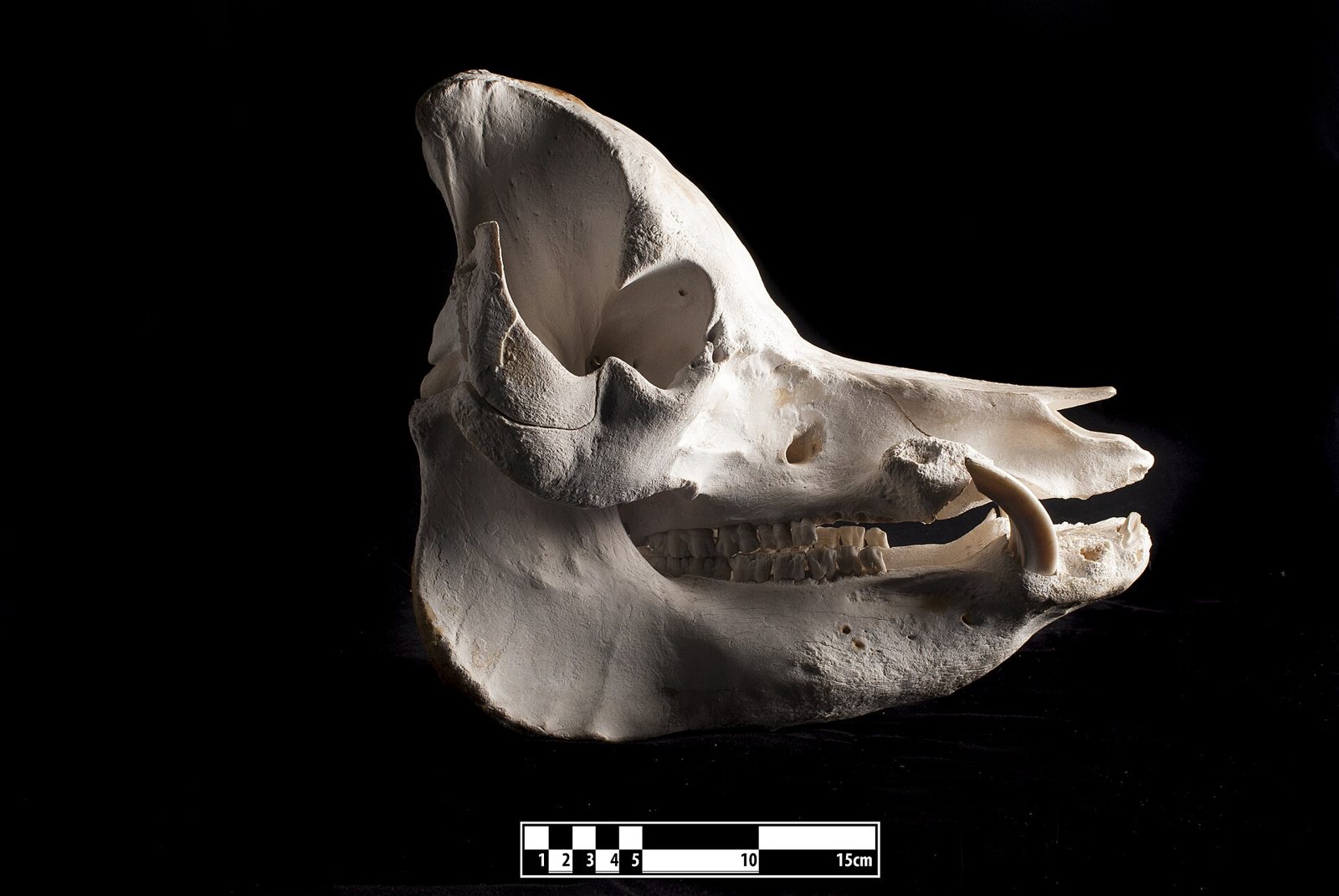
The tusks are not a special kind of tooth. They are enlarged canines, as the CITES guide to ivory and ivory substitutes notes for wild boar. In adult males they are usually the most prominent, but females have canines too. The lower canines curve upward and are sharpened against the upper ones. According to USDA APHIS, wild boar and feral swine generally show longer, more visible tusks than ordinary domestic pigs.
Before you count, a word of caution. Young pigs still have their deciduous, or baby, teeth, adult teeth go missing, and domestic breeds vary in skull shape. A complete adult set of 44 is stronger evidence than the size of the skull, so count empty sockets as well as teeth.
Domestic pig or wild boar?
Because domestic pigs and wild boar are both *Sus scrofa*, their skulls overlap, and every difference is a tendency rather than a rule. A wild boar skull is often longer and narrower, with a more sloping forehead, a longer lower jaw and more developed canines. A domestic pig skull is often shorter and broader, almost youthful in its proportions, with a shorter snout and smaller tusks.
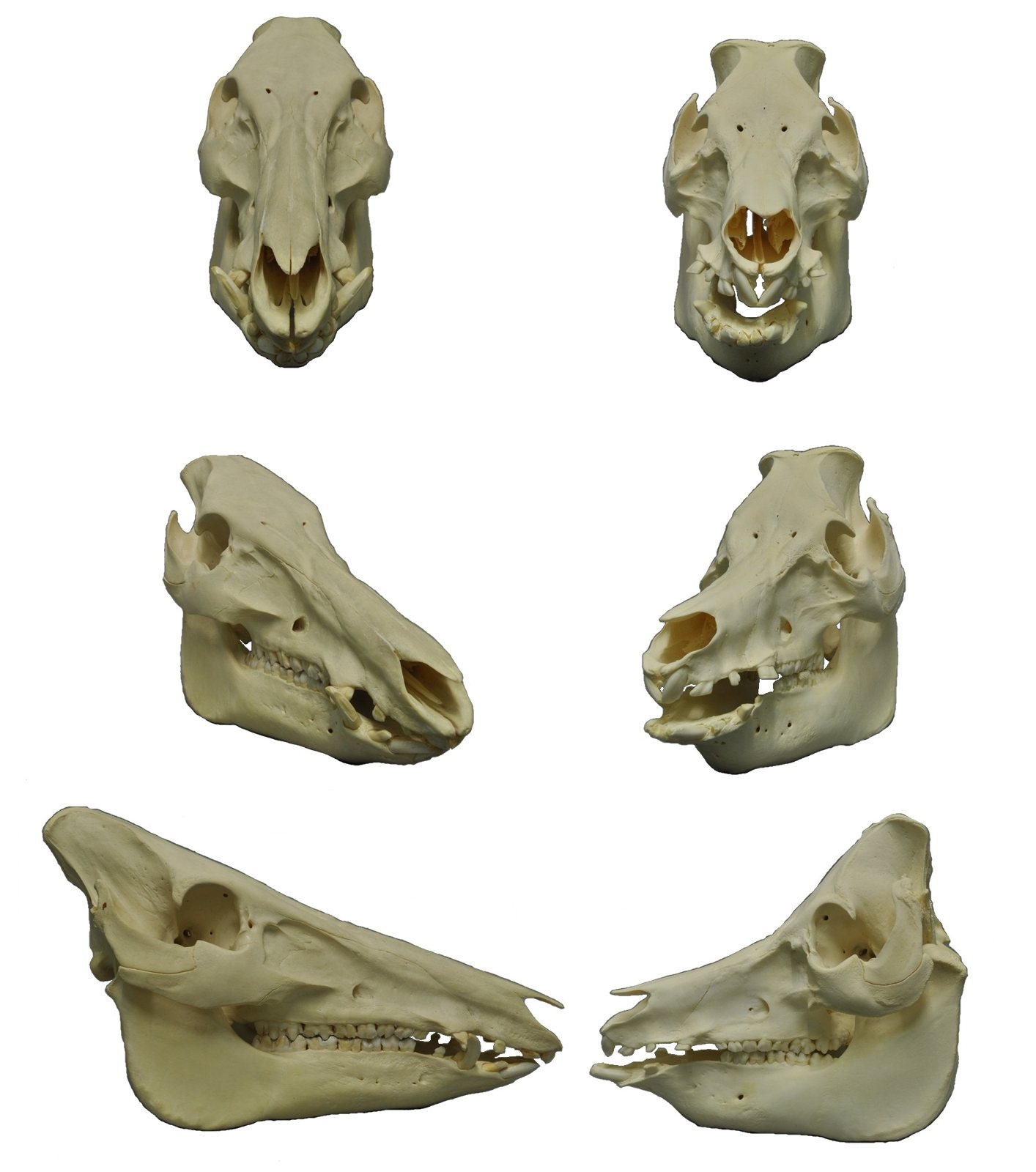
Feral swine blur the line further. APHIS describes feral swine in the United States as a mix of escaped domestic pigs, Eurasian wild boar and hybrids of the two, and their skulls can combine domestic and wild features. A skull alone may not tell a pure wild boar from a feral domestic pig or a hybrid.
Archaeologists studying ancient pigs avoid leaning on one feature. Max Price and Hitomi Hongo's account of pig domestication in Eurasia describes combining tooth size, molar length, skull proportions, sex, age and the setting where the bones lay. A single tusk or snout measurement is not enough for a confident call either way.
Could it be human?
A complete pig skull and a human skull look very different once you know what to compare. The pig has a long snout, a braincase that is small relative to its face, a large nasal opening and projecting canines. A human skull has a large rounded braincase, a short face, no snout and no tusks. Thomas W. Byers sets out that contrast in his textbook *Introduction to Forensic Anthropology*.
The confusion comes with pieces. Pigs and people are both omnivores, so pig molars and premolars can look surprisingly like human ones when they turn up on their own. Byers describes pig teeth as a known cause of mix-ups in forensic anthropology. A forensic archaeology course from FutureLearn explains that specialists compare anatomy, tooth position and the build of the skull, look at bone structure under the microscope and, when needed, turn to DNA or imaging. Laboratory methods such as FTIR spectroscopy have been used to tell human bone from pig, goat and cow bone. Even so, fragments can stay inconclusive without a lab, and a study of police work published by Oxford University Press stresses the need to separate human from nonhuman material correctly.
So, if a skull or bone could be human, treat it with care: do not clean it, change it or throw it away. Leave it where it is and contact local law enforcement, a medical examiner or a forensic anthropologist. Human bones were part of a person, which is reason enough to make that call even when the answer turns out to be a pig. Our story on what to do if you find human bones walks through what happens next, and how to tell a human skull from an animal skull covers the features specialists compare.
Pig or dog?
A dog skull can share the long face, but the teeth tell them apart quickly. A dog has carnassials, blade-like cheek teeth shaped for shearing meat, and four prominent pointed canines that never grow into pig-style tusks. Its muzzle can be long or short depending on the breed. A pig has broad grinding cheek teeth, a long snout and a large nasal opening.
A National Park Service lesson on comparing skulls sets pig, dog and bear skulls side by side, using the carnassials of the meat-eater against the mixed teeth of the omnivores. For the dog side in detail, read how to identify a dog skull, and if your skull is big, broad and heavy-toothed, the bear skull story may be the closer match.
Tap or hover a row to highlight it.
| Feature | Pig or wild boar | Dog | Human |
|---|---|---|---|
| FeatureFace | Pig or wild boarLong snout and large nasal opening | DogLong or short muzzle depending on breed | HumanShort face beneath a large braincase |
| FeatureCanines | Pig or wild boarCanines may become tusks | DogFour prominent pointed canines, but not pig-like tusks | HumanSmall canines, no tusks |
| FeatureCheek teeth | Pig or wild boarBroad grinding teeth; adult total normally 44 | DogCarnassial teeth for shearing | HumanHuman molars and premolars |
| FeatureBraincase and face | Pig or wild boarSmaller braincase, long face | DogSmaller braincase than a human's | HumanLarge rounded braincase |
| FeatureHow sure you can be | Pig or wild boarStronger when the snout, tooth arrangement and jaw are all present | DogCompare tooth rows and carnassials | HumanIf in doubt, leave it to a forensic specialist |
Pig skulls in archaeology
Pig remains are important evidence for a long transition, from hunting wild boar to managing and domesticating pigs. Melinda Zeder's 2011 overview in *Current Anthropology* points to a reduction in molar size, especially in the length of the third molar, as one early physical sign of domestication in *Sus scrofa*. She also notes that visible changes in the skeleton may follow a period of management that left little trace.
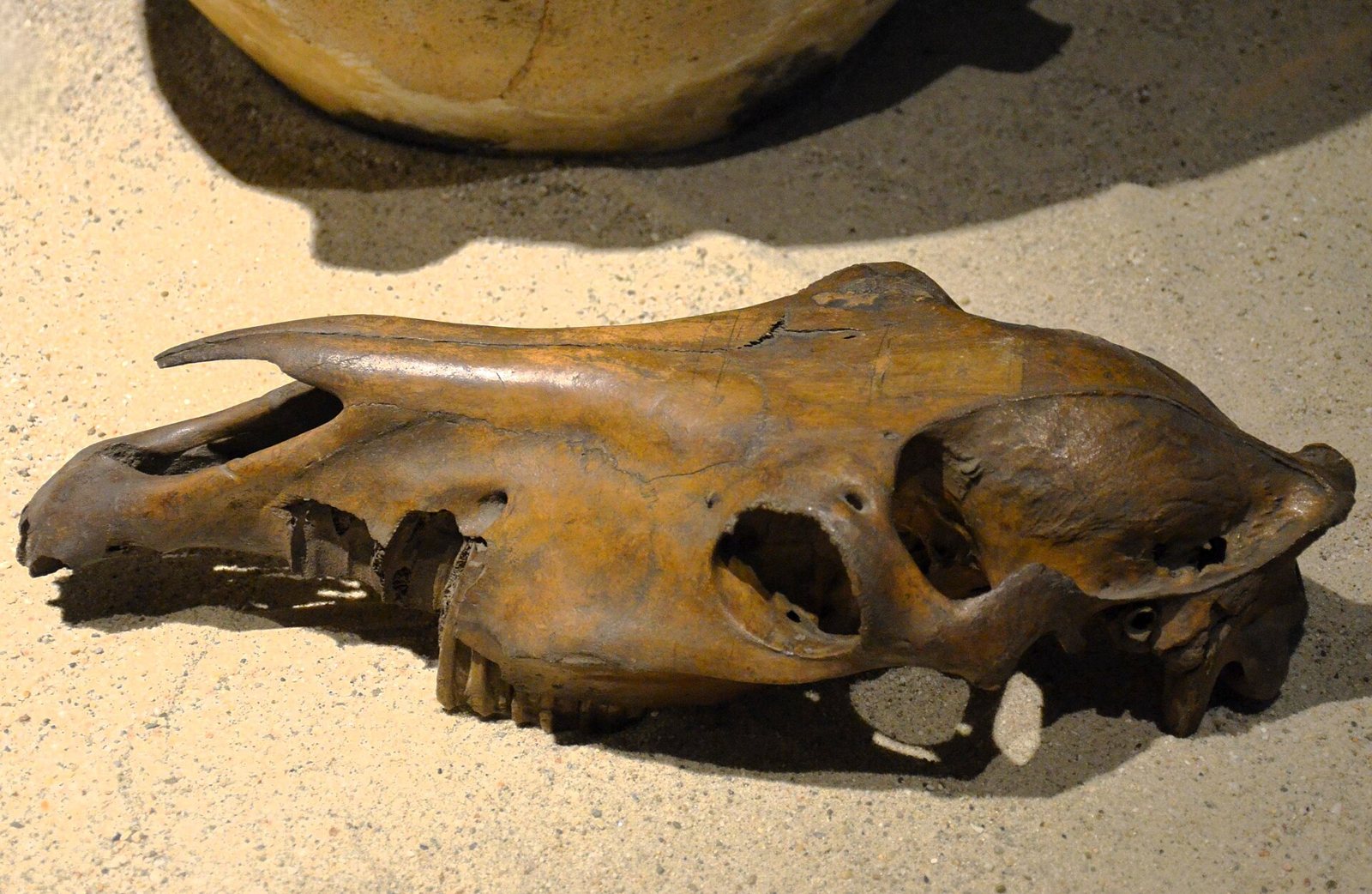
Price and Hongo place independent pig domestication in northern Mesopotamia by about 7500 calibrated BC and in China by about 6000 calibrated BC. They stress that no single bone settles it; domestication has to be read from several lines of evidence at once.
Some pig skulls were more than leftovers. At Çatalhöyük in central Anatolia, archaeologists in 2004 uncovered a deliberately modified boar skull. Its cheek teeth had been removed, part of the front of the cranium was missing, and the upper canines were left close to their natural places. Inside the mouth were phytoliths, tiny mineral traces left by plants, from wheat and barley.
Far to the east, at Dawenkou and Longshan cemetery sites in Shandong, China, pig mandibles were placed in burials in numbers tied to status and ceremonial display. Taken together, these sites show pig skulls and jaws standing for food, wealth, ritual and social identity, not only kitchen scraps. For more on how bones carry this kind of story, see what bones tell archaeologists.
Pigs and people, from domestication to feral hogs
Tap or hover a step to follow the order.
About 7500 calibrated BC
Pig domestication is established in northern Mesopotamia, in Price and Hongo's account.
About 6000 calibrated BC
Independent pig domestication is established in China, in the same account.
2004
A deliberately modified boar skull is uncovered at Çatalhöyük in central Anatolia.
2011
Melinda Zeder sums up the evidence for animal domestication and notes that visible change may follow earlier management.
2014
USDA APHIS begins a national feral swine damage management program in the United States.
Feral hogs in the United States
A pig skull in American woods may well have come from a feral hog rather than a farm animal. APHIS identifies feral swine as *Sus scrofa*, made up of escaped domestic pigs, Eurasian wild boar and their hybrids. Europeans brought pigs to what is now the United States in the 1500s, and later releases and escapes spread them further.
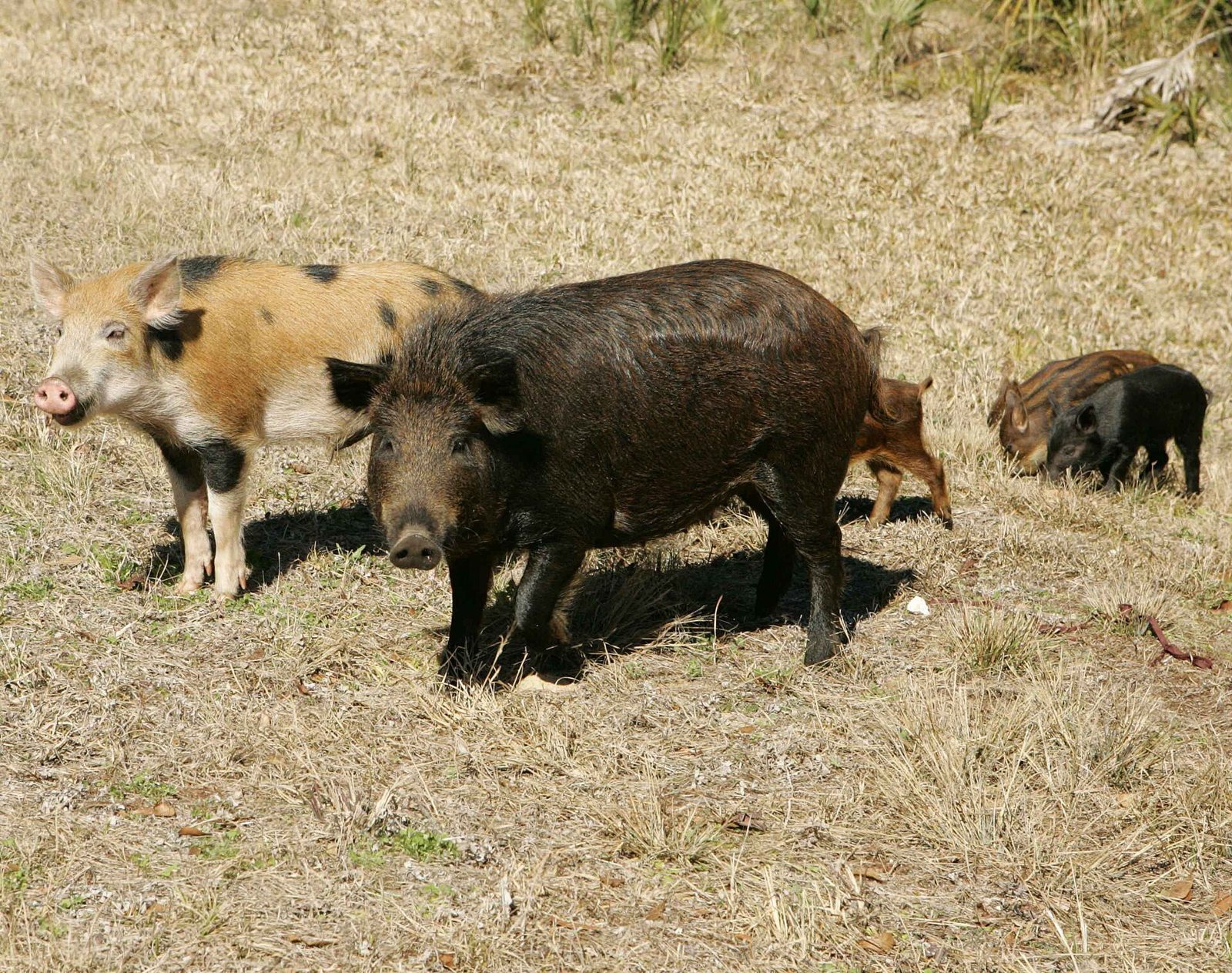
The agency reported feral swine in at least 35 states in 2026 and describes serious agricultural, ecological and public safety damage from them. A national feral swine damage management program has run since 2014.
If you come across a skull like this
Tap a card to bring it forward.
- Could it be human?: Leave it in place and call local law enforcement or a medical examiner.
- Photograph it where it lies: Take photos before anything is moved.
- Note the location: Write down exactly where it is.
- Ask before you move it: Contact the state wildlife agency or the land manager.
- At a dig or historic site?: Contact the cultural resource authority for the area.
Keeping a pig skull you came across
> Before you take it home. Treat this as general information, not legal advice. Wildlife and land rules are set by each state and country and change over time, and only the agency for the place where the skull lay can answer for your find.
A skull outdoors is not automatically yours to keep. The answer depends on the species, the state, who owns the land, whether the animal was protected, whether it was lawfully taken, and whether the spot is public land, private land or an archaeological site. The Wisconsin Department of Natural Resources, for example, allows clean skulls and bones of unprotected wild animals under stated conditions and requires the landowner's permission on private property. The Alaska Department of Fish and Game skull guide tells people to check the regulations and contact wildlife authorities when they are unsure.
The safe order is simple. Photograph the skull where it lies, note the location, and confirm the rule with the state wildlife agency, the land manager or the permit office before you move or keep it. If it might be human or from an archaeological site, contact law enforcement or the cultural resource authority instead. The wider rules, federal and state, are gathered in found an animal skull, and how to clean an animal skull is the next step once it is clear the skull is yours to handle. We Dig Skulls draws skulls for shirts and art; we do not buy, sell or collect real ones.
Pig skull quiz
Answer every question to check.
Pig skull questions, answered
These come up once the snout and tusks are in view.
How many teeth does a pig skull have?
A complete adult pig skull has 44 permanent teeth, including canines that can grow into tusks. Behind them sit molars built for grinding, set in a long, reinforced snout with a large nasal cavity, so a skull with fewer teeth may simply be young or have lost some.
Do bigger tusks mean a wild boar?
Not on their own. Wild boar and feral swine often have longer tusks than domestic pigs, but tusks are usually more prominent in adult males of any kind, and hybrids overlap, so judge the snout, forehead, jaw and teeth together.
Can I keep a pig skull I found?
You cannot assume so. Ask the state wildlife agency or the land manager first, and keep your photographs and a note of the location, since those details shape the answer.
Where to go next
If the skull turns out to be a dog's, how to identify a dog skull picks up from here, and a broad, heavy skull may belong in the bear skull story. If there is any chance it is human, start with found human bones. For anything you might keep, found an animal skull is the page to read first.
Terms in this story
Tap a term to see what it means.
Sus scrofa. The species that includes the wild boar and, as Sus scrofa domesticus, the domestic pig. Feral swine belong to it too.
---