

No. 257
Highgate Cemetery, London: Who Is Buried There and How to Visit East and West
Highgate Cemetery in north London opened in 1839, one of the seven Victorian cemeteries later known as the Magnificent Seven. According to UK Parliament evidence, about 170,000 people lie in roughly 53,000 graves here. Karl Marx, George Eliot and Douglas Adams are in the East Cemetery; Michael Faraday, Christina Rossetti and George Michael are in the West.
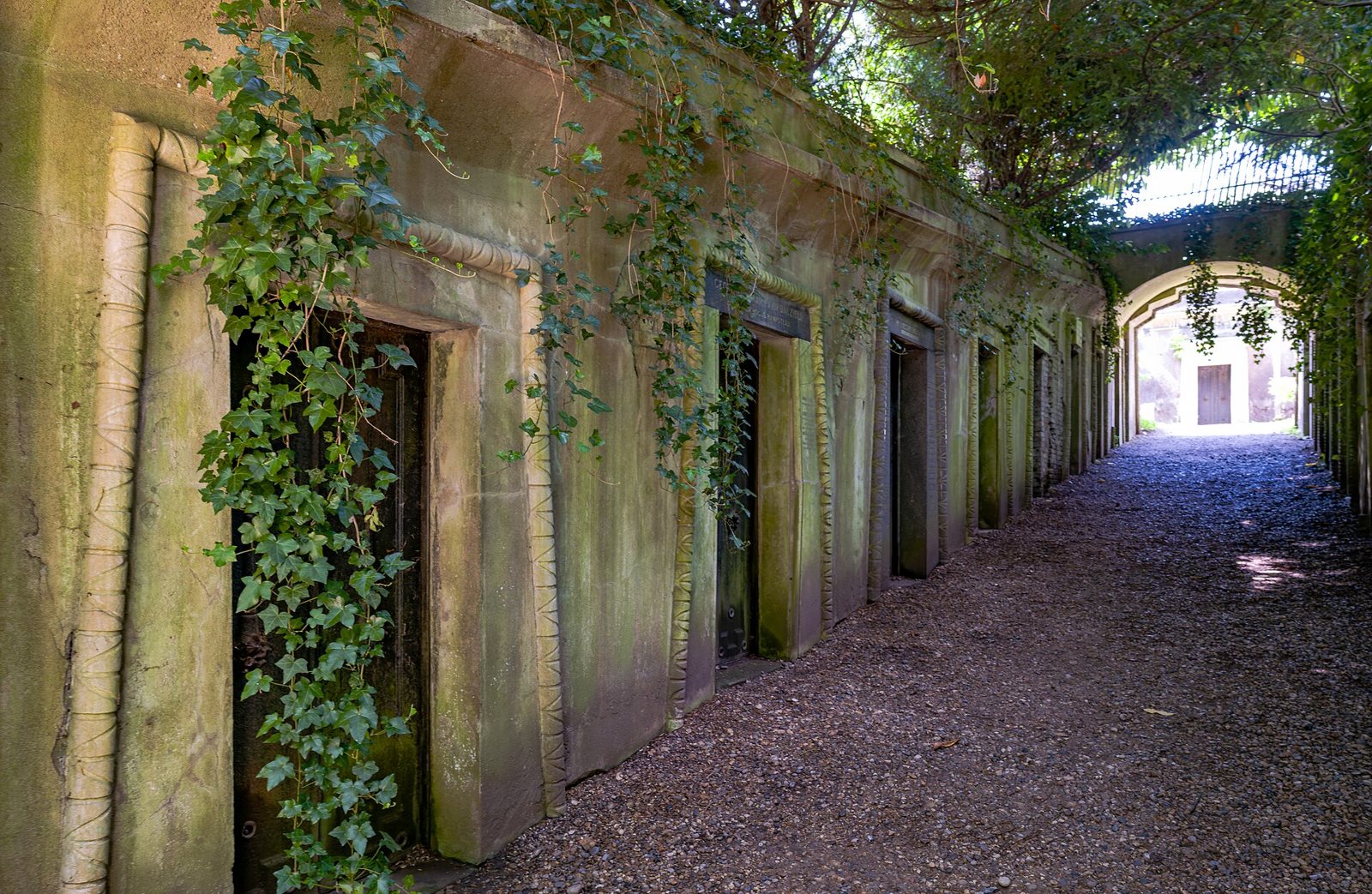
The two sections are visited differently. The East has generally been open for independent visits, while the West, home to the Egyptian Avenue and the Circle of Lebanon, has traditionally been seen on guided tours. Admission pays for the cemetery's upkeep, so book and check current arrangements on the official Highgate Cemetery website before you go.
Behind the famous names, Highgate is still a resting place for many families, and most of its graves belong to Londoners few visitors will have heard of.
How Highgate began: the Magnificent Seven
By the 1830s, London's parish burial grounds were overcrowded. The answer was a set of privately developed cemeteries, seven in all, which became known as the Magnificent Seven, as the London Museum explains. Highgate, officially St James's Cemetery of Highgate, was one of them.
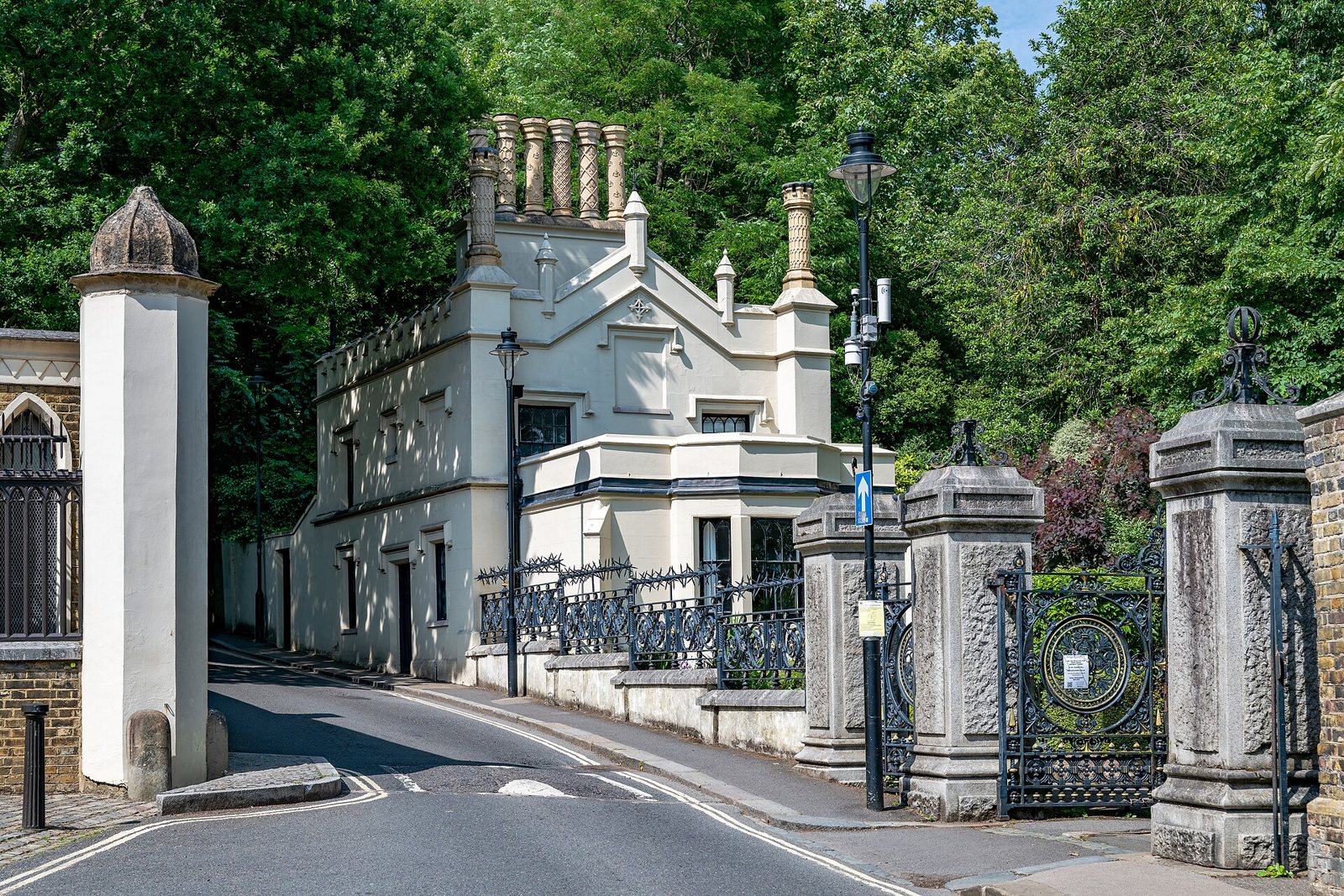
The London Cemetery Company was established by Act of Parliament in 1836 to build it. The grounds were designed by Stephen Geary, the surveyor James Bunstone Bunning and David Ramsey, and the Bishop of London consecrated the West Cemetery on 20 May 1839. As burials grew, the company acquired more land and opened the East Cemetery in 1854.
Harder years followed. The cemetery declined financially and fell into neglect, until the Friends of Highgate Cemetery formed in 1975 to preserve it; the freehold was acquired in 1981. Today Historic England lists Highgate as an important historic site, with listed buildings, monuments and graves.
Highgate Cemetery from 1836 to the Friends
Tap or hover a step to follow the order.
1836
The London Cemetery Company is established by Act of Parliament.
20 May 1839
The Bishop of London consecrates the West Cemetery.
26 May 1839
Elizabeth Jackson becomes the first recorded burial.
1854
The East Cemetery opens.
Around 1870
The outer half-circle of the Circle of Lebanon and the Julius Beer Mausoleum are added.
1975
The Friends of Highgate Cemetery form to preserve the site.
1981
The freehold is acquired for preservation.
The Egyptian Avenue and the Circle of Lebanon
The West Cemetery holds Highgate's most famous Victorian set piece. The Egyptian Avenue is a monumental entrance with Egyptian-inspired columns, obelisks and tomb entrances. It leads to the Circle of Lebanon, a ring of catacombs built around a large cedar of Lebanon. Historic England dates the main Egyptian Avenue and Circle of Lebanon structures to 1838 and 1839 and lists them at Grade I.
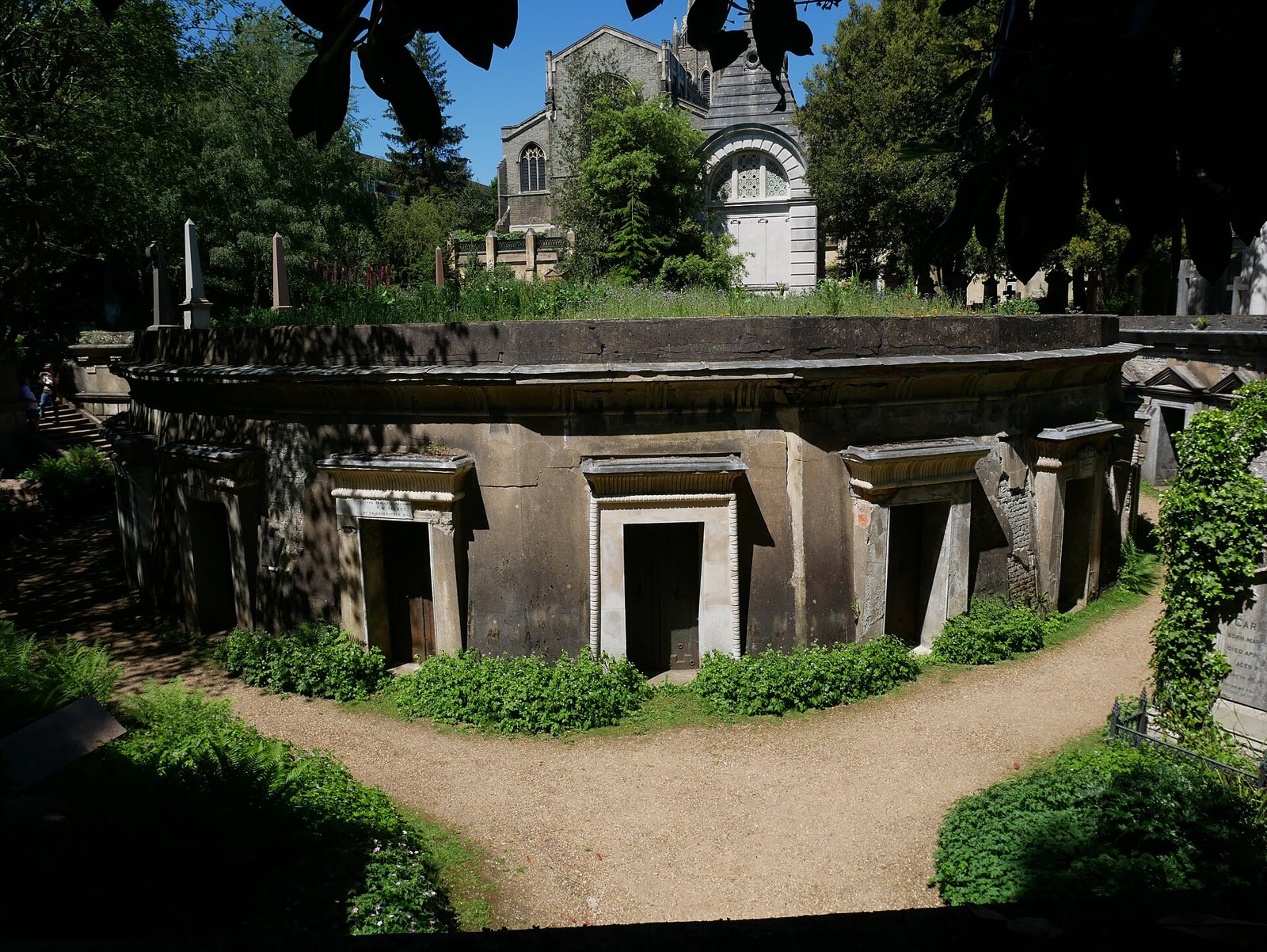
The circle grew later. Its outer half-circle was added around 1870, at the same time as the Julius Beer Mausoleum, designed by J. O. Scott. The Terrace Catacombs are part of the West Cemetery too.
The mix of styles says a lot about Victorian taste in death. As Victorian Web and Camden Council's conservation appraisal describe, the builders drew on Egyptian, classical and Gothic forms, and all three sit side by side on the same hillside of graves.
Who is buried at Highgate, East and West
Highgate's famous names are split between its two halves, and knowing which is where helps you plan.
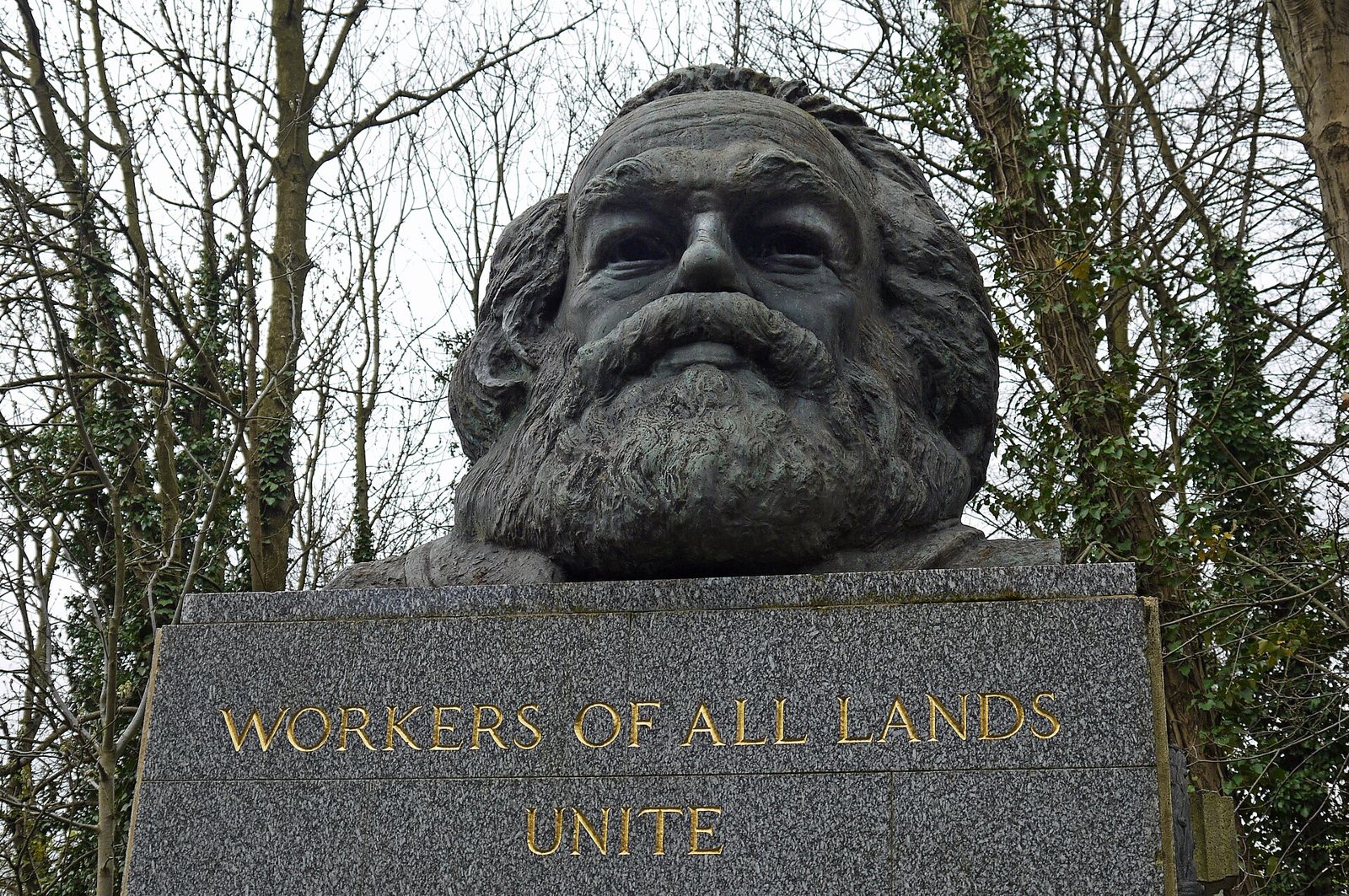
Karl Marx is buried in the East Cemetery. His monument is the best-known memorial at Highgate, and it is monitored because it has been vandalised more than once. Nearby lie George Eliot, whose real name was Mary Ann Evans, Andrea Levy and Douglas Adams, author of *The Hitchhiker's Guide to the Galaxy*. Visitors often leave pens at Adams's grave, a nod to his writing; it is a custom some visitors keep, and nobody needs to leave anything.
The West Cemetery holds Michael Faraday, Christina Rossetti and George Michael, whose grave is recorded under his birth name, Georgios Kyriacos Panayiotou. Radclyffe Hall is among the people buried at Highgate as well.
Tap or hover a row to highlight it.
| Person | Section |
|---|---|
| PersonKarl Marx | SectionEast Cemetery |
| PersonGeorge Eliot (Mary Ann Evans) | SectionEast Cemetery |
| PersonAndrea Levy | SectionEast Cemetery |
| PersonDouglas Adams | SectionEast Cemetery |
| PersonMichael Faraday | SectionWest Cemetery |
| PersonChristina Rossetti | SectionWest Cemetery |
| PersonGeorge Michael (Georgios Kyriacos Panayiotou) | SectionWest Cemetery |
| PersonElizabeth Jackson, first recorded burial | SectionWest Cemetery |
The famous are a small share of the whole. Parliament evidence gives about 53,000 graves and about 170,000 people; an older Camden appraisal counts more than 52,000 graves and more than 168,000 names. Either way, most of those names belong to ordinary Londoners.
The first burial at Highgate
The first person laid to rest here was not famous at all. Elizabeth Jackson, who lived in Soho, was buried on 26 May 1839, six days after the cemetery was consecrated, according to the Geograph record of her grave. Her grave is in the West Cemetery.
Her burial came less than a week after the ground was blessed, and every one of Highgate's tens of thousands of graves followed hers.
Reading the symbols on Victorian graves
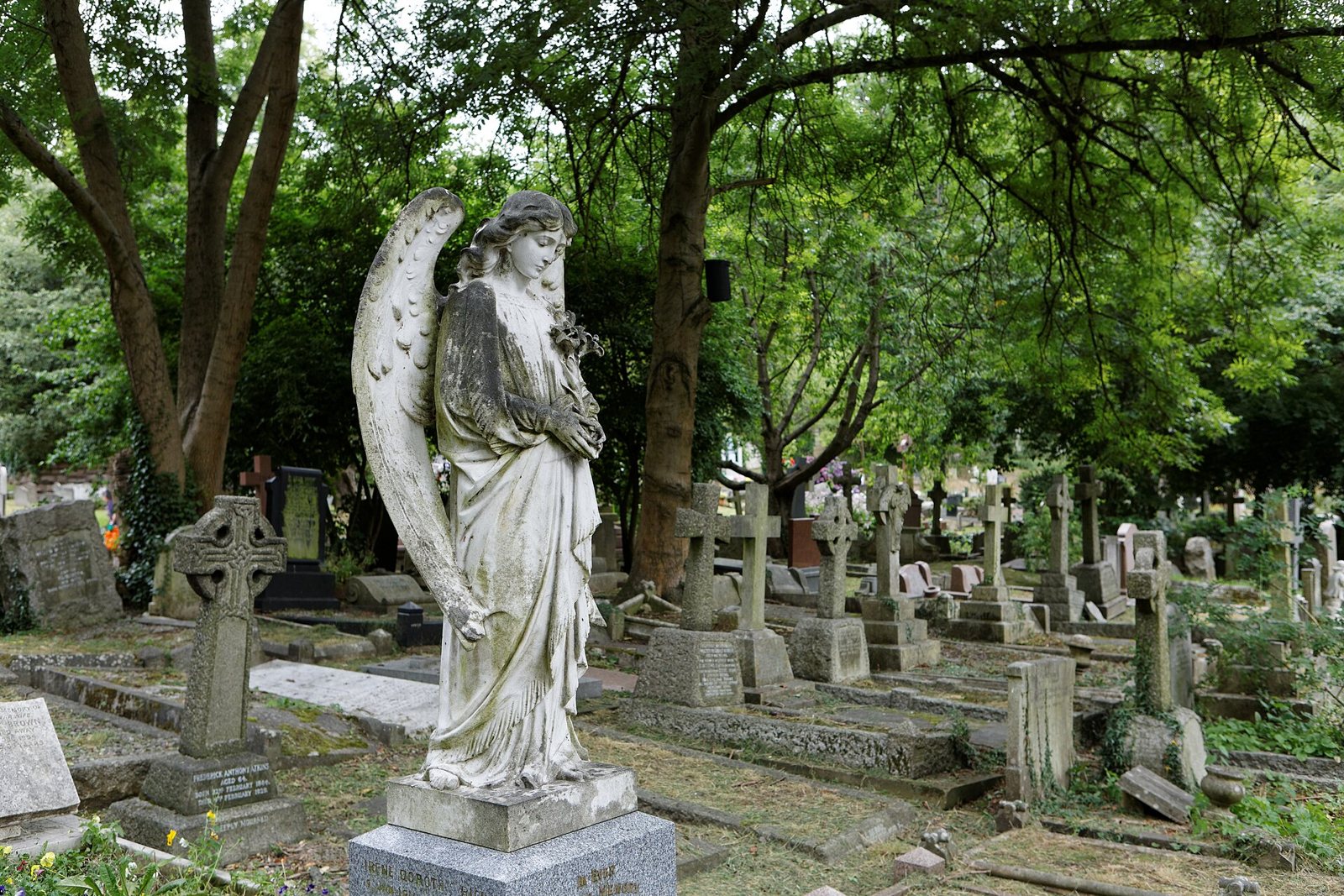
Walk through Highgate and you will meet the same carved shapes again and again: crosses, angels, urns, clasped hands, obelisks, broken columns, leaves and flowers. The Victorians shared a funerary vocabulary, and an Oxford Academic study, "Designing for Death: Learning from the Victorians", describes it as a language of mourning.
Common Victorian grave symbols and their conventional meanings
Tap a card to bring it forward.
- Obelisk: Could suggest strength or endurance.
- Weeping willow: Sorrow.
- Lamb: Innocence.
- Cross or angel: Christian belief.
- Draped urn: Could suggest death, mourning or the absence of the body.
These are conventions, not a secret code. A particular monument's meaning depends on its inscription and on what the family who commissioned it intended, so read the words on the stone before reading too much into the carving. A draped urn on one grave does not tell you what that person believed.
The same era produced other ways of keeping the dead close, from Victorian mourning jewellery to motifs like the winged skull. Those belong to the wider Victorian story; on any one grave at Highgate, the inscription is the best guide to what its carvings mean.
The "Highgate vampire" of 1970
In 1970 Highgate became the setting for a media sensation. The episode involved television coverage, competing claims by self-described investigators and a crowd that gathered near the cemetery on Friday 13 March 1970, as the Evening News reported on 14 March 1970.
It is remembered now as a modern media episode, not as evidence of anything supernatural, and it brought crowds to a place where families had buried their dead. Readers who like their vampire scares with real history attached can compare it with the much older Jewett City vampires of Connecticut.
Visiting Highgate's East and West Cemeteries
The East and West Cemeteries are connected but distinct, and they are usually visited in different ways.
The East Cemetery, where Marx, Eliot, Levy and Adams lie, has generally offered independent access, so you can walk its paths at your own pace. The West Cemetery holds the Egyptian Avenue, the Circle of Lebanon, the Terrace Catacombs and many of the site's major Victorian monuments. It has historically been reached on guided tours because its ground is steep, uneven and overgrown, and those arrangements can change.
If you only have time for one side, choose by what you want to see: the East for the famous graves you can visit on your own, the West for the Victorian buildings and catacombs. Admission fees support the preservation, restoration and maintenance of the cemetery and its charitable work.
Hours, prices, tour times, photography rules and the current West Cemetery arrangements all change, so confirm them on the official Highgate Cemetery booking page before you travel. And keep in mind that this is a working cemetery: families still visit their own graves, so give them room and quiet.
How well do you know Highgate Cemetery?
Answer every question to check.
Questions about Highgate Cemetery
A few more questions come up often before a visit.
Why is Highgate Cemetery so famous?
Highgate is famous for its 1839 Victorian garden-cemetery design, the Egyptian Avenue and the Circle of Lebanon, its overgrown historic grounds and its notable graves, above all Karl Marx's monument. It is one of London's Magnificent Seven cemeteries.
Why is Highgate Cemetery not free?
Admission helps pay for the preservation, restoration and maintenance of the cemetery, including its listed monuments, buildings and paths. It also supports the cemetery's charitable work.
Why is the West Cemetery seen on guided tours?
The West Cemetery's ground is steep, uneven and overgrown, which is why access there has traditionally been by guided tour. Arrangements can change, so check the current West Cemetery policy on the official booking page.
Can you visit George Michael's grave?
George Michael is buried in the West Cemetery under his birth name, Georgios Kyriacos Panayiotou. Access depends on the current West Cemetery visitor route and his family's privacy arrangements, so follow the cemetery's rules and treat the grave as a private place of remembrance.
More cemeteries worth knowing
Highgate is one of the great Victorian cemeteries, and other burial grounds around the world tell their own stories. Read about Eva Perón's resting place in Recoleta Cemetery in Buenos Aires, the blue painted crosses of the Merry Cemetery in Săpânța, or New Haven's Grove Street Cemetery. For the old idea that runs through so many Victorian graves, our story on memento mori is a good next read.
Terms in this story
Tap a term to see what it means.
Magnificent Seven. The seven privately developed London cemeteries, Highgate among them, created in the 1830s and after to relieve overcrowded parish burial grounds.
---