

No. 017
Grove Street Cemetery in New Haven: Who Is Buried There and What the Gate Says
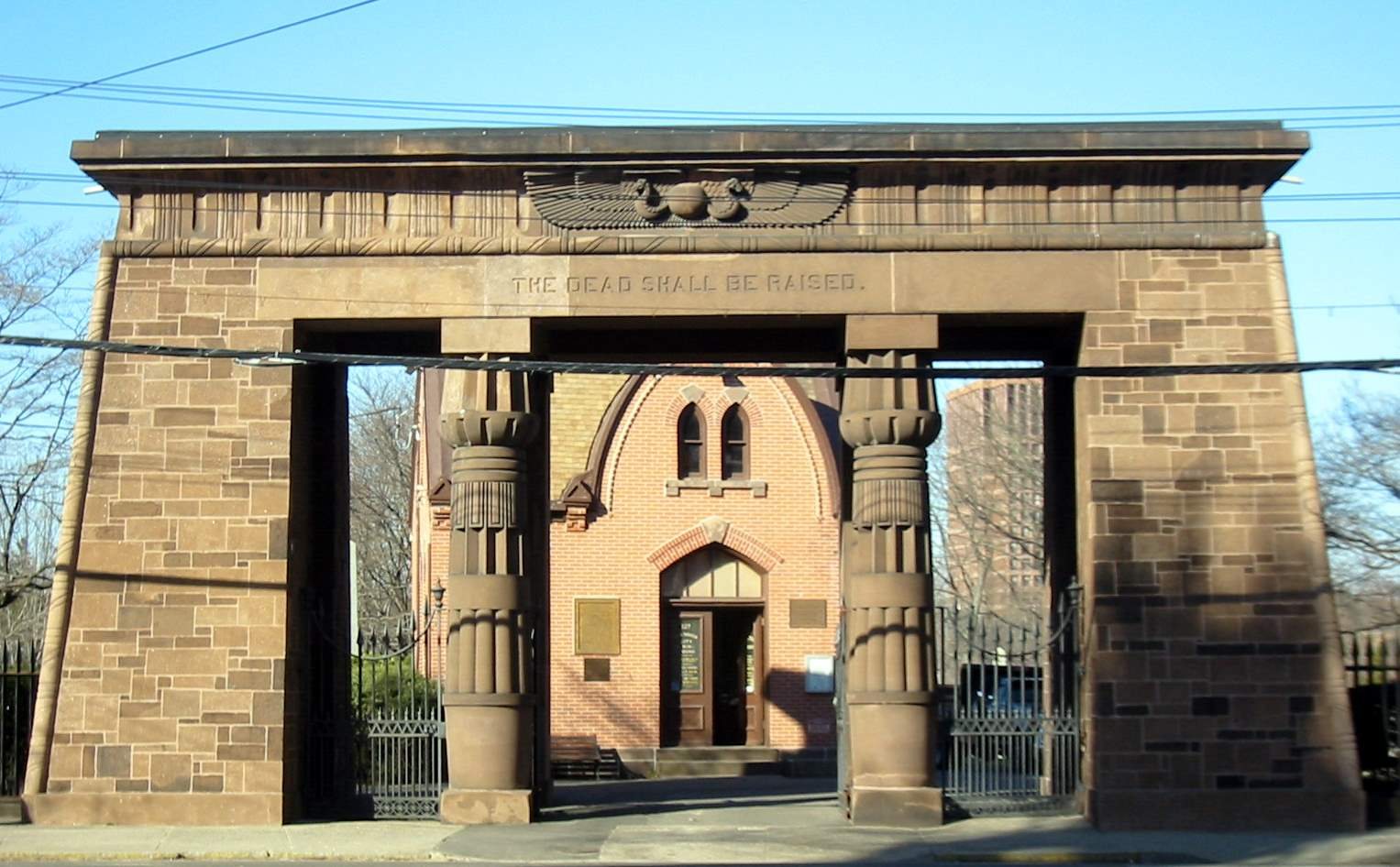
Grove Street Cemetery is New Haven's historic burying ground, incorporated by Connecticut in October 1797, and the cemetery describes itself as the first chartered burial ground in the United States. Its Egyptian Revival gate, designed by Henry Austin and completed in 1845, carries the words "THE DEAD SHALL BE RAISED," a line drawn from 1 Corinthians 15:52. Buried inside are Eli Whitney, Noah Webster, Charles Goodyear, Roger Sherman, Walter Camp, Josiah Willard Gibbs Jr., O.C. Marsh, Lars Onsager, Lyman Beecher and fourteen Yale presidents. And yes, you can visit: the cemetery's official FAQ gives general hours of 8 a.m. to 4 p.m. daily.
Why New Haven needed a new burying ground
Before Grove Street, New Haven buried its dead on the Green, the common at the center of town. After severe yellow-fever epidemics in 1794 and 1795, that ground had become overcrowded, according to the cemetery's own history.
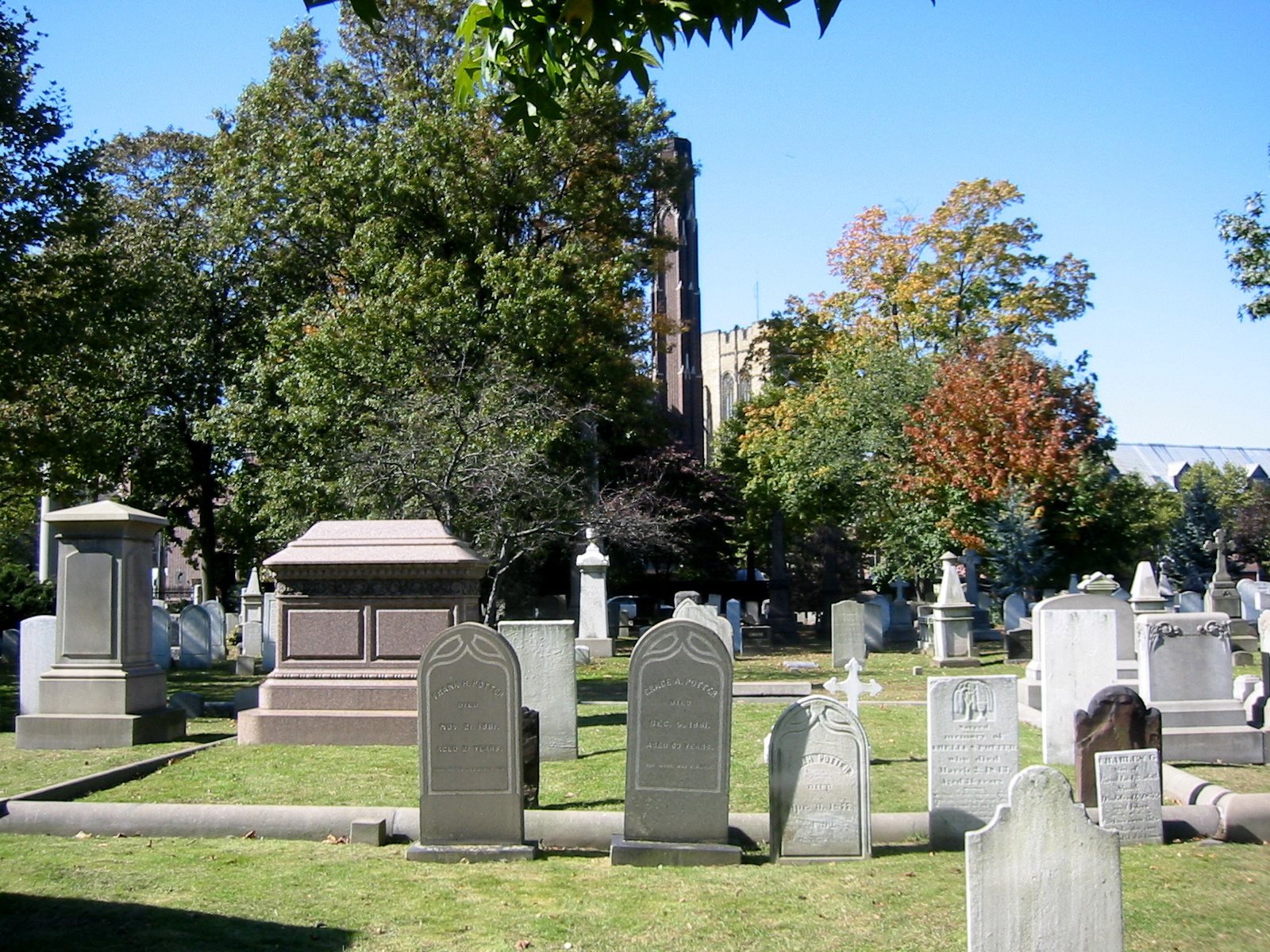
Senator James Hillhouse and a group of other residents answered with a new idea. They organized a private, nonsectarian cemetery outside the crowded center, laid out in permanent family lots. The ground was planned and opened in 1796. In October 1797, Connecticut incorporated it as the New Burying Ground in New Haven, and that charter is why the cemetery calls itself the first chartered burial ground in the country. The first burial was Martha Townsend, on November 9, 1797.
That is why dates for the cemetery's beginning can look inconsistent. Some histories, including the Yale New Haven Building Archive, give 1796, the year the ground was planned and opened. The cemetery's charter dates from 1797, and that is the date its own overview uses for its founding.
The family lots mattered as much as the charter. The cemetery says it was the first in the United States designed with family lots, so that relatives could lie together in a plot that belonged to them. The New Haven Preservation Trust and the Yale New Haven Building Archive both describe the cemetery in these terms.
Cal Hewitt, who runs We Dig Skulls, grew up in New Haven, Connecticut, and the gate on Grove Street is one of those landmarks that makes people stop on the sidewalk and read.
The gate and what it says
For its first decades the cemetery was enclosed by wooden fencing. When that deteriorated, it was replaced with the stone wall and entrance that stand today, completed in 1845. Henry H. Townshend's history of the cemetery records that the cornerstone of the gateway was laid on July 18, 1845, and names the man who designed it: Henry Austin of New Haven.
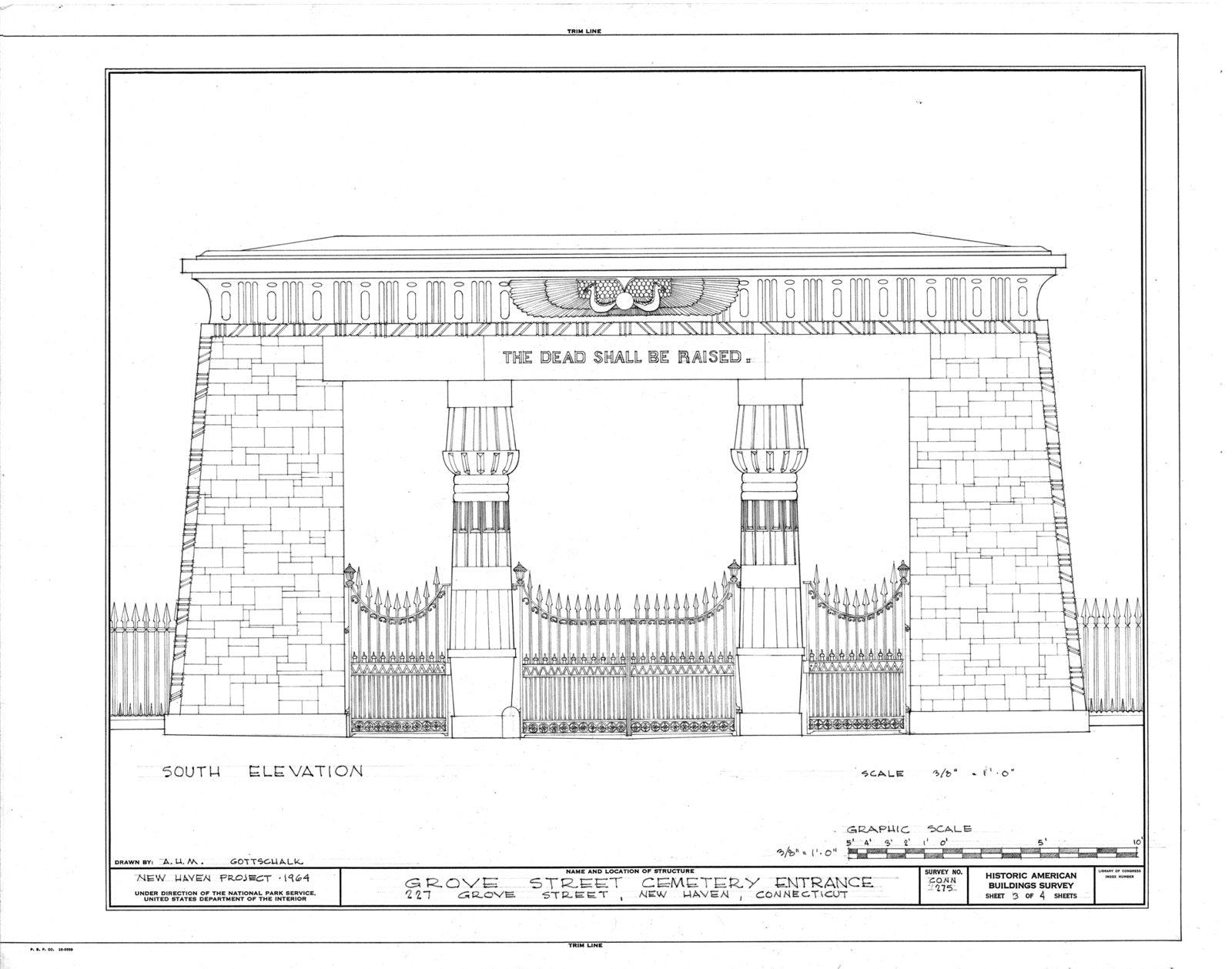
Austin designed the entrance in the Egyptian Revival style. Across it runs the inscription "THE DEAD SHALL BE RAISED." A Grove Street Cemetery tour script identifies the words as an allusion to 1 Corinthians 15:52: "The trumpet shall sound, and the dead shall be raised."
It is a frank message to carve over a cemetery entrance, and in its biblical setting it speaks of resurrection. The Library of Congress holds the Historic American Buildings Survey record of the gate, with photographs, drawings and data pages documenting Austin's 1845 design.
Who is buried at Grove Street
The cemetery's overview and its chronicle of eminent people read like a roll call of early American invention, scholarship and politics.
Tap or hover a row to highlight it.
| Person | Known for |
|---|---|
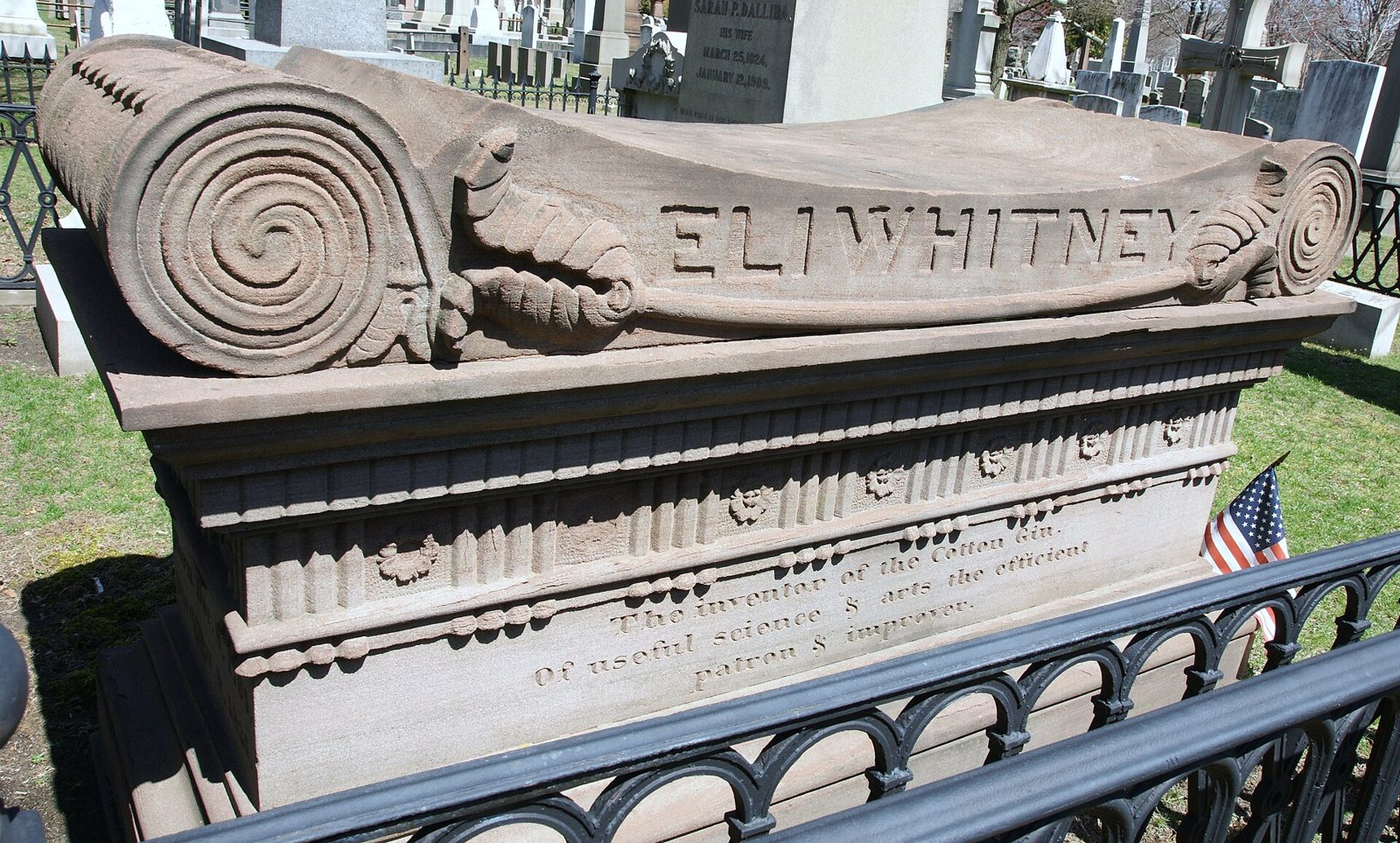
| PersonEli Whitney | Known forInventor of the cotton gin and of interchangeable-parts manufacturing |
| PersonNoah Webster | Known forLexicographer |
| PersonCharles Goodyear | Known forInventor of vulcanized rubber |
| PersonRoger Sherman | Known forPatriot; the only person to sign the Articles of Association, the Declaration of Independence, the Articles of Confederation and the Constitution |
| PersonWalter Camp | Known forAssociated with the development of American football |
| PersonJosiah Willard Gibbs Jr. | Known forScientist known as the "Father of Thermodynamics" |
| PersonOthniel Charles Marsh | Known forPaleontologist |
| PersonLars Onsager | Known forNobel Prize-winning chemist |
| PersonLyman Beecher | Known forClergyman and abolitionist |
| PersonFourteen Yale presidents | Known forLeaders of Yale College and Yale University |
| PersonHenry Austin | Known forDesigner of the cemetery's 1845 gate |
| PersonJames Hillhouse | Known forSenator and a founder of the cemetery |
Roger Sherman's line in the table is the rarest distinction on it. The cemetery notes that he was the only person to sign all four of these documents: the Articles of Association, the Declaration of Independence, the Articles of Confederation and the Constitution.
Two names on that list close a circle. Henry Austin, who designed the gate, is buried inside it, and so is James Hillhouse, who organized the cemetery in the first place. The Yale Visitor Center includes the cemetery on one of its tours for the same reason: fourteen Yale presidents, Eli Whitney, Noah Webster and Roger Sherman are all buried here.
Beyond the famous names are many ordinary New Haven families who chose the cemetery's family lots for their parents, children and grandchildren. Their stones are as much a part of the place as Webster's or Whitney's.
The stones from the Green
Grove Street did not end burials on the Green right away. The old ground stayed in use until its last burial in 1812. Then, in 1821, the remaining monuments on the Green were moved to Grove Street Cemetery.
What moved depended on the family. Some families moved both their relatives' remains and their markers into new family plots at Grove Street. Many other markers were moved without the remains and set along the cemetery's west and north walls, a large number of them in alphabetical order. The cemetery's 2016 bulletin states plainly that for the markers along the rear wall, only the stones were moved.
That means the rows of colonial stones along the back walls are, in many cases, markers without graves, and the people they name still lie under the Green. The Green remains a historic burial site, which became headline news in 2012 when Hurricane Sandy toppled a tree there and exposed colonial burials in its roots. That story is told in the skeleton in the tree on the New Haven Green.
Death's heads, cherubs and urns
Grove Street is an open-air record of how New England carved its grief. The cemetery holds monuments from many periods and styles: colonial death's-head stones, winged cherubs or soul effigies, early nineteenth-century urn-and-willow designs, obelisks, sarcophagi and later Victorian monuments.
The cemetery's bulletin describes New Haven death's-head stones as rounded-top tablets, often of brownstone, carved with stylized winged heads. Around 1800 the skull imagery in New Haven gave way to fuller-faced cherubs. In the early nineteenth century the urn and willow became common, a design the bulletin associates with the Greek Revival. Many of the colonial stones along the rear walls came from the Green.
If the winged skulls on those stones are what caught your eye, the story of what a winged skull means covers the death's head, the soul effigy and the carvers who made them across Connecticut and Massachusetts. The idea behind the death's head is the old one of memento mori: remember that life is short.
A National Historic Landmark
Grove Street Cemetery was listed on the National Register of Historic Places in 1997 and designated a National Historic Landmark on February 16, 2000, according to the National Park Service. The Park Service's National Register record lists its areas of significance, among them art, architecture, and community planning and development, along with the design of its grounds. The landmark designation recognizes the cemetery's funerary art and Henry Austin's Egyptian Revival gateway. In other words, the federal government honors the place for the two things most visitors notice first: the gate and the carved stones.
Grove Street Cemetery, 1794 to 2000
Tap or hover a step to follow the order.
1794 to 1795
Severe yellow-fever epidemics add to the overcrowding of New Haven's burial ground on the Green.
1796
James Hillhouse and other residents plan and open the New Burying Ground outside the crowded center.
October 1797
Connecticut incorporates the cemetery as the New Burying Ground in New Haven.
November 9, 1797
Martha Townsend becomes the first burial.
1812
The last burial takes place on the New Haven Green.
1821
The remaining monuments on the Green are moved to Grove Street Cemetery.
July 18, 1845
The cornerstone of the gateway is laid.
1845
Henry Austin's Egyptian Revival wall and entrance are completed.
1997
The cemetery is listed on the National Register of Historic Places.
February 16, 2000
The cemetery is designated a National Historic Landmark.
Visiting Grove Street Cemetery
The cemetery is open to the public. As of 2026, its official FAQ says it is generally open daily from 8 a.m. to 4 p.m., with last entry at 3:30 p.m. The cemetery asks visitors to call 203-787-1443 before traveling to confirm that day's hours. Guided walking tours run seasonally, and self-guided tour materials are available on the cemetery's tours page.
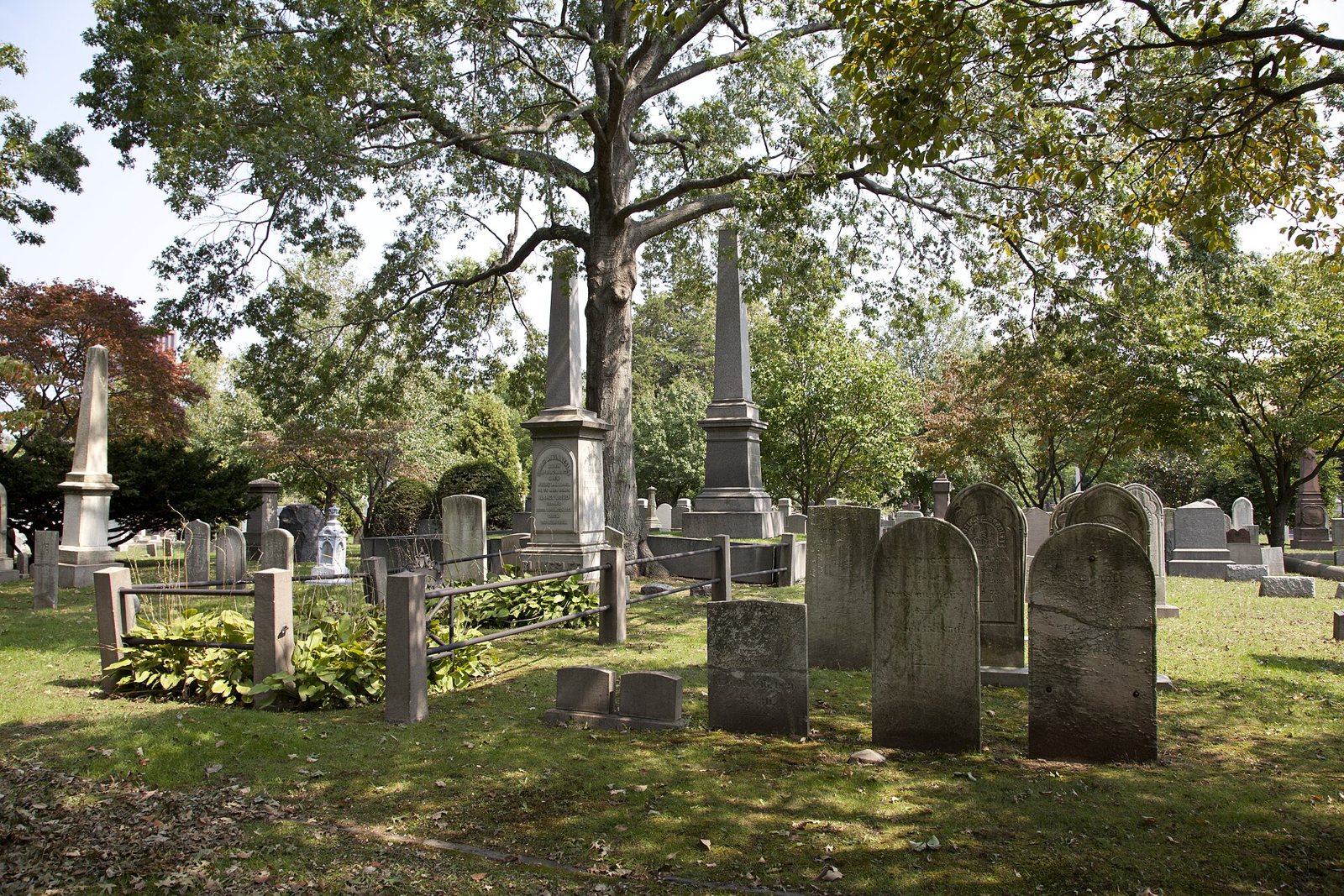
This is still a cemetery where families have graves, so visit it with the care you would want for your own.
Grove Street Cemetery quiz
Answer every question to check.
Questions people ask about Grove Street Cemetery
What famous people are buried in Grove Street Cemetery?
Famous people buried at Grove Street Cemetery include Eli Whitney, Noah Webster, Charles Goodyear, Roger Sherman, Walter Camp, Josiah Willard Gibbs Jr., O.C. Marsh, Lars Onsager, Lyman Beecher and fourteen Yale presidents. The gate's designer, Henry Austin, and the cemetery's founder, James Hillhouse, are buried there too.
What does the Grove Street Cemetery gate say?
The gate says "THE DEAD SHALL BE RAISED." The cemetery's tour script ties the words to 1 Corinthians 15:52, and they were carved on Henry Austin's Egyptian Revival entrance, completed in 1845.
What is the oldest graveyard in Connecticut?
Grove Street Cemetery is not Connecticut's oldest graveyard; it was founded in 1797 to replace New Haven's older burying ground on the Green, where the town had buried its dead since its earliest years. Its distinction is a different first: according to the cemetery, it was the first chartered burial ground in the United States and the first designed with family lots.
Can you visit Grove Street Cemetery?
Yes, Grove Street Cemetery is open to visitors, generally daily from 8 a.m. to 4 p.m. with last entry at 3:30 p.m., according to its official FAQ in 2026. The cemetery asks visitors to call 203-787-1443 first to confirm that day's hours, and it offers seasonal guided walking tours and self-guided materials.
Where is Grove Street Cemetery?
Grove Street Cemetery is in New Haven, Connecticut, on the street that gives it its name. It was laid out in the 1790s outside what was then the crowded center of town.
Where to go next
Grove Street makes the most sense alongside the place it replaced. Read the skeleton in the tree on the New Haven Green for what still lies under the old burying ground, and what a winged skull means for the carved faces on the stones that came from it. For a darker chapter of Connecticut burial history, the Jewett City vampires story follows two families in Griswold through the tuberculosis years.
Terms in this story
Tap a term to see what it means.
Burying ground. The older New England term for a cemetery. Grove Street was first incorporated as the New Burying Ground in New Haven.