

No. 267
The Merry Cemetery of Săpânța: Who Carved the Blue Crosses and What They Say
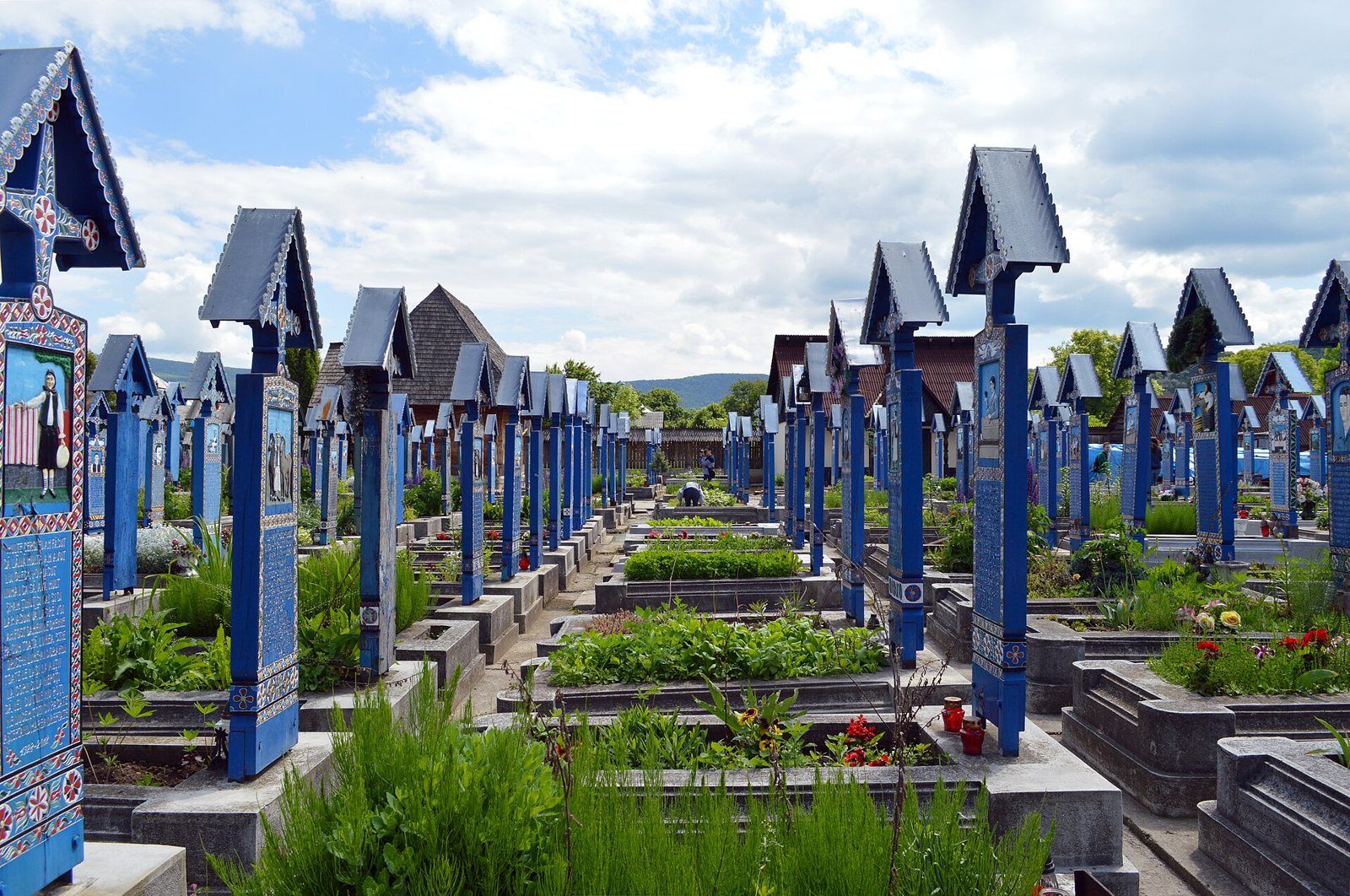
The Merry Cemetery, Cimitirul Vesel in Romanian, is the village cemetery of Săpânța, in Maramureș County in northern Romania. It stands beside the parish church in the centre of the village. Its oak crosses are painted in a shade known as Săpânța blue, carved with scenes from each person's life and cut with short verses in which the dead speak in the first person.
The tradition began with a local woodcarver, Stan Ioan Pătraș, in the 1930s, and his apprentice Dumitru Pop Tincu carried it on after him. It is still the village's working cemetery, and the people under those blue crosses are Săpânța's own families: soldiers, farmers, mothers, children and neighbours, each remembered in a few lines of wood and paint.
Stan Ioan Pătraș and the first crosses
Stan Ioan Pătraș, born in 1908, was a woodcarver in Săpânța. In the 1930s he began carving verses onto the oak grave crosses he made for the village. Accounts give 1934 or 1935 for the first epitaphs; Radio Romania International puts the start of the humorous epitaphs in 1935. By 1936 the narrow cross shape and the painted relief style that visitors recognise today had taken form.
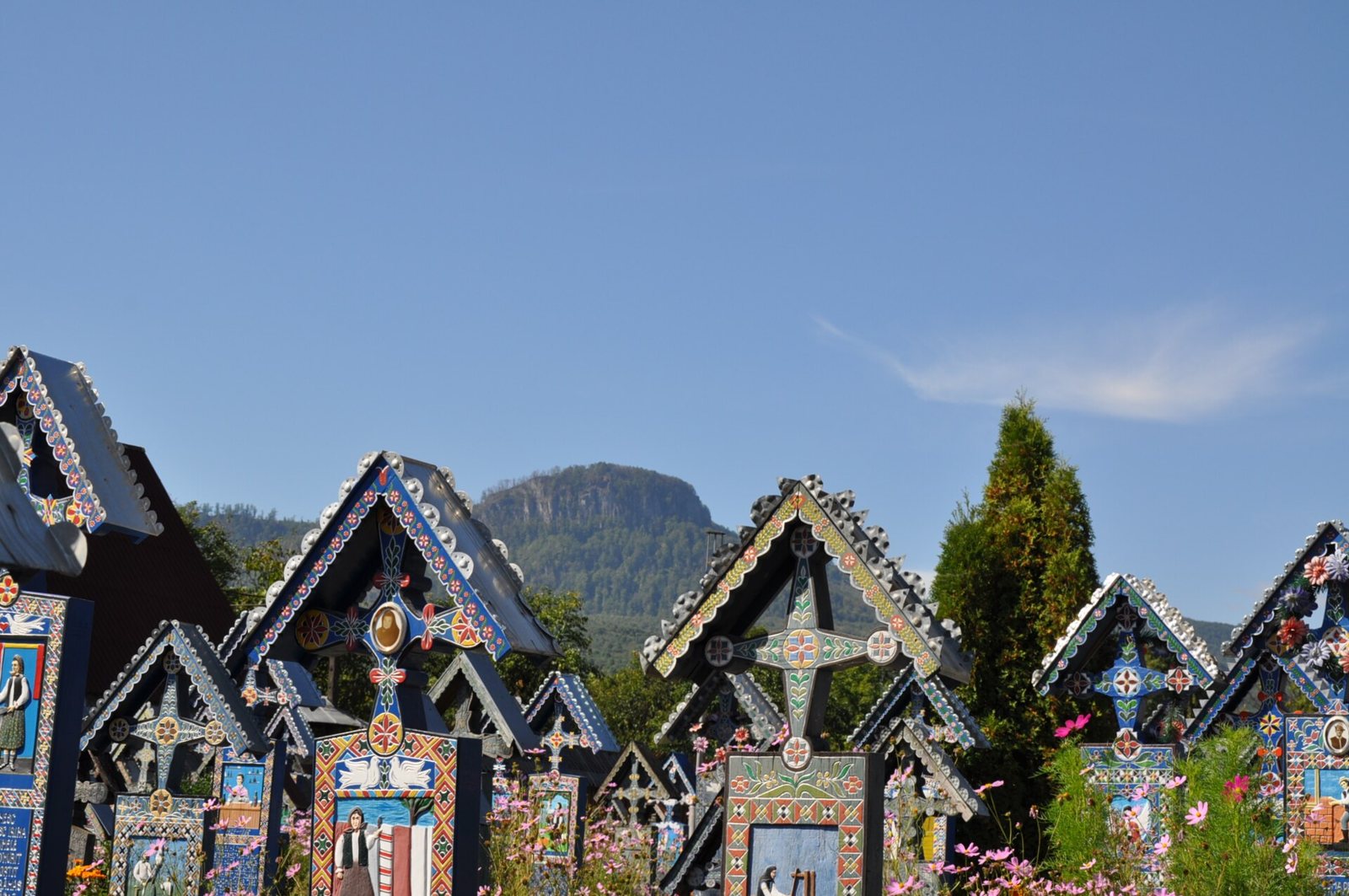
What Pătraș did was give each cross a voice. Instead of a name and two dates, a grave marker could now tell who the person had been, what work filled their days and how their life ended. The cemetery's own account says he made nearly 700 tombstones in two Săpânța cemeteries before his death in 1977.
His work has drawn scholarly attention as well as visitors. Ioan Pop-Curșeu wrote about Pătraș, tradition and innovation in a 2010 article for Babeș-Bolyai University, listed on CEEOL, and the Săpânța town hall tells his story as part of the village's own history.
Dumitru Pop Tincu and the workshop that carries it on
When Pătraș died in 1977, the craft did not die with him. His apprentice, Dumitru Pop Tincu, continued carving and painting the crosses, working in Pătraș's former house. That house became a workshop and a museum, and today it is listed by Romania's National Heritage Institute as the Stan Ion Pătraș Memorial House.
The work has stayed close to the people who learned it. Later continuity is associated with Pop's family and with Stan Ioan Pătraș III. In a report dated 11 July 2023, Radio Romania International described the craft continuing into a third generation, still carving the oak, writing the verses and painting the scenes for the village's dead.
What the verses on the crosses say
The epitaphs are short poems, usually written in the first person and in the local speech of Maramureș, often in the local dialect with deliberately nonstandard spelling. The person under the cross tells you their name, their work, their family, something of their character, and how illness, an accident or old age brought them there.
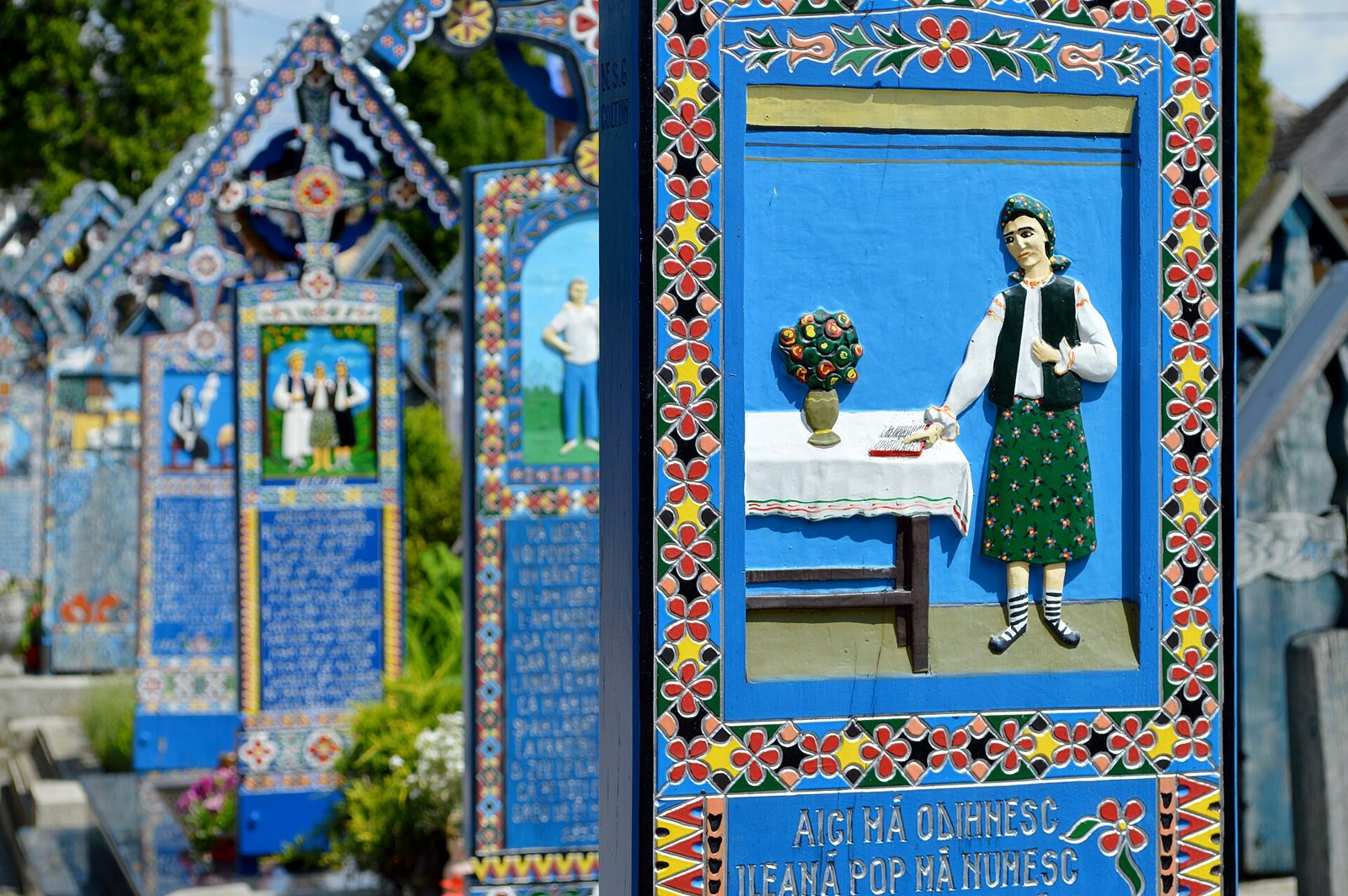
MAPPOLA has published several of them in translation. On one cross, Grigore Fișcuș says he left for war in 1914, was shot in Galicia, on the Eastern Front, and died in 1915. On another, Anuța Ghemeșoai remembers making sheep cheese, and speaks of losing her husband and the deaths of her children. Gheorghe Stan tells how he was struck by lightning while working in the field at nineteen.
Some verses are comic. The best known in English is a rendering that begins, "Underneath this heavy cross / Lies mother-in-law, what a loss," which Radio Romania International attributes to the cross Dumitru Pop Tincu carved for his own mother-in-law. It is a family joke made by a son-in-law, in wood, for everyone to read.
Many more are mournful. They speak plainly of war, hard work, widowhood and children buried too young. Read together, the crosses make a kind of village chronicle, written by the carvers for the village's families, in which the dead are allowed to sound like themselves.
Why it is called the Merry Cemetery
The cemetery is called merry because of how its crosses look and speak: bright colour, carved scenes from everyday life, and verses that can carry humour, irony and direct speech. It is sometimes called the Happy Cemetery for the same reason.
The name describes that warmth and wit. It does not mean the place is free of grief. As MAPPOLA and the Visit Maramureș listing both make clear, many epitaphs describe illness, accidents, war and bereavement. On these crosses, the merriness sits right beside the mourning.
If you know the comic verse of Mexico's calaveras literarias, you will feel a familiar spark here, but the two grew up separately, each with its own roots, makers and purpose.
Săpânța blue and how a cross is made
Each cross is carved from oak and shaped as a narrow wooden grave marker. The top carries a bas-relief scene, a carving that stands out slightly from the wood, showing the person at work or at an important moment of their life. Below it, the verse is cut or incised into the board. Then the whole cross is painted.
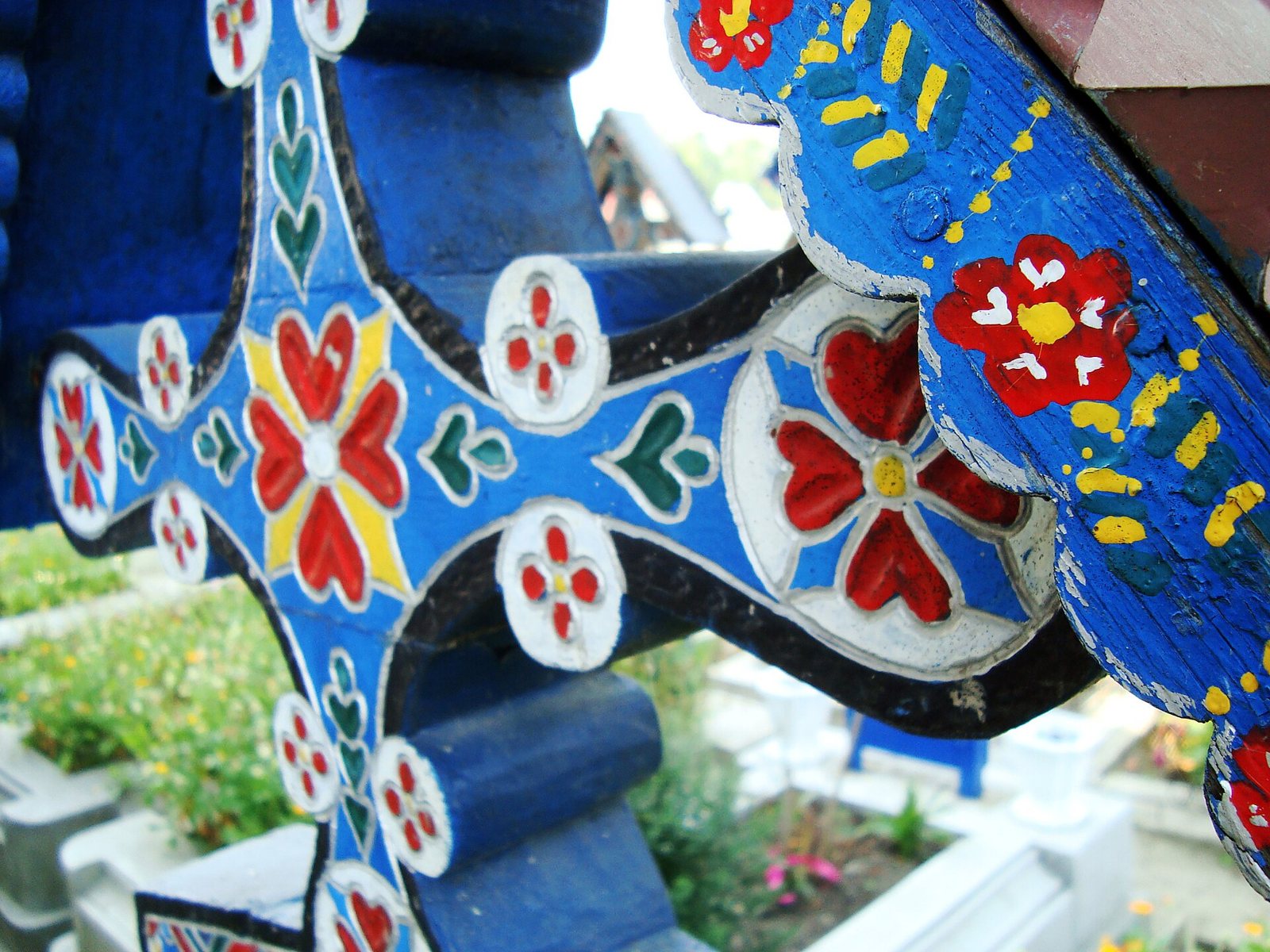
The dominant colour is the one locals call Săpânța blue. The official cemetery account also gives meanings to the other colours used on the crosses.
The colours of a Săpânța cross, as the cemetery explains them
Tap a card to bring it forward.
- Blue: Săpânța blue, the distinctive background colour of the crosses.
- Green: Life.
- Yellow: Fertility.
- Red: Passion.
- Black: Death.
The borders and decoration draw on Maramureș folk motifs, including patterns associated with traditional clothing and woven textiles. So, a cross is a small piece of the region's own visual language, carved for one person and painted in the colours of the village.
The village, the church and Maramureș
Săpânța lies in Maramureș County in northern Romania, near the Ukrainian border and close to the town of Sighetu Marmației. The cemetery sits in the village centre beside the parish church, and it is at once a working cemetery and an open-air folk-art site.
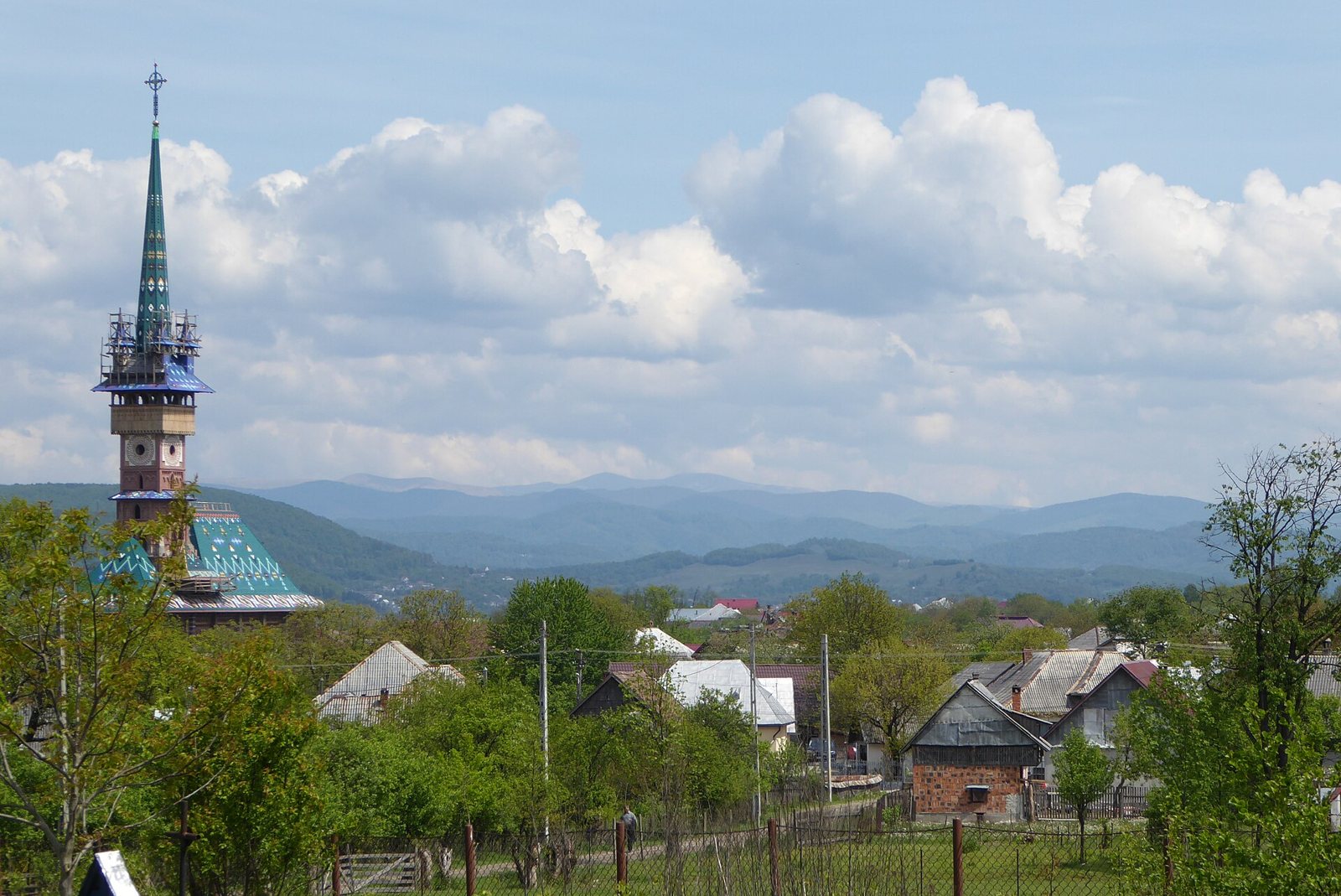
It has grown with the village. The Săpânța tourism authority describes more than 800 carved monuments, and the town hall page dated 2 March 2026 describes more than 850 crosses.
Maramureș is known for timber building, folk carving and historic churches. UNESCO inscribed the Wooden Churches of Maramureș, a group of eight churches in the region, on the World Heritage List in 1999. The Merry Cemetery is a separate place and is not part of that listing. For details about the parish church beside the cemetery, including its age and when it is open, ask the parish or the Săpânța town hall.
The Merry Cemetery of Săpânța over time
Tap or hover a step to follow the order.
1934 or 1935
Stan Ioan Pătraș begins carving first-person epitaphs onto oak crosses.
1936
The narrow cross shape and painted relief style have developed.
1977
Pătraș dies; his apprentice Dumitru Pop Tincu continues the tradition.
1999
UNESCO inscribes the Wooden Churches of Maramureș, a separate group of eight churches.
2023
Radio Romania International reports the craft continuing into a third generation.
2026
The Săpânța town hall describes more than 850 crosses at the cemetery.
Visiting the Merry Cemetery
The Visit Maramureș tourism listing gives daily hours of 10:00 to 18:00 for the cemetery, with the address as Săpânța, postal code 437305, and the telephone number 0749 403 207. The Stan Ion Pătraș Memorial House, the workshop and museum in the carver's old home, keeps seasonal hours, according to the National Heritage Institute listing updated on 10 August 2026: 10:00 to 18:00 from 15 April to 30 September, and 08:00 to 16:00 from 1 October to 14 April.
Before you travel, confirm current admission fees, photography rules and tour availability with the listed contact, since these can change.
This is an active burial place beside a church, the cemetery of the village's own families. Keep your voice low, do not interrupt services or funerals, ask before photographing people or ceremonies, and do not touch or climb on the crosses.
Before you visit Săpânța
Tap a card to bring it forward.
- Cemetery hours: Daily, 10:00 to 18:00, per the Visit Maramureș listing.
- Memorial House hours: 10:00 to 18:00 from 15 April to 30 September; 08:00 to 16:00 from 1 October to 14 April (National Heritage Institute, updated 10 August 2026).
- Contact: Săpânța 437305, telephone 0749 403 207.
- Fees, photos and tours: Confirm them with the listed contact before you travel.
- At the graves: Keep quiet, give way to services and funerals, ask before photographing people, and leave the crosses untouched.
How well do you know the Merry Cemetery?
Answer every question to check.
Questions about the Merry Cemetery
A few more questions come up often.
What is the Merry Cemetery?
The Merry Cemetery, or Cimitirul Vesel, is the village cemetery of Săpânța in Maramureș, Romania. Its oak crosses combine brightly painted relief scenes with first-person epitaphs about the lives and deaths of the people buried there, a style begun by Stan Ioan Pătraș in the 1930s.
How do I get to the Merry Cemetery?
The cemetery is in the village of Săpânța, Maramureș County, near Sighetu Marmației in northern Romania, close to the Ukrainian border. For tours and the best way to reach it, ask the contact on the Visit Maramureș listing (telephone 0749 403 207) when you plan your trip.
Can you take photos at the Merry Cemetery?
Confirm the current photography rules with the cemetery or museum contact before you visit. Whatever the rules allow, ask before photographing people or ceremonies, and step back during services and funerals.
What are the funeral traditions of Maramureș?
MAPPOLA describes wakes in Maramureș at which family and friends gather during the period before burial to remember the person who died, with wailing or lamenting by relatives or by specialised mourners. These customs belong to a regional setting, and families keep them in their own ways, so they do not describe every funeral in Romania or even in Maramureș.
More cemeteries with stories to tell
The crosses of Săpânța let the dead speak, and other famous burial grounds tell their stories through stone, sculpture and the names on them. Walk through Recoleta Cemetery in Buenos Aires and Highgate Cemetery in London, or stay closer to the idea behind those carved verses with memento mori, the medieval danse macabre and the old stones of New Haven's Grove Street Cemetery.
Terms in this story
Tap a term to see what it means.
Cimitirul Vesel. Romanian for "the Merry Cemetery," the name of the village cemetery of Săpânța.
---