

No. 262
Recoleta Cemetery, Buenos Aires: Who Is Buried There and How to Visit
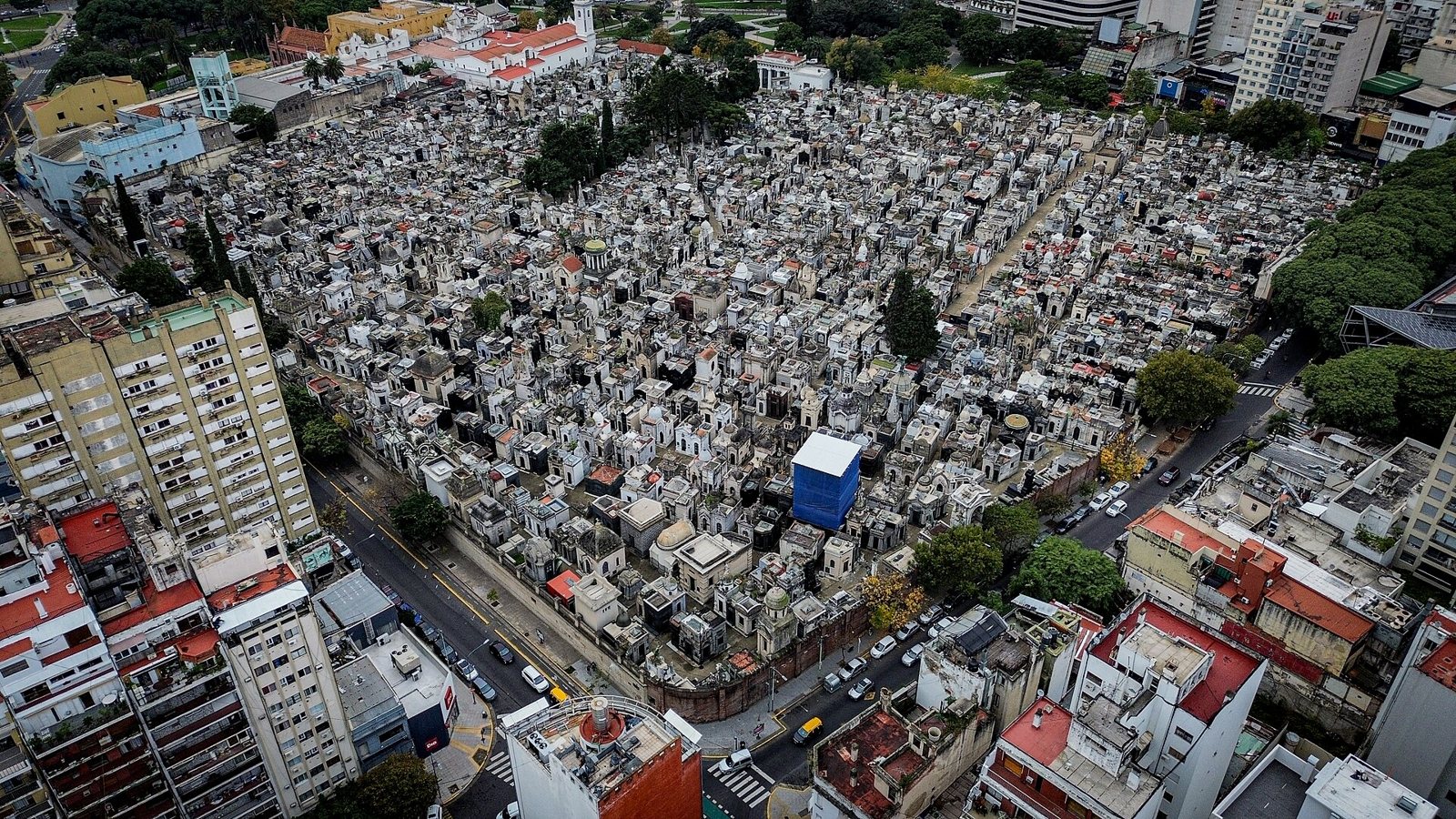
Recoleta Cemetery, the Cementerio de la Recoleta, sits at Junín 1760 in Buenos Aires. It opened in 1822 as the city's first public cemetery, and its lanes of family vaults hold Eva Perón, presidents Domingo Faustino Sarmiento, Bartolomé Mitre and Raúl Alfonsín, Nobel laureate Luis Federico Leloir, the writer Adolfo Bioy Casares and many thousands of other Argentines.
Eva Perón lies in the Duarte family mausoleum, which the Buenos Aires tourism board calls the cemetery's most visited tomb; ask for the Duarte family vault and you will be pointed the right way. The city lists tourist visits daily from 9 a.m. to 5 p.m.
Before the names and the sculpture, keep one thing in mind. These are family vaults and resting places, and a visit here is a walk among other people's dead.
From the friars' orchard to the city's first public cemetery
The ground came first from the Recollect friars. Their former orchard and burial ground lay beside the Basilica Nuestra Señora del Pilar, and in 1822 the city turned it into Buenos Aires's first public cemetery, at first called the Cementerio del Norte, the Northern Cemetery. The French engineer Próspero Catelin designed its first layout, and the cemetery was formally inaugurated on November 17, 1822, according to the Buenos Aires City cemetery history. In time it took the name of the neighbourhood and the friars, Cementerio de la Recoleta.
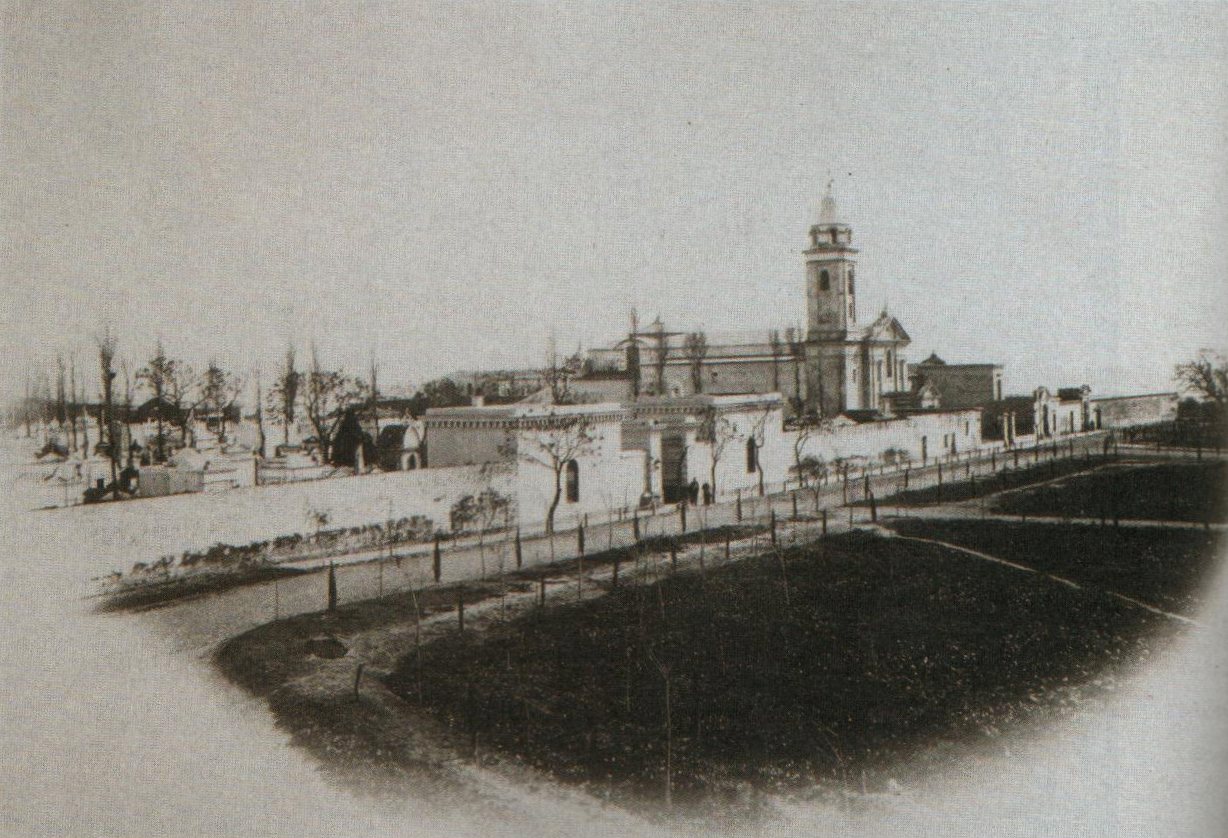
It covers about five hectares of lanes lined with family vaults. Much of what visitors see today came later in the century. The yellow fever epidemic of 1871 helped push wealthy families out of southern Buenos Aires toward Recoleta and the northern districts, and the grand family mausoleums followed in the decades after.
Recoleta Cemetery through the years
Tap or hover a step to follow the order.
1822
The former burial ground of the Recollect friars becomes Buenos Aires's first public cemetery.
November 17, 1822
The cemetery is formally inaugurated as the Cementerio del Norte.
1871
The yellow fever epidemic helps speed the move of wealthy families from southern Buenos Aires toward Recoleta and the north.
Late 1800s and early 1900s
Families commission more and more elaborate mausoleums and sculpture.
1902
Rufina Cambaceres dies at 19; her Art Nouveau tomb becomes linked to the "buried alive" legend.
1955 onward
Eva Perón's body is removed after the military coup, hidden abroad and later returned to Argentina.
2024
The city announces expanded free guided tours in Spanish.
Who is buried in Recoleta
The city's list of notable graves reads like a short history of Argentina. It includes María Eva Duarte de Perón; the presidents Domingo Faustino Sarmiento, Bartolomé Mitre and Raúl Alfonsín; the independence-era figures Manuel Dorrego and Juan Bautista Alberdi; the Nobel laureate Luis Federico Leloir; the writer Adolfo Bioy Casares; Remedios de Escalada de San Martín; and Rufina Cambaceres, whose story comes up later.
Two shared monuments are worth finding as well: the Panteón de Ciudadanos Meritorios and the Panteón de los Caídos en la Revolución de 1890. Most of the vaults, though, belong to families whose names will mean little to a visitor and a great deal to their descendants.
Finding Eva Perón's tomb
Eva Perón is buried in the Duarte family mausoleum, the vault of the family she was born into. That is the single most useful thing to know on arrival: ask staff or your guide for the Duarte family mausoleum rather than looking for the name Perón.
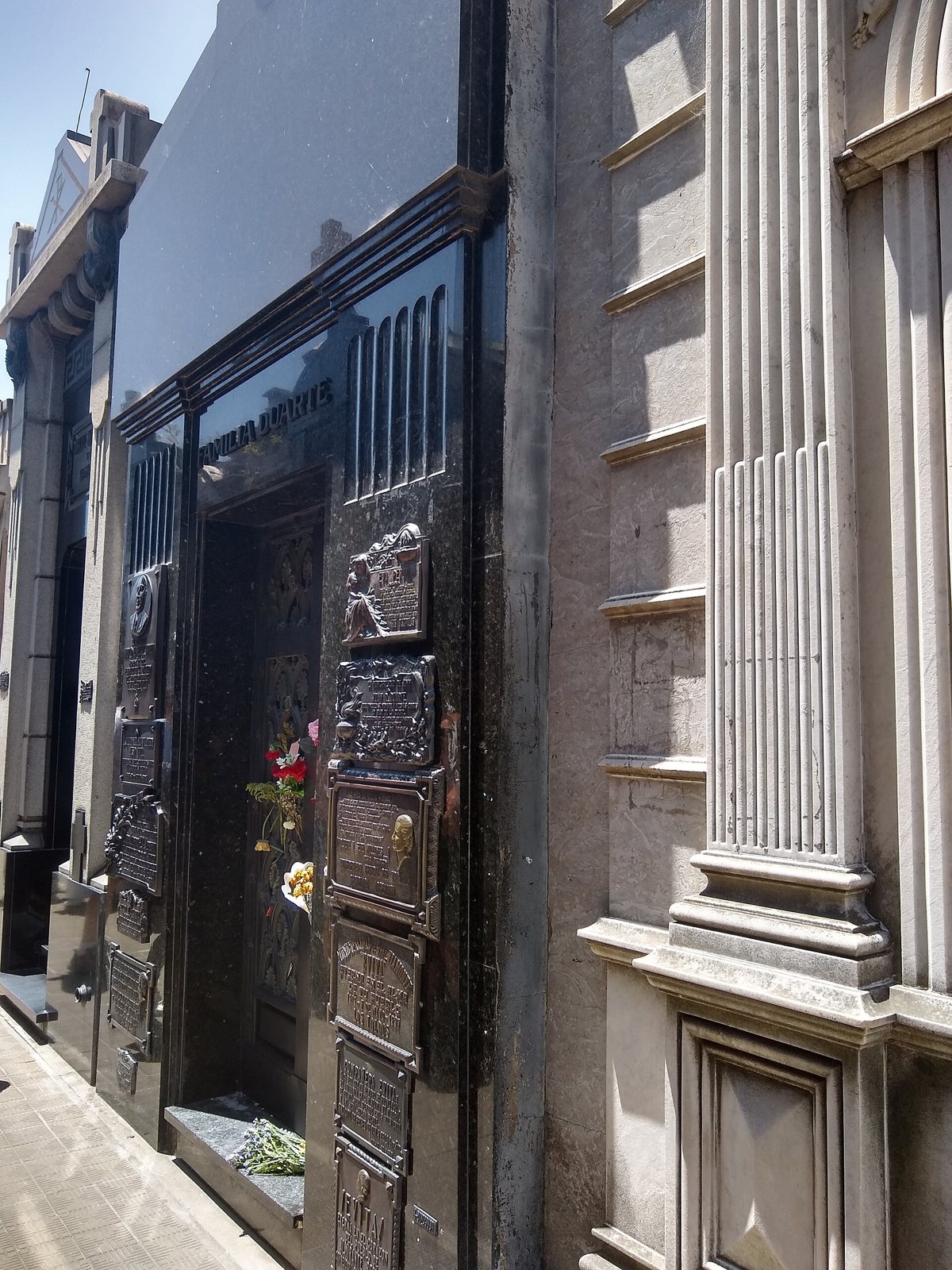
Her resting place came after a long separation. The Buenos Aires tourism board explains that after the 1955 military coup her body was secretly taken abroad, later recovered in Italy and returned to Argentina. Today the vault is the cemetery's most visited tomb.
It is still a family vault, and her life is part of Argentine history that many people feel strongly about. Bring the same quiet you would bring to any family grave. Our story on cemetery exhumation looks at what it means when the dead are moved, a question her story raises for many readers.
Temples, pyramids and Art Nouveau: the mausoleums
Recoleta's stone houses were built in stages. The first cemetery had a simpler layout; then, in the late nineteenth and early twentieth centuries, wealthy Buenos Aires families commissioned ever more elaborate mausoleums. The city counts more than 4,500 vaults in a wide range of styles: Greek-inspired temples, Egyptian-style pyramids, Neogothic structures, Art Nouveau work and Art Deco designs. More than 90 of them are recognised as National Historic Monuments.
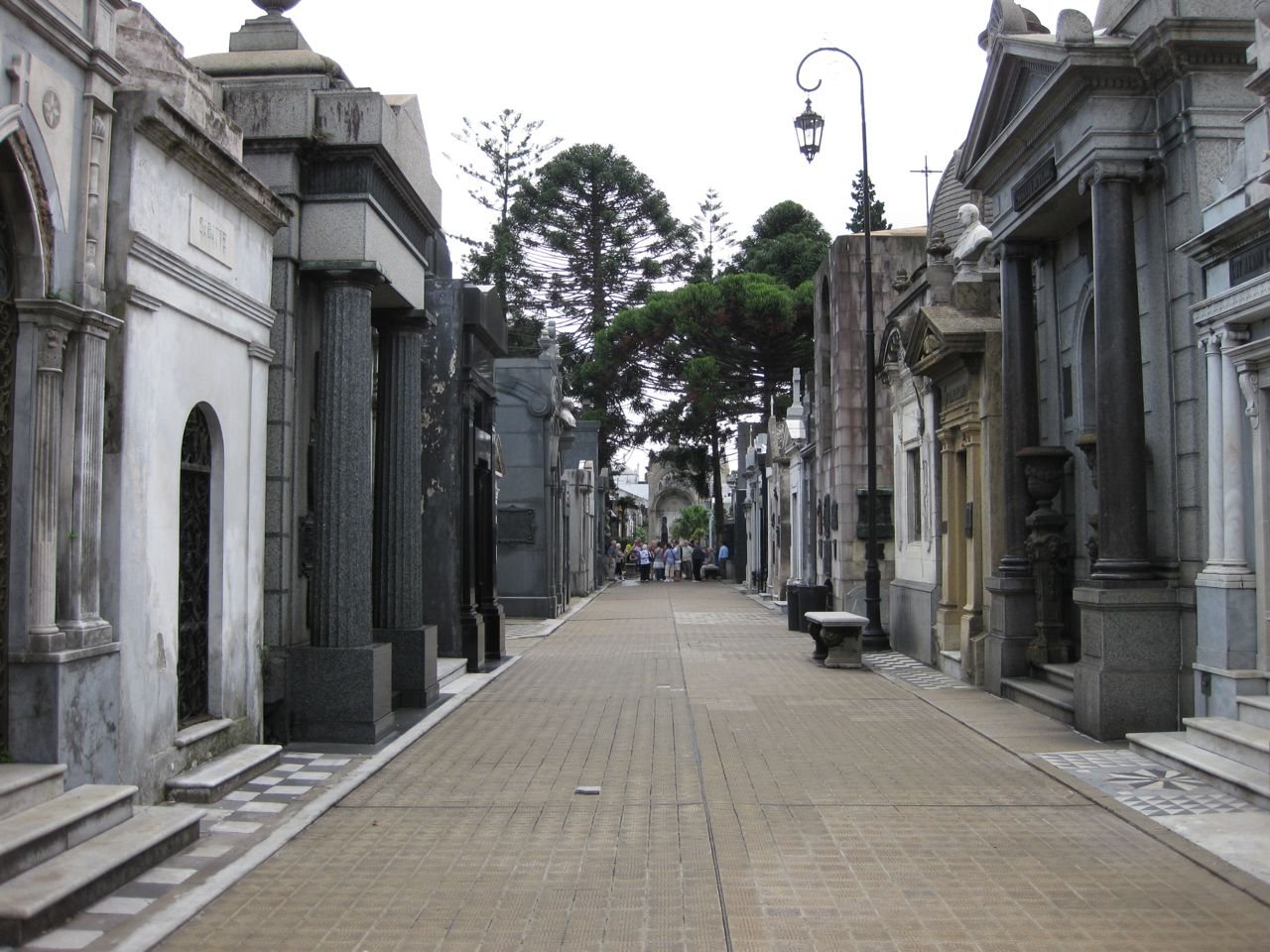
A few stand out in the city's account of the cemetery's design treasures, dated November 21, 2024.
Tap or hover a row to highlight it.
| Mausoleum | What to look for |
|---|---|
| MausoleumLeloir family | What to look forA temple-like tomb with a Venetian mosaic of Christ the Redeemer |
| MausoleumLópez Lecube family | What to look forSculptures by Lola Mora |
| MausoleumRufina Cambaceres | What to look forAn Art Nouveau monument designed by Richard Aigner |
| MausoleumBartolomé Mitre | What to look forA marble mausoleum with sculptures by Eduardo Rubino representing liberty, duty and justice |
The mix of styles is half the pleasure of a walk here, and each vault is a family's choice about how it wanted to be remembered.
Rufina Cambaceres and the story told about her
Rufina Cambaceres died on May 31, 1902, while celebrating her nineteenth birthday. Her Art Nouveau tomb, by Richard Aigner, shows a young woman standing at the door of her own vault with her hand on the handle.
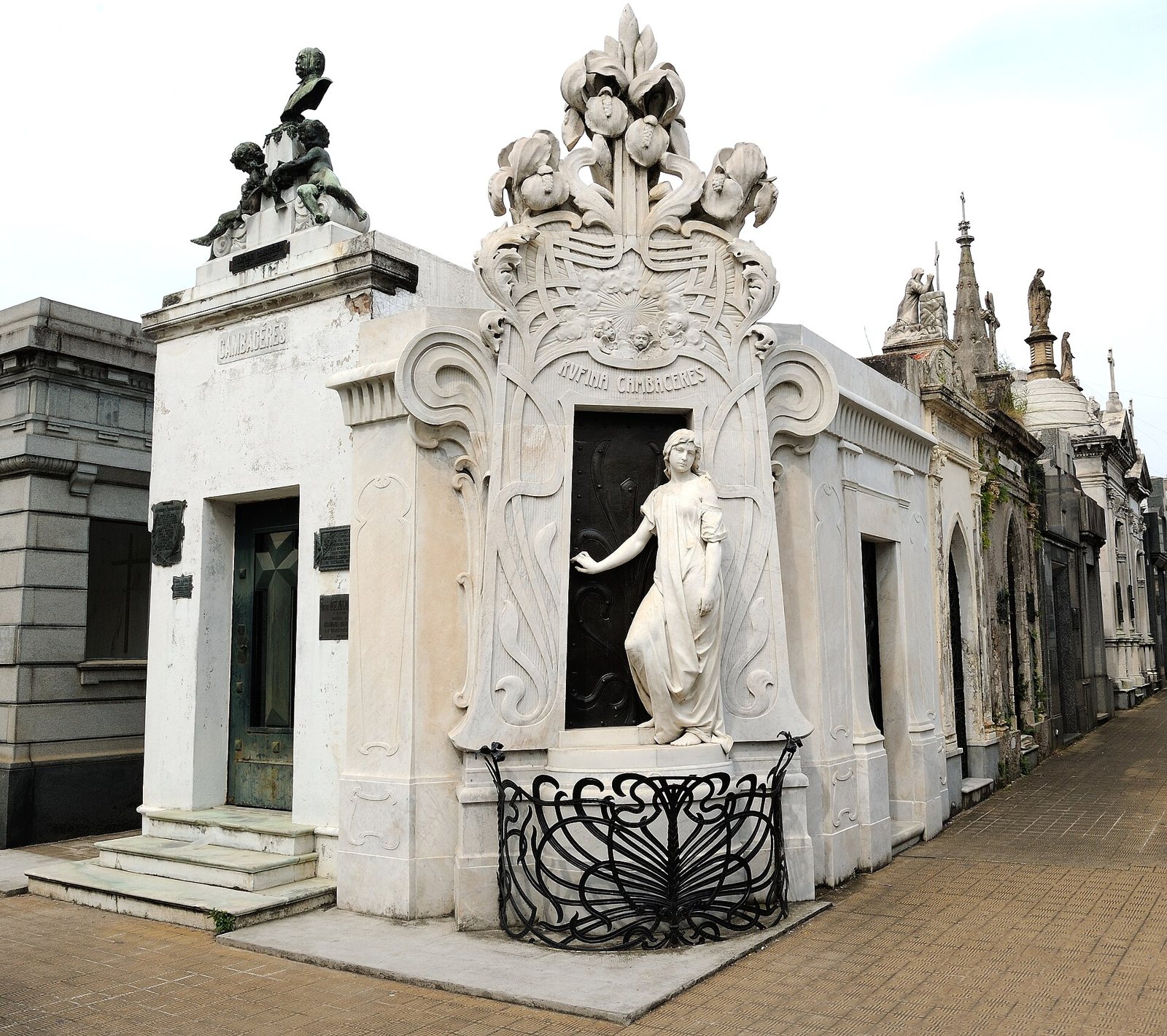
That image helped keep a story alive. The popular version says Rufina was buried alive after a cataleptic episode, a condition that can leave a person rigid and seemingly lifeless, and that she later returned as a "lady in white." The Buenos Aires City legends article presents the burial alive as legend, not established fact, and notes that the cemetery's books confirm her wake on the date she died.
Whatever visitors believe, she was a young woman who died on her birthday, and someone's daughter. Her tomb is worth seeing for Aigner's sculpture alone.
The other legends of Recoleta
Rufina's is not the only story. The same city article gathers several others and labels them as folklore.
Liliana Crociati's mausoleum shows her in a wedding dress beside her dog, Sabú. A belief grew up that Sabú died on the same day as Liliana, and that rubbing his bronze nose brings good luck; the city says the first is false and calls the second folklore. Alfredo Gath is remembered for a device meant to protect against premature burial. The estranged couple Salvador María del Carril and Tiburcia Domínguez are known for their opposing statues. The city also lists a story about Luz María García Velloso among its legends.
And the cats? They turn up in many visitors' accounts of Recoleta. If you want to feed or photograph them, ask cemetery staff about current animal-care arrangements first.
Visiting Recoleta Cemetery: hours, tickets and tours
The cemetery's address is Junín 1760. The Buenos Aires City cemetery page lists tourist visits daily from 9 a.m. to 5 p.m. The same page separately lists general visits from 7 a.m. to 6 p.m.; if you are sightseeing, plan around the tourist hours.
A city announcement dated June 18, 2024 described free guided tours in Spanish, running on weekdays from 10 a.m. to 4 p.m. and hourly on weekends and holidays from 9 a.m. to 4 p.m., with up to 60 people per tour. The same announcement said Argentine residents entered free and that foreign visitors paid ARS 8,270 at that time. That 2024 price will have changed, so confirm the current fee and photography conditions with the cemetery before you visit. The city's tourism page on the cemetery also mentions free neighbourhood walking tours.
You may share the lanes with families and mourners. Keep your voice low near anyone mourning, and ask before taking close photos of graves or people.
Your Recoleta visit at a glance
Tap a card to bring it forward.
- Address: Junín 1760, Buenos Aires.
- Tourist hours: Daily, 9 a.m. to 5 p.m., as listed by the city.
- Eva Perón: Ask for the Duarte family mausoleum.
- Tours: Consider one of the city's Spanish-language guided tours.
- Fees: Confirm the current foreign-visitor fee before you go.
- Photos: Confirm photography rules, and ask before close photos of graves or mourners.
How well do you know Recoleta Cemetery?
Answer every question to check.
Questions about Recoleta Cemetery
A few more questions come up often before a visit.
Is Recoleta Cemetery free?
It was free for Argentine residents, according to the city's announcement of June 18, 2024, while foreign visitors paid a fee. Prices change, so confirm the current admission before you go.
Do I need a guide to visit Recoleta Cemetery?
A guide is an option, not the only way in. The city lists daily tourist visiting hours and has offered guided tours in Spanish, which help if you want the stories behind the vaults.
What is the oldest tomb in Recoleta Cemetery?
The earliest surviving tomb is disputed. A Canal 26 report of August 29, 2026, says Juan Benito and María Dolores Maciel are recorded among the first burials, though their original monuments are gone; it names the grave of Romana Josefa López de Anchorena, who died on October 30, 1822, as one of the oldest surviving, and the Bustillo family vault, dated 1823, as possibly the oldest family mausoleum.
Why is Recoleta Cemetery so famous?
It was Buenos Aires's first public cemetery, it holds thousands of monumental vaults, more than 90 of which are National Historic Monuments, and it is the resting place of many central figures in Argentine history, Eva Perón above all.
What should I see in Recoleta Cemetery?
Start with the Duarte family mausoleum, Rufina Cambaceres's Art Nouveau tomb and the mausoleums of Sarmiento and Mitre. Then look for the Leloir and López Lecube vaults, the Panteón de Ciudadanos Meritorios and the Panteón de los Caídos en la Revolución de 1890.
More cemeteries worth the trip
Recoleta tells Argentina's story in marble and bronze, and other cities keep their dead in ways just as worth knowing. Read about the painted crosses of the Merry Cemetery in Săpânța, the Victorian lanes of Highgate Cemetery in London, another South American city of the dead in the catacombs of Lima, or the old stones of New Haven's Grove Street Cemetery. If all those vaults leave you thinking about time, our story on memento mori picks up the thought.
Terms in this story
Tap a term to see what it means.
Cementerio de la Recoleta. The Spanish name of Recoleta Cemetery in Buenos Aires, opened in 1822 as the city's first public cemetery.
---